In-Depth Analysis of Fluent: How to Make Every Virtual Machine a Lego Brick?

marsbitPublished on 2026-02-24Last updated on 2026-02-24

Abstract

Tiger Research's report "Deep Dive into Fluent: Making Every Virtual Machine a Lego Brick?" explores Fluent's vision to unify blockchain ecosystems by enabling seamless interoperability between different virtual machines (VMs). The report argues that the performance race in blockchain infrastructure is largely over, and the next frontier is cross-VM composability—allowing applications built on Ethereum Virtual Machine (EVM), Solana Virtual Machine (SVM), and WebAssembly (Wasm) to interact natively on a single chain, eliminating the need for bridges. Fluent, an Ethereum L2, uses a "mixed execution" model where contracts from EVM, SVM, and Wasm are compiled into a unified format (rWasm) to share state and interact within a single transaction. Currently, EVM-Wasm interoperability is live on testnet, with SVM support under development. Beyond technical innovation, Fluent is building Prints, a reputation aggregation layer that consolidates trust signals from multiple platforms (e.g., Ethos, Kaito, Talent Protocol) to identify real users and enable reputation-based benefits. This is complemented by Fluent Connect, a tool for developers to target users based on their reputation data. Fluent is also growing its ecosystem through the Blended Builders Club (BBC), an accelerator supporting early-stage dApps like Pump Pals (social trading) and Sprout (yield optimization). The testnet is used for gathering genuine user feedback rather than incentivizing empty engagement. While still e...

This report is written by Tiger Research. Each chain has its own Lego bricks. What Fluent wants to explore is what will happen when all bricks can be assembled on the same baseplate.

Core Points

  • The arms race is nearing its end; cross-VM composability will be the next main battlefield.
  • Fluent's hybrid execution technology integrates EVM, SVM, and Wasm on the same chain, completely eliminating the need for cross-chain bridges.
  • A good chain may not necessarily retain good applications. Fluent is building its own reputation layer, Prints, to prove its value.

1. The Performance War Ends, the Next Contest Begins

The competition in blockchain infrastructure started with performance—faster, cheaper, higher throughput. Today, this race is largely over. Dozens of public chains already exist, and except for extreme financial scenarios, performance is no longer a bottleneck.

Looking back, the true leap-forward breakthroughs in blockchain have never come from performance but from composability. The DeFi Summer of 2020 is the most powerful proof: lending protocols and exchange functions叠加 on each other, with liquidity mining built layer by layer on top. The modular, Lego-like拼接 was the biggest secret of that summer.
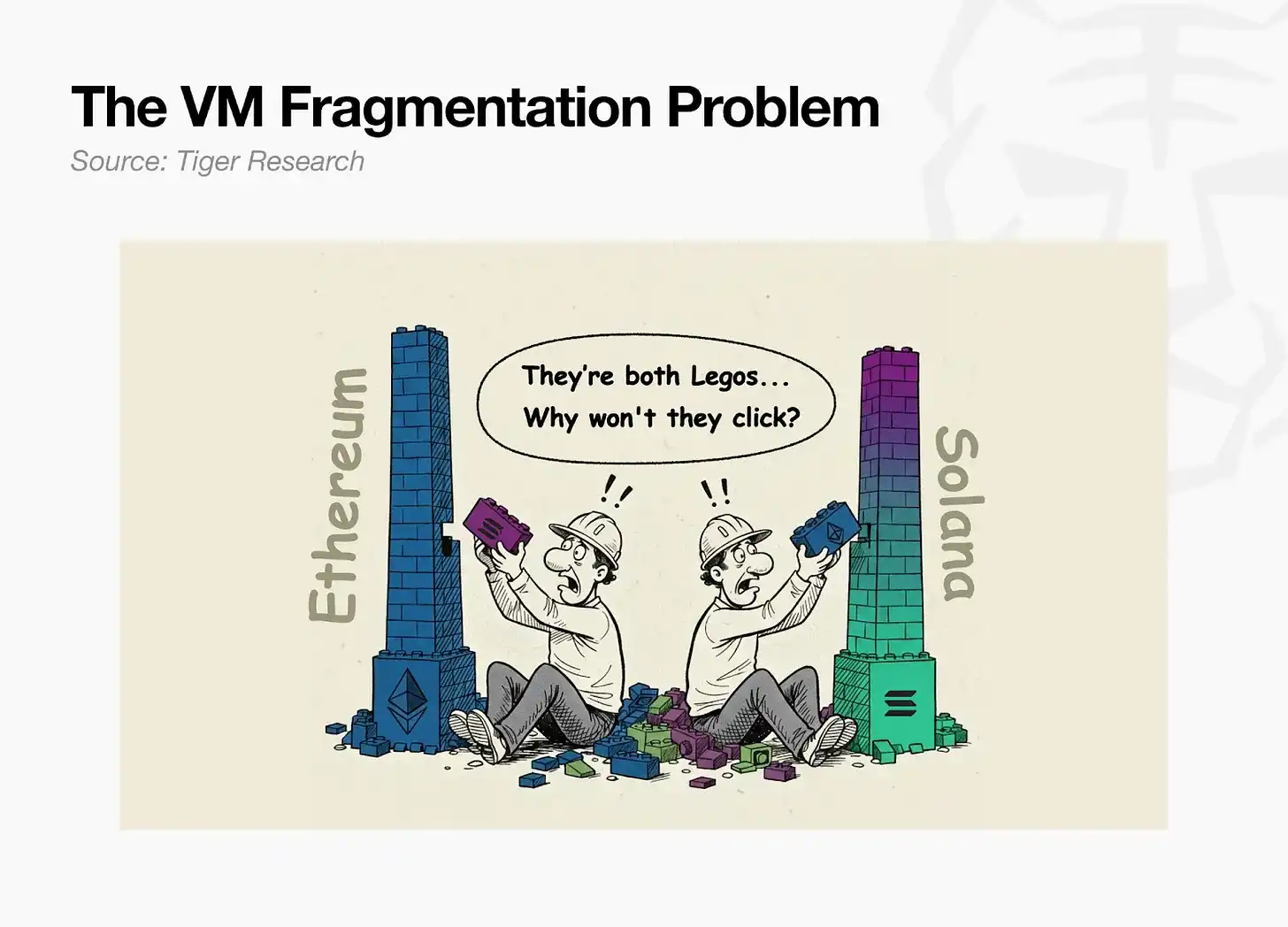
However, this composability has an invisible wall—it only works within the same virtual machine. Ethereum's bricks cannot be embedded into Solana, and Solana's bricks cannot be inserted into Ethereum. This barrier between virtual machines is the shackle that Fluent aimed to break from the very beginning.

2. The Lego Baseplate in Fluent's Vision

Fluent is a project dedicated to消除 virtual machine boundaries. Its core solution is called "hybrid execution"—enabling applications from different virtual machines to run together on the same chain.
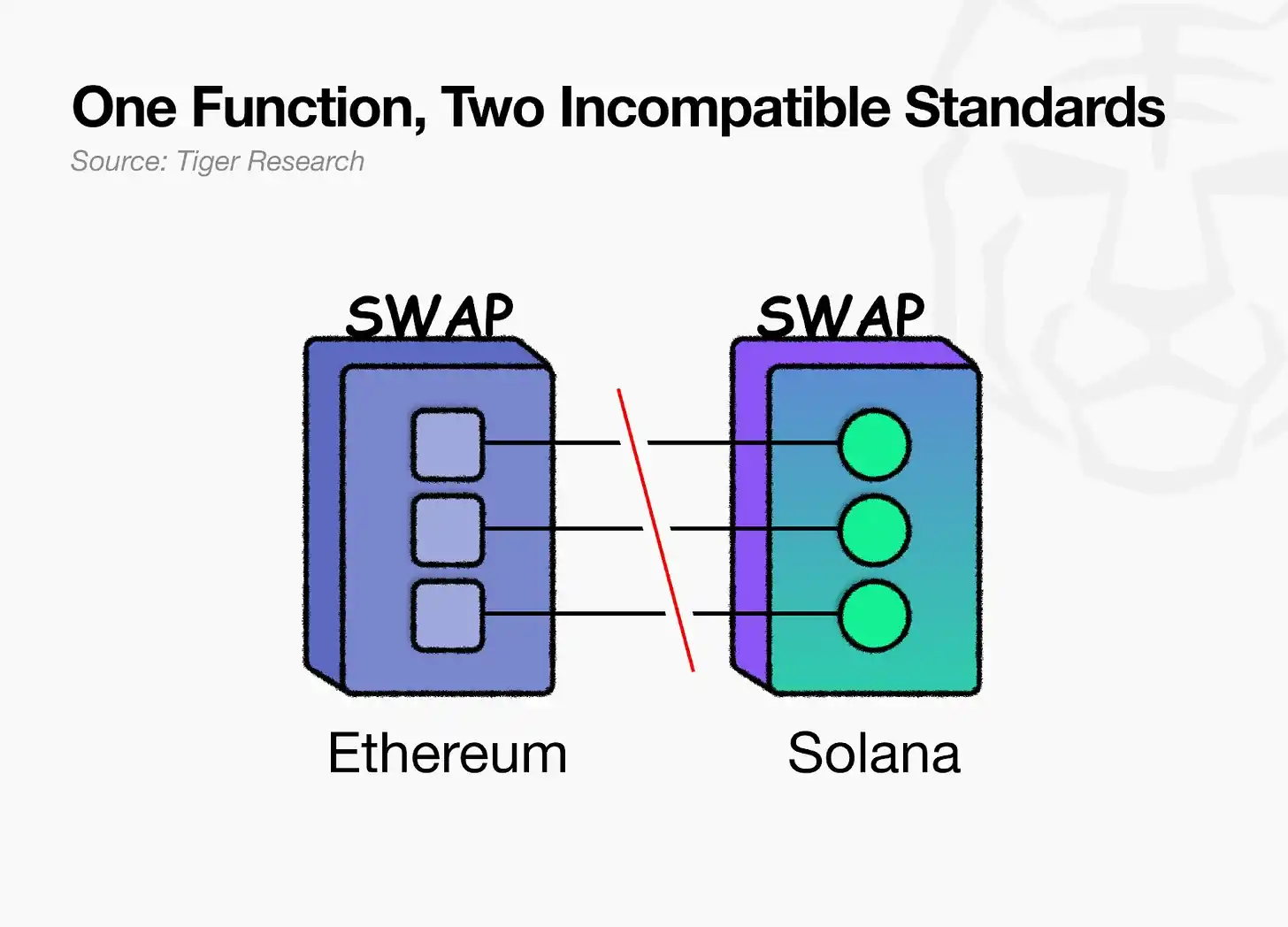
Using Legos as an analogy: Ethereum's bricks are square, Solana's bricks are round. Both have their merits, but their specifications are inherently incompatible. Even if you want to connect Ethereum's lending application with Solana's trading application, they can only stay in their own boxes, unable to拼接.

Fluent is that unified baseplate. As an Ethereum L2, it inherits Ethereum's security foundation while starting anew at the execution layer. Architecturally, Fluent is similar to Ethereum L2s like Arbitrum and Base, until the execution phase where the real difference emerges.
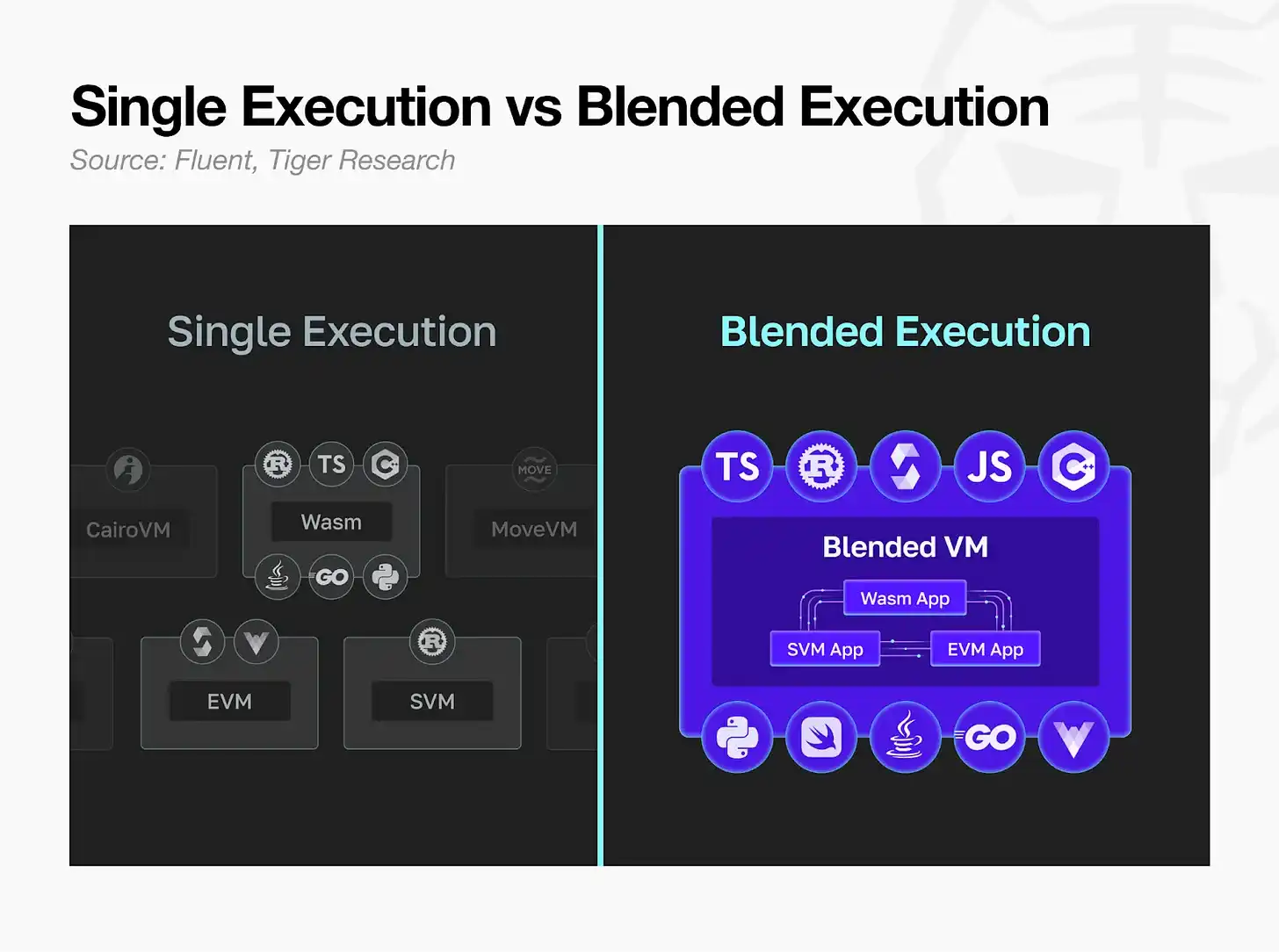
There is only one difference: inside Fluent, contracts written for EVM, SVM, and Wasm coexist on the same chain, sharing the same state. Wasm (WebAssembly) was originally designed to run high-performance programs in browsers, capable of converting code written in various languages like Rust, C++, and TypeScript into a unified, universal format.

Fluent uses Wasm as a medium to compile all contracts into a common format called rWasm (reduced Wasm). Regardless of whether the bricks are square or round, they are all converted to the same specification, allowing free assembly on the same baseplate. This means Solidity contracts can directly call functions of Rust contracts—no cross-chain bridges, no message relays, all within a single transaction. Fluent calls this "hybrid execution."

Currently, hybrid execution between EVM and Wasm is already running on the testnet; SVM support has completed functional development and is in the performance optimization phase.

3. Speaking with Prints

A question arises: if you build a good chain, will it automatically attract quality applications?

The answer: No.
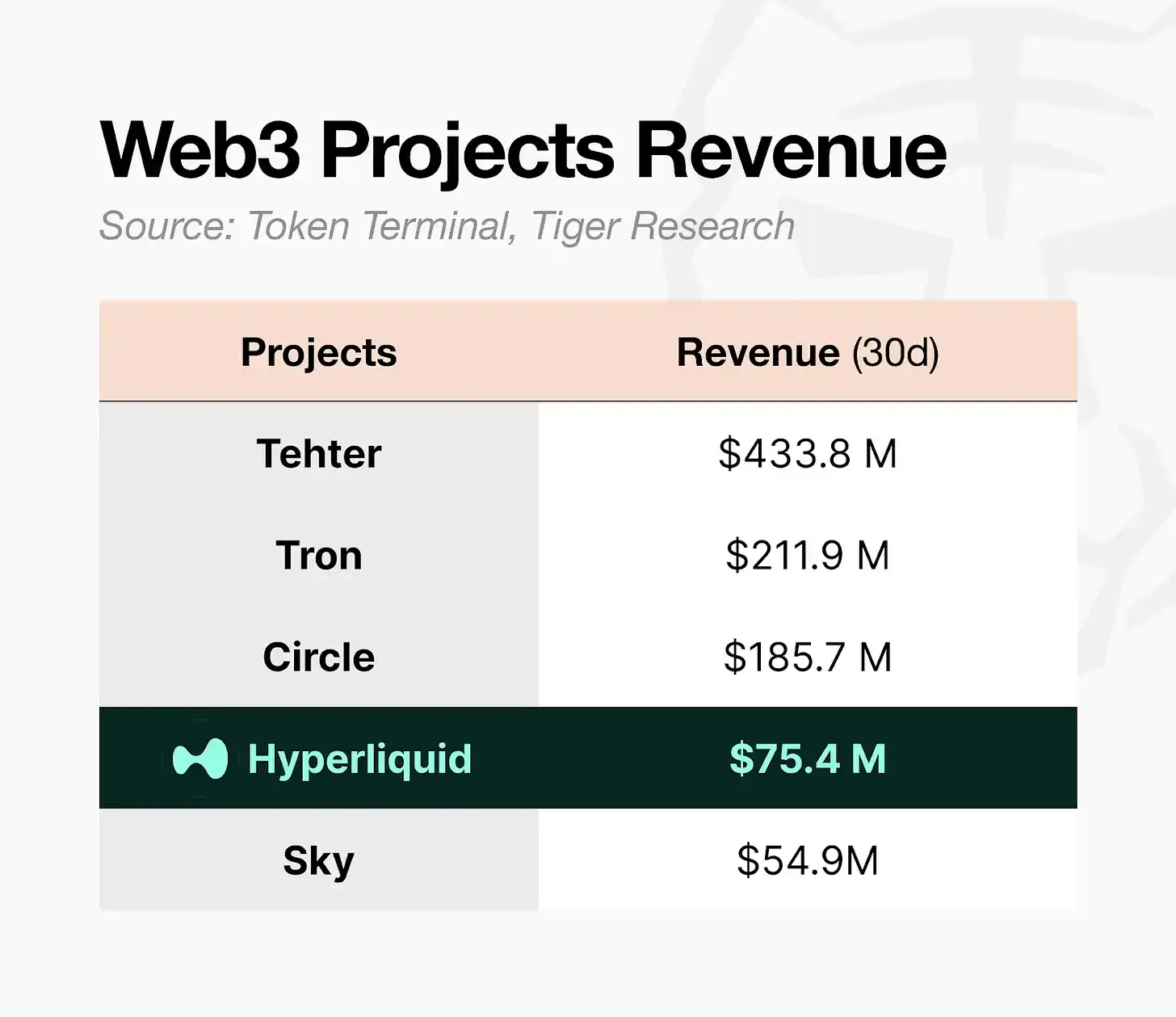
Hyperliquid is a vivid example. The team's self-built perpetual contract DEX is among the most dazzling success stories in crypto. The Web3 market was like night and day before and after Hyperliquid's emergence. Previously, teams relied on subsidy programs, recruiting external developers everywhere to build flagship applications; afterwards, a new paradigm quietly took shape: build it yourself, and let the results speak for themselves.

Following this trend, Fluent is building a product called Prints. Prints is a "reputation aggregator" that gathers scattered credit data from across the internet, identifying who are real users and who is trustworthy. In short, it is a reputation integration platform for the information finance era, consolidating ratings from multiple platforms into one place for a clear overview.
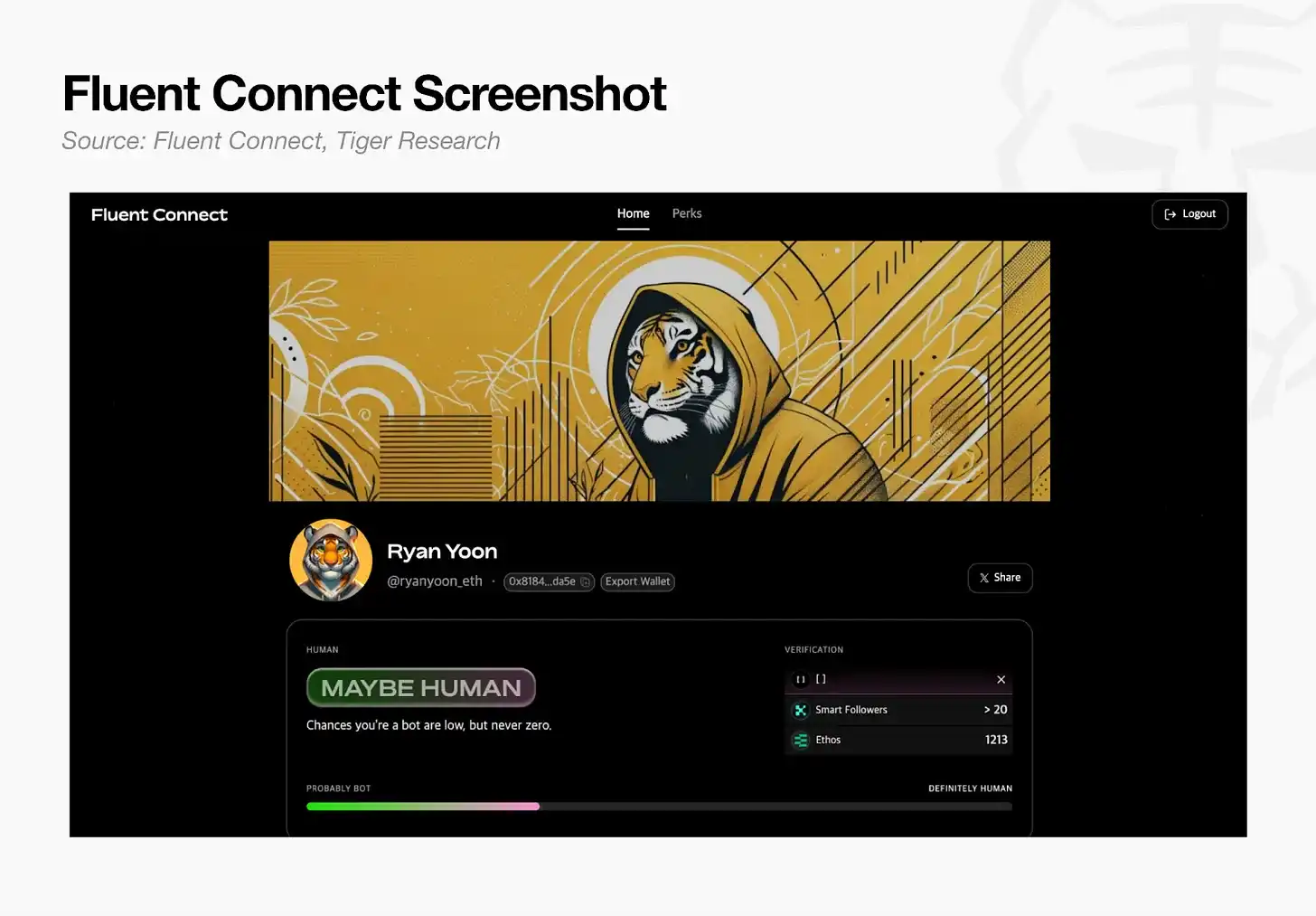
Currently, Prints has integrated Ethos Trust Score, Kaito Smart Follower data, and Talent Protocol developer ratings. A single indicator is easily manipulated, but forging data across multiple dimensions simultaneously is exponentially more difficult.

For users, Prints is a Web3 reputation resume—on one page, proving their credibility in various fields to the world. For developers, it is a reputation tool that can be directly embedded into applications.

On top of Prints, Fluent has also built Fluent Connect: developers can call Prints' reputation data to filter users matching specific profiles and定向发放 early access or token benefits through the "Perks" function. Essentially, it is a精准匹配 platform connecting developers with real users.
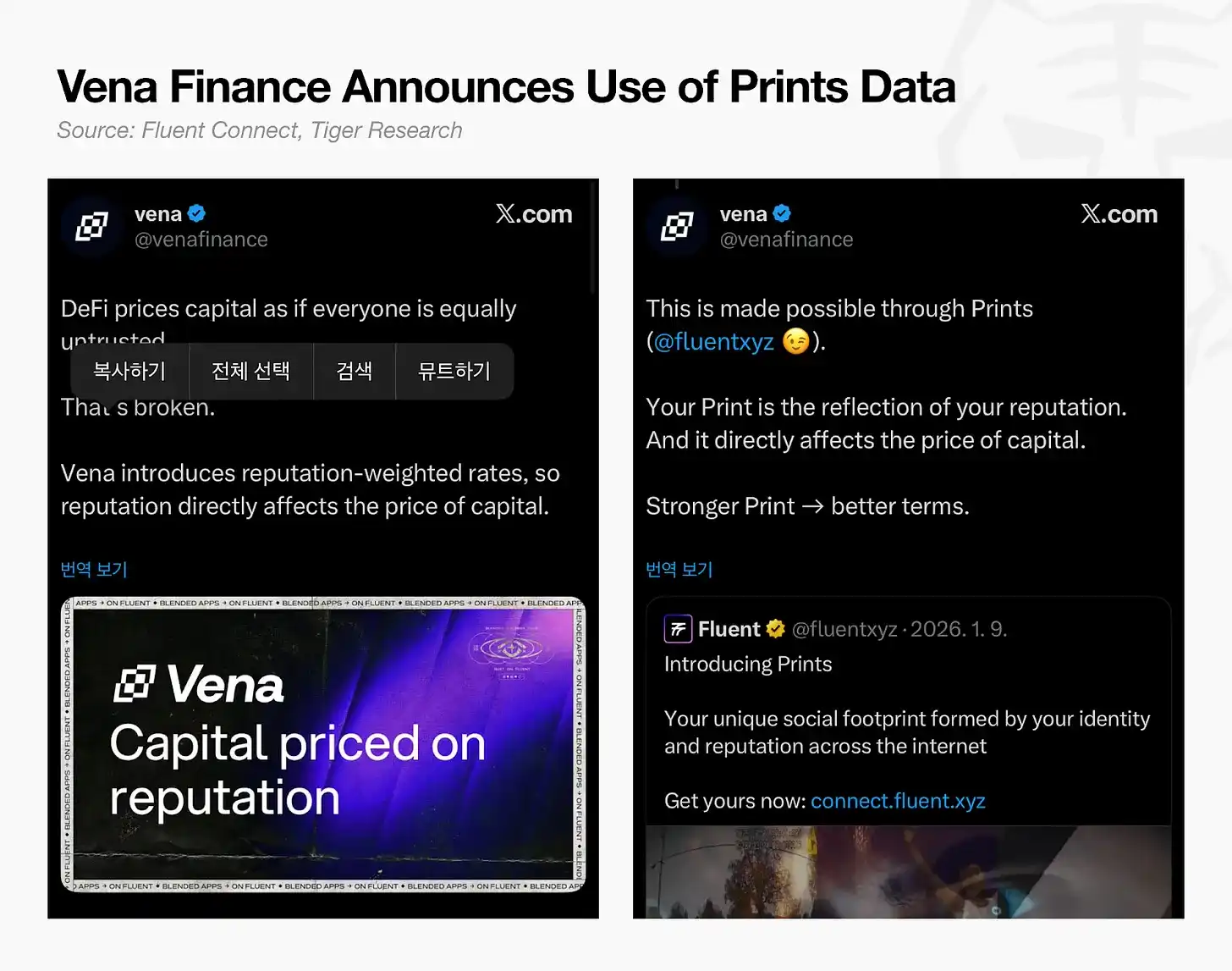
Third-party adoption is already emerging. Vena Finance announced it will introduce a reputation-based interest rate mechanism using Prints data, offering more favorable lending terms to high-credit users. Since its launch, the service has attracted about 40,000 registered users, and the developer API is under active development.

Of course, Prints currently relies heavily on external services and lacks its own reputation signals. To弥补 this shortcoming, Fluent has established an internal feedback scoring system and plans to gradually incorporate more dimensions of data, such as prediction market performance, yield strategy history, and AI Agent reputation.

4. Ecosystem Landscape

Prints is still growing and needs time to mature into a complete reputation system. Fluent is not waiting idly but is advancing in parallel—building its ecosystem by incubating external developers. This mission is carried out by Fluent's own accelerator program: Blended Builders Club (BBC).
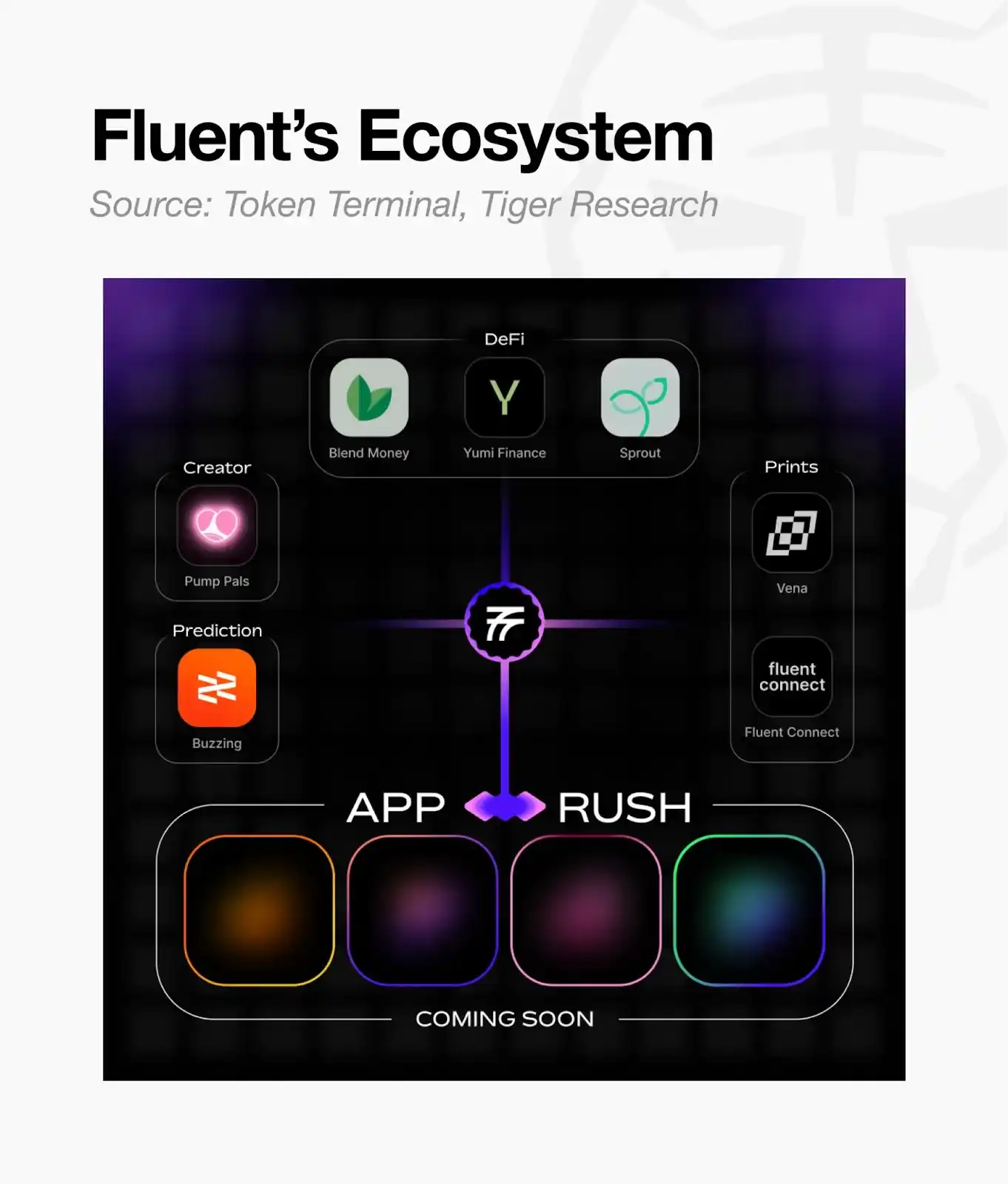
The first five selected teams are:

  • Pump Pals: A social trading platform making community-driven collaborative trading a reality.
  • Sprout: An automated yield optimization platform that intelligently matches investment strategies to user risk preferences.
  • Buzzing: A prediction market platform where users can create markets and place bets freely.
  • Yumi Finance: On-chain credit infrastructure embedding credit scores into crypto cards, supporting buy-now-pay-later.
  • Blend Money: An on-chain savings platform where users deposit in local currency, and the system automatically executes yield strategies and currency hedging.

Among them, PumpPals, Sprout, and Buzzing have completed user testing on the testnet. It is worth noting that Fluent has a different定位 for its testnet. On most chains, testnets are merely breeding grounds for airdrop farming: users mechanically repeat meaningless operations, and teams misinterpret inflated data as real demand.

Fluent redefines the testnet as a "feedback collection field": users' real opinions go directly to development teams, driving product iteration; users providing high-quality feedback accumulate reputation value in Prints and get priority access to subsequent benefits. Applications are not launched all at once but take turns every few weeks, ensuring each team receives sufficient and focused feedback.
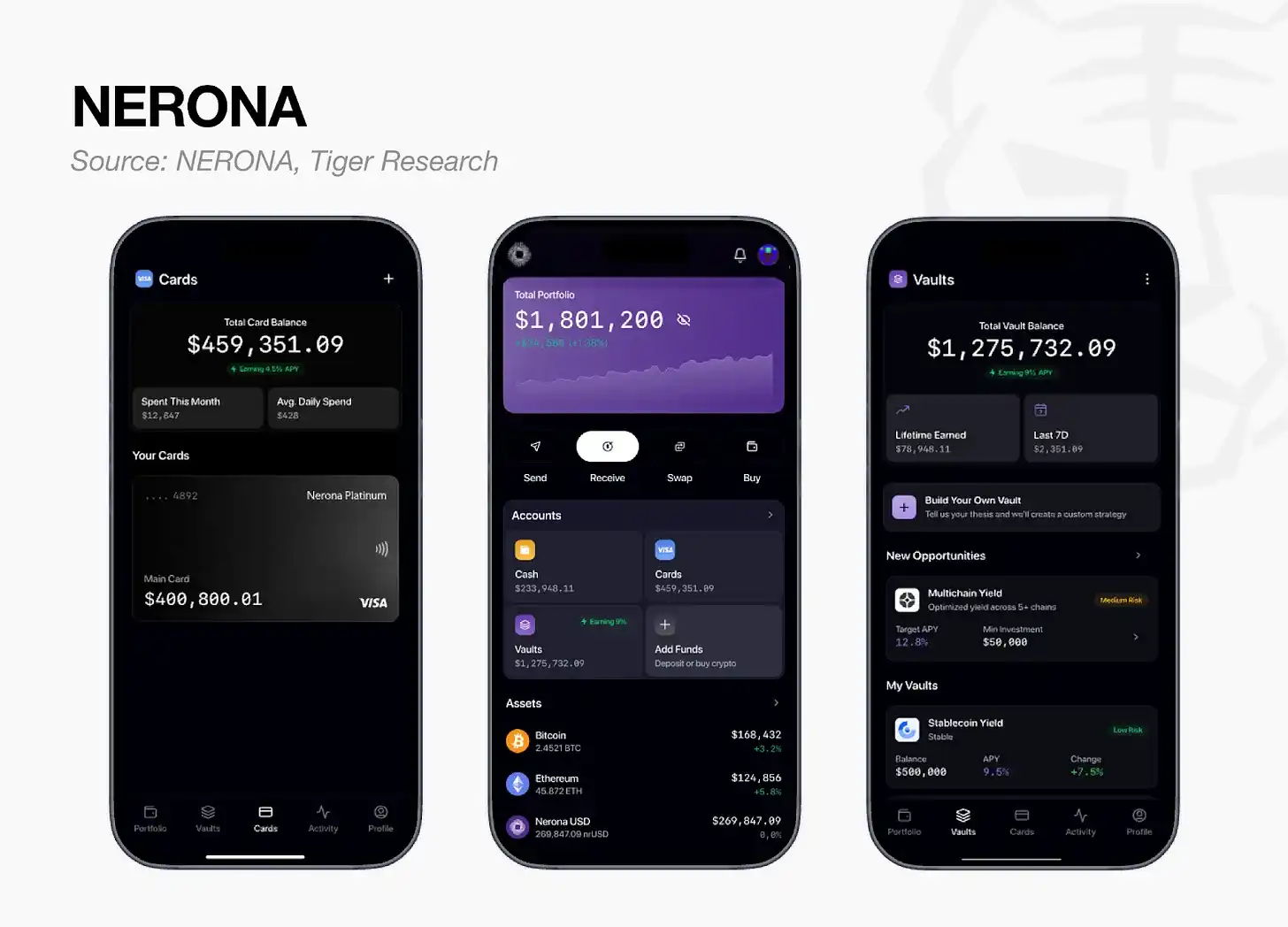
Beyond BBC, more forces are emerging in the ecosystem. Nerona is an on-chain asset management platform integrating mobile apps, crypto cards, stablecoin yields, and lending functions. Previously, these functions were scattered, and funds were often idle; Nerona整合 them, keeping funds constantly working. Combined with Prints' reputation data, the platform can provide differentiated interest rates and service terms based on user credit profiles—similar to Vena Finance's reputation-based interest mechanism.

5. The Blueprint Fluent is Drawing

Fluent is advancing three things simultaneously.

First, the chain itself. Hybrid execution gives EVM, SVM, and Wasm applications the ability to combine freely on the same chain. The technical direction is clear, and EVM-Wasm hybrid execution is already running stably on the testnet. However, SVM integration is still in the optimization phase, and whether the three virtual machines can cooperate seamlessly in the mainnet environment remains to be verified.

Second, Prints. The design philosophy of aggregating multi-dimensional reputation signals and cross-verifying is convincing—a single indicator can be faked, but forging multiple dimensions simultaneously is much harder. However, the currently integrated signal dimensions are still limited and mostly rely on external services. Whether Prints can develop its own reputation signals and form an internal verification闭环 needs time to tell.

Third, the ecosystem. BBC is nurturing developers, and projects like Vena Finance and Nerona are experimenting with linking reputation to financial terms. But most projects are still in early stages, some even conceptual. How each achieves real user growth仍需继续观察.

Fluent is still early, but from the start, it has designed the chain, product, and ecosystem as an integrated structure, which itself outlines the雏形 of the final form. Early execution has shown initial results: hybrid execution is running on the testnet, and services based on Prints have begun to land.

In the last cycle, dozens of L2s emerged one after another, but most only relied on performance numbers for show, ultimately becoming deserted chains. Whether Fluent can escape this fate will be honestly answered by the real user numbers and on-chain activity after the mainnet launch.


Related Questions

QWhat is the core innovation that Fluent is bringing to blockchain infrastructure?

AFluent's core innovation is 'hybrid execution,' which integrates EVM, SVM, and Wasm on a single chain, enabling seamless cross-VM composability without the need for bridges.

QHow does Fluent's hybrid execution technology work to enable cross-VM composability?

AFluent compiles contracts from different VMs (EVM, SVM, Wasm) into a common format called rWasm (reduced WebAssembly), allowing them to share the same state and interact directly within a single transaction on the same chain.

QWhat is Prints, and what role does it play in Fluent's ecosystem?

APrints is a reputation aggregation layer built by Fluent that consolidates trust and credibility data from various sources (e.g., Ethos, Kaito, Talent Protocol) to identify real users and provide a unified Web3 reputation profile.

QHow is Fluent addressing the challenge of attracting quality applications to its chain?

AFluent is building its own ecosystem through initiatives like the Blended Builders Club (BBC) accelerator program and tools like Prints and Fluent Connect, which help developers target and reward real users based on reputation data.

QWhat are some of the applications or projects currently being built on Fluent's testnet?

AProjects on Fluent's testnet include Pump Pals (social trading), Sprout (automated yield optimization), Buzzing (prediction markets), Yumi Finance (on-chain credit), and Blend Money (on-chain savings platform).

Related Reads

Will the Fed Still Cut Interest Rates? Tonight's Data Is Crucial

The core debate surrounding the Federal Reserve's potential interest rate cuts is intensifying amid geopolitical conflict and rebounding inflation. The key question is whether high energy prices will cause persistent inflation or weaken consumer demand enough to force the Fed to cut rates. Citigroup presents a bullish case for cuts, arguing that oil supply disruptions from the Strait of Hormuz are temporary and will not lead to lasting inflationary pressure. They point to receding bond yields and oil prices as evidence the market is pricing in a short-lived shock. Citi's data also shows tightening financial conditions, a stabilizing labor market, and healthy tax returns, supporting their view that the path to lower rates remains open. Conversely, Deutsche Bank offers a starkly contrasting, more hawkish outlook. They argue the Fed's current policy is already neutral and expect rates to remain unchanged indefinitely. Their view is based on stalled disinflation progress and a shift toward more hawkish rhetoric from key Fed officials like Waller, who cited risks from prolonged Middle East conflict and tariffs. Other officials, including Williams and Hammack, signaled rates would likely stay on hold for a "considerable time." The market pricing has shifted dramatically, now forecasting zero cuts in 2026. The imminent release of the March retail sales "control group" data is highlighted as a critical test. This metric, which excludes gas station sales, will reveal if high gasoline prices are eroding consumer spending in other areas. A weak reading could support the case for imminent rate cuts, while a strong one would bolster the argument for the Fed to hold steady. This data is pivotal for determining the near-term policy path.

marsbit3m ago

Will the Fed Still Cut Interest Rates? Tonight's Data Is Crucial

marsbit3m ago

The Second Half of Macro Influencer Fu Peng's Career

Fu Peng, a prominent Chinese macroeconomist and former chief economist of Northeast Securities, has joined Hong Kong-based digital asset management firm Bitfire Group (formerly New Huo Group) as its chief economist. This move, announced in April 2026, triggered an 11% surge in Bitfire's stock price. Fu, known for his accessible macroeconomic commentary and large social media following, will focus on integrating digital assets into global asset allocation frameworks, particularly combining FICC (fixed income, currencies, and commodities) with cryptocurrencies for institutional clients. His career includes roles at Lehman Brothers and Solomon International, with significant influence gained through public communication. However, in late 2024, Fu faced temporary social media bans after a controversial private speech at HSBC on China's economic challenges, though he denied regulatory sanctions. He later left Northeast Securities citing health reasons. Bitfire, a licensed virtual asset manager serving high-net-worth clients, seeks to build trust and attract traditional capital through Fu’s expertise and credibility. The partnership represents a strategic shift for both: Fu enters the crypto sector after a traditional finance peak, while Bitfire aims to leverage his macro framework for institutional adoption. Outcomes remain uncertain regarding capital inflows and compatibility within corporate structure.

marsbit1h ago

The Second Half of Macro Influencer Fu Peng's Career

marsbit1h ago

Trading

Spot
Futures

Hot Articles

What is USDC(WORMHOLE)

USD Coin (Wormhole): A Comprehensive Overview Introduction In the rapidly evolving world of cryptocurrencies, USD Coin (Wormhole), referred to as $USDC(Wormhole), stands out as a pioneering solution within the DeFi (Decentralized Finance) landscape. Operating on several blockchain platforms, including Solana, USD Coin (Wormhole) is more than just a digital representation of the United States dollar. It embodies the innovative spirit of modern finance, enabling seamless cross-chain transactions and enhanced interoperability among diverse blockchain ecosystems through the advanced Wormhole protocol. What is USD Coin (Wormhole)? USD Coin (Wormhole) is a tokenized version of the US dollar designed to facilitate frictionless transactions across different blockchain networks. Its primary aim is to bolster liquidity and enhance the functionality of the DeFi ecosystem. By leveraging the Wormhole protocol, which establishes a robust cross-chain communication network, users can effortlessly transfer USDC tokens across various platforms. This cross-chain capability marks a significant advancement in cryptocurrency use, promoting a more interconnected and efficient ecosystem where assets can flow freely between different blockchains. The value proposition of USD Coin (Wormhole) lies not only in its stability, being pegged to the US dollar, but also in its ability to bridge gaps between disparate blockchain environments. This innovative approach fosters a greater level of participation among users and developers, paving the way for new and exciting applications within decentralized finance. Who is the creator of USD Coin (Wormhole)? The origins of USD Coin (Wormhole) are intricately tied to the Wormhole network, which was developed by Jump Crypto. While specific individual creators are not prominently documented, Jump Crypto is notable for its involvement in advancing blockchain technology and supporting its applications in finance. By creating the Wormhole network, Jump Crypto has played a vital role in promoting cross-chain asset transfers, enhancing the efficiency and diversity of cryptocurrency usage. Who are the investors of USD Coin (Wormhole)? The success of USD Coin (Wormhole) is supported by investments from several notable funds and organizations within the cryptocurrency realm. Key investors include: Coinbase Ventures: A prominent venture capital arm backed by one of the leading cryptocurrency exchanges in the industry, Coinbase Ventures provides essential capital and strategic support to promising blockchain projects. Arrington XRP Capital: Specializing in digital assets, Arrington XRP Capital recognizes the potential of innovative projects like USD Coin (Wormhole) and has invested accordingly to back its development. Jump Trading: As the parent organization of Jump Crypto, Jump Trading brings not only investment but a wealth of expertise in trading technology and market dynamics to bolster the Wormhole project. How Does USD Coin (Wormhole) Work? The operational framework of USD Coin (Wormhole) is intricately designed to facilitate effective cross-chain transactions, maximizing security and efficiency. Here’s a simplified overview of how it functions: Asset Locking: When a user wishes to transfer USDC from one blockchain to another, they first lock their tokens on the source blockchain. This process ensures that the assets are secure and are set to be either burned or moved later. Token Minting: After the tokens are locked, an equivalent amount of USDC is minted on the destination blockchain. This provides the user with access to their funds on a new platform, reflecting the flexibility that the Wormhole protocol enables. Cross-Chain Transfer: The Wormhole protocol efficiently facilitates the entire transfer process. It ensures that once the USDC is minted on the destination chain, the equivalent tokens are burned on the source chain. The result is a seamless transfer of value between two distinct blockchain environments. This cross-chain methodology ensures that transactions remain secure and transparent, significantly enhancing liquidity within the different DeFi ecosystems. Timeline of USD Coin (Wormhole) Understanding the evolution of USD Coin (Wormhole) provides vital context for its significance in the cryptocurrency arena. Here’s a timeline highlighting important milestones in the project’s history: 2021: The Wormhole project is launched, establishing a framework for cross-chain asset transfers and setting the stage for the development of USD Coin (Wormhole). 2022: The Wormhole network experiences a significant challenge with a security breach that results in a $325 million theft. However, the incident is later addressed and refunded by Jump Crypto, showcasing the project’s commitment to security and transparency. 2023: USD Coin (Wormhole) integrates with Circle’s Cross-Chain Transfer Protocol (CCTP), enhancing its capabilities for cross-chain transfers and further solidifying its place within the DeFi ecosystem. 2024: Ongoing development and expansion of the Wormhole network continue, aimed at increasing the utility and reach of USD Coin (Wormhole) as well as enhancing its operational framework. Key Features The success of USD Coin (Wormhole) can be attributed to several key features that differentiate it from other cryptocurrency offerings: Cross-Chain Interoperability At the core of USD Coin (Wormhole) is its ability to facilitate seamless transfers across multiple blockchain networks. This interoperability serves as a cornerstone for decentralized finance, allowing various platforms to interact with each other, thereby accelerating the evolution of financial services. Security Wormhole employs a well-designed Guardian Network comprised of node validators that ensure secure cross-chain transactions. This collective oversight minimizes the risk of fraud and provides users with confidence that their assets are protected during cross-chain transfers. Liquidity Enhancement By enabling USDC to circulate freely across different blockchains, USD Coin (Wormhole) enhances liquidity in the DeFi ecosystem. This increased liquidity can foster more efficient trading, contribute to better pricing strategies, and improve the overall market dynamics encompassing various digital assets. Conclusion USD Coin (Wormhole) is a pivotal innovation in the blockchain space, reinforcing the capabilities of decentralized finance (DeFi) and establishing a more connected financial ecosystem. With its robust framework for cross-chain transactions, security features, and strong backing from reputable investors, USD Coin (Wormhole) is positioned to play a key role in the future of cryptocurrency. As the digital finance landscape continues to evolve, USD Coin (Wormhole) not only embraces the future of interconnectivity among blockchain networks but also reaffirms the power of tokenization and blockchain technology in transforming how we perceive and utilize value in a digital world. By navigating the complexities of cross-chain functionality, it demonstrates a sophisticated approach to enabling financial inclusivity and innovation in the world of cryptocurrencies.

1.2k Total ViewsPublished 2024.04.01Updated 2024.12.03

What is USDC(WORMHOLE)

What is W$C

World$tateCoin ($W$C): A Comprehensive Exploration of the Emerging Cryptocurrency Project Introduction In the ever-evolving landscape of cryptocurrencies, World$tateCoin ($W$C) has emerged as a project that aims to harness the power of web3 technologies to create a distinctive digital ecosystem. As traditional models of online interaction undergo significant transformation, World$tateCoin seeks to establish itself in this budding third generation of the internet. This article will delve into the intricacies of World$tateCoin, providing an overview of the project, its objectives, and its potential impact on the web3 space. What is World$tateCoin ($W$C)? World$tateCoin ($W$C) is designed as a cryptocurrency that facilitates seamless transactions within a web3 environment. Aimed at creating a decentralized platform where users can interact with various web3 applications, $W$C intends to streamline user experience and enhance accessibility to digital services. While the project aspires to become an integral part of the web3 landscape, detailed insights into its specific objectives and use cases remain limited, raising questions regarding its potential role and utility in a rapidly advancing digital context. The essence of web3 revolves around decentralization and empowering users with greater control over their interactions online. World$tateCoin intends to align with these principles, although specific applications and functionalities of the currency are still under discussion within the community. Who is the Creator of World$tateCoin ($W$C)? In exploring the origins of World$tateCoin, information regarding its creator remains elusive. As of now, there is no publicly available data identifying the individuals or organizations behind the project. This obscurity may cast a shadow of uncertainty over the project’s credibility, but the commitment to innovation within the cryptocurrency framework could be a driving force for its adoption in the future. The lack of identifiable leadership may result in hurdles related to trust and transparency—elements that are crucial for establishing a strong community in the crypto space. Who are the Investors of World$tateCoin ($W$C)? Current research does not reveal any specific investors or backing organizations involved with World$tateCoin. It is not uncommon for emerging cryptocurrency projects to either attract discreet investments or operate in a minimalist financial structure during their initial phase. The ambiguity surrounding investment supports and funding methodologies could affect the project’s sustainability and growth prospects. When assessing new projects within the cryptocurrency domain, investors generally look for transparency regarding financial backing and support from established entities. The absence of this information might necessitate a cautious approach for potential users and stakeholders interested in the future of World$tateCoin. How Does World$tateCoin ($W$C) Work? The operational mechanics of World$tateCoin are grounded in the principles of decentralization, a hallmark of web3 technologies. By facilitating transactions directly between users without the intervention of intermediaries, $W$C is designed to enhance trust and efficiency. However, comprehensive documentation detailing the unique features and operational framework that distinguish World$tateCoin from other cryptocurrencies is markedly sparse. This lack of information complicates the understanding of how $W$C functions within the broader web3 ecosystem and what unique propositions it brings to users and developers alike. Nevertheless, the fundamental goal of allowing for decentralized transactions holds the promise of a more liberated financial landscape, should the project deliver on its aspirations of implementing robust mechanisms and user-friendly interfaces. Timeline of World$tateCoin ($W$C) Constructing a timeline that encapsulates the historical progression of World$tateCoin poses challenges due to an absence of significant documentation on key events and milestones. Nevertheless, an approximate sequence of hypothetical phases can be envisaged, constituting a path forward for the project: Initial Concept (Date Unknown): Conceptualization of the World$tateCoin framework in the broader context of web3 technologies. Development Phase (Date Unknown): Commencement of technical development and coding processes. Community Engagement (Date Unknown): Outreach to potential users and stakeholders to foster community interest in the project. Launch Target (Date Unknown): Announcing an expected launch date, contingent on the progress of development and testing phases. Due to the lack of substantiated dates and details surrounding these phases, stakeholders will need to remain vigilant and engaged with the project's communications for updates regarding its trajectory. Key Topics About World$tateCoin ($W$C) As the project unfolds, certain key subjects arise that embody the potential and aspirations of World$tateCoin: Decentralization: The core philosophy driving the project, aimed at fostering direct user interactions. Web3 Integration: The goal of mirroring web3 principles and enabling seamless user access to an array of digital services. Digital Currency: Positioned as a currency to facilitate internet-based transactions, World$tateCoin aims to inject additional liquidity into the web3 market. Challenge of Information Scarcity: The notable absence of detailed information regarding the project's foundations, creators, and operational methods, necessitating increased transparency from developers to build community trust. Conclusion World$tateCoin ($W$C) is positioned within an exciting yet uncertain terrain of cryptocurrency and web3 integration. While it aims to cultivate a decentralized environment, the limited availability of information regarding its creators, investors, and specific functionalities presents challenges for potential stakeholders and users. In the dynamic world of cryptocurrencies, transparency, engagement, and well-structured communication are vital for the success of projects such as World$tateCoin. As the landscape continues to evolve, stakeholders will be eager to see how the project can solidify its place within the web3 narrative and contribute to the ongoing transformation of the digital ecosystem.

1.0k Total ViewsPublished 2024.04.01Updated 2024.12.03

What is W$C

How to Buy W

Welcome to HTX.com! We've made purchasing Wormhole (W) simple and convenient. Follow our step-by-step guide to embark on your crypto journey.Step 1: Create Your HTX AccountUse your email or phone number to sign up for a free account on HTX. Experience a hassle-free registration journey and unlock all features.Get My AccountStep 2: Go to Buy Crypto and Choose Your Payment MethodCredit/Debit Card: Use your Visa or Mastercard to buy Wormhole (W) instantly.Balance: Use funds from your HTX account balance to trade seamlessly.Third Parties: We've added popular payment methods such as Google Pay and Apple Pay to enhance convenience.P2P: Trade directly with other users on HTX.Over-the-Counter (OTC): We offer tailor-made services and competitive exchange rates for traders.Step 3: Store Your Wormhole (W)After purchasing your Wormhole (W), store it in your HTX account. Alternatively, you can send it elsewhere via blockchain transfer or use it to trade other cryptocurrencies.Step 4: Trade Wormhole (W)Easily trade Wormhole (W) on HTX's spot market. Simply access your account, select your trading pair, execute your trades, and monitor in real-time. We offer a user-friendly experience for both beginners and seasoned traders.

5.3k Total ViewsPublished 2024.04.02Updated 2025.03.21

How to Buy W

Discussions

Welcome to the HTX Community. Here, you can stay informed about the latest platform developments and gain access to professional market insights. Users' opinions on the price of W (W) are presented below.

活动图片