Hyperliquid demand deepens as institutions chase staking yields – Just a fad?

ambcryptoPublished on 2026-06-27Last updated on 2026-06-27

Abstract

Hyperliquid's HYPE token is seeing structural demand growth driven by its priority fee mechanism and institutional staking. Since the mainnet launch, traders have burned over 21,000 HYPE in priority fees, with weekly burns increasing 45-fold. Adoption is broadening, with distinct fee payers growing from 14 to 130. Institutionally, Bitwise staked 1.775 million HYPE ($114M), signaling long-term conviction and reducing liquid supply. While 21Shares sold a small portion of its HYPE holdings, this appears to be isolated profit-taking rather than a broad trend. The combination of fee burns and staking is creating multiple, reinforcing demand sinks for HYPE, tightening its supply and supporting its long-term utility beyond speculation.

Hyperliquid’s priority fee mechanism is gradually evolving from a trading narrative to a structural source of demand for HYPE.

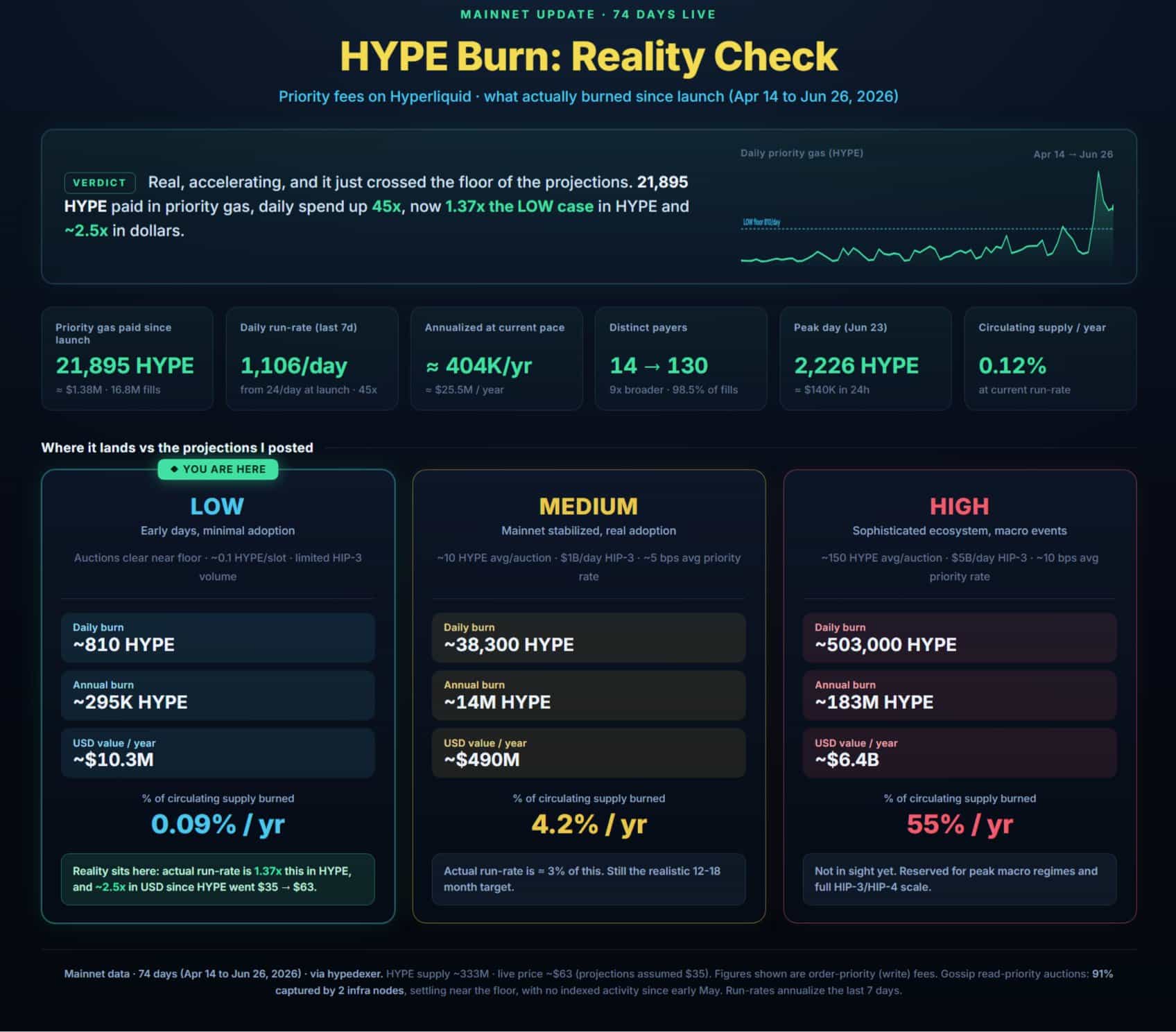
Since the 14th of April mainnet launch, Hyperliquid [HYPE] traders have burned around 21,895 tokens through priority fees. This move confirms that execution demand now creates a measurable supply sink.

More importantly, while weekly spending was limited to only 24 HYPE in the first week after the launch, it has increased drastically to 1,106 HYPE in the last seven days, marking a 45-fold increase.
Source: X

Meanwhile, distinct payers expanded from 14 to 130, suggesting adoption is broadening instead of remaining concentrated among a handful of participants. That shift matters because wider participation makes fee generation more resilient as network activity grows.

Thus, there is still considerable room for compound growth of demand alongside trading activity.

HYPE Staking signals long-term institutional conviction

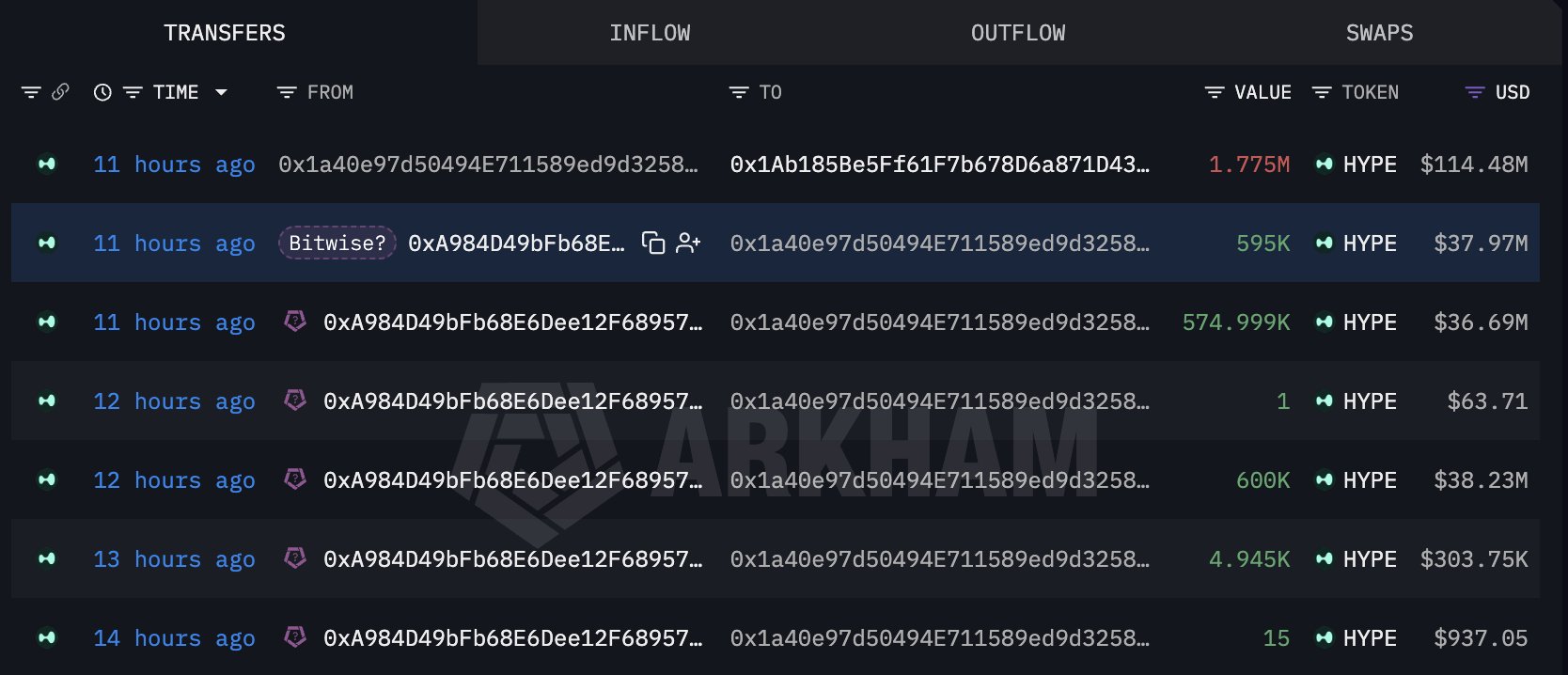
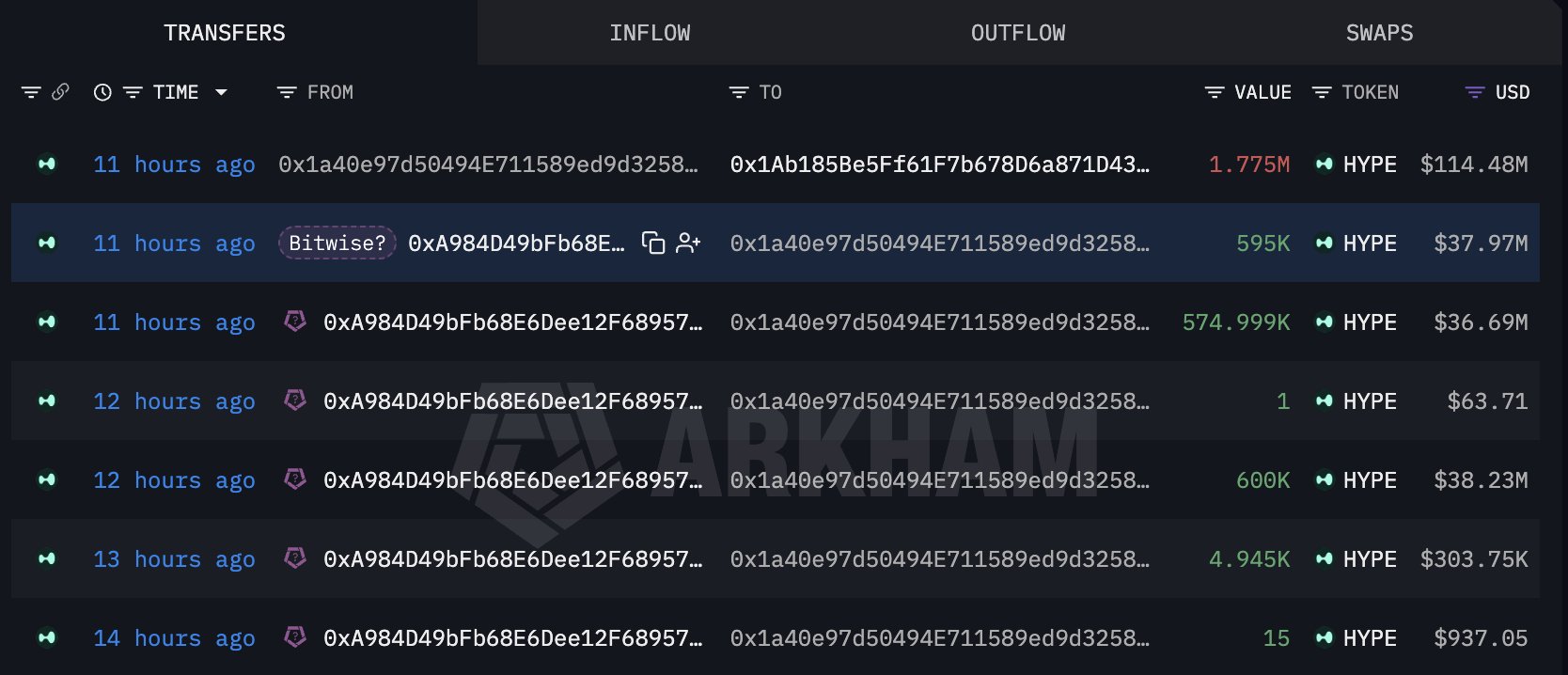
That expanding utility is now beginning to influence how institutions allocate capital. Building on the rise in fee-driven demand, Bitwise deposited 1.775 million HYPE, worth roughly $114 million, into Hyperliquid before staking the entire position.
Source: X

Institutional capital signals more than just mere accumulation. Institutions appear willing to prioritize the recurring staking yield from their investment as opposed to short-term liquidity.

Staking enables the transition from passively owning an asset to participating in a long-term network, which has reduced the amount of the asset that is immediately tradable.

Combined with the growing priority-fee burn, HYPE is developing multiple demand sinks that reinforce each other instead of relying solely on speculative buying.

Institutional positioning begins to diverge

Even so, institutional positioning is not entirely one-sided. While Bitwise increased its long-term commitment through staking, 21Shares became the first major asset manager to trim HYPE exposure.

According to Farside data, the firm sold roughly $1.8 million worth of HYPE, equal to nearly 3% of its ETF assets under management. Rather than signaling broad institutional capitulation, the move appears more consistent with portfolio rebalancing or profit-taking.

Unless similar reductions spread across other funds, isolated selling is unlikely to outweigh the growing commitment from long-term institutional holders.


Final Summary

  • Hyperliquid fee burns and staking continue tightening supply, reinforcing long-term demand.
  • HYPE institutional selling remains limited despite isolated profit-taking.

Trending Cryptos

Related Questions

QWhat is the main mechanism creating a structural demand sink for HYPE tokens according to the article?

AThe main mechanism is the priority fee system, where traders burn HYPE tokens to pay for faster transaction execution. This burn creates a measurable and growing supply sink as trading activity increases.

QHow has the weekly spending on HYPE priority fees changed since the mainnet launch, and what does this indicate?

AWeekly spending on HYPE priority fees has increased from 24 HYPE in the first week to 1,106 HYPE in the most recent seven days, marking a 45-fold increase. This indicates a drastic growth in trading demand and adoption of the fee mechanism.

QWhat significant action did Bitwise take regarding HYPE, and what does this signal about institutional intent?

ABitwise deposited 1.775 million HYPE (worth roughly $114 million) into Hyperliquid and staked the entire position. This signals long-term institutional conviction and a willingness to prioritize recurring staking yields over short-term liquidity.

QWhat was the action of 21Shares regarding HYPE, and how does the article interpret this move?

A21Shares sold roughly $1.8 million worth of HYPE, trimming about 3% of its ETF assets under management in the token. The article interprets this as likely portfolio rebalancing or profit-taking by one firm, rather than a signal of broad institutional capitulation.

QWhat are the two primary demand sinks for HYPE mentioned in the article that reinforce each other?

AThe two primary demand sinks are the growing burn of HYPE through priority fees (reducing supply) and the staking of HYPE by institutions (locking up supply to earn yields). These mechanisms work together to tighten the available supply and reinforce long-term demand.

Related Reads

Trading

Spot

Hot Articles

Discussions

Welcome to the HTX Community. Here, you can stay informed about the latest platform developments and gain access to professional market insights. Users' opinions on the price of S (S) are presented below.

活动图片