History's Only Asset with a 100% Win Rate After 4 Years of Holding

marsbitPublished on 2026-08-28Last updated on 2026-08-28

Abstract

**Title: The Only Asset with a 100% Win Rate Over Any 4-Year Holding Period** This article analyzes which major, freely-tradable assets have historically never produced a nominal loss over any rolling 4-year holding window. It concludes that only two distinct categories achieve this: ultra-low-risk contractual assets and Bitcoin. Among traditional risk assets, none maintain a perfect 4-year record. The S&P 500 had negative 4-year periods (e.g., 1929-1932: -64.8%). The Nasdaq 100 fell roughly 60% from 2000-2003. Gold saw a ~47.7% loss from 1981-1984. US real estate declined about 23.3% from 2007-2010. Even long-term US Treasury bonds (e.g., 2021-2024: -19.8%) and corporate bonds can produce 4-year losses due to interest rate and market price risks. In contrast, the first category achieving 100% nominal success includes assets like rolling 3-month US Treasury Bills, 4-year certificates of deposit (CDs), and US Treasuries held to maturity within 4 years. Their "guarantee" stems from contractual obligations and credit backing (e.g., FDIC insurance, US sovereign promise), not price appreciation. The sole exception in the high-risk category is Bitcoin. Analysis of daily data from 2010-2026 across 4,419 rolling 4-year windows shows a 100% positive return rate. The worst 4-year period (April 2021 to April 2025) still yielded a +32.6% total return (~7.3% CAGR). This record is unique because Bitcoin has no issuer, promises no cash flows, and has endured severe drawdowns (70-90%), y...

Author: Chen Xiaomeng

If we define the problem strictly:

Buying at any point in time and holding for a full 4 years results in a final nominal total return greater than 0.

Then the conclusion is very interesting:

Among mainstream, high-risk, freely tradable assets, no other asset can achieve a "historical rolling 4-year 100% profitable rate," except it.

But if we include low-risk fixed income assets, instruments like 4-year Treasury bonds, rolling short-term bonds, and term deposits can also do it. However, their "100%" is entirely a different matter.

I. S&P 500 Cannot Do It

Many people would instinctively think:

As long as you hold US stocks for 4 years, you'll make money, right?

Actually, that's completely wrong.

In the long-term data maintained by NYU Professor Damodaran, the total return of the S&P 500 includes dividends, covering the period from 1928 to 2025.

Here are a few very typical 4-year windows.

1929~1932

Annual returns were approximately:

  • 1929: -8.3%

  • 1930: -25.1%

  • 1931: -43.8%

  • 1932: -8.6%

Compounded over 4 years:

Approximately -64.8%.

In other words:

$1 million put in would be worth only about $350,000 after 4 years.

1999~2002

Even including the final surge of the dot-com bubble in 1999:

  • 1999: +20.9%

  • 2000: -9.0%

  • 2001: -11.9%

  • 2002: -22.0%

The total 4-year return is still approximately:

-24.4%.

2007~2010

Experiencing the financial crisis:

  • 2007: +5.5%

  • 2008: -36.6%

  • 2009: +25.9%

  • 2010: +14.8%

Even with the violent rebound in 2009 and 2010, the 4-year total is still:

Approximately -3.2%.

Therefore:

The long-term win rate of the S&P 500 is very high, but it is definitely not 100% over 4 years.

II. Nasdaq 100 Is Even Less Likely

Nasdaq's official data shows that during the dot-com bubble burst, the Nasdaq 100:

  • 2000: -36.4%

  • 2001: -30.8%

  • 2002: -38.9%

  • 2003: +48.5%

Even with the near 50% surge in the 4th year, the cumulative return for this entire 4-year cycle is still:

Approximately -60%.

Nasdaq's official data also notes that after the 2000 bubble peak, the index once declined cumulatively by about 83%.

So, the historical performance difference between BTC and tech stocks on this point is very clear:

Tech stocks can experience a deep trough that a full 4-year cycle cannot recover from.

Bitcoin, so far, has not.

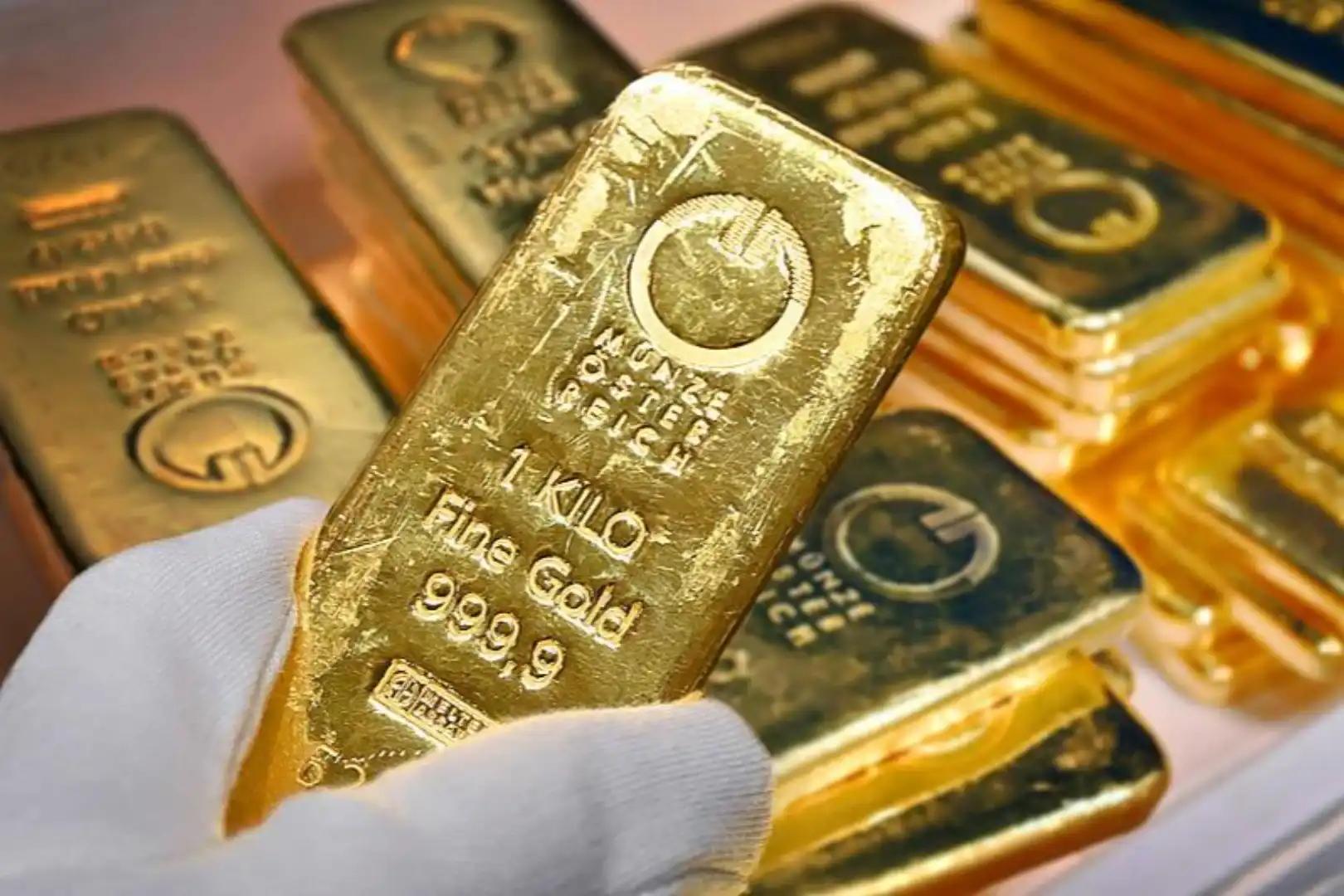
III. Gold Cannot Do It Either

Gold is often considered the classic long-term store of value asset, but over 4 years, it can also lose a lot.

For example, 1981~1984, according to Damodaran's data:

  • 1981: -32.6%

  • 1982: +15.6%

  • 1983: -16.8%

  • 1984: -19.4%

Cumulative over 4 years:

Approximately -47.7%.

Even more dramatic, research from the World Gold Council itself shows:

Gold experienced a nearly 12-year bear market from November 1987 to August 1999, with prices cumulatively falling about 48%.

So, although gold possesses very strong long-term monetary properties:

4 years absolutely does not equal a safe time horizon.

IV. Real Estate Is Not It Either

If we look at US real estate overall, not a single luckily purchased property, there are also negative 4-year cycles.

In Damodaran's data:

The approximate annual returns for real estate from 2007 to 2010 were:

  • 2007: -5.4%

  • 2008: -12.0%

  • 2009: -3.85%

  • 2010: -4.12%

Cumulative approximately:

-23.3%.

And there's also a visual illusion with real estate:

Houses don't trade daily like BTC and stocks, so the price curve appears smooth.

In reality, if there were a public market quoting your house price every day, real estate volatility would be much greater than we typically perceive.

V. Long-Term Treasury Bonds Surprisingly Cannot Do It Either

This is actually the easiest to misunderstand.

Many people say:

Aren't US Treasuries risk-free assets?

The key is to distinguish:

Treasury bonds held to maturity and trading a long-duration bond.

For example, the total return of the 10-year US Treasury:

  • 2021: -4.42%

  • 2022: -17.83%

  • 2023: +3.88%

  • 2024: -1.64%

Cumulative over 4 years approximately:

-19.8%.

The reason is the aggressive interest rate hikes starting in 2022; old bonds with low coupons saw their market prices plummet.

Therefore:

TLT, 10-year Treasury indices, long-term bond funds are not "four-year guaranteed win assets."

VI. Corporate Bonds Also Cannot Do It

Baa corporate bonds during the same 2021~2024 period:

  • +1.02%

  • -15.23%

  • +8.74%

  • +1.74%

Still, after 4 years approximately:

-5.3%.

So credit bonds also cannot achieve it.

VII. So What Can Truly Achieve "100% Nominal Profit Over 4 Years"?

This brings us to another category of assets.

Category 1: Rolling US Short-Term Treasury Bills

The 3-month T-Bill is a very typical example.

It doesn't make money through asset price appreciation, but by:

Buying at a discount → Redeeming at face value upon maturity.

For example, you spend $99.5 to buy a T-Bill with a $100 face value, and at maturity, the US Treasury gives you $100.

TreasuryDirect describes the T-Bill mechanism similarly: purchase price is typically below face value, receive the full face value at maturity, the difference is interest.

Damodaran's US T-Bill annual data from 1928 onward has been basically positive nominal returns, so continuously rolling over 3-month T-Bills naturally results in positive returns for any complete historical 4-year interval.

But note:

This is called:

Not losing dollar amount.

It does not mean:

Not losing purchasing power.

For example, with inflation at 8% and T-Bill returns at 2%, your account balance increases, but your actual purchasing power declines.

VIII. 4-Year Term Deposit / CD

Suppose you find today:

A 4-year fixed-rate CD at 4%

And you:

  • Do not redeem early;

  • The bank does not fail beyond insurance coverage;

  • The interest rate contract remains valid;

Then after 4 years:

The nominal dollar profit is essentially locked in on the day of purchase.

The US FDIC provides insurance for qualifying bank deposits and CDs, currently with a standard limit of:

$250,000 per depositor, per bank, per ownership category.

Therefore, the "100% win rate over 4 years" for such instruments essentially comes from:

Contract + credit protection.

Not from asset price appreciation.

IX. US Treasury Bonds Maturing Within 4 Years

This also qualifies.

For example, if you buy today:

A US Treasury bond maturing in 4 years with a yield-to-maturity of 4%

And hold it to maturity.

As long as the US government pays normally, you don't need to care at all about how the bond price fluctuates in the interim.

At maturity:

Principal + interest are paid as agreed.

Thus, the nominal return is basically locked in at purchase.

But if you buy a:

10-year Treasury bond, and must sell it in the 4th year

That's a different story.

So there's a very important distinction here:

A 4-year maturity bond ≠ Holding a long-term bond for 4 years.

The former can lock in returns.

The latter has duration risk.

X. The Only True Deity – Bitcoin

A Strategy report used BTC/USD daily data from July 2010 to August 2026 to statistically analyze rolling holding periods starting on every single day.

The result is:

Holding PeriodFinal Profitable ProportionWorst Total Return1 Year73.1%-83.6%2 Years84.0%-68.3%3 Years99.3%-34.7%4 Years100.0%+32.6%

That is to say, among the 4,419 rolling 4-year windows it analyzed, not a single one ended in a loss.

And historically, the worst 4-year period was:

April 16, 2021 → April 16, 2025

The total return was still:

+32.6%

Converted to an annualized rate approximately:

7.3% CAGR.

Two words – invincible~

XI. So What's Really Worth Comparing Is This Table

This leads to an interesting barbell phenomenon:

Assets that can achieve a 100% nominal win rate over 4 years are concentrated at two extremes.

One end is:

Extremely low-risk, contract-fulfillment type assets.

The other end is:

Assets like Bitcoin – high-growth, inherently short fiat currency, and still in the early stages of monetization.

And those traditional risk assets in the middle:

Stocks, gold, real estate, long-term bonds – none of them can do it.

XII. But the "100%" of BTC and the "100%" of Treasury Bonds Are Completely Different in Substance

This is the most crucial point.

T-Bill's 100%

Logic:

You know today exactly how much someone owes you in the future.

You primarily bear US sovereign credit risk.

BTC's 100%

Logic is completely different.

Bitcoin:

  • Has no issuer;

  • No one promises how much they will give you 4 years later;

  • Has no principal repayment;

  • Has no coupon payment;

  • Has no cash flow.

Therefore, Bitcoin's 4-year 100% comes entirely from:

The historical market price itself ultimately rising.

And precisely because of this, it is exceptionally abnormal.

XIII. The Final Investment Perspective

Bitcoin is likely one of the most prominent assets among modern major risk assets to possess the historical record of "any 4-year holding period achieving a positive nominal return."

But what's truly remarkable about it is not just the three numbers "100%".

It has repeatedly experienced 70%~90% crashes, yet still hasn't produced a single complete 4-year cycle with a negative return.

This is much more powerful than simply saying "Bitcoin goes up in the long term."

It also conversely illustrates a problem:

Being able to hold on is far more important than constantly trading.

Especially strategies like selling calls, using leverage, trading in waves, and yield enhancement are essentially ways to alter this very rare long-term return distribution.


Trending Cryptos

Related Questions

QAccording to the article, which major asset class has historically achieved a 100% win rate for any 4-year holding period starting from any day, among those discussed?

AAccording to the article, Bitcoin is the only major, freely-traded, high-risk asset that has historically achieved a 100% win rate for any rolling 4-year holding period.

QWhy can a 4-year Certificate of Deposit (CD) achieve a guaranteed positive nominal return, as mentioned in the article?

AA 4-year CD achieves a guaranteed positive nominal return through a contractual agreement with the bank and credit protection (like FDIC insurance in the US), which ensures the principal and specified interest are paid at maturity, assuming no default or early withdrawal.

QWhat is the fundamental difference between the 100% 4-year win rate of U.S. T-Bills and the 100% win rate of Bitcoin, as explained in the article?

AThe 100% win rate of U.S. T-Bills is based on a contractual promise from the U.S. government to repay a known nominal amount at maturity. Bitcoin's 100% win rate is not based on any promise or contract, but purely on the historical fact that its market price has risen enough within every 4-year window to overcome even severe interim drawdowns.

QBased on the article, why did long-term U.S. Treasury bonds (like 10-year Treasuries) fail to deliver positive returns in the 2021-2024 period?

ALong-term U.S. Treasury bonds failed to deliver positive returns in the 2021-2024 period primarily due to aggressive interest rate hikes starting in 2022, which caused the market price of existing bonds with lower coupon rates to fall significantly, offsetting their interest payments.

QWhat key investment insight does the article draw from Bitcoin's unique 4-year return profile?

AThe key investment insight is that, for Bitcoin, the ability to hold the asset for a sustained period (4 years) is far more crucial than attempting to time the market or use complex strategies like selling options or leverage, which can interfere with capturing its unique long-term return distribution.

Related Reads

Podcast Notes | After Watching 141 YouTube Investment Guru Videos, I Found Everyone's Bullish on These 5 Stocks

Podcast Summary: After analyzing 141 YouTube investment videos from 21 creators, five stocks were consistently highlighted: Alphabet (Google), Nvidia, Micron, CoreWeave, and Uber. However, the analysis reveals a key concentration: four of these (Google, Nvidia, Micron, CoreWeave) represent essentially the same AI-focused bet, with only Uber standing as an independent pick. The podcaster, Brian, provides his specific views and entry strategies for each. **Key Stocks & Brian's Stance:** - **Alphabet (Google):** Viewed as cheap based on profits but expensive based on sales. Brian is only buying a half-position via monthly investments at ~$362. - **Nvidia:** Models suggest it is undervalued (~$221 vs. a ~$290-330 fair value range), but significant client debt ($500B) raises risk. Brian holds a 12% position (his cap) and would not buy below $148. - **Micron:** Brian's model fair value is ~$1450, but it's a cyclical stock. He is buying only on schedule after it broke below its 50-day moving average (~$961), with a "story broken" line at $434. - **CoreWeave:** Has large contracts but faces scrutiny over demand sustainability, with Nvidia backing unsold capacity. Brian holds zero position due to limited history and structural concerns. - **Uber:** The only non-AI pick, valued cheaply on strong cash flow (~$100B annually). Brian's fair value is ~$109 (current price ~$67), and he is buying a full position. **Core Insight:** Most discussed topics (76/141 videos) were chips, cloud, and AI models. A portfolio built from such consensus may appear diversified but often constitutes a single, concentrated bet on AI. Brian concludes with a disciplined framework for any investment: compare to its own history, understand what the current price assumes, separate a good company from a good price, and pre-define your exit conditions.

marsbit4m ago

Podcast Notes | After Watching 141 YouTube Investment Guru Videos, I Found Everyone's Bullish on These 5 Stocks

marsbit4m ago

From 'Interest Rate Trading' to 'Dollar Debasement Trade', the Logic Behind Gold's Rise Has Changed

From "Rate Trade" to "Debasement Trade": The Logic Behind Gold's Rally Has Shifted Gold surged by 17% in August. According to UBS, the key development was a fundamental shift in the driving narrative mid-rally—from the traditional "rate trade" to a "debasement trade" focused on fiscal and dollar concerns. The bank breaks the summer rebound into two acts. The first was a technically-driven bounce from a solid base, supported by light positioning, resilient physical demand (especially from central banks like China's), and softening US economic data. The second act, triggered by the US Treasury's announcement to double long-term bond buybacks, marked a shift in gold's pricing logic. The market began viewing higher long-term yields as a sign of fiscal sustainability risks rather than economic strength, weakening gold's traditional inverse correlation with real rates. Gold's role evolved from an "opportunity cost" asset to a hedge against "fiscal credibility" and currency debasement, further aided by a weakening US dollar. UBS maintains a bullish outlook, noting rising upside risks to its long-term forecasts. While it lowered its 2026 year-end target to $4,675/oz, its 2027+ forecasts are unchanged, with an upside scenario target as high as $6,500/oz. The primary near-term risk is a hawkish Fed pivot, which could trigger a correction. However, UBS views any such dip as a buying opportunity, not a trend reversal, unless AI-driven growth allows for significantly higher rates. The report concludes that as gold is increasingly seen as a hedge against fiscal and currency risks, its strategic role in portfolios is changing. With overall gold allocations still low, there is significant room for further price appreciation if debt sustainability concerns drive sustained strategic buying.

marsbit5m ago

From 'Interest Rate Trading' to 'Dollar Debasement Trade', the Logic Behind Gold's Rise Has Changed

marsbit5m ago

Not Just Trading and Meme: These 5 Projects on Base Are Exploring New On-Chain Use Cases

Beyond Trading and Memes: 5 Projects Exploring New On-Chain Use Cases on Base While much of the crypto space is dominated by speculation, Base—Coinbase's Ethereum Layer 2 with over $5B TVL—is fostering innovative projects beyond the usual categories. Here are five notable examples: 1. **Hydrex**: A MetaDEX/AMM aggregator that pools native and external liquidity (e.g., from Uniswap, Morpho) to offer optimal swap rates. It features a ve(3,3)-style incentive model and single-signature transactions. 2. **SwapRoyale**: A fantasy trading competition app where users pay a fixed entry fee to trade with a virtual $100k portfolio in real-time contests. It gamifies trading with various tournament formats and has already distributed over $100k in prizes. 3. **BlockRun**: A permissionless AI gateway and payment layer for the on-chain agent economy. It allows autonomous systems to discover, pay for, and execute services using USDC on Base via the x402 micropayment standard, enabling pay-per-use AI. 4. **PixieChess**: A play-to-earn digital chess game where each piece is a collectible NFT with unique abilities that alter classic rules. Value is kept within the ecosystem, with a treasury funding real ETH prizes for winners. 5. **Tokensto**: A platform that lets users sell their unused AI API credits (e.g., from OpenRouter) for cash. It automatically prices credits and facilitates direct payouts to crypto wallets. These projects demonstrate that builders on Base are actively experimenting with consumer experiences, the agent economy, and novel gaming mechanics, suggesting the surface area for meaningful on-chain activity is broader than current narratives imply.

marsbit49m ago

Not Just Trading and Meme: These 5 Projects on Base Are Exploring New On-Chain Use Cases

marsbit49m ago

Trading

Spot

Hot Articles

How to Buy WIN

Welcome to HTX.com! We've made purchasing WINkLink (WIN) simple and convenient. Follow our step-by-step guide to embark on your crypto journey.Step 1: Create Your HTX AccountUse your email or phone number to sign up for a free account on HTX. Experience a hassle-free registration journey and unlock all features.Get My AccountStep 2: Go to Buy Crypto and Choose Your Payment MethodCredit/Debit Card: Use your Visa or Mastercard to buy WINkLink (WIN) instantly.Balance: Use funds from your HTX account balance to trade seamlessly.Third Parties: We've added popular payment methods such as Google Pay and Apple Pay to enhance convenience.P2P: Trade directly with other users on HTX.Over-the-Counter (OTC): We offer tailor-made services and competitive exchange rates for traders.Step 3: Store Your WINkLink (WIN)After purchasing your WINkLink (WIN), store it in your HTX account. Alternatively, you can send it elsewhere via blockchain transfer or use it to trade other cryptocurrencies.Step 4: Trade WINkLink (WIN)Easily trade WINkLink (WIN) on HTX's spot market. Simply access your account, select your trading pair, execute your trades, and monitor in real-time. We offer a user-friendly experience for both beginners and seasoned traders.

6.1k Total ViewsPublished 2024.03.29Updated 2026.06.02

How to Buy WIN

Discussions

Welcome to the HTX Community. Here, you can stay informed about the latest platform developments and gain access to professional market insights. Users' opinions on the price of WIN (WIN) are presented below.

活动图片