Decoding why UNI didn’t flinch after Vitalik’s Uniswap token sale

ambcryptoPublished on 2025-12-15Last updated on 2025-12-15

Abstract

Vitalik Buterin's sale of 1,400 UNI tokens, alongside other assets, did not trigger significant price volatility in Uniswap's UNI token. Despite the sell-side pressure, UNI traded in a tight range, showing market restraint rather than panic. The sale was interpreted as routine wallet management rather than a bearish signal, given its small size relative to market depth. Price action remained compressed within a falling wedge pattern, with weakening downside momentum and a bullish RSI divergence suggesting exhaustion. Key support held at $4.81, while liquidity clustered firmly around the $5.6 resistance level. UNI supply continued to leave exchanges, reducing immediate sell pressure, though the token struggled to break higher. Traders are focused on the $5.6 level; a reclaim could trigger a short squeeze toward $6, while failure risks a deeper pullback. A break above $10 is needed to invalidate the multi-year downtrend. Overall, liquidity dynamics, not headlines, are currently dictating UNI's price behavior.

Vitalik Buterin’s Uniswap token sale drew attention as UNI traded inside a tight range under persistent liquidity pressure.

High-profile on-chain activity often triggers volatility, yet Uniswap [UNI] showed restraint despite visible sell-side pressure. Price action stayed compressed, with volatility continuing to contract, pointing to hesitation rather than panic.

UNI remained capped beneath resistance as downside attempts lost momentum. Each dip slowed quickly, while upside bounces stalled just as fast. That balance reflected compression, not trend continuation.

Vitalik flow adds context

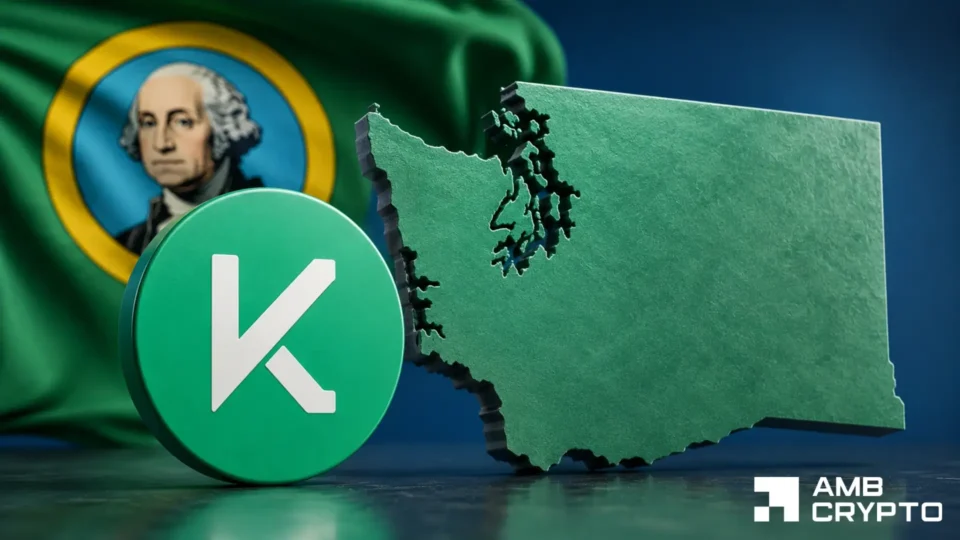
According to Lookonchain, Ethereum founder Vitalik Buterin sold 1,400 UNI worth $7.48K, 10,000 KNC worth $2.47K, and 40 trillion DINU about five hours earlier. The transfers returned a combined 16,796 USDC.

The UNI sale occurred during a period of dominant short liquidity. However, the transaction aligned with a familiar pattern tied to unsolicited tokens sent to Buterin’s public address.

That context mattered. The disposals reflected routine wallet housekeeping rather than directional conviction. The UNI amount stayed small relative to market depth, even as timing coincided with a liquidity-heavy zone.

Liquidity clustered near the $5.6 level, acting as both a magnet and firm resistance. Sellers defended that zone, while the sale failed to trigger any liquidation cascade. Control stayed intact.

Compression tightens as momentum fades

UNI pressed deeper into the final phase of a falling wedge. Price compression intensified as downside attempts weakened, pointing to exhaustion rather than a clean breakdown.

RSI printed a bullish divergence, showing momentum no longer confirmed lower prices. On higher timeframes, RSI remained below 40, reflecting longer-term weakness instead of panic.

Losing the $4.7 ascending support on higher timeframes could raise downside risk. For now, the $4.81 area stood as immediate 4-hour support, where buyers previously stepped in.

UNI supply continued leaving exchanges rather than entering them. That shift pointed to reduced immediate sell pressure despite the price remaining capped below resistance.

Fewer UNI tokens sat on exchanges, yet the price struggled to push higher as sellers defended key levels.

What it means for UNI

This left traders focused on the $5.6 liquidity band. A reclaim could flip short-term control and open room toward $6 as shorts reacted. Failure to reclaim keeps downside risk active, with deeper supports back in play.

A break above $10 remained the level that would invalidate UNI’s multi-year downtrend and reset higher-timeframe bias.


Final Thoughts

  • UNI’s muted response highlighted how liquidity, not headlines, currently dictates price behavior.
  • As compression deepened, traders may watch whether absorption turns into resolution.

Related Reads

The Crypto Scene Is Dead, Perpetual Swaps Are Eternal

The crypto industry is undergoing a fundamental shift. The era defined by minting novel, native digital assets (altcoins) is fading. These assets, lacking real-world cash flows or clear value, are losing relevance as attention and capital flow elsewhere. Two powerful external forces are reshaping the space. First, traditional assets like U.S. stocks, bonds, gold, and oil are being tokenized and traded on-chain. Second, the explosive growth of AI, with its tangible products, has overshadowed crypto's once-dominant "future narrative." This marks a critical pivot: crypto is transitioning from being a "factory for new assets" to becoming a "global conduit for existing assets." Its validated utility is not complex financial reinvention but efficient global settlement, transfer, and trading—the original promise of blockchain. Stablecoins like USDT and USDC exemplify this, offering faster dollar movement rather than replacing it. Consequently, native ecosystems like Ethereum face profound challenges. While still crucial infrastructure, ETH struggles to capture value as users interact with Layer 2s or trade traditional assets without needing to hold it. DeFi's grand narrative of rebuilding finance has narrowed to core needs like cheap transfers and deep liquidity. The true breakout innovation is the perpetual contract (Perp). It brilliantly bypasses the complexities of direct asset ownership (custody, compliance, dividends) by creating pure price exposure. Users can speculate on the price movement of *any* asset—NVIDIA, gold, oil—24/7, globally, and with leverage. This "price casino" model, while risky and ethically fraught, delivers unmatched liquidity and accessibility. Projects like Hyperliquid succeeded not by inventing new mechanics but by perfecting the timing and execution of this model. Key drivers included making on-chain Perps feel like centralized exchanges, post-FTX trust migration towards transparency, and rising demand to trade macro assets and equities round-the-clock. In conclusion, the crypto world's most enduring successes are the dollar (via stablecoins), Bitcoin, and trading. Its new frontier is not creating alternative assets but providing a seamless, perpetual trading layer—a new API—for the world's existing financial system. The age of native altcoins is over; the age of perpetual synthetic exposure has begun.

Odaily星球日报10m ago

The Crypto Scene Is Dead, Perpetual Swaps Are Eternal

Odaily星球日报10m ago

After Marvell's 32% Surge, the Chinese Chip Family Behind It Emerges

The stock price of Marvell Technology surged 32.5% on June 2nd, driven by NVIDIA CEO Jensen Huang highlighting its custom ASICs and optical interconnects as core to AI data center architecture. This event brought attention to the Chinese semiconductor family behind Marvell: the Dai siblings. The story centers on three siblings, all UC Berkeley graduates, whose three-decade entrepreneurial journey aligns with major semiconductor industry shifts. In 1995, youngest sister Dai Wei Li co-founded Marvell with her husband Sehat Sutardja and his brother, focusing on storage controllers. Eldest brother Dai Wei Min founded EDA company Ultima, later sold to Cadence, and later founded VeriSilicon (芯原) in China, becoming a leading semiconductor IP provider. Second brother Dai Wei Jin co-founded EDA firm Silicon Perspective (sold to Cadence) and GPU IP company Vivante, later acquired by VeriSilicon. The combined "Dai-Sutardja" family network extends beyond Marvell. Their ventures and investments form a comprehensive ecosystem for the post-Moore's Law, chiplet era. Key holdings include: Dream Big Semiconductor (AI SuperNICs, acquired by Arm), Alphawave (high-speed SerDes IP, acquired by Qualcomm), and Silicon Box (a chiplet advanced packaging foundry). VeriSilicon itself thrives on the AI ASIC and IP boom in China. Collectively, the family's AI infrastructure-related portfolio is estimated at over $22 billion. Their strategy represents a distinct path: building critical components for open standards and key manufacturing capacity in the chiplet era, rather than pursuing standalone AI chip dominance. While this path may not create the next NVIDIA, it has enabled repeated successful exits and sustained influence within the global semiconductor industry.

marsbit1h ago

After Marvell's 32% Surge, the Chinese Chip Family Behind It Emerges

marsbit1h ago

Microsoft is Afraid of Being Marginalized by AI Giants

Microsoft, once the defining force of the PC era, now faces a familiar challenge in the AI age: the risk of being relegated to a profitable but invisible infrastructure provider. This anxiety was laid bare at Build 2026, where CEO Satya Nadella unveiled a major strategic pivot. The catalyst was a quiet April agreement that dissolved Microsoft's exclusive licensing and cloud-hosting deal with OpenAI, its once-vital partner. This erased Microsoft's key AI moat. With OpenAI and Anthropic defining AI applications and gaining enterprise traction—even within Microsoft's own ranks—Nadella had to answer: without exclusivity, what is Microsoft's role? The answer was a suite of seven in-house AI models, a developer-focused AI workstation (Surface RTX Spark Dev Box), and, most crucially, the Agent 365 platform for enterprise AI governance. The models, notably targeting Anthropic's strengths in coding and enterprise, signal a defensive move. However, the broader strategy is to make the models themselves less decisive. Financially, Microsoft's AI revenue is strong, driven largely by Azure running others' models. Yet its user-facing products like Copilot show weak penetration and engagement. Microsoft earns infrastructure money but lacks direct user mindshare. Nadella's core fear is being "hollowed out." As OpenAI and Anthropic prepare for IPOs and gain financial independence, they may build their own infrastructure, threatening Azure's lucrative AI revenue stream. Microsoft's window is to entrench itself deeper: not as the model creator, but as the indispensable platform for securely deploying, managing, and governing all AI models within the enterprise through Agent 365. Build 2026 revealed Microsoft's bet: in the AI era, the ultimate power lies not in any single model, but in the enterprise "operating system" that controls them. Nadella is determined to ensure Microsoft is the driver of this new era, not just a passenger.

marsbit1h ago

Microsoft is Afraid of Being Marginalized by AI Giants

marsbit1h ago

Trading

Spot
Futures

Hot Articles

Discussions

Welcome to the HTX Community. Here, you can stay informed about the latest platform developments and gain access to professional market insights. Users' opinions on the price of S (S) are presented below.

活动图片