Cursor, Why Boarded Musk's Starship?

链捕手Published on 2026-06-17Last updated on 2026-06-17

Abstract

SpaceX announced its acquisition of AI programming startup Cursor's parent company, Anysphere, for $60 billion in an all-stock deal, just days after its record-breaking IPO. The move sent SpaceX's stock soaring, briefly making it the most valuable U.S. company. Cursor, founded in 2022 by MIT graduate Michael Truell and his classmates, is a popular AI coding assistant that allows developers to switch between models from OpenAI, Anthropic, and others. It saw explosive revenue growth, reaching a $4 billion annualized run rate in early 2026. However, its market share was eroded by the launch of competitor Claude Code from its key AI supplier, Anthropic. This dependence prompted Cursor to develop its own AI model, Composer, in early 2026. To scale Composer, Cursor needed immense computing power. In April 2026, it struck a deal with SpaceX, granting the latter an option to acquire it post-IPO. SpaceX exercised this option, offering Cursor access to its Colossus supercomputer, powered by hundreds of thousands of top-tier Nvidia AI chips. For SpaceX, the acquisition is a strategic move to bolster its AI capabilities, particularly for its xAI division, and advance its broader ambition of building orbital, solar-powered data centers. While the deal surprised some employees and investors given Truell's earlier stance on independence, it represents a high-stakes partnership. SpaceX CEO Elon Musk has projected the company could reach $1 trillion in revenue by 2030. For Truell, joining ...

Original Text丨Boyang, Tencent Technology

On June 16th, US local time, just four days after completing the largest IPO in history, SpaceX announced its first major acquisition following the listing.

According to documents filed with the US Securities and Exchange Commission (SEC), SpaceX will acquire AI programming startup Cursor's parent company Anysphere in an all-stock transaction valued at $60 billion. The deal is expected to close in the third quarter of 2026, subject to regulatory approvals.

Following the announcement, SpaceX's stock price surged by over 16% intraday, with its market cap once exceeding $2.94 trillion, briefly surpassing Microsoft. By the close, SpaceX had overtaken Amazon to become the fourth most valuable company in the US. From its IPO price of $135 per share, SpaceX's stock has accumulated gains of nearly 50%.

CNBC host Jim Cramer commented on this: "Buying SpaceX is essentially buying Musk's brain." He believes traditional valuation models struggle to measure Musk's ability to translate grand visions into commercial reality.

01 What is Cursor, and Why is it Worth $60 Billion?

Cursor is one of the hottest AI programming tools globally, co-founded in 2022 by Michael Truell and his MIT classmates Sualeh Asif, Arvid Lunnemark, and Aman Sanger. Headquartered in San Francisco, the company has about 700 employees and serves 60% of Fortune 500 companies.

Cursor's core product is an AI coding assistant that allows developers to flexibly switch between mainstream AI models from OpenAI, Anthropic, xAI, Google, etc. It can automatically generate, edit, and review code, directly competing with Anthropic's Claude Code and OpenAI's Codex.

In terms of revenue, Cursor's growth has been staggering. In November 2025, its annualized revenue surpassed $1 billion, roughly tenfold growth from a year earlier. It's reported that within the following three months, Cursor's annualized revenue doubled again to $4 billion. Currently, Cursor ranks 37th on the 2026 CNBC Disruptor 50 list.

However, according to Ramp spending data, Cursor's market share has dropped from 41% in June 2025 to around 26% in May 2026, while Anthropic's Claude Code now occupies about half of the market in this segment.

02 The Entrepreneurial Journey of a Prodigy

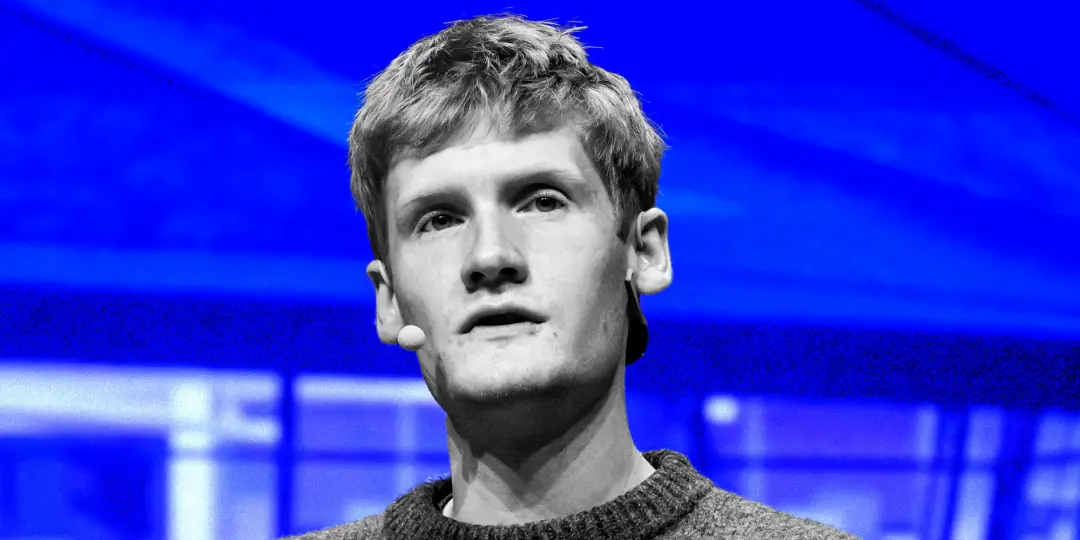
Cursor CEO Michael Truell

The story of Cursor begins with a quiet, red-haired teenager.

In 2019, as an 18-year-old MIT freshman, Truell faced a coding test expected to take an hour. He submitted his answers in under ten minutes. Tech investor Ali Partovi was the examiner that day, leading a program scouting top student coding talent. Partovi later had Truell test him, finding the teenager's code neat and concise, while his own answer sheet was a mess.

Growing up in New York with parents who were both journalists, Truell displayed exceptional programming talent from a young age. At 15, attending the prestigious private school Horace Mann School, he co-developed a programming game called Halite with classmates. The game taught coding basics by having players conquer grid territories, attracting thousands of middle and college students with no prior coding experience and earning him a $10,000 prize from a top math association.

At MIT, Truell majored in both Computer Science and Mathematics while incubating startup ideas. Claire Shorall, who mentored him in a startup bootcamp, recalls being impressed by his curiosity and humility. "I gave him some advice, but he clearly already knew his mind."

After graduating in 2022, Truell co-founded Anysphere with three MIT classmates, initially positioning it as a code editing platform. By building an enhanced version of Microsoft's open-source editor VS Code, they achieved monthly recurring revenue of $1 million within a year. Cursor officially launched in March 2023 and was quickly embraced by developers and enterprise users.

03 The "Strange" Relationship with Anthropic

Cursor's rise wasn't smooth sailing, with the biggest variable coming from its core AI supplier—Anthropic.

The two companies were highly interdependent: Cursor's product heavily relied on Anthropic's AI models, while Cursor's explosive growth once contributed about 40% to 50% of Anthropic's revenue. Both sides were aware of each other's importance.

However, before launching its own code editor Claude Code, Anthropic privately told Cursor's management that the product was more research-oriented and not a major commercial deployment. Yet Claude Code quickly swept through the developer community.

By February 2026, Claude Code's annualized revenue had grown to $2.5 billion, about $500 million higher than Cursor's revenue at the time. Many developers began posting on social media announcing they were abandoning Cursor for Claude Code. Meanwhile, Anthropic's previous severing of model access to Windsurf during its acquisition talks with OpenAI further heightened Cursor management's concerns about over-reliance on a single supplier.

On January 5, 2026, Truell held an all-hands meeting described by internal employees as "urgent," announcing that Cursor must develop its own AI model. His message was concise and powerful: We cannot fall behind. Cancel all unnecessary meetings, be ready for cross-team collaboration at any time. We must stay agile and adapt quickly.

Subsequently, Cursor launched its self-developed programming model suite, Composer, initially based on an open-source model from Chinese AI lab Moonshot. However, according to Cursor, in the Composer 2.5 version released in May, over 85% of the work was Cursor's own R&D (based on the Kimi K2.5 model). Cursor engineer Lucas Garza stated that with its low price and extremely fast response speed, Composer received an "extremely enthusiastic" response from developers.

04 Moving Closer to Musk: A Win-Win Gamble

Developing its own model required massive computing power, a weakness for Cursor. This spring, Truell found another founder with grand ambitions to fill this gap.

On April 21st, Truell posted on X in his typically concise style: "Excited to partner with the SpaceX team to scale Composer. A significant step on our journey to building the best AI platform for programming."

On the same day, SpaceX also publicly announced on X that it had secured an acquisition option from Cursor. SpaceX could choose to acquire Cursor for $60 billion in an all-stock transaction after completing its IPO. If SpaceX declined the acquisition, it would have to pay a $1 billion breakup fee and provide $8.5 billion worth of free computing resources.

Days after SpaceX successfully completed the largest IPO in history, SpaceX formally exercised the acquisition option, announcing the $60 billion acquisition of Cursor, fulfilling the "foreshadowing" planted in April.

The deal serves different purposes for both parties. Cursor gains access to SpaceX's Colossus supercomputer. This system is composed of hundreds of thousands of top-tier Nvidia AI chips. SpaceX, on the other hand, hopes to leverage Cursor's deep penetration among top software engineers to achieve a leapfrog advantage in the AI programming race. Musk's AI chatbot Grok currently lags behind mainstream models in programming; an xAI contractor once admitted Grok "is not good at programming."

After the announcement, many Cursor employees were caught off guard. After all, Truell had repeatedly expressed his intention to build Cursor into an "enduring company" and viewed selling as "a significant risk and a major gamble." Early investor Partovi, who wrote Cursor's first check, said he considered Truell the type of founder inclined to remain independent, "He has the ambition, confidence, and drive to go much further."

SpaceX stated that the Colossus supercomputer was its core bargaining chip to attract Cursor. "Cursor's leading product and distribution among top software engineers, combined with SpaceX's Colossus supercomputer with a million H100 compute equivalents, will enable us to build the world's most useful AI models."

05 A Larger Ambition: Satellite Data Centers and Trillion-Dollar Revenue

This acquisition also serves SpaceX's broader AI strategy. The company is seeking regulatory approval to deploy up to 1 million AI satellites, exploring solar-powered orbital data centers to handle ground computing tasks. Meanwhile, SpaceX has announced multi-billion-dollar cloud computing agreements with Anthropic and Google, significantly bolstering its pre-IPO revenue base.

However, Musk also stated on X that SpaceX reserves the right to cancel these agreements if Colossus computing power becomes constrained.

On June 14th, Musk posted that SpaceX "might achieve around $1 trillion in revenue by 2030." Compared to the company's $18.7 billion revenue in 2025, this would be a qualitative leap. In 2025, SpaceX reported a net loss of $4.9 billion, and the loss widened to $4.28 billion in the first quarter of this year.

For Musk, the goal is always clear. He wrote on X: "Whether it will become the best remains to be seen, but I will never give up. Never."

For Truell, this is perhaps the biggest test of his life: Can he deliver on the bet with Musk? "It's all a bit crazy," he said, "But we know how special this is—how unprecedented it is in history."

Related Questions

QWhat is Cursor, and why did SpaceX acquire its parent company Anysphere for $60 billion?

ACursor is a popular AI-powered programming tool that allows developers to switch between major AI models (like OpenAI, Anthropic, xAI) for code generation, editing, and review. SpaceX acquired its parent company, Anysphere, primarily to gain access to Cursor's leading product and its strong penetration within the elite software engineering community. In return, Cursor gains access to SpaceX's immense computing power (the Colossus supercomputer), which it needs to scale its self-developed AI models and compete more effectively.

QWho founded Cursor, and what was the key event that led to its accelerated growth in 2026?

ACursor was founded in 2022 by Michael Truell and his MIT classmates Sualeh Asif, Arvid Lunnemark, and Aman Sanger. A key event in 2026 was the competitive threat from Anthropic's Claude Code, which surpassed Cursor in revenue and market share. This prompted CEO Michael Truell to declare an urgent internal shift, leading Cursor to rapidly develop and launch its own AI model suite, Composer, to reduce dependency on external AI providers like Anthropic.

QWhat was the nature of the relationship between Cursor and Anthropic, and why did it become a problem?

AThe relationship was highly interdependent. Cursor relied heavily on Anthropic's AI models to power its product, and at one point, Cursor contributed about 40-50% of Anthropic's revenue. The problem arose when Anthropic launched its own code editor, Claude Code, which quickly became a major competitor, capturing about half the market. This, coupled with fears of being cut off from AI models (as happened to another company), forced Cursor to develop its own AI models to ensure business stability and independence.

QWhat specific strategic assets does SpaceX's Colossus supercomputer bring to the partnership with Cursor?

ASpaceX's Colossus supercomputer provides Cursor with access to a massive computing infrastructure comprising hundreds of thousands of top-tier Nvidia AI chips (H100 equivalents). This immense computational power is critical for Cursor to train, scale, and improve its self-developed Composer AI models efficiently, allowing it to compete in the high-stakes AI programming tool market.

QAccording to the article, what is Elon Musk's broader AI vision for SpaceX beyond the Cursor acquisition?

AElon Musk's broader AI vision for SpaceX involves deploying up to 1 million AI satellites to create solar-powered orbital data centers that can handle computing tasks traditionally done on Earth. This aligns with SpaceX's goal of becoming a major AI infrastructure player. The company has also signed multi-billion dollar cloud computing deals with Anthropic and Google. Musk has expressed an ambitious target for SpaceX to achieve roughly $1 trillion in revenue by 2030.

Related Reads

Conversation with Arthur Hayes: AI Has Drained Market Liquidity, BTC Will Be Below 100k by Year-End

In this June 2026 podcast interview, BitMEX co-founder Arthur Hayes explains his decision to sell his major crypto holdings (HYPE, NEAR, Worldcoin, Zcash). His rationale is based on a macro view linking oil prices, the Iran conflict, US politics, and an impending AI bubble burst. Hayes argues that high oil prices, driven by the ongoing war, will pressure domestic US inflation. To salvage the Republican Party's chances in the midterm elections, he believes Donald Trump may pivot to a populist, anti-AI stance—advocating for taxes and regulation—which would deflate the AI investment narrative. He sees the AI sector, particularly massive capital expenditure on data centers, as having absorbed nearly all excess market liquidity (around $1.5 trillion in debt issuance since 2025), starving other assets like Bitcoin. He highlights the upcoming SpaceX IPO at a ~$1.8 trillion valuation and 100x price-to-sales ratio as a potential tipping point. If these hyped IPOs underperform, it could shatter market confidence in AI. In such a scenario, all risk assets, including crypto, would fall together as correlations converge to 1 during a broad correction. Hayes has moved his portfolio into Treasuries and energy stocks (like ExxonMobil), predicting Bitcoin will be below $100k by year-end. He sees a potential crypto bull market only after the AI frenzy cools, liquidity stops flowing exclusively into AI, and possibly after a significant market downturn prompts new monetary stimulus.

marsbit3m ago

Conversation with Arthur Hayes: AI Has Drained Market Liquidity, BTC Will Be Below 100k by Year-End

marsbit3m ago

Fed's Internal Doves Flock to Hawkish Stance, Warsh's Debut "Between a Rock and a Hard Place"

U.S. Federal Reserve officials who previously advocated for rate cuts, including Governor Christopher Waller, have recently shifted their stance, with many now not ruling out the possibility of future rate hikes. This sets a challenging stage for new Fed Chair Kevin Warsh's first policy meeting. Appointed by President Trump based on his dovish views, Warsh now faces a committee where the debate has pivoted from "when to cut" to "whether to hike," driven by persistent inflation above 3%, a strong labor market, and supply-side pressures from AI infrastructure demands and geopolitical tensions. Key figures illustrate the shift. Governor Waller, once concerned about employment, now says data has pushed him toward considering rate increases. Even moderate voices like Governor Lisa Cook, while expecting inflation to ease, have indicated readiness to hike if it fails to do so. Long-time hawks such as regional Fed presidents Beth Hammack, Lorie Logan, and Neel Kashkari have grown more vocal, arguing that the real policy rate is effectively falling and that action may soon be needed. The upcoming Fed meeting is expected to keep rates steady but will likely remove the "easing bias" from its statement, signaling a neutral stance between cuts and hikes. The quarterly "dot plot" is anticipated to show most officials projecting no cuts this year, with some potentially indicating hikes. Chair Warsh, a critic of the Fed's reliance on forward guidance like the dot plot, must navigate communicating this pivot using tools he has questioned, all while steering policy in a direction counter to the preferences of the president who appointed him. The consensus suggests the Fed's next move could well be a rate increase.

marsbit1h ago

Fed's Internal Doves Flock to Hawkish Stance, Warsh's Debut "Between a Rock and a Hard Place"

marsbit1h ago

The Trillion-Yuan Market Cap 'Yi Zhong Tian': Who is the True Value King?

The article analyzes the three leading Chinese optical module companies, collectively nicknamed "Yi Zhong Tian": Xinyisheng, Zhongji Innolight, and TFC Optical Communication. It evaluates their "cost-performance" not by current stock price, but through three lenses: PEG ratio (growth vs. valuation), earnings quality, and premium/discount for certainty. Xinyisheng shows the most attractive PEG ratio and high profitability, but its valuation reflects discounts for risks like high customer concentration and reliance on overseas markets. Zhongji Innolight, the most expensive, commands a premium for its market leadership, dominant share in key products like 800G/1.6T modules, and higher earnings certainty, though it faces geopolitical risks. TFC Optical, as an upstream component supplier ("water seller"), has the highest gross margin and bets on the long-term CPO/NPO architecture trend, but trades at a high valuation with more stable, less explosive growth. The core argument is that while these companies dominate module assembly, the true profit pool and technological moat lie upstream in laser and switch chips, currently controlled by U.S. firms like Lumentum and Coherent. The long-term "cost-performance" for these Chinese leaders hinges on whether the domestic industry, exemplified by companies like Yuanjie Technology, can successfully move up the value chain into high-power laser chips. Otherwise, their high growth may remain confined to the lower-margin assembly segment.

marsbit1h ago

The Trillion-Yuan Market Cap 'Yi Zhong Tian': Who is the True Value King?

marsbit1h ago

Has the Crypto Market Bottomed? Here's What Institutions Think

The crypto market is in a period of significant debate, with leading institutions offering differing views on whether a bottom has been reached. Three prominent firms have published detailed analyses: * **Galaxy Digital** argues Bitcoin has **not yet bottomed**. Their analysis of 13 historical indicators across six dimensions (valuation, profit-taking, miner pressure, etc.) shows only four are fully met. They project a potential bottom range between $30k and $54k. * **NYDIG** states a bottom is **possible but not likely**. While metrics are close to historic bear market extremes, they note the absence of a classic panic-selling event. They also suggest increased institutional adoption may have structurally altered the market cycle, potentially leading to a shallower downturn. * **Standard Chartered Bank** asserts the **bottom has already occurred** at around $59k. They cite two key factors: potential US-Iran diplomatic progress and the anticipated SpaceX IPO, which they believe absorbed capital and caused ETF selling pressure that is now subsiding. They forecast a year-end price target of $100k. Despite the surface-level disagreement, the reports share critical common ground more valuable for long-term investors: 1. All three believe the market bottom will form **within this year**. 2. All agree the current price is **closer to the bottom than to previous highs**. 3. All maintain a **bullish long-term outlook** for Bitcoin and a new cycle. The core takeaway is that while the exact bottom price ($40k, $50k, or $60k) is debated, the consensus is that a bottom is imminent. For long-term holders, the primary focus should not be pinpointing the absolute low, but on the future potential for prices to reach $100k, $200k, or higher. The fundamental thesis for Bitcoin—sovereign debt accumulation, inflation, declining trust in centralized institutions, global digitization, and improved accessibility—remains intact and is arguably strengthening. The overall landscape is viewed as more favorable than in previous crypto winters.

marsbit1h ago

Has the Crypto Market Bottomed? Here's What Institutions Think

marsbit1h ago

Trading

Spot
Futures

Hot Articles

Discussions

Welcome to the HTX Community. Here, you can stay informed about the latest platform developments and gain access to professional market insights. Users' opinions on the price of S (S) are presented below.

活动图片