Crypto Stocks Coinbase and Robinhood Drop Sharply Despite Bitcoin’s Rally — CLARITY Act To Blame?

ccn.comPublished on 2026-01-16Last updated on 2026-01-16

Abstract

Despite Bitcoin's rally above $95,000, crypto stocks like Coinbase (COIN) and Robinhood (HOOD) dropped sharply, with both losing over 7% in value. The decline is attributed to growing uncertainty and delays surrounding the CLARITY Act, a key regulatory bill for digital assets. Coinbase CEO Brian Armstrong withdrew support, criticizing the bill's latest draft as harmful to DeFi, privacy, and stablecoin rewards, arguing it is worse than the current regulatory environment. In contrast, Robinhood CEO Vlad Tenev urged its passage to enable new products like staking and tokenized assets. The act aims to create clear crypto regulations but faces divided industry opinions, with supporters including Kraken and Ripple. The Senate markup was postponed due to the controversy, adding to market pressures.

Key Takeaways

  • Coinbase and Robinhood stocks dropped sharply despite Bitcoin’s recent rebound, amid uncertainty over the CLARITY Act.
  • Brian Armstrong, Coinbase’s CEO, withdrew support, warning that the bill harms DeFi, privacy, and stablecoin rewards more than the status quo.
  • Robinhood CEO Vlad Tenev pushed for passage to unlock staking and tokenized assets, while supporters like Kraken see it as vital for U.S. crypto leadership.

Just days after crypto stocks such as Coinbase (COIN) and Robinhood (HOOD) climbed to multi-month highs alongside Bitcoin’s (BTC) move above $95,000, the rally abruptly lost steam. On Jan. 16, both stocks slid more than 7%.

The pullback appears to be driven by growing unease over delays to the long-awaited CLARITY Act, as well as mounting frustration within the crypto industry over the bill’s latest draft and its direction.

Earn Crypto with These Top Mining Apps
Sponsored
Disclosure
We sometimes use affiliate links in our content, when clicking on those we might receive a commission at no extra cost to you. By using this website you agree to our terms and conditions and privacy policy.
"}' data-trk="67d19e1ff74d32de176c1b03" href="https://www.miningrigrentals.com?ref=2742248" rel="nofollow" target="_blank">
Mining Rig Rentals<\/h3>"}' data-trk="67d19e1ff74d32de176c1b03" href="https://www.miningrigrentals.com?ref=2742248" rel="nofollow" target="_blank">

Mining Rig Rentals

promotions
Earn a commission on your referral\u2019s transactions.<\/strong>"}' data-trk="67d19e1ff74d32de176c1b03" href="https://www.miningrigrentals.com?ref=2742248" rel="nofollow" target="_blank"> Earn a commission on your referral’s transactions.
Coins
6
Claim Offer
"}' data-trk="67d19ee2f74d32de176c1b5f" href="https://hashing24.com/?rid=53616c7465645f5fe8657fbf16217f483baff299e53f4db4" rel="nofollow" target="_blank">
Hashing24<\/h3>"}' data-trk="67d19ee2f74d32de176c1b5f" href="https://hashing24.com/?rid=53616c7465645f5fe8657fbf16217f483baff299e53f4db4" rel="nofollow" target="_blank">

Hashing24

promotions
Earn 3-10% on referral purchases<\/strong>"}' data-trk="67d19ee2f74d32de176c1b5f" href="https://hashing24.com/?rid=53616c7465645f5fe8657fbf16217f483baff299e53f4db4" rel="nofollow" target="_blank"> Earn 3-10% on referral purchases
Coins
Claim Offer
"}' data-trk="67d1a119f74d32de176c1be1" href="https://accounts.binance.com/en/register?ref=DTDJBNX1" rel="nofollow" target="_blank">
Binance Pool<\/h3>"}' data-trk="67d1a119f74d32de176c1be1" href="https://accounts.binance.com/en/register?ref=DTDJBNX1" rel="nofollow" target="_blank">

Binance Pool

promotions
Sign up, verify, deposit 100 USDT, get 100 USDT bonus<\/strong>"}' data-trk="67d1a119f74d32de176c1be1" href="https://accounts.binance.com/en/register?ref=DTDJBNX1" rel="nofollow" target="_blank"> Sign up, verify, deposit 100 USDT, get 100 USDT bonus
Coins
5
Claim Offer
ALL TOP CRYPTO BETTING SITES

COIN, HOOD Plummet

Coinbase shares dropped more than 7% in early Friday trading, sliding from an intraday high above $249 to below $237.
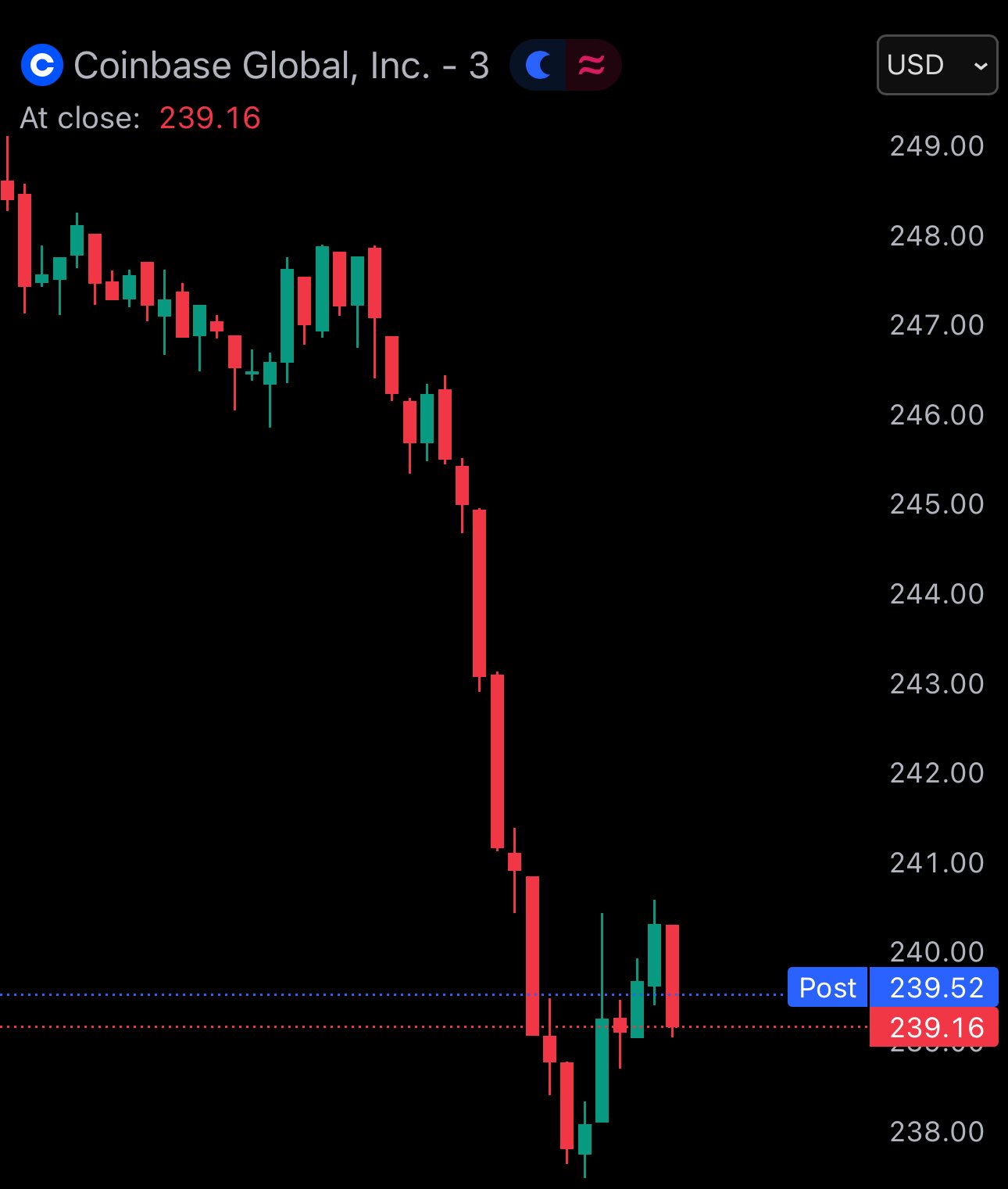
Coinbase stock fell by more than 7% following the delay of the CLARITY Act. Credit: TradingView

Similarly, Robinhood’s stock fell by more than 6%, retreating from a daily high of around $116.50 to a low near $110.
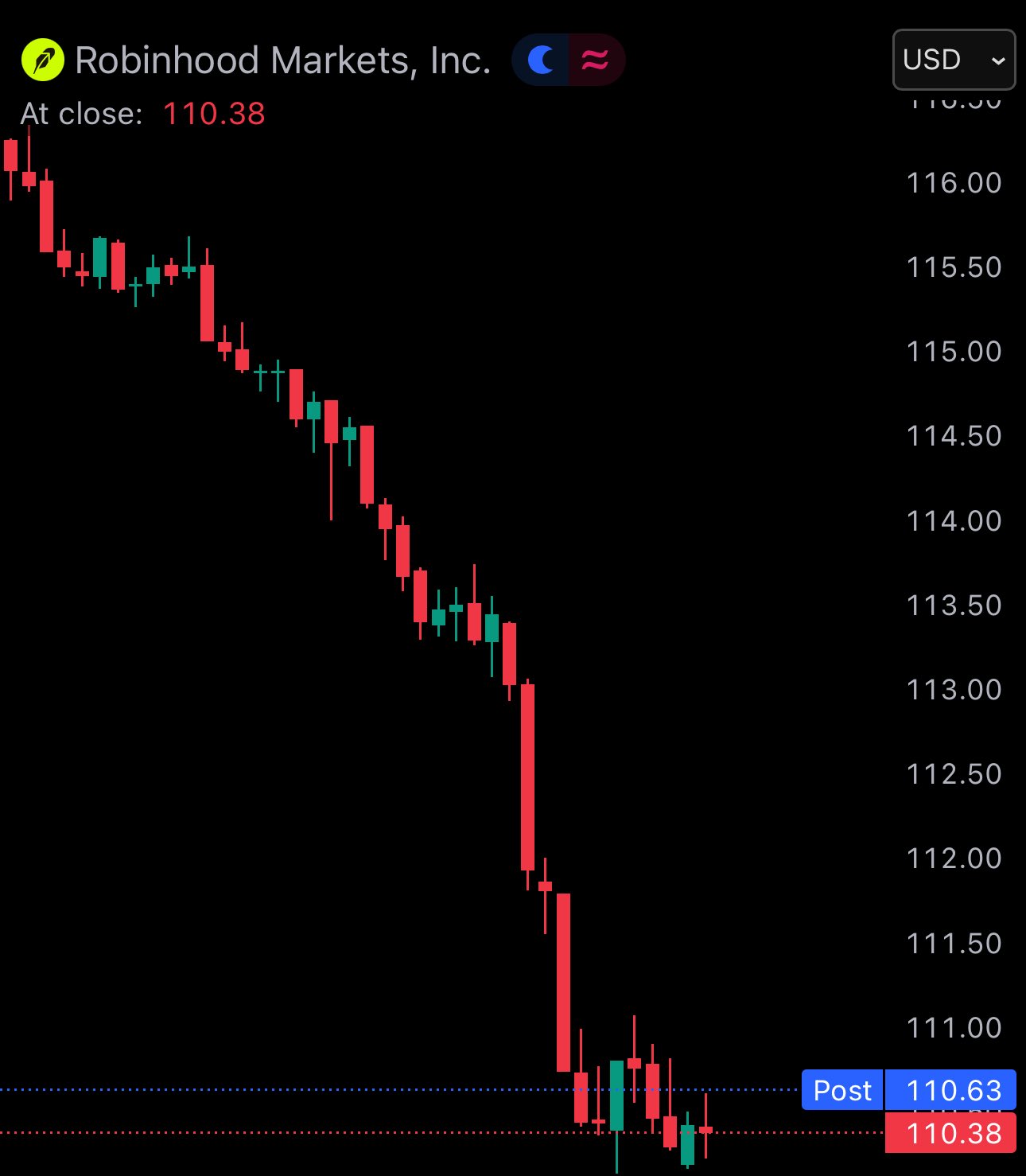
Robinhood stock fell over 6%. Credit: TradingView.

However, not all crypto stocks declined to the same extent.

The sharpest losses were concentrated among companies most exposed to the regulatory implications of the delayed CLARITY Act.

Coinbase, which has publicly criticized the current draft of the market structure bill, faced heavier selling due to perceived risks to its core business.

Robinhood also declined, though potentially for different reasons.

While the company has expressed support for parts of the legislation, uncertainty around timing and final provisions weighed on sentiment, even as a successful passage could eventually unlock new product opportunities.

By contrast, firms with less direct regulatory exposure fared better.

Strategy (MSTR) rose about 3.5% on the same day, benefiting from Bitcoin’s rebound without being directly tied to the bill’s outcome.

CEO Michael Saylor has not publicly weighed in on the CLARITY Act debate.

Overall, delays to the legislation pressured crypto stocks broadly, but exchanges that see the current draft as unfavorable bore the brunt of the sell-off.

If lawmakers revise and advance the bill, companies that stand to benefit could recover more quickly.

Despite the controversy, the CLARITY Act continues to draw backing from several corners of the crypto industry.

Supporters of the bill include titans like Kraken , Ripple, Circle , Andreessen Horowitz (a16z), and others.

CLARITY Act

The CLARITY Act is bipartisan legislation passed by the U.S. House of Representatives in July 2025, and was to be under consideration in the Senate this week.

It seeks to establish a clear regulatory framework for digital assets. This is excluding stablecoins, which are covered under the separate GENIUS Act of 2025.

Coinbase CEO Brian Armstrong has strongly opposed the CLARITY Act’s latest draft, calling it highly risky and not what was promised.

He went on to claim that it’s better to have no bill at all than the current version.

Armstrong criticized the dilution of power for the CFTC, the primary designated regulator under the proposed legislation.

Coinbase’s abrupt withdrawal of support on Jan. 14 led to the postponement of a Senate Banking Committee markup scheduled for Jan. 15, introducing uncertainty that has weighed on investor sentiment.

Robinhood CEO Vlad Tenev urged progress, but wasn’t as critical of the bill as Coinbase.

“It’s time for the U.S. to lead on crypto policy. Let’s pass legislation that protects consumers and unlocks innovation for everyone. We support Congress’s efforts to pass the market structure bill. There is still work to be done, but we see a path and are here to help.”

Proponents argue it replaces “regulation by enforcement” with clear rules, fostering U.S. innovation and competitiveness.

Critics of the bill, including some Democrats and privacy advocates, warn that it could enable excessive surveillance and weaken consumer protections by shifting power from the SEC to the CFTC.

The Act’s Senate draft, released in early January 2026, includes contentious changes on stablecoin rewards, DeFi privacy, and tokenized equities, fueling the current controversy.

Top Trending Crypto Articles
  • Best Exchanges Check Out Our Recommended Exchanges Here
  • Buy Crypto Fast How To Buy Crypto with a Credit Card Now
  • Safe Crypto Gambling See Our Picks for the Best Crypto Gambling Sites

Related Questions

QWhy did Coinbase and Robinhood stocks drop sharply despite Bitcoin's rally?

ACoinbase and Robinhood stocks dropped sharply due to growing uncertainty over the delayed CLARITY Act and frustration within the crypto industry regarding the bill's latest draft and direction, which created regulatory concerns for these companies.

QWhat was Coinbase CEO Brian Armstrong's stance on the CLARITY Act?

ABrian Armstrong strongly opposed the latest draft of the CLARITY Act, calling it highly risky and worse than the status quo. He warned that the bill harms DeFi, privacy, and stablecoin rewards, and even withdrew Coinbase's support, stating it's better to have no bill at all than the current version.

QHow did Robinhood CEO Vlad Tenev view the CLARITY Act?

AVlad Tenev pushed for the passage of the CLARITY Act, urging progress and expressing support for Congress's efforts. He believed the legislation could protect consumers and unlock innovation, including staking and tokenized assets, and stated that Robinhood saw a path forward despite some work still needed.

QWhich companies supported the CLARITY Act according to the article?

ASupporters of the CLARITY Act included Kraken, Ripple, Circle, Andreessen Horowitz (a16z), and others. They argued that the bill would replace 'regulation by enforcement' with clear rules, fostering U.S. innovation and competitiveness in the crypto industry.

QWhat were the main criticisms of the CLARITY Act's Senate draft?

ACritics, including some Democrats and privacy advocates, warned that the CLARITY Act's Senate draft could enable excessive surveillance and weaken consumer protections by shifting regulatory power from the SEC to the CFTC. The draft also included contentious changes related to stablecoin rewards, DeFi privacy, and tokenized equities.

Related Reads

Why Hasn't the U.S. Seen the Rise of 'Huabei' or 'Jiebei'?

The article explores why the U.S. lacks large-scale consumer credit products like China's "Huabei" and "Jiebei," despite having a developed financial sector. Key reasons include: 1. **Structural Barriers**: A fragmented federal and state regulatory system, reinforced by post-2008 reforms like the Dodd-Frank Act, raises compliance costs and protects traditional banks, stifling fintech innovation. 2. **Credit Card Dominance**: Credit cards, used by 70-80% of adults, form a $1.28 trillion debt market with high APRs (avg. 22.3%). This system cross-subsidizes users who pay in full with those carrying balances, creating a predatory yet entrenched ecosystem. 3. **Data Privacy Laws**: Strict regulations (e.g., FCRA, CCPA) prevent tech giants from leveraging behavioral data for credit scoring, unlike in China where such data fuels fintech models. 4. **Capital Market Disincentives**: Wall Street penalizes tech firms entering finance due to lower valuations associated with heavy regulation and risk, as seen in Apple’s failure with Apple Card. 5. **Banking Oligopoly**: Major banks control consumer lending, leveraging lobbying power and consumer habits to maintain high-cost credit, while alternatives like payday loans (400% APR) or "unbanked" services remain niche or exploitative. Ultimately, regulatory, structural, and corporate interests collectively block the emergence of accessible, low-cost digital lending in the U.S.

Odaily星球日报1m ago

Why Hasn't the U.S. Seen the Rise of 'Huabei' or 'Jiebei'?

Odaily星球日报1m ago

More and More 'Model Supermarkets' Are Opening: ByteDance, Alibaba, and Tencent Compete to Integrate

Chinese tech giants like ByteDance, Alibaba, and Tencent are accelerating the rollout of integrated AI model subscription services—dubbed “model supermarkets”—to provide developers with bundled access to multiple leading domestic large language models (LLMs). ByteDance’s Volcengine recently upgraded its "Coding Plan" by adding newer models like GLM-5.1, Minimax M2.7, and Kimi k2.6, allowing subscribers to use various top models under a single monthly fee starting at ¥40. However, user feedback reveals significant issues, including rapid consumption of usage limits (e.g., hitting caps within hours), frequent server errors (like HTTP 429), and slow response times during peak hours. Complaints about misleading deduction rates—where calls to advanced models consume more quota—are also common. The trend is industry-wide: Alibaba, Tencent, and Baidu have all launched similar multi-model coding plans. While these platforms reduce trial costs for developers, they also expose challenges in balancing affordability with service quality and computational stability. Amid this shift, independent AI companies like Zhipu, MiniMax, and Moonlight Face (Kimi) are developing strategies to avoid becoming mere “pipes” in this ecosystem—focusing on vertical applications, autonomous agents, and long-context models to retain competitiveness. Analysts suggest that, while platform aggregation may pressure model firms in the short term, specialized and vertical AI capabilities will remain differentiated in the long run.

marsbit5m ago

More and More 'Model Supermarkets' Are Opening: ByteDance, Alibaba, and Tencent Compete to Integrate

marsbit5m ago

Trading

Spot
Futures

Hot Articles

What is $BITCOIN

DIGITAL GOLD ($BITCOIN): A Comprehensive Analysis Introduction to DIGITAL GOLD ($BITCOIN) DIGITAL GOLD ($BITCOIN) is a blockchain-based project operating on the Solana network, which aims to combine the characteristics of traditional precious metals with the innovation of decentralized technologies. While it shares a name with Bitcoin, often referred to as “digital gold” due to its perception as a store of value, DIGITAL GOLD is a separate token designed to create a unique ecosystem within the Web3 landscape. Its goal is to position itself as a viable alternative digital asset, although specifics regarding its applications and functionalities are still developing. What is DIGITAL GOLD ($BITCOIN)? DIGITAL GOLD ($BITCOIN) is a cryptocurrency token explicitly designed for use on the Solana blockchain. In contrast to Bitcoin, which provides a widely recognized value storage role, this token appears to focus on broader applications and characteristics. Notable aspects include: Blockchain Infrastructure: The token is built on the Solana blockchain, known for its capacity to handle high-speed and low-cost transactions. Supply Dynamics: DIGITAL GOLD has a maximum supply capped at 100 quadrillion tokens (100P $BITCOIN), although details regarding its circulating supply are currently undisclosed. Utility: While precise functionalities are not explicitly outlined, there are indications that the token could be utilized for various applications, potentially involving decentralized applications (dApps) or asset tokenization strategies. Who is the Creator of DIGITAL GOLD ($BITCOIN)? At present, the identity of the creators and development team behind DIGITAL GOLD ($BITCOIN) remains unknown. This situation is typical among many innovative projects within the blockchain space, particularly those aligning with decentralized finance and meme coin phenomena. While such anonymity may foster a community-driven culture, it intensifies concerns about governance and accountability. Who are the Investors of DIGITAL GOLD ($BITCOIN)? The available information indicates that DIGITAL GOLD ($BITCOIN) does not have any known institutional backers or prominent venture capital investments. The project seems to operate on a peer-to-peer model focused on community support and adoption rather than traditional funding routes. Its activity and liquidity are primarily situated on decentralized exchanges (DEXs), such as PumpSwap, rather than established centralized trading platforms, further highlighting its grassroots approach. How DIGITAL GOLD ($BITCOIN) Works The operational mechanics of DIGITAL GOLD ($BITCOIN) can be elaborated on based on its blockchain design and network attributes: Consensus Mechanism: By leveraging Solana’s unique proof-of-history (PoH) combined with a proof-of-stake (PoS) model, the project ensures efficient transaction validation contributing to the network's high performance. Tokenomics: While specific deflationary mechanisms have not been extensively detailed, the vast maximum token supply implies that it may cater to microtransactions or niche use cases that are still to be defined. Interoperability: There exists the potential for integration with Solana’s broader ecosystem, including various decentralized finance (DeFi) platforms. However, the details regarding specific integrations remain unspecified. Timeline of Key Events Here is a timeline that highlights significant milestones concerning DIGITAL GOLD ($BITCOIN): 2023: The initial deployment of the token occurs on the Solana blockchain, marked by its contract address. 2024: DIGITAL GOLD gains visibility as it becomes available for trading on decentralized exchanges like PumpSwap, allowing users to trade it against SOL. 2025: The project witnesses sporadic trading activity and potential interest in community-led engagements, although no noteworthy partnerships or technical advancements have been documented as of yet. Critical Analysis Strengths Scalability: The underlying Solana infrastructure supports high transaction volumes, which could enhance the utility of $BITCOIN in various transaction scenarios. Accessibility: The potential low trading price per token could attract retail investors, facilitating wider participation due to fractional ownership opportunities. Risks Lack of Transparency: The absence of publicly known backers, developers, or an audit process may yield skepticism regarding the project's sustainability and trustworthiness. Market Volatility: The trading activity is heavily reliant on speculative behavior, which can result in significant price volatility and uncertainty for investors. Conclusion DIGITAL GOLD ($BITCOIN) emerges as an intriguing yet ambiguous project within the rapidly evolving Solana ecosystem. While it attempts to leverage the “digital gold” narrative, its departure from Bitcoin's established role as a store of value underscores the need for a clearer differentiation of its intended utility and governance structure. Future acceptance and adoption will likely depend on addressing the current opacity and defining its operational and economic strategies more explicitly. Note: This report encompasses synthesised information available as of October 2023, and developments may have transpired beyond the research period.

363 Total ViewsPublished 2025.05.13Updated 2025.05.13

What is $BITCOIN

Discussions

Welcome to the HTX Community. Here, you can stay informed about the latest platform developments and gain access to professional market insights. Users' opinions on the price of BTC (BTC) are presented below.

活动图片