Crypto markets turned sharply lower following the Federal Reserve’s latest policy decision, with major assets posting broad losses as investors reacted to a more cautious macro outlook.
Data from TradingView’s heatmap showed widespread selling pressure across the market, with large-cap tokens leading the decline.
Bitcoin fell over 5%, while Ethereum dropped more than 6%, reflecting heightened sensitivity to macro signals. XRP declined by around 5.3%. Solana slipped 5.7%, and BNB recorded a more modest 3.7% loss.
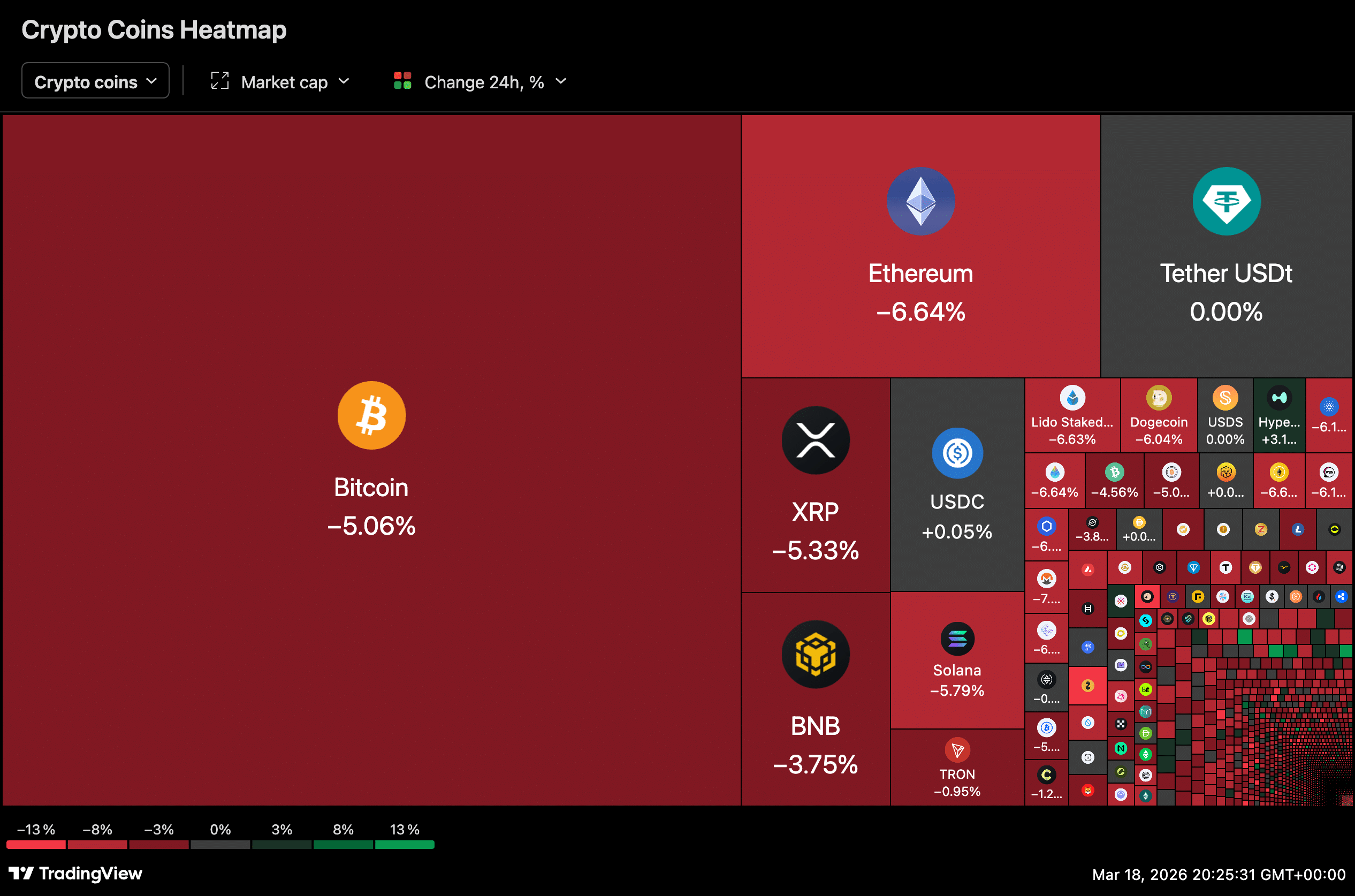
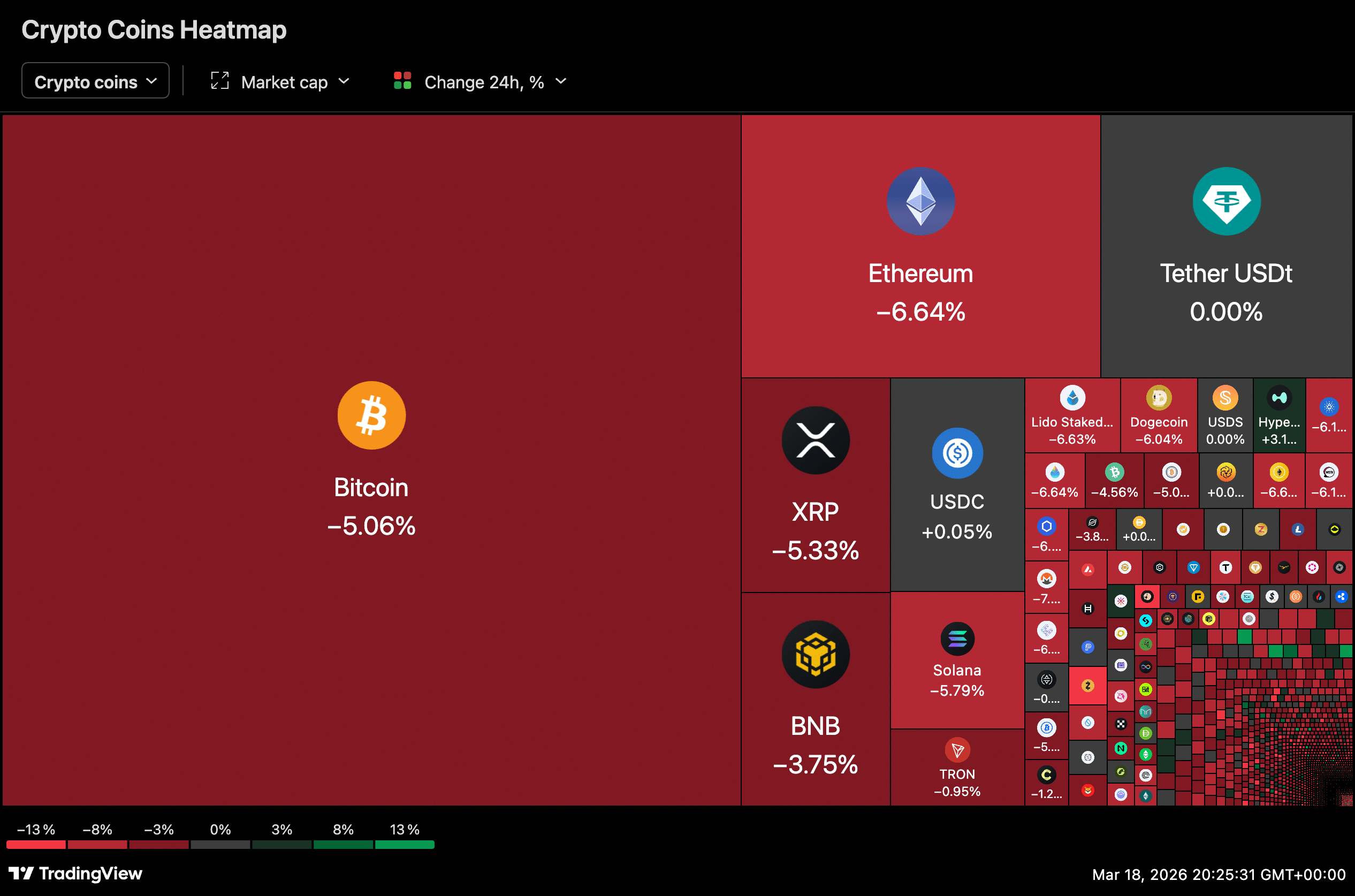
The sell-off extended across altcoins, with only a handful of assets showing resilience, underscoring a broad risk-off move rather than isolated weakness.
Powell’s tone dampens rate cut expectations
While the Fed’s decision to hold rates steady was largely expected, market reaction appears to have been driven by Chair Jerome Powell’s press conference and the central bank’s updated projections.
Powell reiterated that inflation remains elevated and warned that recent developments — particularly rising energy prices linked to Middle East tensions — could keep price pressures higher in the near term.
He noted that headline PCE inflation stood at 2.8%, with core inflation at 3.0%, both still above the Fed’s 2% target.
Crucially, Powell made clear that:
- Policy is not on a preset path
- The Fed will remain data-dependent
- It is too early to determine the full impact of geopolitical risks
This reinforced the view that rate cuts are not imminent — a key trigger for the market pullback.
Higher-for-longer narrative hits risk assets
The Fed’s projections and Powell’s remarks together strengthened the “higher-for-longer” narrative, which tends to weigh on speculative assets like crypto.
Although policymakers still expect inflation to ease over time, the pace of disinflation appears gradual. At the same time, the U.S. economy remains resilient, reducing the urgency for aggressive monetary easing.
For crypto markets, this creates a challenging short-term setup:
- Liquidity remains constrained
- Rate cuts are delayed
- Macro uncertainty remains elevated
These factors typically limit upside momentum and increase volatility across digital assets.
Market reaction signals macro sensitivity remains high
The scale of the sell-off highlights how closely crypto markets are still tied to macroeconomic signals, particularly U.S. monetary policy.
Despite improving fundamentals in parts of the crypto ecosystem, price action continues to react strongly to interest rate expectations and broader risk sentiment.
The synchronized decline across Bitcoin, Ethereum, and altcoins suggests that traders are repositioning in response to shifting expectations rather than asset-specific developments.
What comes next?
With the Fed offering no clear timeline for easing, markets are likely to remain highly reactive to incoming data.
Inflation readings, labour market updates, and geopolitical developments — particularly those affecting energy prices — will play a critical role in shaping expectations for future policy moves.
Until clearer signals emerge, crypto markets may continue to trade cautiously, with macro conditions acting as the dominant driver.
Final Summary
- Crypto markets dropped sharply as Powell reinforced a data-dependent, higher-for-longer stance.
- The sell-off highlights how macro policy expectations continue to drive short-term price action.