Vietnam’s police has dismantled an “exceptionally large” multi-billion dollar crypto scam centered on selling fake digital currencies.
Inside The Multi-Billion Dollar Crypto Scam
The Vietnam’s Ministry of Public Security (national police) announced on Thursday the arrest of at least seven people in relation with ONUS, a Vietnamese-based crypto investment app and exchange that was used by millions of Vietnamese investors, AFP reports through Nampa.
140 people were summoned for questioning before the arrest of fintech and blockchain entrepreneur Vuong Le Vinh Nhan (aka Eric Vuong) and six accomplices, on charges of property appropriation and money laundering. The platform suddenly became inaccessible around March 20, leaving retail users locked out and scrambling for answers.
The police claims Vuong’s group has been operating since 2018, allegedly creating fake coins, issuing and selling them through ONUS, while manipulating supply, demand, and prices to manufacture paper gains and lure in more victims. The scam leaves millions of users affected, and at least one investor saying they were “devastated” after losing over $15,000.
A Country Of Booming Crypto Scams
Vietnam has become one of the world’s hottest retail‐crypto markets, with around 17 million digital asset holders. Hanoi bans crypto as a means of payment but allows speculation in a legal grey zone, which scammers exploit: this is not Vietnam’s first case of high-profile crypto fraud.
The country has already seen multiple digital assets frauds and Ponzi‐style schemes. Back in 2018, around 32,000 people may fell victim to a $658 million Initial Coin Offering (ICO) scam for two different cryptocurrencies, both of which were launched by Ho Chi Minh City-based company Modern Tech JSC. In 2024, Vietnamese authorities dismantled another large-scale cryptocurrency scam orchestrated by a company called ‘Million Smiles,’ protecting nearly 300 potential victims from financial exploitation, after it had already swindled around $1.17 million.
Takeaways For Traders
Emerging‐market retail booms combined with regulatory grey areas are turning Southeast Asia into a hotspot for “short‐cycle” high‐yield scams, even as regulators worldwide step up enforcement. It would not come as a surprise if we see Vietnam’s policy change its trajectory into an strategy of more pressure for clear rules on token issuance, exchanges, and marketing, and less tolerance for “experimental” platforms operating at scale.
For traders, the ONUS saga is a reminder that jurisdictional risk matters just as much as chart patterns. Enforcement in regulatory grey zones can flip from hands‐off to aggressive overnight, and when that happens, liquidity on localized platforms tends to disappear far faster than most risk models assume. “Too‐good‐to‐be‐regulated” is no longer a clever marketing line; it is a working definition of counterparty risk.
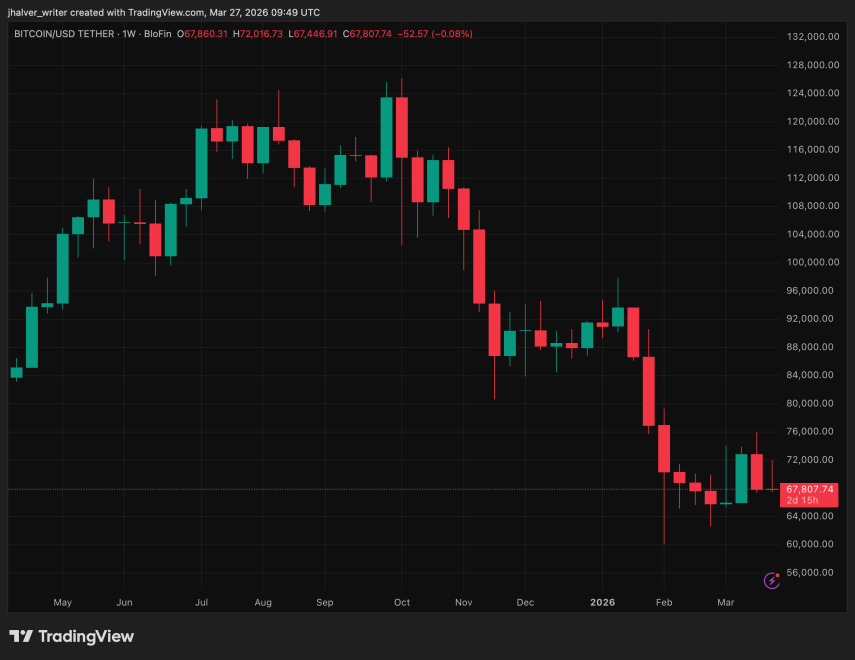
BTC’s price crashed under $68k. Source: BTCUSDT on Tradingview
Cover image from Perplexity, BTCUSD chart from Tradingview