"Crypto Czar" Steps Down: 130-Day Political Performance Concludes, How Much of Trump's Crypto Promises Remain?

marsbitPublished on 2026-03-29Last updated on 2026-03-29

Abstract

David Sacks, known as the "Crypto Czar," has stepped down after reaching the 130-day limit of his special government appointment. Initially appointed by former President Trump to lead AI and crypto policy, Sacks was tasked with creating a clear legal framework for the cryptocurrency industry. During his tenure, he achieved several high-profile actions, including banning a central bank digital currency (CBDC), hosting the first White House Crypto Summit, establishing a strategic Bitcoin reserve, and helping pass the GENIUS Act for stablecoin regulation. However, the article argues that these accomplishments were largely symbolic political performances rather than substantive gains for the crypto industry. The White House Crypto Summit was described as a publicity event with no concrete policies announced. The strategic Bitcoin reserve merely repurposed seized assets without new purchases, failing to inject liquidity or provide strong market backing. While the GENIUS Act was a tangible achievement, its counterpart, the CLARITY Act, remains stalled in Congress due to conflicts between banks and crypto firms over stablecoin interest benefits—with recent drafts favoring traditional banks, contrary to initial pro-crypto promises. Sacks will continue as co-chair of the Presidential Technology Advisory Council, focusing on AI policy, with no mention of crypto. The article concludes that Trump’s pro-crypto promises have largely resulted in political theater rather than meaningful re...

Author: Golem, Odaily Planet Daily

"Crypto Czar" David Sacks is stepping down. David Sacks explained that he is leaving his position because he has reached the 130-day limit for a Special Government Employee. In the future, he will continue to participate in relevant government affairs as the Co-Chair of the President's Council of Advisors on Science and Technology.

On December 6, 2024, Trump announced the appointment of David Sacks as the White House lead for Artificial Intelligence and Crypto matters. Because Trump directly referred to him as the "White House A.I. & Crypto Czar," David Sacks earned the title "Crypto Czar."This was not a formal official title, but rather a role to facilitate the formalization of David Sacks' influence. In the appointment letter, Trump specifically expressed his expectations for David Sacks in the crypto field: "to promote the establishment of a clear legal framework, providing the long-needed clarity for the cryptocurrency industry, allowing it to thrive in the United States."

From a motivational perspective, in 2024, Trump made numerous crypto promises to gain support from the U.S. crypto community. Therefore, after successfully assuming the presidency, he needed a capable person to help him fulfill these promises. David Sacks was the policy executor chosen by Trump.

David Sacks did not disappoint Trump's expectations and achieved some political results during his 130-day tenure:banning CBDC, convening the first White House Crypto Summit, establishing the U.S. Strategic Bitcoin Reserve Act, and facilitating the passage of the CLARITY Act, among others.

Trump's several promises to the crypto industry during the campaign were basically fulfilled by David Sacks, leading many to portray his tenure as a victory narrative. Superficially, it appears so, but in reality, reviewing the things David Sacks did for the crypto industry reveals a common characteristic—the political gestures were full, but the crypto industry's sense of gain was very thin.

During these 130 days, David Sacks was not reshaping the crypto industry; he was merely performing a crypto political show for Trump.

I. White House Crypto Summit = Trump's Praise Fest

The highlight of this performance show was that superficially sincere, but in reality, full of flattery and empty slogans, White House Crypto Summit.

On March 7, 2025, on behalf of Trump, David Sacks invited a group of crypto companies and industry figures to the White House, including a16z partner Chris Dixon, Ripple CEO, Robinhood CEO, MicroStrategy founder Michael Saylor, Coinbase CEO, among others. Several key U.S. government officials also spoke, including Trump, the Secretary of the Treasury, and others.

Crypto figures going to Washington was not unheard of before, but previously, it was mostly for hearings, to be scolded, to explain whether they were scams or not. This time was different: the setting changed from the witness stand to the White House, the atmosphere shifted from tense confrontation to dignified photo ops. Crypto figures were treated as "honored guests" by the U.S. government for the first time. David Sacks sat next to Trump, like a general director responsible for cueing lines.
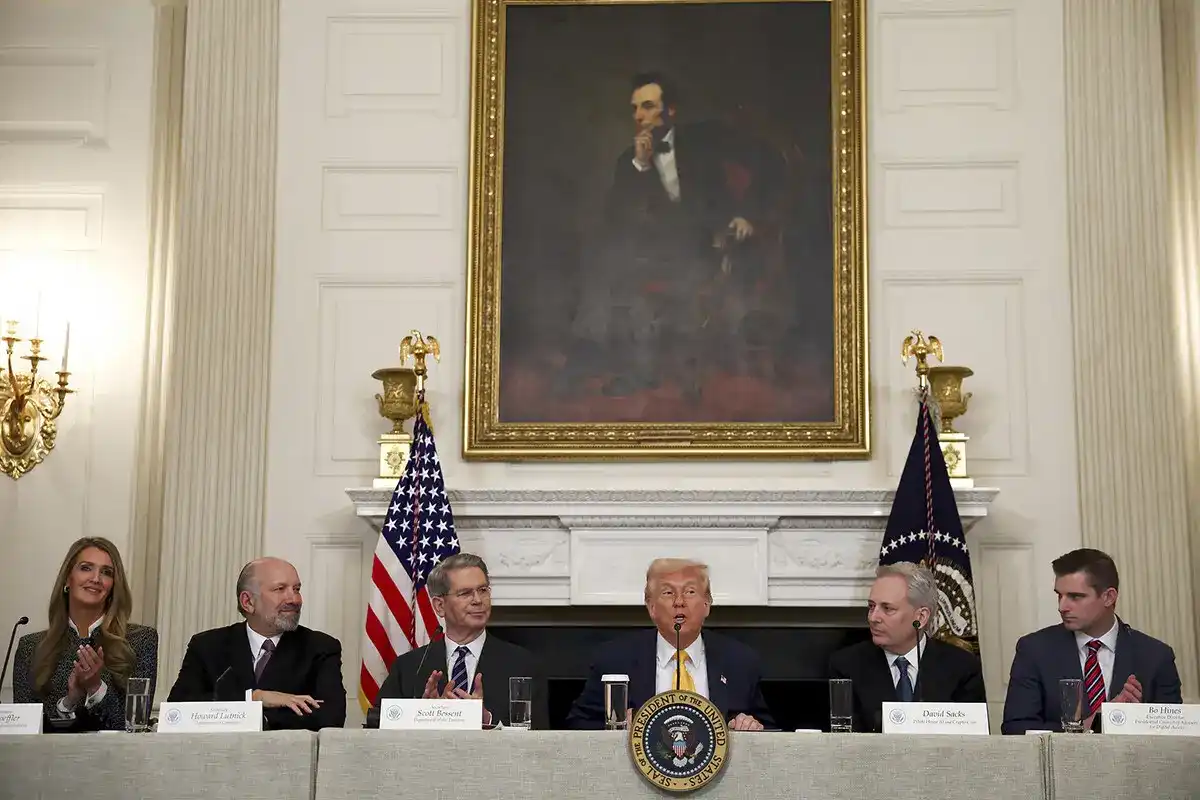
At the White House Crypto Summit, David Sacks sits to Trump's left.

What was discussed at such a high-level and highly anticipated government crypto meeting?

According to the records of an Odaily Planet Daily reporter who monitored the live broadcast that night, everyone was praising Trump throughout the event. The closed-door meeting, purported to define the direction of crypto regulation for the next four years, did not release any substantive policy documents. Because the meeting content was too far from market expectations, the crypto market immediately fell after the summit concluded, according to OKX market行情 that day.

This summit certainly had symbolic significance, but the problem is precisely that it had only symbolic significance. It performed Trump's alignment with crypto once again, but the things the industry most wanted—such as unified, stable, predictable regulatory boundaries, long-term rules that institutions could comfortably enter under, and project teams not having to guess what tone the SEC and CFTC would take tomorrow—still didn't truly materialize. The meeting was lively, emotions were high, but what ultimately landed on the industry was still news-driven speculation.

Why was this meeting so hollow? Because it wasn't part of the original plan. Trump's campaign promise was to establish a cryptocurrency committee, expected to enable crypto industry leaders to have direct, ongoing dialogue with the White House and the president. But this didn't materialize for various reasons. So, a crypto summit was hastily arranged as compensation, claiming it would be held continuously. However, to date, the White House has not held a second crypto meeting of the same level.

II. Bitcoin Strategic Reserve = Moving Bitcoin to a Different Drawer

The second major thing David Sacks pushed for, the U.S. Strategic Bitcoin Reserve, if taken seriously, was not a performance but a magic trick.

A few hours before the White House Crypto Summit, Trump signed an executive order to establish a strategic bitcoin reserve, but after the news came out, the bitcoin price fell. The core reason was that David Sacks explained that this bitcoin strategic reserve came from bitcoins confiscated by the U.S. government in previous criminal or civil asset forfeiture proceedings, not from newly purchased bitcoins, without spending a single penny of taxpayers' money.

Although the order authorized the Treasury and Commerce Departments to研究 "budget-neutral" new coin acquisition strategies, it did not provide any clear buying schedule or scale. Therefore, the stance this bitcoin strategic reserve took to the market was: I will not sell bitcoin anymore, but I will not buy bitcoin anymore either.
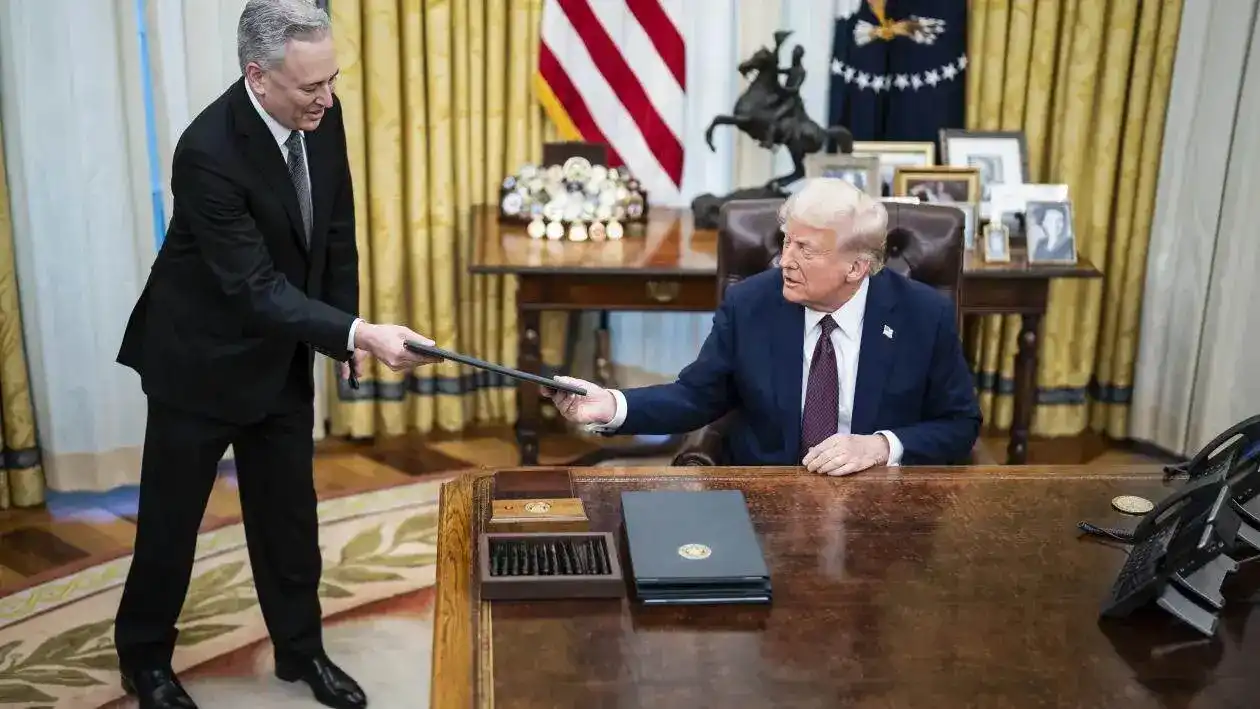
Trump signs the Bitcoin Strategic Reserve executive order.

Did David Sacks handle this well? For Trump, of course it was brilliant, fulfilling the promise without spending a single cent.But for the crypto industry, it again had only symbolic meaning. The market originally expected the U.S. government to start accumulating bitcoin, injecting liquidity and endorsement into the market. What they got was "moving the previously seized bitcoin to a different drawer."

III. The GENIUS Act is the Real Achievement

The GENIUS Act might be the real achievement of David Sacks as the Crypto Czar.

On July 18, 2025, Trump formally signed the "GENIUS Act" in the East Room of the White House, making it a signed into law. It has not only symbolic significance but also practical significance. From an industry impact perspective, the "GENIUS Act" establishes a federal framework for USD stablecoins, meaning stablecoins have moved out of the wild growth stage and into the compliance scope, becoming a new financial tool backed by the force of federal law.

This was not accomplished by David Sacks alone, but he certainly deserves credit. However, another bill, the twin brother of the "GENIUS Act," the "CLARITY Act," is still struggling. The "CLARITY Act" was passed by the U.S. House of Representatives on July 18, 2025, alongside the "GENIUS Act," but until now, it has failed to complete the Senate process, remaining stuck in a negotiation僵局 between the banking industry and the crypto industry.
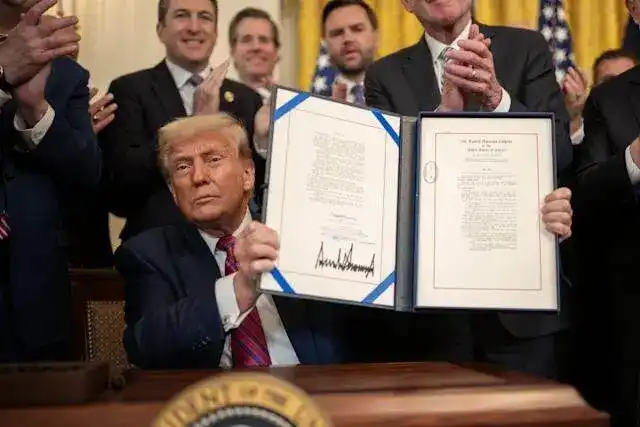
Trump signs the GENIUS Act.

David Sacks once confidently stated that the "CLARITY Act" and the "GENIUS Act" would be passed within the first 100 days of this administration. Currently, it seems he has been severely proven wrong.

The failure of the "CLARITY Act" to pass is not solely David Sacks' fault, but he certainly bears some responsibility, just as he could claim some credit when the "GENIUS Act" passed. The White House Digital Assets Working Group led by David Sacks explicitly called the "CLARITY Act" an "excellent foundation." Since the White House has already regarded it as the core draft for market structure legislation, can David Sacks be a completely unrelated bystander when it subsequently gets stuck?

The core僵局集中在conflict between the banking industry and the crypto industry over stablecoin interest, and according to the latest revised text, the banks have won.受此消息,3 月 25 日 Circle(CRCL)股价一度下跌 18%, Coinbase(COIN)下跌约 8%. Moreover, if such a "CLARITY Act" is truly passed, it would be a blow to the entire DeFi industry.

This is not quite the script that Trump and David Sacks originally touted as beneficial to the crypto industry.A bill purportedly promoting the development of the crypto industry ultimately benefits banks, not the crypto industry. How ironic.

On March 4, Trump, amidst his busy schedule, did not forget to mention the crypto industry, posting on Truth Social that the U.S. must pass the "CLARITY Act" as soon as possible, and Americans should earn higher returns on their funds. It seemed Trump was still concerned about the crypto industry, but only after the latest revised text of the bill was released on March 24 did we see clearly that it was again a "symbolic" statement.

Now, the "Crypto President" Trump has completely gone silent. As for David Sacks, the White House had already written the script for him. As the Crypto Czar, he stood in the forefront to translate Trump's campaign slogan of "making America the global crypto capital" into a few decent political actions. When the show was almost over, it was time to retreat. Now, as Co-Chair of the President's Council of Advisors on Science and Technology, David Sacks stated that he will continue to work on AI policy and technology strategy in the future, not even mentioning crypto.

The former Crypto Czar is gone, and Trump's暧昧 relationship with cryptocurrency has ended.

Related Questions

QWho was appointed as the White House AI and Crypto Czar by Trump, and what was his main role?

ADavid Sacks was appointed as the White House AI and Crypto Czar by Trump. His main role was to help establish a clear legal framework for the cryptocurrency industry to thrive in the United States, as part of Trump's campaign promises to gain support from the crypto community.

QWhat were the key achievements of David Sacks during his 130-day tenure as the Crypto Czar?

ADavid Sacks' key achievements included banning CBDC, convening the first White House Crypto Summit, establishing the U.S. Strategic Bitcoin Reserve Act, and facilitating the passage of the GENIUS Act.

QWhy was the White House Crypto Summit criticized despite its symbolic significance?

AThe White House Crypto Summit was criticized because it was largely a political performance with no substantive policy announcements. The event focused on praising Trump rather than addressing the industry's need for clear, stable, and predictable regulatory boundaries, leading to a market downturn afterward.

QWhat was the controversy surrounding the U.S. Strategic Bitcoin Reserve established under David Sacks' leadership?

AThe controversy was that the Bitcoin Reserve consisted only of Bitcoin seized from previous criminal or civil asset forfeitures, not newly purchased Bitcoin. This meant no new capital was injected into the market, contrary to expectations that the government would actively buy Bitcoin to provide liquidity and endorsement.

QWhat is the CLARITY Act, and why has its progress stalled in the Senate?

AThe CLARITY Act is a bill aimed at providing regulatory clarity for the cryptocurrency market structure. Its progress has stalled due to a deadlock in negotiations between the banking and crypto industries, particularly over conflicts regarding stablecoin interest earnings. The latest revisions favor banks, which has caused concern and criticism within the crypto industry.

Related Reads

Single-Day Plunge of 30%, Arthur Hayes Suddenly Liquidates: Why Did ZEC Get Exploded by Security Issues?

On June 5th, Zcash founder Zooko Wilcox disclosed a critical soundness vulnerability in the project's latest Orchard privacy pool. This flaw, found in the elliptic curve multiplication constraints, could allow an attacker to create unlimited counterfeit ZEC within the shielded pool, with transactions appearing valid. The vulnerability was discovered in late May by security researcher Taylor Hornby, who utilized Anthropic's new Opus 4.8 AI model for a targeted audit. The Zcash ecosystem had already performed an emergency network upgrade to patch the issue. However, the detailed disclosure triggered severe market panic, causing ZEC's price to plummet over 30% in a single day. Notably, prominent investor Arthur Hayes announced he had sold his entire ZEC position following the news. The incident starkly challenges the "technological trust" narrative central to privacy coins. Despite years of top-tier cryptographic audits, the bug persisted until uncovered with advanced AI-assisted research. This highlights the growing gap between theoretical perfection and practical implementation in privacy technology. The event serves as a industry-wide warning: in an AI-driven security landscape, the assumption that "undiscovered equals safe" is obsolete. It underscores the urgent need for continuous, proactive security practices combining AI audits, formal verification, and rapid response mechanisms.

foresightnews_api32m ago

Single-Day Plunge of 30%, Arthur Hayes Suddenly Liquidates: Why Did ZEC Get Exploded by Security Issues?

foresightnews_api32m ago

Breaking the Curse of DeFi Cascading Liquidations, Vitalik Proposes a New Solution

**Vitalik Buterin Proposes New DeFi Design to Eliminate Forced Liquidations** Ethereum co-founder Vitalik Buterin has published a proposal for a new decentralized finance (DeFi) architecture aimed at removing the automatic liquidation mechanisms prevalent in current lending protocols. The core idea involves creating synthetic assets using options as building blocks, fundamentally avoiding the抵押借贷结构 that triggers forced sell-offs. The proposal responds to a recurring flaw in DeFi: during sharp market downturns, mass自动清算 of under-collateralized positions can exacerbate price declines, creating systemic selling pressure and market instability, as evidenced by recent crypto market volatility. Buterin's model would split an asset like 1 ETH into two option-like derivatives, P and N, pegged to a price index with a set strike price and expiration. At expiry, an oracle determines the settlement price to allocate the underlying ETH between P and N holders. This design eliminates the "cliff" of instant liquidation. Instead, a position's value would gradually drift from its target peg if not actively rebalanced by the user, transferring the rebalancing decision from the protocol to the user or automated tools. A key advantage is the reduced reliance on high-frequency, real-time oracle price feeds, which are vulnerable to manipulation and errors in current systems. The delayed settlement in the options model allows for more robust, fault-tolerant oracle designs. However, significant challenges remain for practical adoption. High transaction costs (slippage) from frequent rebalancing on automated market makers (AMMs) could erode user funds. The model may not be suitable for stablecoins requiring a strict 1:1 dollar peg, as it inherently allows for value drift. Success would depend on developing new liquidity provisioning models and deep markets for these synthetic assets. The proposal represents a fundamental rethinking of DeFi risk management, challenging the industry to explore alternatives to被动集中平仓 rather than merely optimizing existing liquidation processes. It remains a theoretical framework awaiting implementation and testing by development teams.

foresightnews_api35m ago

Breaking the Curse of DeFi Cascading Liquidations, Vitalik Proposes a New Solution

foresightnews_api35m ago

Bitcoin's Decline Marks the Transformation of Crypto

Title: The Decline of Bitcoin Marks the Transformation of Crypto While Bitcoin's price recently fell below $70,000, down approximately 45% from its peak, the broader crypto industry is not following it into decline. Instead, crypto is maturing and evolving beyond its dependence on Bitcoin's price movements. Two of Bitcoin's core functions are being usurped. First, AI has captured its role as the primary speculative asset. AI, with its tangible revenue, explosive demand, and massive capital inflows ($700-830 billion in 2024), is siphoning off the speculative "hot money" that once drove Bitcoin. It also contributes to a sustained high-interest-rate environment, further tightening liquidity for assets like Bitcoin. Second, dollar-pegged stablecoins like USDC and USDT have replaced Bitcoin as the crypto market's foundational currency and primary on/off-ramp. Most trading pairs and on-chain transactions are now settled in stablecoins, severing the historical link where all capital inflows had to pass through Bitcoin first. This decoupling allows projects to thrive based on their own fundamentals rather than Bitcoin's price. Examples include Hyperliquid, an on-chain derivatives exchange with annual revenues of $8-13 billion, and prediction market platform Polymarket, valued at $200 billion with $3.65 billion in annual fees. These projects are evaluated on traditional metrics like revenue and user growth. New opportunities are emerging, particularly around privacy. Privacy coins like Zcash (ZEC) are seeing surging demand, while infrastructure like NEAR enables private, cross-chain asset transfers without requiring users to hold a specific token—privacy becomes a universal service layer. In this new paradigm, stablecoins are the universal cash, various project tokens represent equity, and privacy-enabled cross-chain coordination layers (like NEAR) act as the critical infrastructure connecting a fragmented, multi-chain ecosystem. Bitcoin is now just one asset among many. The era where the entire crypto market moved in lockstep with Bitcoin is over. The industry's health should now be judged by project fundamentals—real revenue, active users, and tokenomics that capture value—and the development of the underlying infrastructure enabling a mature, dollar-denominated crypto economy.

foresightnews_api38m ago

Bitcoin's Decline Marks the Transformation of Crypto

foresightnews_api38m ago

Lightspark CEO: In Ten Years, Bitcoin Will Be as Invisible as TCP/IP, Yet Power Trillions in Daily Transactions

A decade from now, Bitcoin will function like TCP/IP — invisible yet foundational, supporting trillions in daily transactions globally, according to Lightspark CEO David Marcus. In this future, a coffee shop in Lagos receives instant payment, a manufacturer in São Paulo settles an invoice with a supplier in Ho Chi Minh City, and a freelancer in Bangalore gets paid weekly from an Austin startup — all via Bitcoin's settlement layer, with none of the parties consciously interacting with it. This vision parallels the adoption of open protocols: first driven by necessity where existing systems fail, then scaling rapidly as tools mature and economic benefits become clear. The structural shift begins with wallets. Modern non-custodial wallets, like Spark, allow users to hold dollars, local currency, and Bitcoin in a single address, seamlessly switching between them. This eliminates friction and revolutionizes global custody, moving significant deposits to user-controlled keys not by ideology, but by superior utility. As a result, Bitcoin becomes the default savings layer for billions, as its fixed supply and appreciating value make it a rational choice for savers holding it alongside stablecoins in their everyday wallets. Businesses follow a similar path, from small companies in emerging markets to multinational corporations, holding Bitcoin alongside operational stablecoins. The latest trend is direct Bitcoin transactions for commerce. When both parties hold Bitcoin, transacting in it becomes the simplest option — no conversions, no intermediary currency. This starts in niche areas like high-value B2B settlements but grows as infrastructure makes sending Bitcoin as easy as stablecoins. An accelerating force is AI agents. By 2036, AI agents conducting commerce on behalf of individuals and firms will increasingly choose Bitcoin for settlement. Optimizing for speed, finality, and minimal counterparty risk across jurisdictions, they find Bitcoin's global, neutral, and programmable network ideal for netting and settling obligations. Thus, Bitcoin is becoming the native currency for machine commerce, just as it has become a native savings asset for humans. The global monetary system is being rebuilt from the protocol layer: open infrastructure, default self-custody, Bitcoin settling everything underneath, with stablecoins as the interface. Most users won't think about Bitcoin when they transact — and they won't need to.

foresightnews_api42m ago

Lightspark CEO: In Ten Years, Bitcoin Will Be as Invisible as TCP/IP, Yet Power Trillions in Daily Transactions

foresightnews_api42m ago

Trading

Spot
Futures

Hot Articles

Discussions

Welcome to the HTX Community. Here, you can stay informed about the latest platform developments and gain access to professional market insights. Users' opinions on the price of S (S) are presented below.

活动图片