Written by:Jose Antonio Lanz
Compiled by:Chopper,Foresight News
Profit expectations were lowered, yet the stock price rose. Yesterday, shares of both Coinbase (COIN) and Circle (CRCL) increased by approximately 3-4%. This followed a report from Chicago-based investment bank William Blair, which lowered revenue and profit expectations for Coinbase but maintained its "Outperform" rating.
William Blair's core thesis is that all negative news has already been priced into the stock, and investors should continue to hold Coinbase.
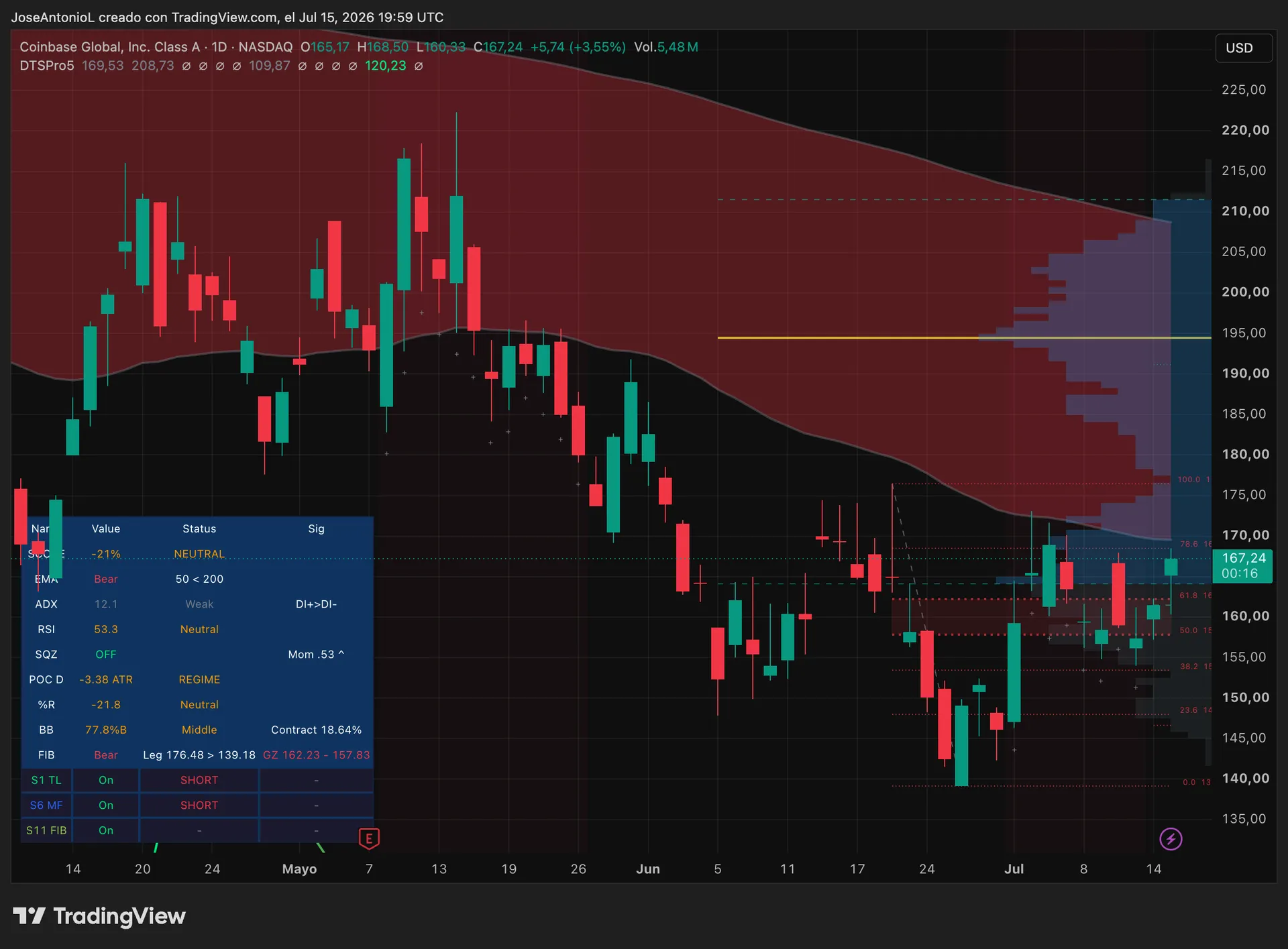
The firm lowered its revenue forecast for Coinbase by 12% for 2026 and 13% for 2027; it also substantially cut its adjusted EBITDA expectations for both years by 34%. Analysts Andrew Jeffrey and Adib Choudhury stated that the company's profits will likely bottom out in the second half of 2026 and recover in 2027. They advise investors to continue holding Coinbase as spot cryptocurrency trading volumes approach a bottom in sync with Bitcoin.
William Blair forecasts that Coinbase's total annual trading volume will drop by about 44% to $669 billion; trading volume is expected to rebound by over 32% in 2027.
The institution believes there are structural differences between this cycle and the one in 2022. Favorable conditions that did not exist four years ago are now in place, including the launch of spot Bitcoin ETFs, sustained institutional capital inflows, and a more mature regulatory framework for the industry.
The report is also bullish on Coinbase's Ethereum layer-2 network Base, seeing it as a potential core profit growth driver, with derivatives and prediction markets further broadening revenue sources, making the business less reliant solely on spot trading. The retail derivatives business alone generated over $200 million in annualized revenue in the first quarter.
Not all institutions are optimistic about COIN's short-term performance. Piper Sandler analyst Patrick Moley lowered his COIN price target from $170 to $155, maintaining a Neutral rating. He noted that the key focus for Q2 is prediction markets and perpetual contracts, with the World Cup driving a surge in prediction market scale, and cautioned that the market will closely watch the potential competitive impact from perpetual contracts in Q3.
Year-to-date, COIN's stock price has fallen nearly 30%, while Bitcoin has declined about 26%. Circle went public on the NYSE in June 2025 at a $31 IPO price, and its stock has retreated 20% since the beginning of the year.
"W" Bottom Pattern Forming: John Bollinger Predicts Bitcoin Poised for Significant Rally
Optimistic signals are also emerging on the technical front. John Bollinger, the creator of the globally used Bollinger Bands volatility indicator and a veteran technical analyst, has been consistently highlighting since early July that Bitcoin's daily chart is forming a key bottoming pattern.
On July 2nd, Bollinger posted on social platform X, pointing out that the chart is forming a "W" double bottom reversal structure: two lows form a range, with a bounce in the middle; once the price breaks above the resistance level between the two lows, an uptrend is formally established.
He described the current movement as a standard fractal structure, with a smaller W bottom nested within the larger pattern, visible even on the weekly chart. However, he also objectively noted uncertainty: this bear market has seen multiple bullish patterns that were ultimately broken by selling pressure.
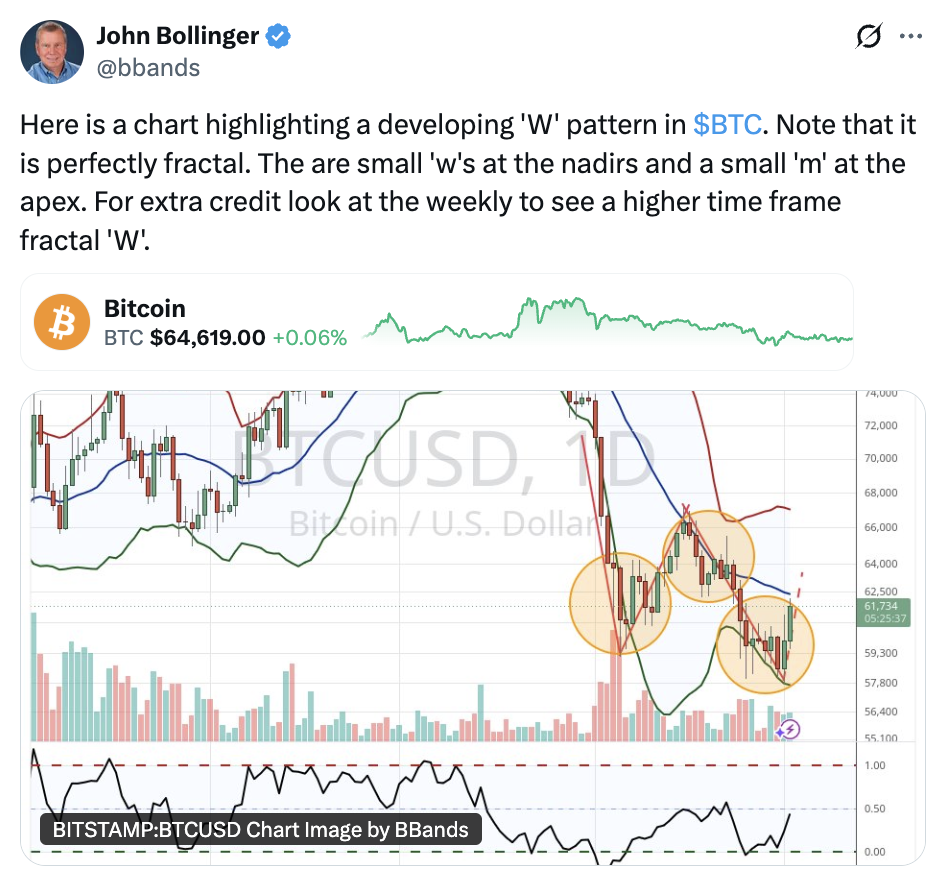
In his latest update, Bollinger stated that if this W bottom completes its formation, it will be viewed as a clear signal of trend reversal, marking his most explicit bullish signal to date, suggesting the move is more than just a short-term bounce.
Earlier this year, Bollinger disclosed that his investment vehicle holds a long Bitcoin position, aligning his view with his holdings. From a broader technical trend perspective, Bitcoin's overall bearish structure hasn't been reversed yet, but downside momentum is continually weakening.
Has Bitcoin's Bottom Already Formed?
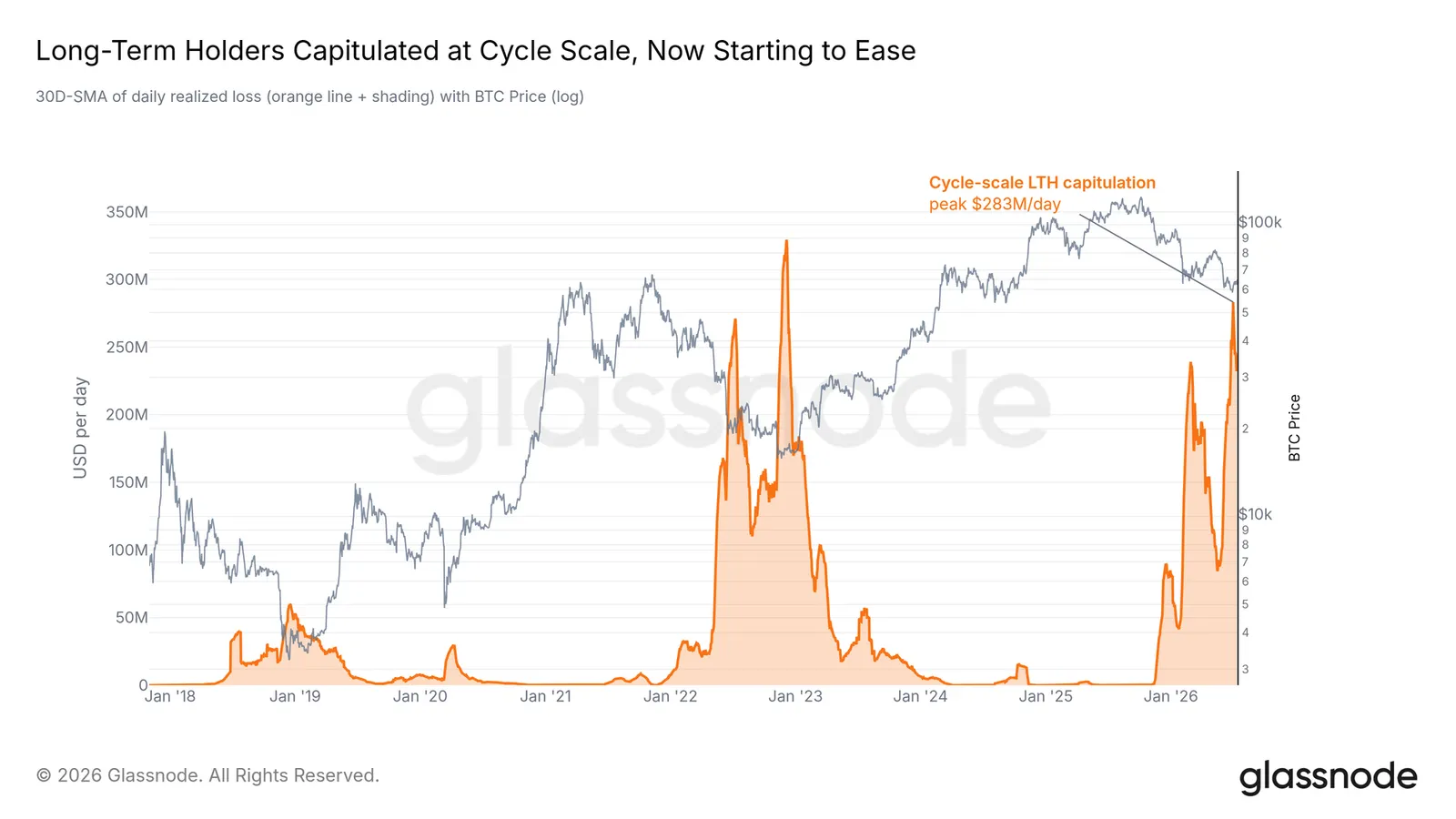
The latest weekly research report from on-chain data firm Glassnode shows that the primary source of selling pressure throughout the year — panic selling by long-term holders — peaked and began declining two weeks ago. This metric, which filters out intra-chain transfer noise to measure the actual selling volume by long-term holders, shows a downturn for the first time in this cycle.
The price low in June attracted significant buying, with Glassnode detecting collective accumulation across wallets of various sizes. Bitcoin's negative correlation with the US Dollar Index has deepened further, while its correlation with US stocks continues to weaken. The sensitivity of Bitcoin's price to positive macroeconomic news has returned: on Tuesday, after disappointing inflation data, Bitcoin's gains far outpaced those of major US stock indices.
For on-chain analysts and Wall Street institutions, a core question remains: sustained buying momentum has not yet emerged in the Bitcoin spot market, insufficient to confirm a reversal.
While derivative positions are being unwound, long-term selling pressure is gradually easing, and the panic premium in the options market is narrowing, incremental capital has not entered the market on a large scale. William Blair judges the market inflection point to be in 2027, predicting Coinbase's trading volume will rebound by 32% next year after a 44% plunge this year.