Coinbase Pushback Delays Crypto Market Structure Bill in Senate

TheNewsCryptoPublished on 2026-01-23Last updated on 2026-01-23

Abstract

Coinbase's withdrawal of support for the Digital Asset Market Clarity Act has caused political backlash in Washington, stalling the crypto regulation bill's progress in the Senate. The White House criticized the move, warning the industry not to take its influence for granted. Coinbase CEO Brian Armstrong argued against rushing a flawed bill, expressing concerns that the draft would restrict DeFi and tokenized equities, while shifting regulatory power toward the SEC and away from the CFTC. The withdrawal complicates legislative efforts amid existing pressure from banking interests worried about stablecoin yields. The White House emphasized the need for industry unity, suggesting failure to pass the current bill could lead to stricter future regulations. The delay highlights the fragile nature of crypto regulatory progress, even under a favorable administration.

Coinbase’s withdrawal from the Digital Asset Market Clarity Act effort is leading to a degree of political backlash in Washington, and the crypto regulation bill currently deemed to have the most potential is losing steam. It is indicative of how easy it is for crypto regulation wins to slip through legislators’ fingers, even under a more friendly U.S. administration.

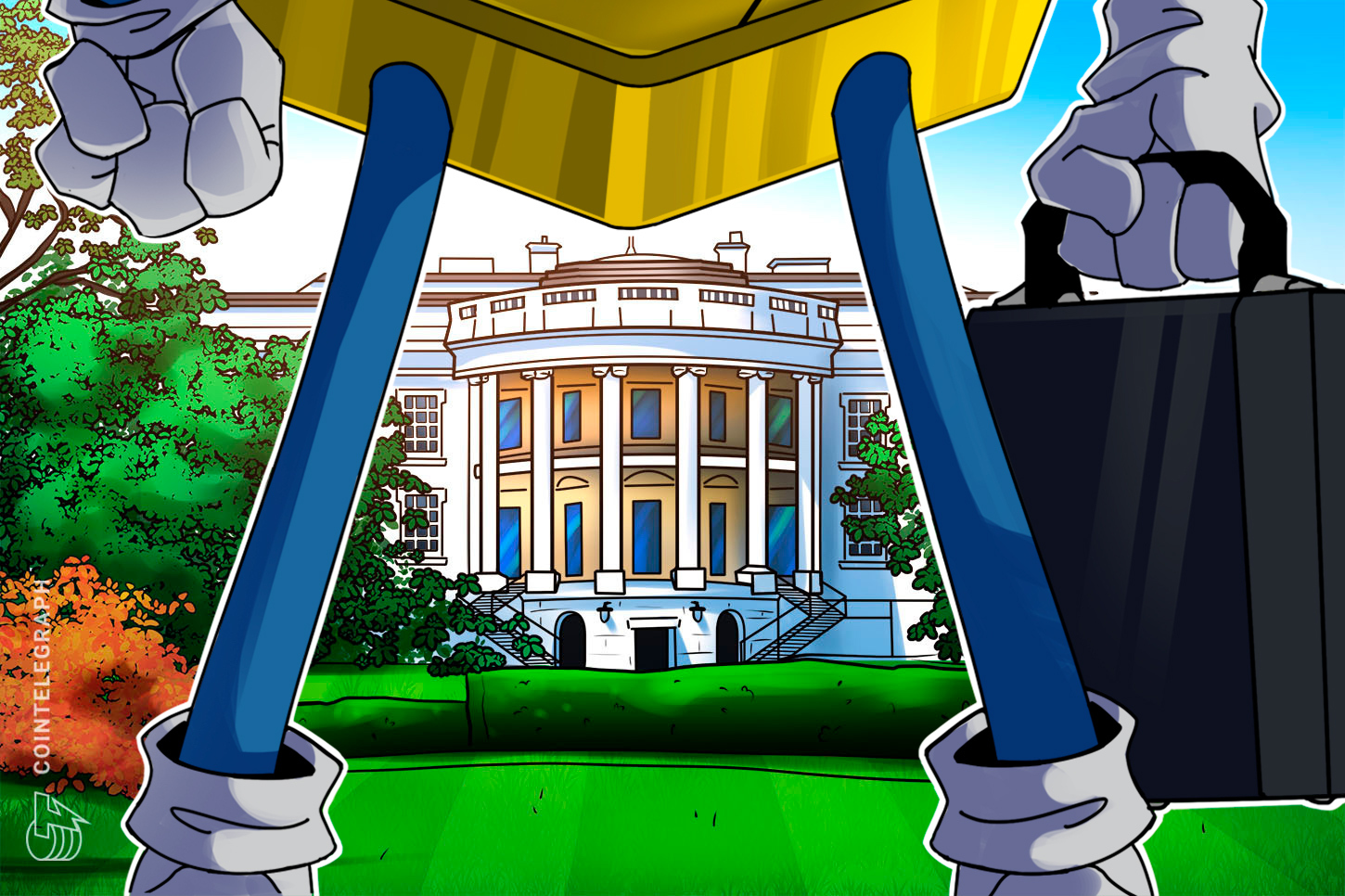
According to Bloomberg, a week after Coinbase CEO Brian Armstrong helped stall sweeping crypto legislation in the Senate, White House crypto adviser Patrick Witt publicly criticized the move and warned the industry not to take its influence for granted.

Armstrong had argued that lawmakers should not rush a flawed bill, saying no bill would be better than a bad one. However, the White House viewed the reversal as disruptive, especially since the administration had treated the CLARITY Act as a signature step toward making the U.S. a global leader in digital assets.

Why Coinbase withdrew support

Coinbase expressed concerns that the draft would place restrictions on activities involving decentralized finance and tokenized equities, as well as reward structures for stablecoins that attract users to them. Armstrong also warned that the bill could reshape the regulatory balance by giving the Securities and Exchange Commission more influence while limiting the Commodity Futures Trading Commission’s ability to oversee crypto markets.

Those objections landed at a sensitive moment. Lawmakers already faced heavy lobbying pressure from banks and traditional finance groups, especially on stablecoin yield. Banking interests have argued that stablecoin rewards could pull deposits away from savings accounts, forcing lawmakers to rethink what “digital dollars” should legally allow.

White House frustration adds a new layer of risk

The White House response signals that the fight now extends beyond committees and lobbyists. Witt’s message suggests the administration wants unity across major industry players, especially on a bill it frames as essential to long-term U.S. crypto competitiveness.

His warning also carried a political edge: he implied a future Democratic-led rewrite could impose tougher restrictions if today’s bill fails. That argument reflects a growing view in Washington that crypto should lock in regulatory clarity while it still has momentum.

Senate timeline grows uncertain

The broader concern now centers on timing. Senators have aimed to push forward market structure rules that clearly define when assets fall under the SEC versus the CFTC. Coinbase’s pullback complicates the effort because lawmakers lose one of the sector’s biggest and most influential supporters.

At the same time, Armstrong signaled he still sees a path forward and expects negotiation to continue, even if lawmakers need more time to bridge disagreements.

For the crypto sector, this episode delivers a clear message: political support exists, but it comes with conditions. If leading firms fracture the coalition, Washington may slow down or rewrite the rules in less crypto-friendly ways.

Highlighted Crypto News:

Indian Rupee Records a Low Against US Dollar, Will Crypto Market be Affected?

TagsCoinbasecrypto regulationDigital AssetTRUMPUS Senate

Related Questions

QWhat is the main reason for the delay in the crypto market structure bill in the Senate?

ACoinbase's withdrawal of support from the Digital Asset Market Clarity Act effort is the primary reason, as it has led to political backlash and complicated the legislative process.

QWhy did Coinbase CEO Brian Armstrong argue against the proposed crypto legislation?

AArmstrong argued that lawmakers should not rush a flawed bill, stating that no bill would be better than a bad one, and expressed concerns about restrictions on DeFi, tokenized equities, and stablecoin rewards.

QHow did the White House react to Coinbase's withdrawal of support?

AWhite House crypto adviser Patrick Witt publicly criticized the move, viewing it as disruptive, and warned the industry not to take its influence for granted, emphasizing the need for unity.

QWhat are the key concerns Coinbase had about the draft bill?

ACoinbase was concerned about restrictions on decentralized finance and tokenized equities, stablecoin reward structures, and the bill giving more influence to the SEC while limiting the CFTC's oversight of crypto markets.

QWhat broader implication does this episode have for the crypto industry's political support?

AThe episode shows that political support for crypto exists but comes with conditions; if leading firms fracture the coalition, Washington may slow down or rewrite rules in less crypto-friendly ways.

Related Reads

70% of the Public Opposes AI, Americans Hope the U.S. Loses the AI War

70% of Americans believe AI development is moving too fast, with growing public resistance evolving from online criticism to real-world protests and violence. This widespread anti-AI sentiment stems from fears of job losses, rising utility costs, environmental damage, threats to democracy, and financial instability. Key incidents illustrate the backlash: Google's former CEO Eric Schmidt was loudly booed at a graduation for promoting AI; AI company ads are vandalized; protests and even violent attacks target AI firms and data centers. Polls show deep public pessimism and strong local opposition to data center construction, often surpassing resistance to nuclear power plants. The core grievances are economic and practical: AI is seen as automating jobs, concentrating wealth, and increasing household electricity and water bills due to massive data center resource demands. Environmentalists also oppose AI's high energy use and carbon emissions. This opposition has turned AI into a major political issue in the US. While the Trump administration prioritizes AI innovation for global competition, bipartisan pushback is growing. Democrats and factions within the MAGA movement are forming temporary alliances to support stricter regulations and local bans on new data centers, pressuring the administration to choose between its tech industry backers and its voter base. The situation highlights a profound national divide over AI's future.

marsbit25m ago

70% of the Public Opposes AI, Americans Hope the U.S. Loses the AI War

marsbit25m ago

Agents Take Over Traffic Distribution Power: What Are Tencent, ByteDance, and Alibaba Competing For?

In the race to dominate the AI era's entry point, China's tech giants—Tencent, ByteDance, and Alibaba—are aggressively deploying AI Agents to control the future of traffic distribution. Alibaba is pursuing a dual-track "closed loop + openness" strategy. Its Qianwen app is evolving into a super-Agent integrated across its ecosystem (Taobao, Alipay, etc.) to handle complex tasks like travel planning. Concurrently, it is opening its platform to external brands (Luckin Coffee, KFC) and has launched a B2B Agent platform, "Wukong," targeting enterprise automation. Its other flagship, Quark, aims to be an "AI super search box" for information and tasks. ByteDance is executing an omnipresent "sprawl strategy." Its Doubao app boasts over 300 million monthly active users and is evolving into a default AI entry point for daily life, with plans for paid versions and e-commerce integration. Its core weapon is the Kouzi platform, a visual "AI assembly factory" for developers to build custom Agents. ByteDance is also pushing hardware integration, collaborating on AI phones and developing smart glasses to embed Doubao everywhere. Tencent is playing its long-held "ultimate card" by quietly embedding an AI Agent directly into WeChat. This Agent, accessible via a swipe, can understand user commands and automatically execute tasks by calling upon WeChat's millions of mini-programs (e.g., finding and ordering coffee). This leverages WeChat's unparalleled 1.4-billion-user ecosystem to position the app as an AI-powered "service operating system," a move that could dramatically reshape the competitive landscape. The core battleground is shifting from competing for "user screen time" to competing to be the "default execution layer" for user intent. The business model is evolving from an "attention economy" to an "intent economy," where the Agent that can most efficiently fulfill a user's need gains control over service access and token flow. This represents a fundamental change in how users connect with digital services, making the fight for the Agent入口 (entry point) a pivotal moment for redefining industry leadership in the AI age.

marsbit2h ago

Agents Take Over Traffic Distribution Power: What Are Tencent, ByteDance, and Alibaba Competing For?

marsbit2h ago

Trading

Spot
Futures

Hot Articles

Discussions

Welcome to the HTX Community. Here, you can stay informed about the latest platform developments and gain access to professional market insights. Users' opinions on the price of S (S) are presented below.

活动图片