Market Analysis

Delivers insights into price action, technical indicators, market forecasts, and future trends. Data-driven analysis helps investors understand market dynamics and identify potential opportunities for informed decision-making.

Alarm Bells Ringing: BOJ's Imminent 25bp Rate Hike, a Repeat of the 2024-Style Flash Crash for US Stocks and Crypto?

The Bank of Japan (BoJ) is highly expected to raise its short-term policy rate by 25 basis points to 1.0% at its June 15-16 meeting, marking the highest level since 1995. This imminent hike, driven by energy-induced inflation and a persistently weak yen, risks triggering a global market correction by forcing the unwinding of an estimated $500 billion in yen carry trades. As investors borrow cheap yen to fund investments in higher-yielding assets like U.S. stocks and cryptocurrencies, a BoJ rate hike would increase funding costs and potentially strengthen the yen. This could force a rapid deleveraging cycle: investors would sell overseas assets, buy back yen to repay loans, and amplify selling pressure. A similar scenario in August 2024 caused a global flash crash, with Bitcoin plunging nearly $20,000 in a single day. High-valuation assets are particularly vulnerable. AI-driven tech stocks, sensitive to liquidity and financing costs, face pressure from rising energy expenses and potential regulatory shifts. For cryptocurrencies, already competing with AI for market liquidity, the tightening of global leverage poses a significant near-term risk. Analysts warn this liquidity shock could lead to sharp corrections in both equities and crypto, urging investors to exercise caution regarding leverage amid heightened volatility.

Odaily星球日报06/11 01:33

Alarm Bells Ringing: BOJ's Imminent 25bp Rate Hike, a Repeat of the 2024-Style Flash Crash for US Stocks and Crypto?

Odaily星球日报06/11 01:33

US CPI Preview: Overall Inflation May Break Through 4% to Hit a Three-Year High, While Core Inflation Could Be Significantly Below Expectations

US CPI Preview: Headline Inflation May Top 4%, Hitting Three-Year High, Core Could Fall Short of Expectations. Wall Street's major institutions (Goldman Sachs, UBS, Deutsche Bank, Morgan Stanley) anticipate May's headline CPI year-over-year to rise sharply to the 4.17%-4.3% range from April's 3.81%, largely driven by a significant jump in energy prices due to recent geopolitical tensions. This could mark the highest level since April 2023. In contrast, core CPI (excluding food and energy) is forecast to increase only 0.17%-0.22% month-over-month, notably below the market consensus of 0.27%-0.30%. Key moderating factors include cooling shelter inflation (OER and rent) and weaker auto insurance prices, while used car prices are expected to be flat. However, upward pressures persist within core components. Airfare, IT goods, and some non-shelter services are expected to show strength, partially offsetting the cooling trends. This divergence makes the report complex for markets: high headline inflation from transient energy shocks versus a potentially softer underlying core trend. Market pricing via inflation swaps suggests a slightly higher-than-expected headline print, historically associated with a modest dollar rally post-release. Looking ahead, the trajectory for inflation remains highly dependent on future oil price movements.

marsbit06/10 10:15

US CPI Preview: Overall Inflation May Break Through 4% to Hit a Three-Year High, While Core Inflation Could Be Significantly Below Expectations

marsbit06/10 10:15

Someone Predicts South Korean Stock Market with Hyperliquid, Achieving 74% Accuracy?

A study analyzed whether weekend price movements of four Korean stock perpetual futures contracts (Samsung Electronics, SK Hynix, Hyundai Motor, and EWY) on Hyperliquid could predict their Monday opening directions on their respective primary exchanges (KRX, NYSE). Over 62 weekend observations across the four assets, Hyperliquid correctly predicted the Monday opening direction 45 times (73.8% accuracy). However, performance varied significantly. Samsung Electronics showed the strongest and statistically significant signal, with Hyperliquid's weekend close correctly predicting its KRX Monday open in 15 out of 16 cases (94% accuracy, p-value < 0.001). This signal remained strong (75% accuracy) even when using Saturday's close instead of Sunday's, suggesting genuine price discovery beyond last-minute convergence. Hyundai Motor also showed high accuracy (81%, 13/16 correct), but this was not statistically significant after accounting for a baseline downward bias in its Monday opens. SK Hynix performed marginally better than a coin flip (63%, 10/16). EWY performed the worst (54%, 7/13), underperforming a simple strategy of always predicting a Monday rise. The stark difference between Samsung and EWY is largely attributed to market timing. KRX opens shortly after Hyperliquid's Sunday close, while NYSE opens ~14 hours later, allowing new information to flow in. The results suggest that for assets like Samsung Electronics, where weekend trading on Hyperliquid precedes the primary market open by only minutes, the platform can provide a valuable predictive signal worth monitoring before the Monday auction, despite the currently small weekend trading volumes.

Foresight News06/10 10:08

Someone Predicts South Korean Stock Market with Hyperliquid, Achieving 74% Accuracy?

Foresight News06/10 10:08

70% Bear Market Signal Flashes in the U.S. Stock Market. Time to Run?

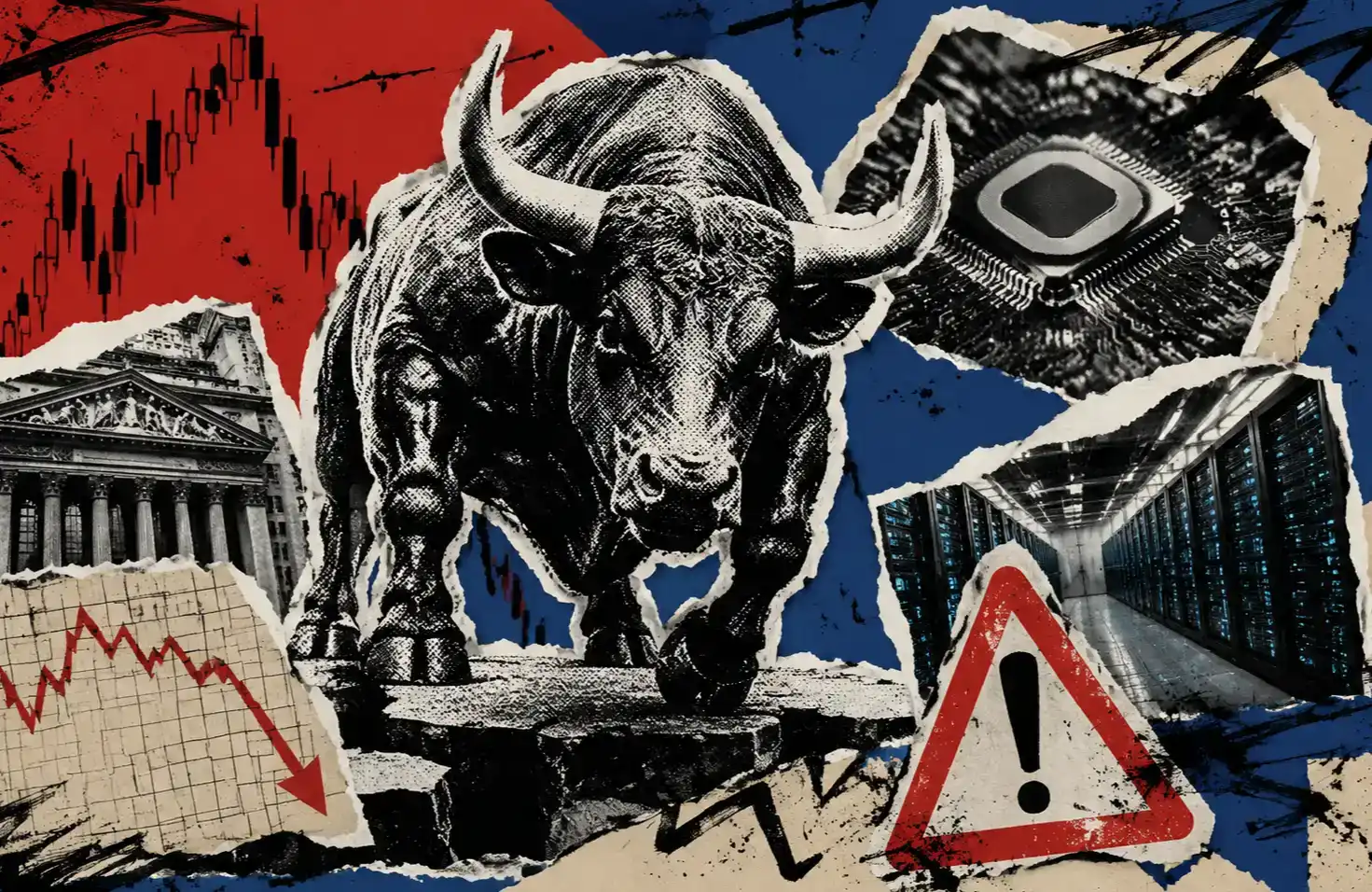
TL;DR: The US stock market faces a complex dilemma: a major bearish warning from Bank of America (BofA) versus strong fundamental growth driven by AI. BofA's equity strategy team warns that about 70% of its bear market indicators have been triggered, a level historically associated with market tops. The S&P 500 shows extreme valuation on multiple metrics, with narrow market breadth and extreme leadership concentration (e.g., top vs. bottom tech stock performance gap at its widest since 2000). This signals deteriorating reward-to-risk odds for investors, as the index advance relies on fewer stocks, reducing portfolio margin for error. However, the current AI boom differs fundamentally from the 2000 dot-com bubble. Today's leading companies (Microsoft, Google, Amazon, Meta, Nvidia) have substantial cash flows, profits, and concrete orders, underpinned by real data center and cloud capital expenditure. Nvidia's massive data center revenue growth offers tangible evidence of demand. The optimism is based on a real infrastructure build-out cycle. The core issue has thus shifted. It's no longer a simple debate about an AI bubble. The market is transitioning from a "buy the growth story" phase to a "prove the growth speed" phase. While AI fundamentals may remain robust, high valuations have priced in significant future success. The key test ahead is whether upcoming earnings can demonstrate that AI-related revenues and cash flows are growing fast enough to justify current prices and offset the elevated risks flagged by historical models like BofA's. Investors must now scrutinize capital expenditure payoffs, profit margins, and whether market breadth improves.

marsbit06/10 09:02

70% Bear Market Signal Flashes in the U.S. Stock Market. Time to Run?

marsbit06/10 09:02

活动图片