Industry NewsNews

Tracks company news, strategic changes, funding activities, and personnel adjustments across the blockchain and crypto industries, delivering a full-spectrum industry overview for our users.
2026 Kicks Off a Major Financial Year: Prediction Markets Are Becoming the Next Frontier for DeFi

The article "2026: The Grand Opening of Finance – Prediction Markets Emerge as DeFi's Next Frontier" discusses the rise of prediction markets in the decentralized finance (DeFi) ecosystem. It highlights how prediction markets, after achieving product-market fit, are gaining mainstream traction, similar to Bitcoin and stablecoins. These markets exhibit a natural platform monopoly effect, forming a layered ecosystem of core platforms, peripheral services, and external applications. Prediction markets are characterized as deterministic yet uncertain, dealing with events like U.S. elections or the World Cup, where outcomes are influenced by real-time information and participant sentiment. Major platforms like Polymarket and Kalshi are becoming centralized hubs for information discovery, backed by significant capital investment due to their maturity and compliance advantages in Western markets. The article identifies four emerging models around prediction markets: 1. Clone platforms facing high entry barriers and compliance costs. 2. Asset-layer innovations, such as DeFi integration for betting assets (e.g., using positions as collateral or adding leverage). 3. Specialized tools for arbitrage, data aggregation, and analysis. 4. KOL-driven referral and佣金 platforms. The most promising opportunity lies in DeFi-izing prediction market assets, particularly leveraging idle funds during the betting period until outcomes are determined. The author proposes a cross-market arbitrage mechanism inspired by e-commerce discount platforms, where users place discounted bets on platforms like Polymarket, while their funds are deployed in DeFi protocols (e.g., Morpho) for yield. This approach benefits all parties: users get better prices, platforms gain volume, and liquidity providers earn returns without disrupting the core betting experience. The conclusion emphasizes that prediction markets' true value is in their locked capital with clear expiration dates. As 2026 approaches with major events like the U.S. midterm elections and the World Cup, regulatory tailwinds and market enthusiasm could make it a pivotal year for prediction markets and DeFi convergence.

marsbit12/24 08:15

2026 Kicks Off a Major Financial Year: Prediction Markets Are Becoming the Next Frontier for DeFi

marsbit12/24 08:15

Huobi HTX Contract Head Fully Deciphers: What Huobi Contracts Did Right in 2025 and Where They Are Headed

Huobi HTX Derivatives Head Decodes 2025 Success and Future Roadmap In 2025, Huobi HTX's derivatives business achieved 2-3x user growth, driven by robust risk management and continuous product upgrades. Key initiatives included the launch of Copy Trading 4.0—a system-level redesign emphasizing user-friendliness, transparency, and safety. The update integrated copy trading with the main contract interface, introduced smart copy modes, and enhanced risk controls with isolated funds and synchronized leverage settings. The growth was attributed to long-term user trust built on Huobi HTX’s 12-year foundation in security and risk control, which withstood multiple market volatilities without major incidents. Liquidity for major and semi-major coins doubled, though improvements are planned for long-tail assets. The Unified Margin system, launched in May, boosted API trading speed by 4x and attracted high-frequency traders. Financial products like Savings (Yu Bao) improved capital efficiency, with plans to increase yields by 2-3x in 2026. AI-driven trading tools and strategy integrations are also prioritized. Looking ahead, Huobi HTX will focus on refining products, optimizing liquidity, enhancing capital efficiency, and deepening risk management. A key shift will involve empowering users with more active risk control tools, promoting transparent and manageable trading decisions. The goal is to enable sustainable participation in high-volatility crypto markets through safer, smarter, and more rational trading frameworks.

深潮12/24 07:57

Huobi HTX Contract Head Fully Deciphers: What Huobi Contracts Did Right in 2025 and Where They Are Headed

深潮12/24 07:57

How is the Once-Booming Metaverse Faring Now?

The metaverse industry in 2025 shows a mixed and evolving landscape, moving past the initial hype into more differentiated and practical developments. Key areas like immersive gaming platforms continue to thrive—Roblox hit 151.5 million daily active users, though it downplays the "metaverse" label in favor of terms like "global gaming ecosystem." Similarly, Fortnite emphasizes open, interoperable experiences with strong third-party content engagement. In contrast, metaverse social platforms struggle. Meta’s Horizon Worlds remains niche with under 200K MAU, while some platforms like VRChat grow steadily. Rec Room faced significant layoffs due to challenges in scaling quality content. Hardware sees divergence: Apple’s Vision Pro targets the high-end but remains niche, Meta’s Quest leads the mass market, and lightweight AR glasses like Ray-Ban Meta gain traction. Industrial metaverse applications are growing robustly, with NVIDIA’s Omniverse and enterprise digital twin use cases expanding in manufacturing, healthcare, and urban planning. Avatar platforms like ZEPETO and Ready Player Me continue evolving, with the latter acquired by Netflix. Crypto and NFT-based metaverses like Decentraland and The Sandbox remain stagnant with low activity, despite efforts like Yuga Labs’ Otherside launch. Overall, the metaverse is maturing with clear winners in gaming and enterprise, while social and crypto segments face structural challenges.

marsbit12/24 07:44

How is the Once-Booming Metaverse Faring Now?

marsbit12/24 07:44

Top 10 AI Models Speak Out: What Do Crypto Users Care About Most in 2025?

This article summarizes the top concerns of cryptocurrency users in 2025, as predicted by 10 major AI models. The models were asked to identify the three most common questions users would have about crypto in 2025, with instructions to avoid real-time searches and base answers on long-term discussion patterns. The responses, while varied, cluster around three core themes: market cycles, profit opportunities, and risk management. Key recurring questions include: - The current market phase (bull or bear) and how long it will last. - Bitcoin's price trajectory post-halving and the market's peak. - Where to find profitable opportunities (alpha) and the best assets or sectors to invest in (e.g., RWA, AI+Crypto, L2s, Solana). - The impact of regulatory changes and ETF approvals on the market and asset safety. - How to identify scams, assess project legitimacy, and securely store assets. - Practical on-chain concerns like avoiding MEV and setting slippage. The analysis notes that the models' different focuses reflect their design and user base. For instance, ChatGPT framed questions around a structured narrative of market anxiety, while Kimi addressed granular technical issues. More capable models tended to provide sharper, more specific questions, while others fell back on broader, common themes. Overall, the collective output reveals a user mindset focused on first gauging market trends, then seeking alpha, and finally mitigating risks.

比推12/24 06:50

Top 10 AI Models Speak Out: What Do Crypto Users Care About Most in 2025?

比推12/24 06:50

The Trillion-Dollar Stablecoin War: Binance Decides to Re-enter the Fray

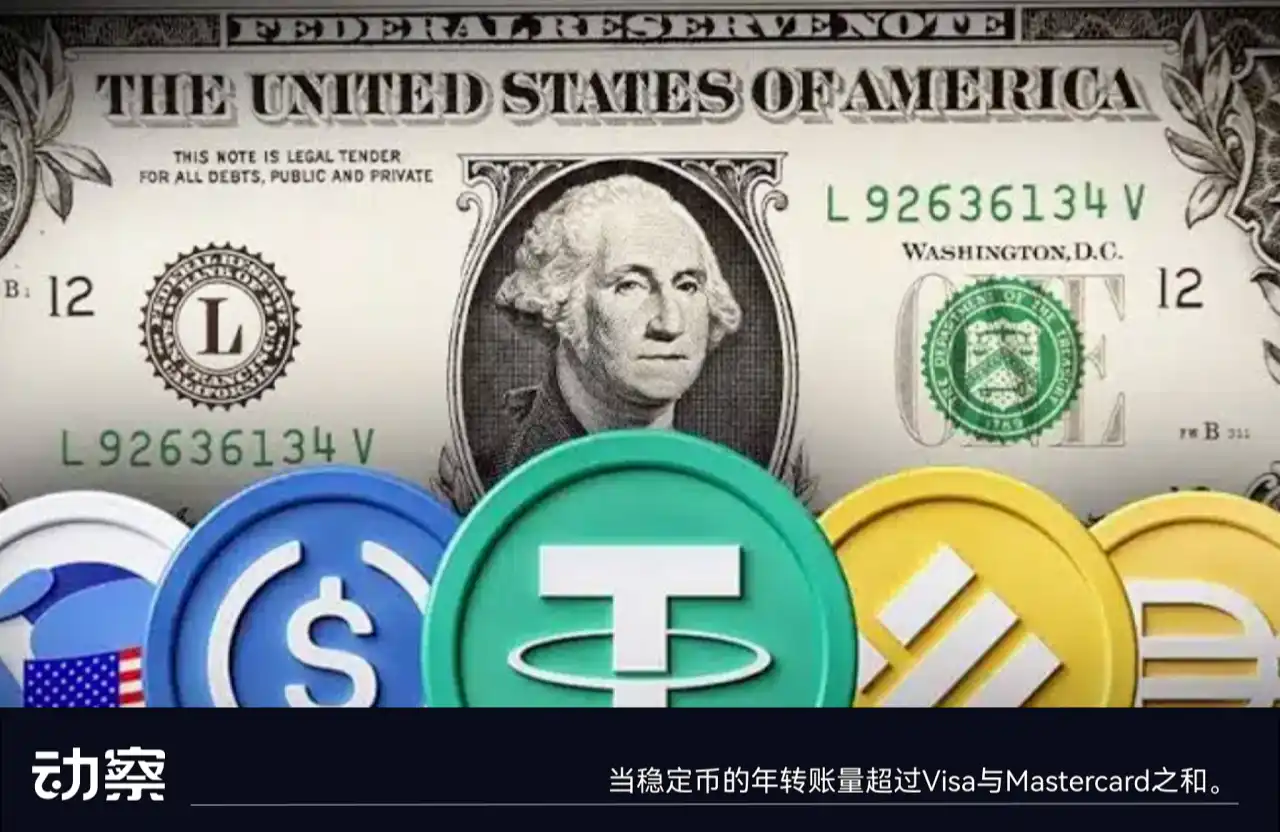
The stablecoin market, with $27.6 trillion in on-chain transfers in 2024, has surpassed the combined volume of Visa and Mastercard. This marks a shift from a niche crypto product to a critical piece of global financial infrastructure. The article outlines the evolution of stablecoins. The 1.0 era was defined by first-mover advantage and passive monopolies. Tether's USDT dominates with a 60% market share, while Circle's USDC, despite its compliance focus, faced a crisis during the 2023 Silicon Valley Bank collapse, proving that network effect is the ultimate moat. Binance's journey reflects this competitive landscape. Its first stablecoin, the regulated BUSD, was shut down by U.S. regulators in 2023. It then pivoted to supporting FDUSD and has now taken a strategic stake in a new model with the launch of $U. Unlike traditional stablecoins, $U is a "stablecoin ETF" or "套娃" (nesting doll), backed by a basket of existing stablecoins: USDT, USDC, and the politically-connected USD1 from the Trump family. USD1's rapid growth, including a $2 billion investment into Binance from an Abu Dhabi fund, highlights a new dimension: stablecoins. The article argues that stablecoins are no longer just financial tools but vehicles for political capital and a new front in the battle for monetary influence, as evidenced by the U.S. passing the GENIUS Act to establish a federal regulatory framework. The "nesting doll" structure of $U aims to mitigate single-point risks (e.g., USDT's opacity, USDC's banking risk, USD1's political ties) and aggregate liquidity. However, it also creates a potential chain of risk contagion. The competition has moved from a solo fight for survival (1.0) to an era of alliances and aggregation (2.0), where the key is who can build the largest coalition. With giants like PayPal and Ripple entering the fray, the battle for the future of digital dollars is intensifying, and its outcome will have profound implications for the global financial system.

marsbit12/24 06:11

The Trillion-Dollar Stablecoin War: Binance Decides to Re-enter the Fray

marsbit12/24 06:11

活动图片