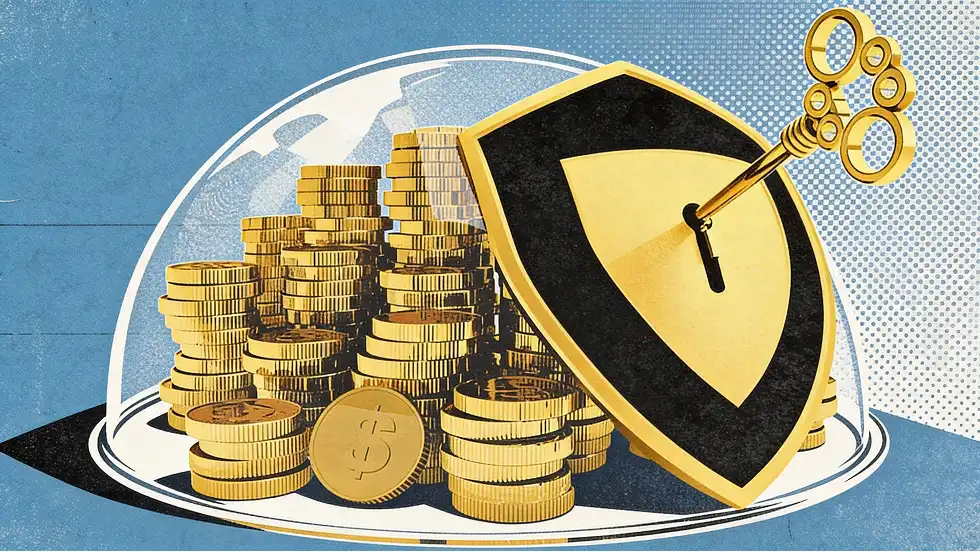
Bitcoin Records First-Ever Negative Post-Halving Year — Is the 4-Year Cycle Over?

ccn.comPublished on 2026-01-01Last updated on 2026-01-01

Abstract

Bitcoin closed 2025 with a 6% decline, marking the first negative post-halving year in its history. This breaks the long-standing four-year cycle where Bitcoin historically saw significant gains following halving events. The trend shift is attributed to increased institutional dominance through ETFs, which tied Bitcoin closer to traditional markets and macro factors like interest rates and equity sentiment. The 2024 halving’s supply reduction had a diminished impact due to the maturity of the market and the fact that most Bitcoin has already been mined. While some declare the four-year cycle "dead," others see it as evolution toward longer, less volatile cycles aligned with macroeconomic trends. Despite the downturn, Bitcoin's network strength and adoption continue to grow.

Key Takeaways

  • Bitcoin closed 2025 as the first negative post-halving year ever.
  • Institutional dominance and macro factors muted the halving impact in 2025.
  • 4-year cycle evolving, not dead; expect longer, less volatile patterns ahead.

Bitcoin (BTC) closed 2025 with a negative yearly return for the first time in a post-halving year, marking a significant deviation from historical patterns.

This development has sparked widespread debate about whether the traditional “4-year cycle” driven by Bitcoin’s halving events is breaking down or simply evolving due to market maturation.

Try Our Recommended Crypto Exchanges
Sponsored
Disclosure
We sometimes use affiliate links in our content, when clicking on those we might receive a commission at no extra cost to you. By using this website you agree to our terms and conditions and privacy policy.
"}' data-trk="68df7fd8872238d510dfbf06" href="https://clicks.pipaffiliates.com/c?c=1104900&l=en&p=1" rel="nofollow" target="_blank">
XM.com<\/h3>"}' data-trk="68df7fd8872238d510dfbf06" href="https://clicks.pipaffiliates.com/c?c=1104900&l=en&p=1" rel="nofollow" target="_blank">

XM.com

promotions
Get 100% Bonus up to $100 on your first Deposit.<\/strong>"}' data-trk="68df7fd8872238d510dfbf06" href="https://clicks.pipaffiliates.com/c?c=1104900&l=en&p=1" rel="nofollow" target="_blank"> Get 100% Bonus up to $100 on your first Deposit.
Coins
28
Claim Offer
"}' data-trk="6899b9831836d97539c51aa6" href="https://www.bitunix.com/" rel="nofollow" target="_blank">
Bitunix<\/h3>"}' data-trk="6899b9831836d97539c51aa6" href="https://www.bitunix.com/" rel="nofollow" target="_blank">

Bitunix

promotions
Receive up to $100,000 worth of exclusive gifts for newcomers upon registration.<\/strong>"}' data-trk="6899b9831836d97539c51aa6" href="https://www.bitunix.com/" rel="nofollow" target="_blank"> Receive up to $100,000 worth of exclusive gifts for newcomers upon registration.
Coins
151
Claim Offer
"}' data-trk="67adf8d4f12aaec7e4808bf5" href="https://bonus.bitget.com/CCN12" rel="nofollow" target="_blank">
Bitget<\/h3>"}' data-trk="67adf8d4f12aaec7e4808bf5" href="https://bonus.bitget.com/CCN12" rel="nofollow" target="_blank">

Bitget

promotions
Earn rewards worth up to 5,000 USDT on your first deposit<\/strong>"}' data-trk="67adf8d4f12aaec7e4808bf5" href="https://bonus.bitget.com/CCN12" rel="nofollow" target="_blank"> Earn rewards worth up to 5,000 USDT on your first deposit
Coins
88
Claim Offer

Bitcoin’s 4 Year Price Cycle Over?

Bitcoin closed 2025 with a 6% decline, marking the first year since the halving with a close in the red.

Historically, the BTC price has peaked in the year following the halving. This trend has been consistent since 2014, with each subsequent year generating significant positive returns.

Bitcoin’s halvings reduce mining rewards by approximately half every 4 years, historically triggering bull runs due to the reduced issuance of new supply.

Examining historical data, 2025 is the weakest post-halving performance on record in percentage terms, with no prior red yearly candle in these periods.

Many declare the cycle “officially dead.” The failure to sustain post-halving gains, combined with the absence of a “supply shock” rally, suggests that halvings matter less in an institutionalized market.

Others see it as maturation, not death. The halving’s scarcity effect persists in the long term, but price dynamics are “not as automatic.”

Consolidation in 2025 could be a healthy correction in a longer bull market, with potential rebounds in 2026 driven by regulatory clarity and easing monetary policy.

How ETFs, Macro Pressure, and Institutions Rewrote the Cycle

The negative return trend breaks nearly a decade-old cycle, but it wasn’t out of the blue; several factors contributed to the reversal of the trend.

  • Institutional Dominance: The launch of Spot Bitcoin ETFs in 2024 brought massive cumulative inflows of approximately $56–$87 billion, but also tied BTC more closely to traditional risk assets.
  • BTC Correlation: BTC’s correlation with the S&P 500 and NASDAQ rose significantly in 2025, behaving like a “macro asset” sensitive to interest rates, liquidity, and equity sentiment.
  • Diminishing Halving Impact: The 2024 halving reduced issuance from 1.7% to 0.85% annually — less dramatic as ~94% of BTC is already mined. Supply shocks are muted compared to earlier cycles.
  • Macro Headwinds: Geopolitical tensions, Fed policy tightening, and year-end risk-off mood dragged prices. BTC underperformed gold, which soared as a traditional hedge.
  • Early Cycle Front-Running: The bull run started pre-halving in 2024 due to ETF hype, peaking early in 2025 before correcting.
  • Reduced Retail Speculation: Lower volatility and perpetual futures basis rates reflect mature, institution-heavy trading with a volume of 60% or more.

The break of Bitcoin’s trend indicates the classic retail-driven, hype-fueled 4-year pattern has evolved.

This means that future cycles may be longer, less volatile, and more aligned with macroeconomic trends.

This negative post-halving year doesn’t invalidate Bitcoin’s fundamentals. The network’s hash rate grew, and adoption increased, signaling a shift toward maturity.

For long-term investors, it may present opportunities for accumulation, while short-term traders should closely monitor macroeconomic cues.

Top Picks for Bitcoin
  • Best Exchanges for Bitcoin Get A Great Offer When You Join These Exchanges
  • Buy Bitcoin Fast & Easy How To Buy Bitcoin With a Credit Card Now
  • Best Online Casinos for Bitcoin See Our Picks for the Best Crypto Gambling Sites

Related Questions

QWhat was Bitcoin's yearly return in 2025, and why is this significant?

ABitcoin closed 2025 with a 6% decline, marking the first negative yearly return in a post-halving year, which is a significant deviation from its historical pattern of strong positive gains following halving events.

QWhat are the key factors cited for the muted halving impact and negative return in 2025?

AKey factors include institutional dominance from Bitcoin ETFs, increased correlation with traditional risk assets like the S&P 500, diminishing supply shock impact as most BTC is already mined, macro headwinds like Fed policy tightening, early cycle front-running from the 2024 ETF hype, and reduced retail speculation.

QDoes the article conclude that Bitcoin 4-year cycle is completely over?

ANo, the article suggests the cycle is evolving, not dead. It states that the halving's scarcity effect persists long-term, but price dynamics are 'not as automatic,' and future cycles may be longer, less volatile, and more aligned with macroeconomic trends.

QHow did the introduction of Spot Bitcoin ETFs in 2024 affect the market dynamics?

AThe launch of Spot Bitcoin ETFs brought massive institutional inflows (approx. $56–$87 billion) but also tied Bitcoin's price more closely to traditional risk assets, increasing its correlation with equities and making it more sensitive to macro factors like interest rates.

QWhat is the long-term outlook for Bitcoin according to the article despite the negative year?

AThe long-term outlook remains fundamentally sound. The network's hash rate grew, adoption increased, and the negative year is seen as a maturation phase. For long-term investors, it may present accumulation opportunities, while short-term traders should monitor macroeconomic cues.

Related Reads

US Stocks Hit Record Highs: Why Isn't the Market Afraid of the Flames of War?

U.S. stocks hit a record high on April 15, with the S&P 500 closing at 7,022.95, just 77 days after its previous peak. This rebound occurred in only 11 trading days—far faster than recoveries following past crises like the COVID-19 pandemic (103 days) or the 2011 debt crisis (106 days). The market's rapid recovery is attributed to "ceasefire expectations" rather than deteriorating economic fundamentals. During the sell-off triggered by the U.S.-Israel military action against Iran in late February, the S&P 500 fell nearly 10%. However, the market rallied twice on ceasefire rumors—first on March 24 and again on April 8—even before any permanent peace deal was signed. Notably, the VIX fear index fell below pre-war levels, indicating that the market had repriced the conflict from an uncertainty to a calculable risk. Major financial institutions like JPMorgan reported record trading revenues of $11.6 billion in Q1 2026, largely driven by volatility in commodities and emerging markets. Hedge funds turned net long for the first time since late 2025, while margin debt hit a record $1.28 trillion. This reflects a financial system that commercializes volatility, treating geopolitical shocks as tradable opportunities rather than systemic threats. However, the current optimism relies on assumptions of a sustained ceasefire and stable oil prices, leaving the market vulnerable if these conditions change.

marsbit7m ago

US Stocks Hit Record Highs: Why Isn't the Market Afraid of the Flames of War?

marsbit7m ago

Is the Rebound an Illusion? The Bond Market Has Already Given the Answer

Is the stock market's rapid rebound to pre-war levels a sign of recovery or a misleading rally driven by momentum rather than fundamentals? While the S&P 500 has fully recovered its losses from the U.S.-Iran conflict and nears all-time highs, bond and oil markets tell a different story. Key data reveals contradictions: 10-year Treasury yields have risen 30 basis points, signaling persistent inflation concerns and constrained Fed policy space. WTI crude is up 37%, indicating that geopolitical risks are not priced to resolve soon. The 2-year Treasury yield, a sensitive gauge of rate expectations, has increased nearly 40 bps, challenging the narrative of imminent Fed rate cuts. The equity market appears to be pricing in a "perfect scenario": subdued oil impact on consumption, Fed rate cuts despite hot inflation, stable corporate margins, and near-term conflict resolution. However, bonds and oil reflect a reality of sticky inflation, limited Fed flexibility, and ongoing geopolitical tension. This divergence suggests the rally may be momentum-driven rather than fundamentally justified. If upcoming CPI data exceeds expectations (e.g., above 3.5%), the 2026 rate-cut narrative could collapse. Investors chasing the rally are betting on an ideal outcome—swift conflict resolution, controlled inflation, Fed easing, and resilient earnings—while ignoring signals from more cautious asset classes. The gap will likely close either through a fundamental improvement validating stocks or a market correction aligning with bond and oil realities.

marsbit15m ago

Is the Rebound an Illusion? The Bond Market Has Already Given the Answer

marsbit15m ago

Trading

Spot
Futures

Hot Articles

What is $BITCOIN

DIGITAL GOLD ($BITCOIN): A Comprehensive Analysis Introduction to DIGITAL GOLD ($BITCOIN) DIGITAL GOLD ($BITCOIN) is a blockchain-based project operating on the Solana network, which aims to combine the characteristics of traditional precious metals with the innovation of decentralized technologies. While it shares a name with Bitcoin, often referred to as “digital gold” due to its perception as a store of value, DIGITAL GOLD is a separate token designed to create a unique ecosystem within the Web3 landscape. Its goal is to position itself as a viable alternative digital asset, although specifics regarding its applications and functionalities are still developing. What is DIGITAL GOLD ($BITCOIN)? DIGITAL GOLD ($BITCOIN) is a cryptocurrency token explicitly designed for use on the Solana blockchain. In contrast to Bitcoin, which provides a widely recognized value storage role, this token appears to focus on broader applications and characteristics. Notable aspects include: Blockchain Infrastructure: The token is built on the Solana blockchain, known for its capacity to handle high-speed and low-cost transactions. Supply Dynamics: DIGITAL GOLD has a maximum supply capped at 100 quadrillion tokens (100P $BITCOIN), although details regarding its circulating supply are currently undisclosed. Utility: While precise functionalities are not explicitly outlined, there are indications that the token could be utilized for various applications, potentially involving decentralized applications (dApps) or asset tokenization strategies. Who is the Creator of DIGITAL GOLD ($BITCOIN)? At present, the identity of the creators and development team behind DIGITAL GOLD ($BITCOIN) remains unknown. This situation is typical among many innovative projects within the blockchain space, particularly those aligning with decentralized finance and meme coin phenomena. While such anonymity may foster a community-driven culture, it intensifies concerns about governance and accountability. Who are the Investors of DIGITAL GOLD ($BITCOIN)? The available information indicates that DIGITAL GOLD ($BITCOIN) does not have any known institutional backers or prominent venture capital investments. The project seems to operate on a peer-to-peer model focused on community support and adoption rather than traditional funding routes. Its activity and liquidity are primarily situated on decentralized exchanges (DEXs), such as PumpSwap, rather than established centralized trading platforms, further highlighting its grassroots approach. How DIGITAL GOLD ($BITCOIN) Works The operational mechanics of DIGITAL GOLD ($BITCOIN) can be elaborated on based on its blockchain design and network attributes: Consensus Mechanism: By leveraging Solana’s unique proof-of-history (PoH) combined with a proof-of-stake (PoS) model, the project ensures efficient transaction validation contributing to the network's high performance. Tokenomics: While specific deflationary mechanisms have not been extensively detailed, the vast maximum token supply implies that it may cater to microtransactions or niche use cases that are still to be defined. Interoperability: There exists the potential for integration with Solana’s broader ecosystem, including various decentralized finance (DeFi) platforms. However, the details regarding specific integrations remain unspecified. Timeline of Key Events Here is a timeline that highlights significant milestones concerning DIGITAL GOLD ($BITCOIN): 2023: The initial deployment of the token occurs on the Solana blockchain, marked by its contract address. 2024: DIGITAL GOLD gains visibility as it becomes available for trading on decentralized exchanges like PumpSwap, allowing users to trade it against SOL. 2025: The project witnesses sporadic trading activity and potential interest in community-led engagements, although no noteworthy partnerships or technical advancements have been documented as of yet. Critical Analysis Strengths Scalability: The underlying Solana infrastructure supports high transaction volumes, which could enhance the utility of $BITCOIN in various transaction scenarios. Accessibility: The potential low trading price per token could attract retail investors, facilitating wider participation due to fractional ownership opportunities. Risks Lack of Transparency: The absence of publicly known backers, developers, or an audit process may yield skepticism regarding the project's sustainability and trustworthiness. Market Volatility: The trading activity is heavily reliant on speculative behavior, which can result in significant price volatility and uncertainty for investors. Conclusion DIGITAL GOLD ($BITCOIN) emerges as an intriguing yet ambiguous project within the rapidly evolving Solana ecosystem. While it attempts to leverage the “digital gold” narrative, its departure from Bitcoin's established role as a store of value underscores the need for a clearer differentiation of its intended utility and governance structure. Future acceptance and adoption will likely depend on addressing the current opacity and defining its operational and economic strategies more explicitly. Note: This report encompasses synthesised information available as of October 2023, and developments may have transpired beyond the research period.

363 Total ViewsPublished 2025.05.13Updated 2025.05.13

What is $BITCOIN

Discussions

Welcome to the HTX Community. Here, you can stay informed about the latest platform developments and gain access to professional market insights. Users' opinions on the price of BTC (BTC) are presented below.

活动图片