Solana’s [SOL] liquidity behavior is shifting, as capital now moves within the ecosystem rather than exiting during stress. In fact, SOL-denominated TVL has exceeded 80 million SOL, reaching an all-time high despite broader market contraction. At the same time, DEX volume hit $95 billion in February, showing strong internal activity.
DeFiLlama data lends some nuance too, with $5.55 billion in TVL even after a 15% monthly decline – A sign of resilience rather than outflows. This happens because liquidity rotates across venues like Kamino, Raydium, and Jupiter, instead of leaving the chain. Daily volumes often exceed $900 million, reinforcing this internal flow.
Such a shift implies Solana’s structure may be maturing, where stability depends on capital movement efficiency and not just retention.
Solana’s DEX routing shifts from dominance to competition
This internal rotation of liquidity is now beginning to reshape how trades are routed across Solana, rather than where capital sits.
Jupiter controlled about 82% of aggregator flow in March, but its share slipped to the lowest level since November 2025 – Evidence of early pressure. Meanwhile, Titan rose to 7.3%, its highest since launch, showing that users have been starting to test alternatives.
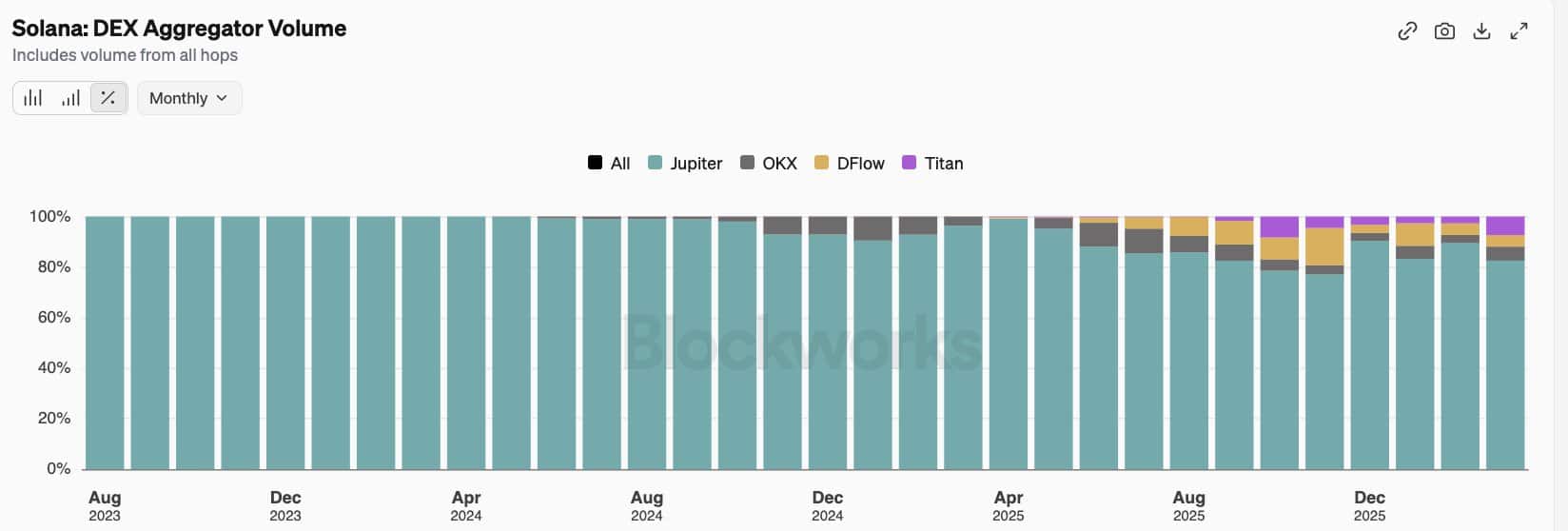
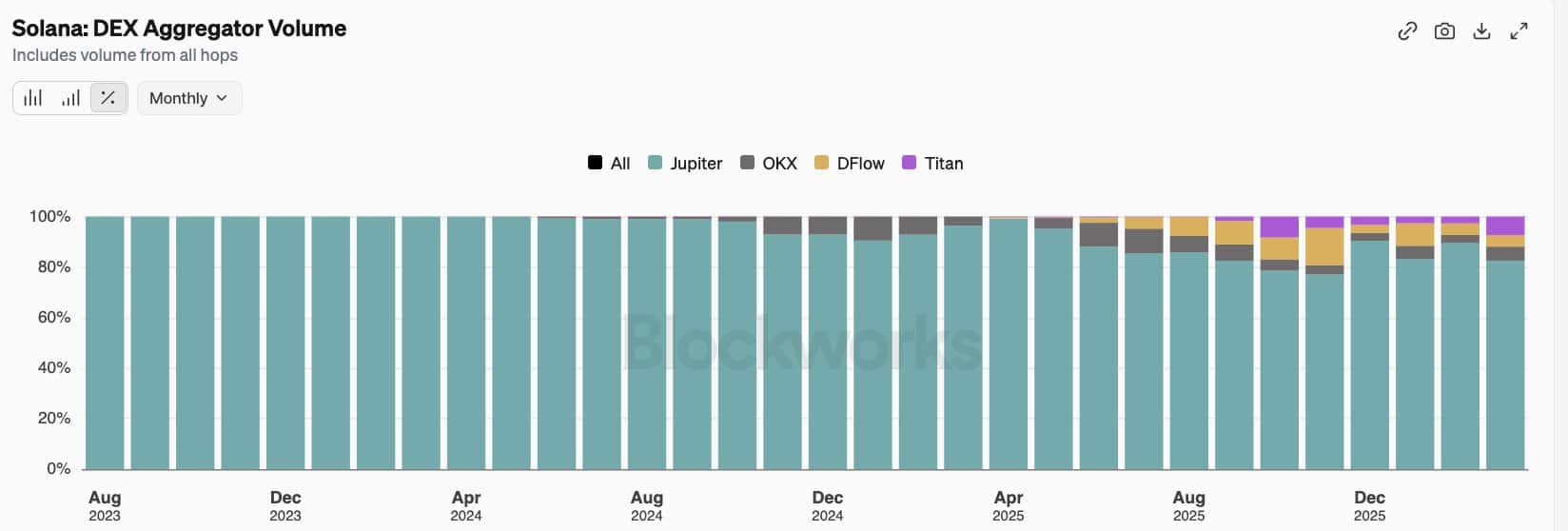
Such a shift happens because execution quality and pricing efficiency are becoming more important than brand dominance. As more routers compete, flows fragment slightly, but remain within the same ecosystem. Earlier, Jupiter held near-total control through 2023 and most of 2024, which limited competition.
Now, competition improves routing efficiency, yet also introduces fragmentation. This means users gain better execution while protocols face tighter margins and rising pressure to innovate.
Solana absorbs shock as liquidity rotates, not exits
This growing routing competition shows why Solana’s liquidity reacts differently during stress, as capital adjusts rather than exits.
For instance – TVL fell to $5.55 billion, down 10.47% in seven days, after the $285 million Drift exploit. However, the drop has been contained since net losses excluding the hack sit near 8%, showing users did not broadly withdraw funds.
Ethereum [ETH] rose by 2.97% to $54.15 billion, while BSC gained by 2.25% to $5.36 billion, indicating capital shifts across ecosystems rather than leaving DeFi. This happens because users seek alternative venues when risk appears, not full exits.
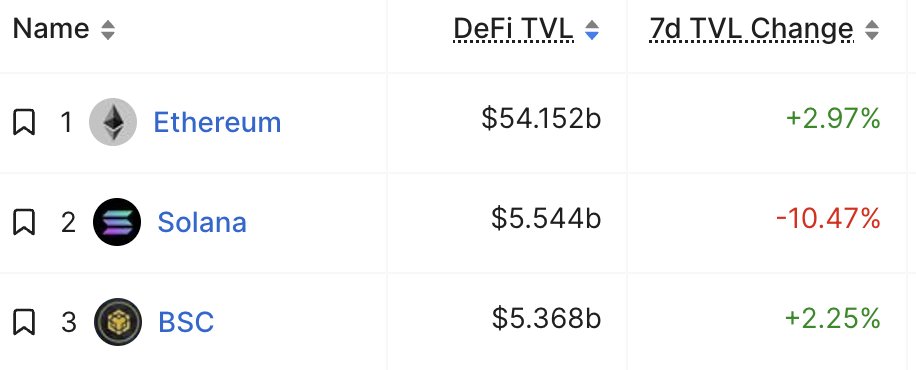
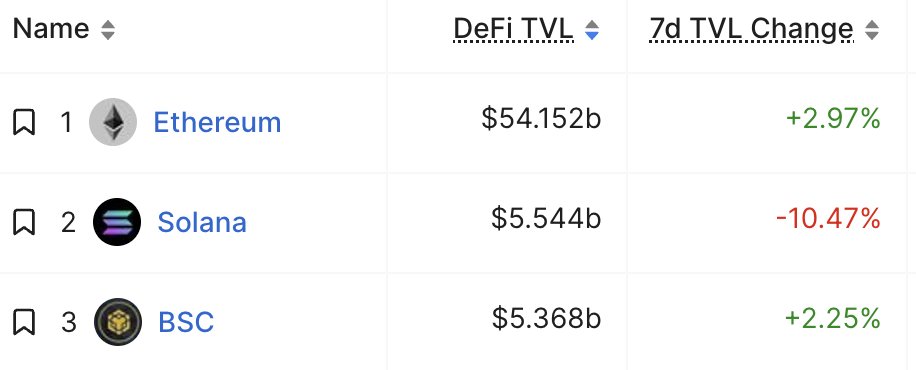
Solana still holds second place, which also means that liquidity remains within reach. This is also evidence of competitive routing and multiple venues helping absorb shocks, allowing users to reposition without abandoning the network.
Taken together, Solana’s liquidity now reflects internal competition as much as external shocks. Titan’s rise means rotation, rather than dominance, making venue dynamics central to resilience while exploit risk still defines trust limits.
Final Summary
- Solana [SOL] has exhibited structural maturity as liquidity rotates across venues.
- Competition has improved routing, allowing capital to reposition internally rather than exiting during stress.