Solana is drawing renewed market attention after on-chain data revealed fresh activity from Alameda Research wallets. According to blockchain analytics platform Arkham, Alameda recently unstaked approximately $17 million worth of SOL and transferred the tokens to its bankruptcy-controlled accounts. These movements are part of the firm’s ongoing asset management process, as funds recovered from the estate are periodically redistributed to creditors.
Alameda Research was once one of the most influential trading firms in the cryptocurrency industry. Founded by Sam Bankman-Fried, the company operated as a quantitative trading desk closely tied to the FTX cryptocurrency exchange. Alameda played a major role in providing liquidity across digital asset markets and maintained large positions in several major cryptocurrencies, including Solana.
However, the firm collapsed in November 2022 following the dramatic failure of FTX. Investigations revealed that billions of dollars in customer funds had been misused and transferred between the exchange and Alameda, triggering a liquidity crisis that quickly spiraled into one of the largest bankruptcies in crypto history.
Since then, Alameda’s remaining digital assets have been gradually managed through court-supervised bankruptcy proceedings. The periodic unstaking and distribution of SOL tokens reflects the ongoing effort to recover value for creditors while liquidating portions of the estate’s remaining cryptocurrency holdings.
Alameda’s Remaining Solana Holdings Continue to Draw Market Attention
Despite the recent $17 million unstaking event, Alameda Research still holds a substantial amount of Solana in its on-chain wallets. Current blockchain data indicates that the bankrupt trading firm retains roughly $321 million worth of SOL, making it one of the largest known holders of the asset tied to the FTX estate. Because these tokens remain under bankruptcy management, market participants closely monitor any movements from these wallets.
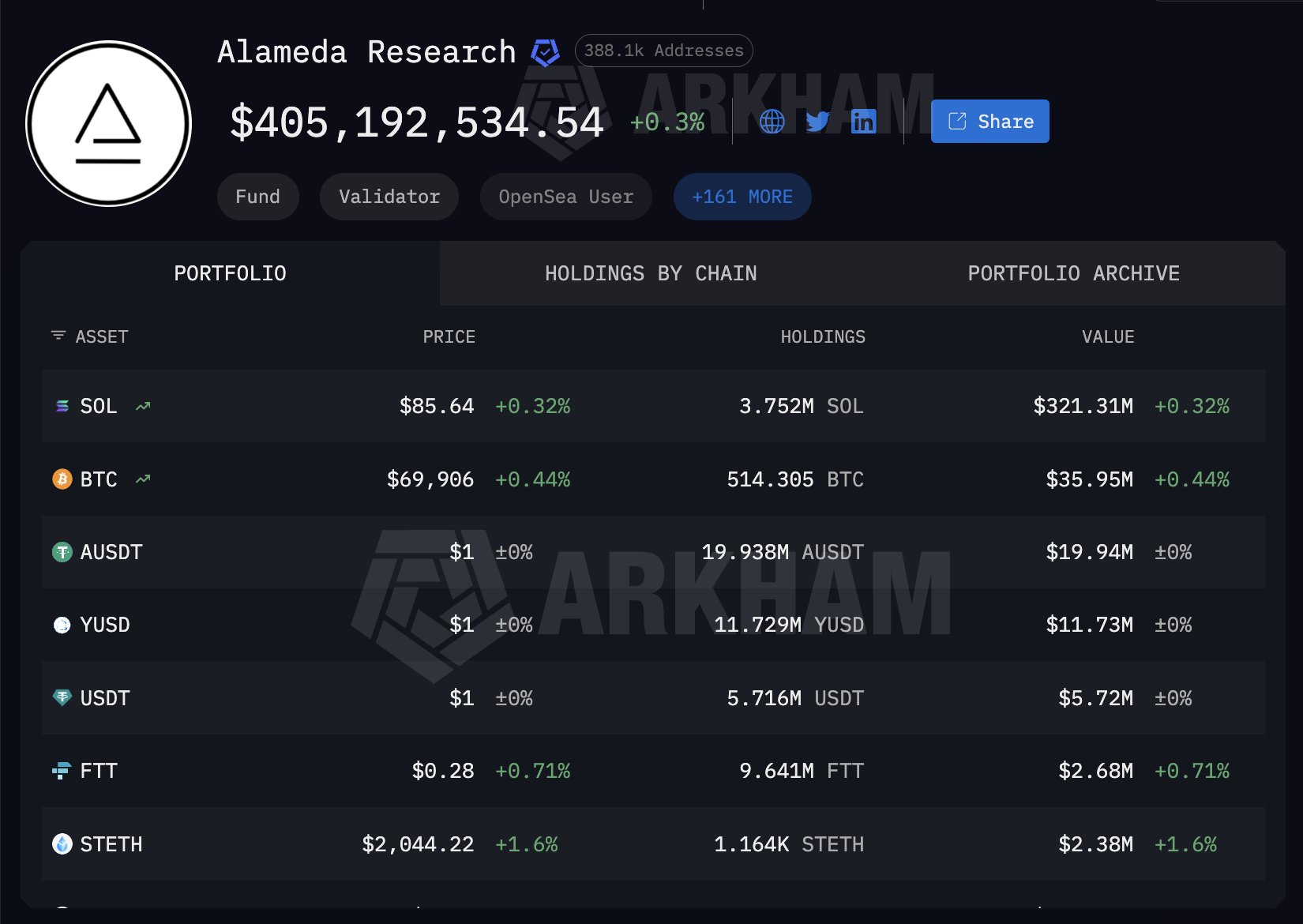
The presence of such a large balance introduces a persistent element of potential supply overhang. As bankruptcy administrators continue distributing assets to creditors, portions of these holdings may periodically enter the market. This process does not necessarily translate into immediate selling pressure, but it can influence trader sentiment because investors often anticipate that distributed tokens could eventually be liquidated.
At the same time, Solana’s broader market structure reflects the cautious environment affecting the cryptocurrency sector. Like many large-cap altcoins, SOL has been trading in a consolidation phase following periods of volatility across the digital asset market. Liquidity remains selective, and investors are increasingly focused on assets with strong ecosystem activity and sustained network usage.
For Solana, this environment creates a mixed dynamic. While ongoing creditor distributions represent a potential supply factor, the network continues to maintain high on-chain activity and developer engagement, which remain key drivers supporting long-term interest in the asset.





















