Author: Wall Street Insights
Over the past year, investors who followed the Trump administration into publicly traded companies reaped substantial profits. However, as the midterm elections approach, with Democrats poised to regain at least one chamber of Congress, this government-backed stock market rally now faces multiple risks—lawsuits, congressional hearings, political backlash, any of which could reverse the upward trend of these stocks.
On August 29, Bloomberg reported that rising poll numbers favor Democrats. Market strategists warn that if Democrats gain control of the Senate or House, congressional investigations targeting government-backed companies will follow, threatening both corporate brands and stock prices. Simultaneously, a shareholder lawsuit is challenging the legality of the government's stake in Intel in court—if the court rules that the CHIPS Act does not empower the Commerce Department to exchange subsidies for equity, the legal foundation of the entire government portfolio could be undermined.
Market strategists note that most of the gains in these stocks came from short-lived surges after announcements, followed by significant pullbacks, indicating the inherent fragility of the momentum driven by government backing. Henrietta Treyz, co-founder of research firm Veda Partners, stated bluntly, subpoenas from Democratic-led committees compelling corporate executives and government officials to testify at hearings "are among the most significant risks investors need to watch now."
The Government Investment Wave: Impressive Gains, But Mostly Fleeting
The Trump administration pursued an unprecedented strategy: exchanging government funds for equity stakes in public companies, directly injecting state capital into private enterprises. This approach quickly ignited market enthusiasm, with retail and institutional investors betting on the next "government-picked" target.
The book figures are quite impressive. Intel's stock price has risen over 300% cumulatively since talks of a Trump administration stake emerged last year; MP Materials has gained 87% since the Defense Department invested $400 million in July last year; Trilogy Metals is up 73% since the U.S. government agreed to acquire a 10% stake last October.
However, the structure of these gains warrants caution. Trilogy Metals' U.S. shares soared from $2.09 to a high of $10.60 within days of the deal announcement, then quickly retreated, currently trading at $3.62. MP Materials surged over 150% within five weeks after the government investment but has since fallen nearly 27% cumulatively over the past year. Intel peaked in June after Trump announced Apple would partner with it on semiconductor design and manufacturing, and has since fallen 37%, making it one of the worst performers in the S&P 500 index over that period.
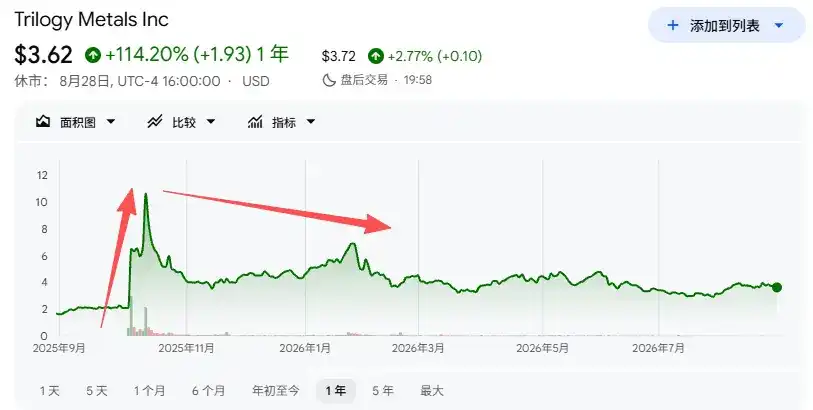
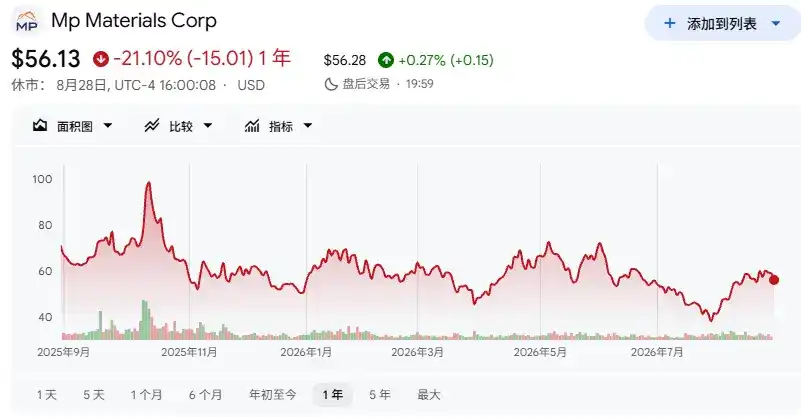
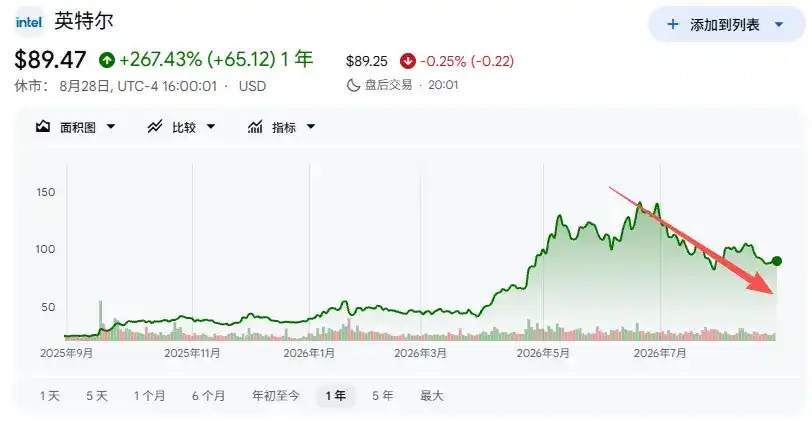
Aniket Shah, Head of Global Washington, Sustainability & Transition Strategy at Jefferies, attributes this rally to a logic: "You now have a government customer and cheerleader, and the market believes it will make your company successful." But the sustainability of this logic is increasingly being questioned.
Election Risk: If Democrats Flip Control, the Hearing Room Becomes the New Battleground
The midterm elections present the most immediate political risk hanging over these stocks. Polls indicate Democrats are likely to win a majority in at least one chamber of Congress, and once they control committee chairmanships, the investigation machinery will start up.
Democratic Senator Elizabeth Warren has already taken action. She sent a letter to Commerce Secretary Howard Lutnick questioning the legality of the government's stake in Intel. If Democrats win the Senate, Warren would become chair of the Senate Banking Committee, granting her subpoena power to summon witnesses and demand documents.
Henrietta Treyz says Democrats "will want every opportunity to hit the president, for as long as possible." She expects Democratic-led committees to subpoena corporate executives and government officials to testify on Capitol Hill, "which poses a risk to both corporate brands and stock prices, and is one of the most important focal points for investors right now."
This kind of political pressure is not without precedent. In 2009, the Bush and Obama administrations faced fierce Republican criticism for the government's stake in General Motors, which fueled the Tea Party movement. The difference is that back then the government was rescuing companies on the brink of bankruptcy, whereas today the Trump administration is actively "picking winners"—a shift in logic that could change the nature and intensity of the political backlash.
Legal Risk: A Successful Lawsuit Could Shake the Entire Portfolio
Compared to elections, legal risks may be more far-reaching. Currently, a shareholder lawsuit is challenging the legality of the government's stake in Intel in court, and its outcome could have a ripple effect on the entire government portfolio.
The lawsuit contends that the CHIPS Act does not authorize the government to require equity as a precondition for granting subsidies, and accuses Intel's board of breaching its fiduciary duty by characterizing the deal as "extortionate" seizure. Lutnick has filed a motion to dismiss the lawsuit, stating the arrangement is authorized under federal law and is critical to the U.S. defense industrial base; Intel CEO Lip-Bu Tan and other board members have also filed dismissal motions.
Josh Lipsky, Senior Director at the Atlantic Council's GeoEconomics Center, warns:
"If the court ultimately rules that the CHIPS Act doesn't grant the Commerce Department the power to do what it did with Intel, that will have broad implications for many of these kinds of deals."
Ann Lipton, a law professor at the University of Colorado, further points out, such a ruling would also call into question the Commerce Department's equity investments in other companies using CHIPS Act funds, including IBM and GlobalFoundries.
Mark Malek, Chief Investment Officer at Siebert Financial, acknowledges the market's dilemma. His firm holds Intel stock, and he says:
"It's the government's investment that really turned things around and is a key factor supporting the stock price. If that factor disappears, what happens next? That's precisely why we haven't added to our position."
Structural Flaws: Politically-Driven Stock Momentum Ultimately Returns to Fundamentals
Above all these risks lies a more fundamental issue: when the logic for rising stock prices is political rather than fundamental, that momentum itself is extremely fragile.
Gina Martin Adams, Chief Market Strategist at HB Wealth Management, notes that the risk of government "endorsement" always exists.
"It may have positively influenced stock prices, but this is partly because investors are chasing a political trend, making the price momentum quite fragile."
Matt Gertken, Head of Geopolitical & U.S. Political Analysis at BCA Research, characterizes the current situation as an "interventionist path" not yet fully tested and digested within the U.S. system. "There will be bumps along the way," he says.
From a broader perspective, the Trump administration's strategy has overturned the traditional logic of government intervention in private enterprise—from rescue in the past to promotion now.
This shift created impressive short-term stock gains but also sowed the seeds for a convergence of political, legal, and market risks. Analysis suggests that as the midterm election countdown continues, investors are reassessing: just how far this government-endorsed trade can go.