a16z Charts of the Week: AI Costs Halved and Usage Doubled This Year, Major Life Milestones for 30-Year-Olds in the US Delayed Across the Board

marsbitPublished on 2026-03-01Last updated on 2026-03-01

Abstract

a16z's Charts of the Week explores four key trends. First, while a "DExit" (Delaware Exodus) narrative exists due to high-profile companies leaving over legal concerns, data shows a more complex reality. Delaware's overall share of U.S. businesses has actually grown, though Wyoming has seen a surge in LLC registrations. Second, AI demonstrates the Jevons Paradox: as the cost to process AI tokens halved this year, usage doubled. Demand for older GPU rentals (H100, A100) is also rising, contradicting predictions of a compute glut. Historical parallels suggest the full economic impact of AI may take time to materialize. Third, AI capital expenditure is massive, comparable to annual U.S. bank lending and significantly larger than U.S. corporate tax income or the military budget of any non-U.S. G7 nation. Fourth, the prediction market Kalshi is outperforming professional forecasters and futures markets in predicting the Federal Funds Rate, providing a valuable high-frequency, probabilistic benchmark. Finally, data shows a stark delay in life milestones for 30-year-olds in the U.S. Since the 1980s, far fewer are living independently, married, living with children, or owning a home. The only exception is college attainment, which has nearly doubled since 1995, though the value of a degree is increasingly questioned.

Author: a16z New Media

Compiled by: Deep Tide TechFlow

Original link:https://www.a16z.news/p/charts-of-the-week-dexit-real-or

Deep Tide Introduction: This edition of a16z's Charts of the Week covers four topics, each worthy of its own article: falling AI costs triggering the Jevons effect, the true scale of tech giant capital expenditures, Kalshi prediction markets outperforming professional forecasting agencies, and the comprehensive delay of life milestones for 30-year-olds in the US. The data sources are solid, and the perspective is calm and restrained, making it a high-quality reference for understanding the intersection of current tech and macro trends.

DExit......Real Trend or Illusion?

Delaware remains the preferred state for US corporate registration, but this position is quietly loosening:
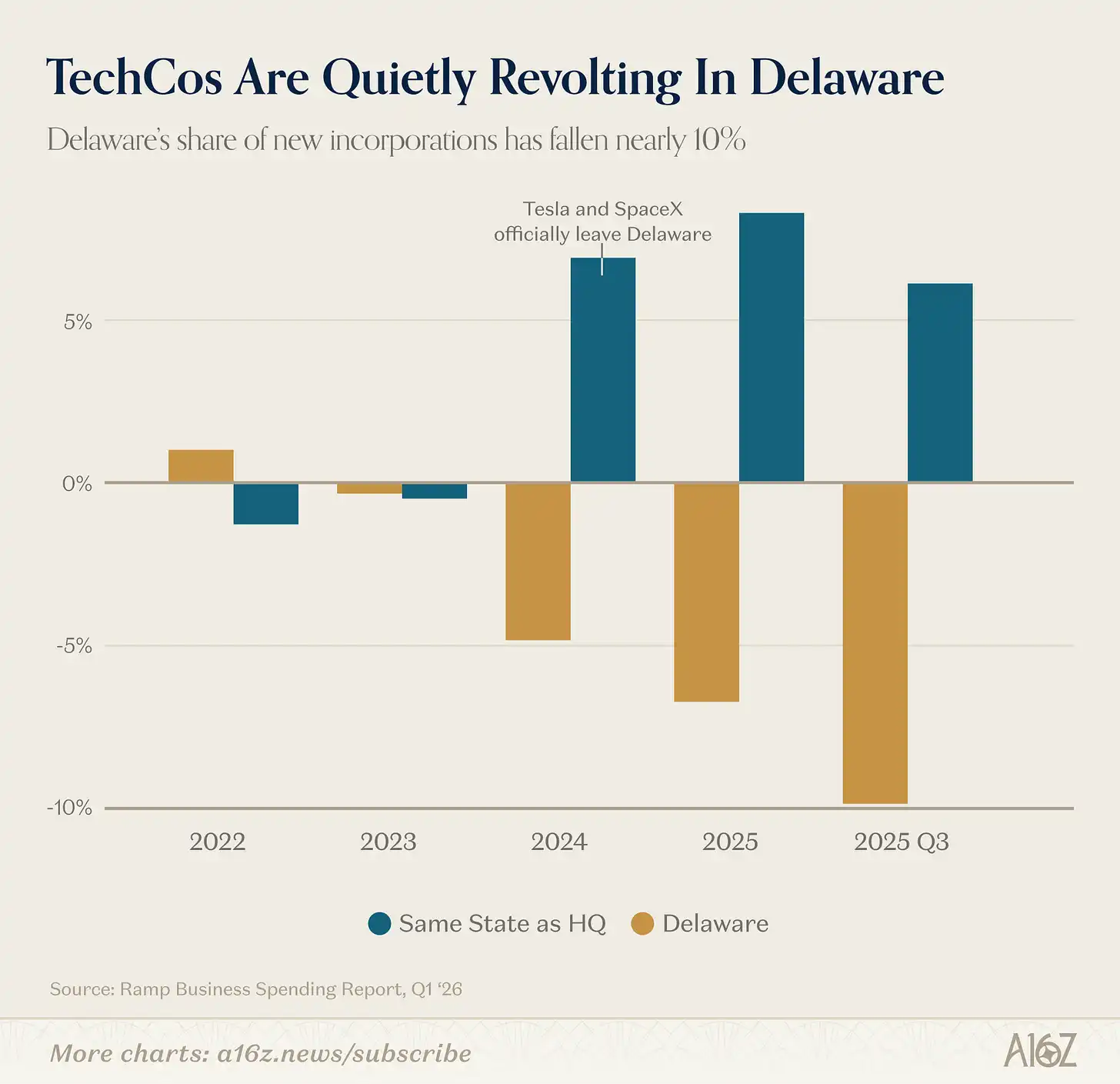
According to Ramp's data, Delaware's share of new company registrations has been declining since 2023, with a drop of about 10% in Q3 2025.

History doesn't repeat itself exactly, but it often rhymes......maybe.

Delaware hasn't always been the holy land for corporate registration.

About a century ago, Delaware replaced New Jersey—the original "Mother of Trusts"—as the preferred state for incorporation. New Jersey lost its advantage because then-Governor Woodrow Wilson tried to curb "corporate abuses," severely worsening the state's business environment. Delaware's corporate law was modeled on pre-Wilson era New Jersey law and was happy to welcome the departing companies. It then, along with the Delaware Court of Chancery, spent nearly 100 years building a reputation as a mature and fair venue for resolving disputes between companies and investors.

However, what took a century to build began to动摇 in just a few years. Rightly or wrongly, the Delaware Court of Chancery has recently taken a more lenient stance on shareholder litigation (especially in several high-profile cases, including but not limited to Tesla), and companies have really started moving their registrations elsewhere. Goodnight, and good luck, Delaware.

This is at least the mainstream narrative, but other data shows the situation is more complex.

First, even Delaware's founding myth itself isn't entirely accurate.

It wasn't until the 1980s (about 60 years after Governor Wilson's term) that Delaware truly surpassed New Jersey to become the number one state in the US for the number of corporate registrations:
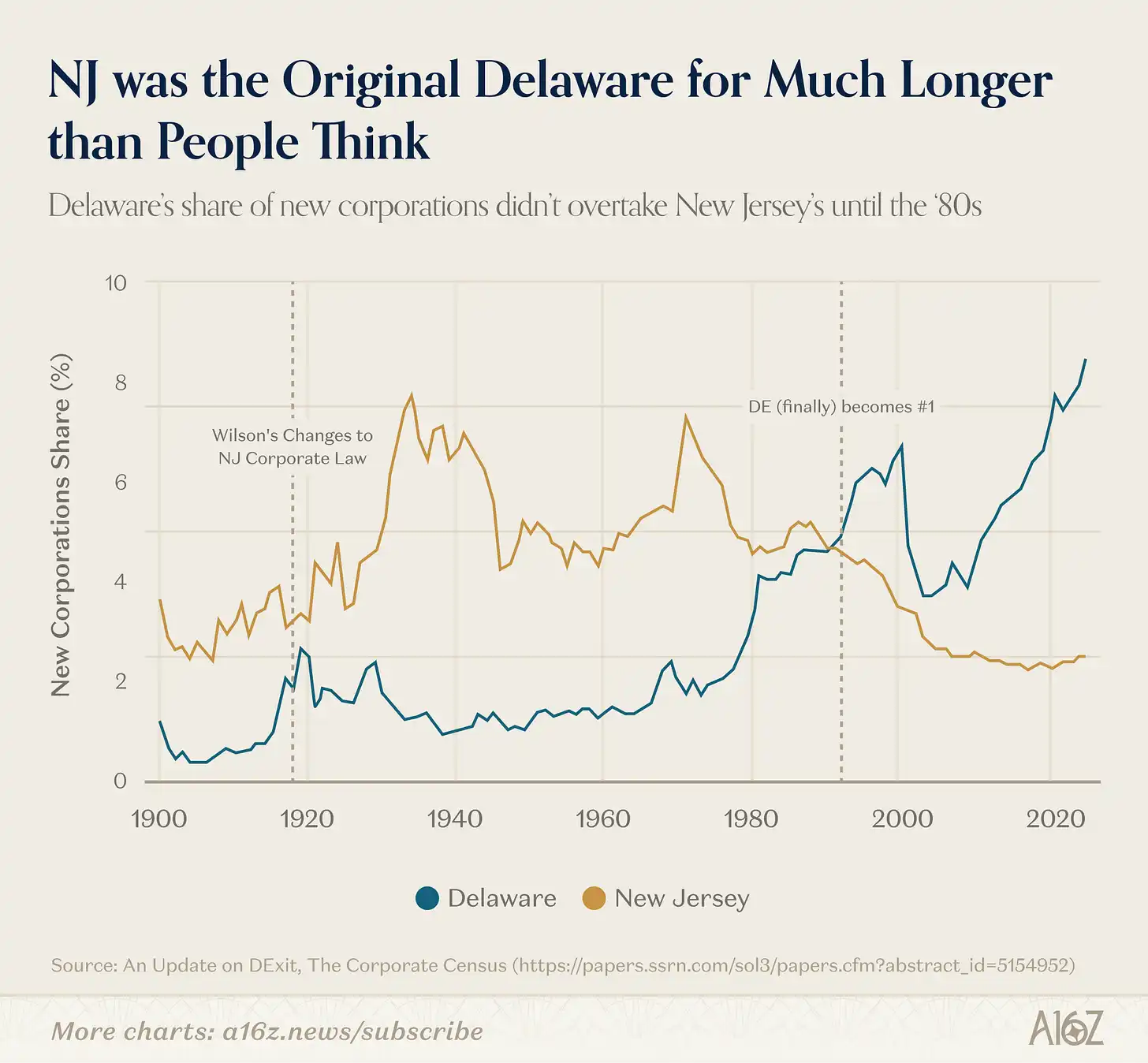
New Jersey dominated for much longer than the mainstream narrative suggests. The catalyst for Delaware's eventual overtaking was likely its passage of a series of laws related to director liability, which were particularly favored by public companies, coupled with network effects that continuously reinforced themselves, creating their own inertia.

Second, regardless of what's happening with high-profile public companies (and the companies in Ramp's data), Delaware as a whole still seems to be doing well, even more than well:
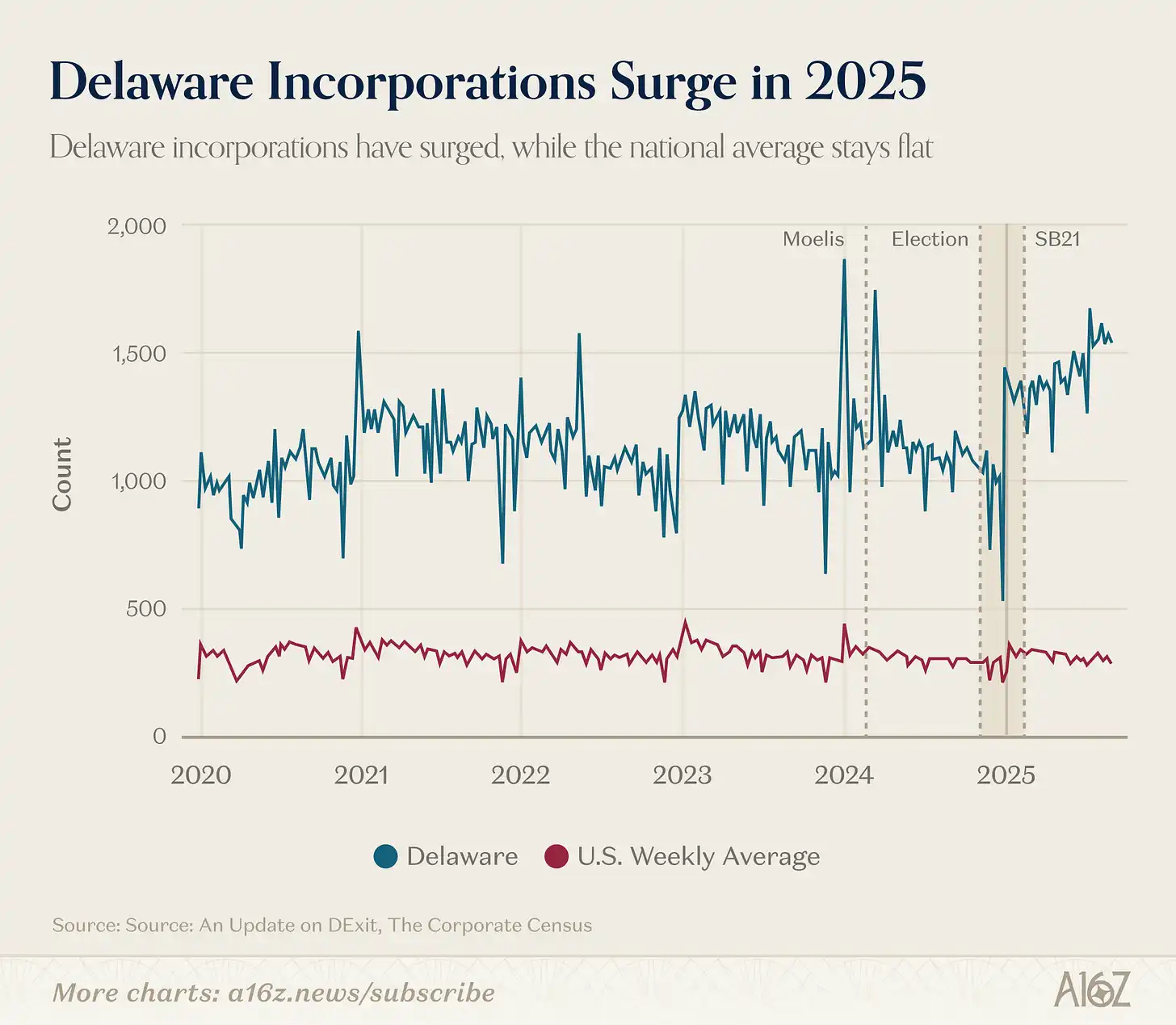
According to data published by the Harvard Law School Forum on Corporate Governance, Delaware's share of the total number of US companies actually increased significantly from late 2024 to 2025.

In fact, if you're looking for a clear case of "DExit," it's probably this one, and it has nothing to do with Tesla, but rather involves a specific type of company structure:
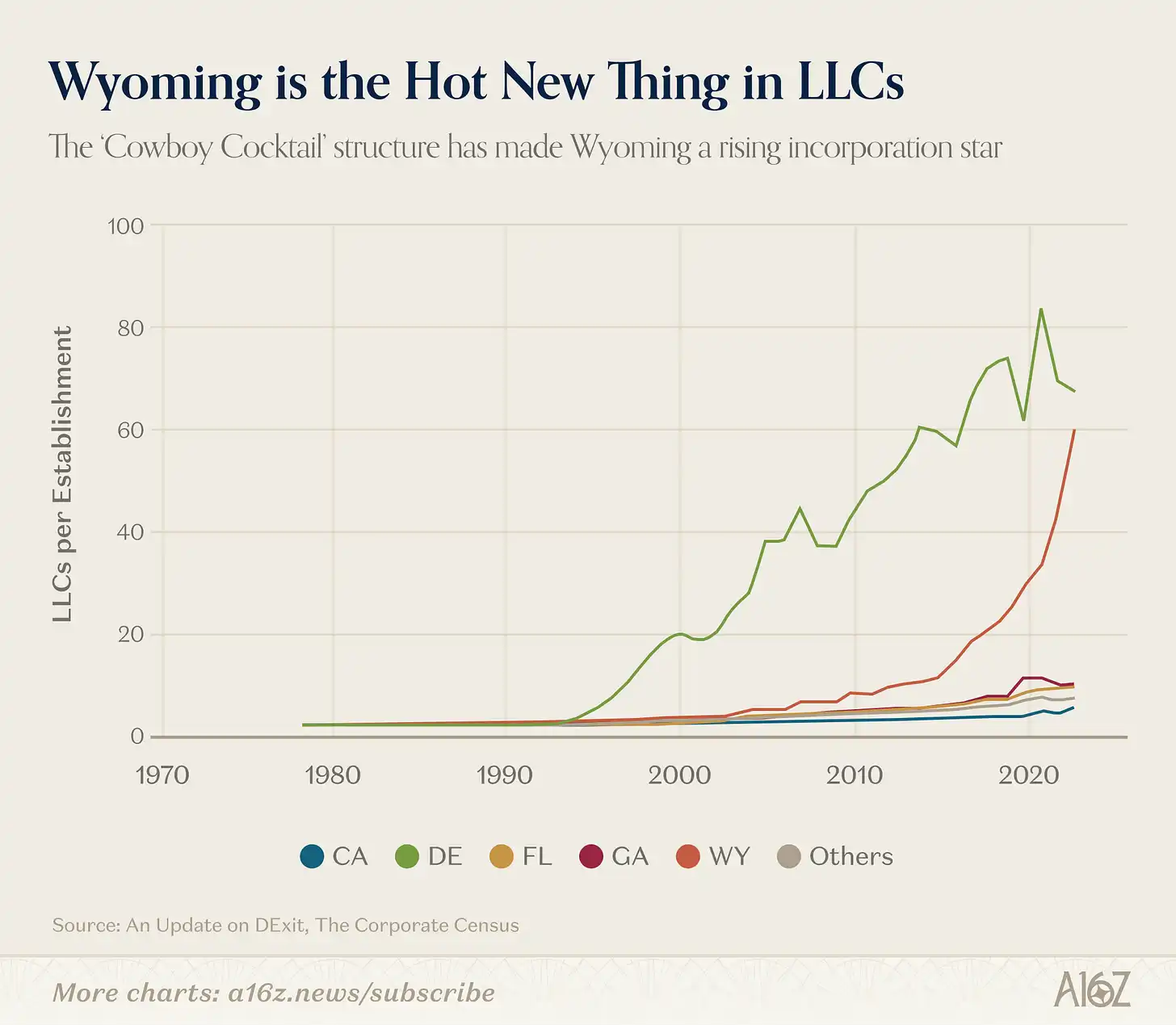
Wyoming LLCs began to surge around 2015.

Why? This is likely related to specific asset protection and privacy provisions in Wyoming's LLC law, which the state itself promotes as a "cowboy cocktail."

In short, the point here is not to say that DExit isn't happening (because at least some data suggests it is—even if it's just a few high-profile companies moving out, it's significant), but the reality is certainly more complex than the mainstream narrative presents.

The reality is that Delaware still enjoys the advantage of being the default option, not to mention all the network effects tied to it, and these are very difficult to shake.

We published an earlier version of this chart before, but as more data comes in, the effect becomes more stunning.

Token costs fall, Token consumption rises:
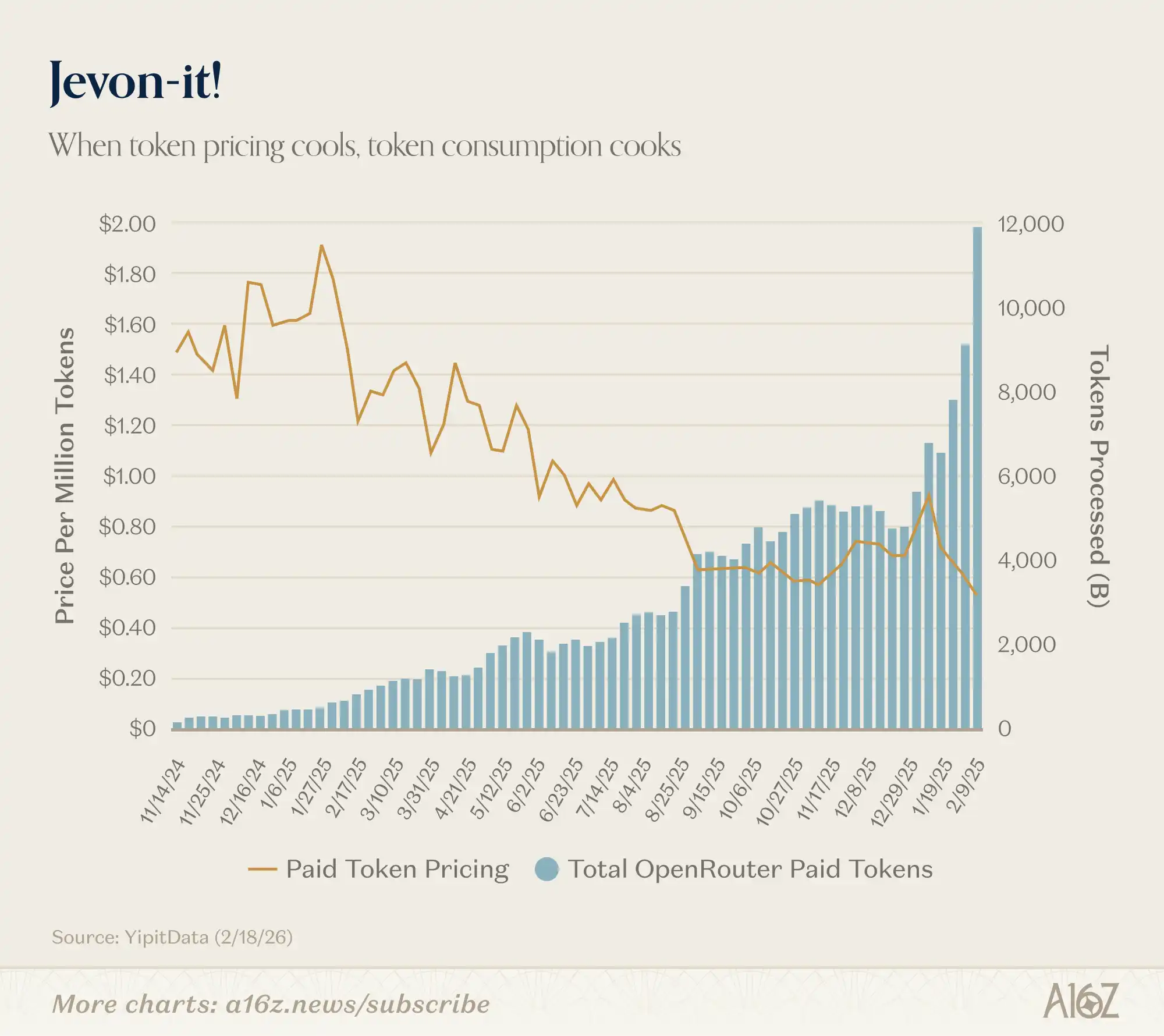
Since the beginning of this year, paid Token pricing has dropped from about 90 cents per million Tokens to 50 cents, while the number of Tokens processed has nearly doubled, from about 6,000 to 12,000.

This is a typical Jevons effect. The cheaper AI gets, the more AI we use. Delightful.

Remember when people said that when newer, better GPUs came out, the old ones would be unwanted?

That doesn't quite seem to be the case either:

According to Silicon Data, rental prices for NVIDIA's H100 and A100 have both increased this year.

The market is far from showing signs of a compute oversupply; instead, it seems we haven't even scratched the surface of existing demand.

This comparison isn't a perfect analogy, but if history offers any reference, it might take us a while longer to truly see what an "AI-driven" economy really looks like:
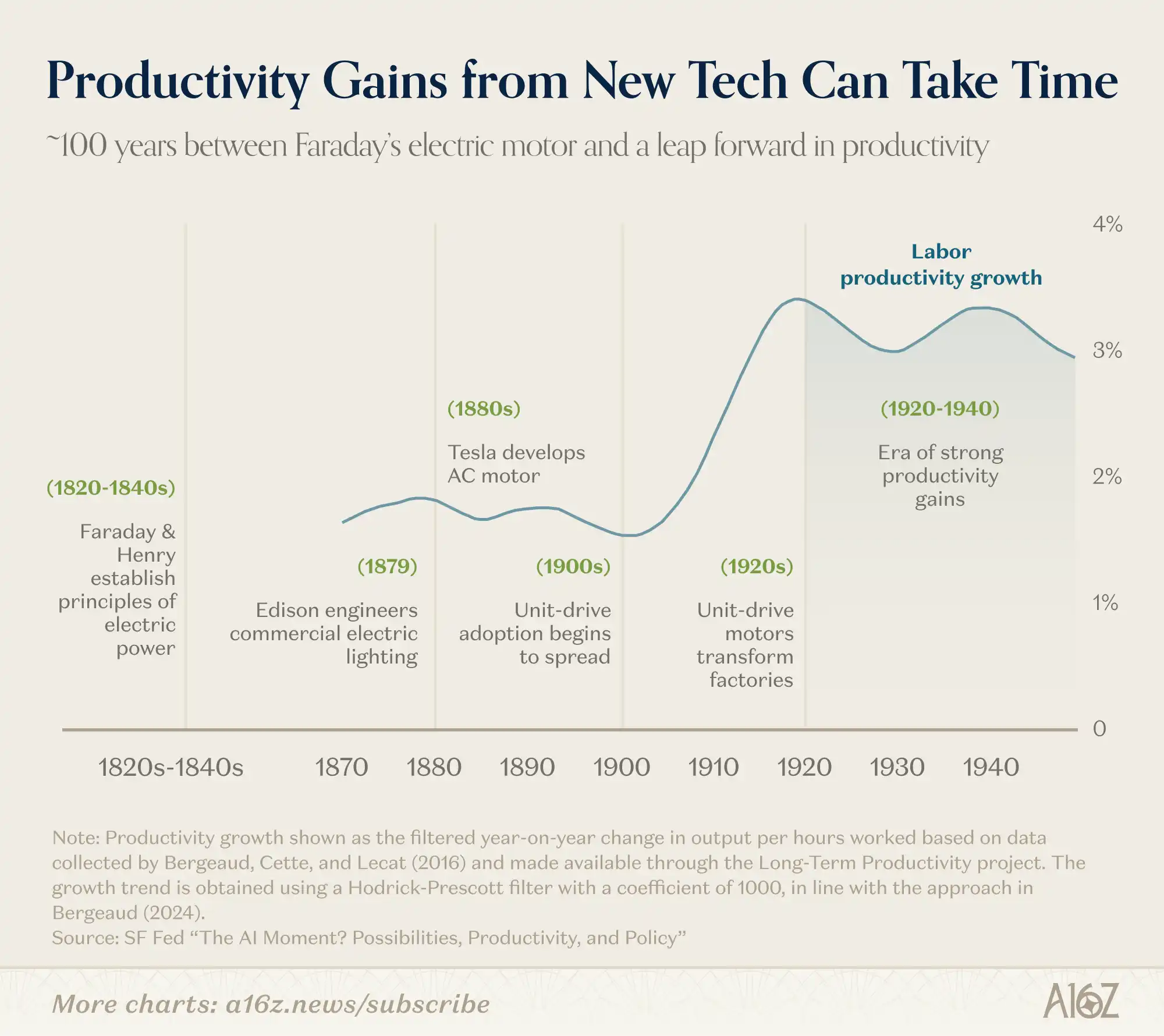
From the initial discussions of electric current by Faraday and Henry to the true explosion of industrial productivity waves in the first half of the 20th century, it took about 100 years.

Technology iteration cycles have indeed accelerated since the 1820s, but the variables involved in a platform-level shift are still extremely numerous.

Roy Amara famously said, "We tend to overestimate the effect of a technology in the short run and underestimate the effect in the long run." (Paraphrased common interpretation of the quote).

Capital Expenditure, Put in Perspective

Here's some data that never gets old: AI capital expenditure is huge.

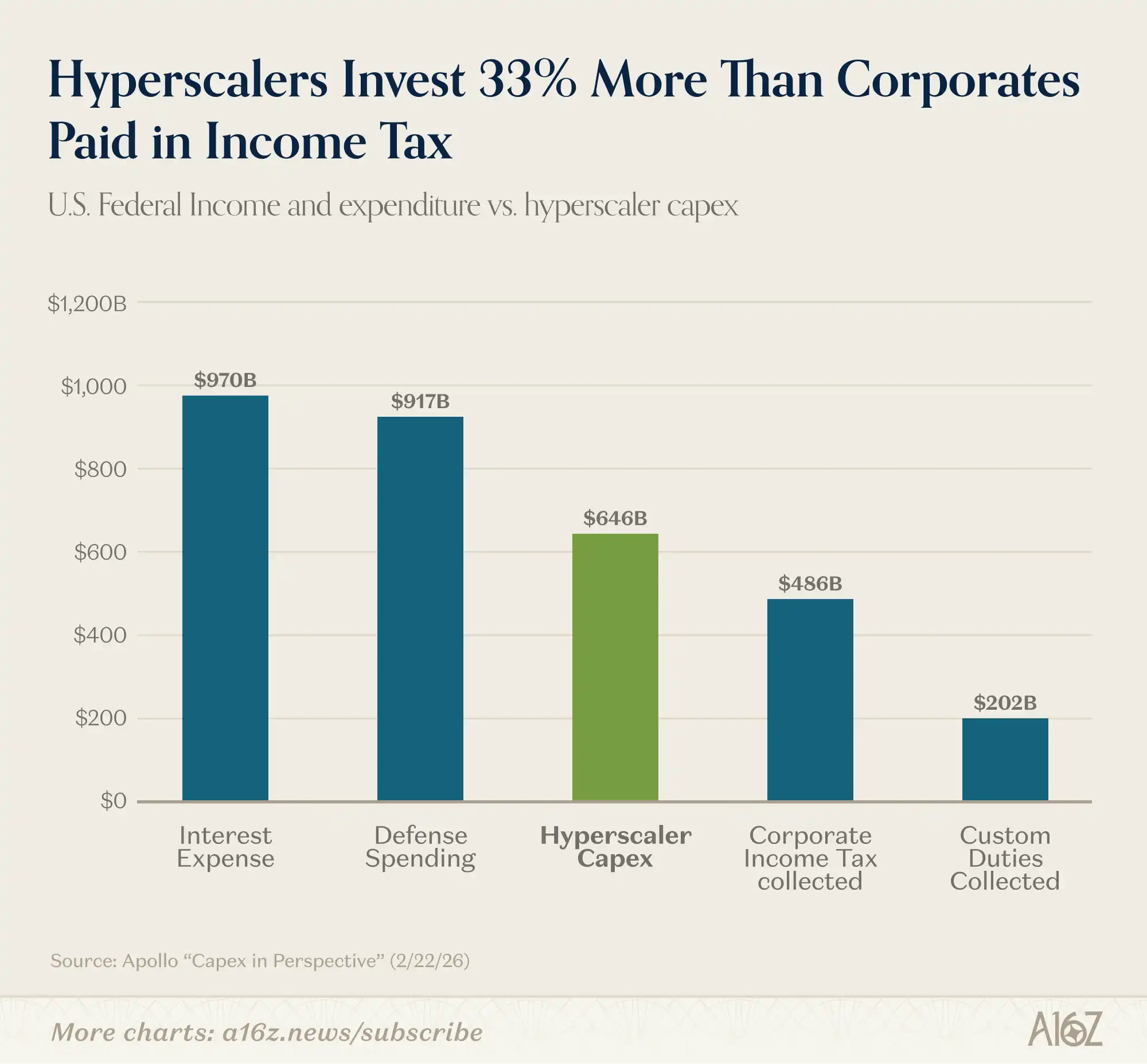
Consider these comparisons:

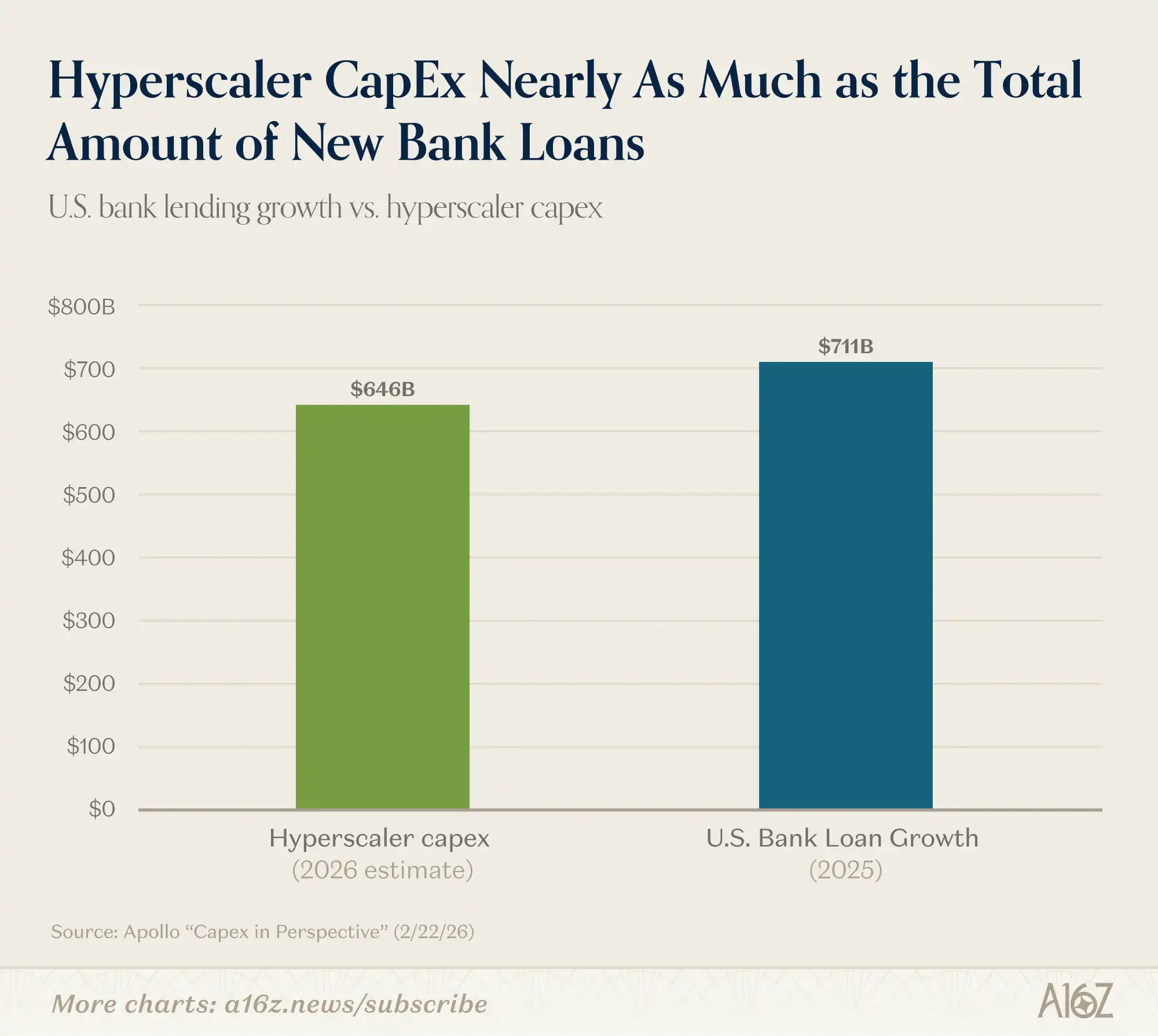
2026 AI capex is projected to be close to the total net new lending by US banks in 2025:
Capex is about 33% higher than total US corporate income tax revenue and about 3 times the total tariff revenue:
Capex is about 6 times the total military budget of any non-US G7 member country:
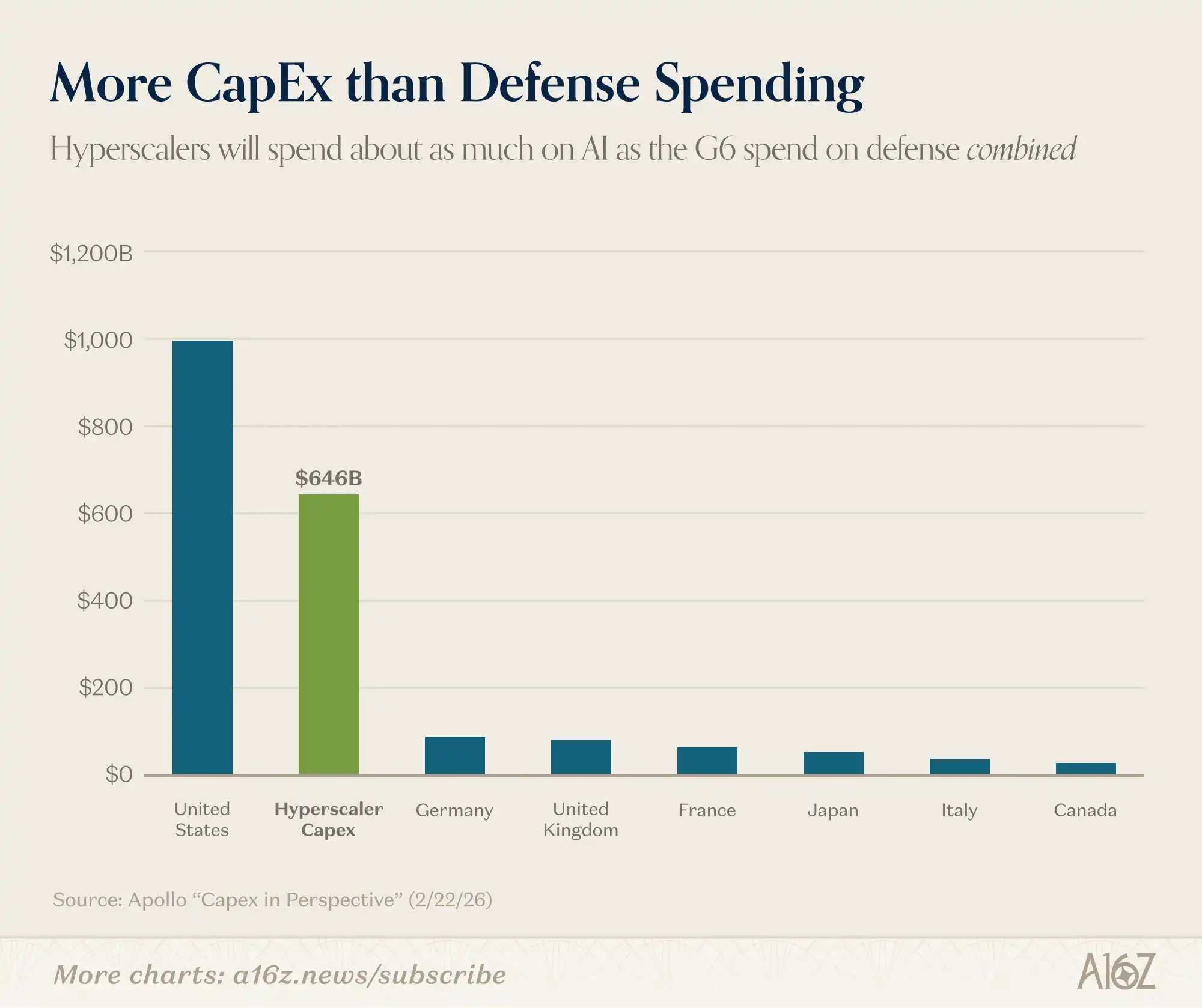
So, yes, capital expenditure is really huge.

Kalshi Moves into Macro Prediction

Federal Reserve researchers think prediction markets are pretty good.

At least on one metric, Kalshi's predictions for the federal funds rate have already outperformed professional forecasting agencies:
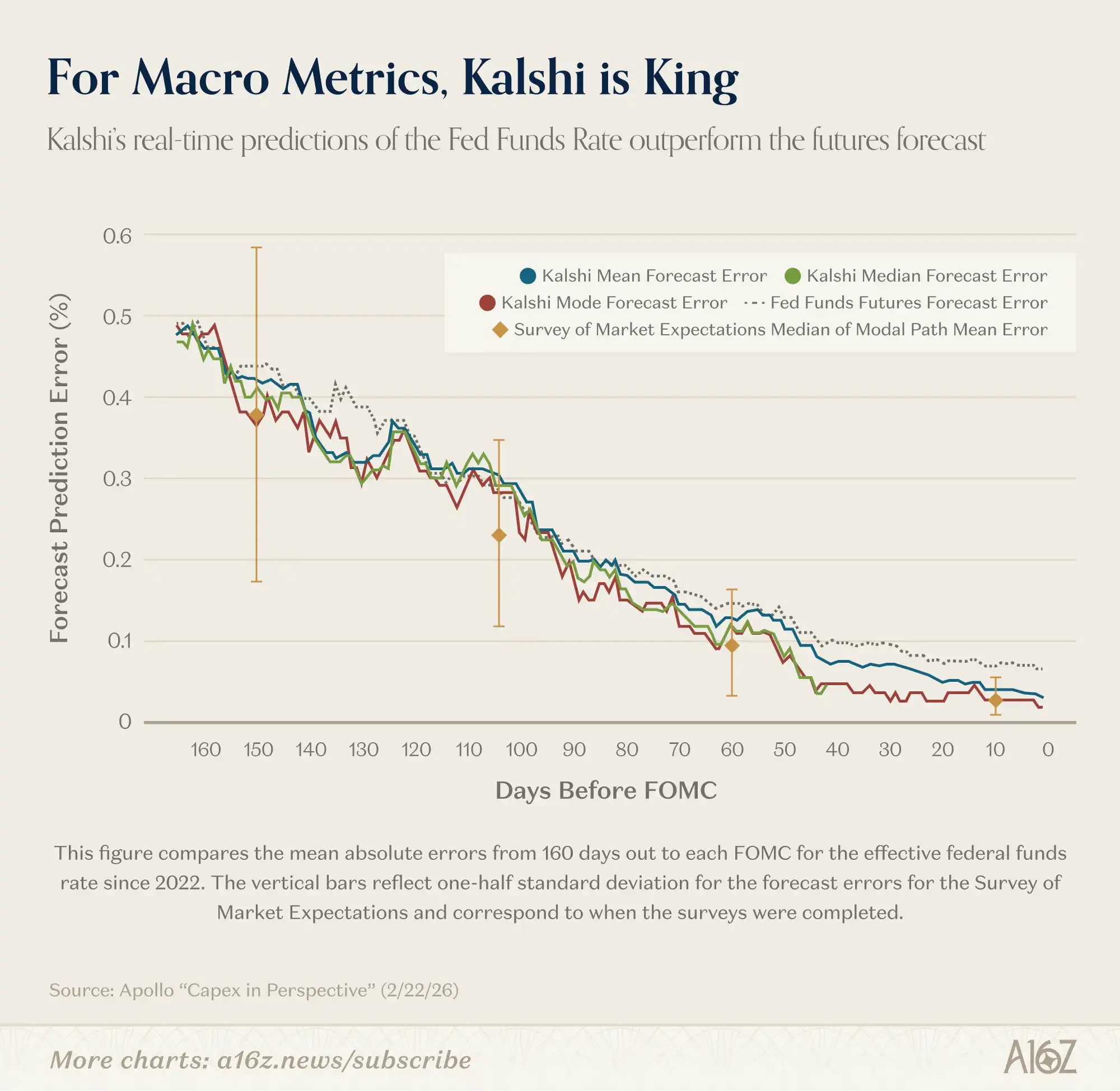
For predictions of the federal funds rate 150 days later (i.e., after 3 FOMC meetings), Kalshi's mean absolute error is very close to that of professional forecasters. But unlike surveys that provide only a modal path snapshot every six weeks, Kalshi provides a continuously updated full probability distribution...... We find that Kalshi's median and mode predictions have a perfect prediction record the day before FOMC meetings, which is a statistically significant improvement over federal funds futures predictions.

In other words, while all predictors start out similar, Kalshi's "continuously updated" predictions optimize over time, eventually achieving a "perfect prediction record" the day before the rate is officially announced. Furthermore, Kalshi's performance is also better than predictions from futures markets.

Kalshi's advantage extends beyond the federal funds rate. As the Fed researchers point out, since there are no other options markets for macroeconomic indicators like inflation, growth, and unemployment, Kalshi is the only place that provides a "high-frequency, continuously updated, probability distribution-rich benchmark" reflecting "crowd" judgment on the direction of these economic indicators.

Sounds pretty important.

The Delay of Adulthood

Here is a thought-provoking chart, with (a little) commentary:
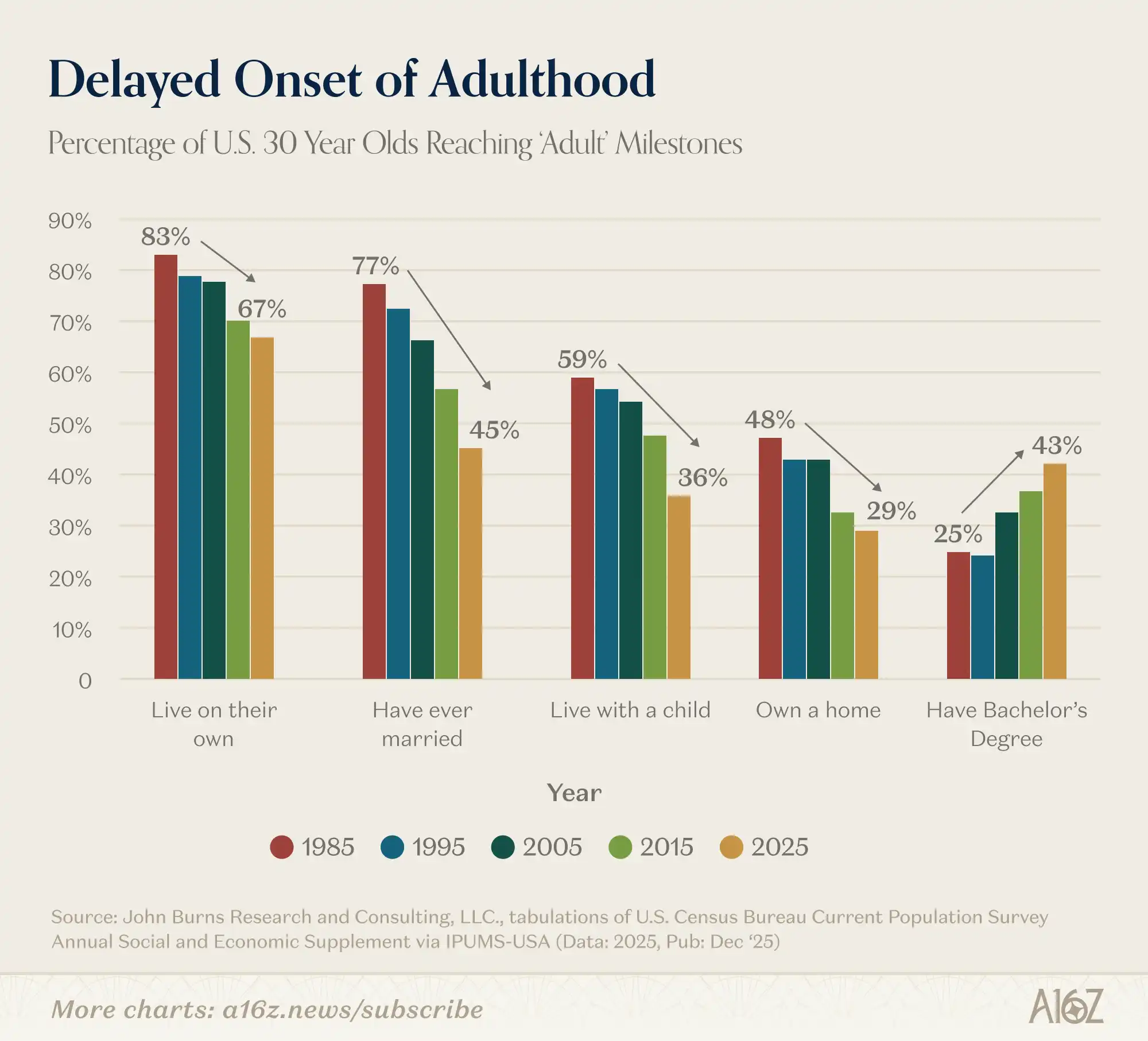
The proportion of 30-year-olds achieving major life milestones has been declining quite steeply since at least the 1980s.

Fewer and fewer 30-year-olds:

Live independently;

>Have ever been married;

>Live with children;

>Own their home.

The only exception is college enrollment rates—the proportion of 30-year-olds with a bachelor's degree has almost doubled since 1995.

So, is college worth it?
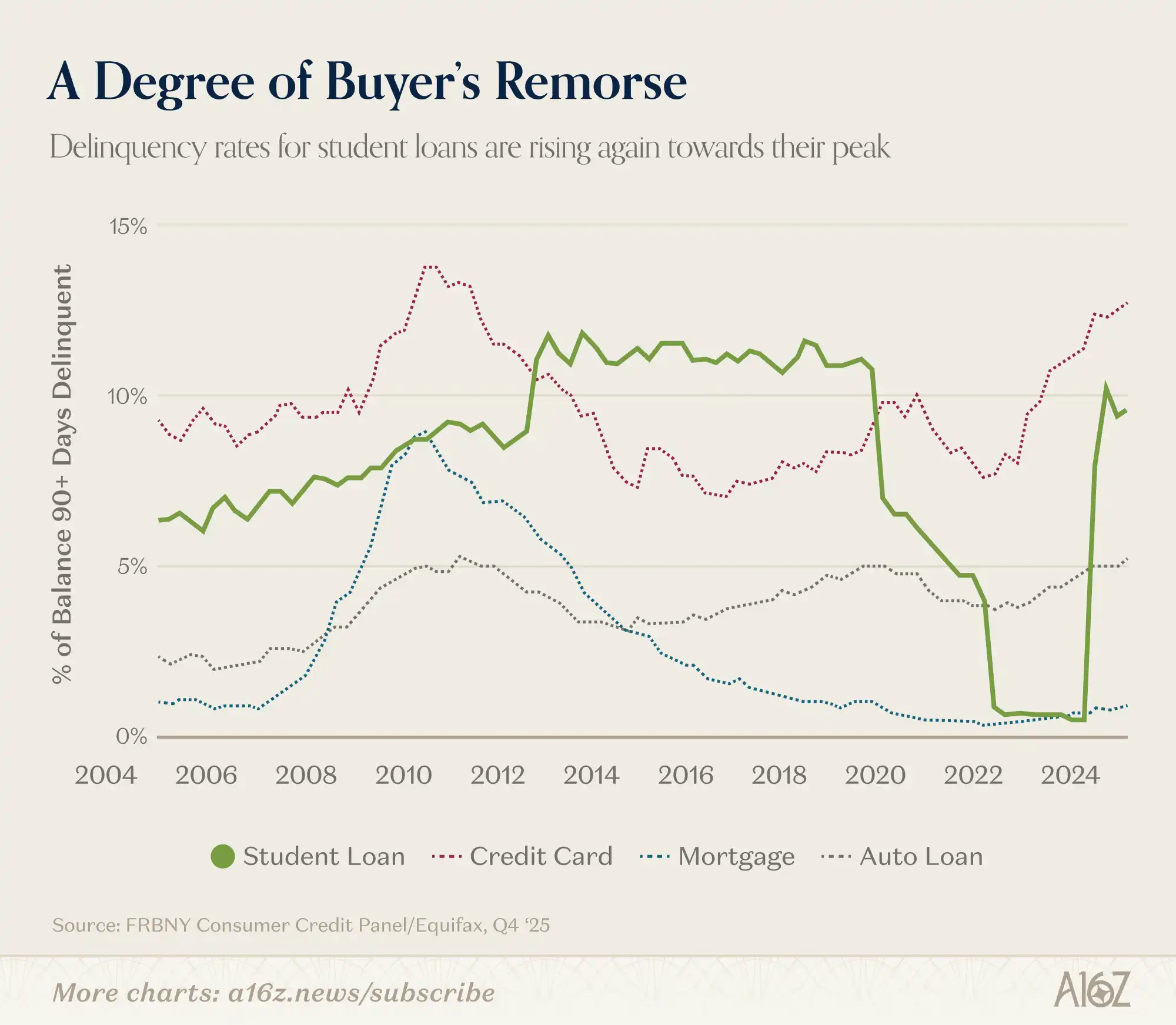
Milestones? More like milestones around the neck, right?!

Maybe, maybe not, but a sense of "buyer's remorse" seems to be in the air.

Related Questions

QWhat is the Jevons Effect mentioned in the article, and how is it demonstrated in the AI industry?

AThe Jevons Effect refers to the phenomenon where increased efficiency in using a resource leads to an increase in its consumption. In the AI industry, this is demonstrated by the fact that as the cost of AI tokens halved (from about $0.90 to $0.50 per million tokens), the number of tokens processed nearly doubled (from about 6,000 to 12,000).

QAccording to the data, what is the trend regarding the share of new company registrations in Delaware since 2023?

AAccording to Ramp's data, Delaware's share of new company registrations has been declining since 2023, with a drop of about 10% in the third quarter of 2025.

QHow does the performance of the prediction market Kalshi compare to professional forecasters in predicting the Federal Funds Rate?

AKalshi's predictions for the Federal Funds Rate have outperformed those of professional forecasters. Its median and mode predictions had a 'perfect predictive record' the day before FOMC meetings, which is a statistically significant improvement over the predictions from federal funds futures.

QWhat are the major life milestones for 30-year-olds that have seen a significant decline since the 1980s?

AThe major life milestones for 30-year-olds that have seen a significant decline since the 1980s are: living independently, ever being married, living with children, and owning a home.

QHow does the projected AI capital expenditure for 2026 compare to other major US economic figures?

AThe projected AI capital expenditure for 2026 is nearly equivalent to the total net new lending by all US banks in 2025. It is also about 33% higher than total US corporate income tax revenue and about three times the total US tariff revenue.

Related Reads

The Value Distribution of Stablecoins

**Summary: The Value Distribution of Stablecoins** The article argues that stablecoins are evolving from mere trading tools into broader channels for dollar access. It divides the stablecoin ecosystem into four layers to analyze how value is distributed: 1. **Issuance Layer:** Mints stablecoins, holds reserve assets, and captures the spread between reserve yield and user costs (e.g., Tether, Circle). This layer currently earns the largest profit margin. 2. **Infrastructure Layer:** Connects stablecoins to the traditional financial system, handling fiat on/off-ramps, banking integration, compliance (KYC/AML), and asset management (e.g., Bridge, BVNK). This is the "unglamorous" but critical work, building the essential bridges between crypto and real-world finance. 3. **Acquiring/Distribution Layer:** Integrates stablecoins into merchant systems, manages payment flows, and provides enterprise financial software (e.g., Stripe, Coinbase). They act as the access point for businesses. 4. **Application Layer:** The end-users and businesses that ultimately use stablecoins for payments, settlements, or as a store of value. They benefit from convenience but have little pricing power. The core thesis is that while the issuance layer currently dominates profits, the often-overlooked **infrastructure layer holds significant long-term potential**. The real challenge and barrier to mass adoption is not the on-chain transfer of stablecoins (which is simple), but the complex "last mile" integration into existing business workflows, banking systems, and regulatory frameworks across different countries. Companies in this layer are currently in a "land grab" phase, investing heavily to build networks, secure bank partnerships, and establish compliance pathways. While their position is currently pressured by the profitable issuers above and distribution platforms below, the article suggests that if stablecoins become a default financial rail for businesses, the infrastructure providers who have done the hard work of integration will ultimately gain strong pricing power and become entrenched, essential players.

marsbit1h ago

The Value Distribution of Stablecoins

marsbit1h ago

The Value Distribution of Stablecoins

The Value Distribution of Stablecoins The article argues that stablecoins are evolving from a mere trading tool into a broad "dollar channel." It analyzes the industry's value chain through four layers: 1. **Issuance Layer (e.g., Tether, Circle):** The top layer that mints stablecoins, holds reserve assets, and captures the thickest interest rate spread. 2. **Infrastructure Layer (e.g., Bridge, BVNK):** Connects stablecoins to the traditional financial system, handling critical but complex "dirty work" like fiat on/off-ramps, banking integration, compliance (KYC/AML), and cross-border settlement. 3. **Acquiring/Distribution Layer (e.g., Stripe, Coinbase):** Embeds stablecoins into merchant systems, manages payment flows, and integrates with enterprise software. 4. **Application Layer:** End-users and businesses that ultimately use stablecoins for payments, settlement, or storing value. The author posits that while the issuance layer currently captures the most profit, the most overlooked and potentially critical layer is infrastructure. The core challenge for stablecoin adoption isn't the on-chain transfer (which is simple), but bridging the gap between blockchain and the real-world financial system. This involves solving practical problems for businesses: fiat conversion, reconciliation, tax handling, and user onboarding. Infrastructure companies are currently in a difficult "land-grab" phase—building networks, securing banking relationships, and achieving compliance country-by-country. They face pressure from both the profitable issuance layer above and distribution platforms below. However, the author suggests this layer is building a crucial moat. Once stablecoins become a default business rail, the infrastructure players who have done the hard work of integration may gain significant, durable value and pricing power.

链捕手1h ago

The Value Distribution of Stablecoins

链捕手1h ago

How to Do Research Well: Deliberately Practice the Real Skills That Matter

No one truly teaches you how to do research. You're often given a desk, a pre-selected problem, and vague instructions to "create something new." Consequently, many people reverse-engineer the job based on visible outputs—papers, posts, announcements—learning only how to *appear* like a researcher rather than how to *become* one. True research capability is built from stacking small, trainable skills, nearly all of which can be developed through deliberate practice. **Pick Your Own Problem:** Most researchers absorb problems from advisors or trends, lacking the underlying reasoning. Choosing a problem you genuinely care about, as John Schulman advises, leads to original work. Develop "taste" like a muscle: predict experiment outcomes, guess paper results from methods, and track which findings remain important over time. **Upgrade Your Inputs:** Relying on shared reading lists (arXiv hot lists, filtered group chats) leads to unoriginal conclusions. Undervalued old literature often holds crucial insights (e.g., MoE, LSTM, backpropagation). Richard Sutton's "The Bitter Lesson" or Claude Shannon's 1952 talk on creative thinking are more predictive than lengthy modern surveys. Breadth matters as much as depth: draw from neuroscience, mechanism design, hardware knowledge, and honest statistics. Read papers directly, especially appendices and limitations sections. **Write Everything Down:** As Paul Graham noted, writing exposes flaws in seemingly mature ideas. Writing is the cheapest defense against self-deception. Following Feynman's principle, Darwin programmatically wrote down facts contradicting his theory to combat memory bias. Maintain a detailed log of hypotheses, setups, predictions, results, and updated understandings. Reviewing past logs fosters essential humility.

marsbit3h ago

How to Do Research Well: Deliberately Practice the Real Skills That Matter

marsbit3h ago

Trading

Spot
Futures

Hot Articles

Discussions

Welcome to the HTX Community. Here, you can stay informed about the latest platform developments and gain access to professional market insights. Users' opinions on the price of AI (AI) are presented below.

活动图片















