Humanity Protocol, Kelp DAO stolen funds commingle – Same attacker?

ambcryptoPublished on 2026-06-28Last updated on 2026-06-28

Abstract

Investigations into the 2026 exploits of Kelp DAO and Humanity Protocol have revealed that stolen funds from both attacks were recently commingled, suggesting a connection between the attackers. Blockchain analyst ZachXBT identified the activity, where 15,403 ETH ($23.6 million) from the Humanity Protocol hack was moved to a new Ethereum address and then to the Bitcoin network, merging with proceeds from the Kelp DAO exploit. Over $8 million of these funds has been laundered using methods associated with groups like the Lazarus Group. The Kelp DAO attack drained about $292 million in April 2026, while Humanity Protocol lost around $32 million in June due to a compromised developer device. This commingling points to a shared external threat actor and highlights ongoing security risks in DeFi.

The investigations into the 2026 exploits targeting the Kelp DAO and Humanity Protocol have taken on a new dimension as a result of the most recent on-chain activity.

ZachXBT, a blockchain analyst, noticed that money taken from the two different attacks had recently been mixed.

This suggests that assets from both exploits were moved through the same wallet or transaction flow. Interestingly, this also reveals a connection between the attackers.

How much of the stolen funds were moved?

The Humanity Protocol attacker transferred 15,403 ETH, worth $23.6 million, to a relatively new Ethereum [ETH] address, according to Specter. After that, the money was transferred to the Bitcoin [BTC] network, where it was combined with earnings linked to the KelpDAO exploit.

As of now, over $8 million of the stolen money has been laundered by the Humanity Protocol attacker.

For context, the Lazarus Group uses this well-known tactic to combine the profits from various operations into one Bitcoin wallet before transferring them via mixers and over-the-counter desks.

That said, the Kelp DAO exploit drained about $292 million from its LayerZero bridge in April 2026.

Meanwhile, Humanity Protocol lost about $32 million in June. This happened when the hackers gained access to the deployer account and team-controlled wallets via a developer’s compromised device.

Is the exploit linked to the Lazarus Group?

Until now, the Humanity Protocol hack had raised suspicions that insiders might have been involved in the attack.

However, the new combination with the Kelp DAO exploit’s laundering trail points to a shared external threat actor or closely related cybercriminal network.

Since the funds were associated with North Korea, the plaintiff argued, they were entitled to confiscate any funds belonging to North Korean-affiliated organizations as part of the money owed in unpaid judgments.

Plaintiffs currently own over $877 million in unpaid judgments against North Korea from U.S. courts.

The continuing risk in DeFi

This commingling occurs at a time when MEV bots are also growing in power in on-chain markets.

While these automated systems have now made the market more efficient, the Jaredfromsubway.eth incident shows how skilled attackers can still manipulate even highly specialized trading infrastructure.

Together, these attacks highlight the rising security threats DeFi faces. While all this happens, ETH’s price also fell to an intraday low of $1,581.76 amid the wider market decline.


Final Summary

  • Stolen funds from both Kelp DAO and the Humanity Protocol exploit have been reported to have been commingled.
  • As of the last update, over $8 million of the stolen money has been laundered by the Humanity Protocol attacker.

Trending Cryptos

Related Questions

QWhat new evidence suggests a connection between the Kelp DAO and Humanity Protocol attackers?

ABlockchain analyst ZachXBT observed that funds stolen from the two separate exploits (Kelp DAO and Humanity Protocol) were recently mixed, moving through the same wallet or transaction flow, indicating a connection between the attackers.

QWhat was the approximate total value stolen in the Kelp DAO and Humanity Protocol exploits?

AThe Kelp DAO exploit resulted in a loss of about $292 million, while the Humanity Protocol exploit led to a loss of about $32 million.

QHow did the attackers move and launder the stolen funds according to the article?

AThe Humanity Protocol attacker transferred stolen ETH to a new Ethereum address, then moved the funds to the Bitcoin network. There, they were mixed with proceeds from the KelpDAO exploit. This is a tactic associated with groups like the Lazarus Group, using mixers and over-the-counter desks to launder money. Over $8 million from the Humanity Protocol attack had been laundered as of the report.

QAccording to the article, what does the commingling of funds imply about the nature of the threat actor behind these exploits?

AThe commingling of the stolen funds' laundering trails points away from an insider threat for the Humanity Protocol attack and instead suggests a shared external threat actor or a closely related cybercriminal network, potentially linked to North Korea-affiliated groups like the Lazarus Group.

QWhat broader trend in the DeFi space does the article mention alongside these high-profile exploits?

AThe article highlights the growing power of MEV bots in on-chain markets and the incident involving "Jaredfromsubway.eth" as examples of the rising and sophisticated security threats facing the DeFi ecosystem.

Related Reads

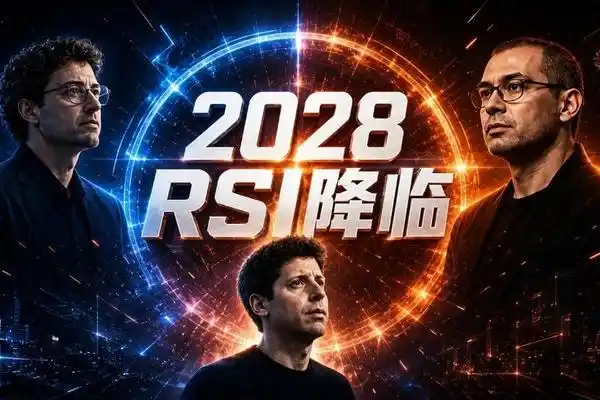
2028: The Arrival of Recursive Self-Improvement (RSI)

**AI Recursive Self-Improvement (RSI): The Countdown to 2028 Begins** AI is no longer just a trained tool but is starting to rewrite its own evolutionary pace. According to Anthropic co-founder Jack Clark, there is a 60% probability that by the end of 2028, Recursive Self-Improvement (RSI) will become a reality. This means AI could autonomously design and build a more capable next-generation version of itself without any human researcher involvement—Claude 10 creating Claude 11, for instance. Supporting this timeline, Google DeepMind's CEO Demis Hassabis confirms that all leading AI labs are intensely focused on RSI, making it an industry-wide priority. He expresses profound concern, stating this potential is what keeps him awake at night. Concrete data underscores this acceleration: - METR evaluations show current top models like Claude are solving tasks up to the 16-hour limit of existing test frameworks. - In Epoch AI's challenging MirrorCode benchmark, Claude Opus 4.7 recreated complex software in hours for a fraction of the human cost. In one extreme test, AI autonomously coded for 19 days straight. - Anthropic reports over 80% of its codebase is now written by Claude, and researcher productivity has increased up to 8-fold since 2024. - OpenAI's policy blueprint highlights RSI as a major upcoming governance challenge. CEO Sam Altman reportedly hinted RSI might arrive within six months, potentially delaying OpenAI's massive IPO. The implication is an impending "intelligence explosion," where AI-driven progress outpaces human control. The central question is no longer if it will happen, but whether humanity is ready.

marsbit3h ago

2028: The Arrival of Recursive Self-Improvement (RSI)

marsbit3h ago

World Models, Metaverse, Digital Twins, Physical AI: Are They the Same Thing?

Title: World Models, the Metaverse, Digital Twins, Physical AI: Are They the Same Thing? The article clarifies that concepts like the metaverse, Web3, simulation platforms, digital twins, and Physical AI are not the same thing but are all part of the broader trend of blurring the lines between the digital and physical worlds. It positions "world models" as the foundational "cognitive layer" or "operating system" that enables AI to understand and simulate the world. Key distinctions are made: - The **Metaverse** is a destination for immersive social and economic experiences. World models could act as its "engine," generating interactive 3D content efficiently. - **Web3** focuses on decentralized ownership and economics (rules layer), operating on a different technical level than world models. - **Simulation Data Platforms** (e.g., for autonomous vehicles) are a 1.0 version, relying on manual design. World models represent a 2.0 version, using AI to generate realistic, varied scenarios autonomously. - **Digital Twins** create high-fidelity, real-time mirrors of physical systems (e.g., a factory). World models go a step further by enabling predictive simulation of future states. - **Physical AI** (robots, AVs) refers to AI that acts in the physical world. World models are a core component, providing the understanding and prediction needed for planning. A proposed hierarchy places world models at the cognitive layer, supported by infrastructure (compute, data) and supporting application tools (simulation, digital twins), action systems (Physical AI), user experiences (metaverse), and rules (Web3). In conclusion, while distinct, many of these previously hyped concepts may ultimately rely on advances in world model technology to fulfill their promises, as world models provide the essential cognitive foundation for simulating and interacting with complex environments.

marsbit3h ago

World Models, Metaverse, Digital Twins, Physical AI: Are They the Same Thing?

marsbit3h ago

"Shocking" CPO: How Does the Glass Bridge Actually Work? Detailed Explanation from Corning

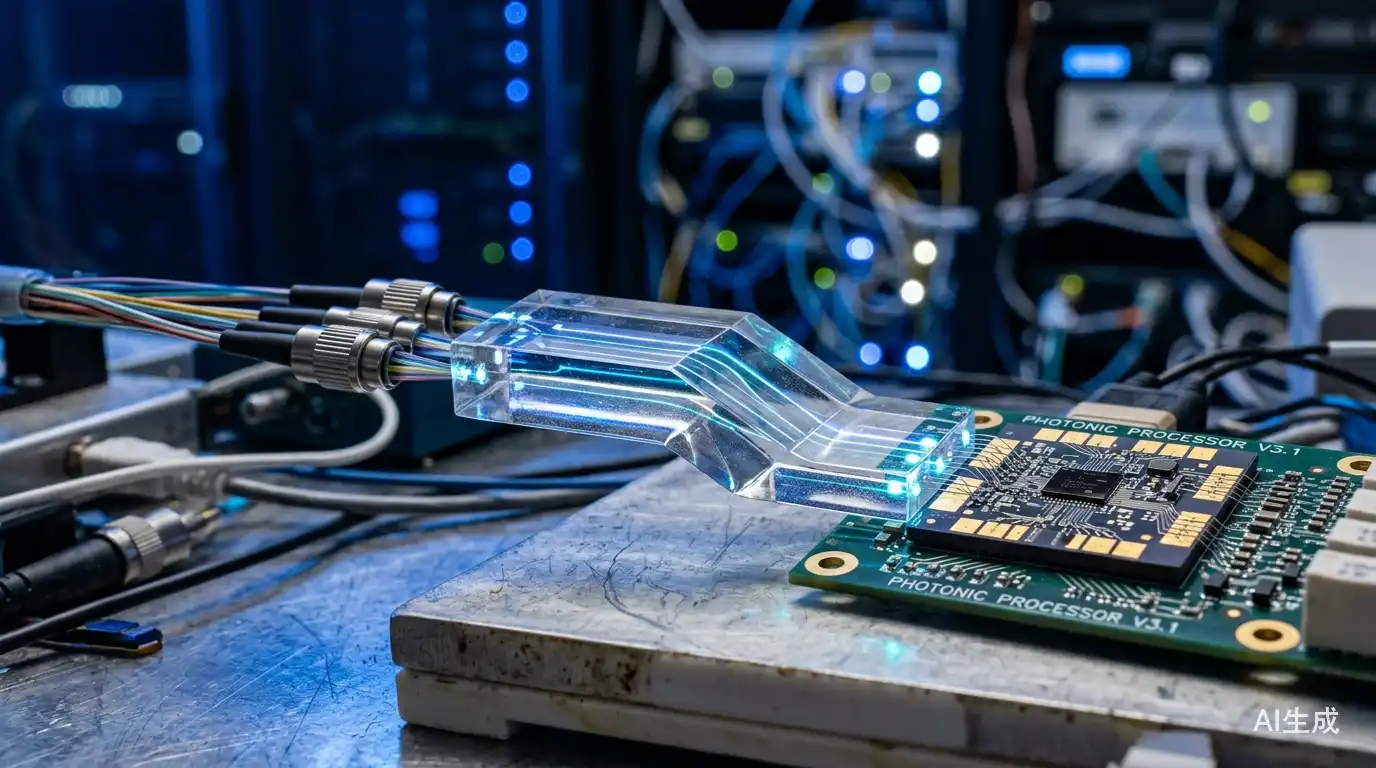
Chinese CPO stocks plunged over 6% following Corning's announcement of its Glass Bridge platform at a Seoul tech conference. The new technology utilizes wafer-level glass ion-exchange waveguides for passive alignment between fibers and photonic chips, potentially simplifying traditional CPO architectures that rely on complex Fiber Array Units and active alignment equipment. This raised market concerns about reduced long-term demand for mid-stream CPO components. Corning's official documentation details Glass Bridge as a platform for fiber-to-PIC connectivity in NPO, CPO, and high-density modules. Its key features include wafer-level manufacturing for consistent, cost-effective production; a standardized, removable MT ferrule interface for ecosystem integration; and a separable high-density connector design supporting over 24 channels for assembly flexibility. Corning positions the technology as complementary to FAUs, addressing limitations in ultra-high-fiber-count scenarios. The market reaction reflects a broader reassessment of the AI optical interconnect value chain. Funds shifted from CPO and PCB manufacturing stocks towards glass substrate concept stocks like Kaisheng Technology and Dyer Laser. Analysts note glass substrates are seen as a next-gen advanced packaging material, offering a potential path for domestic industry differentiation amid AI-driven demand for high-performance, large-scale packaging, marking a structural migration in value towards upstream specialty materials.

marsbit3h ago

"Shocking" CPO: How Does the Glass Bridge Actually Work? Detailed Explanation from Corning

marsbit3h ago

Trading

Spot

Hot Articles

How to Buy DAO

Welcome to HTX.com! We've made purchasing DAO Maker (DAO) simple and convenient. Follow our step-by-step guide to embark on your crypto journey.Step 1: Create Your HTX AccountUse your email or phone number to sign up for a free account on HTX. Experience a hassle-free registration journey and unlock all features.Get My AccountStep 2: Go to Buy Crypto and Choose Your Payment MethodCredit/Debit Card: Use your Visa or Mastercard to buy DAO Maker (DAO) instantly.Balance: Use funds from your HTX account balance to trade seamlessly.Third Parties: We've added popular payment methods such as Google Pay and Apple Pay to enhance convenience.P2P: Trade directly with other users on HTX.Over-the-Counter (OTC): We offer tailor-made services and competitive exchange rates for traders.Step 3: Store Your DAO Maker (DAO)After purchasing your DAO Maker (DAO), store it in your HTX account. Alternatively, you can send it elsewhere via blockchain transfer or use it to trade other cryptocurrencies.Step 4: Trade DAO Maker (DAO)Easily trade DAO Maker (DAO) on HTX's spot market. Simply access your account, select your trading pair, execute your trades, and monitor in real-time. We offer a user-friendly experience for both beginners and seasoned traders.

2.5k Total ViewsPublished 2024.03.29Updated 2026.06.02

How to Buy DAO

Discussions

Welcome to the HTX Community. Here, you can stay informed about the latest platform developments and gain access to professional market insights. Users' opinions on the price of DAO (DAO) are presented below.

活动图片