Author: nini
If you missed the Apple supply chain in 2010, the Tesla supply chain in 2020, or even the Nvidia supply chain you've been regretting these past two years,
the SpaceX supply chain is just getting started.
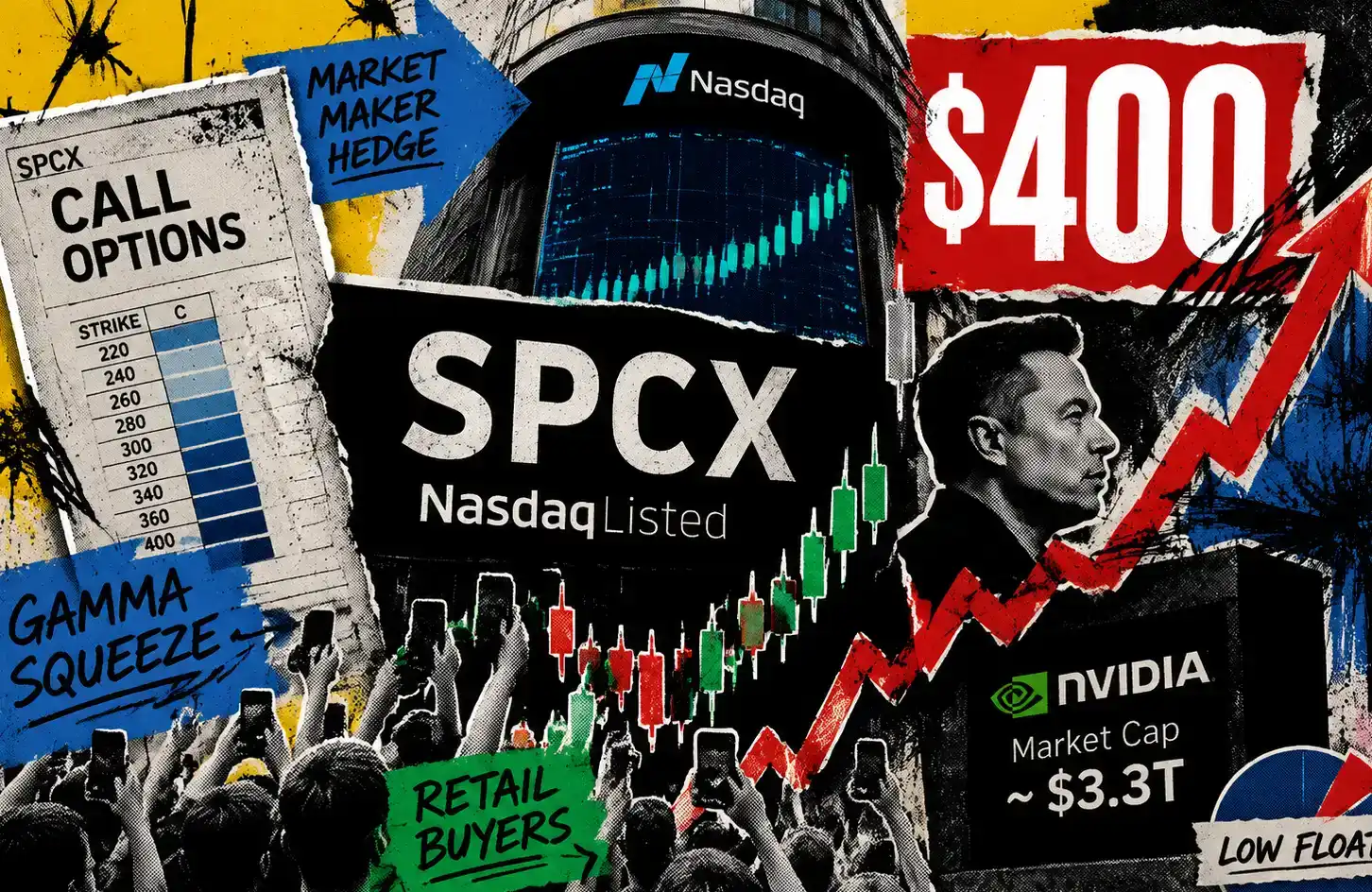
Of course, I think chasing SpaceX itself doesn't seem very cost-effective. Its stock rose 19% on its first day of trading, from a price of 135 to 160, with a price-to-sales ratio approaching 100 times, and the company is still losing huge sums of money. Retail investors rushing in on the first day face significant pressure.
So what I'm suggesting are the companies that supply it.
History has repeatedly validated the same logic: super terminals' frenzied nurturing of the supply chains behind them. When Apple made the iPhone 4 in 2010, Luxshare Precision had revenue of 10 billion yuan; a decade later it hit 92.5 billion, with its stock price rising 30-fold. When Tesla's Shanghai Gigafactory went into operation in 2019, CATL's market cap was just over 100 billion yuan; five years later, it surpassed 1 trillion. Nvidia exploded in popularity these past two years, and Zhongji Innolight's market cap rose from tens of billions to over 100 billion.
Apple, Tesla, Nvidia—each time the super terminal stood center stage, but the ones who really made big money were the supply chain companies behind them.
SpaceX spends tens of billions of dollars annually buying chips, materials, components, and industrial gases. These purchase orders gradually become real revenue on the books of certain companies. After the prospectus was made public, this supply chain has data that can be checked for the first time.
We can first look at where SpaceX's money comes from and where it goes
Its business mainly consists of these three parts. First, Starlink. Last year's revenue was 11.3 billion USD, accounting for 60% of the group, with over 10 million global subscribers—this is the only consistently profitable part of SpaceX, one could even say all the money-losing ventures after this are funded by it.
Second, rockets. The Falcon and Starship programs have an annual R&D investment of 3 billion USD, resulting in the world's lowest commercial launch cost, with a plan for 100 launches in 2026 and demand for 1,500 Raptor engines. Third, AI. It lost over 6 billion last year. On the ground, it's building the Colossus supercomputer, packed with 220,000 GPUs, and planning orbital data centers in space.
So, the flow of money is simple: money earned from Starlink → invested into rockets to bring launch costs down → low-cost launches send AI hardware into space → AI computing power is rented out to generate more revenue. It's roughly that kind of cycle.
This cycle scatters tens of billions of dollars in purchase orders annually. So whose pockets does this money go into?
Categorized by replaceability, suppliers fall into three types.
First type: Irreplaceable, at least in the short term
- NVIDIA. The Colossus supercomputer's 220,000 GPUs are all from them. But NVIDIA's real moat isn't the hardware; it's CUDA. The world's AI training basically uses this software ecosystem to write code. Hardware can be swapped, but the migration cost of a decade's worth of code can't be recovered in a year or two. We can understand it as: as long as SpaceX is building supercomputers, NVIDIA is collecting money.
- Eutelsat, ticker SATS. It holds the radio spectrum licenses for satellite communications. What is spectrum? Think of it as lanes in the sky. Physical laws determine there are only so many; whoever occupies them first gets them. No matter how advanced your technology is, you can't create a band out of thin air. Musk's satellite-to-phone functionality must pass through here; without paying the toll, signals would collide with other satellites. Plus, SATS holds about 3% of SpaceX shares. The day before the IPO, it rose 11%, with options trading volume 11 times the usual.
- Filtronic, ticker FTC, listed in London (note: not searchable on U.S. markets). They make millimeter-wave signal amplifiers for Starlink satellites, making signals travel farther and clearer. In 2024, they signed a 47.3 million GBP contract; SpaceX contributes 83% of its revenue, and they have subscription rights for up to 10%. This thing seems small, but aerospace-grade certification requires years of repeated testing in vacuum, radiation, and extreme temperature ranges. Once certified, SpaceX won't easily switch because the re-certification cycle can't keep up with production ramp-up. And Filtronic's stock price has nearly doubled in a year.
- Materion, ticker MTRN. The world's only fully integrated beryllium metal producer, from mine to finished product, controlling about 56% of global supply. Beryllium is one-third lighter than aluminum, six times stronger than steel, with a melting point near 1300°C—light, strong, and high-temperature resistant; few metals on Earth satisfy all three conditions simultaneously. The F-35 fighter jet, the Webb Space Telescope's mirror, and Starship's load-bearing structures all use it. The U.S. Department of Defense lists beryllium as a strategic material; Materion is the sole certified supplier for the F-35, with certification spanning over a decade. This shows its scarcity.
- STMicroelectronics (STM). They make phased array antenna chips for SpaceX, with cumulative deliveries exceeding 5 billion units, covering over ten thousand satellites. STM predicts its low-earth orbit satellite business will reach 2 billion USD by 2028 and 2.9 billion USD by 2030.
Second type: Technically replaceable, but the cost of switching is too high
- Honeywell, ticker HON. Rocket flight control and inertial navigation systems—everything about where the rocket is, where it's flying, and what attitude it maintains is controlled by them. Decades of certification accumulated from Apollo to the Space Shuttle to commercial spaceflight. Changing suppliers is like transplanting the rocket's brain; all underlying code must be rewritten from scratch, and new certification must be run from the beginning. SpaceX launches over a hundred times a year; it can't stop the launch schedule to save on procurement costs.
- Carpenter Technology, ticker CRS. Provides specialty steel alloys for the Raptor engine. Vacuum melting, repeated purification, impurity control to parts-per-million levels. A tiny deviation means disaster in the combustion chamber. This material process isn't something that can be passed on by blueprints alone; building equivalent production lines might take decades.
- Hexcel, ticker HXL. Supplies aerospace carbon fiber. Every extra kilogram on the rocket means one less kilogram of payload. Carbon fiber frames are half the weight of metal with no loss of strength. They've collaborated with SpaceX for over a decade; the material formula and weaving processes are specifically tailored for SpaceX's needs. Switching to another would require re-validating the entire material system from scratch.
- Broadcom (AVGO) handles the terabit-level data exchange between satellites and ground. To prevent traffic jams with high-speed data distribution, you rely on it. The Linde Group invested 100 million USD in an air separation plant near Starbase, Texas in 2025, dedicated to supplying liquid oxygen and nitrogen. This is because the massive amounts of high-purity industrial gases consumed in rocket launches cost less the closer the source is; the location itself is a moat.
Third type: Requiring stable mass production at the lowest possible cost
You might not have seen a Starlink dish in person, but think about it: they plan to deploy a full 30 million units globally. Each one contains thousands of components and dozens of assembly steps, must be produced on an assembly line like a smartphone, and must withstand aerospace-grade vibration and temperature extremes.
At this scale, technology isn't the primary factor anymore; the most important thing is who can deliver stably and who can drive costs down the most.
The logic of Foxconn manufacturing for Apple applies here exactly. Wistron NeWeb Corp, ticker 6285, is the world's largest contract manufacturer for Starlink terminals and routers. The quality control standards were honed over years of collaboration with SpaceX, so it's not something just any factory can take on.
Moving up are several A-share listed companies. Sunway Communication (300136) is the global exclusive supplier of high-frequency connectors inside Starlink terminals; SpaceX-related orders in 2025 are approximately 1.05 billion yuan. Parker Hannifin Aerospace China (605123) is the sole Chinese supplier of forgings for Starship bodies and engines, with orders around 680 million yuan, accounting for 35% of its revenue. Western Superconducting Technologies (002149) is the exclusive supplier of niobium alloy for Raptor engines, with orders around 1.02 billion yuan. Yingliu Co., Ltd. (603308) makes core castings for Raptor turbopumps, accounting for 42% of its own revenue—SpaceX's orders are already the largest revenue source for this company.
Looking at smaller players. Tianyin Electromechanical can be likened to making the star trackers on Starlink satellites; satellites use them to look at stars to determine their attitude, and their market share exceeds 60%. Tongyu Communication makes Starlink ground antenna modules, with projected 2026 orders of 300 million yuan.
There are also a few on the U.S. markets. Trimble (TRMB) manages time; tens of thousands of satellites flying overhead must have their clocks synchronized to the same beat, a microsecond off and communications fail. Astronics (ATRO) manages rocket power distribution. CTS (CTSH) manages heat dissipation. These aren't exactly cutting-edge tech, but they are indispensable cogs in the entire system.
You might ask, these companies have always existed; why now?
Three reasons.
- First, procurement volume is just starting to ramp up. There's a plan for 100 launches in 2026, Starship testing is accelerating, and AI data centers are scheduled to begin orbital deployment in 2028. The target for Starlink terminals is 30 million units; there are only 10 million subscribers now. The rate at which SpaceX is scattering money hasn't peaked yet.
- Second, transparency has opened up for the first time. SpaceX was previously a private company, making procurement data a black box. After the prospectus was made public, quarterly and annual reports will continue to disclose information, allowing the order growth rates of supply chain companies to be tracked and verified.
- Third, consider historical patterns. The Apple supply chain took a decade from the iPhone 4 to its peak. The Tesla supply chain has been going for seven years from Model 3 mass production to now. The position of the SpaceX supply chain today is more like Tesla in 2018—mass production just starting, suppliers just being finalized, order growth just beginning its steep climb. And with Starship still in testing, Starlink still expanding, and AI data centers not yet built, it's currently equivalent to its 2018.
Finally
Buying SpaceX on its first day of trading, in my view, is paying for Musk's dream—and a very expensively priced space dream at that. Of course, you could say you simply believe in Musk, and that's your dream too.
But perhaps we can look at it from another angle.
Looking along the supply chain, what we're betting on is something else. Because regardless of how SpaceX's stock price moves, someone has to take its annual tens of billions in purchase orders. These orders are independent of the stock price; they are monthly revenue arriving on schedule.
This article does not constitute investment advice. Some issues remain here, such as the cyclical nature of beryllium metal, geopolitical discounts for Taiwanese companies, insufficient liquidity in small companies, and the possibility of re-shuffling certifications due to technological iteration. Each company needs to be judged separately.
But if you didn't get an allocation on SpaceX's IPO day,
then you can adopt a different strategy: don't chase the high-flyer. Let's go look at the quiet suppliers.
The giant has ignited its engines. This time, the shovels are within your reach~