Russian Lawmakers Advance Bill For Crypto Seizures In New Regulatory Push

bitcoinistPublished on 2026-01-28Last updated on 2026-01-28

Abstract

Russian lawmakers have advanced a bill to formally allow the seizure of crypto assets in criminal proceedings, addressing a legal vacuum that has complicated investigations. The legislation, recommended for adoption in its third reading, aims to recognize digital assets as property under the Criminal Code and Code of Criminal Procedure. It grants authorities the power to seize crypto by controlling physical devices or transferring assets to a secure address, and introduces mechanisms for freezing digital currency. The bill is designed to combat money laundering, corruption, and terrorist financing. This move complements Russia’s upcoming crypto regulatory framework, set to take effect by July, which will allow retail and qualified investors to purchase digital assets through licensed platforms.

Russian lawmakers have moved forward with legislation that will formally allow the regulation of crypto asset seizures in criminal proceedings, eliminating legal vacuums that complicated previous investigations.

Crypto Seizure Bill Advances At State Duma Committee

On Monday, the Committee on State Building and Legislation at the State Duma, the lower house of the Federal Assembly of Russia, advanced a bill to regulate the seizure of crypto assets in criminal proceedings.

In an official Telegram message, the ruling political party in Russia, the All-Russian Political Party United Russia, revealed that the legislation was recommended for adoption in its upcoming third reading.

Although cryptocurrencies are already recognized as property under several laws, their status has not yet been established in criminal procedure laws, the statement noted, which has complicated the investigation of crimes and the enforcement of property claims.

As a result, the recently passed crypto bill is designed to reduce the risks associated with the use of cryptocurrencies in criminal activities, such as money laundering, corruption, and terrorist financing.

To address this, the bill proposes recognizing digital assets as property under the Criminal Code and the Code of Criminal Procedure of the Russian Federation. In addition, it intends to amend the Code of Criminal Procedure with a new article to regulate the actions of investigators upon discovering digital assets subject to seizure.

The legislation will also grant relevant authorities investigating a case the power to seize assets by taking control of physical devices, including servers, computers, and cold wallets, or by transferring the assets to a special address to ensure their preservation. Lastly, it will introduce a mechanism for freezing digital currency for subsequent confiscation or to secure a civil claim.

“The adoption of the law will eliminate the legal vacuum and create effective mechanisms for law enforcement agencies to work with modern digital assets, based on international recommendations and the successful experience of foreign legal systems,” said Pavel Krasheninnikov, head of the State Duma Committee on State Building and Legislation.

Russia Prepares For New Regulatory Landscape

If approved, the bill would complement Russia’s upcoming crypto framework, which is expected to take effect by July. In December, the Central Bank of Russia unveiled new comprehensive regulatory proposals to enable retail and qualified investors to buy digital assets through licensed platforms in the country.

The new rules will allow non-qualified investors to purchase up to 300,000 rubles annually in the most liquid cryptocurrencies after passing a knowledge test. Moreover, qualified investors will be able to buy unlimited amounts of any digital asset after passing a risk-awareness test.

Under the proposed framework, transactions must be conducted through platforms that are already licensed, including exchanges, brokers, and trust managers, with additional requirements applied to custodians and exchange services.

Additionally, residents will be allowed to buy crypto assets abroad and transfer their holdings through Russian-licensed intermediaries, subject to the necessary tax reporting. Leading stock exchanges, the Moscow Exchange (MOEX) and SPB Exchange, have shared their support for the central bank’s proposed regulatory framework.

As reported by Bitcoinist, the institutions confirmed they are prepared to launch crypto trading services under the upcoming rules as soon as they are enacted. The Moscow Exchange affirmed that it is actively working on solutions to serve the cryptocurrency market, with plans to offer them as soon as the relevant regulations are in place.

Meanwhile, the SPB Exchange also stated that it is prepared to participate in joint efforts to develop the relevant infrastructure within the regulated market, highlighting the Central Bank’s efforts to create “transparent and secure conditions” for crypto trading.
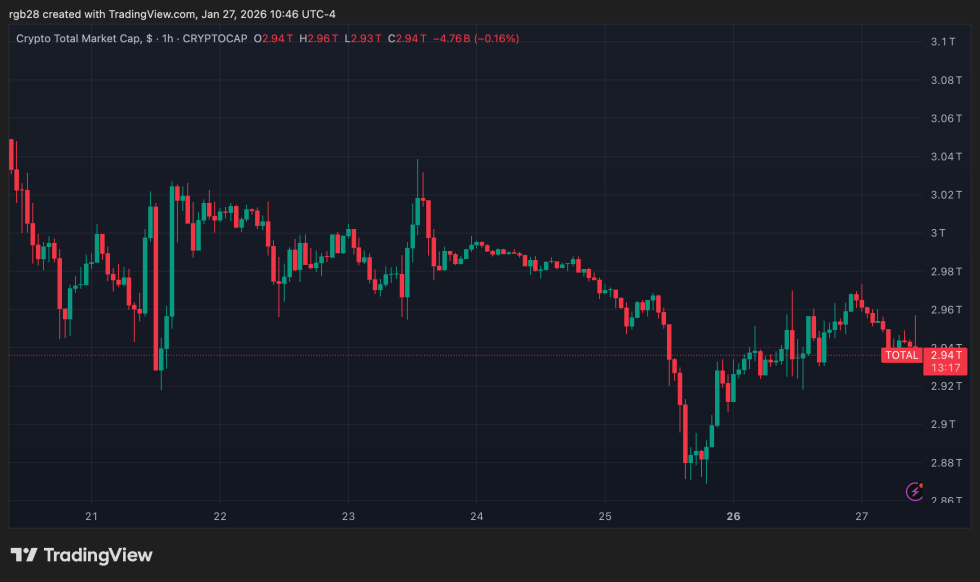
The total crypto market capitalization is at $2.94 trillion in the one-week chart. Source: TOTAL on TradingView

Related Questions

QWhat is the main purpose of the crypto seizure bill advanced by Russian lawmakers?

AThe bill aims to formally allow the regulation of crypto asset seizures in criminal proceedings, eliminate legal vacuums, and reduce risks associated with the use of cryptocurrencies in criminal activities such as money laundering, corruption, and terrorist financing.

QWhich Russian legislative body advanced the bill for crypto asset seizures?

AThe Committee on State Building and Legislation at the State Duma, the lower house of the Federal Assembly of Russia, advanced the bill.

QHow will the bill grant authorities the power to seize crypto assets?

AThe bill grants authorities the power to seize assets by taking control of physical devices like servers, computers, and cold wallets, or by transferring the assets to a special address to ensure their preservation. It also introduces a mechanism for freezing digital currency for subsequent confiscation or to secure a civil claim.

QWhat are the proposed limits for non-qualified investors to purchase cryptocurrencies under Russia's upcoming regulatory framework?

ANon-qualified investors will be allowed to purchase up to 300,000 rubles annually in the most liquid cryptocurrencies after passing a knowledge test.

QWhich Russian institutions have expressed support for the Central Bank's proposed crypto regulatory framework?

ALeading stock exchanges, the Moscow Exchange (MOEX) and SPB Exchange, have shared their support for the central bank's proposed regulatory framework and confirmed they are prepared to launch crypto trading services under the upcoming rules.

Related Reads

Regulatory Clarity for Tokenized Securities: Which Hot Projects Won't Pass the SEC's Scrutiny?

The U.S. SEC has issued new guidance clarifying the regulatory treatment of tokenized securities, emphasizing that the use of blockchain does not change the fundamental nature of securities obligations. The guidance distinguishes between two main types of tokenized securities: those led by the issuer (where blockchain is used as a technical upgrade to record ownership registry, without altering rights or regulatory requirements) and those created by third parties (which may not confer direct ownership rights and introduce additional risks such as custody or counterparty risk). The SEC stresses that regardless of the technology used, any asset that meets the definition of a security or derivative remains subject to existing federal securities laws. This move aims to address market confusion, particularly around unauthorized “tokenized stocks” that mimic equity without issuer involvement—such as certain products offered by platforms like Robinhood in Europe or third-party claims of tokenized equity in companies like OpenAI. In contrast, compliant initiatives—such as those by Kraken, NYSE, or DTCC—focus on integrating tokenization within existing regulatory frameworks, ensuring issuer participation and clear accountability. The guidance reinforces that tokenization is not a shortcut to bypass securities laws but must align with legal and economic substance.

Odaily星球日报22m ago

Regulatory Clarity for Tokenized Securities: Which Hot Projects Won't Pass the SEC's Scrutiny?

Odaily星球日报22m ago

Meta's Big Bet on AI: Investing $135 Billion, Is Zuckerberg in 2026 Worth Believing?

Meta is making a massive $135 billion bet on AI by 2026, a near-doubling of its capital expenditures from the previous year. This aggressive investment comes after the company reported strong Q4 2025 and Q1 2026 results that exceeded market expectations, with revenue reaching $59.9 billion (up 24% YoY) and EPS at $8.88 (up 11% YoY). The market responded positively, with Meta's stock surging over 10%. Unlike its previous metaverse gamble, which resulted in nearly $80 billion in cumulative losses for its Reality Labs division, this AI investment is already showing tangible returns by directly improving Meta's core advertising business. AI-driven enhancements to recommendation and ad delivery systems have increased ad prices by 6% and impressions by 18% in Q4. Key growth drivers include the strong performance of Instagram Reels and the accelerated commercialization of WhatsApp, which is expected to become a major revenue stream. CEO Mark Zuckerberg emphasized that the company's goal is to develop "superintelligence," and this investment is part of a long-term strategy involving talent acquisition, computational infrastructure, and organizational restructuring. To fund this, Meta is reallocating resources, including cutting about 10% of Reality Labs staff. The company's approach differs from competitors like Google and Microsoft by focusing on internalizing AI to enhance its existing massive user traffic and monetization engines, rather than primarily selling external AI products or cloud services. However, this high-stakes strategy carries significant risk; if revenue growth or ad efficiency fails to keep pace with the soaring costs, market tolerance could quickly diminish. Ultimately, Zuckerberg believes the greater risk for Meta is not being aggressive enough in AI investment, as falling behind in the AI race could be more damaging than the financial cost of the bet itself.

比推31m ago

Meta's Big Bet on AI: Investing $135 Billion, Is Zuckerberg in 2026 Worth Believing?

比推31m ago

Trading

Spot
Futures

Hot Articles

How to Buy PUSH

Welcome to HTX.com! We've made purchasing Push Protocol (PUSH) simple and convenient. Follow our step-by-step guide to embark on your crypto journey.Step 1: Create Your HTX AccountUse your email or phone number to sign up for a free account on HTX. Experience a hassle-free registration journey and unlock all features.Get My AccountStep 2: Go to Buy Crypto and Choose Your Payment MethodCredit/Debit Card: Use your Visa or Mastercard to buy Push Protocol (PUSH) instantly.Balance: Use funds from your HTX account balance to trade seamlessly.Third Parties: We've added popular payment methods such as Google Pay and Apple Pay to enhance convenience.P2P: Trade directly with other users on HTX.Over-the-Counter (OTC): We offer tailor-made services and competitive exchange rates for traders.Step 3: Store Your Push Protocol (PUSH)After purchasing your Push Protocol (PUSH), store it in your HTX account. Alternatively, you can send it elsewhere via blockchain transfer or use it to trade other cryptocurrencies.Step 4: Trade Push Protocol (PUSH)Easily trade Push Protocol (PUSH) on HTX's spot market. Simply access your account, select your trading pair, execute your trades, and monitor in real-time. We offer a user-friendly experience for both beginners and seasoned traders.

1.7k Total ViewsPublished 2024.03.29Updated 2025.04.02

Discussions

Welcome to the HTX Community. Here, you can stay informed about the latest platform developments and gain access to professional market insights. Users' opinions on the price of PUSH (PUSH) are presented below.

活动图片