Ehsani of VALR Warns That Cryptocurrency Restrictions Could Lead to Weakened Regulatory Oversight

cryptonews.ruPublished on 2026-08-09Last updated on 2026-08-09

Abstract

Farzam Ehsani, co-founder and CEO of VALR, warns that South Africa's proposed regulatory framework for cross-border cryptocurrency transactions could severely harm the domestic digital asset industry and push financial activity into the shadows unless key provisions are substantially revised. Commenting on draft guidance from the National Treasury and the South African Reserve Bank (SARB), Ehsani argues that applying decades-old capital controls to modern technology threatens jobs, local investment, and business innovation. While acknowledging a positive change—that reporting is triggered when funds exit a licensed Crypto Asset Service Provider (CASP), not at purchase—Ehsani states the proposals still disadvantage licensed local operators. He suggests South Africa would benefit more from fully abolishing exchange controls while maintaining proper reporting and oversight, rather than forcing a half-century-old regulatory regime onto the digital economy. The draft rules allow resident individuals to send crypto abroad within existing exchange allowances but restrict legal entities from cross-border crypto transactions. It also deems certain inbound transfers from private, non-custodial wallets as impermissible for local CASPs. Ehsani contends these restrictions create perverse incentives. By blocking legitimate corporate transactions, especially cross-border stablecoin payments that offer faster, cheaper settlement, the rules would undermine the very regulatory oversight auth...

According to Farzam Ehsani, Co-founder and CEO of VALR, South Africa's proposed new regulatory framework for cross-border cryptocurrency transactions could seriously harm the domestic digital asset industry and push financial activity into the shadows if key provisions are not substantially revised.

Commenting on the joint draft guidance on crypto assets published by the National Treasury and the South African Reserve Bank (SARB), Ehsani warned that attempting to apply decades-old capital control measures to modern technology jeopardizes employment, local investment, and business innovation.

Acknowledging positive changes in the draft—specifically, that the reportable event occurs when funds are withdrawn from a Crypto Asset Service Provider (CASP) system, not upon the initial purchase of assets—Ehsani noted that the proposals still disadvantage licensed local operators.

"South Africa would benefit more from fully abolishing exchange controls while maintaining proper reporting, transparency, and regulatory oversight, rather than trying to adapt a half-century-old regulatory regime to modern technology and the digital economy," Ehsani said in an interview with Bitcoin.com News.

According to the draft rules, resident individuals are permitted to transfer cryptocurrency abroad within existing exchange quotas. However, this regulatory framework restricts legal entities from conducting cross-border crypto transactions and classifies a range of inbound transfers originating from private non-custodial self-hosted wallets as inadmissible for local CASPs.

Ehsani argues that these restrictions create undesirable incentives for both businesses and retail users. By blocking legitimate corporate transactions—particularly cross-border stablecoin payments that offer faster, cheaper, and more transparent settlement compared to outdated banking networks—these rules will undermine the very regulatory oversight the authorities seek.

"By prohibiting legitimate corporate activity through regulated providers, the proposed regulatory framework is likely to push transactions into the shadows or offshore," said Ehsani. "This will reduce the very transparency and control that the National Treasury and the South African Reserve Bank (SARB) aim to achieve, while simultaneously undermining employment, tax revenue, investment, innovation, and new enterprise creation."

Ehsani also raised concerns regarding self-hosted wallets, noting that deeming transactions from non-custodial wallets as inadmissible is neither practical nor sensible. He warned that such a restriction would push South African users to use foreign, unregulated exchanges instead of local licensed platforms, which runs counter to the central bank's goal of monitoring capital flows within the country.

"If South Africa chooses to retain capital flow controls, it should at least apply them on a principled, equitable, and technologically neutral basis," said Ehsani. "Regulation should monitor the movement of value and manage associated risks; it should not dictate which technologies individuals and companies can use."

The VALR co-founder's comments came nearly a month after another South African exchange, Luno, formally challenged the proposed capital flow rules. As reported by Bitcoin.com News, Luno—which has called on Parliament to revise the regulatory framework—argues that the government's current approach risks driving cryptocurrency activity underground and beyond the reach of domestic regulators and tax authorities.

The National Treasury and the South African Reserve Bank (SARB) have opened the draft crypto asset guidance for public comment until September 30. The authorities have emphasized that the draft guidelines are subject to refinement based on stakeholder feedback before final implementation.

Ehsani expressed optimism that the consultation process will lead to a more balanced regime. "South Africa faces a fundamental choice: either we are serious about overcoming our economic problems, unlocking growth, and becoming a globally competitive force, or our regulatory frameworks undermine these ambitions," he said.

end-content

Trending Cryptos

Related Questions

QWho is Farzam Ehsani, and what is his main warning regarding South Africa's proposed crypto regulatory framework?

AFarzam Ehsani is the co-founder and CEO of VALR. He warns that South Africa's proposed new regulatory framework for cross-border crypto transactions could severely harm the local digital asset industry and push financial activity into the shadows if its key provisions are not substantially revised.

QWhat specific positive change in the draft framework did Ehsani acknowledge, and what is his remaining concern about it?

AEhsani acknowledged the positive change where the reportable event is triggered when funds are withdrawn from a Crypto Asset Service Provider (CASP) system, not upon the initial purchase of assets. However, he remains concerned that the proposals still harm licensed local operators.

QAccording to Ehsani, how do the proposed rules on corporate cross-border transactions and self-custody wallets create undesirable outcomes?

AThe rules restrict corporate cross-border crypto transactions and classify inbound transfers from private, non-custodial wallets as impermissible for local CASPs. Ehsani argues this creates undesirable incentives by pushing businesses and users towards using foreign, unregulated exchanges or underground markets, thereby reducing the transparency and oversight regulators seek.

QWhat alternative approach does Ehsani suggest South Africa take regarding capital controls and technology?

AEhsani suggests that South Africa would be better off scrapping exchange controls altogether while maintaining proper reporting, transparency, and regulatory oversight. Alternatively, if controls are kept, they should be applied on a principled, equitable, and technology-neutral basis, focusing on monitoring value movement and managing risks rather than dictating which technologies can be used.

QWhat is the deadline for public comments on the draft framework, and what is Ehsani's hope for the consultation process?

AThe deadline for public comments on the draft crypto assets guidance is until September 30. Ehsani expressed optimism that the consultation process will lead to a more balanced regulatory regime, stating that South Africa faces a fundamental choice between unlocking growth and competitiveness or having its regulatory frameworks undermine these ambitions.

Related Reads

Bitcoin Price Remains Virtually Unchanged Amid Mass Coldcard Withdrawals and BIP-110 Failure

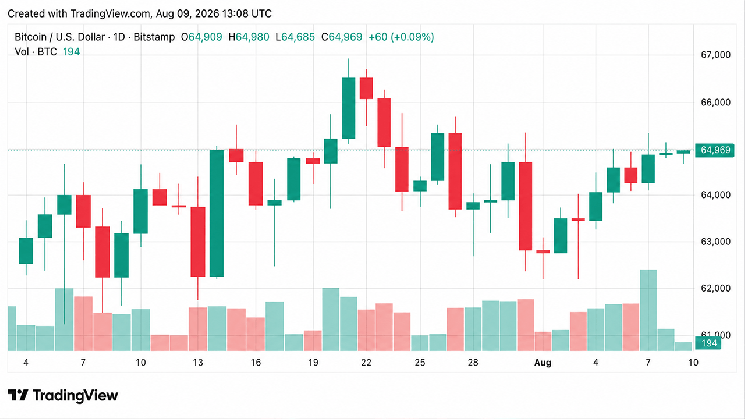
Bitcoin's price remained unusually stable, trading in a narrow range between roughly $64,500 and $65,250 over the weekend of August 9, 2026, despite two significant events. First, a security flaw in Coldcard hardware wallets led to substantial thefts, with high-confidence estimates ranging from 1,596 to 1,719 BTC (approx. $133M). The market appeared to view this as a product-specific security failure rather than a systemic Bitcoin issue, as the stolen coins were a tiny fraction of circulating supply and network operations continued normally. Second, the attempted activation of BIP-110, which required 55% miner signaling, failed dramatically, achieving only about 2.53% support. A minority chain formed but quickly stalled, controlling only a tiny fraction of the network's hash rate while inheriting Bitcoin's full mining difficulty, leaving it effectively dead in the water. Throughout both episodes, Bitcoin's price showed no sharp reaction. Technical indicators like the RSI and MACD were neutral, with immediate support seen at $64,000-$64,500 and resistance at $65,000-$65,500. The most notable aspect was the lack of a significant price move following a major wallet vulnerability and an actual chain split. Traders are now watching for a breakout from the $64,000-$66,000 corridor, which may depend more on liquidity, institutional ETF flows, and macroeconomic data than on these past events.

cryptonews.ru2h ago

Bitcoin Price Remains Virtually Unchanged Amid Mass Coldcard Withdrawals and BIP-110 Failure

cryptonews.ru2h ago

Trading

Spot

Hot Articles

Discussions

Welcome to the HTX Community. Here, you can stay informed about the latest platform developments and gain access to professional market insights. Users' opinions on the price of S (S) are presented below.

活动图片