Data of 54,000 wallet users leaked, Clarity odds just 10%: Hodler’s Digest, Aug. 16

cointelegraphPublished on 2026-08-17Last updated on 2026-08-17

Abstract

Galaxy Digital has slashed the odds of the CLARITY Act passing in 2026 from 75% to just 10%, citing limited Senate session days. If it fails, the SEC and CFTC plan to issue their own crypto rules, though an SEC meeting was abruptly cancelled. High-profile meetings at the White House are planned to discuss the bill. Amid growing hack fears, crypto companies are urging AI labs to grant developers early access to advanced AI models for cybersecurity, following a $116M Coldcard wallet theft. Data breaches at Trezor and SafePal have exposed over 54,000 users' personal information. The CFTC is clashing with states over regulating prediction markets like Kalshi, ordering it to ignore a New York restraining order to maintain a national market, while a Washington state judge ruled against it. The Ethereum Foundation is revising its post-quantum plan, moving away from the Poseidon hash function, and scoping its next major upgrade, Hegotá, for next year. Tether received its first full clean audit opinion from KPMG, showing reserves exceeding liabilities by $6.814 billion. Marketwise, major cryptos saw weekly declines. Predictions include a possible Bitcoin bottom in October, while analysts dispute the feasibility of BTC reaching $1M by 2030. Glassnode notes Bitcoin is in its longest capitulation phase since FTX's collapse. Three men were charged for an alleged Bitcoin kidnapping plot in Missouri.

Galaxy Digital has lowered its estimate of the CLARITY Act’s chances of passing in 2026 to just 10%. In May it had estimated the chance of passage at 75%.

Multiple political issues remain unresolved and the Senate only has 14 days in session to pass the bill after it reconvenes on Sept. 14.

Unless an initial motion to proceed vote occurs immediately upon lawmakers’ return to Washington, there would only be enough time for the CLARITY Act to pass if it “dominates basically the entire working session,” wrote Galaxy head of research, Alex Thorn.

If the bill doesn’t pass, the SEC and CFTC plan to step into the breach by issuing their own rules for crypto markets. The SEC scheduled an open meeting on Friday to unveil its “clear rules of the road” but then cancelled it due to an “an unforeseen scheduling issue.” The White House was reportedly unhappy that the SEC going rogue on crypto rules could anger Democrats and scuttle the delicate negotiations underway to pass CLARITY.

SEC chair Paul Atkins, President Donald Trump and a series of big wigs from Coinbase, a16z, Ripple, Chainlink, NYSE and Nasdaq will meet at the White House on Wednesday to discuss crypto regulation and explore ways to get the bill over the line.

The following day the US Commodity Futures Trading Commission’s new Innovation Advisory Committee will meet to discuss regulation of crypto, AI and prediction markets.


Crypto companies seek access to frontier AI cybersecurity capabilities as fears of more hacks grow

Cryptocurrency companies including Anchorage Digital, BitGo, Bitwise, Blockstream, Ledger and Trezor have urged frontier artificial intelligence (AI) labs to give Bitcoin developers early access to their most capable models.

An open letter, published by the Bitcoin Policy Institute said Bitcoin Core devs and other crypto developers are being blocked by guardrails on publicly available frontier systems, leaving them to rely on less capable open-weight models.

“Without dedicated access programs, defenders may lack the tools needed to keep pace with evolving threats to the infrastructure they maintain.”

The threat from AI identified exploits has become a key focus after $116 million was stolen from Coldcard hardware wallets. The Bitcoin Red Team subsequently used AI to identify thousands of potential cybersecurity issues using open source Chinese models.

New threats to hardware wallet owners have continued to emerge over the past few days, with the personal details of more than 50,000 users leaked in two separate incidents. Trezor reported a breach of personal data affecting about 14,000 users through its shipping provider, ShipMonk. Users who received its products from the US, UK, Sweden, Colombia, Brazil, Italy, and Portugal between May 10 and Aug. 8 are now at high risk from potential phishing attacks using their personal information.

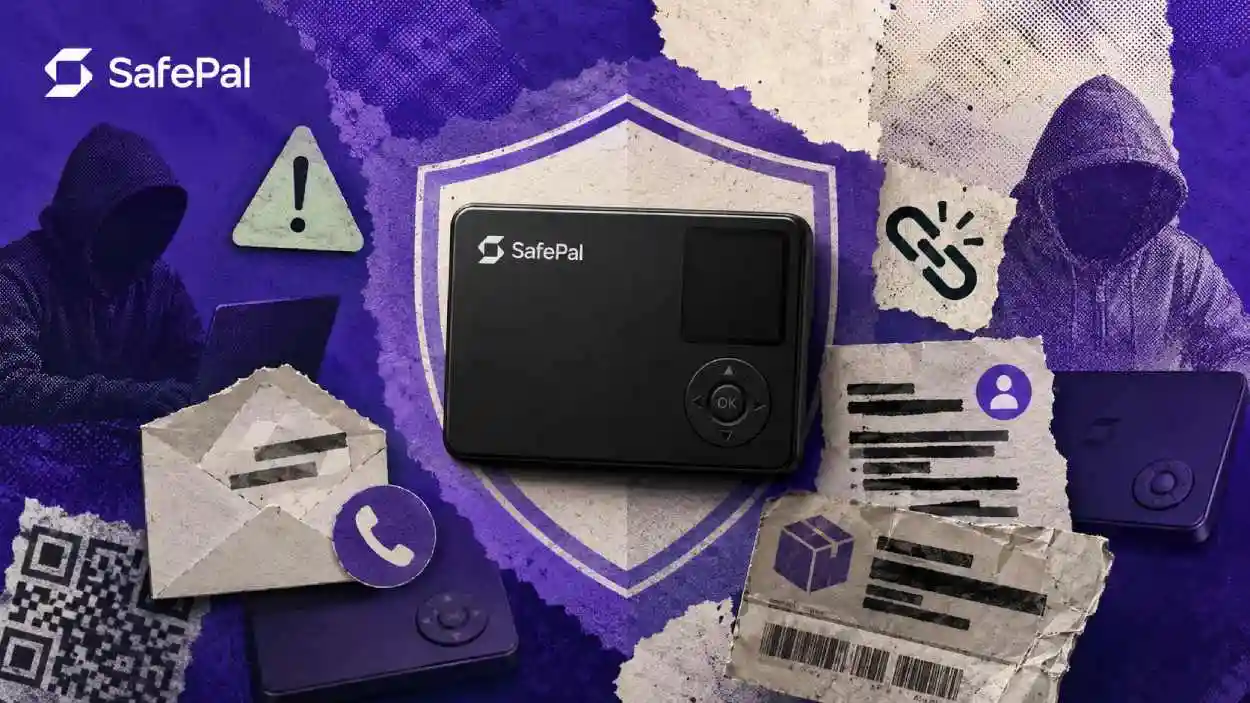
Cryptocurrency wallet provider SafePal has also just disclosed its own data breach that saw unauthorized access to almost 40,000 customers’ order information, including names, addresses and purchasing data. It has since identified and taken down more than 30 fraudulent websites and phishing links tied to the breach.

CFTC and states battle over who gets to regulate prediction markets like Kalshi and Polymarket

The US Commodity Futures Trading Commission (CFTC) has ordered prediction market Kalshi to ignore New York’s restraining order and continue operating normally.

The CFTC said that New York’s enforcement action against Kalshi for operating an illegal gambling business constituted a market emergency as it would bar Kalshi from operating prediction markets nation-wide. It believes the Commodity Exchange Act requires the CFTC to provide a uniform national derivatives market. CFTC Chair Michael Selig said that Congress did not intend derivatives exchanges to face a “patchwork of state gaming laws.”

A few days later a Washington state judge ordered prediction market platform Kalshi to stop operating in the state and rejected its argument that federal commodities law preempts Washington gambling law. Kalshi has been ordered to implement IP-address and residency-based geofencing by Aug. 19 and a GeoComply multi-source geofencing system by Sept. 2.

Even the New York City Council wants to regulated prediction markets and it has launched an investigation into prediction market firms to examine if they are using “false and deceptive marketing” through influencers to target young adults.

Ethereum Foundation revamps post-quantum plan and decides on scope for Hegota hard fork

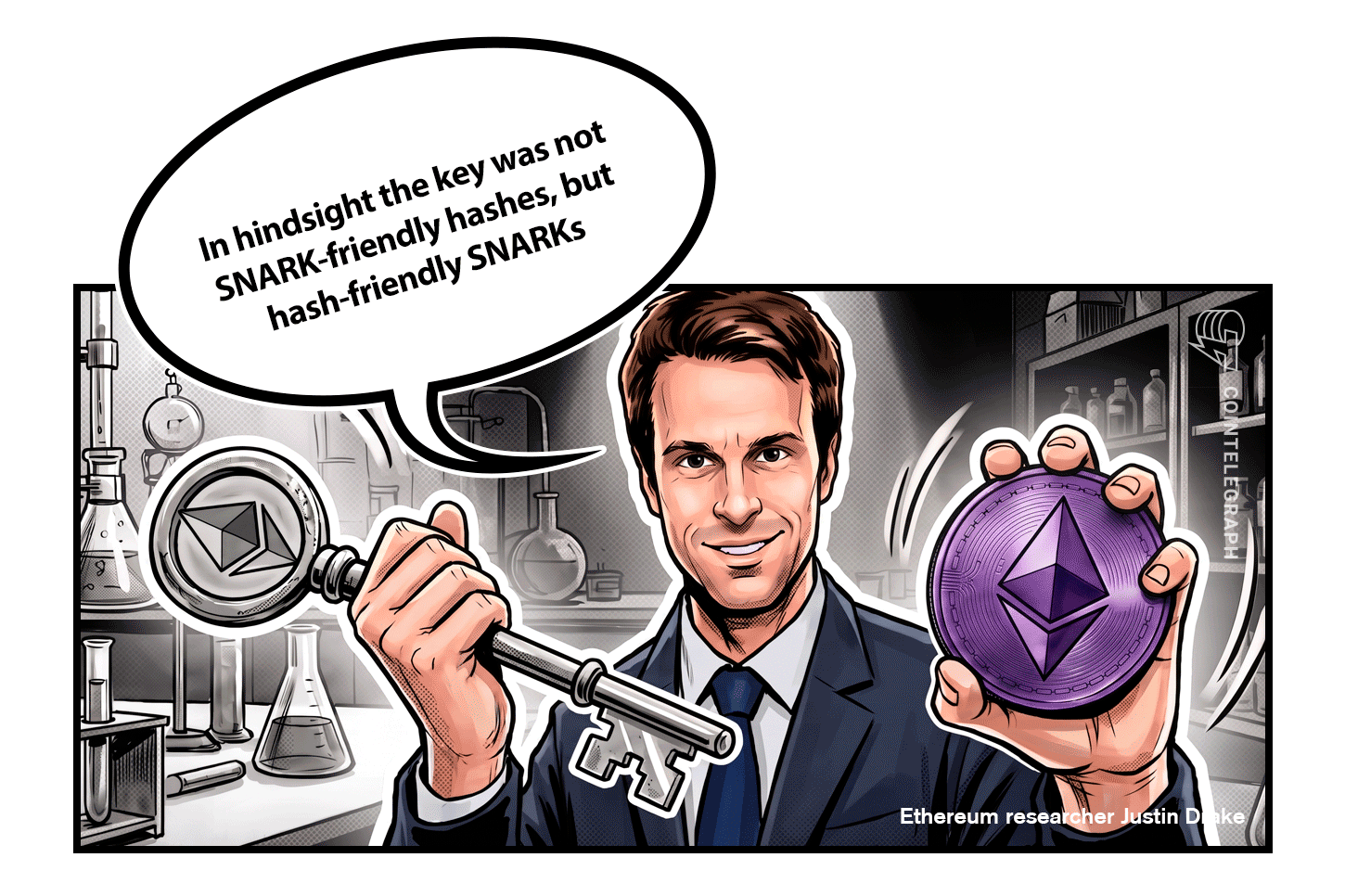
The Ethereum Foundation is moving away from the Poseidon hash function in its planned post-quantum architecture, according to researcher Justin Drake.

On Thursday, Drake said the foundation would instead rely on established alternatives such as SHA or BLAKE.

Poseidon is a relatively new hash function tailored to work better with zero knowledge proofs in order to compress signatures sizes. However, Drake said new developments mean that SNARKS can be tailored to work better with existing hash functions.

A production-ready leanVM is targeted for 2027, followed by deployments across Ethereum’s consensus, data and execution layers in 2028.

Ethereum developers are currently reviewing 66 proposals to narrow them down as part of scoping the next major Ethereum upgrade to follow Glamsterdam called Hegotá

Censorship resistance proposal FOCIL is currently the only Ethereum Improvement Proposal (EIP) scheduled for inclusion. A number of other EIPs are focused on privacy.

Core developers aim to ship the Hegotá upgrade next year, with Glamsterdam expected in the coming months.
Tether completes first full financial audit, receives clean KPMG opinion

Tether completed the first full independent audit of its annual financial statements, with KPMG US issuing a clean opinion on the stablecoin issuer’s 2025 accounts.

The audit covered Tether’s balance sheet, income statement and cash flows for the year ended Dec. 31, 2025, including the assets backing its issued tokens and the liabilities they represent. Tether said the audited statements showed reserves exceeding liabilities by $6.814 billion.

Unlike Tether’s quarterly reserve attestations, which it has published for years, the full audit subjected the company’s broader financial statements and underlying evidence to independent examination, including transactions, systems, ownership records, valuations and counterparties.


Winners and Losers

At the end of the week, Bitcoin (BTC) is down 3.3% to trade at $62,842, Ethereum (ETH) is down 2.3% to trade at $1,872 and XRP (XRP) is down 4.2% to 99 cents. The total market cap is at $2.16 trillion according to CoinMarketCap.

Among the biggest 100 cryptocurrencies, the top three altcoin winners of the week are Velvet (VELVET) with a 131% gain, Ether.fi (ETHFI) on 31%, and Chainlink (LINK) on 14%.

The top three altcoin losers of the week are Uniswap (UNI) which was down 18%, Aptos (APT) down 12% and Pepe (PEPE) down 11%.


Top Prediction of the Week


Bitcoin could bottom in October, altcoins are ‘basically dead,’ Swan CEO says

Bitcoin could bottom in October before recovering to around $130,000 ahead of the 2028 halving, according to Swan Bitcoin CEO Cory Klippsten.

He argued that Bitcoin has so far bottomed about 12 months after each previous bull market peak, and the previous peak was in October last year.

He told Cointelegraph that Bitcoin could fall to $57,000, or even $53,000, before a quick recovery, and could reach around $130,000 ahead of the 2028 halving.


Top FUD of the Week


Bitcoin to $1M by 2030 is ‘mathematically impossible’ says Markus Thielen

The numbers behind the oft-cited prediction that Bitcoin will reach $1 million by 2030 simply don’t add up, according to Markus Thielen, head of research at 10x Research.

“It’s mathematically impossible,” Thielen told Trade Secrets, arguing that Bitcoin would need to attract another $15 trillion in capital to reach a per Bitcoin price of $1 million. This is equivalent to roughly 25% of the US stock market’s total value flowing into Bitcoin over the next four years.

“We have seen $1 trillion US dollars of inflow to bring the market cap really to $1 trillion. To $1 million [per] Bitcoin. It’s 15x, I think, from here.”


Bitcoin price-metric basket sees longest capitulation since FTX blow-up: Glassnode

Bitcoin is seeing its longest capitulation since the end of the 2022 bear market, onchain analytics platform Glassnode reported on Monday.

The firm said that forty-five Bitcoin (BTC) price metrics it tracks under the Bitcoin Cycle Position Heatmap show the longest “capitulation” phase since the collapse of FTX in late 2022. But it warned that aggregate readings will have to get even worse to match areas that marked previous bear-market bottoms, says creator Rafael Schultze-Kraft.

“Today it sits in its coldest stretch since FTX: late in the bear, but not yet the unanimous deep blue that previously marked a floor,” he commented.


Missouri trio charged over alleged Bitcoin kidnapping plot

Three Missouri men were charged over an alleged August 2024 plot to kidnap a Bitcoin holder and steal his holdings.

Sedric Louis, John Davis and Martel Williams were allegedly hired to kidnap and force a Bitcoin holder to transfer cryptocurrency to accounts controlled by organizers, according to a Tuesday press release by the US Attorney’s Office. They traveled from St. Louis to Connecticut, where they rented vehicles and obtained air rifles to stake out the victim.

After staking out the intended target for two days, they abandoned the plan for fear of being caught on home security cameras. Shortly afterward, another crew from Florida arrived to carry out the plan.


Top Magazine Features of the Week

El Salvador’s Bitcoin experiment turns 5: ‘It was for us, not them’

Five years after El Salvador made Bitcoin legal tender, the experiment has fallen short of its original promises for locals, but it’s been great for Bitcoin’s global profile.


Inside the fake crypto startup that fooled North Korean IT workers

Suspected North Korean IT workers joined a fake crypto startup — without realizing their every move was being tracked to extract valuable intel.


Solana’s fee overhaul increases burn and makes resource hogs pay

Solana’s proposed fee overhaul would make resource-heavy transactions more expensive while cutting costs for simpler activity, and it increases the amount of SOL burned.

Trending Cryptos

Related Questions

QWhy did Galaxy Digital lower the odds of the CLARITY Act passing to 10%?

AGalaxy Digital lowered the odds due to multiple unresolved political issues and the limited time available. The Senate only has 14 days in session after reconvening on September 14 to pass the bill, making passage unlikely unless it dominates the entire working session.

QWhat data breaches affecting crypto wallet users are reported in the article?

ATwo separate data breaches are reported. Trezor reported a breach of personal data affecting about 14,000 users through its shipping provider, ShipMonk. Additionally, SafePal disclosed unauthorized access to almost 40,000 customers' order information, including names, addresses, and purchasing data.

QWhat regulatory conflict is discussed regarding prediction markets like Kalshi?

AThe CFTC and state authorities are in conflict. The CFTC ordered Kalshi to ignore a New York restraining order to maintain a uniform national derivatives market. Conversely, a Washington state judge ordered Kalshi to stop operating in the state, rejecting the argument that federal law preempts state gambling laws.

QWhat significant change did the Ethereum Foundation make to its post-quantum plan?

AThe Ethereum Foundation is moving away from the Poseidon hash function in its planned post-quantum architecture. Instead, it will rely on established alternatives such as SHA or BLAKE, as new developments allow SNARKs to work better with existing hash functions.

QWhat was the outcome of Tether's first full independent financial audit?

AKPMG US issued a clean opinion on Tether's 2025 financial statements. The audit confirmed that Tether's reserves exceeded its liabilities by $6.814 billion, covering its balance sheet, income statement, cash flows, and the assets backing its issued tokens.

Related Reads

Claude's Watermark Has Been Cracked, Gaining 11k Stars, But Installation Is Refused

The article discusses the controversy surrounding Anthropic's implementation of a hidden watermark in all text generated by its AI, Claude. This policy, based on Google DeepMind's SynthID-Text technique, embeds a statistical signature by making inconsequential word choices. The watermark applies globally, even to human-written text lightly edited by Claude, sparking user backlash over issues of ownership and the creation of an "AI content second-class citizen" status. In response, an open-source tool called "watermarks-remover" (originally "remove-claude-marks") was released on GitHub, quickly gaining 11k stars. It works on three levels: removing invisible Unicode characters, using an agent to rewrite text and break statistical patterns, and stripping metadata from various file formats. Notably, Claude itself refused to install this removal tool as an Agent Skill, a task ultimately completed by another AI model, GLM 5.2. The article points out the irony that the removal code may have been written by Claude. The piece frames this as an ongoing battle between watermarking for traceability against misinformation and the desire for unmarked, owned content from paying users. It questions the practicality of mandatory technical markings when AI-generated text becomes indistinguishable from human writing, suggesting the open-source community's rapid development of countermeasures will continually outpace regulatory efforts.

marsbit58m ago

Claude's Watermark Has Been Cracked, Gaining 11k Stars, But Installation Is Refused

marsbit58m ago

SafePal Leaks Data of Nearly 40,000 Hardware Wallet Buyers: Private Keys Intact, Yet Danger Moves Closer to the Physical

Hardware wallet manufacturer SafePal has disclosed a data breach affecting approximately 39,798 customers who placed orders between March 2025 and April 2026. The leak exposed personal information including names, email addresses, phone numbers, physical delivery addresses, and purchase records. The company confirmed that private keys, recovery phrases, wallet passwords, and financial details were not compromised, as the cold storage systems operate in an isolated environment separate from the e-commerce servers. However, the breach poses significant risks beyond digital theft. Attackers now possess a high-value list of confirmed hardware wallet owners, effectively marking them as likely holders of substantial cryptocurrency. This enables highly targeted social engineering attacks, such as phishing emails referencing real order details, fake hardware deliveries, or phone scams impersonating SafePal support. The company has already identified and taken down over 30 related phishing sites. A critical aspect of the incident is the delayed disclosure timeline. SafePal acknowledged receiving initial user reports of phishing attempts in May but treated them as isolated. A full investigation began in July, with a public announcement not made until August, leaving users exposed for approximately three months. Furthermore, a configuration error prevented a data-purge routine from deleting old order information as intended, potentially increasing the scope of the leaked data. The incident highlights a structural paradox in the hardware wallet industry: while the devices are designed to secure private keys offline, the necessary e-commerce process collects sensitive personal data that, if leaked, makes the user a target. This mirrors a similar breach suffered by Ledger in 2020. Affected users are advised to be extremely vigilant. They should verify if they are impacted via SafePal's dedicated page, treat all unsolicited communications (emails, calls, physical mail) referencing SafePal as suspicious, and never share recovery phrases. Users who may have entered sensitive information on a phishing site must create a new wallet immediately. The breach underscores that in cryptocurrency security, the most vulnerable link is often the human user, not the cryptographic technology.

marsbit1h ago

SafePal Leaks Data of Nearly 40,000 Hardware Wallet Buyers: Private Keys Intact, Yet Danger Moves Closer to the Physical

marsbit1h ago

30 Years After Being Crushed by AI, People Have Fallen Back in Love with Chess

On May 11, 1997, IBM's "Deep Blue" defeated chess champion Garry Kasparov, marking the first time a machine triumphed in a top-level intellectual game. The narrative of human defeat by AI seemed cemented when AlphaGo beat Lee Sedol in Go in 2016, a game once considered AI's final frontier. Yet, nearly 30 years after AI's dominance began, chess is experiencing unprecedented popularity. Chess.com boasts over 250 million registered users and 10 million daily active players. Its CEO, Erik Allebest, attributes this resurgence to several waves: the pandemic, the Netflix series *The Queen's Gambit*, and viral AI chess bots like "Mittens" on social media. Crucially, each surge left a permanently higher user base. The key insight is that AI liberated the game. When machines unequivocally became the best, the pressure to "win" as the ultimate human was removed. Chess returned to its core: the intrinsic joy of play—the thrill of a tactical combo, the tension of a time scramble, the curiosity of post-game analysis. AI, now serving as an always-available coach and anti-cheat tool, became infrastructure that enhanced rather than killed the experience. In contrast, Go, deeply rooted in East Asian elite culture and often pursued for mastery and status, suffered a "collapse of meaning" at the professional level after AlphaGo. Players began mimicking AI moves, erasing distinctive styles and narrative. While some Go players gained fame as online personalities, it didn't translate to widespread engagement with the game itself. The divergence highlights a fundamental question in the age of AI: is the motivation for an activity about *winning* or *playing*? Activities where the process itself is the reward, like chess, can thrive when the pressure of being the best is gone. AI may rightly take over tasks done purely for outcome, but it cannot replace the human experience of simply enjoying the game.

marsbit1h ago

30 Years After Being Crushed by AI, People Have Fallen Back in Love with Chess

marsbit1h ago

Exiting Top Ten Shareholders of Kweichow Moutai, 'Long-term Capital' Portfolio Adjustments Revealed: National Social Security Fund Enters 12 New Stocks, Invests in Hard Tech Mthreads

With the ongoing release of semi-annual reports, the second-quarter investment moves of long-term institutional investors like the National Social Security Fund (NSSF) and insurance capital are becoming clear. Central Huijin Asset Management and China Securities Finance Corp., often referred to as the "national team," are no longer among the top ten shareholders of Kweichow Moutai. Data shows that as of August 14th, the NSSF held positions in 33 A-share companies, with a total portfolio value exceeding 11 billion yuan. It added 12 new stocks in Q2, spanning sectors like chemicals, food & beverage, and semiconductors. The NSSF maintains its stable investment style, favoring companies with solid performance and attractive valuations. Apart from exiting Moutai, Huijin and China Securities Finance also left the top ten shareholder lists of companies like Ping An Bank and Dahua Technology. Insurance capital heavily invested in 41 companies in Q2, with a total holding value over 26 billion yuan. They showed a continued preference for cyclical sectors like non-ferrous metals and chemicals, as well as high-dividend-yield stocks. Analysts note that these long-term funds act as market stabilizers and investment bellwethers. Their presence is reshaping the market ecology, steering focus towards fundamental corporate value and away from speculative trading. A notable move was the NSSF's new investment in Moore Threads, a loss-making but leading domestic GPU design company listed on the STAR Market, indicating interest in hard technology sectors. Looking ahead, analysts expect long-term capital to continue a dual-strategy: maintaining a foundation in high-dividend-value stocks while gradually increasing exposure to growth areas aligned with industrial upgrading, such as advanced manufacturing and tech self-sufficiency. The market's recovery is seen as gaining a firmer footing after recent adjustments.

marsbit1h ago

Exiting Top Ten Shareholders of Kweichow Moutai, 'Long-term Capital' Portfolio Adjustments Revealed: National Social Security Fund Enters 12 New Stocks, Invests in Hard Tech Mthreads

marsbit1h ago

50 Billion, Sichuan Brothers Have Struck It Rich

A new king of Sichuan stocks has emerged. This week, Chengdu Chaochun Applied Materials Co., Ltd. (Chaochun Yingcai) debuted on the ChiNext board, with its stock price surging over 700% intraday and its market value exceeding 50 billion yuan. Opening at 450 yuan per share, it surpassed New Easun to become the highest-priced stock in Sichuan's A-share market. This marks the success of a 21-year entrepreneurial journey by brothers Chai Jie and Chai Lin. Younger brother Chai Jie founded the company in 2005 in Chengdu, initially focusing on特种陶瓷. Elder brother Chai Lin, an expert in精密光学 and特种涂层, joined in 2008 to lead R&D. Facing a market monopolized by giants like KoMiCo and TOCALO, the company persisted. A breakthrough came in 2011 when its products entered the supply chain of AMEC (中微公司), a major domestic etching equipment maker. By 2020, its components reached the technical threshold for supporting 5nm process etching equipment. Revenue grew from 169 million yuan in 2023 to 496 million yuan in 2025, with semiconductor coating parts accounting for over 95% of sales. The IPO created significant wealth. The Chai brothers, holding a combined 46.88% stake, saw their paper wealth reach approximately 24 billion yuan. It also became the most profitable ChiNext IPO this year for retail investors. Employees benefited through two layers of持股平台, covering over 200 core technical and business staff. Early investors like SDIC Venture Capital, AMEC, and BYD (which invested 126.9 million yuan and now has a paper gain exceeding 1.8 billion yuan) also reaped substantial returns. The company represents a wave of tech leaders choosing to build their businesses in their hometown of Sichuan. Examples include New Easun in optoelectronics and Baili Tianheng in biopharmaceuticals. This trend shows that inland cities like Chengdu, with talent and industrial patience, can incubate specialized leaders that break foreign monopolies, offering an alternative model to the coastal hubs.

marsbit3h ago

50 Billion, Sichuan Brothers Have Struck It Rich

marsbit3h ago

Trading

Spot

Hot Articles

Discussions

Welcome to the HTX Community. Here, you can stay informed about the latest platform developments and gain access to professional market insights. Users' opinions on the price of S (S) are presented below.

活动图片