Michael Saylor Gives New Signal to Buy Bitcoin! Strategy May Resume Buying BTC After Five-Week Break!

cryptonews.ruPublished on 2026-08-03Last updated on 2026-08-03

Abstract

Michael Saylor, founder and chairman of Strategy, has sparked market speculation with a recent social media post hinting that the company may resume Bitcoin purchases after a five-week pause. He posted his customary Sunday chart tracking Strategy's BTC buys with the caption "Launch Bitcoin movement," leading investors to anticipate a potential buying announcement on Monday. This break in buying is unusual for Strategy, known for its consistent BTC acquisitions. The company last purchased Bitcoin on June 22, buying 520 BTC for approximately $34.9 million. Subsequently, from June 29 to July 5, it sold 3,588 BTC to raise about $216 million for funding preferred stock dividends and bolstering its dollar reserves. According to an SEC filing, as of July 26, Strategy holds 843,775 BTC, acquired at an average price of $75,476 per coin for a total of $63.69 billion. With Bitcoin currently trading around $63,200, the portfolio's estimated value is roughly $53.3 billion, representing an unrealized loss of about $10.4 billion. During the buying hiatus, Strategy has also increased its dollar reserves to $3.75 billion through common stock sales and launched the STRC share buyback program, strategic moves that have received analyst support.

A recent social media post by Michael Saylor, founder and Chairman of the board of directors of Strategy, has fueled expectations that the company may be preparing to start buying bitcoin again after a long hiatus.

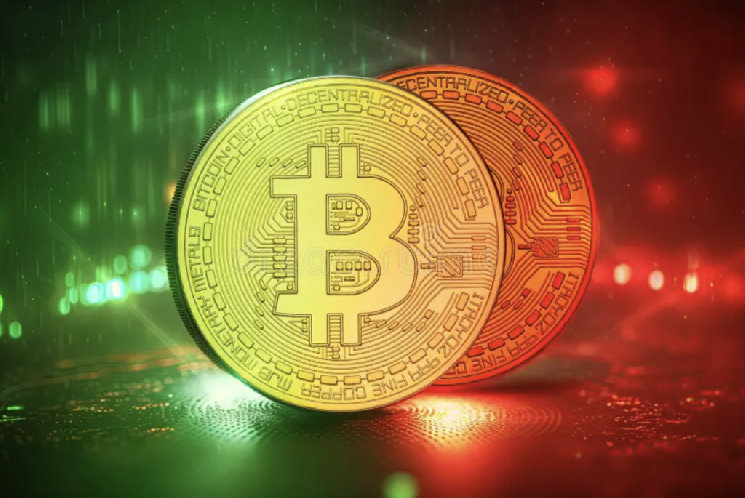
Saylor, who posts a chart every Sunday showing the company's bitcoin purchases, this time caught investors' attention by posting it with the caption "Launching the Bitcoin Movement".

Market participants suggest this post could be an indirect hint that Strategy may announce a new bitcoin purchase on Monday. The company has not announced any new bitcoin purchases over the past five weeks.

This situation is unusual for Strategy, known for its regular purchases of $BTC. After Saylor's statement last week that "we will need a different color," the company announced on July 27th that it had not bought any new bitcoin.

According to a recent filing with the U.S. Securities and Exchange Commission (SEC), as of July 26th, Strategy owned 843,775 $BTC. The company acquired these assets for a total of $63.69 billion, at an average cost of $75,476 per bitcoin.

At current prices, with bitcoin trading around $63,200, the value of the company's bitcoin portfolio is estimated at approximately $53.3 billion, while the position's value is estimated to be roughly $10.4 billion below its actual cost.

Strategy's last bitcoin purchase was on June 22nd, when the company acquired 520 $BTC for approximately $34.9 million. However, between June 29th and July 5th, it sold 3,588 $BTC to raise about $216 million in cash to fund preferred share payments and strengthen its dollar reserves.

Over the past five weeks, the company not only suspended bitcoin purchases but also increased its dollar reserves to $3.75 billion through sales of common stock and also launched the STRC share repurchase program. These strategic moves have received support from TD Cowen and Benchmark analysts.

*This is not investment advice.

end-content

Trending Cryptos

Related Questions

QWhat recent action by Michael Saylor has sparked speculation about MicroStrategy resuming Bitcoin purchases?

AMichael Saylor posted a chart on social media, which he usually does every Sunday to show the company's Bitcoin purchases, but this time he captioned it 'Bitcoin Motion Launch'. This has led market participants to speculate it's an indirect hint of a potential new Bitcoin purchase announcement.

QFor how long had MicroStrategy paused its Bitcoin buying activity before this recent development?

AMicroStrategy had not announced any new Bitcoin purchases for the previous five weeks.

QWhat were the total value and average purchase price of MicroStrategy's Bitcoin holdings as of its latest SEC filing?

AAs of July 26, MicroStrategy held 843,775 BTC, acquired for a total of $63.69 billion. This represents an average cost of $75,476 per Bitcoin.

QWhat were the key strategic financial moves MicroStrategy made during its five-week pause from Bitcoin buying?

ADuring the pause, MicroStrategy increased its dollar reserves to $3.75 billion by selling common stock, and also launched the STRC stock buyback program. It had also previously sold 3,588 BTC to raise cash for preferred share payments and to bolster its dollar reserves.

QWhat is the approximate unrealized loss on MicroStrategy's Bitcoin portfolio at the current market price mentioned in the article?

AWith Bitcoin trading around $63,200, the value of MicroStrategy's portfolio is approximately $53.3 billion, which is roughly $10.4 billion below its total acquisition cost of $63.69 billion.

Related Reads

Once-Popular Web3 Enters Wave of Layoffs

The once-hot Web3 industry is experiencing a severe wave of layoffs. While many companies attribute job cuts to AI-driven restructuring, the primary reason is often financial pressure. The Web3 sector, at the intersection of tech and finance, has been hit particularly hard. Employees at major cryptocurrency exchanges report sudden, impersonal layoffs—often with system access revoked overnight—and minimal or no severance. Common tactics include setting impossible performance targets or terminating employees for minor policy violations. The working atmosphere has become toxic, marked by intense monitoring, excessive meetings, and management obsessed with control and internal politics rather than product innovation. The industry's core business model is collapsing. Exchange revenue from trading fees and listing charges has plummeted due to a decline in quality projects and retail investor exodus. Events like the massive forced liquidation on October 10th further shattered confidence. Competition from on-chain derivatives platforms and prediction markets is intensifying the downturn. As layoffs continue, displaced workers struggle to find new opportunities. Many transition to the AI sector, but face significant bias from traditional finance and even some AI firms, which view crypto industry experience with suspicion. The current downturn appears more structural than cyclical, driven by unsustainable practices, internal strife, and a failure to innovate, raising questions about the industry's future trajectory.

marsbit42m ago

Once-Popular Web3 Enters Wave of Layoffs

marsbit42m ago

Sales Drop 26% But Prices Rise? Xiaomi's Dilemma

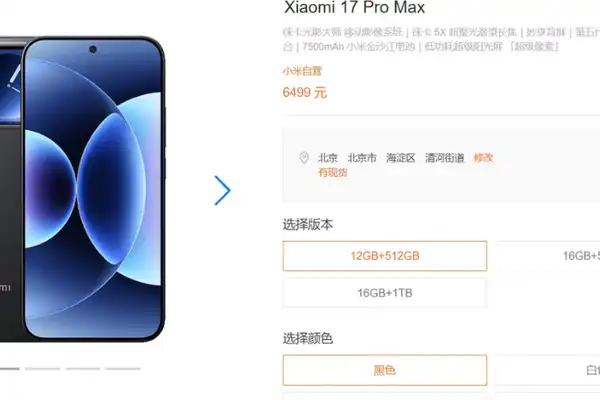
Xiaomi, facing a significant 26.3% year-on-year decline in global smartphone shipments in Q2 2026, has implemented its third price hike of the year. On August 2nd, prices were raised for nine models, including the flagship Mi 17 series (up 400-500 yuan) and Redmi K90/Turbo 5 series (up 300 yuan). This move completes a pattern where cost pressure, originating from surging memory chip prices, has climbed from entry-level to mid-range and now flagship products. The primary driver is a severe supply squeeze on consumer-grade DRAM and NAND flash memory, as major manufacturers like Samsung shift advanced capacity to more profitable HBM for AI applications. According to Xiaomi President Lu Weibing, memory prices for the same configuration have skyrocketed nearly fourfold since Q1 2025, adding roughly 1500 yuan to the cost of a mainstream 12GB+512GB phone. IDC estimates consumer memory costs have risen nearly 300% year-on-year. While the price increases hurt demand and contributed to the sales slump, Xiaomi's strategy of reducing entry-level models and upgrading its product mix also played a role. Domestically, its market share in China fell to 12% (5th place), while leaders Huawei and Apple saw shipments grow over 24%. To mitigate future risks, Xiaomi is accelerating its in-house "Surge" chip development and optimizing memory configurations across its lineup. Xiaomi is not alone; major brands like OPPO, vivo, and Apple have already raised prices in 2026, with industry insiders predicting another round of increases (200-800 yuan) in the second half. A full-scale industry-wide涨价 cycle is underway, forcing both manufacturers and consumers to recalibrate their strategies and purchasing decisions amid sustained cost pressures.

marsbit53m ago

Sales Drop 26% But Prices Rise? Xiaomi's Dilemma

marsbit53m ago

Trading

Spot

Hot Articles

What is $BITCOIN

DIGITAL GOLD ($BITCOIN): A Comprehensive Analysis Introduction to DIGITAL GOLD ($BITCOIN) DIGITAL GOLD ($BITCOIN) is a blockchain-based project operating on the Solana network, which aims to combine the characteristics of traditional precious metals with the innovation of decentralized technologies. While it shares a name with Bitcoin, often referred to as “digital gold” due to its perception as a store of value, DIGITAL GOLD is a separate token designed to create a unique ecosystem within the Web3 landscape. Its goal is to position itself as a viable alternative digital asset, although specifics regarding its applications and functionalities are still developing. What is DIGITAL GOLD ($BITCOIN)? DIGITAL GOLD ($BITCOIN) is a cryptocurrency token explicitly designed for use on the Solana blockchain. In contrast to Bitcoin, which provides a widely recognized value storage role, this token appears to focus on broader applications and characteristics. Notable aspects include: Blockchain Infrastructure: The token is built on the Solana blockchain, known for its capacity to handle high-speed and low-cost transactions. Supply Dynamics: DIGITAL GOLD has a maximum supply capped at 100 quadrillion tokens (100P $BITCOIN), although details regarding its circulating supply are currently undisclosed. Utility: While precise functionalities are not explicitly outlined, there are indications that the token could be utilized for various applications, potentially involving decentralized applications (dApps) or asset tokenization strategies. Who is the Creator of DIGITAL GOLD ($BITCOIN)? At present, the identity of the creators and development team behind DIGITAL GOLD ($BITCOIN) remains unknown. This situation is typical among many innovative projects within the blockchain space, particularly those aligning with decentralized finance and meme coin phenomena. While such anonymity may foster a community-driven culture, it intensifies concerns about governance and accountability. Who are the Investors of DIGITAL GOLD ($BITCOIN)? The available information indicates that DIGITAL GOLD ($BITCOIN) does not have any known institutional backers or prominent venture capital investments. The project seems to operate on a peer-to-peer model focused on community support and adoption rather than traditional funding routes. Its activity and liquidity are primarily situated on decentralized exchanges (DEXs), such as PumpSwap, rather than established centralized trading platforms, further highlighting its grassroots approach. How DIGITAL GOLD ($BITCOIN) Works The operational mechanics of DIGITAL GOLD ($BITCOIN) can be elaborated on based on its blockchain design and network attributes: Consensus Mechanism: By leveraging Solana’s unique proof-of-history (PoH) combined with a proof-of-stake (PoS) model, the project ensures efficient transaction validation contributing to the network's high performance. Tokenomics: While specific deflationary mechanisms have not been extensively detailed, the vast maximum token supply implies that it may cater to microtransactions or niche use cases that are still to be defined. Interoperability: There exists the potential for integration with Solana’s broader ecosystem, including various decentralized finance (DeFi) platforms. However, the details regarding specific integrations remain unspecified. Timeline of Key Events Here is a timeline that highlights significant milestones concerning DIGITAL GOLD ($BITCOIN): 2023: The initial deployment of the token occurs on the Solana blockchain, marked by its contract address. 2024: DIGITAL GOLD gains visibility as it becomes available for trading on decentralized exchanges like PumpSwap, allowing users to trade it against SOL. 2025: The project witnesses sporadic trading activity and potential interest in community-led engagements, although no noteworthy partnerships or technical advancements have been documented as of yet. Critical Analysis Strengths Scalability: The underlying Solana infrastructure supports high transaction volumes, which could enhance the utility of $BITCOIN in various transaction scenarios. Accessibility: The potential low trading price per token could attract retail investors, facilitating wider participation due to fractional ownership opportunities. Risks Lack of Transparency: The absence of publicly known backers, developers, or an audit process may yield skepticism regarding the project's sustainability and trustworthiness. Market Volatility: The trading activity is heavily reliant on speculative behavior, which can result in significant price volatility and uncertainty for investors. Conclusion DIGITAL GOLD ($BITCOIN) emerges as an intriguing yet ambiguous project within the rapidly evolving Solana ecosystem. While it attempts to leverage the “digital gold” narrative, its departure from Bitcoin's established role as a store of value underscores the need for a clearer differentiation of its intended utility and governance structure. Future acceptance and adoption will likely depend on addressing the current opacity and defining its operational and economic strategies more explicitly. Note: This report encompasses synthesised information available as of October 2023, and developments may have transpired beyond the research period.

1.4k Total ViewsPublished 2025.05.13Updated 2025.05.13

What is $BITCOIN

Discussions

Welcome to the HTX Community. Here, you can stay informed about the latest platform developments and gain access to professional market insights. Users' opinions on the price of BTC (BTC) are presented below.

活动图片