Trends in US Stocks (June 22): Strait of Hormuz Agreement Changes Course, Thursday's PCE and Micron to Determine Chip Sector Direction

marsbitPublished on 2026-06-22Last updated on 2026-06-22

Abstract

U.S. Stock Market Outlook (June 22): Strait of Hormuz Deal Falters, Thursday's PCE & Micron to Set Chip Sector Direction. Geopolitical tensions resurged over the weekend as Iran's IRGC announced the closure of the Strait of Hormuz, and its negotiation team walked out after threats from Trump, pausing U.S.-Iran talks. This renewed risk premium is weighing on U.S. equity futures ahead of the open. Last week's market was driven by chip stocks, with the Philly Semiconductor Index hitting a record high. While the Fed's hawkish tone was overshadowed by initial deal optimism, the S&P 500 gained 0.9% for the week. SpaceX debuted strongly but ended with two down days. Key events this week: The status of U.S.-Iran negotiations remains the immediate variable for oil and energy stocks. Monday sees Marvell and Flex added to the S&P 500. Tuesday's MSCI reclassification could benefit South Korean semiconductors and memory stocks. **Thursday, June 25th, is the critical day**, featuring the May Core PCE report and Micron's earnings. Hotter PCE data could solidify expectations for two 2024 rate hikes, while softer data would rapidly reprice rate cut bets. Micron's report is a key test for the AI narrative; the market will scrutinize its 2027 HBM supply visibility, HBM4 progress, and its position in Nvidia's Vera Rubin supply chain. Nvidia's AGM and a potential OpenAI GPT-5.6 release will make Thursday a pivotal 24 hours for AI. Friday concludes with the Russell reconstitution, elevating sm...

Author: Tide Research

Over the weekend, the US-Iran agreement has already begun to falter. Iran's IRGC announced the closure of the Strait of Hormuz on Saturday, and the negotiation delegation walked out angrily on Sunday after Trump issued threats. The US-Iran talks in Switzerland are currently still suspended. US stock futures for the three major indices were all lower in pre-market trading, with geopolitical risk premiums starting to accumulate again. The direction of the negotiations is the most immediate pricing variable for today's market open.

Market Performance

Last week, chip stocks were the main theme. The Philadelphia Semiconductor Index hit a record high on Thursday, overshadowing the hawkish FOMC with the US-Iran deal signing. The S&P 500 gained 0.9% for the week. SpaceX finished its debut week up 37%, but ended with two consecutive down days; a $20 billion bond issuance plan was revealed, indicating its honeymoon period is over. Accenture plunged 18% on Thursday, making it the worst-performing large-cap blue-chip last week.

Macro & Outlook

Latest status of US-Iran talks: The Strait of Hormuz remains closed. The Iranian delegation left the venue on Sunday in protest of Trump's threatening remarks. US media reports indicate Iranian personnel are still in contact with the US, but talks are effectively suspended. Iran's condition is for Israel to halt military operations in Lebanon, while Trump publicly warned of potentially taking over the Strait to collect tolls and threatened more severe strikes. Both sides are applying pressure. Progress in negotiations before today's market open is the most direct pricing variable for oil and energy stocks.

Marvell and Flex are added to the S&P 500 effective Monday. Most passive fund weight alignment was completed by last Friday's close. Today's open will see residual position adjustments; watch for liquidity premiums in the first few minutes for these two stocks.

MSCI's annual market classification review is announced Tuesday. If South Korea enters the watchlist for developed markets, billions in passive funds could flow into semiconductor ETFs. SK Hynix ADR application is expected to receive SEC approval as early as this week. Both events share a beneficial direction, likely creating a resonance effect in the memory sector.

Thursday, June 25th is the heaviest day of the week, with May PCE and Micron's earnings report landing on the same day. Core PCE is expected to rise year-over-year from 3.3% to 3.4%. Deutsche Bank already predicts two rate hikes totaling 50 bps this year, with the first potentially in July. If PCE data comes in hot, a September hike moves from probability to consensus, giving the hawkish Waller a data-backed boost; if it softens, the repricing of rate cut expectations could be faster than anyone expects.

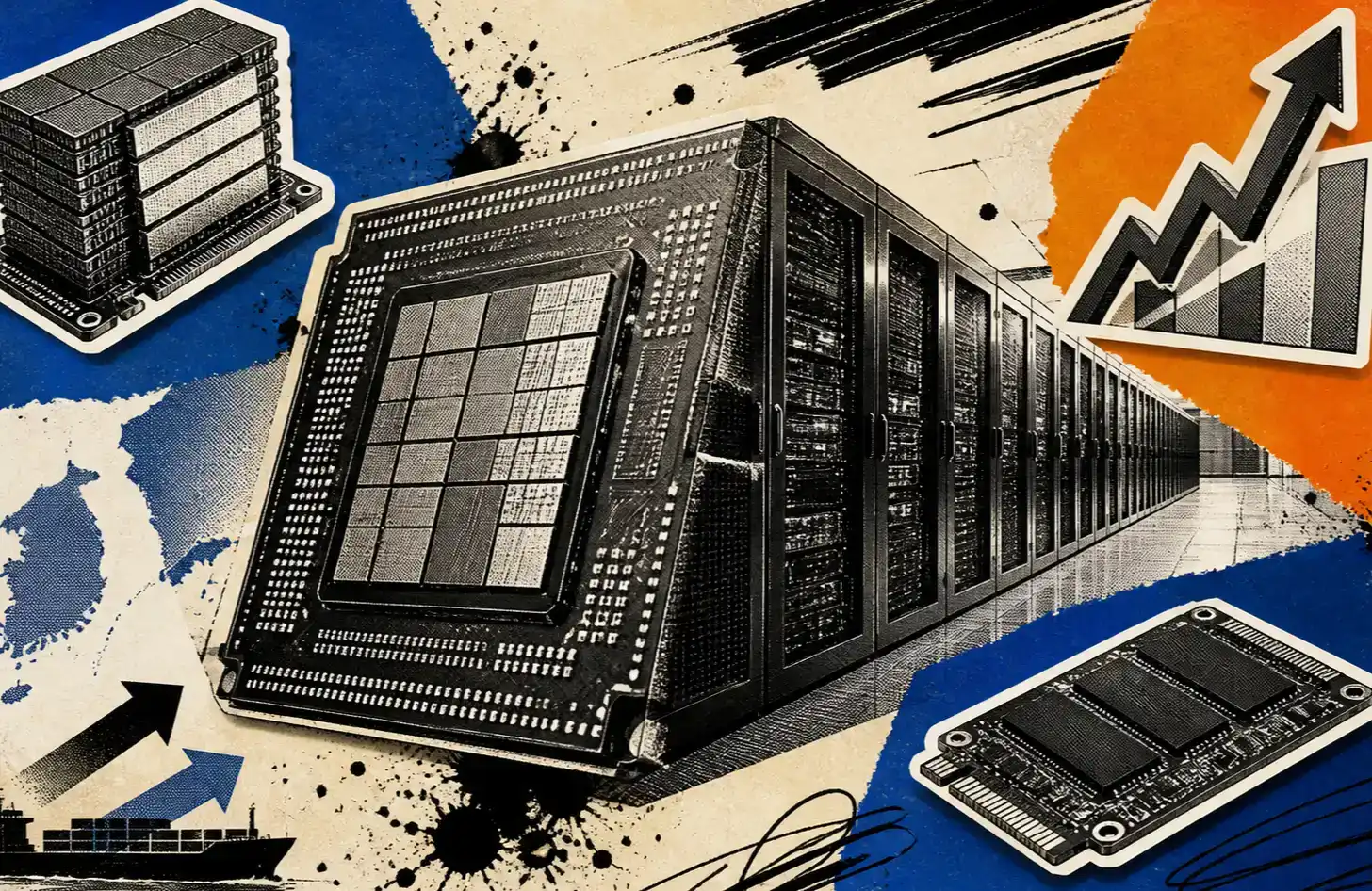
Micron's earnings are the most direct litmus test for the AI narrative this week. Wall Street currently expects Q3 revenue around $34.5B, EPS around $19.72, and gross margin around 81%. Its full-year HBM capacity is reportedly locked by customers through late 2026 and into early 2027. The market is most focused this time on 2027 HBM supply visibility, HBM4 mass production ramp progress, and whether Micron can maintain its share in Nvidia's Vera Rubin supply chain. Micron has confirmed being included as a certified HBM4 supplier for Vera Rubin, the biggest narrative upgrade last quarter. Any language suggesting capacity constraints or conservative guidance will be amplified by bears, as the Philly Semiconductor Index just hit a record high, leaving little room for error.

Nvidia's annual shareholders meeting is held at Beijing time early morning. Blackwell and Vera architecture ramp-up is the core focus; any below-expectations commentary will directly impact the AI capital expenditure narrative. OpenAI's GPT-5.6 is expected to debut this week, evolving from model to executable Agent. If its timing overlaps with Micron's earnings and Nvidia's meeting, Thursday will be the most intensive 24 hours for the AI narrative this week.

The Russell Reconstitution takes effect at Friday's close, systematically raising volatility for small-cap stocks.

Tide's Perspective

Last week's answer was temporary; this week is the real test for the pricing framework. Two lines are running simultaneously: the geopolitical line watches if US-Iran talks can restart, and the AI line watches Micron's guidance and Nvidia's capacity. Chip stocks hit a record high last week. Whether this level can hold depends on the outcome of two key reports landing simultaneously on Thursday. Deutsche Bank has already capitulated to Waller, predicting 50 bps of hikes within the year. If PCE comes in hot again and Micron offers conservative guidance, last week's biggest gainers could become this week's deepest decliners. If both deliver the answers the market wants, the pricing framework for the AI narrative will be re-established, and this week's volatility will present an entry window.


Trending Cryptos

Related Questions

QWhat is the most direct pricing variable for the market opening on June 22nd, according to the article?

AThe most direct pricing variable for the market opening is the progress of US-Iran negotiations regarding the Strait of Hormuz, as the talks are currently paused and their direction will impact oil prices and energy stocks.

QWhat two major events are happening on Thursday, June 25th, that make it the heaviest day of the week?

ATwo major events on Thursday, June 25th are: 1) The release of the May Core PCE inflation data, and 2) Micron Technology's earnings report.

QWhat key information is the market focused on in Micron's upcoming earnings report?

AThe market is focused on Micron's visibility for HBM supply in 2027, the progress of HBM4 mass production ramp-up, and whether Micron can maintain its share in Nvidia's Vera Rubin supply chain.

QAccording to the article, what will be the consequence for the Russell 2000 small-cap stocks on Friday?

AOn Friday, the Russell Reconstitution will take effect at the market close, which will systematically increase volatility for small-cap stocks.

QHow does Deutsche Bank's forecast relate to the upcoming PCE data and Federal Reserve policy?

ADeutsche Bank has forecast two rate hikes totaling 50 basis points this year, possibly starting in July. If the upcoming PCE data comes in hotter than expected, this forecast would gain stronger support, solidifying market consensus for a September rate hike.

Related Reads

Soaring Export Data for Memory Chips, Market Is Redefining the Valuation Anchor for Memory Stocks

Korean storage export data for the first 20 days of June shows substantial year-on-year increases in both value and price-per-kilogram for categories like DRAM, NAND, and SSDs. This signals a potential shift beyond simple demand recovery, indicating rising prices and a product mix shift towards higher-value items, possibly influenced by AI infrastructure needs. A key point is that the surge in price-per-kilogram is not simply a uniform chip price hike. It reflects a combination of actual price increases and, more importantly, an export structure increasingly dominated by high-value-density products like HBM (High-Bandwidth Memory) and advanced DRAM, which are critical for AI servers. This suggests AI-driven demand may be spilling over from just HBM into broader memory markets. SK Hynix stands to benefit directly due to its leading HBM position. For Samsung and Micron, the implication is potential for greater margin elasticity if the tightness in high-end memory spreads to enterprise SSD and NAND prices. However, the storage sector remains cyclical. Risks include supply expansion, inventory changes, and potential slowdowns in broader AI capital expenditure. Ultimately, while the strong export data supports upward revisions for storage company earnings and fuels discussion of an "AI infrastructure bottleneck premium," a definitive valuation shift from a cyclical to a structural story depends on upcoming quarterly reports. Investors need confirmation from SK Hynix, Samsung, and Micron that improvements in average selling prices, product mix, and, crucially,毛利率 are sustained over multiple quarters.

marsbit1h ago

Soaring Export Data for Memory Chips, Market Is Redefining the Valuation Anchor for Memory Stocks

marsbit1h ago

Why Does SpaceX Have Such a High Valuation Ceiling? The Answer Lies in Musk's Business Blueprint

SpaceX achieved a record-breaking IPO on June 12, 2026, with its market cap surging past $2.1 trillion. This valuation reflects its central role within Elon Musk's expansive, interconnected technological ecosystem. The article details how four core components form a synergistic closed-loop system: 1) **The "Brain" (xAI & Orbital Compute):** xAI provides AI models and massive ground/space-based supercomputing for simulation and decision-making across the system. 2) **The "Neural Logistics Core" (Starlink & Starship):** Starlink's low-latency satellite network enables global data transmission, while Starship's low-cost, reusable launch capacity aims to make large-scale space deployment economically viable. 3) **The "Physical Body" (Tesla & Optimus):** Tesla's manufacturing prowess and energy products support hardware production and power, pivoting toward mass-producing the Optimus humanoid robot for terrestrial and potential space-based labor. 4) **The "Human Interface" (Neuralink & X):** Neuralink seeks direct brain-computer communication, and the X platform provides real-time societal data. Together, these elements create three reinforcing "flywheels": manufacturing/logistics, data-driven iteration, and energy/compute/network synergy. This integrated approach promises lower costs, faster innovation cycles, and potential infrastructure-as-a-service offerings. However, it also concentrates technical, regulatory, and corporate governance risks. Ultimately, SpaceX's high valuation stems from its position as the indispensable infrastructural backbone—handling space transport, global communications, and future orbital computing—tying together Musk's entire vision for a self-reinforcing technological empire.

marsbit1h ago

Why Does SpaceX Have Such a High Valuation Ceiling? The Answer Lies in Musk's Business Blueprint

marsbit1h ago

Snap, Unprofitable for Nine Years, and a Decade-Long AR Obsession Without Return

Snap's AR Obsession: A Decade of Betting Against the Odds On June 16, Snap CEO Evan Spiegel unveiled the new AR glasses, Specs, priced at $2,195, causing the company's stock (SNAP) to plummet nearly 10%. The launch was met with intense criticism online, with investors questioning why a consistently unprofitable company would stake its future on an expensive product its core young user base can't afford. Snapchat, known for pioneering features like ephemeral Stories and popular AR lenses (like the iconic dog filter), has a history of innovation often copied by rivals like Instagram and Meta. Despite this, it has struggled to translate first-mover advantage into commercial success. Since its 2017 IPO, Snap has reported annual net losses, with a Q1 2026 loss of $89 million. Its stock is down 94% from its 2021 peak, hampered by iOS privacy changes, competition, and a young demographic less attractive to major advertisers. In this challenging context, Spiegel is doubling down on AR. He calls 2026 a "crucible moment," having recently laid off 16% of staff while reportedly investing over $3.5 billion cumulatively in its AR glasses line over nearly a decade. The new Specs represent a significant leap from the 2016 camera-focused Spectacles, offering true AR overlays, gesture control, and standalone operation. However, at $2,195, it faces tough comparisons. While more advanced than Meta's $799 Ray-Ban smart glasses, critics point to its heavier weight, short battery life, and features largely replicable by a smartphone. Facing pressure from investors to cut losses on the Specs project, Spiegel has refused, framing it as essential to Snap's long-term vision. The company finds itself in a paradoxical position: cutting costs while heavily funding a decade-long, unproven bet. Some see Specs as an awkward but necessary step in AR's evolution, akin to early mobile phones. Whether Spiegel is a visionary outlier or a gambler destined to fail remains an open question, highlighting the tension between long-term ambition and short-term market demands.

marsbit1h ago

Snap, Unprofitable for Nine Years, and a Decade-Long AR Obsession Without Return

marsbit1h ago

Annualized Revenue Exceeds $20 Billion, Kalshi Aims to Become the First Prediction Platform IPO?

Kalshi, a leading U.S. prediction markets platform, is reportedly in early, informal discussions for an Initial Public Offering (IPO). The company's annualized revenue now exceeds $2 billion, fueled by its dominance of over 90% of the domestic prediction market activity. This growth stems from a surge in trading volume—reaching a total of $52.7 billion—and an increase in fee rates, largely driven by sports event contracts like the NBA playoffs and the 2026 FIFA World Cup. Monthly active users are approximately 2 million. Kalshi recently raised $1 billion in a funding round led by Coatue Management, valuing the company at $22 billion. It has also expanded its offerings to include Bitcoin perpetual contracts and plans to launch a dedicated trading platform, Kalshi Pro. However, Kalshi's path to an IPO faces significant regulatory hurdles. The core risk involves jurisdictional conflicts, as multiple U.S. states are challenging its operations under local gambling laws. For instance, Arizona has filed criminal charges against the platform, while states like Kentucky have filed lawsuits. Kalshi and the Commodity Futures Trading Commission (CFTC) argue that its event contracts fall under exclusive federal jurisdiction as "swaps." The outcomes of these ongoing legal battles could critically impact Kalshi's core revenue and its IPO timeline. Analysts suggest that while an IPO could theoretically occur by late 2026, a more likely timeframe is late 2027 or 2028, contingent on resolving legal issues and favorable market conditions. If successful, its fundraising could significantly exceed $1 billion, given its current valuation and revenue multiple.

Foresight News2h ago

Annualized Revenue Exceeds $20 Billion, Kalshi Aims to Become the First Prediction Platform IPO?

Foresight News2h ago

Trading

Spot
Futures

Hot Articles

How to Buy CHIP

Welcome to HTX.com! We've made purchasing USD.AI (CHIP) simple and convenient. Follow our step-by-step guide to embark on your crypto journey.Step 1: Create Your HTX AccountUse your email or phone number to sign up for a free account on HTX. Experience a hassle-free registration journey and unlock all features.Get My AccountStep 2: Go to Buy Crypto and Choose Your Payment MethodCredit/Debit Card: Use your Visa or Mastercard to buy USD.AI (CHIP) instantly.Balance: Use funds from your HTX account balance to trade seamlessly.Third Parties: We've added popular payment methods such as Google Pay and Apple Pay to enhance convenience.P2P: Trade directly with other users on HTX.Over-the-Counter (OTC): We offer tailor-made services and competitive exchange rates for traders.Step 3: Store Your USD.AI (CHIP)After purchasing your USD.AI (CHIP), store it in your HTX account. Alternatively, you can send it elsewhere via blockchain transfer or use it to trade other cryptocurrencies.Step 4: Trade USD.AI (CHIP)Easily trade USD.AI (CHIP) on HTX's spot market. Simply access your account, select your trading pair, execute your trades, and monitor in real-time. We offer a user-friendly experience for both beginners and seasoned traders.

1.8k Total ViewsPublished 2026.04.21Updated 2026.06.02

How to Buy CHIP

Discussions

Welcome to the HTX Community. Here, you can stay informed about the latest platform developments and gain access to professional market insights. Users' opinions on the price of CHIP (CHIP) are presented below.

活动图片