Organized & Compiled: Shenchao TechFlow
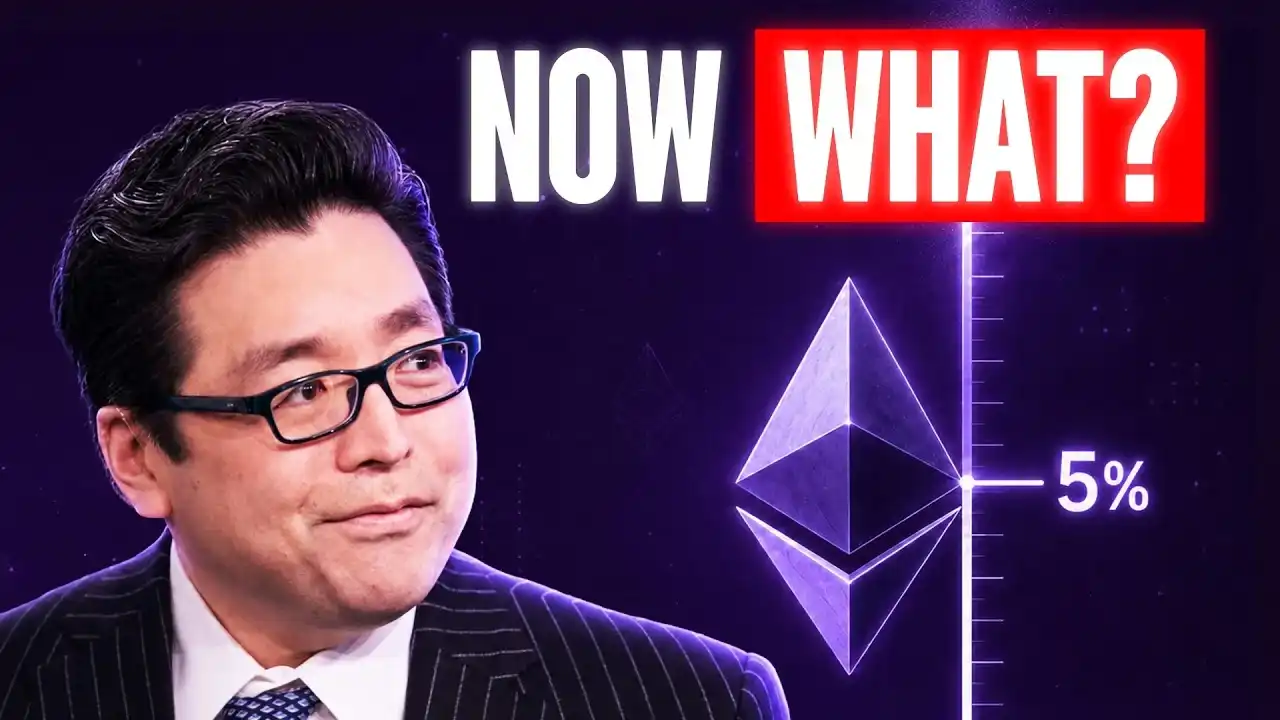
Guest: Tom Lee (Chairman of the Board of BitMine Immersion Technologies, Co-founder and Head of Research at Fundstrat Global Advisors, CIO of Fundstrat Capital)
Host: David Hoffman (Bankless)
Podcast Source: Bankless
Original Video Title: BitMine Is About to Own 5% of ETH | Tom Lee
Release Date: August 24, 2026
Conflict of Interest Statement: Tom Lee, as Chairman of BitMine Immersion Technologies (NYSE: BMNR), which is the world's largest institutional holder of Ethereum, holding approximately 5.8476 million ETH as of August 23rd, representing about 4.8% of the total supply. Lee is also a personal investor in BitMine, and his managed Fundstrat Capital operates the GRNY ETF. Additionally, Fundstrat's core business model is based on paid research subscriptions. Lee's personal wealth is highly correlated with the price of ETH, the stock price of BMNR, and the performance of GRNY. All views on Ethereum and the crypto market expressed in this episode are aligned with his significant financial interests. Readers are advised to consider these relationships when forming judgments.
Key Takeaways
- BitMine has increased its ETH holdings from 0 to approximately 5.82 million tokens within 14 months, accounting for nearly 4.9% of the total supply, just about 3% short of the 5% target.
- This was achieved entirely through equity financing, with no debt or convertible bonds; Lee calls this "keeping the capital structure clean."
- They have been buying ETH every week for over 60 consecutive weeks. In the past 5 weeks, the strategy shifted to a combination of "ETH purchases + stock buybacks," adjusted dynamically based on return on capital.
- It is highly likely they will not stop buying after reaching 5%, provided institutions begin holding ETH as a long-term asset; a true evaluation will be needed in 2027.
- BitMine does not rely on selling ETH to cover expenses. The annual staking yield is approximately $300 million, sufficient to cover the annual dividends of about $30-$35 million for the 9.5% preferred stock (BMNP).
- Lee compares ETH to "the stock market/land," with its core attribute being a store of value, rather than a bond-like cash flow asset.
- He provides a price target: ETH should exceed $5,000 in the new bull market cycle; if combined with Wall Street tokenization and AI demand, it could "easily" surpass $10,000 within 1 to 2 years.
Highlights of Key Points
- "ETH is an asset that generates yield. BitMine has no need to sell any ETH due to financial pressure." Tom Lee, discussing whether BitMine would sell ETH.
- "If you view the stock market as a cash flow machine, over the past 15 years, the S&P 500 has risen about 10 times, with dividends contributing only 30% of that gain. The remaining 9.7 times have nothing to do with cash flow. The stock market is essentially a store of value." Tom Lee, discussing whether ETH is a store of value or a cash flow asset.
- Lee compares BMNP to a three-year at-the-money call option on ETH: the company pays a 9.5% annual dividend in exchange for the right to lock in more ETH at the current price; buying a call option with similar conditions on the market might cost close to 100% in premium. Tom Lee, explaining the rationale behind issuing 9.5% perpetual preferred stock.
- "The more AI develops, the more important crypto becomes. Crypto is the downstream narrative of AI." Tom Lee, discussing the relationship between AI and crypto.
Main Content
1. Reaching Nearly 5% in 14 Months: What Did BitMine Do Right?
On June 30, 2025, BitMine announced its transformation into an Ethereum treasury company, with the goal of acquiring 5% of the ETH supply. At the time, the two Bankless hosts privately thought, "There's no way they can buy 5%." Fourteen months later, BitMine's holdings have reached approximately 5.82 million ETH, nearly 4.9% of the total supply of 120.7 million. Host David Hoffman noted at the beginning of the show that this is one of the few cases in the Digital Asset Treasury (DAT) space that has "not only avoided the graveyard but exceeded expectations."
Tom Lee attributes the success to three points.
First, the message has always been simple and consistent. He told investors that the capital structure must remain clean: use only equity financing throughout, with no debt or convertible bonds. Second, position the purchase of ETH as "helping the Ethereum ecosystem," with the 5% target being both meaningful yet not becoming a force of excessive centralization. Third, respect investor intelligence by not spinning stories to push the stock price up weekly, but instead emphasizing a multi-year time frame. Lee quotes Michael Saylor: look at such companies on a four-year dimension, not weekly fluctuations.
More importantly, BitMine completed almost every financing round above its Net Asset Value (NAV, i.e., the value of holdings per share). The amount of ETH per share has grown over 10 times from the initial trading level of around $450 per share. This means the ETH exposure per share for early shareholders has been significantly magnified, which is the core reason the stock price has been able to hold above $450.
2. Buying for Over 60 Consecutive Weeks: Where Does the Money Come From?
Even more impressive than the scale of holdings is the purchasing discipline. BitMine has been buying ETH every week since its transformation, for over 60 consecutive weeks. In contrast, Strategy (MSTR) has paused buying Bitcoin multiple times and even sold Bitcoin. Lee explains that their ability to keep buying lies in "doing only the thing with the highest return on capital each week."
In the past 5 weeks, BitMine's cash usage has shifted to a combination of "ETH purchases + stock buybacks." Lee says that when ETH might see a major move before year-end, the company will become more tactical: it will continue to accumulate ETH while also buying back stock, as buybacks concentrate the amount of ETH per share.
Funding primarily comes from three sources.
- Issuing common stock above Net Asset Value (NAV): This is the main source of cash, but used prudently.
- Buying ETH at a discount: Lee reveals that most of the ETH purchased over the past 14 months was not bought at spot prices but through structured arrangements at a discount, which adds value for shareholders.
- Perpetual Preferred Stock BMNP: Issued in June with a 9.5% dividend, oversubscribed over five times. Issued at $80, trading around $91 at the time of the recording. Lee likens it to "using a 9.5% annual interest to buy a three-year at-the-money call option on ETH," whereas buying a similar option on the market might cost close to 100% in premium.
The staking yield itself also compounds. BitMine currently stakes over 5 million ETH through its self-operated Maven staking platform and partners. At an annualized staking yield of about 2.6% to 2.7%, approximately 120,000 new ETH are generated annually. Lee calculates: they need about 200,000 more ETH to reach 5%, but staking "automatically produces" about 120,000 ETH per year, so only about 80,000 additional ETH need to be purchased to reach the target.
3. What Happens After 5%: Three Possibilities, But Selling ETH Is Not a Top Option
The market's biggest concern: once BitMine reaches 5%, will this largest ETH buying machine shut down?
Lee offers two directions. First, 5% may not be a hard cap. If enterprises in the future start holding ETH as a long-term asset, it would be "completely reasonable" for BitMine to continue buying beyond 5%, but this question will need to be re-evaluated in 2027. Second, even if they stop at 5%, staking rewards will still cause holdings to grow naturally; at that point, BitMine might choose to sell the rewards to control the total percentage, but they will not sell coins due to financial pressure.
He reiterates that BitMine has no need to sell ETH. Annual staking yield is about $300 million, while the annual dividend burden for the 9.5% preferred stock is about $30 to $35 million, providing a high coverage ratio. The company doesn't even convert these staking rewards into dollars or stablecoins. Instead of selling coins, Lee prefers "finding ways to monetize the ETH assets," such as deploying the approximately 800,000 currently unstaked ETH into scenarios useful for the ecosystem.
This leads to BitMine's second transformation: from a simple ETH-buying treasury company to an Ethereum ecosystem company. The Maven staking platform, besides managing BitMine's own ETH, has already attracted over $2 billion in external client assets. Lee calls it a "real cash flow business" incubated within BitMine.
4. Funding EF Spin-off Entities: The Ecological Role BitMine Aims to Play
The Ethereum Foundation (EF) has been narrowing its focus over the past year, spinning off some of its work to three new entities: the non-profit EthLabs, the for-profit EthSystems, and EthInstitutional. BitMine was a major investor in the seed rounds for all three.
Lee explains that Ethereum has grown too large for a single organization to handle all matters, just as the semiconductor industry doesn't rely on just one industry association. BitMine, as permanent capital (with no maturing debt or redemption pressure), can provide runways of 3 years or even longer, allowing these spin-off entities to focus on execution without worrying about fundraising month to month. This is both a public good investment and a business consideration: BitMine hopes Ethereum can capture as much of the future opportunities brought by tokenization and AI as possible.
5. What Kind of Asset is ETH Really?
David Hoffman asked Lee during the show: Is ETH a cash flow asset or a store of value? Lee chose the latter, but he reframed the concept.
He believes it's wrong to simply categorize the "stock market" as a cash flow asset. Taking the S&P 500 from 2009 to the present as an example, the total return increased about 10 times, with dividends contributing only 30%, and the remaining 9.7 times coming from capital appreciation. Investors buy stocks, essentially believing companies can allocate capital better than they can; a truly pure cash flow asset is a bond. ETH is more like the stock market, and also like land: land can be rented to generate cash flow, but long-term appreciation is its core attribute for traversing cycles.
He also responded to the skepticism that "institutions will use Ethereum for tokenization but don't need to hold large amounts of ETH." Lee believes this view is common during bear markets and will quickly disappear once the ETH price enters a new upward phase. He also uses the US dollar as an analogy: the dollar itself cannot be exchanged for gold with the government, yet it remains the global unit of account. Trying to explain asset prices with a single economic model often leads to absurd conclusions.
6. Learning from Saylor and the "Call Option" Logic of BMNP
BitMine is often compared to Michael Saylor's Strategy. Lee's observation is that Strategy has been quite successful as a common stock story, but Saylor's later strategies became complex, incorporating digital credit, volatility monetization, and other leveraged structures. Lee believes these innovations require a longer time horizon to judge, "it might only become clear from now until 2032."
BitMine chose a different capitalization path: using 9.5% perpetual preferred stock to lock in dollar costs while preserving the upside potential of common stock. Lee has calculated that if ETH rises to $5,000 or $10,000, the staking yield would far exceed the preferred stock dividends, giving common shareholders significant leverage. He also hinted that if BitMine decides to buy far beyond 5% of ETH, it might expand the BMNP scale; otherwise, the current preferred stock issuance is sufficient.
7. Cycle, AI, and ETH Price Targets
Lee believes the crypto market has bottomed. He says that from a time dimension, it's about 95% complete, and from a price dimension, about 90% complete. "Unless you're a genius, buying here is probably cheaper than waiting for the bottom to be confirmed before buying."
He also agrees with David's point about "AI sucking all the capital away from crypto," but adds a key judgment: crypto is the downstream narrative of AI. The more mature AI becomes, the greater the demand for machine-to-machine transactions, on-chain settlement, and tokenized assets, which in turn will enhance the importance of crypto. This year's AI narrative made it difficult for other assets to gain attention, but this dynamic is changing.
As for price targets, Lee provides numbers directly:
- Simply due to entering a new crypto bull market cycle, ETH should be above $5,000.
- If Wall Street tokenization and AI-driven demand are added on top, ETH could "easily" exceed $10,000 within 1 to 2 years.
He also provides a rough shareholder return calculation: if ETH flips Bitcoin, corresponding to an ETH price of around $15,000, BitMine's stock price could potentially rise another 10 times from current levels, reaching approximately $180 per share.
8. Conclusion
BitMine has proven in 14 months that an Ethereum treasury strategy can be executed at scale without debt. For the average investor, the value of this episode lies not in "how BitMine does it," but in Lee providing a framework for judging ETH: whether it is a store of value, whether staking yields can cover capital costs, and whether institutional demand for holding ETH will truly emerge by 2027.
At the same time, it's important to remember that Lee is one of the most obvious stakeholders in this game. The companies under his control hold nearly 5% of ETH, and his personal success is deeply tied to theirs. The path to a $10,000 ETH he outlines sounds enticing, but whether that path materializes still depends on the macro cycle, regulatory progress, and Ethereum's ability to truly transform the narratives of tokenization and AI into on-chain demand.