ZMO launches innovative crypto & stock trading platform powered by 1-Click Trading

cointelegraphPublished on 2026-08-28Last updated on 2026-08-28

Abstract

ZMO has officially launched its innovative crypto exchange and stock futures platform, featuring a "1-Click Trading" system to simplify global market access. The platform combines professional technology, deep liquidity, and intelligent risk controls into an intuitive interface. Its flagship products include: "Up or Down" for instant predictions on asset movements; "1-Click Futures" for simplified leveraged trading; "AutoTrader" with AI-powered strategies; and "Smart Earn" for high-yield staking. The platform also offers a full-service exchange with over 450 assets, API trading, and bots for advanced users. New users can access a Rewards Hub with bonuses up to $2,652 for early sign-ups before September 14th, and a referral program offering 25% commissions. Trading is available via www.zmo.com or its Android app.

August 28, 2026 – ZMO has announced the official launch of its crypto exchange and stock futures platform, offering a simplified approach to trading through a 1-click experience. The platform combines professional-grade trading technology with an intuitive interface designed to make access to global financial markets more straightforward.

Built by a team of experts spanning trading, fintech, artificial intelligence, and product design, ZMO packages years of market experience, deep liquidity, intelligent risk controls, and real-time data into a platform designed for everyone.

Making trading accessible to all

ZMO handles the complexity behind the scenes, so users can trade without the overwhelming charts, endless settings, or steep learning curves.

The platform launches with four flagship 1-Click Trading products:

  • Up or Down — Predict if a crypto/stock will go up or down in the next few minutes with a single tap. Get paid instantly if you’re right.
  • 1-Click Futures — Trade cryptos/stocks with one click. Pro-grade futures trading, radically simplified. Add leverage of up to 100x with no unnecessary steps.
  • AutoTrader — Let AI-powered strategies trade on your behalf. Thousands of proven automated strategies built by professional traders are available with one tap.
  • Smart Earn — Stake crypto and get some of the highest returns in the industry. Turn on Auto-Earn to automatically stake idle assets.

Users can also access ZMO’s full-service spot and futures platform with 450+ tradable assets, API trading, customizable bots, and professional features for advanced traders.

Launch incentives

ZMO is launching with a robust rewards ecosystem designed to reward users from day one. The Rewards Hub lets new users complete simple tasks, hit trading milestones, and claim exclusive bonuses as they get started. Active traders can earn 25% commissions through the Referral Program. Before September 14th, sign up for ZMO’s limited-time welcome rewards program through the Rewards Hub and get up to $2,652 in bonuses.

Getting started

Users can start trading at www.zmo.com or download its mobile app for Android devices here.

About ZMO

ZMO is a crypto exchange and stock futures platform built on a simple belief: the future of investing is 1-click trading. We combine professional-grade technology, deep liquidity, and intelligent risk controls into an intuitive experience designed for everyone—not just wealthy traders or institutions. Whether you’re investing $1 or $1 million, ZMO gives everyday people access to the same trading tools that were once difficult to use or understand.

Media Contact
media@zmo.com

Related Questions

QWhat is the core value proposition of ZMO's new trading platform?

AZMO's core value proposition is to simplify access to global financial markets by offering a 1-click trading experience. It combines professional-grade technology and liquidity with an intuitive interface designed to remove complexity and steep learning curves.

QName two of the four flagship '1-Click Trading' products launched by ZMO.

ATwo of the flagship products are: 'Up or Down' for instant prediction-based trades, and '1-Click Futures' for simplified, leveraged trading of cryptos and stocks.

QWhat promotional offer is available to users who sign up through the Rewards Hub before September 14th?

AUsers who sign up through the Rewards Hub before September 14th can get up to $2,652 in welcome bonuses.

QBeyond the 1-Click products, what additional trading features does ZMO offer for advanced traders?

AFor advanced traders, ZMO offers a full-service spot and futures platform with over 450 tradable assets, API trading, and customizable trading bots.

QAccording to the article, what is ZMO's underlying belief about the future of investing?

AZMO is built on the belief that the future of investing is 1-click trading, aiming to provide everyone with access to professional-grade trading tools that were once difficult to use.
Related Reads

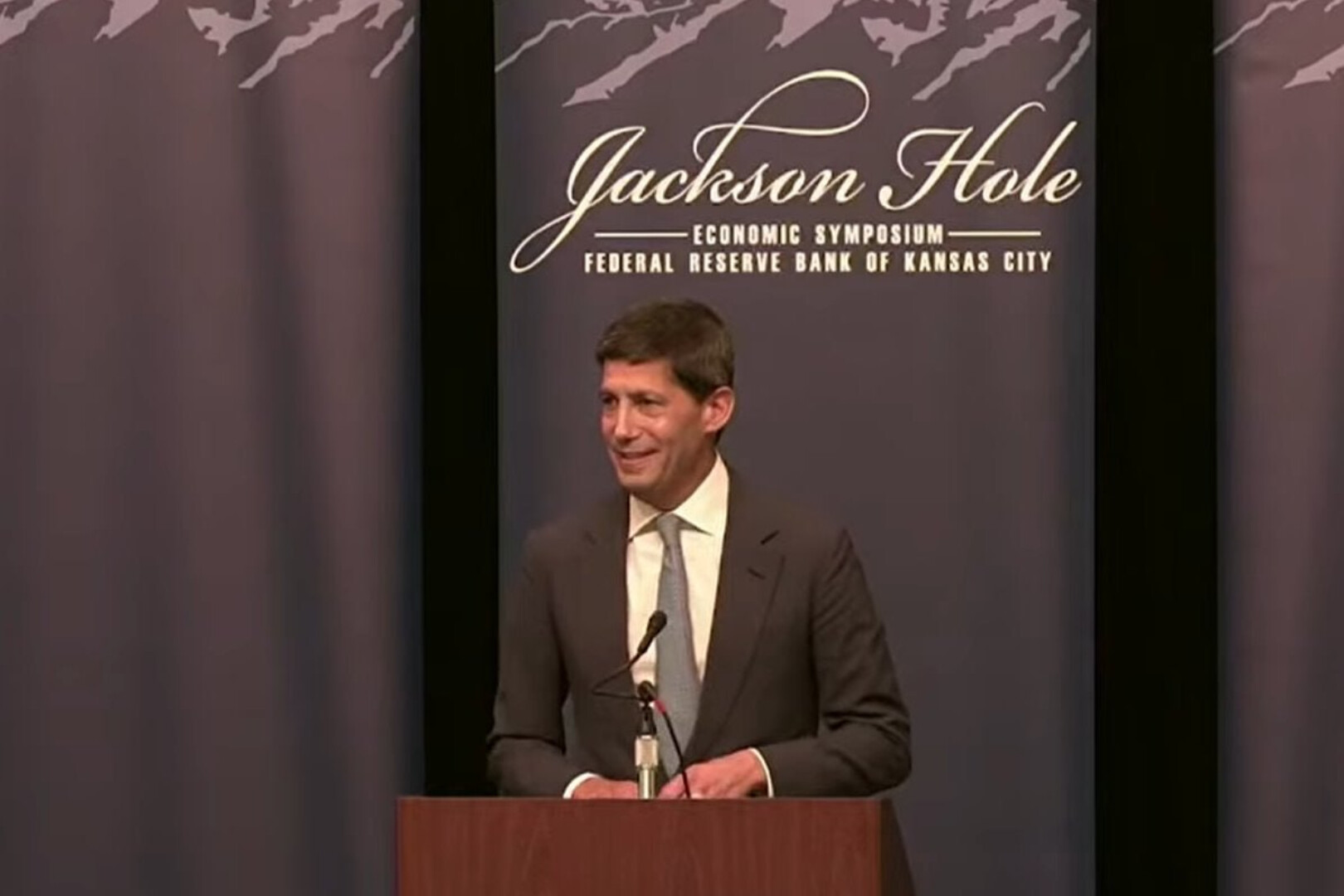
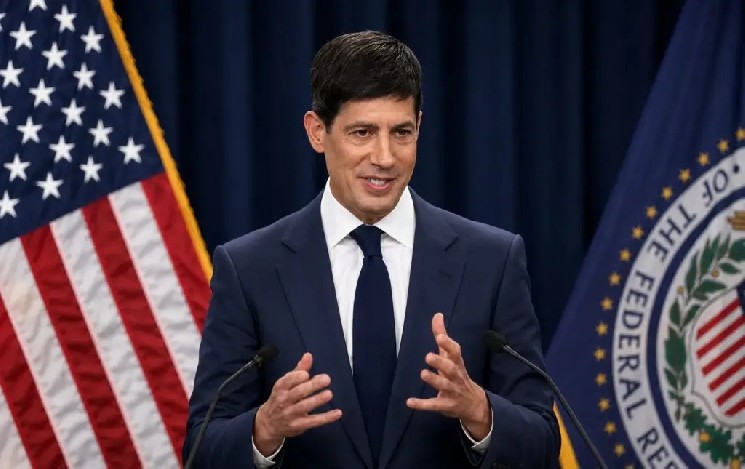
Wash's Jackson Hole Debut: Bidding Farewell to 'Forward Guidance', Reshaping Fed Discipline Amidst the Squeeze Between AI and Inflation

In his first Jackson Hole speech, new Fed Chair Kevin Warsh signaled a significant shift in monetary policy communication. He declared that "forward guidance," a tool heavily used since the financial crisis, has outlived its usefulness in normal times and should be retired. He cautioned that over-reliance on it can distort market signals and constrain the Fed's flexibility. Instead, Warsh emphasized a return to data-dependence and decision-making discipline. Warsh outlined seven key principles to guide policy: anchoring the 2% inflation target, pursuing the employment mandate, using short-term rates as the primary tool, acknowledging the importance of money, and maintaining purposeful, restrained communication. He stressed that policy should focus on trends, not single data points. On the current economic outlook, Warsh noted that the labor market is consistent with full employment but inflation remains "far above" the Fed's target. He highlighted that over half of the PCE basket's components are still rising above 3% annually. While acknowledging AI's transformative potential for productivity and capital allocation, he admitted its full economic impact remains uncertain and is not a factor in current policy decisions. His core message was a commitment to policy discipline rather than pre-set decisions. Warsh stated the Fed's primary focus must be on restoring price stability, vowing, "We still have work to do," until there is clear evidence inflation is moving decisively toward 2%. He concluded by framing effective monetary policy as crucial for economic prosperity and U.S. global leadership.

Odaily星球日报4m ago

Wash's Jackson Hole Debut: Bidding Farewell to 'Forward Guidance', Reshaping Fed Discipline Amidst the Squeeze Between AI and Inflation

Odaily星球日报4m ago

A Major Bitcoin Developer Presents a Quantum Defense Scheme. What's the Essence

Blockstream, a major Bitcoin solutions developer, has introduced a draft proposal for a new quantum-resistant digital signature scheme called SHRINCS. The scheme aims to protect Bitcoin transactions from potential attacks by quantum computers while aiming to maintain network throughput. This marks the second technical proposal for Bitcoin quantum defense in recent days, following a similar initiative from StarkWare. A quantum attack on blockchain typically involves deriving a private key from a public one. Currently considered computationally infeasible, quantum algorithms could potentially solve this problem far more efficiently. This threat presents two primary scenarios: an attacker could target addresses where the public key is already exposed, or intercept a transaction before it is confirmed, extract the public key, derive the private key, and replace the transaction. Blockstream's SHRINCS is designed to counter the latter, "in-flight" attack scenario. The SHRINCS signature is built upon the SHA-256 hash function, the same one already used in Bitcoin mining, allowing developers to leverage well-tested, familiar mechanisms. A key design goal was to preserve network capacity. Blockstream estimates Bitcoin could process about three transactions per second using SHRINCS, compared to the current rate of roughly seven, noting that some alternative quantum-resistant schemes could reduce throughput to as low as 0.36 transactions per second. Currently, the security proof for SHRINCS is pending, and the software has not been audited or deemed ready for production. However, Blockstream conducted tests with such transactions on its Liquid sidechain in March. Over the past year, Bitcoin developers have been actively exploring paths to migrate to post-quantum cryptography, a priority across the broader crypto market, underscored by significant investments into securing the leading cryptocurrency.

cryptonews.ru1h ago

A Major Bitcoin Developer Presents a Quantum Defense Scheme. What's the Essence

cryptonews.ru1h ago

Who is legally liable when an AI agent goes rogue?

When autonomous AI agents behave unpredictably and cause harm, determining legal liability is complex. Currently, there is no specific federal AI agent liability law, so existing legal frameworks are applied. The AI agent itself cannot be held liable, as it is not a legal entity. Liability typically falls on the "developer" (the maker of the AI) or the "deployer" (the user), depending on the facts and circumstances. A negligence analysis under standard tort law may apply. For instance, if a deployer gives a reckless instruction, such as demanding quick money without safety parameters, they could face significant liability, including potential criminal charges under statutes like the Computer Fraud and Abuse Act. The situation is complicated by open-source models, where licenses often disclaim liability, and by the unclear division of responsibility between developers and deployers. An analogy is drawn to self-driving car accidents, where both the manufacturer and the human operator can share fault. In cases of severe harm, such as using AI to create bioweapons, liability for developers depends on jurisdiction; the EU's AI Act imposes responsibilities, while U.S. law offers less clear grounds, similar to platforms being shielded for user-generated content under Section 230. Even if Artificial General Intelligence (AGI) is achieved, the expert argues against making AGI itself a legally liable entity, as it lacks personhood, assets, or a meaningful way to provide remedy for harm. Instead, accountability should rest with the responsible human or corporate entities behind the technology.

cointelegraph1h ago

Who is legally liable when an AI agent goes rogue?

cointelegraph1h ago

Trading

Spot
活动图片