Animoca, Solv to help Japanese Bitcoin companies generate yield

cointelegraphPublicado em 2025-12-10Última atualização em 2025-12-10

Resumo

Web3 gaming firm Animoca Brands has partnered with Solv Protocol to help Japanese companies with large Bitcoin holdings generate yield on their assets. The collaboration will use Solv's infrastructure to offer annual yields between 4% and 12% through methods like lending markets and liquidity provisioning. This initiative aims to transform Bitcoin from a passive holding into a productive financial tool for corporate growth. Currently, 11 Japanese public companies hold Bitcoin, with Metaplanet being the largest. The venture is backed by investors including Binance Labs and manages over $2.8 billion in assets.

Web3 gaming giant Animoca Brands has partnered with decentralized finance platform Solv Protocol to help large Bitcoin holders in Japan generate yield from their holdings.

The partnership aims to combine Solv’s infrastructure with Animoca Brands’ institutional network to target corporations and listed entities with large Bitcoin (BTC) treasuries, according to a statement shared with Cointelegraph on Wednesday.

Kensuke Amo, the CEO of Animoca Brands Japan, said that most companies only hold Bitcoin, but the new venture with Solv aims to change that.

“Through this collaboration, we aim to create an environment where companies can not only hold Bitcoin as a financial asset but also leverage it as a new revenue engine that drives corporate growth,” he said.

Bitcoin isn’t traditionally a yield-generating asset because holding it in a wallet doesn’t generate interest, dividends, or staking rewards; instead, it requires an external system, such as lending or locking.

Solv offering between 4% and 12% Bitcoin yield

The new venture will utilize Solv’s universal Bitcoin-backed wrapper, enabling treasury firms to generate an annual percentage yield of between 4% and 12%.

Solv generates Bitcoin yield through lending markets, liquidity provisioning to AMM pools, and participation in structured staking programs, according to its white paper.

Ryan Chow, co-founder and CEO of SOLV, said his protocol has proven “Bitcoin can serve as productive capital,” and the next phase of expansion will be “delivering secure, compliant, and high-yield treasury solutions to Japan’s most forward-thinking corporations.”

Related: Metaplanet eyes $135M raise via new Class B shares to fuel more Bitcoin buys

SOLV is backed by investors including Binance Labs and Blockchain Capital, and has over $2.8 billion in managed assets, according to the company.

Metaplanet has the largest Japan-based Bitcoin treasury

There are 11 Japan-based public companies holding Bitcoin on their balance sheets, according to Bitbo. The top company holding Bitcoin, and the fourth-largest overall, is Metaplanet, with roughly 30,823 coins on its balance sheet.
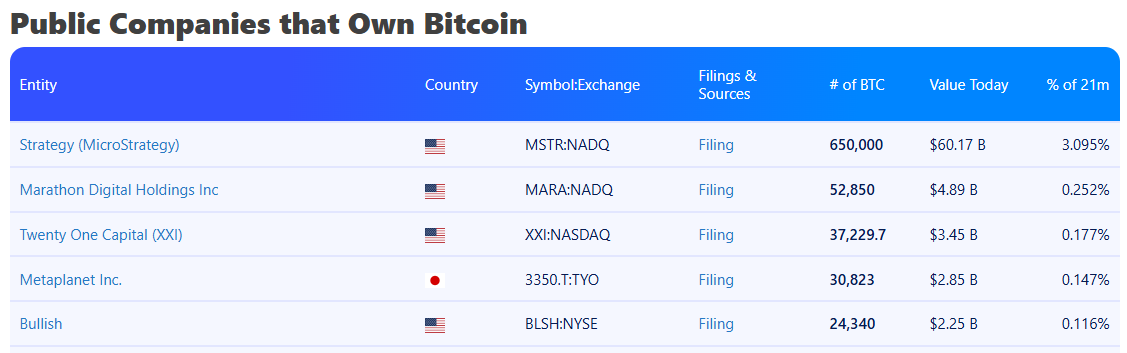
The Japan-based Metaplanet has the fourth-largest listed Bitcoin treasury. Source: Bitbo

Next in line is Nexon, a South Korean video game developer, which has its headquarters in Japan and holds 1,117 Bitcoin. Rounding out the top three is consulting services company Remixpoint.

Only one private company has any Bitcoin in its stash, Mt. Gox, the collapsed exchange that still holds over 34,000 tokens despite going bankrupt in 2014.

Magazine: Mysterious Mr Nakamoto author — Finding Satoshi would hurt Bitcoin

Leituras Relacionadas

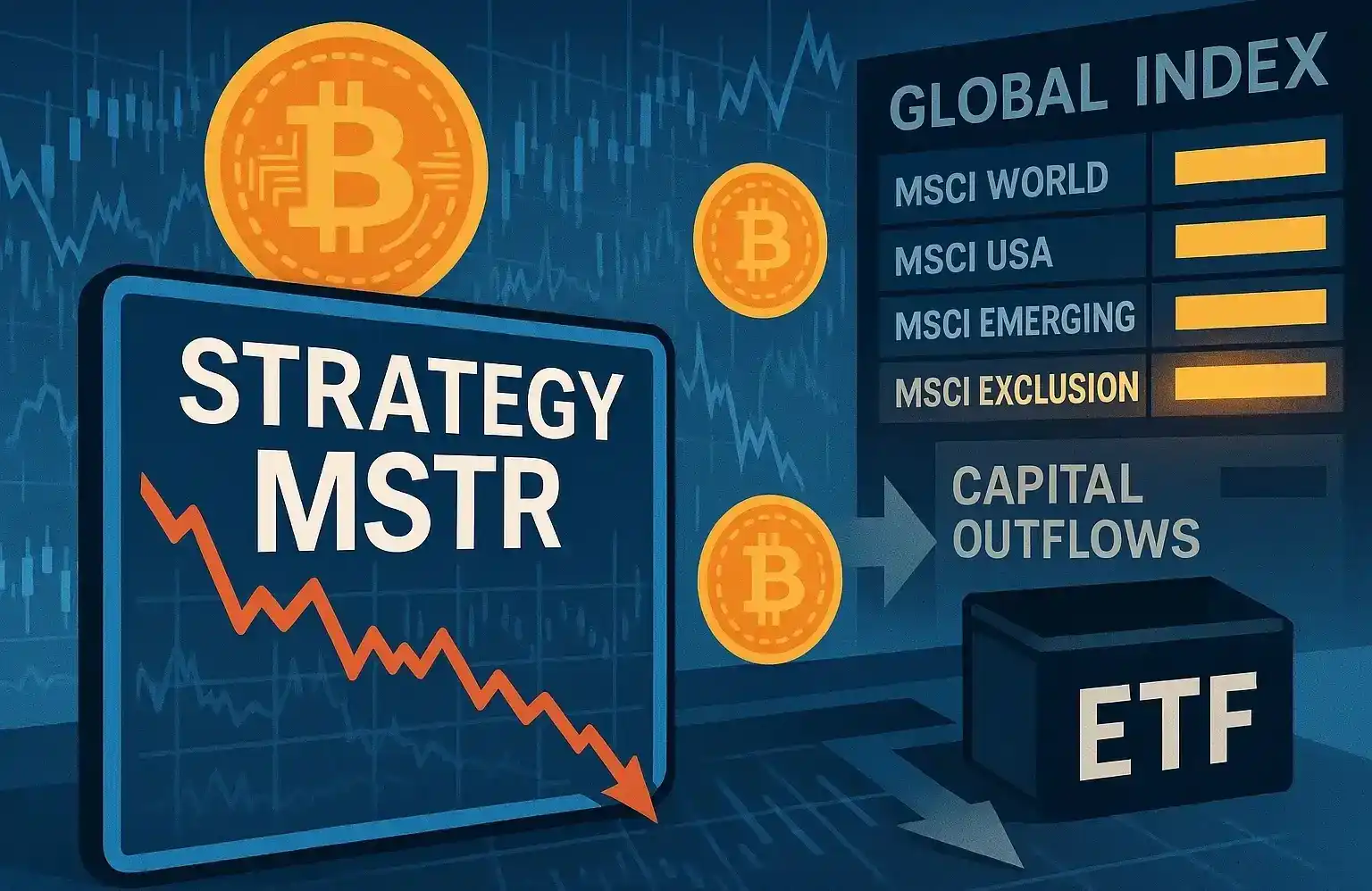
Strategy Takes a Hardline Stance Against MSCI: What's in the 12-Page Open Letter of Defense?

In October 2024, MSCI proposed excluding companies with over 50% of their assets in digital assets from its global investable market indices, directly threatening Digital Asset Treasury (DAT) companies like MicroStrategy. Analysts warned this could trigger up to $8.8 billion in outflows, with MicroStrategy alone facing $2.8 billion in passive selling pressure. In response, MicroStrategy submitted a 12-page public letter to MSCI, strongly opposing the proposal as "misleading and destructive." The company argued that digital assets represent a revolutionary financial technology, comparable to historic infrastructure investments like oil or telecommunications. It emphasized that DATs are operational businesses with active revenue models, not passive funds, and criticized the 50% threshold as arbitrary, discriminatory, and impractical due to Bitcoin's volatility. MicroStrategy also accused MSCI of violating index neutrality and contradicting the U.S. government's pro-digital asset strategy. The company demanded MSCI withdraw the proposal or extend the consultation period. It is not alone—over 300 entities, including Strive and Bitcoin for Corporations, have joined opposition efforts, suggesting alternative indices instead of exclusion. The outcome, expected by January 2026, will significantly impact the integration of digital asset companies into traditional financial markets.

marsbitHá 8m

Strategy Takes a Hardline Stance Against MSCI: What's in the 12-Page Open Letter of Defense?

marsbitHá 8m

Dogecoin Price Forecast for 2026: The Path to $1 Amid Meme Rally

Dogecoin (DOGE) is back in the spotlight as retail traders return to the meme segment. Analysts express cautious optimism, suggesting that under favorable conditions, including a continued bull market and increased risk appetite, DOGE could potentially reach the $1 mark in 2026. The price is currently consolidating after volatile swings, with significant trading volumes indicating ongoing speculative interest. Key drivers remain its meme narrative, support from high-profile figures, and its correlation with Bitcoin's cycles. The path to $1 is not linear. DOGE must hold key support levels, sustain derivatives interest without overheating, and receive fresh meme-driven momentum. Technical analysis highlights the importance of watching RSI levels and volume for signs of sustainable growth versus short-term pumps. Alongside DOGE, newer, more aggressive meme tokens like Maxi Doge (MAXI) are gaining attention. Having raised approximately $4.3 million in its presale, MAXI offers high-risk, high-reward speculation with features like staking rewards and trading tournaments. While it could amplify portfolio returns during a rally, it carries significant risks associated with early-stage projects, unlike the more established DOGE. The overall strategy for many investors is to combine a core position in DOGE with a smaller, speculative bet on tokens like MAXI to capitalize on the potential meme rally.

bitcoinistHá 19m

Dogecoin Price Forecast for 2026: The Path to $1 Amid Meme Rally

bitcoinistHá 19m

Trading

Spot
Futuros
活动图片