"Young people, you shouldn't ask if AI will reshape the world—it definitely will. The question is whether you can participate in and influence AI's development."
If this were said at a Chinese student's graduation ceremony, most would probably think it sounds quite reasonable. That's the trend of the times, and one should indeed actively embrace AI.
But when American students heard it, they just wanted to punch the speaker.
I. The Great Anti-AI Unification
The opening quote came from former Google CEO Eric Schmidt during his speech at the University of Arizona's graduation ceremony. After he said it, the students in the audience collectively let out piercing boos. Every subsequent mention of AI was met with jeers, making the scene extremely awkward.
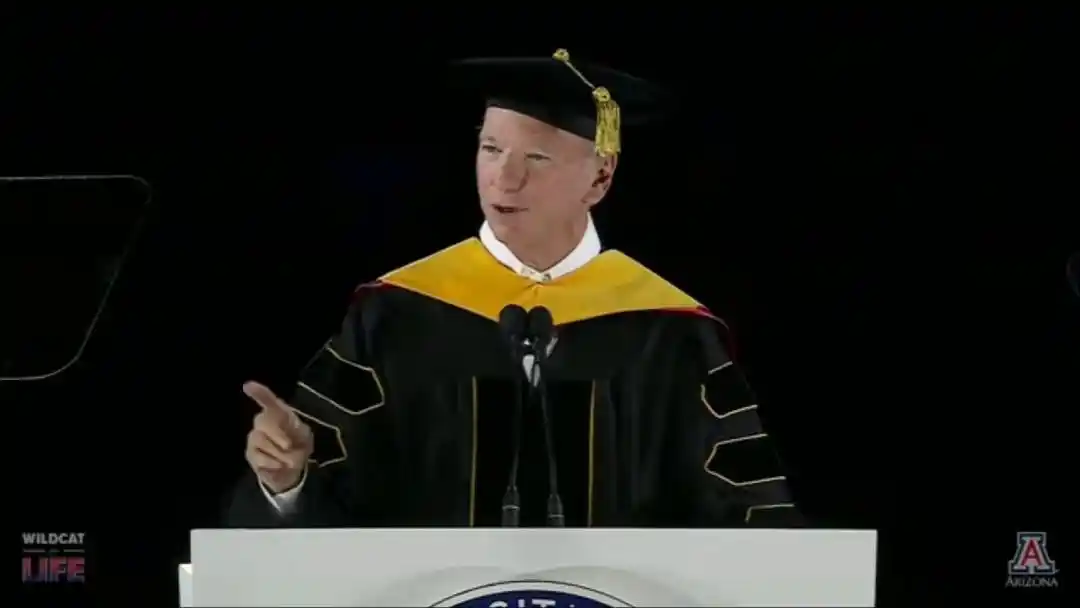
Unsurprisingly, the video was uploaded online, and the unfortunate Schmidt suffered secondary damage. On social media platforms like X and others, a large number of people criticized him, calling him too evil, saying he wanted to be a slave owner, and even accusing Schmidt of being anti-human.
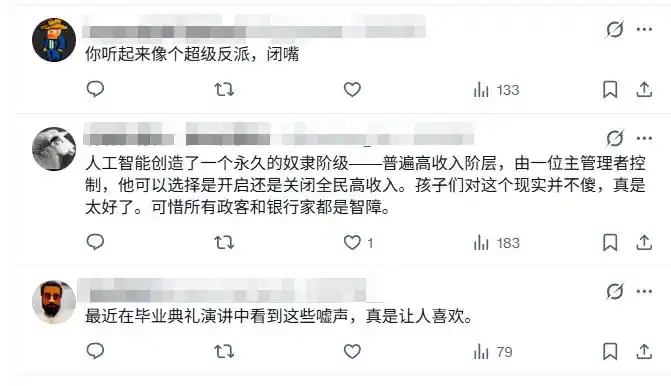
American netizens who love sarcasm also posted a bunch of memes mocking him, basically implying that Schmidt, as a capitalist, wants to squeeze dry these future wage laborers.
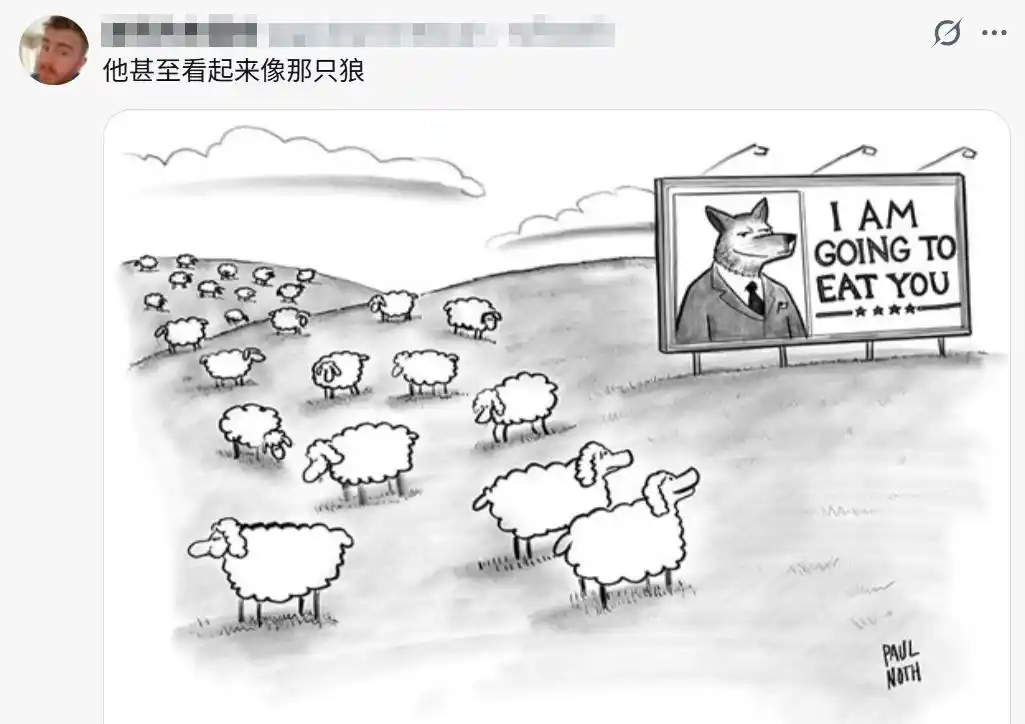
As a tech industry big shot, talking to young people about the importance of AI—how did that become a heinous crime?
This touches on something counter-intuitive. Although the U.S. is proudly one of the countries with the most advanced AI technology, many ordinary people deeply dislike this technology, and the anti-AI sentiment is also the strongest in the world.
Yes, you heard that right. A recent large-scale poll by The Economist and YouGov shows that a staggering 70% of Americans believe AI development is currently "too fast," requiring stronger regulation, cautious project analysis, and a pause to wait for the people. Moreover, people are increasingly pessimistic about AI's prospects and long-term social impact. The proportion of respondents holding a pessimistic view is as high as 51%, with another 24% unsure. Only 25% are truly optimistic.
Another polling organization, Gallup, revealed in a March poll a phenomenon that has alarmed all AI giants: Now 71% of Americans oppose building AI data centers in their local communities, with 48% strongly opposing, making them widely disliked. The most ironic part is that this proportion even exceeds those who oppose building nuclear power plants locally. When faced with the risk of a Fukushima-like disaster versus a data center, people would rather choose the former.

(Gallup)
American aversion and resistance to AI isn't just online talk. It has now rapidly developed to the real-life, offline stage.
Late last year, the American AI startup Friend spent over a million dollars placing large ads in the New York subway to promote their wearable AI companion pendant. But they soon discovered their ads were vandalized with graffiti, covered in various mocking words. Since the brand is called Friend, opponents directly added, "AI is not your friend."
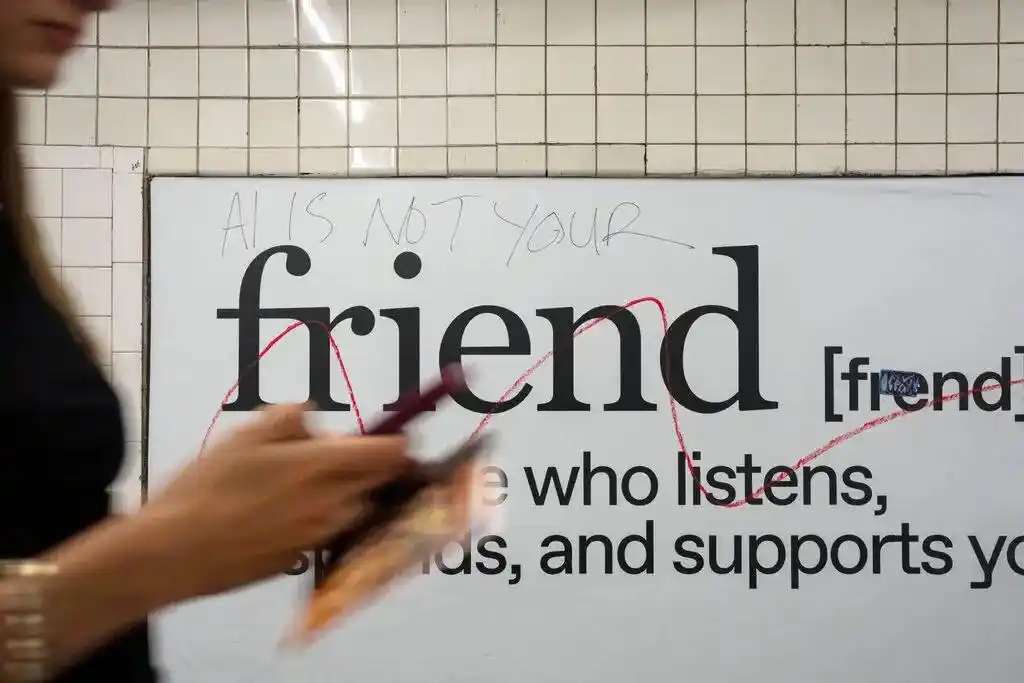
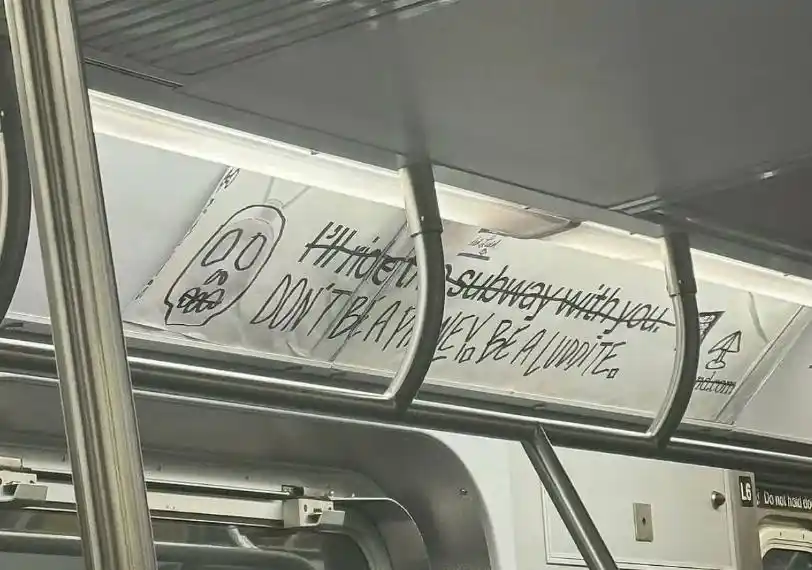
Besides witty additions, there were threatening messages referencing past scandals, like writing "AI suggested suicide"; sarcastic ones saying "AI friends can't shower with you, they're not waterproof"; and random scribbles, directly turning the product pendant into a skull. The wildly different styles clearly came from different people. A million dollars in ad money ended up as an anti-AI message board.
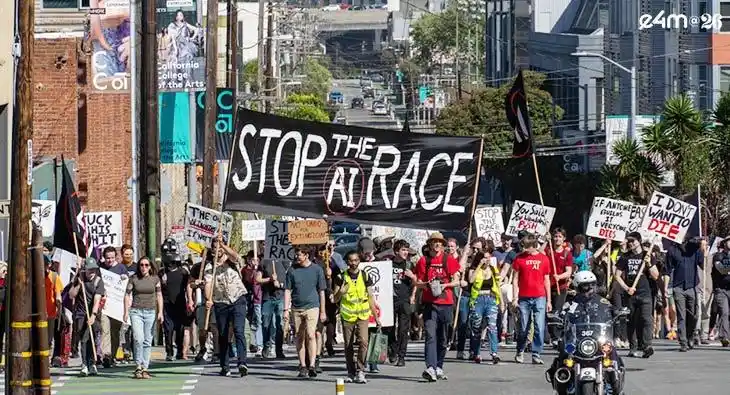
But Friend is considered lucky—at least they weren't confronted directly. Previously, Silicon Valley has seen multiple anti-AI protests and demonstrations. Participants, holding high banners with slogans like "Stop the AI Race" and "Pause AI," marched in large numbers towards the headquarters of these tech companies to give them a hard time.
Photos of big shots like Elon Musk and Sam Altman were also tagged with "traitor" labels and paraded through bustling areas, which was very humiliating.
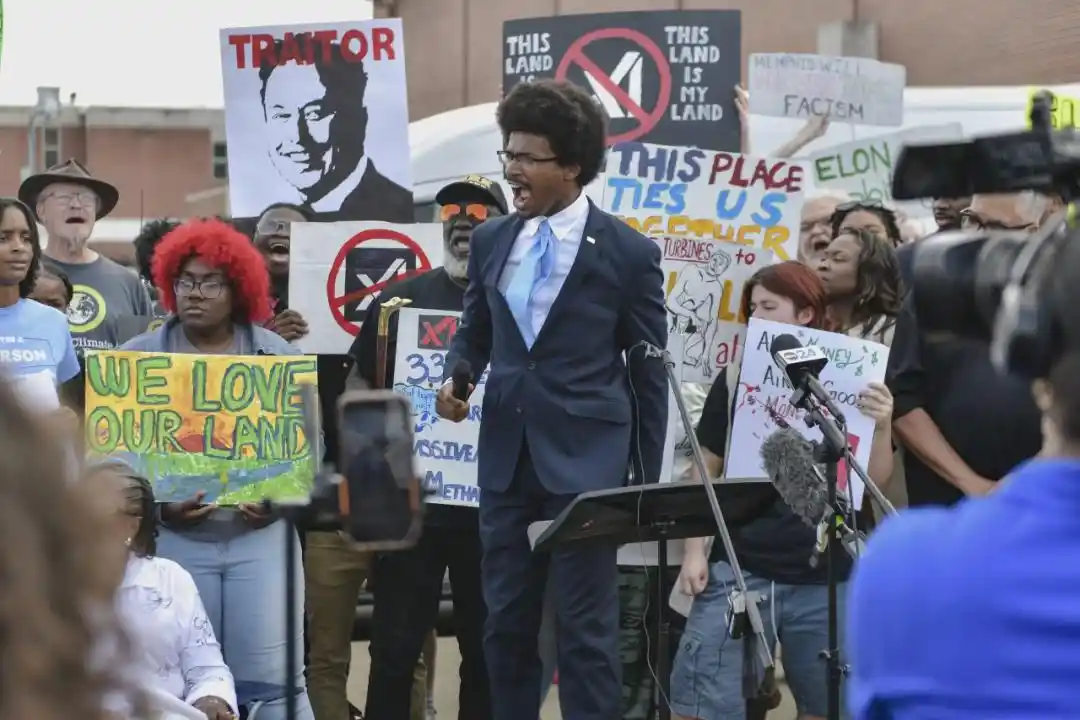
But for these big shots, being publicly shamed isn't the worst. In more remote areas, people's resistance to data centers is what's truly deadly.
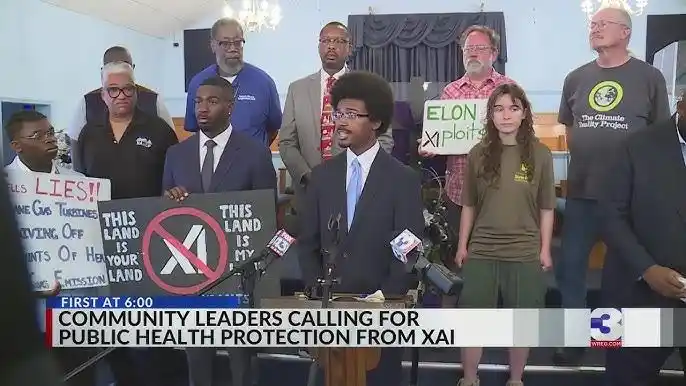
Virginia, Pennsylvania, North Carolina, and several other states have all seen local residents obstructing data center construction. They not only held signs pressuring local government offices but also continuously harassed construction sites and workers. Last year, at least 48 data center projects were delayed or canceled due to local resident protests, involving a total investment of $156 billion. In the first quarter of 2026, a record-breaking 20 data center projects were canceled for the same reason.
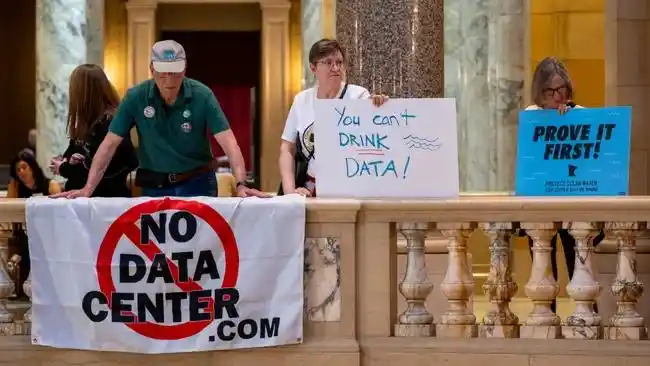
Even if local officials like Commissioner Smith try to push data center projects despite pressure, it's hard to succeed because the public will vote you out. In April 2026, residents of Festus, Missouri, directly voted to recall half of the city council members because the council approved an AI data center project. That's how tough they are.
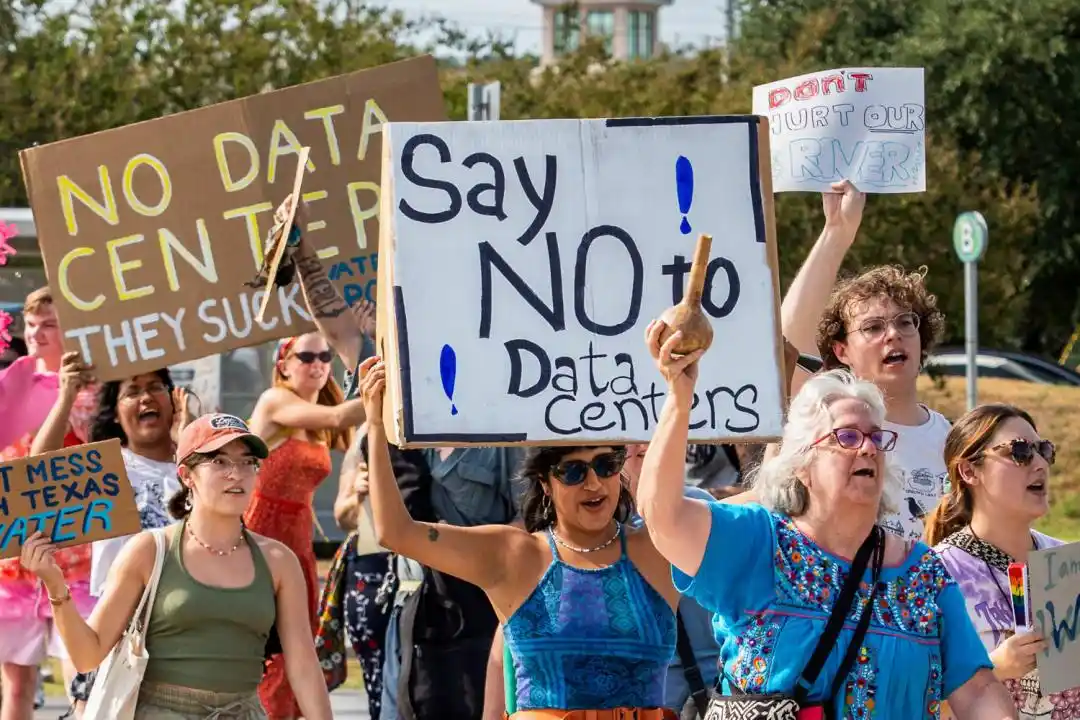
Those who frequently use AI can probably feel that popular large models like Claude and ChatGPT have long faced insufficient computing power, often experiencing queues, crashes, and sometimes directly limiting user usage. Even paying for a PRO membership only slightly increases the quota, far from unlimited output freedom. That's why American tech giants are building data centers everywhere to fill the gap. Now, with inefficient construction, equipment shortages, and resident resistance, how can they expand computing power?

What worries American media more is that protest activities are showing a trend of extremization and gradually turning violent.
In April this year, two security incidents targeting OpenAI occurred in San Francisco. Someone threw a Molotov cocktail at CEO Sam Altman's private residence. Less than an hour later, the same person appeared outside OpenAI headquarters, openly threatening to burn down the building. Fortunately, they were subdued by police. Altman himself was terrified, directly posting a photo of his children as a shield, "I don't care what you think of me, my family is inside!"

Indianapolis City Councilor Ron Gibson also became a target. He was recently approved an AI data center project and was fiercely condemned by local residents. His residence was even shot at, with the suspect firing 13 shots at the front door. Then, they left a note under the doormat saying, "No data center."

We usually only focus on the speed of American AI development, never expecting that hatred for AI has also quietly intensified in the shadows, spreading like wildfire.
II. Ten Thousand Reasons to Hate AI
One crucial reason Americans hate AI is the fear that AI will take jobs.
Even before AI became popular, Americans generally distrusted tech billionaires because they monopolized and manipulated the internet, constantly amassing wealth. Conspiracy theories like Bill Gates controlling humanity with vaccines or Mark Zuckerberg being a lizard person in disguise are classics. Now that these conspiracy theory protagonists have brought out AI, people instinctively think they must have ulterior motives. Nearly 3/4 of Americans expect AI to significantly reduce employment, and about 65% of the public don't believe the economic benefits created by AI will benefit everyone—only making the bosses richer.
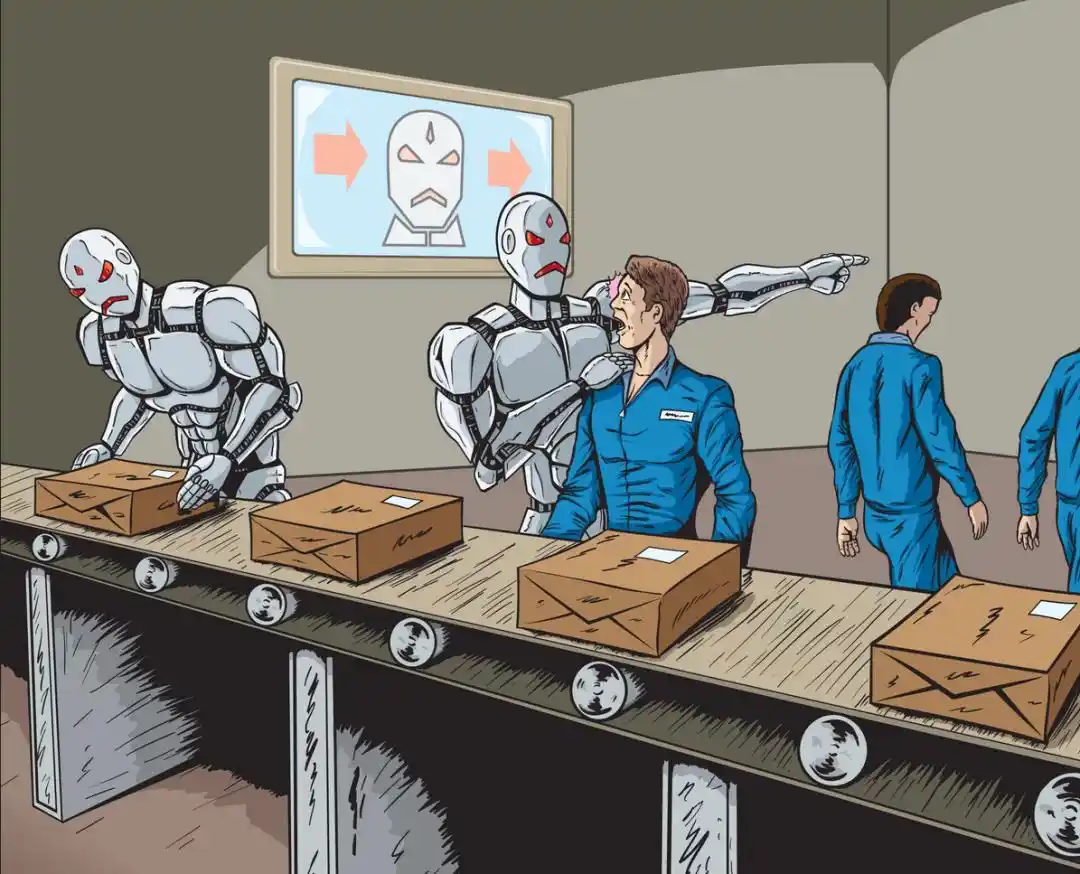
Looking at various layoff news, their suspicions aren't wrong. For example, after Dell introduced AI, it massively cut non-technical departments like sales, laying off 12,500 people over time. A commercial software company, Salesforce, laid off 4,000 customer service employees at once due to AI automation. In 2026, the well-known fintech company Block laid off nearly 40% of its staff, with the boss openly promoting that using AI tools allows small teams to achieve higher efficiency, so there's no need to keep so many people.
Hollywood started using AI to write scripts several years ago, trying to cut screenwriters' pay, which led to major strikes.
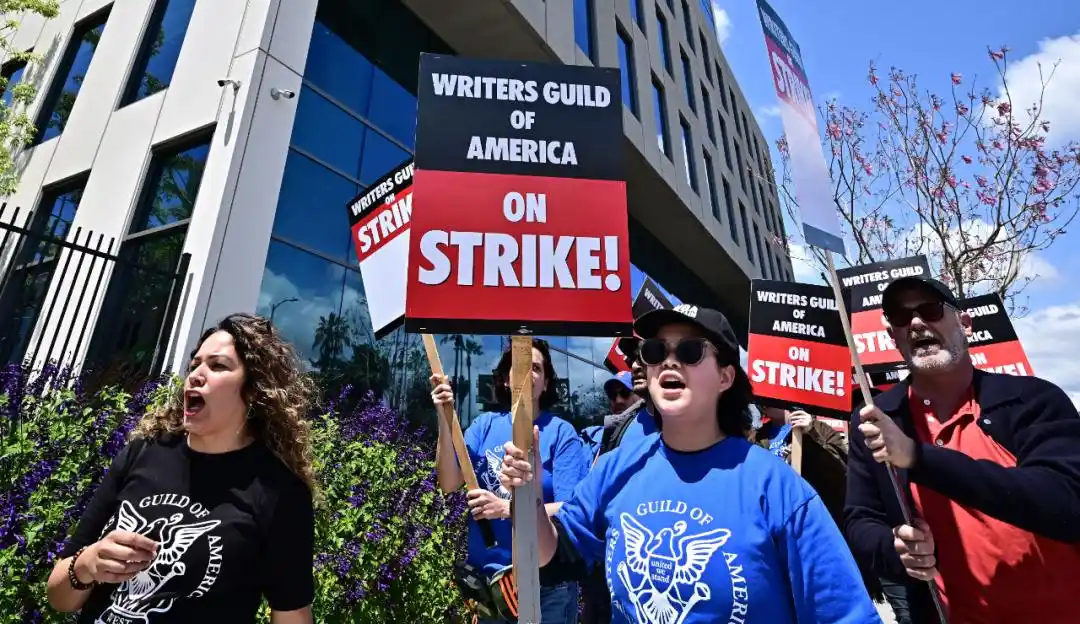
In the eyes of ordinary Americans, the current AI business logic is brutal. The efficiency gains it brings reduce jobs, achieving so-called cost reduction and efficiency improvement, concentrating wealth in the hands of a few tech giants while the public bears the cost—jobs "optimized," incomes lowered.
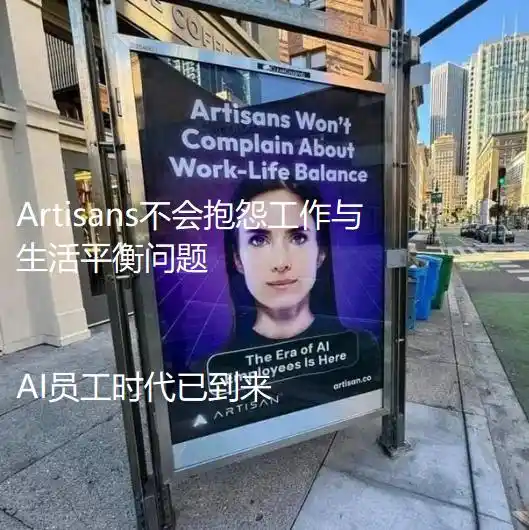
While AI's prosperity has also created some new computer engineering jobs and brought a long-awaited boom to the construction industry through large-scale infrastructure, from the netizens' perspective, it's still causing some jobs to disappear, people losing their livelihoods—it has original sin. Especially for college students, AI has impacted many white-collar jobs. In 2026, the unemployment rate for American college graduates climbed to 5.6%, the highest post-pandemic graduation season for employment pressure.
Against this backdrop, the "high EQ" Schmidt came asking for trouble. He said to the extremely anxious students: "Your generation has this fear that the future is already written, that machines are coming, jobs are disappearing, the climate is collapsing, politics are dividing, and you've inherited a mess you didn't create..." At this point, the audience was already getting restless. Coupled with his later advice for students to embrace AI, it was a complete disaster. The truth really hurts.

Thinking about a hopeless future and unpaid student loans, it was polite of the graduates not to go up and punch him.

But Schmidt did mention climate, and coincidentally, that's another reason Americans, especially the white left, dislike AI.
To meet the enormous 24/7 power demands of AI data centers, coal and natural gas power plants in many parts of the U.S. have been forced to delay retirement or even increase generation, directly causing carbon emissions to soar. Carbon neutrality? That can only be a dream. This led over 200 environmental groups across the U.S. to launch a joint action in February, demanding the government suspend approval of new data centers and harshly criticizing tech giants for ignoring climate change.
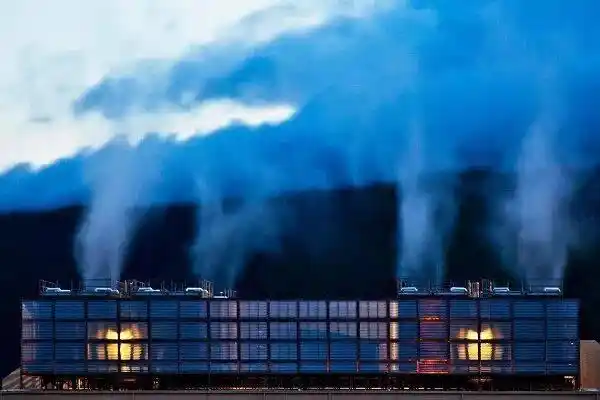
Many of these are familiar radical environmental groups, like "Greenpeace" and "Friends of the Earth"... it's like an NGO export-import business.
Of course, many Americans don't care about human survival, but they must care about their hometowns.
As AI enters the "computing infrastructure" phase of competing with large models, the load on the power grid and the consumption of cooling water by super data centers have expanded rapidly. This crazy absorption of macro-industrial and energy resources directly touches the survival bottom line of local communities. The most obvious change is that electricity bills are rising quickly. The following price increase map from Fox News shows that from 2024 to mid-2025, only five states didn't see average electricity price increases. It's estimated that in the next three years, AI expansion will add at least $23 billion in electricity costs to ordinary American households.
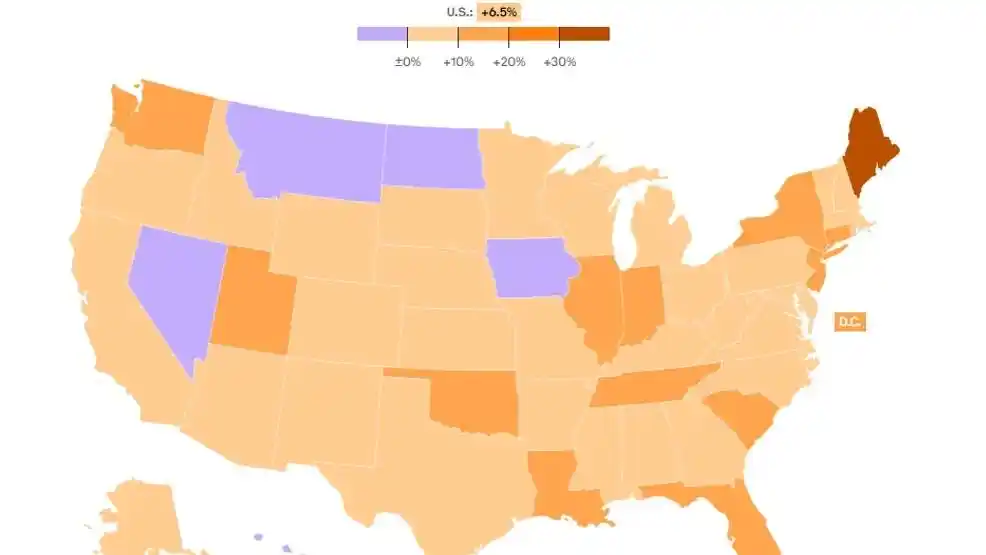
(Fox News)
But, tech giants using electricity—what does that have to do with household users?
This relates to America's magical cost-sharing mechanism. To meet the insane electricity demands of data centers, power companies must invest heavily in expanding and upgrading the grid and building new power plants. This infrastructure upgrade cost is recovered through electricity price increases, meaning it's directly shared among all end-users. Essentially, everyone pays for AI.
The situation with water resources is similar. Data centers maintaining chip cooling require vast amounts of water, and it must be clean water. In some data centers using "evaporative cooling" systems, millions of gallons of water can evaporate. This not only requires water supply companies to massively upgrade water treatment and supply pipeline facilities, driving up residents' water prices, but in some inherently water-scarce Midwest states and counties, it also causes agricultural irrigation stress.
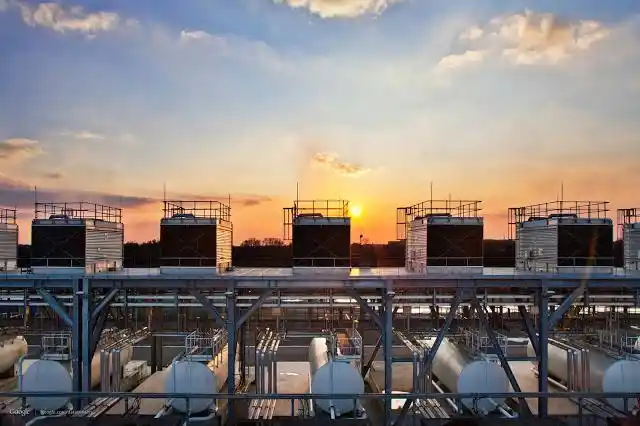
Local residents also worry about the chain effects of data centers on the environment. Cooling systems must forcibly expel waste heat from chips into the external atmosphere, significantly raising surface temperatures in surrounding areas, affecting up to 10 kilometers or more. For example, around AI data centers in Silicon Valley, surface temperatures are 9°C higher than other areas. The destruction of ecosystems and impact on plants and animals aside, how are nearby residents supposed to live in such heat during summer?

Now you understand why Americans would rather have a nuclear power plant than a data center. Nuclear power only affects life during an accident, but a data center next door is a daily nuisance, not to mention worrying about utility bills.
Additionally, Americans have two very realistic concerns. One is worry that AI affects their democracy. First, AI's internal workings are a black box; no one can clearly explain how its responses are generated. Even its own engineers sometimes can't figure it out. Many netizens worry AI has hidden biases and can create various fabricated information, with the ability to change public opinion and even influence elections. After all, many people's fact-checking method is typing in the comments, "@grok, is this true?"...
Speaking of this, Mr. Musk has to take the blame again. After buying X (formerly Twitter), he helped Trump gain momentum on social media and reposted AI-generated spoof videos of Harris and Biden. It's hard for Americans not to be suspicious.

The other concern is investments and pensions. Economically, AI has become the ultimate hot topic in capital markets. Even if you don't believe in AI, the fate of your public pensions and retirement accounts now depends on AI's prosperity. The government is also using large amounts of funds to subsidize related companies. About 30% of the S&P 500 index consists of six companies—Apple, Meta, Alphabet, Microsoft, Nvidia, and Amazon—all betting their future on AI applications. Moreover, the data center infrastructure boom has boosted the performance of equipment manufacturers like Caterpillar.
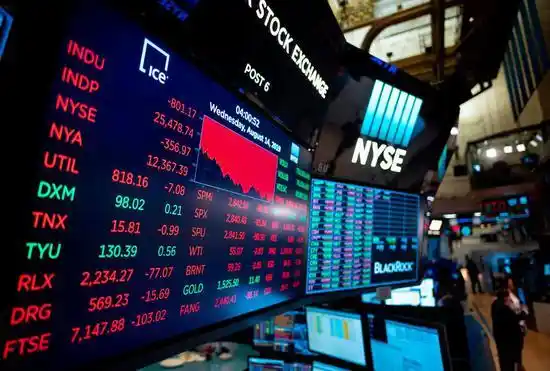
Tech stocks rising is great for now, but if artificial intelligence ultimately proves to be a bubble, it could trigger a massive economic recession in the U.S., bankrupting countless families and pushing them over the edge.
III. Trump's Dilemma
The development of AI is inherently an extremely complex technological issue, involving employment, environment, energy, finance, and many other aspects—a tangled mess.
The most ridiculous part is that in the U.S., AI has become a political issue, directly related to whether Trump's position is secure and could even become the trigger for another MAGA civil war.
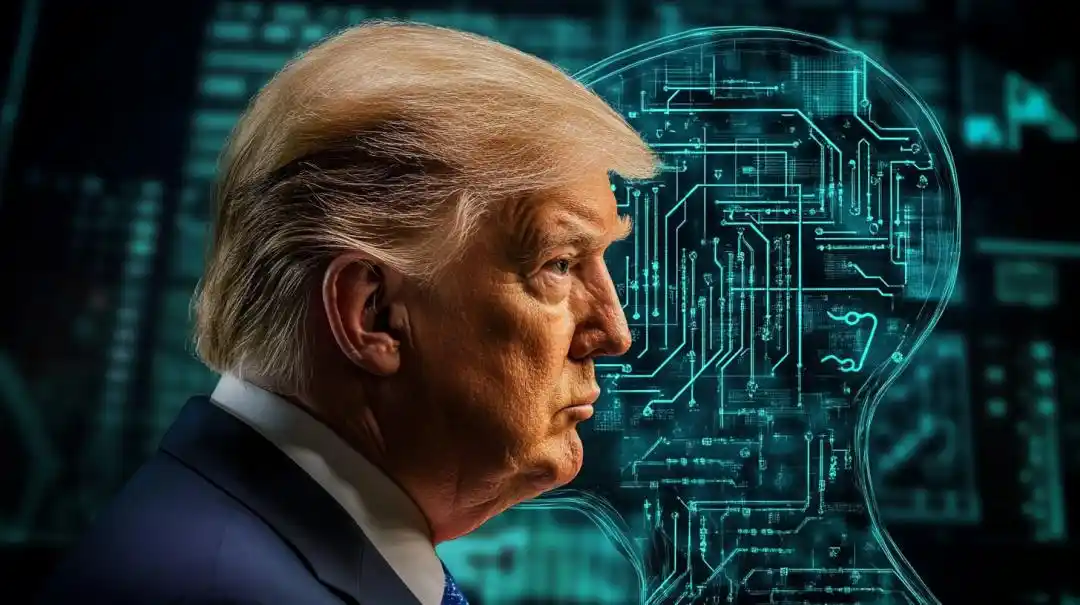
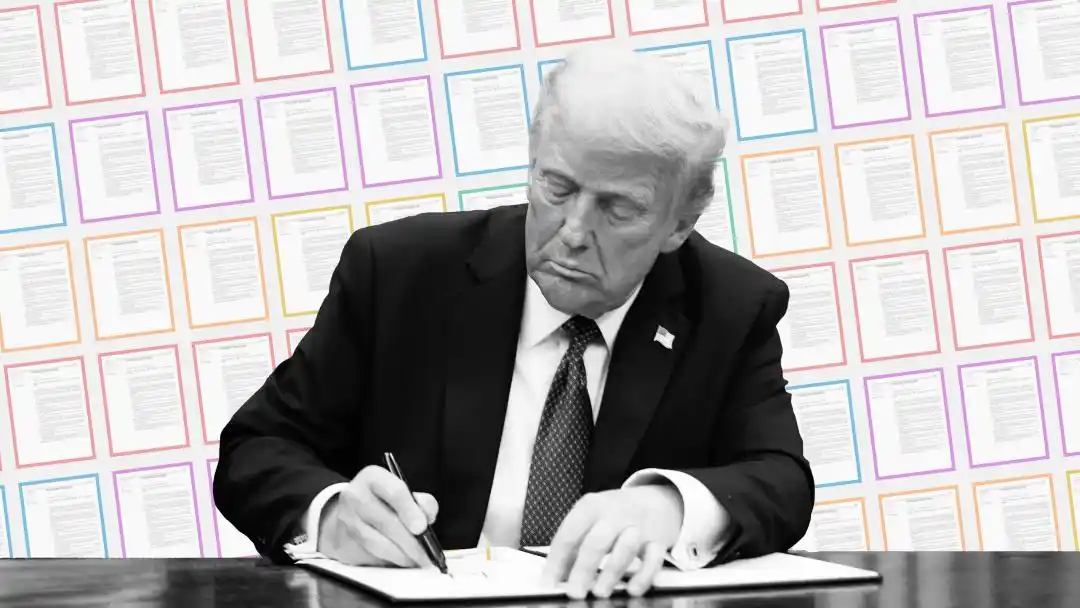
Remember? On January 20, 2025, inauguration day, Trump, with a stroke of his pen, revoked a bunch of executive orders left by the Biden administration, including one called "Executive Order on the Safe, Secure, and Trustworthy Development and Use of Artificial Intelligence," which aimed to strengthen AI regulation and scrutiny.
He replaced it with his own new executive order, "Removing Barriers to American AI Leadership," demanding that "innovation and competitiveness" be prioritized, comprehensively eliminating regulations hindering AI development. Subsequently, he significantly compressed state-level AI project approval and regulatory authority, centralizing it all at the federal level to ensure efficient project operation and outpace China.
This was undoubtedly suggested by the Silicon Valley faction within MAGA, as they are all investing in AI. Removing regulations would allow them to completely let loose.
The Silicon Valley faction's reasoning: Forget about ethics, morality, or employment crises. AI genuinely boosts productivity. If we don't do it, China will. America's superpower status is already precarious, manufacturing is a mess, technology is constantly being overtaken. If we lose to China on this track as well, better days are ahead! AI National Salvation Plan, activate!

This view, and the anti-AI view, are not inherently wrong—they just look at the issue from different angles (and sit in different positions).
But political discussions are never just about right or wrong; they also involve factions.
Many in the Democratic Party want to regulate AI, as their base includes many young graduates and white leftists concerned about climate change. On the Republican side, the far-right MAGA faction doesn't get along with the Silicon Valley faction, having huge disagreements on tariffs, immigration, etc., each thinking the other is a treacherous minister around Trump, constantly thinking of "purging the court."

Now that AI is causing public outrage, they see an opportunity to defeat their opponents.
In Congress, Democrats have introduced the "Safeguarding and Upholding Americans' Determinations on Responsible Artificial Intelligence Laws and Standards Act"—you don't need to remember this long, convoluted name. Just know it aims to overturn Trump's previous executive order and once again strengthen state-level regulatory authority over AI. The bill is currently in the review stage.
The Maine State Legislature, led by Democrats, passed the nation's first bill suspending the construction of new large data centers. The ban will last until the end of 2027 to mitigate the impact of rising water and electricity prices within the state. Several blue states are now considering similar bills.
Some Democratic politicians have even personally joined the anti-AI movement, standing with protesters in front of the media, condemning tech giants for being inhumane, first enjoying the wave of attention. Democrats who love social media have also started podcasts targeting rural voters, preaching the dangers of data centers, trying to shake Trump's solid support base.
As for the far-right MAGA, its leader Steve Bannon has repeatedly attacked AI and the tech giants behind it on his show, inciting listeners to resist data center projects in their hometowns. The video titles are alarmingly sensational: "Stop AI from Stealing Our Humanity" and "Use an Iron Fist Like Nuclear Weapons to Control AI." Just a few days ago, he gathered over 60 die-hard MAGA supporters to write a joint letter to the White House, urging Trump to issue a mandatory order requiring all AI models to undergo government review and testing before release to ensure they pose no danger to humanity.
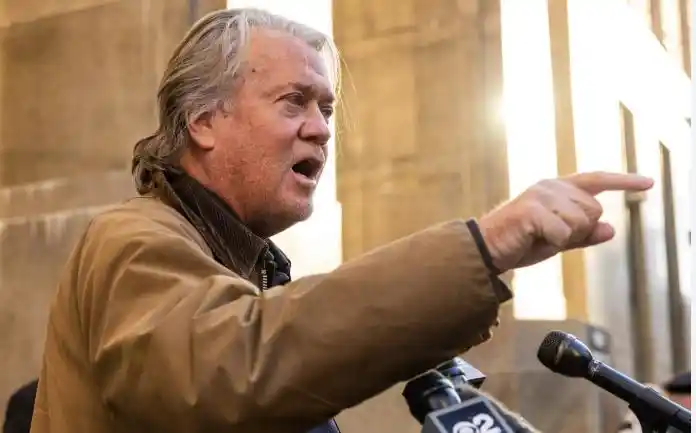
The more abstract part is that these two groups, once mortal enemies, have now formed a temporary alliance on the AI issue. Maine's ban received support from local lawmakers of both parties. Laws blocking data center construction in other places are mostly the same. The white left goes up and says, "What about the birds? What about the fish?" The redneck goes up and says, "The cost of living is too high, how am I supposed to live?" Different methods, same goal.
Some scholars studying politics marvel that in this divisive era, where Americans can argue over watching TV or choosing a car, they can actually agree on the data center issue—and agree to oppose it. It's truly both laughable and ironic.
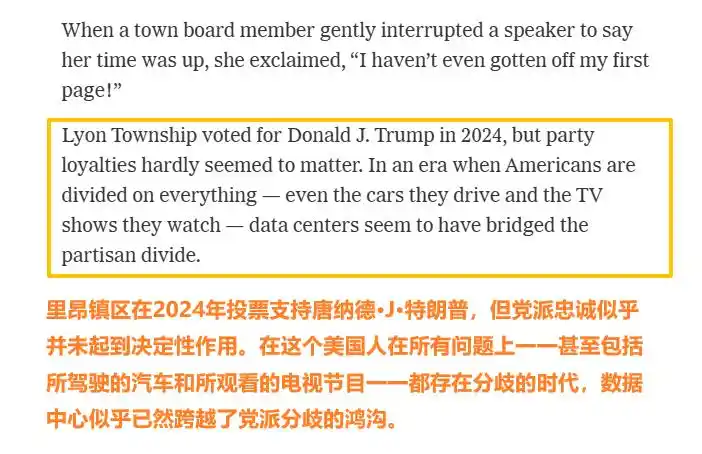
(The New York Times)
Who's most panicked about this situation? No need to say more.
If the situation continues, Trump may be forced to choose between "donors" and "voter base." Tech giants needing AI expansion versus traditional rednecks opposing AI invading their homes—he can only choose one. Choosing the former could lead to a major defeat in the midterm elections; choosing the latter would lose the support of the Silicon Valley right and could cause the U.S. to gradually fall behind in the AI race.
This is a dilemma Trump must solve.
This article is from the WeChat public account "Cool Play Lab," author: Cool Play Lab