Trader Made $49 Million Profit and Lost $24 Million in 12 Seconds Shorting ETH

cryptonews.ruPublished on 2026-08-20Last updated on 2026-08-20

Abstract

A crypto trader known as "pension‐usdt.eth" had their large Ethereum short position forcibly liquidated in just 12 seconds, resulting in a loss of nearly $24 million. Prior to this, the wallet, using the display name "Pension Fund," had been one of the year's most successful short sellers, accruing an estimated $49 million in total profit from bets against cryptocurrencies, including profitable shorts on 60,000 ETH and 1,400 BTC in June. The liquidation on the Hyperliquid platform was triggered by a sharp price surge in major tokens. Five forced-sell orders for a total of 50,000 ETH were executed from 04:51:03 to 04:51:15, accelerating the price increase. Four batches of ETH were sold at prices ranging from $2,193 to $2,236. The remaining 1,417 ETH were absorbed by Hyperliquid's special fund as no buyers were found. During the 12-second event, Ether's price jumped by $43. The short position had been held for roughly two months (1,445 hours) during a period of lower Bitcoin prices. The market reversed following a U.S. Treasury bond buyback announcement, with Ether gaining $18 in 24 hours. The trader's wallet is now essentially empty, showing a 100% loss against a trading volume of $111.76 million. This event was part of a broader market liquidation of $2.74 billion in short positions in 24 hours, the largest such wave since 2021.

The Hyperliquid wallet identified as pension‐usdt.eth, which had been shorting Ethereum for two months, was forced out of its short position on 50,000 $ETH amid a sharp price surge. The liquidation process, lasting 12 seconds, involved five forced sell orders — these transactions further pushed prices higher.

On Thursday morning, the position was closed after a rise in the prices of major tokens, resulting in the trader losing nearly $24 million. Previously, this wallet was considered one of the most successful short sellers of the year, with total profits from bets against cryptocurrencies reaching about $49 million.

Recent trades yielded a series of wins: nearly $6 million from shorting 60,000 $ETH (position closed in June), $3.6 million from shorting 1,400 BTC in the same month, and $1.7 million from another bet against Bitcoin in March.

The position liquidation occurred from 04:51:03 to 04:51:15 according to Hyperliquid data. During this time, four batches of ETH were forcibly sold:

  • 9,989 $ETH at a price of $2,193;
  • 20,698 $ETH at $2,209;
  • 15,830 $ETH at $2,214;
  • 1,871 $ETH at $2,236.

The remaining 1,417 $ETH found no buyers by the end of the process, and Hyperliquid absorbed this volume into a special fund created for such situations.

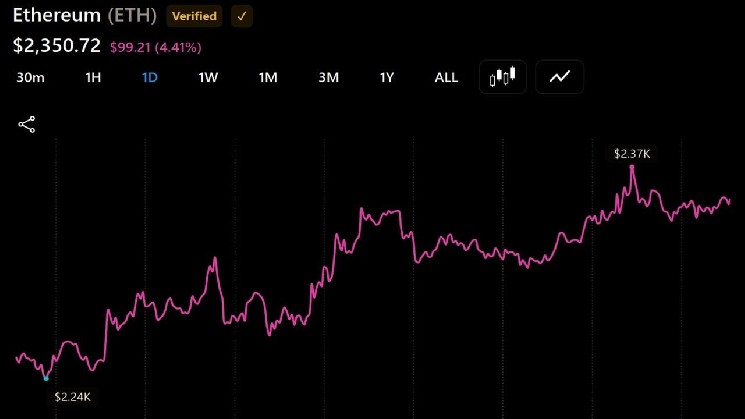
In just 12 seconds, the price of ETH rose by $43. The forced sale of the trader's assets partially triggered this rise, and each additional dollar made closing the remaining parts of the position more expensive.

The position was held for 1,445 hours — just over two months. This period coincided with Bitcoin trading below $65,000, making bets against it seem like a sure win. However, the situation changed after the U.S. Treasury announced a bond buyback on Wednesday: over the past 24 hours, ETH rose by $18 to nearly $70,000.

The wallet balance is now empty. According to Hyperliquid's leaderboard, the wallet under the display name "Pension Fund" holds just $35.61 and shows a 100% decline against a trading volume of $111.76 million during this period.

This is not the largest loss of the day. The greatest damage was suffered by the owner of a $48.8 million Bitcoin position also held on Hyperliquid. In total, $2.74 billion in shorts were liquidated in the market over 24 hours — the largest wave of forced position closures since 2021.


Trending Cryptos

Related Questions

QWhat was the total profit earned by the 'pension-usdt.eth' wallet from shorting cryptocurrencies before this liquidation event?

AThe wallet had earned a total profit of about $49 million from betting against cryptocurrencies before the liquidation event.

QHow much did the trader lose during the 12-second liquidation of their 50,000 ETH short position?

AThe trader lost nearly $24 million during the forced liquidation of their 50,000 ETH short position.

QWhat event triggered the sudden price increase of Ethereum that led to the mass liquidation of short positions?

AThe announcement by the U.S. Department of the Treasury about a bond buyback on Wednesday triggered a sharp price increase in cryptocurrencies, including Ethereum, leading to the mass liquidation of short positions.

QWhat happened to the remaining 1,417 ETH that was not sold during the forced liquidation process?

AThe remaining 1,417 ETH found no buyers by the end of the liquidation process, and Hyperliquid absorbed this volume into a special fund created for such situations.

QAccording to the article, what was the total value of short positions liquidated across the market in that 24-hour period?

AA total of $2.74 billion worth of short positions were liquidated across the market in that 24-hour period, marking the largest wave of forced position closures since 2021.

Related Reads

Haiwei Huaxin's Official Seal Seized by Over a Hundred People, High-Stakes Corporate Battle's 'Nuclear Deterrence' in Action Again

On August 18th, Haowei Huaxin, a semiconductor firm specializing in gallium arsenide and gallium nitride wafers, reported that over a hundred individuals forcibly entered its offices and seized the company's official seals from a safe, including the corporate, contract, and party committee seals. The incident is the latest escalation in a protracted control dispute. Haowei Huaxin, established in 2010, was originally a joint venture. Control became contested after 2021 when Zhenwei Financial Holding injected capital, becoming the largest shareholder (34.01%), while former parent Haite High-Tech's stake was diluted to 33.79%. An agreed-upon governance structure collapsed, leading to mutual accusations. Haite claimed it was locked out of the subsidiary's premises, while also alleging improper management like livestock being kept on the chip fabrication site. After state-owned Qingdao Haiyue Holdings took over Zhenwei's stake in 2023, Haite accused it of illegally seizing control. Despite Haite winning several legal battles in 2024-2026, which affirmed its rights to nominate directors and the chairman, it failed to regain physical control or recover the seals. The stakes are high: market valuations for Haite's stake in Haowei Huaxin are estimated between 3.7 to 5 billion USD, yet it is only valued at about 83 million USD on Haite's books. Losing control effectively jeopardizes a significant portion of Haite's value. In response to the seal seizure, Haite framed it as a "shareholder rights protection" action agreed upon by five shareholders. This mirrors a pattern in Chinese corporate disputes where seizing physical seals becomes a tactic to paralyze the opponent's daily operations, seen in past conflicts at companies like Dangdang and Bitmain. However, such actions don't resolve underlying ownership issues; the opposing party can report the seals stolen, declare them void, and apply for new ones, albeit with significant delay. The incident underscores how fragile corporate governance can devolve into physical confrontations over symbols of authority, with control ultimately determined by law and shareholding, not possession of a seal.

marsbit23m ago

Haiwei Huaxin's Official Seal Seized by Over a Hundred People, High-Stakes Corporate Battle's 'Nuclear Deterrence' in Action Again

marsbit23m ago

Bernstein Interprets MRNA's 177% Surge: What's Fundamentals and What's Hype?

Bernstein's analysis of Moderna's 177% stock surge following positive Phase 3 results for its individualized neoantigen therapy (INT) in melanoma distinguishes fundamental drivers from market speculation. The clinical breakthrough is real: the INTerpath-001 trial met its primary and key secondary endpoints, providing crucial validation for mRNA technology in oncology beyond infectious diseases. However, Bernstein argues the magnitude of the stock move cannot be justified by this single trial's fundamentals alone. The surge was amplified by three key factors: 1) A re-rating of Moderna's mRNA platform potential for expansion into other cancers, 2) A massive short squeeze, given ~15% of shares were sold short pre-announcement, and 3) The compelling "cancer vaccine" narrative that fueled broader investor enthusiasm. While the melanoma success is significant, Bernstein cautions that replication in lung, kidney, and bladder cancers—which have different immunogenicity—is not guaranteed. Furthermore, INT's commercial model faces challenges: it's a personalized treatment, not a mass-market vaccine, implying higher production costs and potential margin pressures despite a projected multi-billion dollar peak sales opportunity. The report also notes sector rotation, with some funds moving from crowded AI/semiconductor trades into defensive healthcare stocks, adding further momentum. In conclusion, Bernstein maintains a "Market-Perform" rating and a $45 price target, far below the post-surge price. It views the current valuation as pricing in an optimistic multi-cancer platform success and efficient commercialization that are yet to be proven. The clinical inflection point is clear, but the earnings inflection point awaits validation across future trials and commercial execution.

marsbit24m ago

Bernstein Interprets MRNA's 177% Surge: What's Fundamentals and What's Hype?

marsbit24m ago

Trading

Spot

Hot Articles

Discussions

Welcome to the HTX Community. Here, you can stay informed about the latest platform developments and gain access to professional market insights. Users' opinions on the price of ETH (ETH) are presented below.

活动图片