Thần thoại Claude Code sụp đổ? Đông đảo người dùng đang hủy đăng ký

marsbitPublished on 2026-08-20Last updated on 2026-08-20

Abstract

Huyền thoại tăng trưởng của Claude Code đang sụp đổ khi một làn sóng người dùng đang hủy đăng ký ồ ạt. Theo báo cáo từ TickerTrends, tốc độ tăng trưởng ARR (Doanh thu định kỳ hàng năm) của Claude Code đã giảm mạnh xuống chỉ còn 5.2% trong tháng 8/2026, so với mức tăng trưởng vũ bão trước đó. Nguyên nhân chính đến từ việc sản phẩm đã đạt đến ngưỡng bão hòa trong nhóm lập trình viên mục tiêu và thất bại trong việc mở rộng sang thị trường văn phòng rộng lớn hơn với tính năng Cowork bị đánh giá là khó sử dụng. Tuy nhiên, nguyên nhân trực tiếp dẫn đến "làn sóng hủy đăng ký" là việc Anthropic triển khai tính năng "watermark vô hình" vào tất cả văn bản và mã code do Claude tạo ra, nhằm tuân thủ quy định của EU. Điều này khiến người dùng, đặc biệt là các nhà phát triển và người làm việc với tài liệu mật, phẫn nộ vì lo ngại làm ô nhiễm tác phẩm gốc và gây rủi ro pháp lý. Trong khi đó, đối thủ OpenAI Codex đang hưởng lợi lớn với mức tăng trưởng ARR lên tới 20.8%, gấp 4 lần Claude Code, nhờ tiếp nhận lượng người dùng rời bỏ Claude. Các nền tảng như Cursor thậm chí còn chạy các chương trình khuyến mãi để thu hút người dùng Claude. Sự kiện này cho thấy thị trường AI đang bước vào thời kỳ bình ổn hơn. Người dùng không còn dễ dàng bị thuyết phục bởi các câu chuyện kỹ thuật hào nhoáng mà tập trung vào các yếu tố thực tế: trải nghiệm sản phẩm, chính sách giá cả, quyền riêng tư và tính ổn định. Anthropic đang phải đối mặt với bài toán khó về việc cân bằng giữa đổi mới, tuân thủ và giữ chân ...

Thần thoại tăng trưởng của Claude Code, đã sụp đổ!

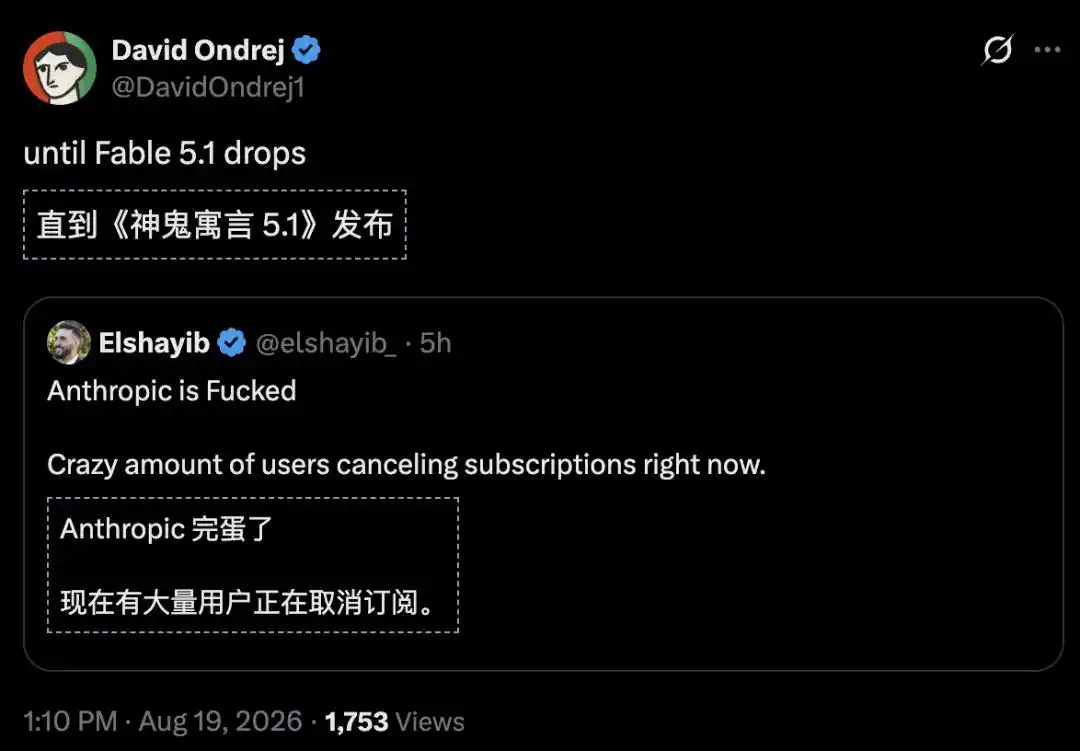
"Anthropic hỏng rồi, giờ có một lượng lớn người dùng đang điên cuồng hủy đăng ký."

Một bài đăng X từ một nhà phát triển đã làm dấy lên cuộc thảo luận sôi nổi trong cộng đồng.
Dữ liệu mới nhất cho thấy, giai đoạn tăng trưởng bùng nổ sớm của Claude Code đã chính thức kết thúc.

Ngày nay, người dùng mới tăng theo đơn vị cá nhân, người dùng cũ đang quay lưng điên cuồng.

Nhiều người dùng trung thành của CC đã chuyển hướng sang đối thủ cũ là Codex của OpenAI.

Tốc độ tăng trưởng ARR sụt giảm mạnh xuống 5.2%, cơn lốc tăng trưởng tạm dừng

Hôm nay, nền tảng theo dõi dữ liệu nổi tiếng TickerTrends đã đưa ra báo cáo mới nhất, dữ liệu cho thấy——

Động cơ tăng trưởng của Claude Code rõ ràng đã "chết máy".
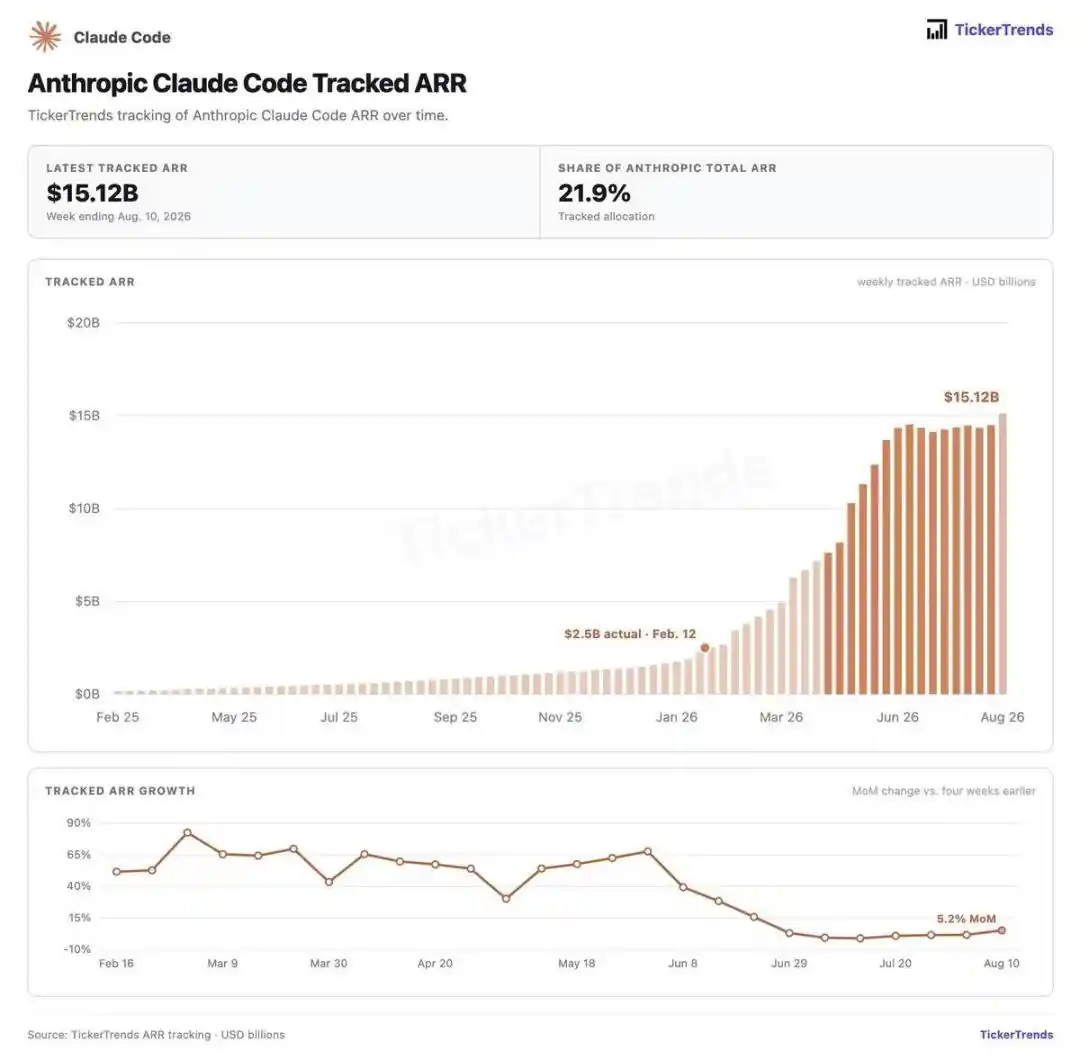
Trước đây, Claude Code từng có một đường cong tăng trưởng khiến người ta phấn khích đến nghẹt thở.

ARR của Claude Code vào khoảng 2.5 tỷ USD vào ngày 12/02/2026; đến cuối tháng 3 tăng vọt lên 6.3 tỷ; cuối tháng 4 vượt qua 10.3 tỷ; đến tháng 6, con số này đã vượt quá 14 tỷ USD.

Chỉ trong vài tháng, tăng gần 6 lần!

Đây không chỉ là kỳ tích trong lịch sử AI, mà còn là thần thoại trong toàn bộ lịch sử công nghiệp phần mềm. Các nhà đầu tư sôi sục, cả giới công nghệ đều trầm trồ.

Nhưng thần thoại của Claude Code, đã kết thúc vào tháng 8 năm 2026 này.

Tính đến ngày 10/8, ARR được theo dõi của Claude Code dừng lại ở mức 15.12 tỷ USD.

Thoạt nhìn, thị phần 15 tỷ vẫn rất lớn (chiếm 21.9% tổng ARR được theo dõi của Anthropic), nhưng nếu xem xét tốc độ tăng trưởng vòng, con số này đã sụt giảm đứt đoạn xuống còn 5.2%!

5.2% nghĩa là gì? Đối với một kỳ lân AI đang ở đỉnh cao của xu hướng, con số này cho thấy nó đã bước vào giai đoạn tăng trưởng thấp của "phần mềm truyền thống" một cách sớm hơn dự kiến.

Dữ liệu không biết nói dối, đặc biệt là đối với các sản phẩm SaaS và đăng ký AI, ARR chính là huyết mạch.

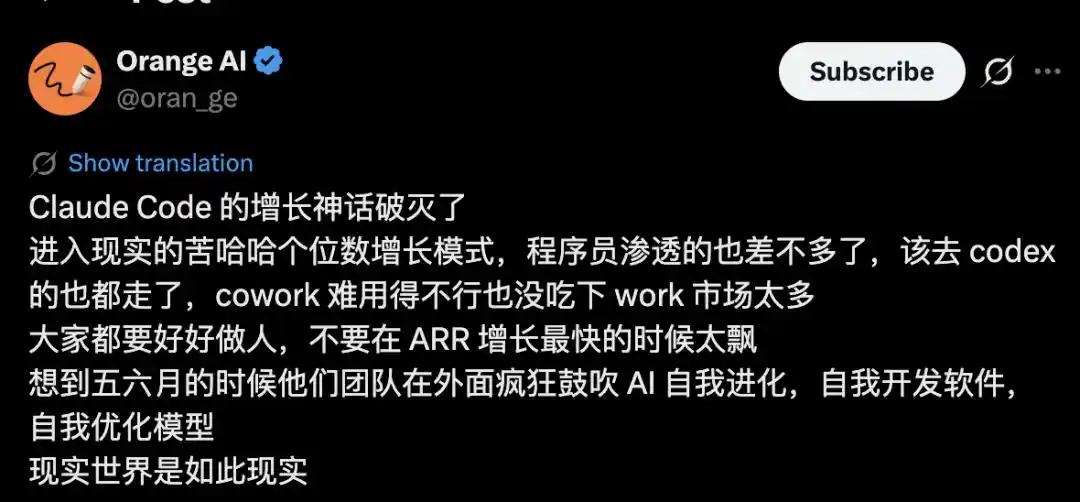
Như người bình luận công nghệ Orange AI đã chỉ ra:

Thần thoại tăng trưởng của Claude Code đã sụp đổ.

Bước vào chế độ tăng trưởng đơn vị khó khăn trong thực tế, mức độ thâm nhập vào cộng đồng lập trình viên cũng gần chạm trần, những ai muốn chuyển sang Codex cũng đã đi hết, Cowork khó dùng đến mức không thể chiếm được nhiều thị phần trong thị trường công việc.
Tại sao lại không thể tăng trưởng được nữa?

Trước hết, tỷ lệ thâm nhập vào cộng đồng lập trình viên đã tiệm cận trần.

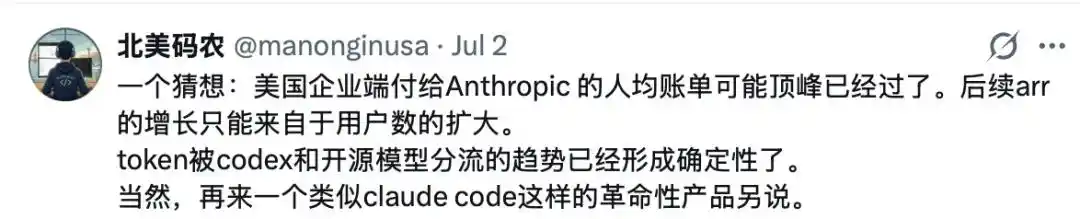
Xét trên toàn cầu, số lượng nhà phát triển cốt lõi sẵn sàng chi trả cho các công cụ lập trình AI cao cấp rốt cuộc cũng có hạn. Ai cần mua đều đã mua, tăng trưởng mới sẽ đến từ đâu?

Thứ hai, Cowork mà Anthropic từng đặt nhiều kỳ vọng vào việc thay đổi quy trình làm việc của đông đảo nhân viên văn phòng, đã thất bại thảm hại.

Người dùng phản hồi phổ biến rằng, Cowork khó dùng đến mức không thể chịu nổi, hoàn toàn không thể cắn xé thị trường công việc khổng lồ như kỳ vọng.

Sức mạnh sản phẩm không theo kịp tham vọng, thất bại trong việc phá vỡ giới hạn, tự nhiên chỉ có thể xoay vòng trong thị trường hiện có.
Watermark vô hình gây phẫn nộ, làn sóng "hủy đăng ký" quy mô lớn bùng nổ

Tốc độ tăng trưởng chậm chỉ là nỗi lo bên trong, mối đe dọa chí tử bên ngoài, là "làn sóng hủy đăng ký" đang lan rộng trên mạng xã hội.

Ngòi nổ trực tiếp của cuộc khủng hoảng hủy đăng ký này, là một tính năng mới được triển khai toàn cầu vào đầu tháng 8 năm 2026——"Watermark văn bản vô hình".

Được biết, Anthropic thực hiện động thái này để đối phó với các quy định ngày càng khắt khe của Liên minh Châu Âu. Tuy nhiên, hành động này đã chọc giận người dùng.

Watermark này sẽ âm thầm được nhúng vào tất cả văn bản và mã code do Claude tạo ra hoặc xử lý, điều này khiến các lập trình viên và nhân viên soạn thảo văn bản nổi giận.

Đối với nhiều người dùng cao cấp trả khoảng 100 USD mỗi tháng để đăng ký Claude Pro/Max, AI chỉ là một công cụ hỗ trợ.

Họ có thể đưa mã code cốt lõi của mình vào để Claude giúp tìm lỗi, hoặc ném tài liệu mật hàng chục nghìn từ vào để chỉnh sửa nhẹ.

Giờ đây, chỉ cần qua tay Claude, những tác phẩm nguyên bản đầy tâm huyết của con người này sẽ bị đánh dấu vĩnh viễn dấu ấn "được tạo bởi AI".

Trong cuộc phỏng vấn chuyên sâu với truyền thông nước ngoài, nhiều người dùng hủy đăng ký trong phẫn nộ đã bày tỏ: "Điều này sẽ làm ô nhiễm tác phẩm của chúng tôi!"
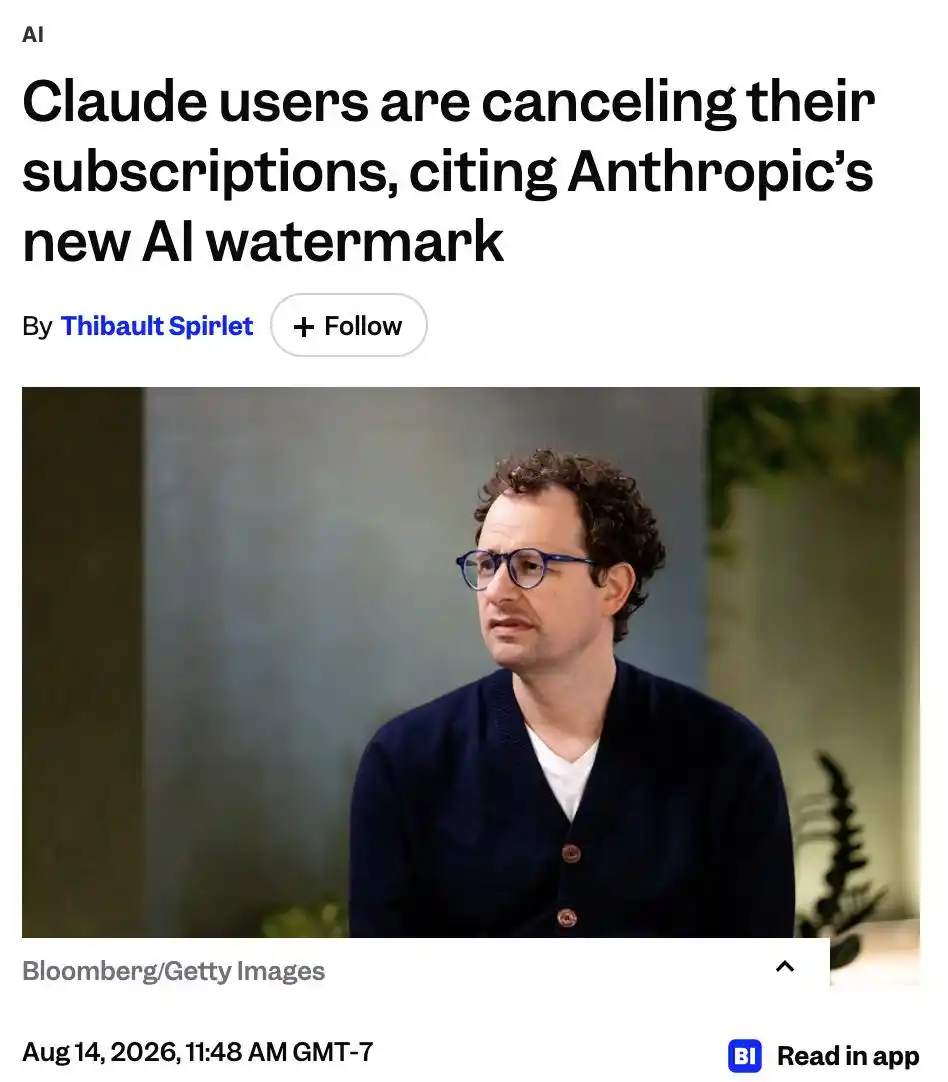
Một khi mã code bị đánh dấu watermark lén lút, các nhà phát triển độc lập sẽ gặp rắc rối lớn——vất vả giao sản phẩm cho khách hàng, quay đầu có thể phải đối mặt với kiện tụng, bồi thường vi phạm hợp đồng.

Các lập trình viên ở công ty lớn càng hoang mang hơn, nếu kho mã code cốt lõi của công ty bị "ô nhiễm" bởi watermark AI, khi kiểm tra tuân thủ diễn ra, tương lai nghề nghiệp của bản thân cũng không bảo đảm.

Hơn nữa, watermark chỉ là ngòi nổ.

Một loạt thao tác tiếp theo từ phía chính thức, đã xếp đầy các hiệu ứng tiêu cực, mài mòn sự kiên nhẫn của mọi người xuống đất.

Ví dụ, hạn mức sử dụng keo kiệt đến mức khó tin.

Khác với bên OpenAI nơi Tibo thường xuyên được reset hạn mức, Anthropic bị chỉ trích đến mức không còn cách nào khác, đã miễn cưỡng tăng hạn mức hàng tuần thêm 50% (và chỉ đến cuối tháng 8).

Nhưng đối với người dùng nặng phụ thuộc vào nó để làm việc hàng ngày, điều này còn không đủ để nhét kẽ răng! Nỗi đau khi viết code giữa chừng đột nhiên bị giới hạn tốc độ, ai hiểu được?

Ngoài ra, còn có trải nghiệm mô hình mơ hồ như Schrödinger.

Mô hình thần thánh Fable 5 từng được ca ngợi hết lời trước đây, sau khi ra mắt vào tháng 6 liên tục gặp trục trặc.

Khi viết mã code nghiệp vụ phức tạp thực tế, biểu hiện của nó giống như mở hộp may rủi, lúc thì thần thánh, lúc thì ngớ ngẩn, hoàn toàn không dám tin tưởng nó.

Vì giá cả đắt đỏ còn điên cuồng cắt cổ người dùng, việc người dùng lật bàn, cũng chỉ là chuyện trong tích tắc.

Sự phản công điên cuồng của OpenAI Codex

Ngay khi Claude Code sa lầy và lượng người dùng sụt giảm lớn, kẻ thù truyền kiếp của nó——OpenAI Codex, đang điên cuồng hưởng lợi.
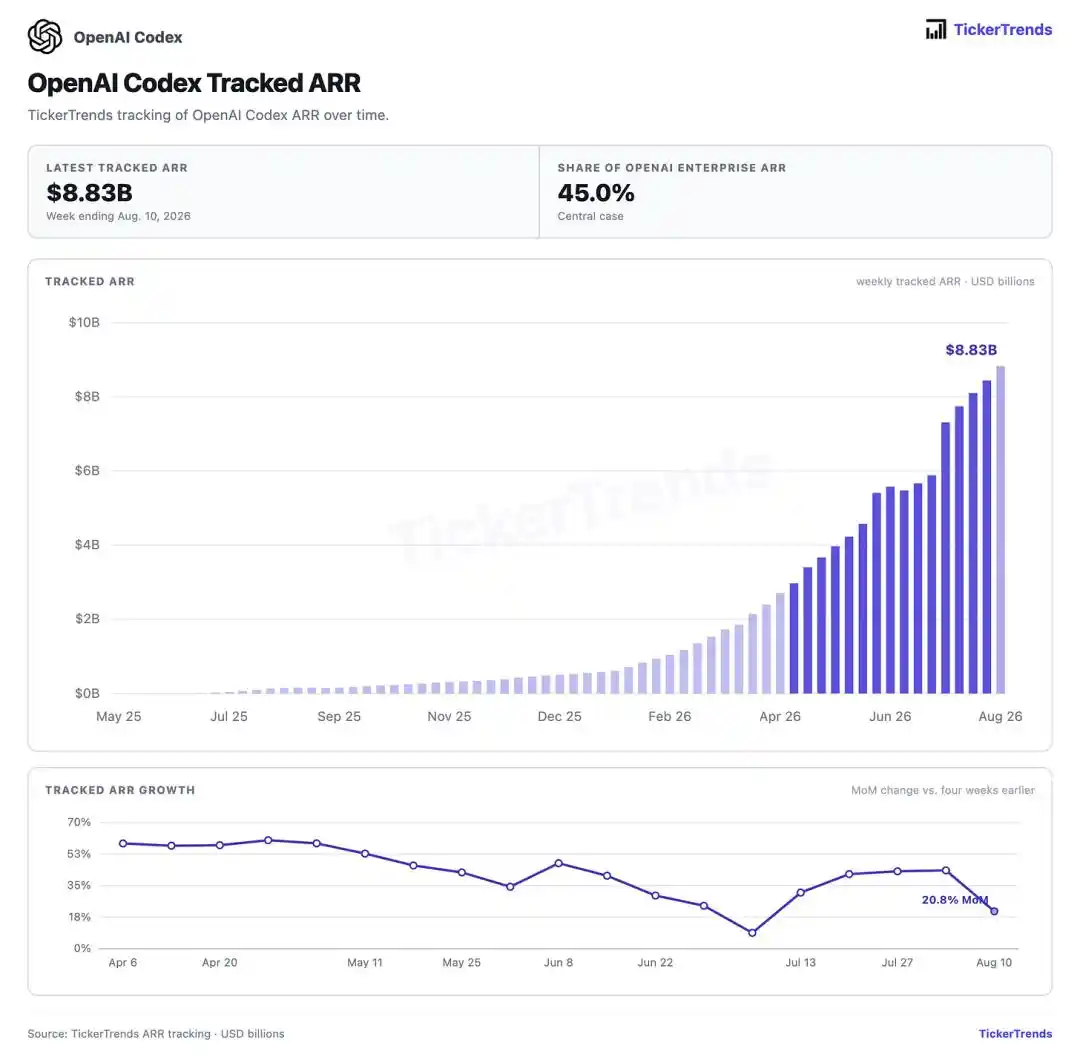
Dữ liệu so sánh của TickerTrends, thực sự là "lửa và băng song hành".

Trong bốn tuần gần nhất tính đến ngày 10/8, tốc độ tăng trưởng vòng của OpenAI Codex đạt mức kinh hoàng 20.8%, gấp đúng bốn lần Claude Code (5.2%)!
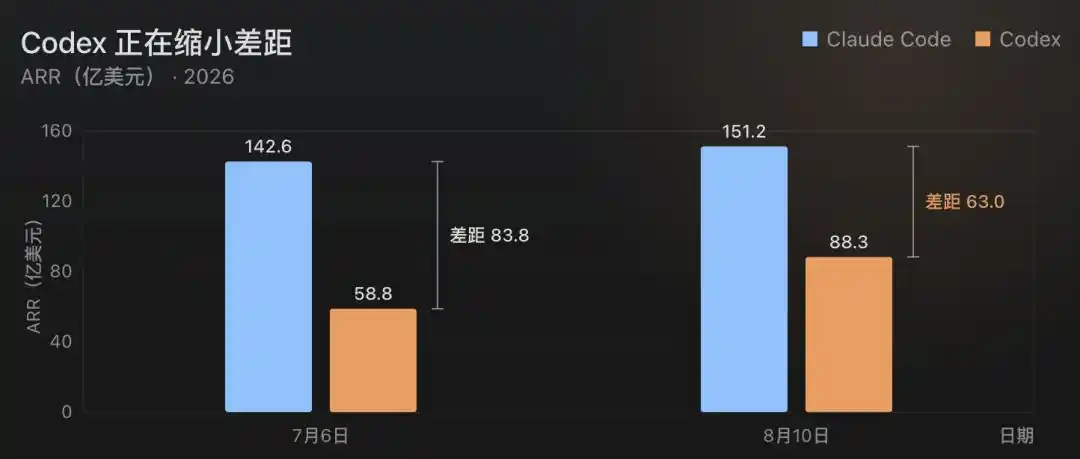
Codex dựa vào đâu mà mạnh mẽ như vậy? Câu trả lời rất đơn giản: nó đã tiếp nhận một lượng lớn "người tị nạn" từ Claude chuyển sang.

Trên nền tảng X, nhiều nhà phát triển cho biết: vì watermark và hạn chế hạn mức, họ đã hủy đăng ký Claude, chuyển hoàn toàn sang Codex.

Codex có hạn chế lỏng lẻo hơn, tích hợp IDE liền mạch hơn, không có watermark vô hình đáng ghét, và được hậu thuẫn bởi mạng lưới bán hàng doanh nghiệp hùng mạnh của OpenAI (hiện tại Codex chiếm khoảng 45% ARR cấp doanh nghiệp của OpenAI).

Như bình luận này đã nói: "Những ai muốn chuyển sang Codex đều đã đi hết". Đây là người dùng bỏ phiếu bằng chân.

Thậm chí, Cursor vừa được SpaceX mua lại còn mở chiến tranh trợ giá, dựa vào "ảnh chụp màn hình hủy đăng ký Claude" trực tiếp tặng gói đăng ký cao cấp trị giá 200 USD.
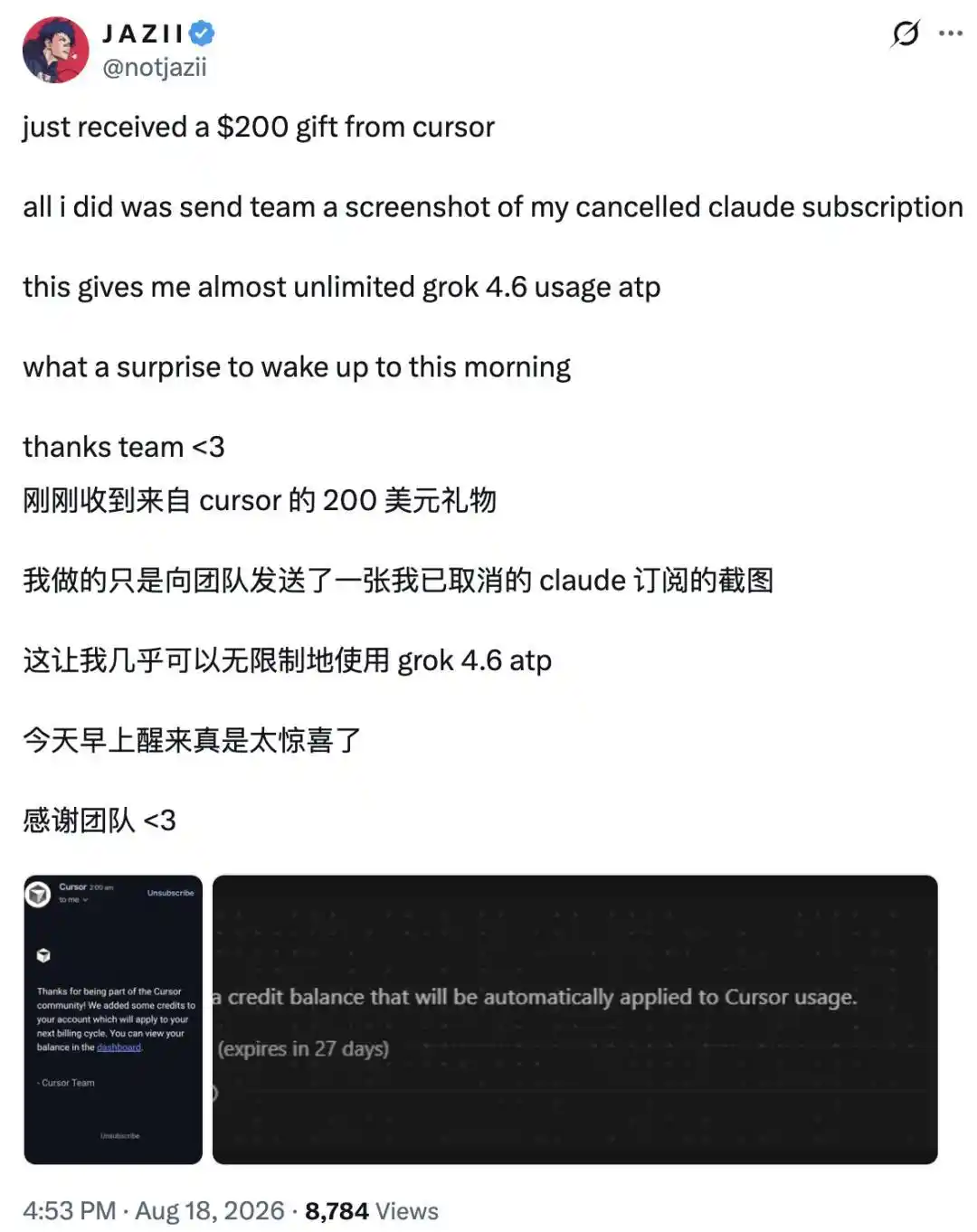
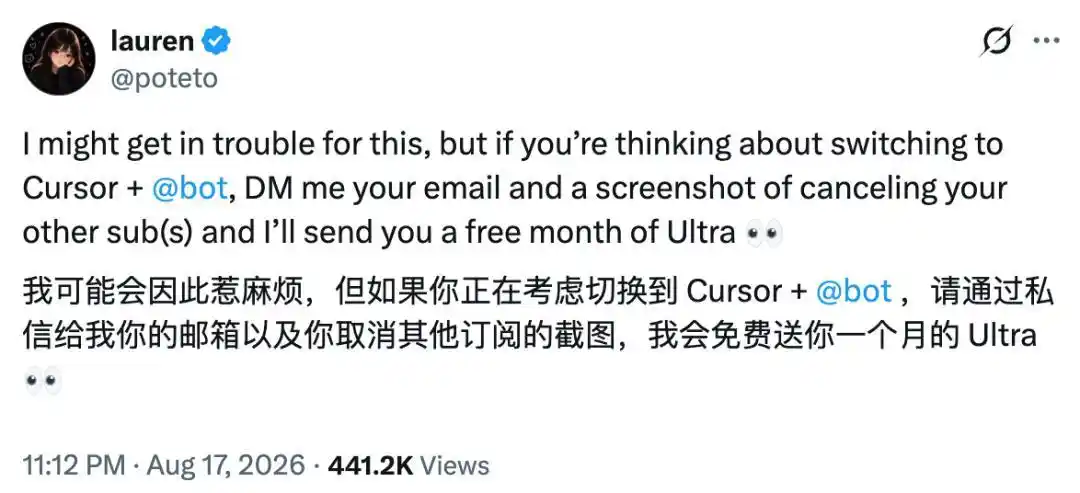
Hào sâu bảo vệ mà Claude Code xây dựng từ sớm dựa trên ngữ cảnh siêu dài và khả năng mã hóa zero-shot đầy ấn tượng, đang bị OpenAI và Cursor dùng trải nghiệm sản phẩm và hệ sinh thái tốt hơn, từng chút một lấp đầy.

Thị trường bước vào thời kỳ bình tĩnh, đánh thức giấc mơ ảo "AI tự phát triển"

Nhìn lại tháng Năm, Sáu năm nay, Anthropic khi đó đã tự tin và phấn khởi biết bao.

Mô hình Fable 5 vừa mới ra mắt, các thành viên trong nhóm đi khắp nơi cổ vũ tường thuật mới: "AI đã có khả năng tự phát triển phần mềm." "Vai trò của lập trình viên con người sẽ được định nghĩa lại."

Ở đỉnh cao của cơn lốc tăng trưởng ARR, cả Thung lũng Silicon đắm chìm trong sự cuồng nhiệt "AGI sắp giáng lâm, chúng ta đang tạo ra thần thánh".

Kiểu tường thuật này cực kỳ hấp dẫn, cũng cực kỳ dễ khiến người trong cuộc "bay bổng".

Tuy nhiên, chỉ hai tháng sau, thực tế đã tát mạnh vào kiểu tường thuật khoa trương này.

Khi thủy triều rút đi, doanh nghiệp đối mặt với thực tế kinh doanh lạnh lẽo——

Ngân sách doanh nghiệp có hạn; sức mạnh tính toán có hạn; nhu cầu của người lao động cũng rất khiêm tốn (chỉ mong công cụ dễ dùng, không gây rắc rối, hạn mức đủ dùng).

Điều người dùng thực sự quan tâm, là "anh có thể đừng thêm watermark vào mã code của tôi được không? Anh có thể nới lỏng giới hạn tin nhắn mỗi giờ một chút không? Tính năng Cowork của anh có thể thiết kế giống như thứ con người dùng được không?"

Đây chính là tình thế khó khăn chung mà tất cả các kỳ lân AI siêu cấp hiện nay đang phải đối mặt.

CC ở tầng đáy kỹ thuật tuyệt đối là đỉnh cao, nhưng trong vận hành sản phẩm, chiến lược thương mại hóa (như ép buộc áp dụng watermark), nắm bắt tâm lý người dùng (như định giá và giới hạn), lại giống như một tay mơ kiêu ngạo, danh tiếng tự nhiên bị phản tác dụng.

Điều thực sự đẩy cuộc thảo luận đến điểm đau đớn, là sự chỉ trích ở tầng vốn và tường thuật.

Có người thẳng thắn: Định giá IPO khoảng 2 nghìn tỷ USD của Anthropic thật vô lý, thậm chí cao hơn cả SpaceX.

Tuy nhiên thực tế là, nó không sở hữu bất kỳ phần cứng nào, không có hào sâu bảo vệ thực sự, triển vọng cũng không sáng sủa. Những công ty thực sự nghiêm túc như SpaceX, trình độ thông minh của họ đang tiệm cận và sẽ sớm vượt qua các mô hình này, thu nhập cũng sẽ theo kịp.

Còn với IPO, nhiều người sẽ coi nó như một công cụ để nhanh chóng bán cổ phần, thực hiện thoái vốn một cách danh giá.

Ngày nay, thị trường đã từ thời kỳ cuồng nhiệt mù quáng, bước vào thời kỳ bình tĩnh.

Những ngày ăn ngon dựa vào thổi phồng khái niệm và lợi nhuận ban đầu, đã kết thúc.

Mặc dù Anthropic vẫn nắm trong tay quân bài át chủ bài Fable 5.1, nhưng nếu vẫn tiếp tục đánh watermark, liệu người dùng có chấp nhận mua?

Cuối cùng gửi tặng Anthropic một câu: Hãy làm người tốt, giữ sự khiêm tốn.

Khi tăng trưởng đừng quá bay bổng, vì những bậc phụ huynh nuôi sống bạn, bất cứ lúc nào cũng có thể lật bàn bỏ đi.

Tài liệu tham khảo:

https://blog.tickertrends.io/p/claude-code-vs-openai-codex-arrhttps://techcrunch.com/2026/08/17/anthropics-annualized-revenue-surges-to-65b/https://x.com/oran_ge/status/2090040293383082085

Bài viết này đến từ tài khoản WeChat công chúng "Tân Trí Nguyên", tác giả: Aeneas David

Trending Cryptos

Related Questions

QSự tăng trưởng của Claude Code đang giảm tốc độ như thế nào?

ATheo báo cáo từ TickerTrends, tốc độ tăng trưởng ARR theo tháng của Claude Code đã giảm mạnh xuống chỉ còn 5.2% vào tháng 8 năm 2026, một con số rất thấp so với mức tăng trưởng vũ bão trước đó. Điều này báo hiệu thời kỳ tăng trưởng thần tốc đã kết thúc.

QNguyên nhân chính nào dẫn đến làn sóng hủy đăng ký dịch vụ Claude Code?

ANguyên nhân trực tiếp dẫn đến làn sóng hủy đăng ký hàng loạt là việc Anthropic triển khai tính năng 'watermark văn bản vô hình' vào đầu tháng 8/2026. Tính năng này âm thầm chèn watermark vào tất cả văn bản và mã nguồn do Claude xử lý, khiến người dùng, đặc biệt là lập trình viên, lo ngại về tính toàn vẹn và quyền sở hữu trí tuệ đối với tác phẩm của họ.

QĐối thủ OpenAI Codex đã phản ứng ra sao trước sự sụt giảm của Claude Code?

AOpenAI Codex đang hưởng lợi trực tiếp từ việc người dùng rời bỏ Claude Code. Trong cùng kỳ, Codex đạt tốc độ tăng trưởng ARR ấn tượng lên đến 20.8%, gấp 4 lần Claude Code. Nhiều lập trình viên đã chuyển sang sử dụng Codex do chính sách hạn mức linh hoạt hơn, tích hợp IDE tốt hơn và không có watermark gây khó chịu.

QSản phẩm Claude Cowork của Anthropic gặp vấn đề gì?

AClaude Cowork, sản phẩm được Anthropic kỳ vọng sẽ mở rộng thị trường sang người dùng văn phòng, đã thất bại trong việc thu hút người dùng. Phản hồi chung từ cộng đồng cho thấy sản phẩm này 'khó sử dụng một cách khó tin' và không đáp ứng được kỳ vọng để chiếm lĩnh thị trường công việc văn phòng rộng lớn.

QBài viết đưa ra nhận định gì về thị trường và cách ứng xử của các công ty AI?

ABài viết nhận định thị trường AI đang bước vào thời kỳ 'bình tĩnh lại' sau cơn sốt tăng trưởng ban đầu. Nó cảnh báo các công ty như Anthropic cần phải 'giữ thái độ khiêm tốn', tập trung vào những nhu cầu thiết thực của người dùng như sản phẩm ổn định, chính sách hợp lý và không có những tính năng gây rắc rối (như watermark), thay vì quá sa đà vào những câu chuyện thổi phồng về khả năng 'tự phát triển' của AI.

Related Reads

Haiwei Huaxin's Official Seal Seized by Over a Hundred People, High-Stakes Corporate Battle's 'Nuclear Deterrence' in Action Again

On August 18th, Haowei Huaxin, a semiconductor firm specializing in gallium arsenide and gallium nitride wafers, reported that over a hundred individuals forcibly entered its offices and seized the company's official seals from a safe, including the corporate, contract, and party committee seals. The incident is the latest escalation in a protracted control dispute. Haowei Huaxin, established in 2010, was originally a joint venture. Control became contested after 2021 when Zhenwei Financial Holding injected capital, becoming the largest shareholder (34.01%), while former parent Haite High-Tech's stake was diluted to 33.79%. An agreed-upon governance structure collapsed, leading to mutual accusations. Haite claimed it was locked out of the subsidiary's premises, while also alleging improper management like livestock being kept on the chip fabrication site. After state-owned Qingdao Haiyue Holdings took over Zhenwei's stake in 2023, Haite accused it of illegally seizing control. Despite Haite winning several legal battles in 2024-2026, which affirmed its rights to nominate directors and the chairman, it failed to regain physical control or recover the seals. The stakes are high: market valuations for Haite's stake in Haowei Huaxin are estimated between 3.7 to 5 billion USD, yet it is only valued at about 83 million USD on Haite's books. Losing control effectively jeopardizes a significant portion of Haite's value. In response to the seal seizure, Haite framed it as a "shareholder rights protection" action agreed upon by five shareholders. This mirrors a pattern in Chinese corporate disputes where seizing physical seals becomes a tactic to paralyze the opponent's daily operations, seen in past conflicts at companies like Dangdang and Bitmain. However, such actions don't resolve underlying ownership issues; the opposing party can report the seals stolen, declare them void, and apply for new ones, albeit with significant delay. The incident underscores how fragile corporate governance can devolve into physical confrontations over symbols of authority, with control ultimately determined by law and shareholding, not possession of a seal.

marsbit27m ago

Haiwei Huaxin's Official Seal Seized by Over a Hundred People, High-Stakes Corporate Battle's 'Nuclear Deterrence' in Action Again

marsbit27m ago

Bernstein Interprets MRNA's 177% Surge: What's Fundamentals and What's Hype?

Bernstein's analysis of Moderna's 177% stock surge following positive Phase 3 results for its individualized neoantigen therapy (INT) in melanoma distinguishes fundamental drivers from market speculation. The clinical breakthrough is real: the INTerpath-001 trial met its primary and key secondary endpoints, providing crucial validation for mRNA technology in oncology beyond infectious diseases. However, Bernstein argues the magnitude of the stock move cannot be justified by this single trial's fundamentals alone. The surge was amplified by three key factors: 1) A re-rating of Moderna's mRNA platform potential for expansion into other cancers, 2) A massive short squeeze, given ~15% of shares were sold short pre-announcement, and 3) The compelling "cancer vaccine" narrative that fueled broader investor enthusiasm. While the melanoma success is significant, Bernstein cautions that replication in lung, kidney, and bladder cancers—which have different immunogenicity—is not guaranteed. Furthermore, INT's commercial model faces challenges: it's a personalized treatment, not a mass-market vaccine, implying higher production costs and potential margin pressures despite a projected multi-billion dollar peak sales opportunity. The report also notes sector rotation, with some funds moving from crowded AI/semiconductor trades into defensive healthcare stocks, adding further momentum. In conclusion, Bernstein maintains a "Market-Perform" rating and a $45 price target, far below the post-surge price. It views the current valuation as pricing in an optimistic multi-cancer platform success and efficient commercialization that are yet to be proven. The clinical inflection point is clear, but the earnings inflection point awaits validation across future trials and commercial execution.

marsbit27m ago

Bernstein Interprets MRNA's 177% Surge: What's Fundamentals and What's Hype?

marsbit27m ago

Trading

Spot

Hot Articles

What is DOGE M

Doge Matrix ($doge m): The New Breed of Community-Driven Cryptocurrency Introduction In the ever-evolving landscape of cryptocurrency, new projects constantly emerge, each aiming to capture the interest of investors and enthusiasts alike. One of the latest entrants to this domain is Doge Matrix, represented by the ticker symbol $doge m. This project has attracted attention thanks to its roots in the popular meme culture surrounding Dogecoin, establishing its place within the web3 space. This article aims to provide a comprehensive analysis of Doge Matrix, covering its overview, creator, investors, functionality, timeline, and notable aspects. What is Doge Matrix ($doge m)? Doge Matrix is a community-driven cryptocurrency project that seemingly builds upon the widespread appeal of Dogecoin, a digital currency known for its Shiba Inu mascot and its meme origins. While the overarching objectives of Doge Matrix are not extensively defined, it is characterized by a commitment to harnessing community involvement and support. Unlike traditional cryptocurrencies that often emphasize utility or intrinsic value through underlying technologies, Doge Matrix positions itself within a space that embraces the cultural phenomenon of cryptocurrencies, particularly appealing to those who resonate with the ethos of meme-based assets. Drawing on the strengths of the Dogecoin community, Doge Matrix operates as part of a broader ecosystem, inviting participation and engagement from users who share an interest in cryptocurrency and the digital landscape. Who is the Creator of Doge Matrix ($doge m)? The identity of the creator of Doge Matrix remains unknown. This lack of transparency is not an uncommon occurrence in the cryptocurrency space, where some projects are launched without revealing the identities of their founders. The absence of information regarding the founding team can raise questions among potential investors about the project’s accountability and direction. Who are the Investors of Doge Matrix ($doge m)? As it stands, there is no publicly available information detailing the investors or investment foundations that back Doge Matrix. The project appears to rely primarily on community support rather than institutional investment. This model aligns with the community-driven nature of the initiative, fostering an environment where the direction of the project is shaped by its participants rather than being dictated by a select few financial backers. How Does Doge Matrix ($doge m) Work? The specifics regarding the operational mechanisms of Doge Matrix are somewhat vague, reflecting a broader trend of projects in the meme coin space where innovative functionalities are not always clearly articulated. Nonetheless, Doge Matrix seems designed to tap into the existing cryptocurrency ecosystem by encouraging user participation while tapping into the familiar cultural references associated with Dogecoin. Its potentially unique characteristics derive from community interactions rather than technological advancements, emphasizing shared experiences and collaboration among token holders. While the exact innovations have not been explicitly outlined, the project appears to create a space where community members can engage, share ideas, and propel the project's potential forward. Timeline of Doge Matrix ($doge m) Reflecting on the project’s timeline reveals notable events that have defined its journey thus far: November 25, 2024: Doge Matrix reached its all-time high value, marking a significant milestone in its early history. January 1, 2025: Conversely, Doge Matrix hit its all-time low value, illustrating the volatility often associated with cryptocurrencies, especially in the early stages of a project's lifecycle. Ongoing: The project continues to be actively traded and supported by its community, although specific future milestones or objectives have yet to be disclosed. Key Points About Doge Matrix ($doge m) Community Focus At the heart of Doge Matrix is a commitment to community engagement. The project thrives on the premise of collaboration and shared objectives among its members, emphasizing the importance of collective effort. Unlike centralized projects that often have a defined leadership structure, Doge Matrix at present showcases a more fluid approach to governance, where every community member's voice matters. Volatility The cryptocurrency market is notorious for its volatility, and Doge Matrix is no exception. Its price history reflects significant fluctuations between high and low values, which is typical of many new cryptocurrencies but underscores the risks associated with investment in emerging tokens. Lack of Detailed Information One of the most striking features about Doge Matrix is the scarcity of detailed information regarding its technological underpinnings and operational mechanisms. This ambiguity necessitates that potential investors conduct thorough due diligence before engaging with the project. Conclusion In summary, Doge Matrix ($doge m) illustrates a new wave of cryptocurrency projects that lean heavily on community engagement and cultural relevance. While lacking in certain specifics—such as clear leadership, defined objectives, and detailed functionality—the project has managed to generate interest within the crypto community, leveraging the established appeal of meme culture. As with any investment in the cryptocurrency space, understanding the inherent risks and conducting comprehensive research is essential for potential participants. Doge Matrix stands as a reminder of the dynamic, sometimes unpredictable nature of the crypto industry, marked by constant evolution and enthusiasm for community-driven initiatives.

4.4k Total ViewsPublished 2025.02.03Updated 2025.02.03

What is DOGE M

What is $M

Understanding Mantis ($M): A New Era in Cross-Chain Interoperability In the continually evolving landscape of Web3 and cryptocurrency, new projects strive to offer innovative solutions aimed at enhancing the user experience and expanding functional possibilities within the decentralized financial ecosystem. One such project garnering attention is Mantis ($M), a pioneering protocol founded on the principles of cross-chain interoperability and intent-based settlements. This article delves into the essential aspects of Mantis, including its core functionality, creators, investment backing, innovative features, and critical milestones. What is Mantis ($M)? Mantis is described as a multi-domain intent settlement protocol that simplifies cross-chain interactions, enabling users to execute complex financial transactions across various blockchain platforms seamlessly. The protocol operates through three primary layers: Intent Expression: Users can articulate their transaction goals using natural language facilitated by the DISE LLM, an advanced AI language model. For instance, a user might express a desire to swap Ethereum (ETH) for Solana (SOL) with a specific slippage tolerance of 1%. Execution: This layer employs a network of solvers that compete to fulfill user intents. Transactions are executed using mechanisms such as Coincidence of Wants (CoWs) and Order Flow Auctions (OFAs), which ensure that user demands are met optimally. Settlement: Leveraging the Inter-Blockchain Communication (IBC) protocol, Mantis enables atomic cross-chain transactions, allowing users to operate across various supported chains, including Ethereum, Solana, and Cosmos. Mantis is engineered to introduce native yield generation for idle assets, employing cryptographic proofs to maintain the integrity of transactions throughout the entire process. Creators & Development Team Mantis was conceived by the Composable Foundation, a research-driven organization notable for its emphasis on blockchain interoperability solutions. This foundation collaborates with esteemed academic institutions, including Harvard University and the University of Lisbon, contributing to extensive research and development efforts that inform Mantis's architecture and functionality. The Composable Foundation’s commitment to fostering innovation in the blockchain space positions Mantis as a robust solution for the growing demand for interoperability among multiple blockchain networks. Investors & Backing While specific details about individual investors have not been publicly disclosed, Mantis enjoys substantial backing from various entities, including: Ecosystem grants from IBC-enabled chains, which support the protocol's growth and integration within decentralized finance ecosystems. Strategic partnerships with infrastructure providers that enhance Mantis's network capabilities and deployment strategies. Funding through the Composable Foundation's treasury, ensuring sustained financial support for ongoing development and operational costs. These collaborative efforts reflect a consensus among stakeholders about the importance of enhancing cross-chain functionality and the potential utility of Mantis's infrastructural innovations. Key Innovations Mantis sets itself apart through several pioneering innovations that enhance its functionality and utility: Chain-Agnostic Intents: Users can initiate transactions from any supported chain while settling on another. This flexibility empowers users, driving increased interaction among different platforms. AI-Powered Interface: The integration of DISE LLM allows users to conduct complex DeFi operations using natural language, thereby simplifying interactions and making blockchain technology accessible to a broader audience. Cross-Domain MEV Capture: Mantis creates an internal market for maximal extractable value (MEV) through competitions among solvers. This innovative approach allows for greater efficiency and value extraction in complex transactions. Modular Settlement Layer: The protocol supports various verification methods, including zero-knowledge proofs and optimistic rollups, providing a versatile framework that can adapt to emerging blockchain technologies. Historical Timeline Mantis's development is marked by several critical milestones that chart its trajectory and growth: | Year | Milestone | |————|————————————————————————-| | 2022 | Initial concept development within the Composable Foundation's research division. | | Q3 2024 | Launch of the testnet with bridging capabilities between Solana and Ethereum. | | Q1 2025 | Anticipated Token Generation Event (TGE) alongside the mainnet launch. | | Q2 2025 | Expected integration of DISE LLM and expansion of cross-chain capabilities. | | 2025 H2 | Planned support for over 15 chains through further IBC upgrades. | This timeline outlines Mantis's evolution, from conceptual discussions to active implementation and future growth phases. Ecosystem Growth Strategy Mantis's strategy for ecosystem growth includes several initiatives designed to encourage user participation and developer engagement: Credits System: Users can earn protocol credits by providing liquidity and engaging in referral programs. These credits are redeemable for incentives in the future, fostering a robust user community. Modular Software Development Kit (SDK): This toolkit empowers developers to create applications based on intent-driven models utilizing Mantis's infrastructure, thus promoting innovation within its ecosystem. Governance Model: As the protocol matures, $M token holders will have a voice in protocol governance, allowing them to vote on proposed upgrades and changes, thereby enhancing community engagement and decentralization. Mantis represents a significant advancement in the realm of cross-chain architecture. By seamlessly integrating advanced AI algorithms with a robust settlement framework, Mantis seeks to tackle the problems of fragmentation within multi-chain ecosystems. Its innovative approach prioritizes improved user experiences while adhering to the foundational principles of decentralization and security, setting a new standard for the future interoperability of blockchain technologies. As Mantis continues its journey of growth and implementation, it promises to be a project to watch closely in the competitive landscape of Web3 and decentralized finance. With its focus on crossing boundaries and elevating user engagement, Mantis is poised to be an integral part of the future developments in the cryptocurrency space.

869 Total ViewsPublished 2025.03.18Updated 2025.03.18

What is $M

How to Buy M

Welcome to HTX.com! We've made purchasing MemeCore (M) simple and convenient. Follow our step-by-step guide to embark on your crypto journey.Step 1: Create Your HTX AccountUse your email or phone number to sign up for a free account on HTX. Experience a hassle-free registration journey and unlock all features.Get My AccountStep 2: Go to Buy Crypto and Choose Your Payment MethodCredit/Debit Card: Use your Visa or Mastercard to buy MemeCore (M) instantly.Balance: Use funds from your HTX account balance to trade seamlessly.Third Parties: We've added popular payment methods such as Google Pay and Apple Pay to enhance convenience.P2P: Trade directly with other users on HTX.Over-the-Counter (OTC): We offer tailor-made services and competitive exchange rates for traders.Step 3: Store Your MemeCore (M)After purchasing your MemeCore (M), store it in your HTX account. Alternatively, you can send it elsewhere via blockchain transfer or use it to trade other cryptocurrencies.Step 4: Trade MemeCore (M)Easily trade MemeCore (M) on HTX's spot market. Simply access your account, select your trading pair, execute your trades, and monitor in real-time. We offer a user-friendly experience for both beginners and seasoned traders.

9.2k Total ViewsPublished 2025.07.02Updated 2026.06.02

How to Buy M

Discussions

Welcome to the HTX Community. Here, you can stay informed about the latest platform developments and gain access to professional market insights. Users' opinions on the price of M (M) are presented below.

活动图片