Meme Season Arrives on Robinhood Chain, but 'Scythes' Are Also Entering the Field

Foresight NewsPublished on 2026-07-14Last updated on 2026-07-14

Abstract

A meme coin season has arrived on Robinhood Chain, but it is accompanied by a surge in scammers and fraudulent schemes. Two major incidents highlight the risks: first, compromised X accounts of SpaceX's SpaceXAI and Starlink were used to promote the meme token SCATMAN, leading to a rapid pump-and-dump where developers drained the liquidity pool, causing the token's value to crash. Second, a hacker gained control of a Robinhood founder's wallet and used it to buy a meme token, sparking a frenzy of copycat trading that artificially inflated the price before it collapsed. These events exploit the current hype on Robinhood Chain, which has seen significant activity and trading volume driven primarily by meme coins, despite its stated long-term focus on real-world assets (RWAs). The incidents reveal vulnerabilities in both platform security—such as inadequate protection for high-profile social media accounts and controversial chain-level address freezes—and investor behavior, where the lure of quick profits often overrides due diligence. The article cautions investors to verify token contracts, check liquidity pool locks, and maintain skepticism toward "official" endorsements to avoid becoming exit liquidity for such schemes.


Author: Nicky, Foresight News


The hype around Robinhood Chain has lasted over a week. However, behind the surge of new Meme coins, 'dark hunters' on the chain are also targeting this wave of popularity.


In the early hours of July 13th, the X platform accounts of SpaceXAI and Starlink, two products from the recently listed SpaceX, were compromised. They once forwarded a post promoting the Robinhood Chain network Meme token SCATMAN. The original account promoting this Meme, Sam Catman, even carried the affiliated gold checkmark verification for SpaceXAI.
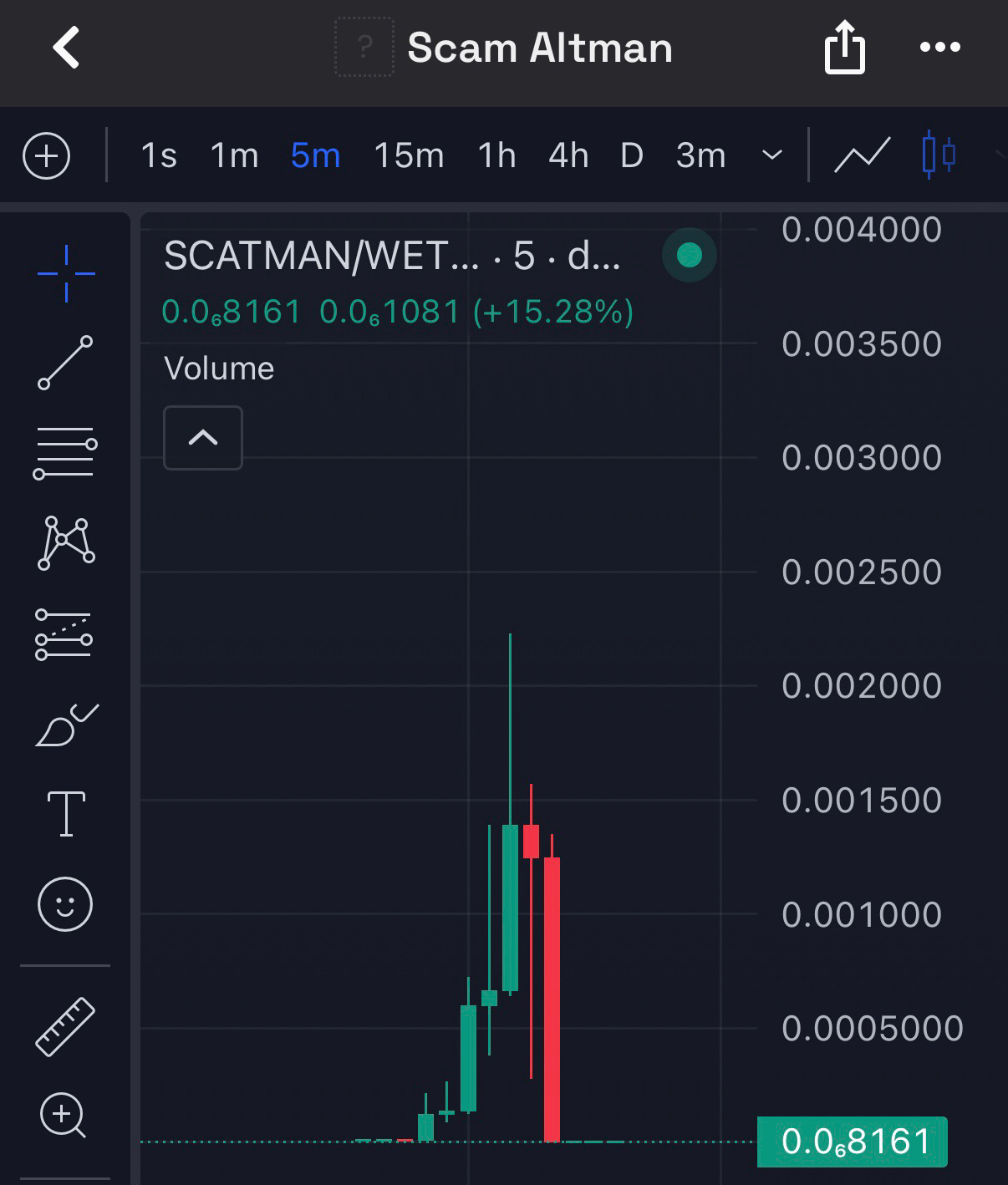


After the repost, the token's market capitalization was quickly pushed to around $2 million. At this point, the deployer immediately withdrew the liquidity pool, causing the Meme's price to plummet almost to zero. Currently, the related post has been deleted, and the original account Sam Catman that posted the Meme token has been suspended on X. As of now, SpaceXAI, Starlink, and X have not publicly responded to this incident.


It is worth noting that SCATMAN was not created through any token launch platform on Robinhood Chain. The contract was deployed by the developers themselves with initial liquidity injected, belonging to a typical self-deployed token scam. The attacker used the compromised accounts to attract traders and immediately executed a liquidity withdrawal.


According to on-chain monitoring platform Lookonchain's tracking, the hacker minted 10 trillion SCATMAN tokens after compromising the account and completed the sell-off through two associated wallets. One wallet exchanged the tokens for 59 ETH, worth approximately $108,000; the other wallet sold part of the tokens for 14.7 ETH, worth about $27,000.


It is reported that the origin of the SCATMAN token name is not without reason. The recent public feud between X platform owner Elon Musk and OpenAI CEO Sam Altman provided a high-traffic backdrop for the account compromise.
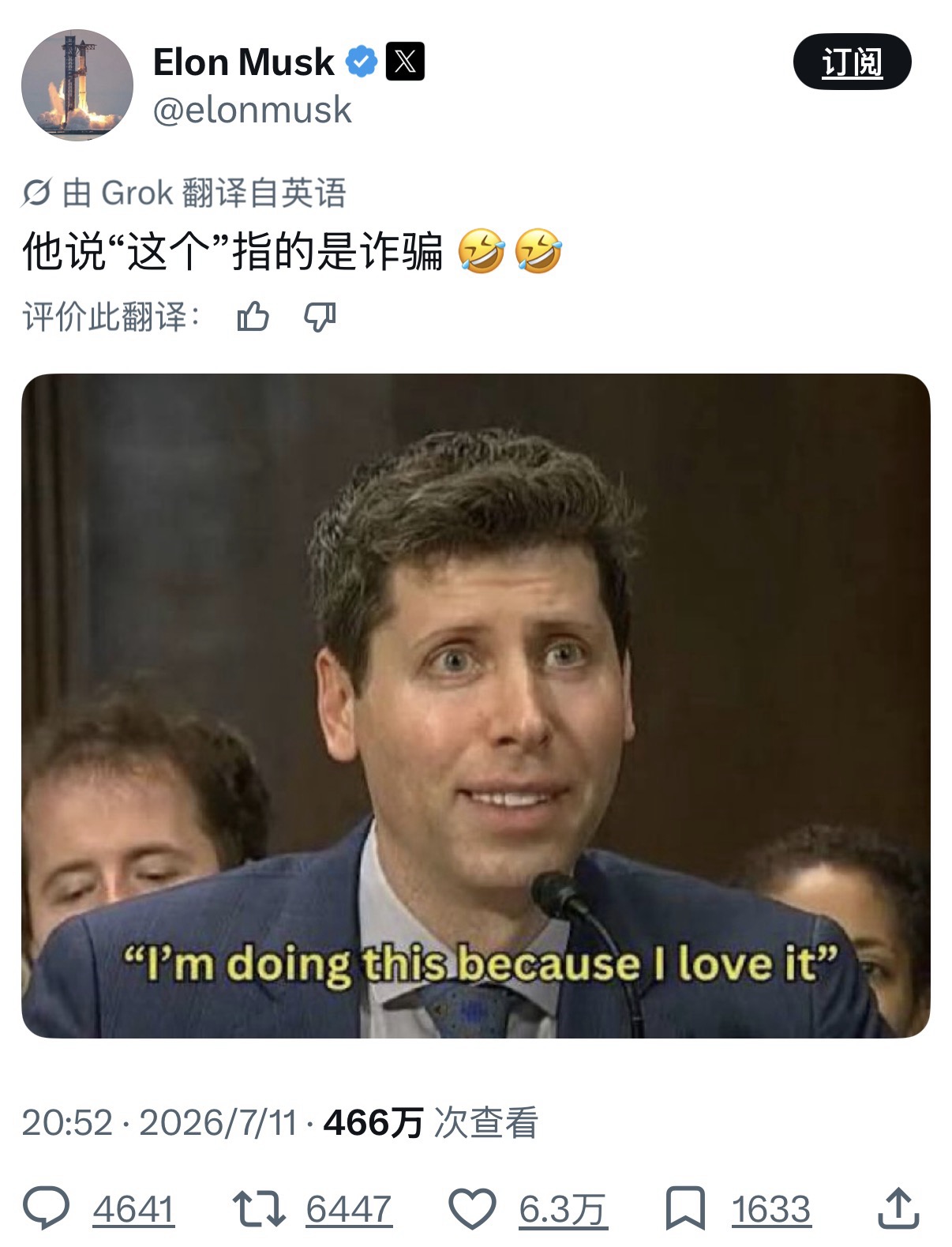


After Apple filed a trade secret theft lawsuit against OpenAI on July 10th, Musk continuously criticized Altman as a 'liar' on X, while Altman retaliated by mocking Musk for promoting space data centers. The massive number of controversial posts generated extremely high attention, making Musk-related accounts like SpaceXAI and Starlink high-value targets for attacks.


The attacker leveraged this wave of public opinion heat to compromise the accounts and used them to promote the SCATMAN token.


The incident of a SpaceX-owned platform being compromised to promote a Meme is not an isolated case; even Robinhood's founder fell victim.


Robinhood co-founder and CEO Vlad Tenev accidentally leaked 8 wallet seed phrase words during a livestream, and the remaining 4 words were reportedly guessed at random by a hacker. On July 12th, after gaining control of the address, the hacker used it to buy the Robinhood chain Meme token $1, triggering a wave of followers from many investors.


Since the transaction records showed the 'founder's address' buying, it prompted thousands of investors to follow suit. The token's market capitalization rapidly surged from around $500,000 to $14 million in a short time, with trading volume reaching approximately $20 million within two hours, before the price sharply corrected to around the $1 million market cap level.


Subsequently, Robinhood Chain's RPC node froze the involved address. Any transactions sent from this address could not be packaged by the node, preventing funds from being transferred or traded further. This handling method also sparked controversy. Some community members argued that Robinhood Chain, positioned as an Arbitrum-based Ethereum Layer 2 network, freezing addresses at the node level deviated from the decentralized nature of blockchain networks.


These two consecutive incidents, both in method, point to exploiting high-profile accounts or individuals to create short-term hype for on-chain tokens, then cashing out after retail investors enter the market.


Starting from July 8th, the Robinhood Chain Meme token CASHCAT began its rally, with intraday gains once exceeding 1000%, reaching a peak market cap of $220 million on July 11th. According to DefiLlama data, the chain's current Total Value Locked (TVL) is approximately $151 million, with a 24-hour decentralized exchange trading volume of $875 million and fee revenue of about $100,000.


On July 8th, Robinhood co-founder and CEO Vlad Tenev posted on X that Robinhood is building the Robinhood Chain focused on real-world assets (RWA), but the network is also 'great for meme coins.' This statement further fueled speculative enthusiasm.


Although Robinhood Chain positions itself with RWA as its long-term focus, currently its main traffic still comes from Meme token trading. Against this backdrop, the chain quickly became an ideal 'soil' for fraudsters to operate.


From the compromise of the official SpaceXAI account to the exploitation of the leaked founder's wallet, two major incidents within two days reflect how the popularity of Robinhood Chain is attracting a large number of fraudsters. They leverage celebrity influence, the halo of official accounts, and investors' tendency to chase trends to quickly generate short-term hype, then cash out rapidly after retail investors enter. This also highlights the shortcomings in Robinhood Chain's early-stage rapid development, particularly in terms of ecosystem infrastructure and user protection mechanisms.


Simultaneously, the X platform, as a crucial medium for information dissemination, showed明显不足 (obvious inadequacies - note: original Chinese phrase retained but translation contextually implied) in security protection capabilities for high-value accounts. This allowed the two official accounts of SpaceXAI and Starlink, with millions of followers, to become channels for distributing scam information, directly converting the platform's immense traffic and user trust into amplifiers for fraud. The platform also did not issue any official response after this incident.


For ordinary investors, before chasing trends, verifying token contract addresses, confirming liquidity pool lock status, and maintaining vigilance towards narratives of 'official endorsement' remain the most basic lines of defense to avoid becoming exit liquidity.

Trending Cryptos

Related Questions

QWhat were the two major incidents related to scams on Robinhood Chain mentioned in the article?

AThe first incident involved the hacking of SpaceX's SpaceXAI and Starlink X accounts to promote the meme token SCATMAN, leading to a rug pull. The second incident involved a hacker gaining control of Robinhood co-founder Vlad Tenev's wallet after a seed phrase leak, using it to buy the meme token $1 and pump its price.

QHow did the attack on the SpaceX-related X accounts contribute to the SCATMAN token scam?

AThe attacker compromised the high-follower SpaceXAI and Starlink X accounts to post promotional content for the SCATMAN token. This misuse of trusted, high-visibility accounts created a surge of interest and buying activity, allowing the deployer to quickly drain the liquidity pool and abandon the token.

QWhat controversial action did Robinhood Chain take in response to the hacked founder's wallet incident?

ARobinhood Chain's RPC nodes froze the compromised wallet address, preventing any transactions from being processed. This action sparked debate within the community, as it was seen as a centralized intervention that contradicts the decentralized principles of a blockchain network.

QWhat does the article suggest is the main source of current activity and traffic on Robinhood Chain?

AAlthough positioned for Real World Assets (RWA), the article states that the primary traffic and activity on Robinhood Chain currently comes from meme token trading, which has attracted both legitimate interest and fraudulent actors.

QWhat basic precautions does the article recommend for investors to avoid scams in meme token frenzies?

AThe article advises investors to verify a token's contract address, confirm the lock status of its liquidity pool, and maintain a healthy skepticism towards narratives of 'official endorsement' before chasing a trending meme token.

Related Reads

The Verdict in Choi Tae-won's Divorce Case: Revealing the Inheritance Undercurrent Behind SK Hynix's Trillion-Won Empire

SK Group Chairman Chey Tae-won's high-profile divorce case, involving a record 1.38 trillion won settlement, has drawn attention to the succession plans for Korea's second-largest conglomerate, especially its crown jewel, SK hynix. Unlike traditional chaebol scripts centered on the eldest son, Chey's three children from his marriage to former President Roh Tae-woo's daughter, Roh Soh-yeong, are carving distinct, non-traditional paths. Eldest daughter Chey Yun-jung (b. 1989) is seen as the most evident successor. With a scientific and consulting background, she holds executive roles at SK bioscience and SK Inc.'s growth support department, focusing on future strategy and biopharma. Her marriage is to an AI infrastructure entrepreneur, not a traditional business alliance. Second daughter Chey Min-jung (b. 1991) took a unique route, voluntarily serving as a South Korean naval officer, including an anti-piracy deployment. She later worked on policy and strategy for SK hynix in Washington D.C. before co-founding an AI-driven healthcare startup. She married a former U.S. Marine Corps officer, connecting her to U.S. defense and policy circles—networks crucial for a global semiconductor giant. The only son, Chey In-geun (b. 1995), who studied physics like his father, worked briefly at SK E&S before joining McKinsey. Despite fitting the traditional "heir" profile as the eldest son, he remains silent and holds no public position or shares in SK, suggesting the old succession playbook is obsolete. As SK hynix's valuation soars, becoming a geopolitical asset in the AI era, the heirs' legitimacy is no longer automatic. They must prove themselves in fields like AI biotech, global policy, and strategic consulting. Their marriages also reflect new elite networks in tech and defense, not old political alliances. Their inheritance is the complex challenge of navigating a globalized, tech-driven world, not just a corporate throne.

marsbit14h ago

The Verdict in Choi Tae-won's Divorce Case: Revealing the Inheritance Undercurrent Behind SK Hynix's Trillion-Won Empire

marsbit14h ago

From OpenSea to OpenRouter: Is Alex Atallah Repeating His 'Exit at the Peak' Playbook?

From OpenSea to OpenRouter: Is Alex Atallah Repeating His "Exit at the Peak" Playbook? According to the Wall Street Journal, payments giant Stripe is in talks to acquire the AI model aggregation platform OpenRouter in a potential deal valuing the company near $100 billion. This would mark founder Alex Atallah's second creation of a company reaching a $100 billion valuation, following his co-founding of NFT marketplace OpenSea. OpenRouter, founded just over three years ago, has grown rapidly by acting as a unified gateway for developers to access over 400 AI models. It currently has about 10 million users and processes over 200 trillion tokens monthly. While the platform's annualized revenue is around $50 million, its valuation has skyrocketed from $1.3 billion in March 2026. The potential acquisition by Stripe, a company OpenRouter's founder once likened it to, represents a major expansion into AI infrastructure for the payments leader. This move echoes Atallah's previous timing with OpenSea, where he departed before the NFT market's significant downturn. For OpenRouter, selling now may be strategic. Despite its scale, its business model—charging a 5-5.5% fee on AI inference calls—faces pressure from competition, open-source models, and potential price wars among model providers, limiting its profitability narrative for an IPO. A key asset for potential acquirers like Stripe is OpenRouter's vast repository of real-world AI usage data, which offers unique insights into model performance and developer preferences that are difficult to replicate. Whether this potential deal signifies a new valuation benchmark for AI infrastructure or another market peak signal remains to be seen.

链捕手14h ago

From OpenSea to OpenRouter: Is Alex Atallah Repeating His 'Exit at the Peak' Playbook?

链捕手14h ago

Trading

Spot

Hot Articles

Discussions

Welcome to the HTX Community. Here, you can stay informed about the latest platform developments and gain access to professional market insights. Users' opinions on the price of MEME (MEME) are presented below.

活动图片