Ethereum whales add $20.6M in ETH – Is $2,000 within reach?

ambcryptoPublished on 2026-07-12Last updated on 2026-07-12

Abstract

Ethereum (ETH) has reclaimed and held the $1,800 price level. Despite struggles to maintain a clear uptrend, large-scale investors, or "whales," are actively accumulating. On-chain data reveals two significant whale purchases totaling 11,306 ETH, worth approximately $20.59 million. This accumulation aligns with broader market signals showing sustained demand: exchange netflows have been negative for eight consecutive days—the longest streak this year—indicating more ETH is being withdrawn from exchanges than deposited. Consequently, the available supply on exchanges has decreased, with the Exchange Supply Ratio hitting a three-week low. The Relative Strength Index (RSI) remains above 50, supporting a bullish momentum. For ETH to target the $2,000 level, it must maintain its position above the short-term moving average at $1,778. Continued accumulation and controlled supply could pave the way for further price appreciation.

Ethereum [ETH] reclaimed the $1,800 level and has held this level for three straight days. At press time, Ethereum was trading around $1,807 after rising slightly by 0.26% on the daily charts.

As the price steadies, high-net-worth investors have seized the opportunity to increase their positions.

Ethereum whales continue to accumulate

Even as Ethereum struggles to maintain its trend, whales have continued to purchase at every price level.

According to Lookonchain, a whale withdrew 4.948k ETH worth $9.01 million. Following the recent purchase, the whale’s ETH holdings increased to 49,407 ETH, worth $84.3 million.
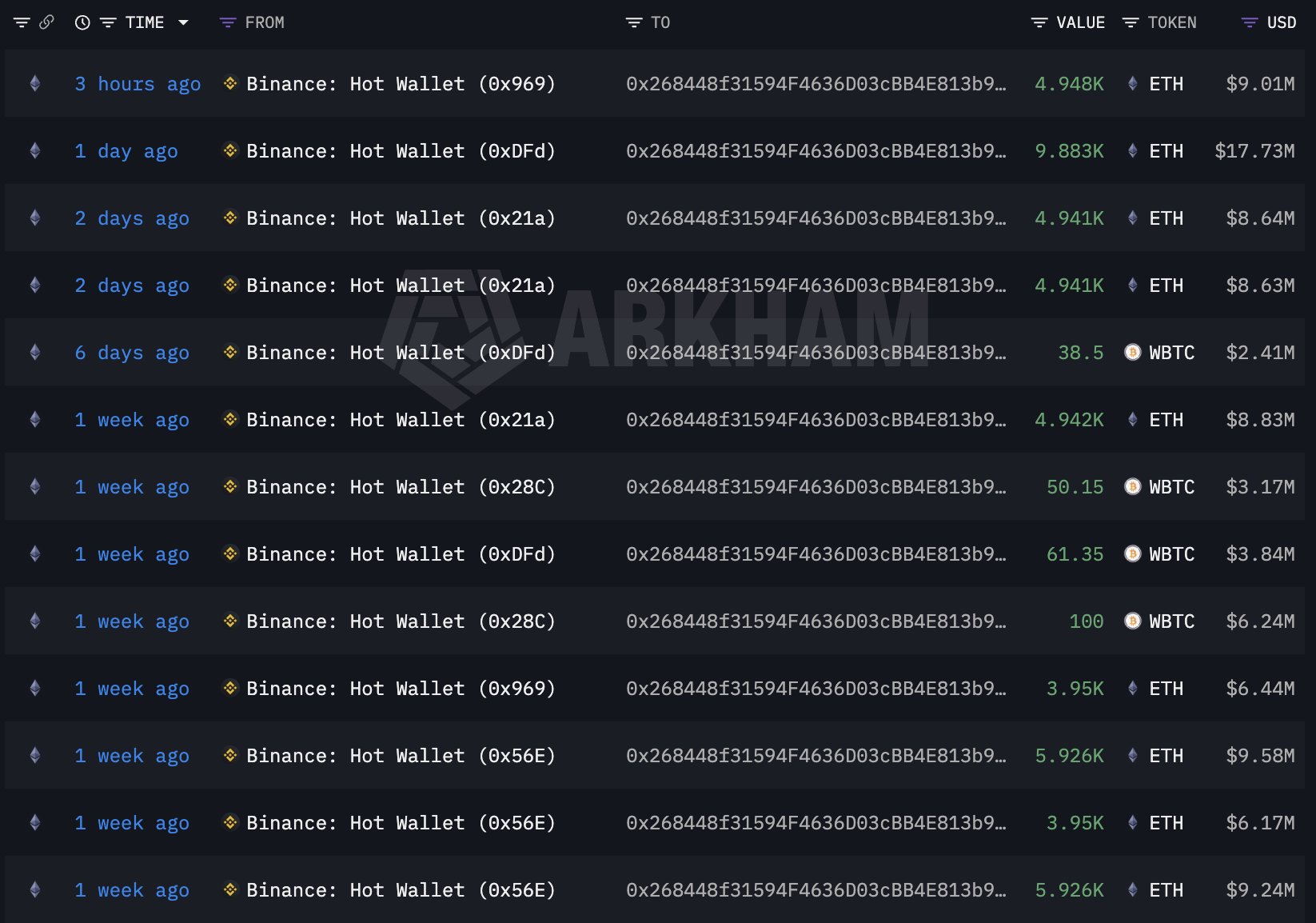
Source: Lookonchain

Additionally, Onchain Lens reported another whale accumulating ETH. According to the on‐chain monitor, two wallets likely linked to the same entity purchased 6,358 ETH worth $11.59 million. In total, these two whales purchased 11.306k ETH worth $20.59 million.

When whales continue to accumulate and the market signals recovery, it indicates strong confidence in the market. Thus, these whales are betting on continued price recovery and subsequent gains on the price charts.

Is ETH’s market demand on the rise?

Incentivized by whales, demand seems to have recovered significantly across all market participants. A look at CryptoQuant’s Exchange Netflow data shows strong market accumulation.

As a result, the Exchange Netflow has remained negative for eight consecutive days, marking the longest negative streak YTD. A sustained period of negative net flow suggests that buyers have gained significant control and effectively displaced sellers.
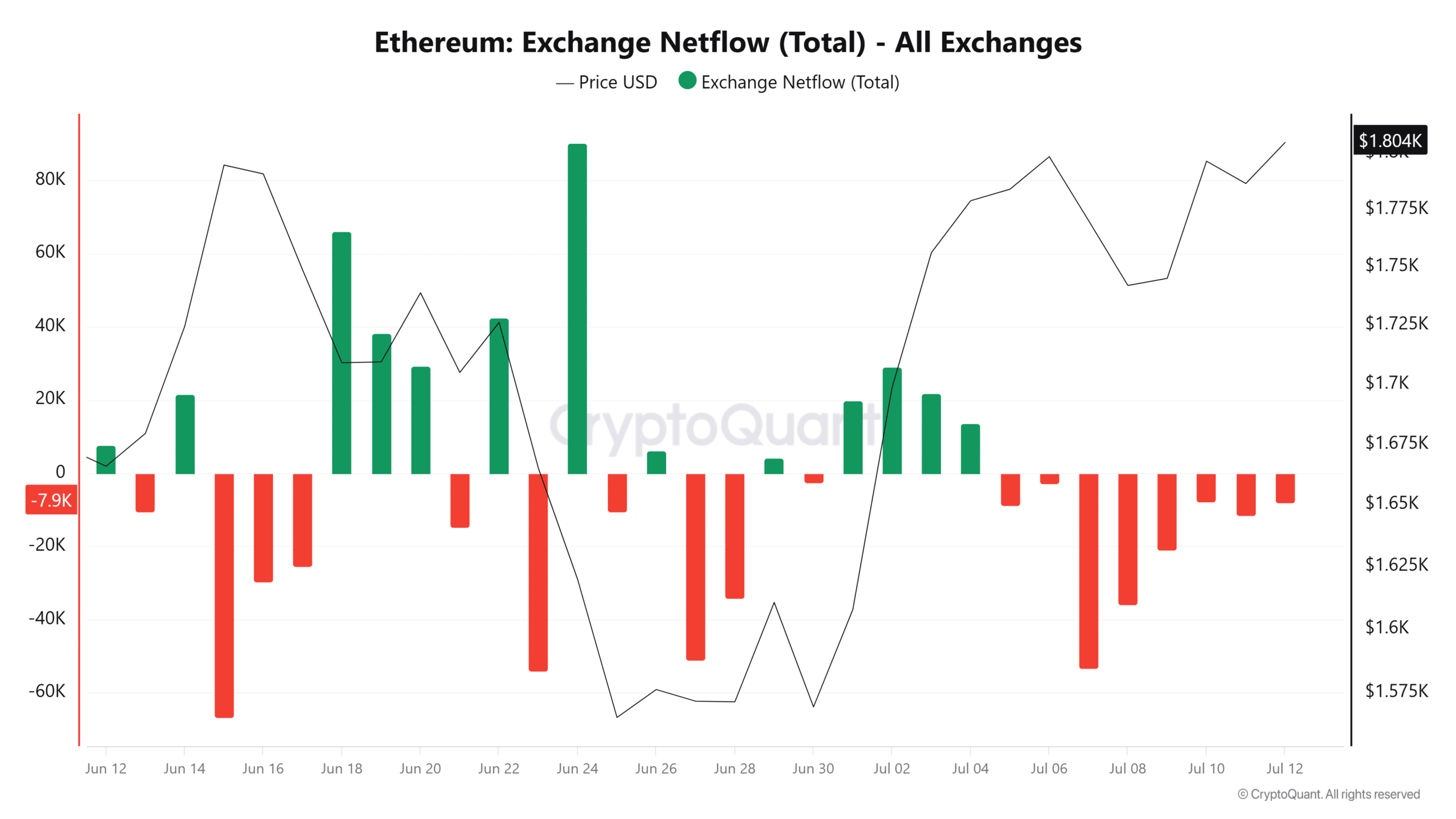
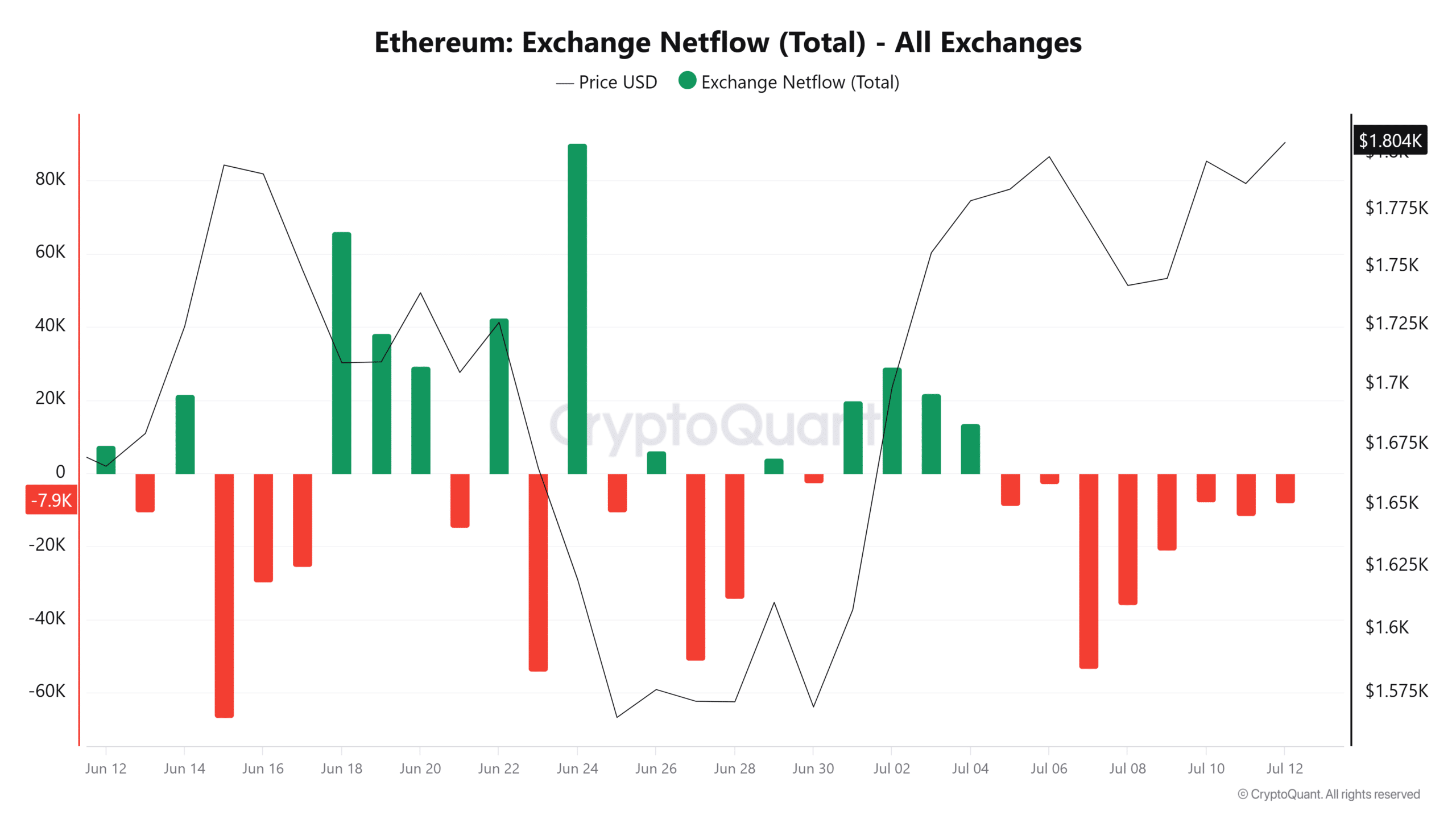
Source: CryptoQuant

As a result of these continued exchange outflows, scarcity has increased significantly, while supply available for immediate sale has declined.

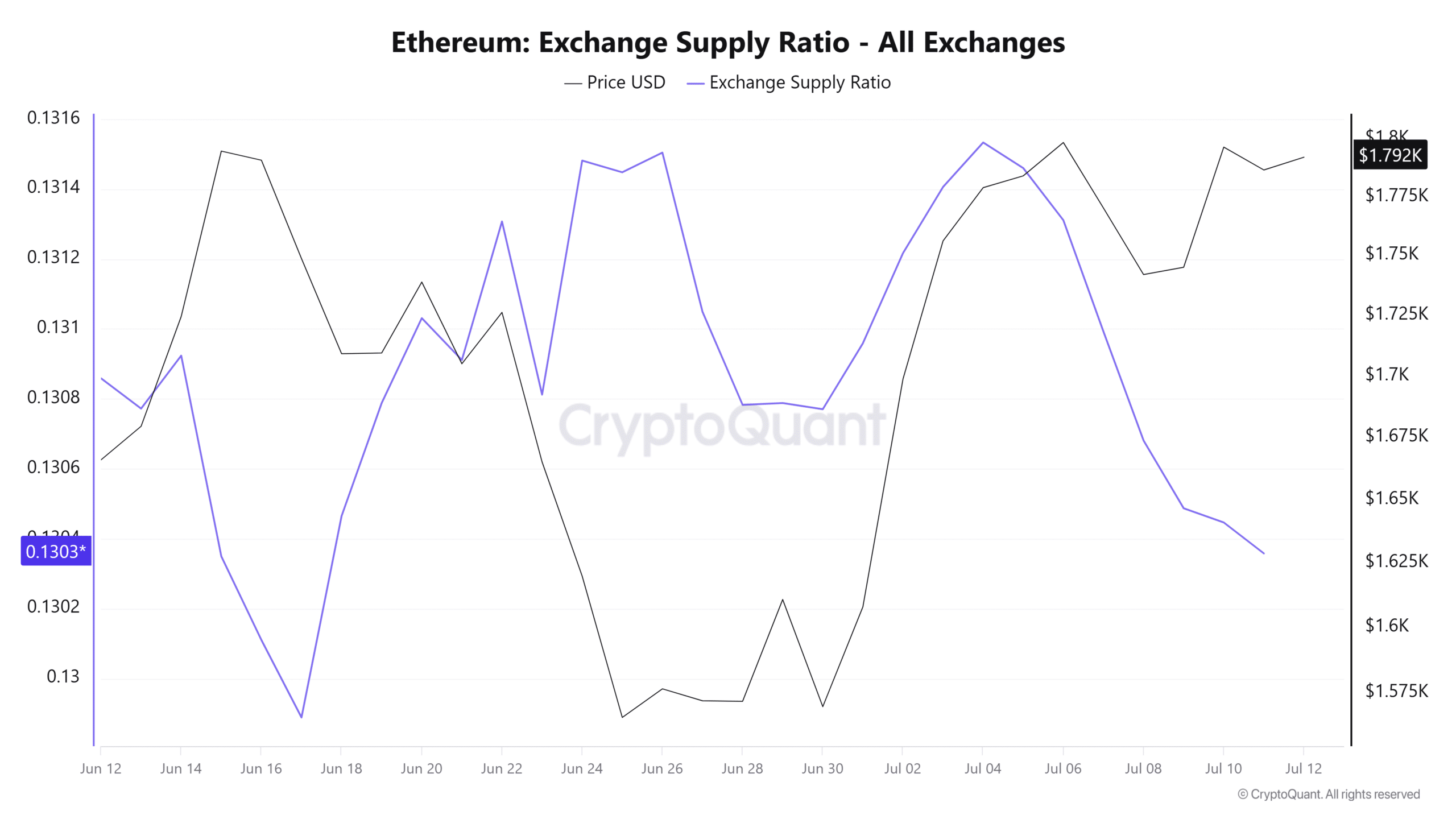
In fact, the altcoin’s Exchange Supply Ratio (ESR) declined to a three-week low of 0.13 as of writing. A drop in ESR indicates that fewer Ethereum tokens are entering exchanges than leaving them.
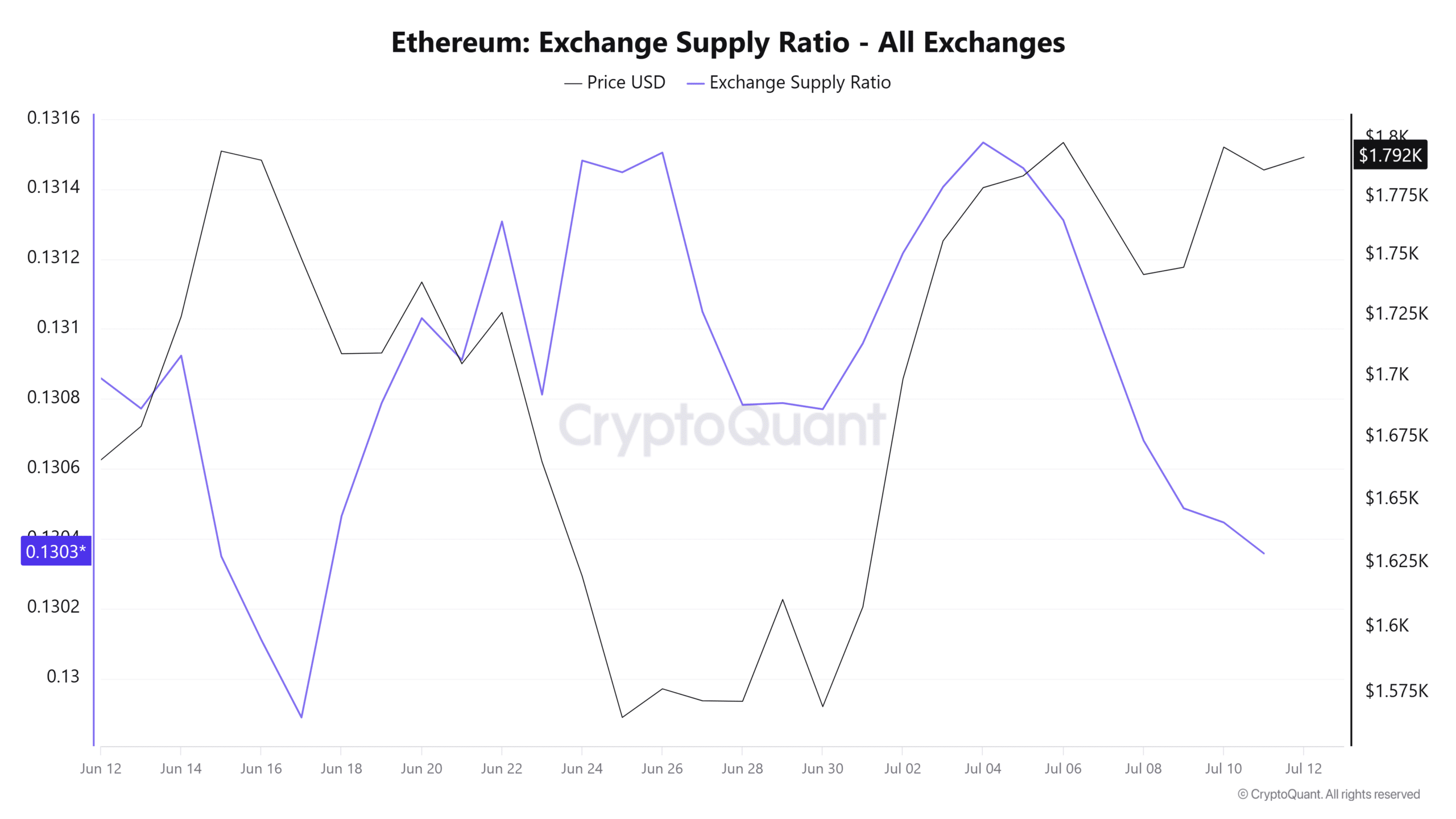
Source: CryptoQuant

Historically, such a setup on exchanges has preceded greater price appreciation for Ethereum.

Can ETH sustain its momentum?

Ethereum has struggled to maintain an uptrend, but the market seems to be recovering for all market participants.

As a result, the altcoin’s Relative Strength Index (RSI) has remained above 50 for the past eight days. The RSI’s upward trajectory coincides with a shift in exchange activity, suggesting a demand-driven surge.
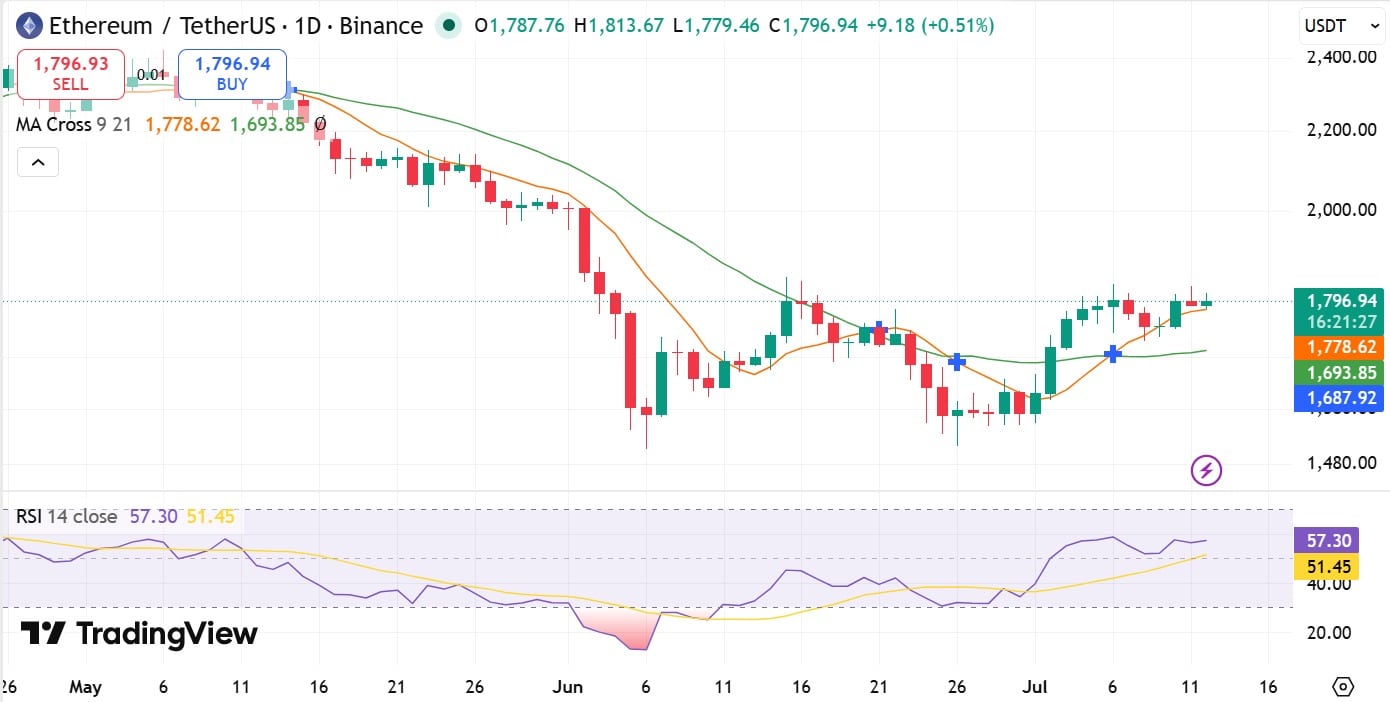
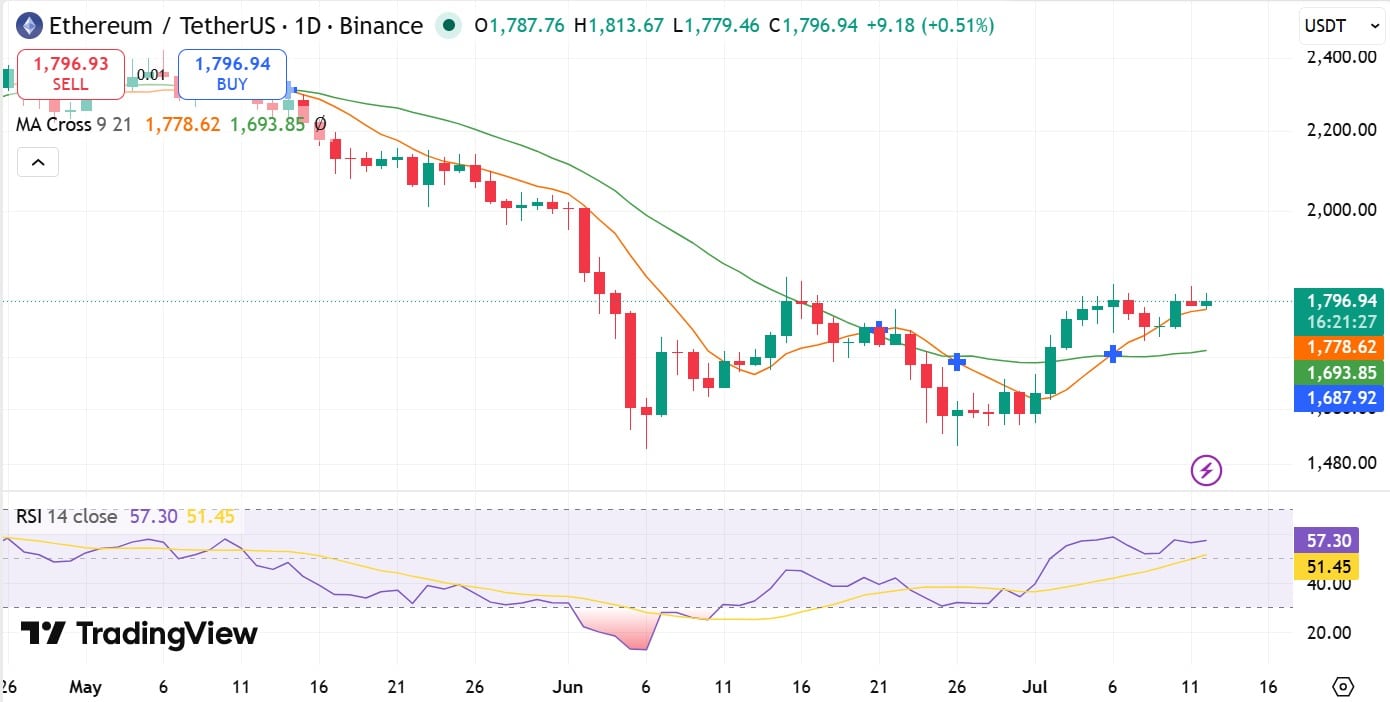
Source: TradingView

Often, when this indicator holds strongly while market demand is strong, ETH tends to make gains. Therefore, if the accumulation persists, traders could see Ethereum hold $1.8k and target $2,000.

However, the altcoin must close above its short-term Moving Average at $1,778 to keep this bullish structure alive. Failure to do so could lead to another price drop.


Final Summary

  • Ethereum whales continue to accumulate ETH, as two whales added 11.306k ETH worth $20.59 million.
  • ETH continues to hover around $1.8k, as bulls show significant control of the market.

Trending Cryptos

Related Questions

QAccording to the article, what is the total value of Ethereum (ETH) accumulated by the two whales mentioned?

AThe two whales accumulated a total of 11,306 ETH worth $20.59 million.

QWhat does a sustained negative Exchange Netflow for eight consecutive days indicate about the Ethereum market?

AA sustained negative Exchange Netflow indicates that buyers have gained significant control, effectively displacing sellers, and suggests strong market accumulation.

QWhat key price level must Ethereum close above to maintain its bullish structure, according to the analysis?

AEthereum must close above its short-term Moving Average at $1,778 to keep the bullish structure alive.

QWhat recent trend in Ethereum's Exchange Supply Ratio (ESR) is highlighted, and what does it signify?

AEthereum's Exchange Supply Ratio (ESR) declined to a three-week low of 0.13. This signifies that fewer ETH tokens are entering exchanges than leaving them, increasing scarcity.

QWhat is the primary market signal that, combined with strong demand, suggests Ethereum could target $2,000?

AThe primary signal is the Relative Strength Index (RSI) remaining above 50 for eight days alongside strong market demand and accumulation, suggesting potential gains toward $2,000.

Related Reads

The Clarity Act's Journey Through Congress: The Thorny Path of Bipartisan Compromise in the U.S.

The U.S. Congress is struggling to advance the crypto market structure bill known as the Clarity Act, with bipartisan compromise proving difficult. Key hurdles include unresolved disputes over "yield" products and, more critically, the inclusion of strong ethics provisions for elected officials—a non-negotiable demand for many Democrats. While a compromise on yield was reached in May, securing only limited Democratic support in committee, the separate Senate Agriculture Committee version later passed with no Democratic votes due to the ethics impasse. As Republicans push for a full Senate vote in July, demands for ethics rules have expanded, and other contentious issues like developer protections and concerns from law enforcement and large banks further complicate negotiations. Despite consensus on the need for legislation, the path forward is unclear. Recent discussions between senators and White House officials aim to find acceptable ethics language. Some lawmakers question whether a compromise text can garner enough bipartisan support, with one Democrat stating the current proposal lacks the strong ethics provisions required for their vote. Potential short-term goals for the crypto community include symbolic Senate action before the August recess, a longer-term aim for passage by 2026, or establishing a detailed framework that addresses ethics and other compromises. The process remains arduous, relying on the traditional, vote-by-vote effort to build bipartisan support.

marsbit11m ago

The Clarity Act's Journey Through Congress: The Thorny Path of Bipartisan Compromise in the U.S.

marsbit11m ago

Are Kalshi and Polymarket Founders at Odds? This Business Rivalry Is More Brutal Than You Think

"The Rivalry Between Kalshi and Polymarket Founders Turns Bitter and Litigious" The intense feud between Tarek Mansour, CEO of Kalshi, and Shayne Coplan, founder of Polymarket, has escalated far beyond typical business competition into personal animosity and regulatory battles. Both lead billion-dollar prediction market platforms, but their approaches differ sharply. Kalshi positions itself as the compliant operator, securing U.S. regulatory approval before launching. In contrast, Polymarket initially operated offshore, allowing U.S. users to access its platform via VPN, which drew regulatory scrutiny. The conflict reached a peak in November 2024 when FBI agents raided Coplan's New York apartment. While Coplan publicly blamed political motives, his team privately suspected Kalshi was involved. According to sources, Kalshi's lawyers had previously reported Polymarket's operations to federal prosecutors, highlighting its accessibility to U.S. users despite a ban. This incident fueled mutual accusations and underhanded tactics, including social media smear campaigns and attempts to sabotage each other's major business deals. Their rivalry also played out in Washington, influencing regulatory debates. Kalshi actively lobbied against Polymarket's practices, framing them as illegal and unethical. Polymarket, after facing a CFTC fine and investigation, later acquired a licensed U.S. firm to launch a domestic app, regaining a foothold. Despite the hostility, both companies have seen massive growth, with combined trading volumes soaring. However, increased regulatory scrutiny, particularly around insider trading on Polymarket's platform, continues to pose challenges. The founders' deep-seated mutual disdain ensures their battle for market dominance remains as much a personal vendetta as a commercial one.

marsbit20m ago

Are Kalshi and Polymarket Founders at Odds? This Business Rivalry Is More Brutal Than You Think

marsbit20m ago

Bank of America Quietly Positions: Could $6 Trillion in Bank Deposits Flow into Stablecoins?

Bank of America (BofA) is making strategic moves in digital assets, appointing senior leaders to advance a platform covering stablecoins, tokenized deposits, custody, and crypto settlement. This comes amid a broader discussion about the potential migration of trillions in bank deposits to stablecoins. A cited TBAC report estimated up to $6.6 trillion in transactional deposits could be at risk of moving to stablecoins long-term, a point BofA's CEO previously conditioned on stablecoins being allowed to pay interest. The regulatory landscape is evolving, with the GENIUS Act setting a final implementation deadline for January 2027. Major banks, however, are not waiting; JPMorgan, Citi, BofA, and others are already developing tokenized deposit networks and services. Industry observers note that while retail crypto trading is sluggish, institutional adoption of stablecoins for real-world use cases is driving growth. Despite the activity, some analysts remain cautious, noting banks have a long history of blockchain announcements and that true structural change is slow. The stablecoin market itself has seen a recent dip from its peak. Optimistic projections, however, foresee significant growth, with stablecoin settlement volume already reaching $33 trillion in 2025. The race is on for the post-January 2027 landscape, where regulatory clarity is expected to accelerate the fusion of traditional finance and crypto.

marsbit25m ago

Bank of America Quietly Positions: Could $6 Trillion in Bank Deposits Flow into Stablecoins?

marsbit25m ago

Trading

Spot

Hot Articles

Discussions

Welcome to the HTX Community. Here, you can stay informed about the latest platform developments and gain access to professional market insights. Users' opinions on the price of ETH (ETH) are presented below.

活动图片