2026年7月XRP价格预期如何?

ambcryptoPublished on 2026-06-30Last updated on 2026-06-30

Abstract

2026年6月26日,瑞波币(XRP)价格跌至1.009美元,接近1美元心理关口。尽管市场疲软,XRP现货ETF仍保持资金净流入,这可能收紧市场供应,但在整体承压的环境下未必能立刻推高价格。近期市场对XRP的需求不足,投机兴趣减弱,前景黯淡。 技术分析显示,XRP自2025年7月以来处于长期下跌趋势。近期虽在1.05美元附近短暂整理,但整体结构看跌。衍生品市场的未平仓合约量稳定在4亿XRP左右,换手率也维持在0.71,表明投机活动降温,市场趋于平静。 分析师指出,若未平仓合约和换手率突然飙升,可能预示波动加剧。从4小时图看,XRP的下跌趋势可能延续,下行目标看向0.975美元和0.854美元。 综上所述,随着七月到来,XRP价格跌破1美元的可能性很高。在缺乏积极催化剂的情况下,看跌动能可能推动价格在七月跌向0.85美元区域。投资者需警惕市场条件变化和潜在波动性上升。

6月26日周五,瑞波币 [XRP] 价格跌至 1.009美元,这是自2024年11月以来最接近心理关口 1美元 的水平。尽管市场疲软,XRP现货ETF的资金流入仍保持正值。

AMBCrypto 报道称,这种现货ETF需求正在收紧可用的XRP供应,但在当前紧张的市场条件下,这可能不会立即带来积极的收益。

近几个月来,更广泛市场对XRP需求的缺乏以及投机兴趣的减弱,都指向了前景黯淡。

XRP多头能否守住1美元,抵御后续抛售?

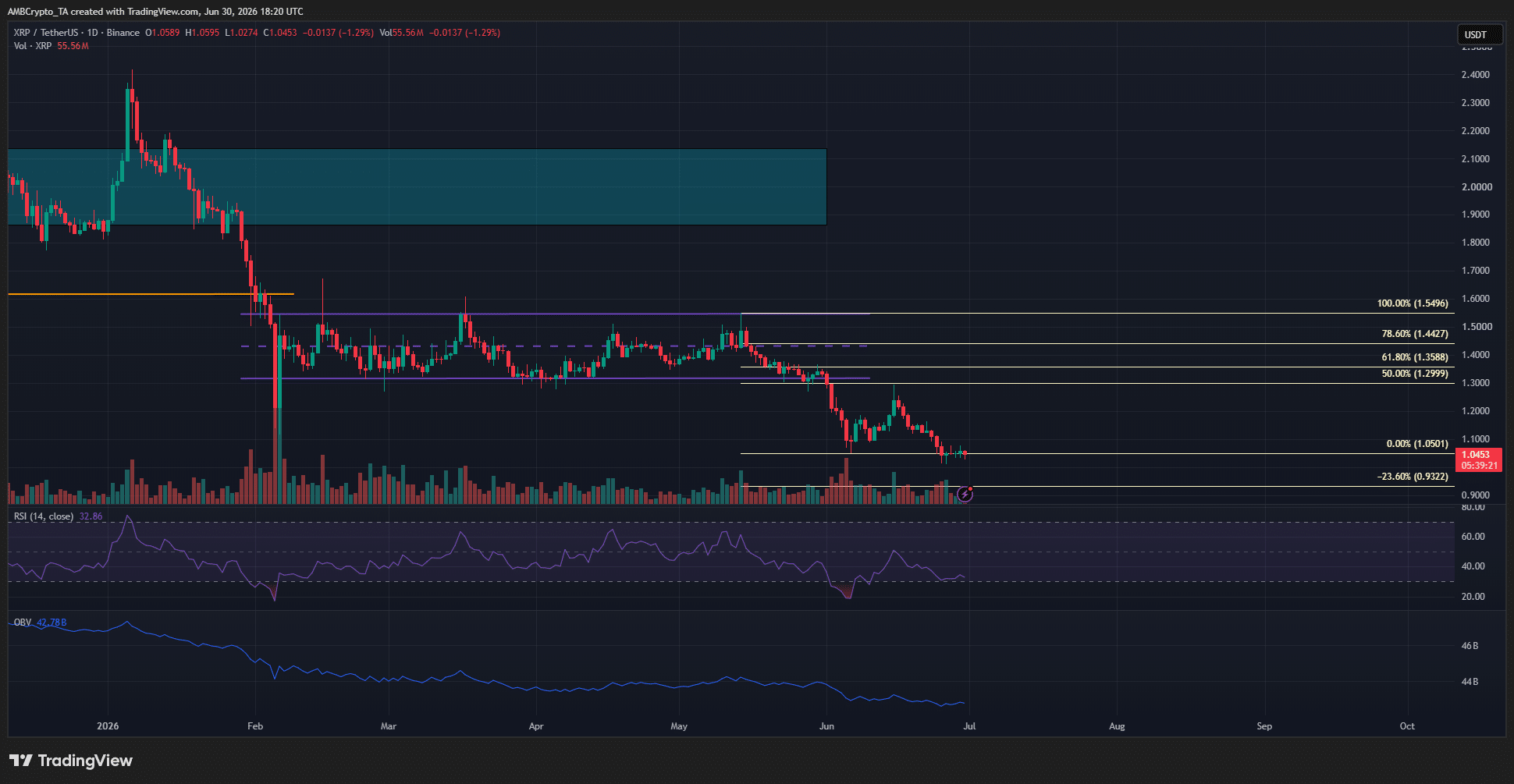
来源:TradingView上的XRP/USDT图表

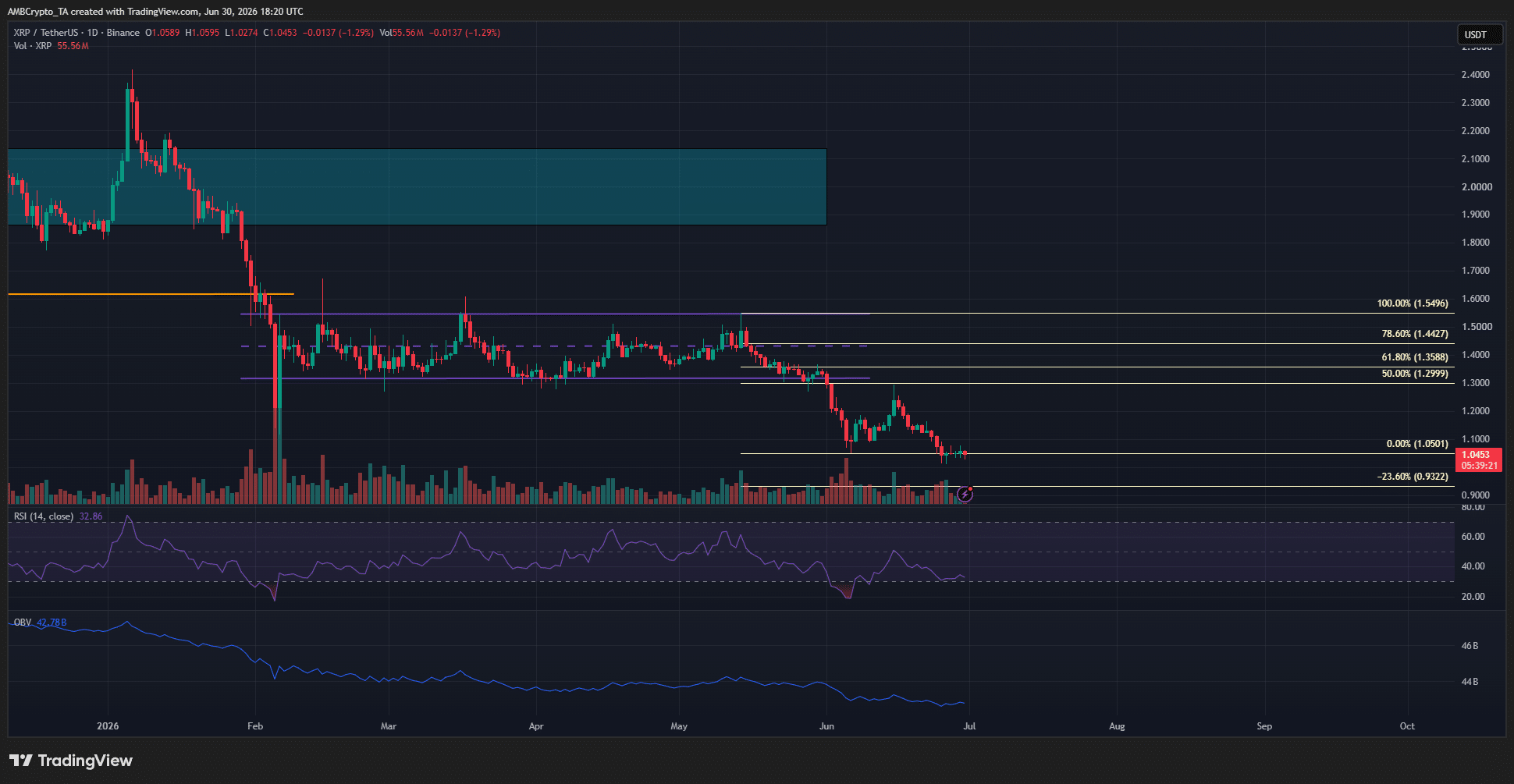
XRP的1日图显示,该山寨币正处于一个长期下跌趋势中。持续的下跌趋势可以追溯到 2025年7月。今年早些时候的2月份,2025年4月创下的 1.61美元 摆动低点被跌破,确认了看跌趋势。

几个月来,一直存在一个区间震荡形态 [紫色],但5月底的抛售对于多头来说过于猛烈,难以应对。在撰写本文时,在短暂反弹至 1.3美元 后,XRP价格正围绕 1.05美元 的局部低点上下波动。

XRP七月份的价格预期

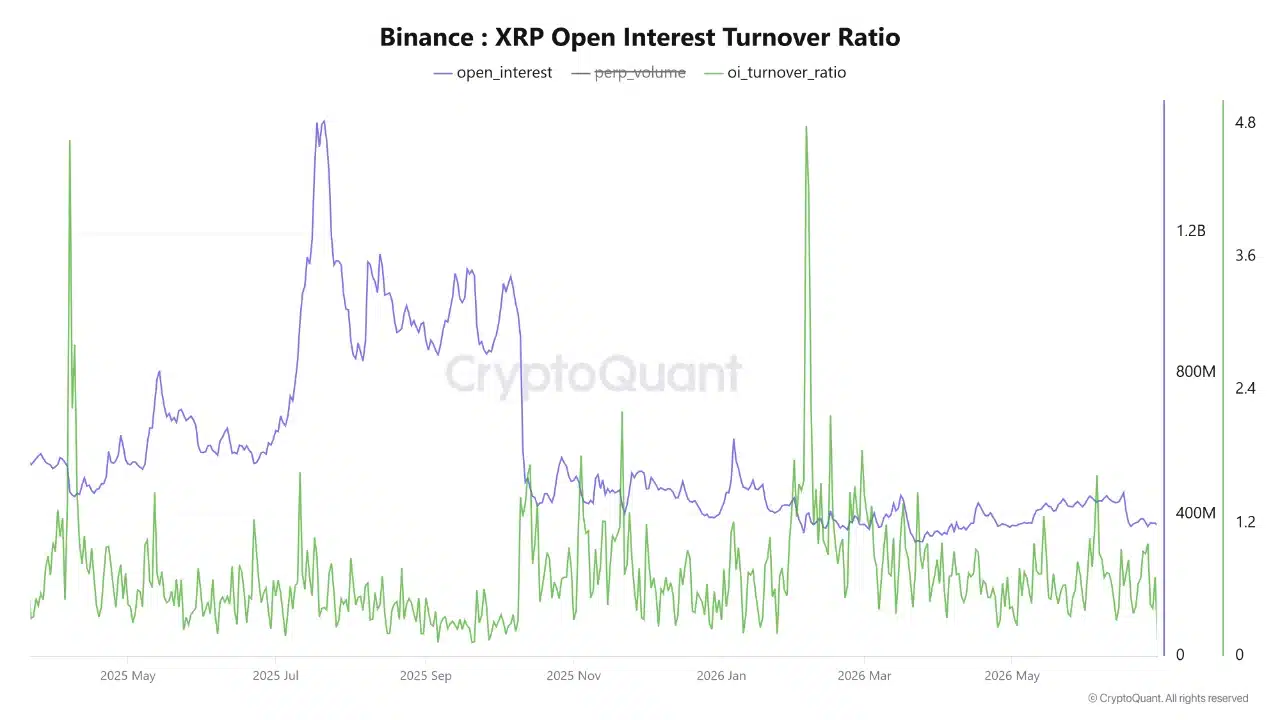
来源:CryptoQuant

近几个月来,未平仓合约量稳定在 4亿 XRP 左右。未平仓合约周转率也稳定在 0.71 附近。这两个指标均未出现剧烈波动,意味着投机市场更加平静和稳定。

衍生品交易员并不急于进行方向性押注,短期投机活动已经放缓。分析师 Arab Chain 写道,交易者可以利用未平仓合约量和周转率的飙升作为波动性增加的早期预警信号。

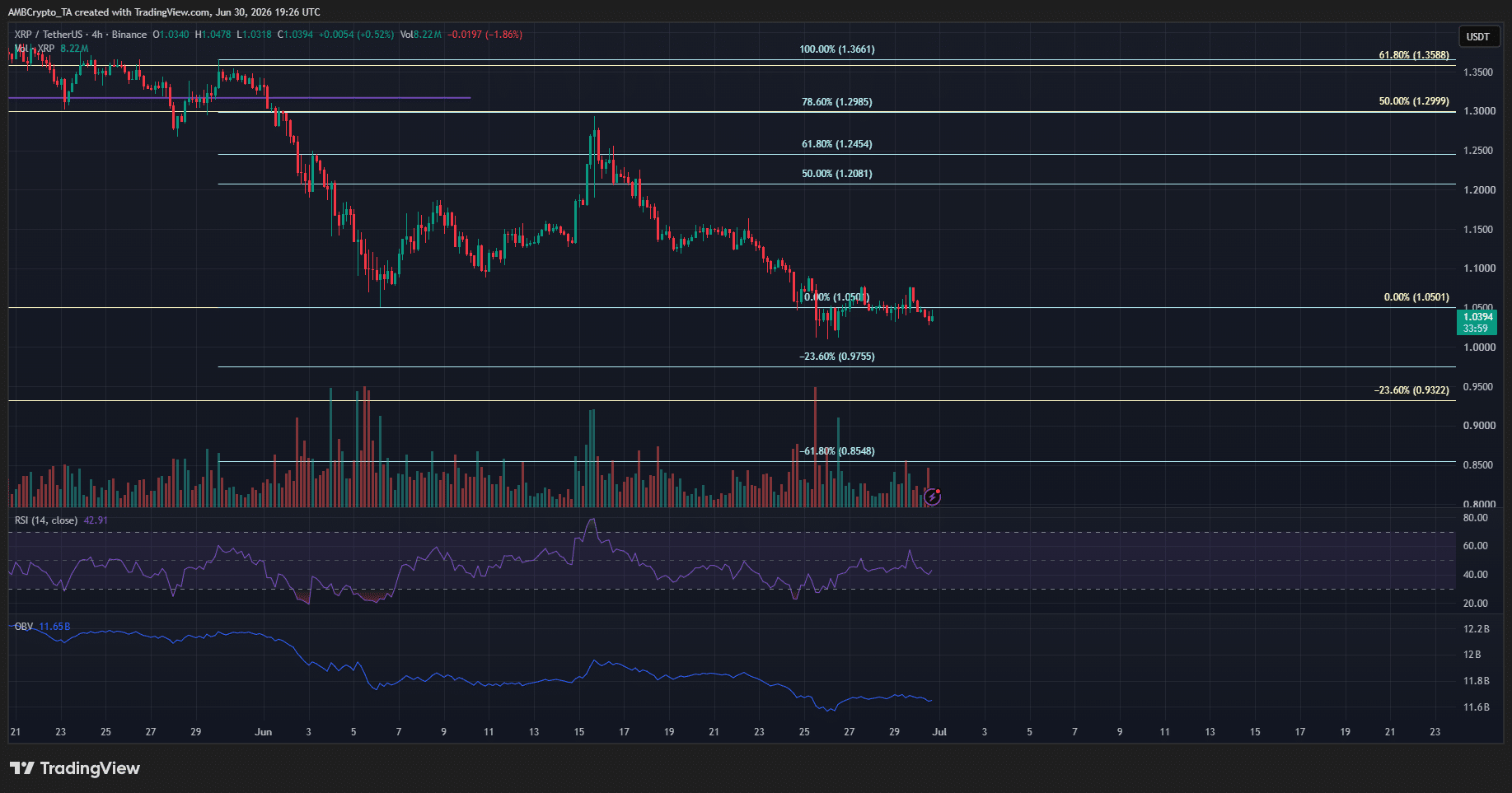
来源:TradingView上的XRP/USDT图表

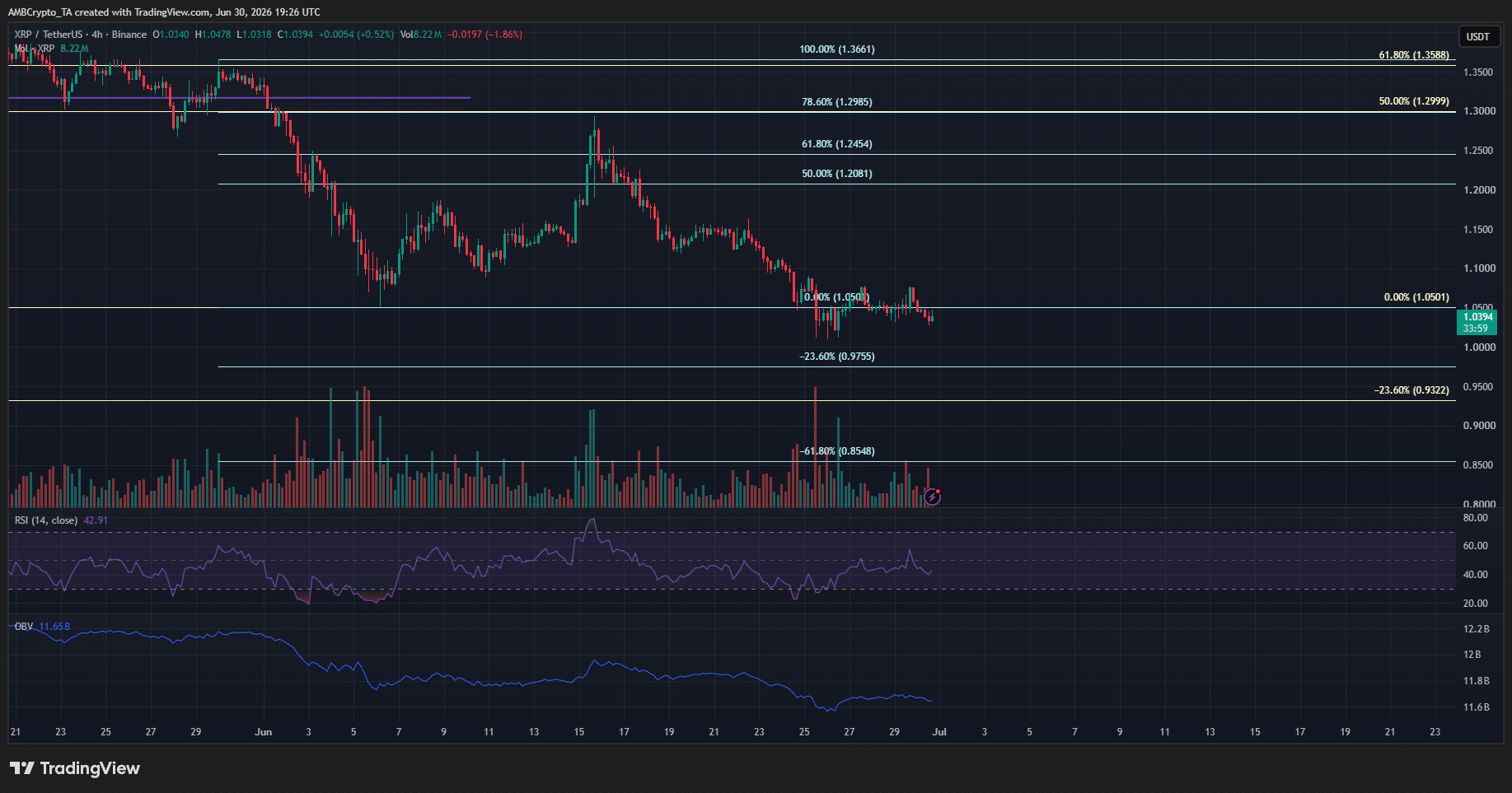
4小时图显示,XRP正处于下跌趋势中。6月中旬反弹至 1.2935美元,只是向 78.6% 斐波那契回调位 1.2985美元 的一次回撤。

这次反弹很快遭遇抛售,XRP即将向南方的扩展目标 0.975美元和0.854美元 延续其看跌走势。

因此,随着七月推进,瑞波币价格跌破 1美元 的可能性看起来非常高。


最终总结

  • 投机活动已经枯竭,衍生品市场更加平静,但交易者需要警惕条件的变化和波动性的加剧。
  • 根据现有证据,XRP的看跌势头和结构很可能导致价格在7月跌向0.85美元。

Trending Cryptos

Related Questions

Q文章提到XRP在2026年6月26日的价格是多少?

A文章提到,在2026年6月26日(星期五),瑞波币(XRP)价格跌至1.009美元。

Q根据文章分析,XRP在2026年7月的价格预期是怎样的?

A文章分析认为,随着7月的进展,XRP价格跌破1美元的可能性很高,且看跌势头和价格结构可能导致价格进一步跌向0.85美元。

Q文章中提到的"未平仓合约"(Open Interest)在近期稳定在什么水平附近?

A文章指出,XRP的未平仓合约(Open Interest)在最近几个月稳定在约4亿XRP的水平。

Q分析师Arab Chain建议交易者如何将未平仓合约和周转率作为预警指标?

A分析师Arab Chain表示,交易者可以将未平仓合约(OI)和周转率(Turnover Ratio)的突然飙升,作为市场波动性可能增加的早期预警信号。

Q文章指出XRP价格在2026年6月中旬反弹至哪个水平后迅速被抛售?

A文章指出,XRP价格在2026年6月中旬反弹至1.2935美元,这个位置接近78.6%斐波那契回撤位(1.2985美元),但此次反弹很快就被抛售了。

Related Reads

The Invisible Force in Bitcoin's Bear Market: Accelerating On-Chain Payments and Institutional Adoption

Amidst ongoing Bitcoin price volatility, the quiet acceleration of on-chain payments and tokenized trading holds significant importance for investors and policymakers, especially with legislation like the CLARITY Act on the horizon. Major traditional financial institutions adopting these technologies are driving crucial discussions on compliance, security, and transparency, which are vital for broader market adoption. Key developments are shaping this evolution. First, blockchain traceability is moving beyond a simple "public vs. private" debate. New frameworks aim to standardize how financial data from immutable ledgers is analyzed and interpreted, making it as crucial as standardized financial reporting for building institutional trust. Second, while traditional finance supports clear digital asset regulation, they emphasize that an asset's economic function should dictate its regulatory treatment, advocating for robust consumer protections over broad exemptions. Furthermore, the growth of on-chain deposits at regulated institutions signals a shift. Major banks are leveraging blockchain not to replace but to upgrade existing services—like deposits and cross-border settlements—with benefits like 24/7 operations and programmable treasury management. This trend focuses more on modernizing financial infrastructure than creating speculative assets. Despite market turbulence, these underlying advancements in on-chain infrastructure point toward a more robust foundation for the industry's future.

Foresight News5m ago

The Invisible Force in Bitcoin's Bear Market: Accelerating On-Chain Payments and Institutional Adoption

Foresight News5m ago

Crypto Payment Cards with $1.5 Billion Monthly Transaction Volume, Stuck in the 1990s

Monthly crypto payment card transaction volume has reached $15 billion, but the industry's development stage is comparable to debit cards in the 1990s, before they became a mainstream financial staple. A key limitation is the lack of established daily financial relationships, such as direct salary deposits and recurring bill payments, with crypto wallets. Despite annualized transaction volumes of approximately $18 billion, the market is concentrated and immature. The leading provider, RedotPay, commands over half the market share. User adoption is heavily skewed towards emerging markets like Bangladesh, India, and Nigeria, where access to USD and stable financial services is limited, rather than developed economies. The sector features four primary business models: 1) Card-issuing infrastructure providers, 2) Exchange-affiliated cards for user retention, 3) Decentralized wallet/DeFi cards with self-custody but high complexity, and 4) Stablecoin-focused digital banks, which dominate transaction volume by offering integrated financial services. The article argues that a pure payment functionality is insufficient for long-term success, mirroring the historical trajectory of traditional debit cards. Future winners will need to: 1) Control the upstream flow of funds, 2) Secure defensible niches in underserved markets, and 3) Most crucially, build core account relationships that integrate into users' daily financial lives. Without this evolution, crypto cards risk remaining niche prepaid tools rather than becoming universal financial infrastructure.

Foresight News35m ago

Crypto Payment Cards with $1.5 Billion Monthly Transaction Volume, Stuck in the 1990s

Foresight News35m ago

$7.8 Billion in Theft and Losses Reveals the Truth: Security Costs Have Become an Unavoidable Liquidity Tax for DeFi

"7.8 Billion in Thefts Reveals the Truth: Security Costs Have Become DeFi's Unavoidable 'Liquidity Tax'" A summary of Q2 2026 data reveals that security risks are now a fundamental capital cost in DeFi, directly impacting user returns and liquidity decisions. DeFiLlama recorded 88 hacking incidents with quantified losses totaling $780.3 million in Q2. April was the worst month with $644.8 million lost. DeFi protocol attacks accounted for $735.8 million, while cross-chain bridge exploits resulted in $354.4 million in losses (note: some event categorizations overlap). Cumulatively, DeFi hacks have reached $7.85 billion, with bridge losses at $3.26 billion. The quarter highlighted two primary risk categories: high-value infrastructure vulnerabilities (e.g., bridges, oracles, admin keys) causing massive single losses, and more frequent contract logic bugs. This signals a critical market shift: from post-incident analysis to preemptive pricing of risk. Users and liquidity providers now implicitly factor in the security of the entire asset pathway—not just pool APY—into their decisions. This hidden "risk premium" manifests through wider spreads, higher liquidity incentives, and capital migration towards perceived safer routes. Cross-chain bridge risks, responsible for over $353 million in Q2 losses, exemplify this change. Asset routing credibility is now part of the transaction. Following incidents like KelpDAO and THORChain, markets are demanding safer bridges, asset insurance, and clearer risk disclosure, increasing the cost of capital for riskier pathways. Consequently, security spending is transforming from a defensive cost into a core distribution cost for attracting liquidity. Protocols must invest more in audits, bug bounties, real-time monitoring, and insurance to remain competitive. Users are increasingly demanding transparency about fund flow paths, associated risks, and contingency plans. The key indicators for the industry's direction will be whether capital continues consolidating in trusted channels, if projects delay launches for enhanced audits, if insurance premiums rise, and if aggregators start displaying security risk metrics. Q2 2026 may be remembered not just as a bad period, but as the point when DeFi underwent a fundamental asset risk repricing, where security became a persistent,隐性 tax on all on-chain activity.

Foresight News1h ago
$7.8 Billion in Theft and Losses Reveals the Truth: Security Costs Have Become an Unavoidable Liquidity Tax for DeFi

Foresight News1h ago

Trading

Spot

Hot Articles

Discussions

Welcome to the HTX Community. Here, you can stay informed about the latest platform developments and gain access to professional market insights. Users' opinions on the price of S (S) are presented below.

活动图片