Cuatro años después del colapso de Terra, el ex CEO de Hodlnaut enfrenta cargos por fraude en un tribunal de Singapur

bitcoinistPublished on 2026-05-26Last updated on 2026-05-26

Abstract

El exdirector ejecutivo de la plataforma de préstamos cripto Hodlnaut, Zhu Juntao, fue acusado de fraude en un tribunal de Singapur el 26 de mayo de 2026, casi cuatro años después del colapso de Terra/LUNA que desencadenó un déficit de 193 millones de dólares. Según la policía, Zhu supuestamente ordenó a empleados hacer declaraciones falsas en mayo-julio de 2022, afirmando que la plataforma no tenía exposición directa a UST ni había sufrido pérdidas por la caída de Terra. Sin embargo, documentos judiciales revelaron que Hodlnaut perdió casi 190 millones en el ecosistema Terra, desmintiendo las declaraciones. La plataforma suspendió retiros en agosto de 2022 y fue liquidada por orden judicial. Zhu declaró su inocencia y se programó una conferencia previa al juicio para junio de 2026.

Zhu Juntao, cofundador y ex Director Ejecutivo de la ya desaparecida plataforma de préstamos cripto con sede en Singapur Hodlnaut, fue acusado el 26 de mayo de 2026 en un tribunal de Singapur por fraude mediante falsa representación, casi cuatro años después de que la implosión del ecosistema Terra/LUNA desencadenara un déficit financiero de 193 millones de dólares que finalmente acabó con la plataforma y dejó en la estacada a más de 30.000 usuarios en todo el mundo.

Los cargos fueron anunciados por el Departamento de Asuntos Comerciales de la Policía de Singapur, que ha estado investigando a Hodlnaut y sus directores desde noviembre de 2022. Zhu, de 36 años, enfrenta un total de seis cargos: tres conforme a la Sección 424A(1)(a) en relación con la Sección 424A(3) del Código Penal de Singapur de 1871, y tres conforme a la misma disposición leída junto con la Sección 109 del mismo código, que cubre la complicidad. Si es declarado culpable en cada cargo, se enfrenta a una pena de prisión de hasta 20 años, una multa, o ambas, según el comunicado policial.
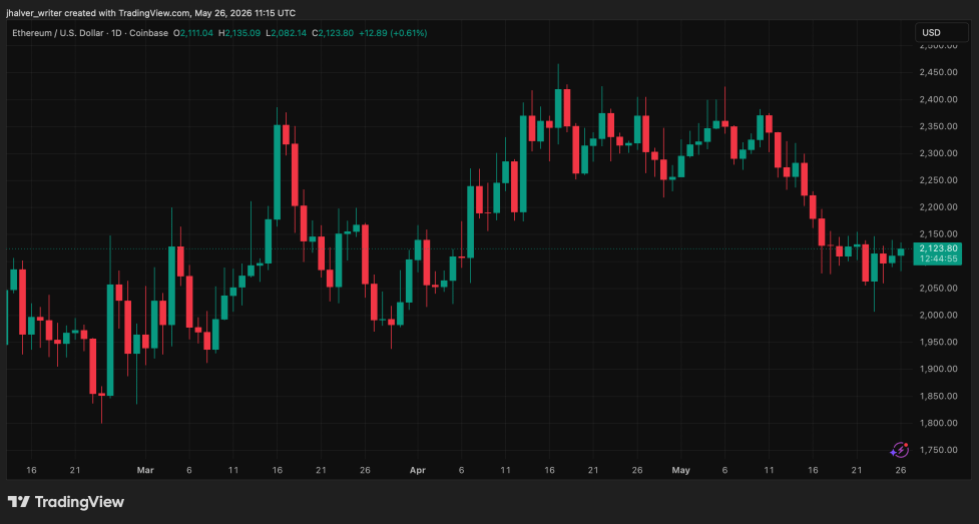
El precio de ETH se mueve lateralmente, según el gráfico diario. Fuente: ETHUSD en Tradingview

Qué alegan los cargos

Los cargos por fraude se centran en un período específico: de mayo a julio de 2022, las semanas inmediatamente posteriores a la catastrófica desvinculación de TerraUSD a principios de mayo de ese año. Según el comunicado oficial de la Policía de Singapur, Zhu supuestamente instruyó a empleados de Hodlnaut para que hicieran declaraciones engañosas en el grupo oficial de Telegram de la empresa y en correos electrónicos enviados directamente a los usuarios: afirmaciones de que Hodlnaut no tenía exposición directa a UST y no había sufrido pérdidas por el colapso.

Las declaraciones, según consta en los informes de Mothership SG sobre las presentaciones judiciales, incluyen una publicación en la que Hodlnaut escribió que "no había sufrido pérdidas como empresa" y que solo se vieron afectados los usuarios que poseían UST personalmente. También se alega que Zhu instruyó a otro empleado para que enviara un correo electrónico a 30 destinatarios afirmando que la empresa no había asumido pérdidas. Los fiscales ahora alegan que esas declaraciones eran falsas y tenían la intención de engañar a los usuarios durante el período más crítico del deterioro de la plataforma.

Qué pasó realmente con Terra

El expediente judicial que surgió después de que Hodlnaut suspendiera los retiros en agosto de 2022 contaba una historia radicalmente diferente. Un informe de administradores judiciales provisionales al que tuvo acceso Bloomberg reveló que Hodlnaut había perdido casi 190 millones de dólares debido a su exposición al colapsado ecosistema Terra, una cifra que la plataforma había minimizado activamente a los usuarios mientras las pérdidas se acumulaban. Firmas de análisis on-chain confirmaron posteriormente una exposición material a actividades relacionadas con UST y TerraForm Labs que Hodlnaut no había reconocido previamente.

Los documentos judiciales presentados en Singapur en agosto de 2022, cuando la plataforma solicitó protección crediticia, revelaron un déficit financiero de 193 millones de dólares. Administradores designados por el tribunal confirmaron más tarde que otros 13,1 millones de dólares en activos de usuarios quedaron atrapados en la colapsada bolsa FTX.

A Hodlnaut se le ordenó posteriormente su liquidación por el Tribunal Superior de Singapur, designándose a socios de EY como liquidadores conjuntos. Zhu indicó que no era culpable y disputó todos los cargos en su audiencia del 26 de mayo; una conferencia previa al juicio ha sido programada para junio de 2026, según Channel News Asia.

Este desarrollo marca un momento significativo en el largo proceso de rendición de cuentas en el sector naciente tras el contagio cripto de 2022. El colapso de Terra desencadenó una cadena de fallos de plataformas —entre ellas Celsius, Voyager, Three Arrows Capital y finalmente FTX— que costaron colectivamente a los usuarios minoristas cientos de miles de millones de dólares.

Que hayan transcurrido cuatro años entre el colapso de Hodlnaut y el primer día en los tribunales de su ex CEO es en sí mismo un reflejo de la lentitud con la que el sistema legal procesa los fracasos más trascendentales en el ámbito cripto, y un recordatorio de que los casos están lejos de estar cerrados.

Imagen de portada de Grok, gráfico de ETHUSD de Tradingview

Related Questions

Q¿Cuándo fue Zhu Juntao, ex CEO de Hodlnaut, acusado en un tribunal de Singapur?

AZhu Juntao fue acusado en un tribunal de Singapur el 26 de mayo de 2026.

Q¿De qué se acusa específicamente a Zhu Juntao en relación con el colapso de Hodlnaut?

ASe acusa a Zhu Juntao de fraude por falsa representación, por presuntamente dirigir a empleados a hacer declaraciones engañosas, afirmando que Hodlnaut no tenía exposición directa a UST ni había sufrido pérdidas tras el colapso de Terra, cuando en realidad había perdido cerca de 190 millones de dólares.

Q¿Cuál fue la causa principal del déficit financiero de 193 millones de dólares en Hodlnaut?

AEl déficit financiero de 193 millones de dólares en Hodlnaut fue causado principalmente por sus pérdidas, de casi 190 millones, debido a su exposición al ecosistema colapsado de Terra/LUNA.

Q¿Qué pasó con Hodlnaut después de suspender retiros en agosto de 2022?

ADespués de suspender retiros, Hodlnaut buscó protección de acreedores, reveló un déficit de 193 millones de dólares, fue ordenado a liquidar por el Tribunal Superior de Singapur y se nombraron socios de EY como liquidadores conjuntos.

Q¿Qué indica el tiempo transcurrido (cuatro años) entre el colapso de Hodlnaut y los cargos judiciales?

AEl tiempo transcurrido de cuatro años refleja lo lentamente que el sistema legal procesa los fracasos más significativos en el sector de las criptomonedas, y es un recordatorio de que estos casos están lejos de estar cerrados.

Related Reads

Fed's Internal Doves Flock to Hawkish Stance, Warsh's Debut "Between a Rock and a Hard Place"

U.S. Federal Reserve officials who previously advocated for rate cuts, including Governor Christopher Waller, have recently shifted their stance, with many now not ruling out the possibility of future rate hikes. This sets a challenging stage for new Fed Chair Kevin Warsh's first policy meeting. Appointed by President Trump based on his dovish views, Warsh now faces a committee where the debate has pivoted from "when to cut" to "whether to hike," driven by persistent inflation above 3%, a strong labor market, and supply-side pressures from AI infrastructure demands and geopolitical tensions. Key figures illustrate the shift. Governor Waller, once concerned about employment, now says data has pushed him toward considering rate increases. Even moderate voices like Governor Lisa Cook, while expecting inflation to ease, have indicated readiness to hike if it fails to do so. Long-time hawks such as regional Fed presidents Beth Hammack, Lorie Logan, and Neel Kashkari have grown more vocal, arguing that the real policy rate is effectively falling and that action may soon be needed. The upcoming Fed meeting is expected to keep rates steady but will likely remove the "easing bias" from its statement, signaling a neutral stance between cuts and hikes. The quarterly "dot plot" is anticipated to show most officials projecting no cuts this year, with some potentially indicating hikes. Chair Warsh, a critic of the Fed's reliance on forward guidance like the dot plot, must navigate communicating this pivot using tools he has questioned, all while steering policy in a direction counter to the preferences of the president who appointed him. The consensus suggests the Fed's next move could well be a rate increase.

marsbit51m ago

Fed's Internal Doves Flock to Hawkish Stance, Warsh's Debut "Between a Rock and a Hard Place"

marsbit51m ago

The Trillion-Yuan Market Cap 'Yi Zhong Tian': Who is the True Value King?

The article analyzes the three leading Chinese optical module companies, collectively nicknamed "Yi Zhong Tian": Xinyisheng, Zhongji Innolight, and TFC Optical Communication. It evaluates their "cost-performance" not by current stock price, but through three lenses: PEG ratio (growth vs. valuation), earnings quality, and premium/discount for certainty. Xinyisheng shows the most attractive PEG ratio and high profitability, but its valuation reflects discounts for risks like high customer concentration and reliance on overseas markets. Zhongji Innolight, the most expensive, commands a premium for its market leadership, dominant share in key products like 800G/1.6T modules, and higher earnings certainty, though it faces geopolitical risks. TFC Optical, as an upstream component supplier ("water seller"), has the highest gross margin and bets on the long-term CPO/NPO architecture trend, but trades at a high valuation with more stable, less explosive growth. The core argument is that while these companies dominate module assembly, the true profit pool and technological moat lie upstream in laser and switch chips, currently controlled by U.S. firms like Lumentum and Coherent. The long-term "cost-performance" for these Chinese leaders hinges on whether the domestic industry, exemplified by companies like Yuanjie Technology, can successfully move up the value chain into high-power laser chips. Otherwise, their high growth may remain confined to the lower-margin assembly segment.

marsbit1h ago

The Trillion-Yuan Market Cap 'Yi Zhong Tian': Who is the True Value King?

marsbit1h ago

Has the Crypto Market Bottomed? Here's What Institutions Think

The crypto market is in a period of significant debate, with leading institutions offering differing views on whether a bottom has been reached. Three prominent firms have published detailed analyses: * **Galaxy Digital** argues Bitcoin has **not yet bottomed**. Their analysis of 13 historical indicators across six dimensions (valuation, profit-taking, miner pressure, etc.) shows only four are fully met. They project a potential bottom range between $30k and $54k. * **NYDIG** states a bottom is **possible but not likely**. While metrics are close to historic bear market extremes, they note the absence of a classic panic-selling event. They also suggest increased institutional adoption may have structurally altered the market cycle, potentially leading to a shallower downturn. * **Standard Chartered Bank** asserts the **bottom has already occurred** at around $59k. They cite two key factors: potential US-Iran diplomatic progress and the anticipated SpaceX IPO, which they believe absorbed capital and caused ETF selling pressure that is now subsiding. They forecast a year-end price target of $100k. Despite the surface-level disagreement, the reports share critical common ground more valuable for long-term investors: 1. All three believe the market bottom will form **within this year**. 2. All agree the current price is **closer to the bottom than to previous highs**. 3. All maintain a **bullish long-term outlook** for Bitcoin and a new cycle. The core takeaway is that while the exact bottom price ($40k, $50k, or $60k) is debated, the consensus is that a bottom is imminent. For long-term holders, the primary focus should not be pinpointing the absolute low, but on the future potential for prices to reach $100k, $200k, or higher. The fundamental thesis for Bitcoin—sovereign debt accumulation, inflation, declining trust in centralized institutions, global digitization, and improved accessibility—remains intact and is arguably strengthening. The overall landscape is viewed as more favorable than in previous crypto winters.

marsbit1h ago

Has the Crypto Market Bottomed? Here's What Institutions Think

marsbit1h ago

The 'Chip' Challenge and Breakthroughs in China's Optical Industry Chain

China's Photonics Industry: Bottlenecks and Breakthroughs In the global AI race, computing chips dominate the narrative, but the underlying bottleneck increasingly defining the scale of AI clusters is light—or more specifically, optical connectivity. Optical modules, which translate electrical signals to light and vice versa, are crucial for connecting thousands of GPUs in AI data centers, preventing data congestion and ensuring efficient model training. High-speed modules (800G, 1.6T) are now standard, with performance hinging on advanced DSP (Digital Signal Processor) chips. This is where a critical dependency lies. Two US giants—Marvell and Broadcom—collectively dominate over 90% of the high-end DSP chip market. Chinese optical module leaders like Zhongji Innolight and Eoptolink rely on these chips to manufacture modules for overseas AI customers, primarily in North America. While this creates a supply chain vulnerability, complete decoupling is difficult. Marvell derives over half its revenue from Greater China, and the US firms depend on Chinese partners for chip packaging and optical components. The risk from laser chips (e.g., from Lumentum), another key component, is considered more manageable due to multiple global suppliers and faster progress in domestic alternatives from companies like YOFC and Accelink. To mitigate risks, China's industry is pursuing a multi-pronged strategy: diversifying supply chains and locking in long-term orders; fostering a domestic market ecosystem to adopt homegrown DSPs from firms like Huawei HiSilicon and CETC; accelerating R&D in high-speed DSPs and advanced packaging; and investing in next-gen technologies like silicon photonics and Co-Packaged Optics (CPO) to reduce reliance on discrete DSPs. The ultimate solution lies not in short-term博弈 but in persistent advancement of domestic high-end chip R&D and manufacturing. While challenges remain in performance, certification, and ecosystem building, China's vast domestic market and manufacturing base provide a crucial buffer, buying time for the industry to achieve greater technological independence.

marsbit1h ago

The 'Chip' Challenge and Breakthroughs in China's Optical Industry Chain

marsbit1h ago

Trading

Spot
Futures

Hot Articles

Discussions

Welcome to the HTX Community. Here, you can stay informed about the latest platform developments and gain access to professional market insights. Users' opinions on the price of S (S) are presented below.

活动图片