The live price of Sonic (S) is $0.03 USD and its current market capitalization is $-- USD.
Get real-time S/USD updates on HTX. Stay informed with the latest data and market trends to make smart trading decisions. HTX, your trusted source for accurate cryptocurrency price information.
Track Sonic price movements with chart views spanning 1 day, 30 days, 60 days, 90 days, 1 year, and the period since it was listed on HTX.View more data for the Sonic prices
Time
Change
Change%
Highest Price
Lowest Price
No data
S Market Information
Get the latest Sonic price details on HTX: 24-hour high and low, all-time high (ATH), and daily price change percentage.
24h Low
$0
24h High
$0
All-Time High
$0
Market Cap
$0.00
24h Volume (USD)
$--
Circulating Supply
--
What is S?
Sonic is an L1 blockchain network delivering 10,000 TPS with sub-second finality. The network connects to Ethereum's liquidity through the Sonic Gateway and features unique developer incentives including Fee Monetization that allows developers to earn up to 90% of fees their apps generate. Built by the team behind Fantom Opera, Sonic plans to support dynamic fees, fee subsidization, and native account abstraction while maintaining full EVM compatibility.
Based on the historical performance of Sonic, our prediction tool estimates that the price of Sonic (S) could reach -- by --.
Predicted S Price in --
Our most recent forecast indicates the price of Sonic (S) will increase to -- by --, with a price change of --% and a cumulative ROI of approximately --%.
Buy your first S on HTXSign Up
S FAQs
QWhat is the Sonic (S) price today?
AThe current price of Sonic (S) is $0.03 USD.
QWhat is the Sonic (S) market cap?
AThe current market capitalization of Sonic (S) is $0.00 USD, calculated by multiplying its circulating supply by its current price.
QWhat is the Sonic (S) circulating supply?
AThe current circulating supply of Sonic (S) is -- S.
QWhat is the Sonic (S) all-time high?
AAs of 2026-06-16, the all-time high of Sonic (S) is $0 USD.
QWhat is the Sonic (S) 24h trading volume?
AThe 24-hour trading volume of Sonic (S) is -- USD on HTX.
QCan I buy Sonic (S) on HTX?
AYes, HTX offers industry-leading trading fees and deep liquidity, ensuring a smooth and secure Sonic (S) purchase experience.
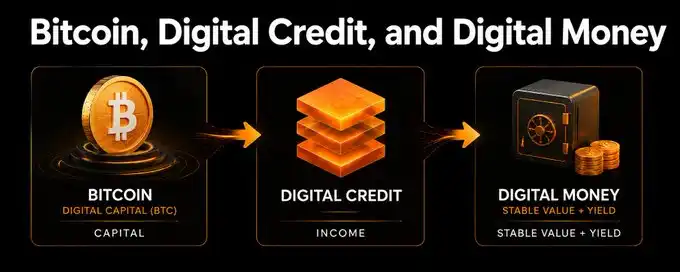
Michael Saylor presents his "Digital Asset Stack" theory, positioning Bitcoin as the foundational layer of digital capital. He argues Bitcoin itself should remain unchanged—no staking, inflation, or protocol alterations. Instead, a five-layer financial architecture should be built atop it: Digital Capital (BTC), Digital Credit (e.g., yield instruments like STRC), Digital Currency (stable, yield-bearing instruments pegged to fiat), Digital Yield (leveraged/structured products), and Digital Equity (e.g., MSTR stock, absorbing residual volatility).
Saylor asserts this stack transforms Bitcoin's high-volatility, high-energy capital into tailored products: stable currencies for payments/savings, yield instruments for income seekers, and equity for growth investors. This approach meets diverse needs—corporate treasuries, banks, retirees, emerging market users—without compromising Bitcoin's core properties (scarcity, decentralization). The "killer use case" is rebuilding global money, credit, and capital markets on Bitcoin, bridging the fiat world with a superior digital asset foundation. The system leverages traditional finance principles (risk layering, structured products) while using Bitcoin as the ultimate collateral. This expands Bitcoin's utility, drives adoption, and offers a better monetary experience: digital, yield-bearing, stable-value tools for everyday use.
Title: "For Those Still Fixated on Altcoins, Just Bet on HOOD"
The article argues that Robinhood (HOOD) stock is a compelling alternative for investors still holding onto hopes for altcoin rallies. It highlights HOOD's recent strong performance, briefly touching $100, and expresses continued optimism.
The bullish thesis is multi-faceted: HOOD's operational data for May showed record highs in key metrics like total assets and funded customers, though crypto volume was weaker. Positive catalysts include Robinhood launching its own prediction market (Rothera) to capture more revenue, gaining approval to act as an IPO underwriter for major upcoming listings, and being selected to manage the new "Trump Account" government savings program for millions of future US newborns. Insider and institutional buying, along with raised price targets, provide further confidence.
The core argument is that HOOD is successfully decoupling from the crypto market's fortunes. While crypto-related revenue was once a major contributor, its share of total revenue has been declining, hitting 13% in Q1 2026. Although HOOD's price historically moved with Bitcoin, a recent divergence is noted. The author posits that Robinhood's growing equity trading, prediction markets, and IPO-related businesses can drive growth independently of a crypto bull market.
Thus, HOOD offers asymmetric exposure: it stands to benefit if the crypto market recovers but is no longer wholly dependent on it. For those disillusioned with altcoins' risks, HOOD presents a potentially safer way to maintain exposure to the fintech and speculative trading space.
USDe, the synthetic dollar from Ethena, circumvents the GENIUS Act's prohibition on paying interest to stablecoin holders. Unlike regulated payment stablecoins like USDC, which must hold cash/Treasury reserves, USDe is a delta-neutral synthetic asset backed by crypto collateral and hedged perpetual short positions. It generates yield from funding rates and staking rewards, not issuer-paid interest, placing it outside the Act's scope. Growing to over $14B at its peak, USDe represents a significant regulatory gap. While Germany's BaFin has restricted it, US institutional adoption is rising, as seen with Janus Henderson's partnership. The core debate is whether USDe is an innovative yield-bearing instrument or an unregulated security posing unique risks, highlighting the need for specific rules for synthetic dollars that current legislation does not address.
DeepSeek, the prominent Chinese AI company, has reportedly completed its first external funding round, raising over 50 billion RMB (approximately $6.9 billion USD), according to foreign media reports. This financing values the company at over $50 billion USD, a significant increase from a $10 billion valuation when the round began in April 2026. Founder Liang Wenfeng personally contributed 20 billion RMB, with other investors including Tencent, CATL (Contemporary Amperex Technology), JD.com, NetEase, and IDG Capital. Notably, the National Artificial Intelligence Industry Investment Fund also participated with a direct investment of 1 billion RMB.
The funding round is distinctive for its structure. Most investors' capital is channeled into a limited partnership controlled by CEO Liang Wenfeng, rather than directly into DeepSeek. These investors face a five-year lock-up period, have no voting rights, but receive priority financial information and future investment rights. This arrangement is seen as a measure to ensure Liang's absolute control over the company's direction, aligning with its stated principles of prioritizing groundbreaking AGI (Artificial General Intelligence) research over short-term profitability.
The report highlights strategic reasons for key investors. Tencent's involvement is viewed as a strategic alignment, building on existing collaborations. CATL's investment is linked to the critical energy and power infrastructure needed for AI data centers, a key growth area for the battery giant. The participation of a state-backed fund underscores the national strategic importance of AI development.
Post-funding, DeepSeek is expected to accelerate infrastructure development, including building its own data centers, hire more talent, and release new model versions with enhanced capabilities like image and audio support. While this marks a major step, the company's long-term journey towards AGI remains a challenging path that will require balancing its foundational ideals with the expectations of its new investors.
The article discusses a potential shift in Wall Street's categorization of major tech stocks, driven by SpaceX's highly successful IPO. On its first day of trading, SpaceX attracted $117 million in net purchases from retail investors, accounting for 56% of all U.S. retail stock buys that day. This surge has prompted research firm Vanda to propose a new group called the "FAB 10" (Frontier AI & Big Tech 10). This concept suggests replacing the long-standing "Magnificent Seven" with ten companies believed to define the next decade of AI and technology. The proposed FAB 10 would include the original seven giants plus SpaceX and the yet-to-be-public AI firms OpenAI and Anthropic, both anticipated to go public later this year with valuations potentially reaching trillions.
This contrasts with another proposed grouping, Bank of America's "AI Big 10," which adds semiconductor companies like Broadcom, AMD, and Micron to the core seven, focusing more on hardware. The divergence highlights different bets on the future drivers of tech growth. Analysts note that the massive influx of retail money into new listings like SpaceX might divert capital from other hot sectors, such as chip stocks, and warn that high valuations across the tech sector may indicate bubble risks.
marsbit1小时前
Threads
Welcome to the HTX Community. Here, you can stay informed about the latest platform developments and gain access to professional market insights. Users' opinions on the price of Sonic (S) are presented below.
Related Questions
Welcome to the Crypto FAQ. Users' questions and answers on Sonic (S) are presented below.