以太坊看似回暖,但比特币才是需求引擎,巨鲸动向透露不安

ambcryptoPublished on 2026-05-09Last updated on 2026-05-09

Abstract

一方面,资金流入和较低的卖压确实对ETH形成了支撑;另一方面,比特币(BTC)仍然是拉动市场需求的资产。而且,比特币那边的情况也不太平稳。

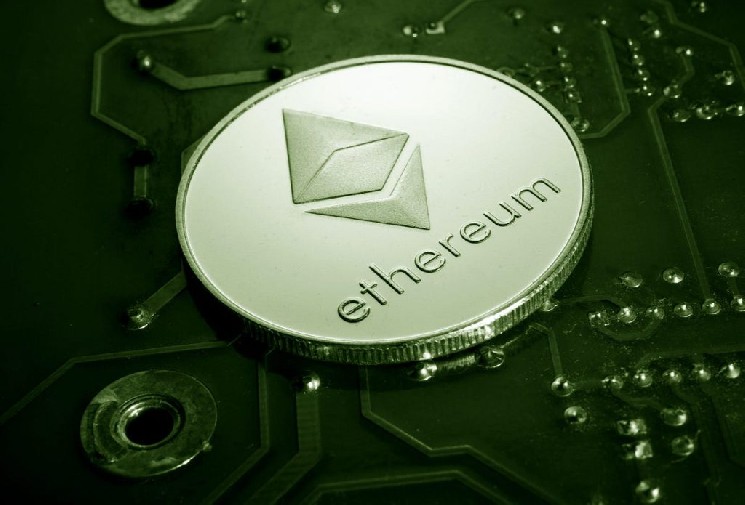
以太坊(ETH)看起来又走强了,但事情远没有表面那么简单。
一方面,资金流入和较低的卖压确实对ETH形成了支撑;另一方面,比特币(BTC)仍然是拉动市场需求的资产。而且,比特币那边的情况也不太平稳。

以太坊真的站起来了?

Alphractal 的已实现市值脉冲图显示,ETH 的该指标八周来首次转正。说明资金正在重新为这个网络定价。

这一点很关键,因为已实现市值反映的是代币最后一次移动的位置。它可以用来判断:是有新的需求进场,还是老持有者在重新调整仓位。
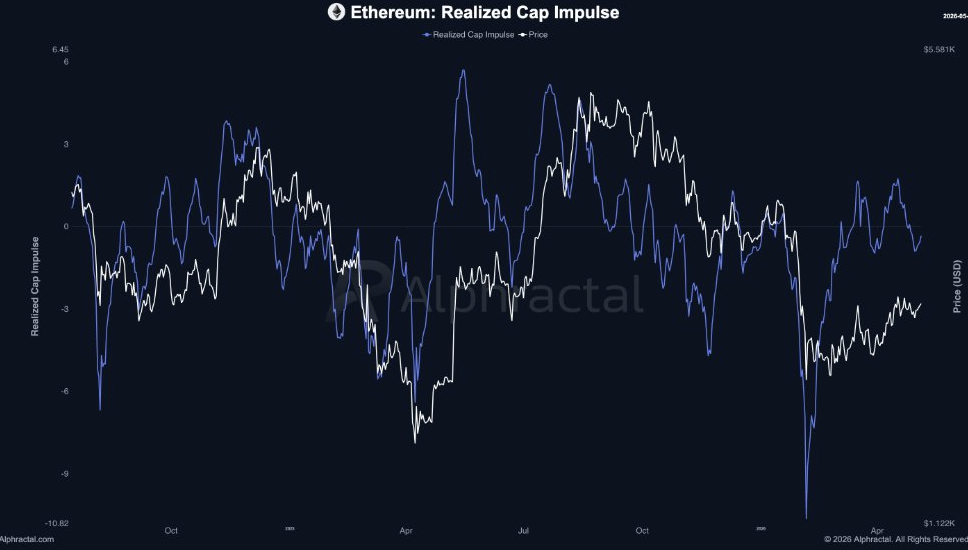
目前 ETH 价格在 2,374 美元附近,衍生品持仓也达到数周高点,这次反弹看起来比之前几次尝试要更扎实一些。

但别搞错了——现在下结论还为时过早。

清晰的需求信号?

ETH 的已实现市值转正令人鼓舞,但需求仍然由比特币主导。Coinbase 溢价指数显示,比特币在四月份重新进入了更强的需求区。事实上,随着价格从低点反弹,出现了多次正值读数。
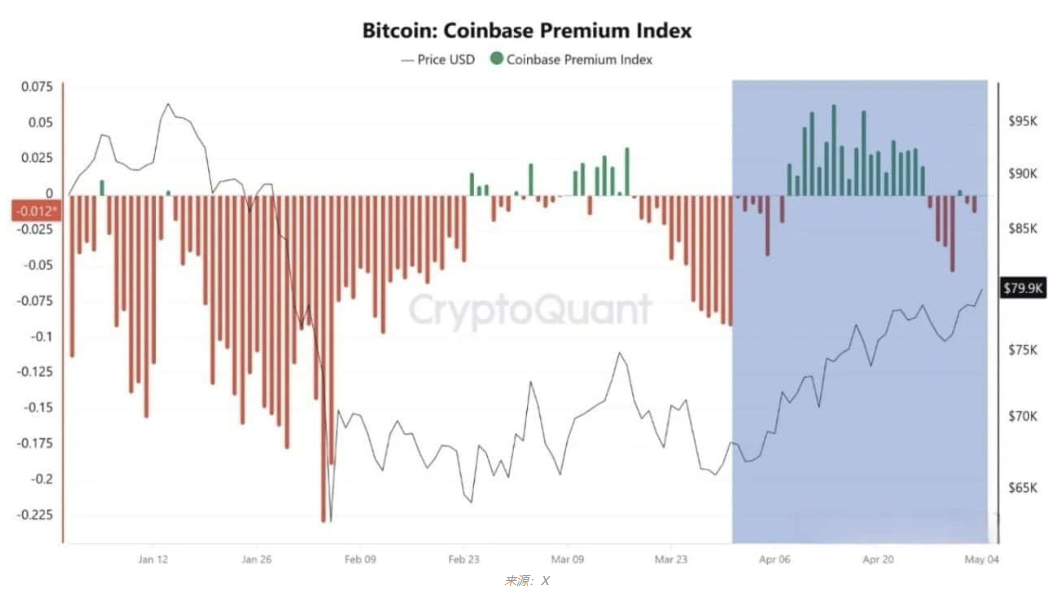
溢价为正通常意味着 Coinbase 上的现货买盘更强,常被解读为美国主导的需求。相比之下,ETH 的反弹更像是卖压降低的结果,而非主动买盘推动。

BTC 巨鲸并不买账……

……而最新的巨鲸数据揭示了原因。在短短 92 小时内,不同时期的 BTC 持有者采取了截然不同的操作:卖出 11,300 枚 BTC,买入 7,000 枚,另有沉睡了三年之久的 12,849 枚 BTC 被转移。
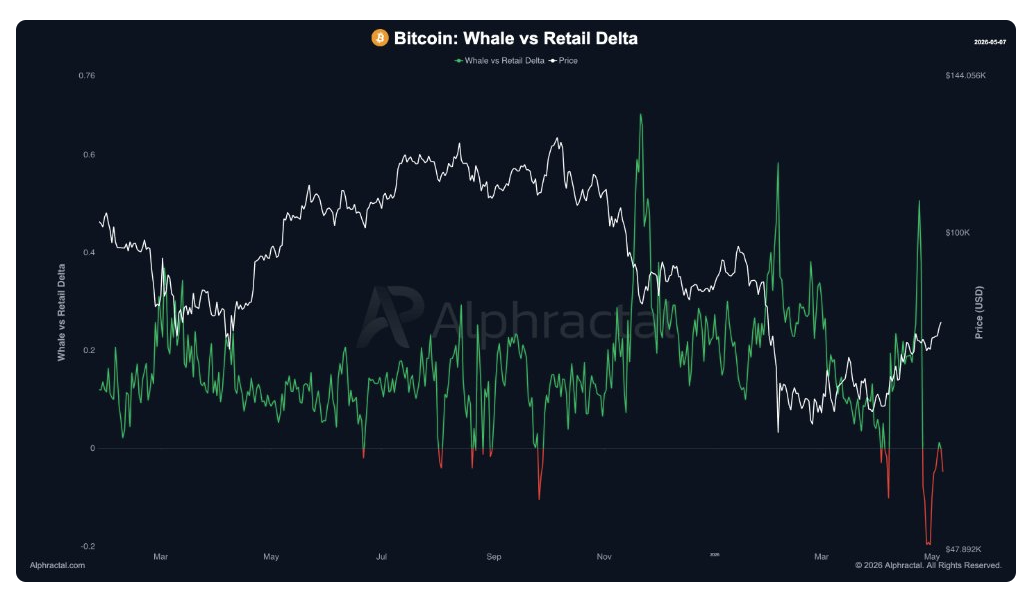
长期不动的钱包通常不会无缘无故地移动。而当大户同时进行买入、卖出和大额转移时,往往意味着表象之下存在不确定性。

简而言之,市场看起来比几周前要强,但远远谈不上已经稳定。

总结

以太坊的已实现市值八周来首次转正!

尽管如此,加密市场仍然充满不确定性,对比特币的需求依然更高。

Trending Cryptos

Related Reads

GPT-5 Also Has Tip-of-the-Tongue Moments, Google Tested 4.5 Million Times: The Keys Are Lost

Google researchers have discovered that advanced AI models like GPT-5 and Gemini 3 experience a phenomenon akin to the human "tip-of-the-tongue" state, where they possess knowledge but fail to retrieve it. Their study, "Empty Shelves or Lost Keys?" (ICML 2026), introduces the "Knowledge Portrait" framework to analyze factual knowledge in models, distinguishing between failure to encode a fact versus failure to recall it. Testing on 13 models across 2.15 million queries from the WikiProfile benchmark revealed that state-of-the-art models successfully encode 95-98% of facts into their parameters. However, when asked directly, they fail to recall 26-34% of these known facts. Enabling chain-of-thought ("thinking") reasoning reduces this recall failure to 11-12%, recovering 40-65% of the previously unrecalled but encoded facts. The research identifies two key bottlenecks: recalling obscure ("long-tail") facts and answering reversed queries (e.g., "Who is Tom Cruise's mother?" vs. "Whose son is Tom Cruise?"). While scaling model size effectively reduces encoding failures, it does little to improve recall rates. In larger models, recall failure becomes the dominant source of factual errors, accounting for over 70% of mistakes in GPT-5.2. The findings suggest that for top models, the primary challenge is no longer storing knowledge but accessing it efficiently. Future accuracy gains may depend more on improved inference-time methods and "meta-cognitive" abilities, enabling models to recognize when they need to engage in deeper reasoning to retrieve information they already know.

marsbitJust now

GPT-5 Also Has Tip-of-the-Tongue Moments, Google Tested 4.5 Million Times: The Keys Are Lost

marsbitJust now

The Dollar is a Technology: Stablecoins Are Exporting U.S. Institutions to the World

This article argues that stablecoins and blockchain infrastructure are becoming a vehicle for exporting American financial systems globally. The core thesis is that the U.S. dollar, as a "technology," is increasingly embedded in blockchain rails, moving beyond a reserve currency to represent the institutional stability of the United States itself. The piece highlights three key areas where this is happening: 1. **Cross-border payments and trade finance:** Companies like Keyrails use stablecoins and blockchain to streamline and secure trade finance for emerging markets (e.g., Nigeria-China trade), offering faster, often cheaper dollar liquidity than traditional systems. 2. **Programmable collateral and credit:** Platforms like SemiLiquid allow institutions to use tokenized assets (e.g., treasuries, stocks) as "programmable collateral" for loans without moving them from custody, unlocking capital efficiency and improving transparency in institutional lending. 3. **Financing real-world assets:** Protocols like USD.AI create lending markets for productive, hard-to-finance assets like AI GPUs, connecting global stablecoin liquidity to physical capital. The author concludes that the true value of these new blockchain-based financial platforms lies not just in transaction volume, but in the deep, hard-to-replicate "context" (data, trust, operational knowledge) they build around specific economic activities like trade and asset finance. This represents crypto's evolution into an operating system for real-world capital formation, moving beyond speculation.

marsbit4m ago

The Dollar is a Technology: Stablecoins Are Exporting U.S. Institutions to the World

marsbit4m ago

Ethereum Glamsterdam Upgrade: Largest-Scale Underlying Restructuring Yet, Mainnet Date Still Undecided

The upcoming Ethereum "Glamsterdam" upgrade is viewed by core developers as the most significant protocol-level refactoring since The Merge, fundamentally altering how the network processes transactions and manages its state to advance L1 scaling. Its core goals are: accelerating processing via parallelization, increasing capacity, and enhancing sustainability through adjusted fees that better reflect long-term data storage costs. The upgrade features two headline proposals. First, **ePBS (EIP-7732)** on the consensus layer aims to formalize proposer-builder separation directly within the protocol, eliminating reliance on off-chain relayers. This built-in mechanism is designed to provide a more secure and efficient block production pipeline, extending the critical validation window to allow the network to handle more data, particularly for Layer2s. Second, **BALs (EIP-7928)** on the execution layer introduces block-level access lists. These lists specify the data each transaction will access beforehand, allowing the network to identify and safely execute non-conflicting transactions in parallel, rather than strictly sequentially. This also speeds up new node synchronization. Glamsterdam also includes配套 proposals to reprice storage costs (aiming for a predictable ~120 GiB annual state growth) and the cost of data-reading operations to better align with modern hardware costs and prevent spam. Regarding the timeline, the initial schedule targeting a mainnet activation on September 16, 2026, has likely been delayed. Following the launch of a new dedicated testnet (Plataberget), the deployments on the Sepolia and Holesky testnets are now expected in September, with the mainnet launch potentially pushed to Q4 2026 or later, as developers prioritize correctness over a fixed date.

marsbit4m ago

Ethereum Glamsterdam Upgrade: Largest-Scale Underlying Restructuring Yet, Mainnet Date Still Undecided

marsbit4m ago

Trading

Spot

Hot Articles

Discussions

Welcome to the HTX Community. Here, you can stay informed about the latest platform developments and gain access to professional market insights. Users' opinions on the price of ETH (ETH) are presented below.

活动图片