Qubic启动狗狗币挖矿第三阶段:这对DOGE意味着什么

bitcoinistPublished on 2026-04-24Last updated on 2026-04-24

Abstract

Qubic宣布已完全转向以狗狗币(DOGE)为核心的挖矿架构,正式进入“第三阶段”,并停止门罗币(XMR)挖矿。新架构采用双轨系统:ASIC矿机全力挖掘DOGE,CPU和GPU则专注于训练其人工智能框架Aigarth,实现了挖矿与AI训练的同步全速运行。 该平台通过循环资本机制将挖矿收益转化为对其原生代币QU的持续购买压力。首日测试数据显示,使用13 GH/s的DG1+ ASIC矿机,通过Qubic挖矿的日收益约为7.94美元,比传统矿池高出约1.92美元(增幅32%)。 目前Qubic占狗狗币全网算力约0.086%(2.1 TH/s),虽暂未对网络安全产生显著影响,但标志着其模型已从理论进入实践阶段。未来关注点将转向其算力增长规模及对DOGE挖矿生态的实际影响。 此前,Qubic曾通过门罗币挖矿验证其“有用工作量证明”模型,一度占据门罗币45%的算力。截至发稿,DOGE价格为0.09791美元。

Qubic宣布已完全过渡到以狗狗币为核心的挖矿架构,标志着“第三阶段”的启动,并从此移除门罗币(XMR)的运营支持。这一转变将资源整合为双轨系统,可同时挖掘狗狗币(DOGE)并训练其内部AI框架Aigarth。

Qubic全面从门罗币转向狗狗币

该变动通过X平台宣布,代表结构性转型而非渐进式升级。团队发文称:“第三阶段已上线。Qubic已完成狗狗币挖矿迁移。XMR退出。新架构全面生效。”新体系中专用ASIC芯片全力进行DOGE挖矿,而CPU和GPU则完全投入AI训练。

此前Qubic的架构需要在挖矿和AI工作负载之间交替分配计算资源,如今这一限制已被消除。“不再交替。不再妥协。两大工作流首次实现全容量同步运行。”团队表示此次升级是实现资源完全利用的重要一步。

该模式的核心是资本流转机制。据Qubic介绍,“挖出的DOGE→出售→回购QU→分配给计算节点。飞轮开始旋转。”该设计将挖矿产出持续转化为对原生代币QU的购买压力,同时维持DOGE的持续产出。

伴随架构更新,Qubic发布了第三阶段首日的性能数据。基于13 GH/s算力的DG1+ ASIC样本,团队对比了其系统与传统矿池的收益。

“通过Qubic挖DOGE → 10,314,425 Qu → 7.94美元/日。传统矿池挖DOGE → 62.31 DOGE → 6.02美元/日。即每日增加1.92美元。利润提升约32%。相同硬件。相同投入。完全不同的结果。”

对狗狗币而言,最直观的影响是Qubic已成为真实但规模仍较小的挖矿参与方。约0.086%的算力占比(2.1 TH/s vs 2.44 PH/s)尚不足以单独改变网络安全、区块生产或DOGE抛压。但这证明迁移已不再是理论设想:Qubic现已在网络上拥有真实的Scrypt算力,其模式正面临所有矿工都需经历的考验——能否实现规模扩张。

这使得下一阶段不再关注启动宣传,而更注重发展势头。若Qubic的DOGE算力持续增长,焦点将从“是否进入狗狗币挖矿领域”转向“能否将早期立足点转化为对DOGE挖矿格局的实际影响”。

在转向狗狗币之前,Qubic曾以XMR挖矿作为其“实用工作量证明”模型的实证,展示如何将网络算力重定向至外部挖矿并回流至Qubic经济生态。项目方表示在此期间曾一度达到门罗币全球算力的45%,挖掘出3,496个门罗币区块,甚至曾公开演示51%算力接管实验。

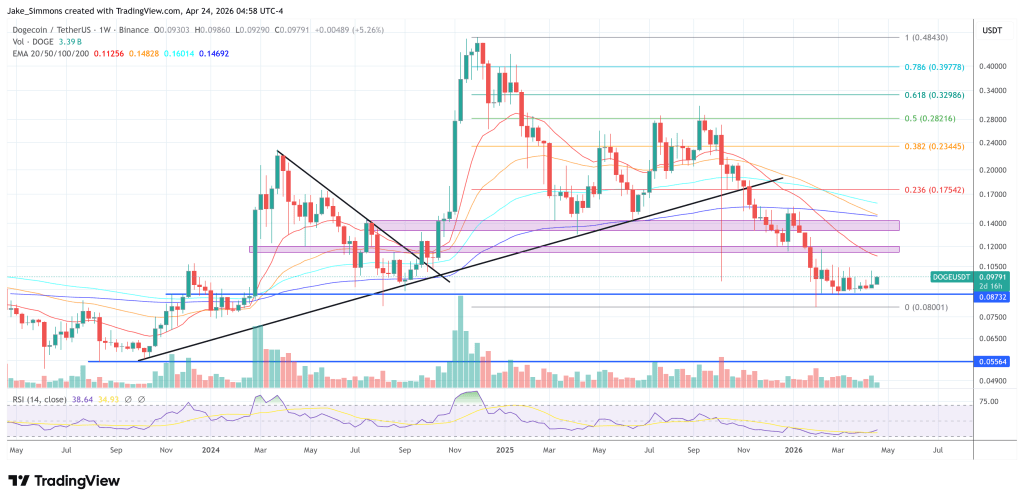
截至发稿,DOGE交易价格为0.09791美元。

DOGE坚守关键支撑位,周线图 | 来源:TradingView.com的DOGEUSDT图表

Related Questions

QQubic 宣布完全转向 Dogecoin 挖矿的第三阶段,这意味着什么?

AQubic 已完全从 Monero (XMR) 挖矿转向 Dogecoin (DOGE) 挖矿,标志着其第三阶段的启动。新的架构将 ASIC 设备专门用于 DOGE 挖矿,而 CPU 和 GPU 则完全用于其内部 AI 框架 Aigarth 的训练,实现了挖矿和 AI 工作负载的同时运行,无需交替使用计算资源。

QQubic 的新架构如何实现资本循环机制?

AQubic 的资本循环机制通过将挖矿获得的 DOGE 出售,然后用所得资金回购其原生代币 QU,并将 QU 分配给计算节点(computors)。这种设计为 QU 创造了持续的购买压力,同时保持 DOGE 的持续生产。

Q根据 Qubic 提供的数据,其 Dogecoin 挖矿与传统矿池相比有何优势?

A根据 Qubic 提供的数据,使用其 DG1+ ASIC 设备(13 GH/s)进行 DOGE 挖矿,通过 Qubic 系统每天收益为 7.94 美元,而通过传统矿池挖矿每天收益为 6.02 美元。Qubic 的收益高出约 1.92 美元,利润率提高了 32%,使用相同的硬件和努力。

QQubic 在 Dogecoin 网络中的算力份额目前是多少?这对网络有何影响?

AQubic 目前在 Dogecoin 网络中的算力份额约为 0.086%(2.1 TH/s 对比全网 2.44 PH/s)。这个份额相对较小,不足以单独改变网络的安全性、区块生产或 DOGE 的抛售压力,但它表明 Qubic 的迁移已从理论变为实践。

Q在转向 Dogecoin 之前,Qubic 在 Monero 挖矿方面取得了哪些成就?

A在转向 Dogecoin 之前,Qubic 使用 Monero (XMR) 挖矿作为其“有用工作量证明”(Useful Proof of Work)模型的实践验证。项目曾在一个时期达到全球 Monero 算力的 45%,找到了 3,496 个 Monero 区块,并曾公开演示过 51% 算力接管攻击。

Related Reads

With Daily Active Users Reaching 3-4 Times That of the Industry's Second Place, Which Crack in the Office Agent Market Has Tencent's WorkBuddy Torn Open?

Tencent's AI office assistant, WorkBuddy, has achieved daily active users (DAU) 3-4 times that of the industry's second-place product, primarily driven by non-technical users like HR, operations, and administrative staff. Its rapid growth, starting with a public beta in March 2026, highlights a key strategic divergence from competitors like OpenAI's Codex and Anthropic's Claude Code. Unlike those tools, which originated as developer-focused assistants (in command lines or IDEs) and are now expanding towards office scenarios, WorkBuddy was built from the ground up for non-technical office workers. Its development was user-driven, initiated after腾讯云's team observed non-technical employees using their CodeBuddy coding tool for general tasks. WorkBuddy's design is defined by three core decisions aimed at lowering barriers: 1) Using natural language instead of technical concepts, so users describe their goal without needing to understand prompts or agents. 2) Providing pre-packaged "Skill" templates for common office tasks like data processing, content creation, and research. 3) Natively integrating into existing腾讯 ecosystems like腾讯 Docs and WeChat, making the agent a seamless part of the user's workflow rather than a separate tool. This "scenario encapsulation" approach, prioritizing the shortest path for users to get work done, contrasts with the "underlying capability" focus of Codex and Claude, which offer more flexibility but require more technical setup. Analysts confirm WorkBuddy's leading market position in China by mid-2026, with massive user and request growth following its launch. Recognizing the same trend of surging non-technical adoption, OpenAI and Anthropic are now pivoting their products with features like role-based plugins (Codex) and a simplified desktop interface (Claude Cowork). However, adapting tools built for developers requires significant changes to interaction models and integrations. WorkBuddy currently holds an estimated six-month lead in delivering a complete solution for non-technical office users. Its recently launched enterprise version aims to solidify this advantage. The competition underscores two valid paths: embedding agent capabilities directly into familiar work environments versus building powerful, general-purpose agents that users must learn to access. WorkBuddy's early success demonstrates the effectiveness of the former strategy for mainstream office adoption.

marsbit1m ago

With Daily Active Users Reaching 3-4 Times That of the Industry's Second Place, Which Crack in the Office Agent Market Has Tencent's WorkBuddy Torn Open?

marsbit1m ago

Dalio's Latest Warning: Don't Get Carried Away by AI, Real Returns on US Stocks in the Next 5-10 Years Could Be -5% to -10%

Ray Dalio, founder of Bridgewater Associates, warns investors against excessive concentration in AI stocks. He argues the current market, dominated by a few AI giants, mirrors historical patterns where revolutionary new technologies lead to high risk, volatility, and uncertainty. While acknowledging AI's transformative potential, Dalio emphasizes that most investors fail at this stage of the cycle by over-concentrating in a handful of leading companies. He cites inherent risks: companies cannot accurately forecast investment needs or external shocks (e.g., monetary policy, geopolitics, taxes), face potential disruption from future technologies and international competition (notably from China), and experience significant price swings. Dalio's core advice is diversification, calling it his "Holy Grail of Investing." He presents a mathematical case that a well-diversified portfolio of 15-20 uncorrelated, good bets offers a superior risk-adjusted return compared to a concentrated position. Dalio also offers a cautious outlook, suggesting U.S. stocks may deliver real returns of -5% to -10% over the next 5-10 years based on valuation and bubble indicators. He concludes that in the face of high uncertainty, the prudent strategy is not to avoid betting entirely, but to avoid large, concentrated bets where one lacks sufficient informational edge. Instead, investors should build a strategically balanced, diversified portfolio.

marsbit1h ago

Dalio's Latest Warning: Don't Get Carried Away by AI, Real Returns on US Stocks in the Next 5-10 Years Could Be -5% to -10%

marsbit1h ago

Rain Valuation Approaches $20 Billion: The Battle for U-Cards Extends to Rewards Systems

Rain, a stablecoin payments infrastructure company, is shifting the competitive focus for U Cards from simple issuance to user retention and repeated usage. On June 15, Rain launched "Rain Rewards," an embedded loyalty program capability within its card-issuing infrastructure. This allows partner businesses—like fintech platforms and neobanks—to configure branded loyalty points, earning rules, redemptions, and merchant promotions directly within their card products. The system, built from the 2025 acquisition of Uptop, ensures points are only issued upon final transaction settlement, preventing liabilities from refunds. Trials, such as with Avalanche Card, reportedly boosted spending by 25% among enrolled users. Founded by Farooq Malik and Charles Yoo-Naut, Rain evolved from a tool for managing Web3 company expenses into a full-stack enterprise platform. It is a Principal Member of Visa and Mastercard, enabling partners to issue stablecoin-backed cards and wallets while leveraging traditional payment networks. Notably, the popular U Card Plasma One is issued by Rain under Visa's authority. Rain also integrates with Visa's stablecoin settlement pilot, using USDC for network settlement. Rain's rapid funding reflects growing institutional interest in stablecoin payment infrastructure. It raised a $245 million Series A in March 2025, a $58 million Series B in August 2025, and a $250 million Series C in January of this year, reaching a $19.5 billion valuation. Annualized transaction volume exceeds $3 billion, serving over 200 partners including Western Union and Nuvei. Beyond cards, Rain is expanding into programmable payments. Its June 2026 "Agent Control Layer" allows businesses to set spending rules—like merchant categories, amounts, and frequency—for AI agents before transactions occur. This positions Rain not as a single product but as an operating system for stablecoin payments, handling everything from card issuance and wallet management to rewards, on/off-ramps, and automated compliance. The goal is to enable seamless, often invisible, real-world spending of on-chain assets.

Foresight News1h ago

Rain Valuation Approaches $20 Billion: The Battle for U-Cards Extends to Rewards Systems

Foresight News1h ago

Trading

Spot
Futures

Hot Articles

What is DOGE M

Doge Matrix ($doge m): The New Breed of Community-Driven Cryptocurrency Introduction In the ever-evolving landscape of cryptocurrency, new projects constantly emerge, each aiming to capture the interest of investors and enthusiasts alike. One of the latest entrants to this domain is Doge Matrix, represented by the ticker symbol $doge m. This project has attracted attention thanks to its roots in the popular meme culture surrounding Dogecoin, establishing its place within the web3 space. This article aims to provide a comprehensive analysis of Doge Matrix, covering its overview, creator, investors, functionality, timeline, and notable aspects. What is Doge Matrix ($doge m)? Doge Matrix is a community-driven cryptocurrency project that seemingly builds upon the widespread appeal of Dogecoin, a digital currency known for its Shiba Inu mascot and its meme origins. While the overarching objectives of Doge Matrix are not extensively defined, it is characterized by a commitment to harnessing community involvement and support. Unlike traditional cryptocurrencies that often emphasize utility or intrinsic value through underlying technologies, Doge Matrix positions itself within a space that embraces the cultural phenomenon of cryptocurrencies, particularly appealing to those who resonate with the ethos of meme-based assets. Drawing on the strengths of the Dogecoin community, Doge Matrix operates as part of a broader ecosystem, inviting participation and engagement from users who share an interest in cryptocurrency and the digital landscape. Who is the Creator of Doge Matrix ($doge m)? The identity of the creator of Doge Matrix remains unknown. This lack of transparency is not an uncommon occurrence in the cryptocurrency space, where some projects are launched without revealing the identities of their founders. The absence of information regarding the founding team can raise questions among potential investors about the project’s accountability and direction. Who are the Investors of Doge Matrix ($doge m)? As it stands, there is no publicly available information detailing the investors or investment foundations that back Doge Matrix. The project appears to rely primarily on community support rather than institutional investment. This model aligns with the community-driven nature of the initiative, fostering an environment where the direction of the project is shaped by its participants rather than being dictated by a select few financial backers. How Does Doge Matrix ($doge m) Work? The specifics regarding the operational mechanisms of Doge Matrix are somewhat vague, reflecting a broader trend of projects in the meme coin space where innovative functionalities are not always clearly articulated. Nonetheless, Doge Matrix seems designed to tap into the existing cryptocurrency ecosystem by encouraging user participation while tapping into the familiar cultural references associated with Dogecoin. Its potentially unique characteristics derive from community interactions rather than technological advancements, emphasizing shared experiences and collaboration among token holders. While the exact innovations have not been explicitly outlined, the project appears to create a space where community members can engage, share ideas, and propel the project's potential forward. Timeline of Doge Matrix ($doge m) Reflecting on the project’s timeline reveals notable events that have defined its journey thus far: November 25, 2024: Doge Matrix reached its all-time high value, marking a significant milestone in its early history. January 1, 2025: Conversely, Doge Matrix hit its all-time low value, illustrating the volatility often associated with cryptocurrencies, especially in the early stages of a project's lifecycle. Ongoing: The project continues to be actively traded and supported by its community, although specific future milestones or objectives have yet to be disclosed. Key Points About Doge Matrix ($doge m) Community Focus At the heart of Doge Matrix is a commitment to community engagement. The project thrives on the premise of collaboration and shared objectives among its members, emphasizing the importance of collective effort. Unlike centralized projects that often have a defined leadership structure, Doge Matrix at present showcases a more fluid approach to governance, where every community member's voice matters. Volatility The cryptocurrency market is notorious for its volatility, and Doge Matrix is no exception. Its price history reflects significant fluctuations between high and low values, which is typical of many new cryptocurrencies but underscores the risks associated with investment in emerging tokens. Lack of Detailed Information One of the most striking features about Doge Matrix is the scarcity of detailed information regarding its technological underpinnings and operational mechanisms. This ambiguity necessitates that potential investors conduct thorough due diligence before engaging with the project. Conclusion In summary, Doge Matrix ($doge m) illustrates a new wave of cryptocurrency projects that lean heavily on community engagement and cultural relevance. While lacking in certain specifics—such as clear leadership, defined objectives, and detailed functionality—the project has managed to generate interest within the crypto community, leveraging the established appeal of meme culture. As with any investment in the cryptocurrency space, understanding the inherent risks and conducting comprehensive research is essential for potential participants. Doge Matrix stands as a reminder of the dynamic, sometimes unpredictable nature of the crypto industry, marked by constant evolution and enthusiasm for community-driven initiatives.

3.8k Total ViewsPublished 2025.02.03Updated 2025.02.03
What is DOGE M

Discussions

Welcome to the HTX Community. Here, you can stay informed about the latest platform developments and gain access to professional market insights. Users' opinions on the price of DOGE (DOGE) are presented below.

活动图片