Jito交易量激增1000%后飙升——波动性会阻碍JTO的涨势吗?

ambcryptoPublished on 2026-03-24Last updated on 2026-03-24

Abstract

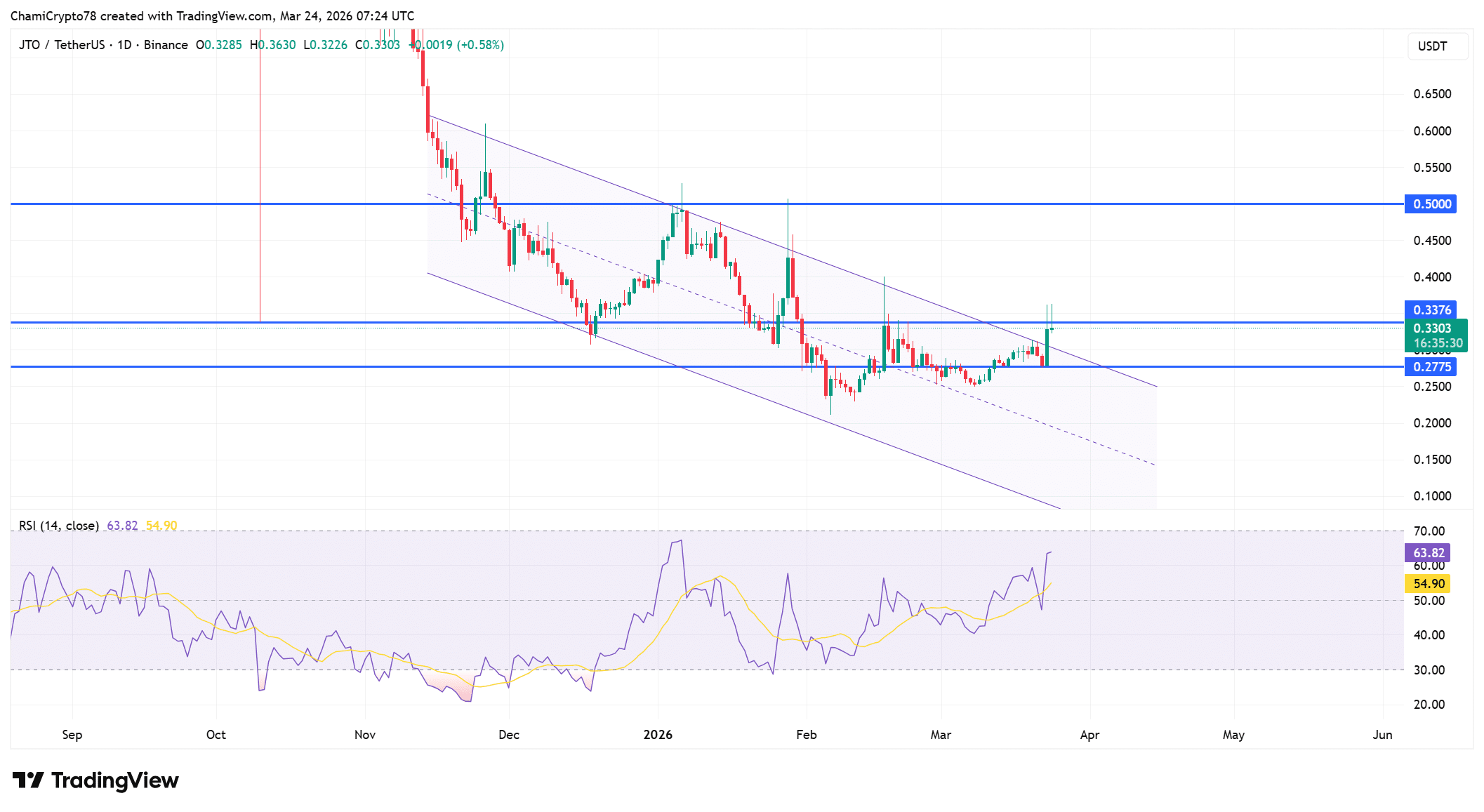
Jito(JTO)价格在发布时上涨15.96%至0.3314美元,交易量激增超1000%,显示现货需求急剧增加和市场参与度回升。价格突破下降通道并站稳0.2775美元支撑位,短期结构转向多头主导,RSI升至63表明仍有上涨空间但未超买。然而,现货市场订单仍以卖出为主,反映零售投资者获利了结,若卖压持续可能限制涨幅。同时,未平仓合约激增89.51%至2897万美元,杠杆仓位快速积累可能加剧波动——若价格继续上涨将推动空头平仓加速上行,但若在阻力位停滞则可能引发多头清算导致急跌。综上,JTO突破虽显示强势,但需持续吸收卖压方能延续涨势,否则高杠杆环境可能引发大幅回调。

截至发稿时,Jito [JTO] 暴涨15.96%至0.3314美元,交易量激增超过1000%,表明现货需求急剧涌入和市场参与度重新提升。这种扩张反映了活动的突然转变,买家在经历一段时间的盘整后积极介入。

值得注意的是,如此大的交易量增长并非逐渐出现;它反映了参与者大规模入场的紧迫感和信心。因此,价格做出了明确的向上推动,强化了这波走势背后的力量。

然而,这种飙升也使JTO进入了一个高关注度区域,快速的资金流入可能加速上涨的延续和波动性,具体取决于后续需求的发展。

JTO突破有效,RSI确认强度

JTO在重新获得0.2775美元的支撑后,已脱离其下降通道,标志着随着买家掌控局面,短期结构发生了明显转变。这一走势反映了从压缩向扩张的过渡,价格不再遵循先前的下行边界。

因此,JTO目前正逼近0.3376美元的阻力位,这是该结构中的下一个关键水平。与此同时,截至撰稿时,相对强弱指数(RSI)已攀升至63,强化了此次突破背后的力量,且未进入超买区域。这种定位表明,涨势仍有扩展空间,同时保持稳定。

此外,RSI已上穿其移动平均线,与当前的价格行为保持一致,并支持涨势的延续。然而,保持在突破区域上方仍然至关重要,因为若在此水平失败,可能会削弱结构并将价格拉回盘整区间。
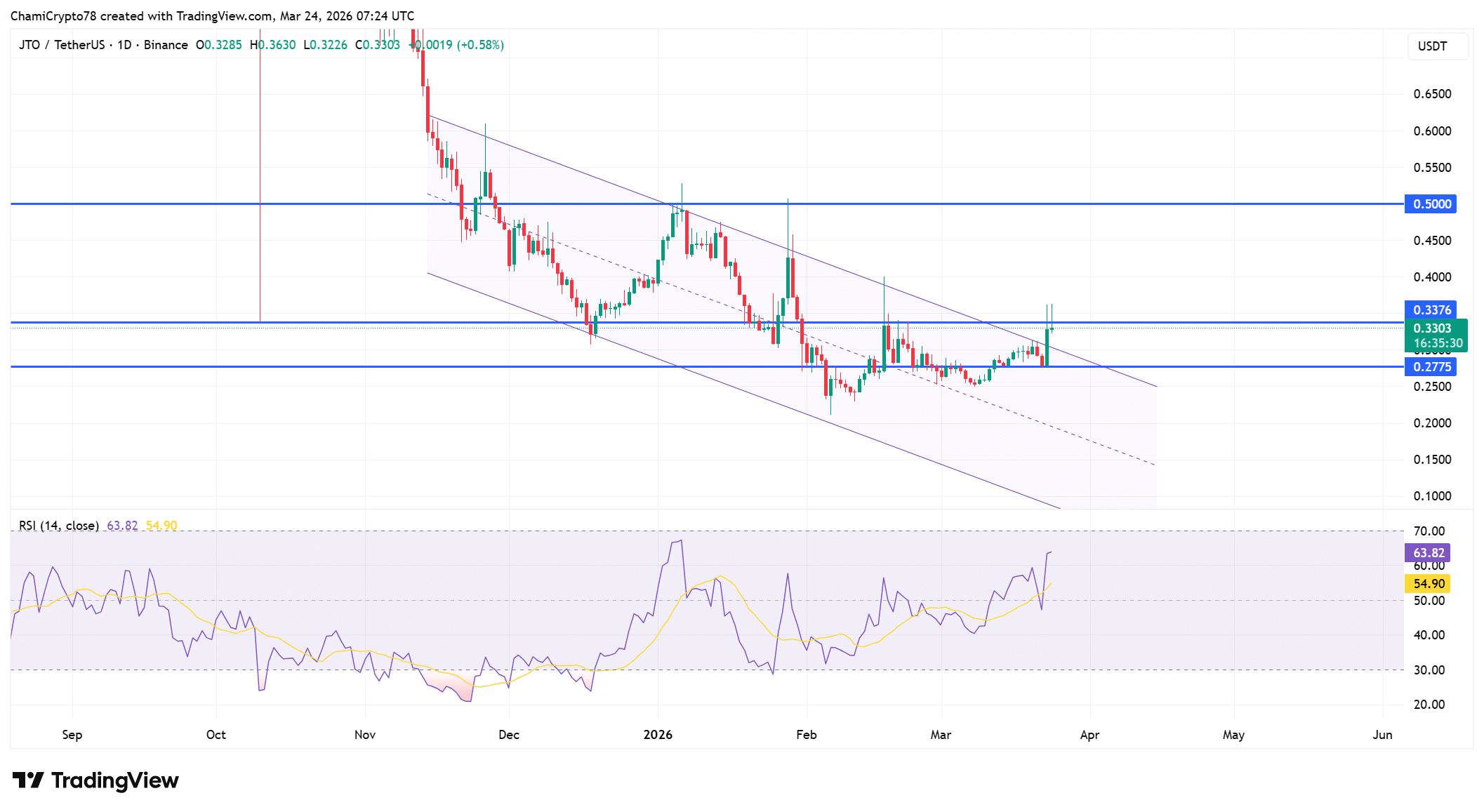
来源:TradingView

散户锁定利润,抛售压力上升

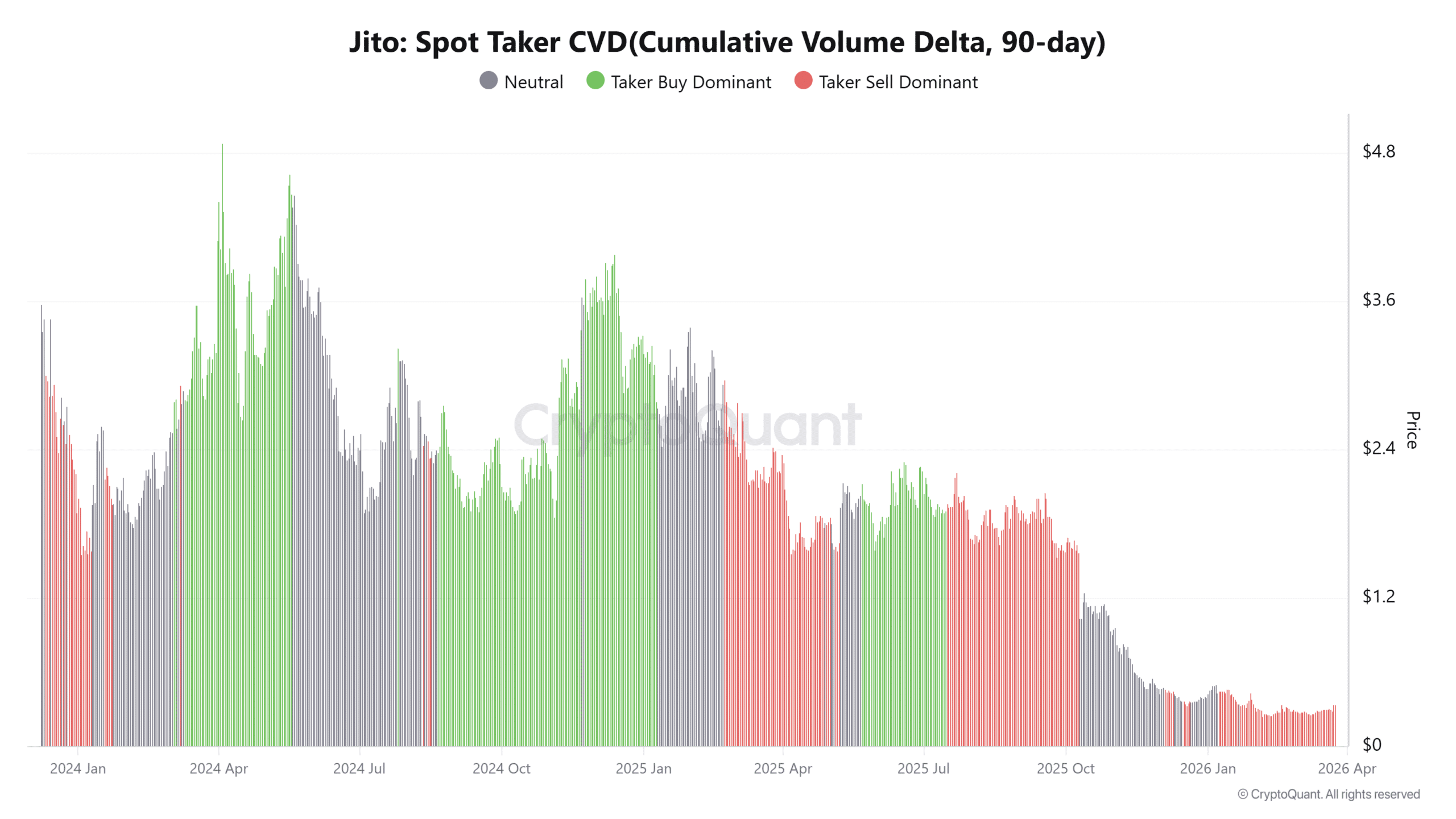
尽管价格突破,现货吃单者CVD(Spot Taker CVD)仍显示为卖出主导,表明市场订单继续倾向于卖出而非买入。这种分歧突显了一个关键动态:即使参与者趁强势获利了结,价格仍在上涨。

这种行为通常反映了散户交易者在上涨后平仓,而实力更强的投资者(大户)则吸收了这些抛压。因此,当前的走势在很大程度上取决于这种抛售压力是否能被有效吸收。

然而,如果卖出主导持续存在而需求不足,可能会减缓涨势并限制进一步的上涨空间。
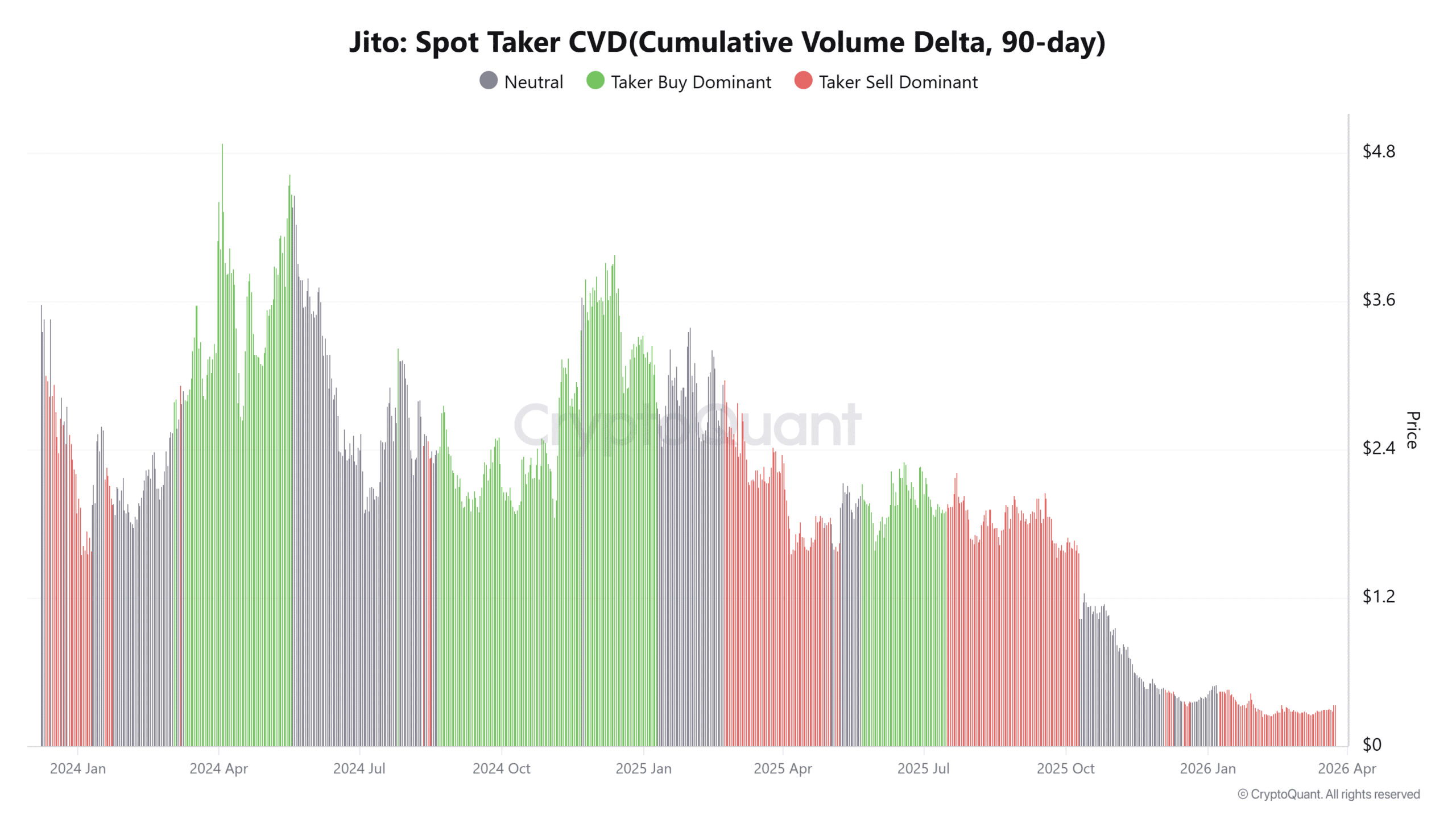
来源:CryptoQuant

JTO未平仓合约激增,杠杆快速累积

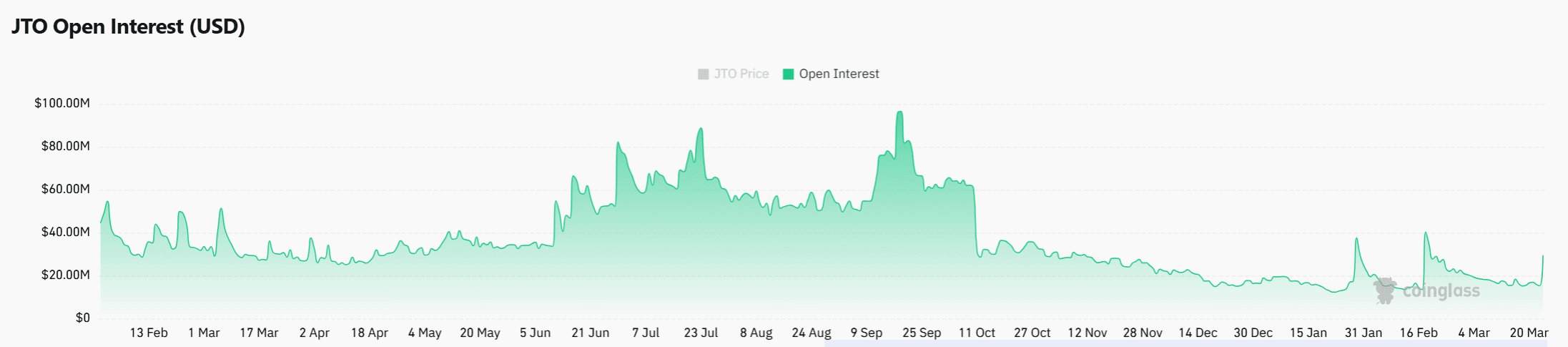
未平仓合约(OI)激增89.51%,达到2897万美元,表明随着交易者积极入市,杠杆头寸急剧增加。这一增长反映了衍生品市场参与度的提高,通常与强烈的方向性预期相一致。

随着价格和未平仓合约同步上升,这表明交易者正在建立头寸,预期涨势将持续。然而,如此快速的扩张也带来了风险,因为拥挤的头寸可能会放大波动性。

如果价格继续上涨,这些头寸可能通过强制平仓(空头被迫买入)进一步推动上涨。另一方面,如果价格在阻力位附近停滞,同样的杠杆可能会迅速解除,引发由清算和平仓驱动的急剧下跌。
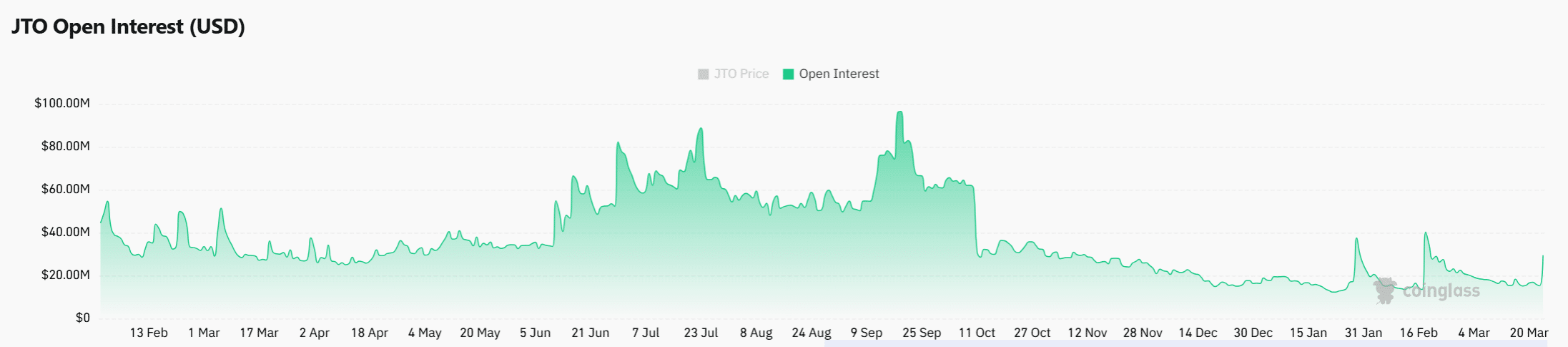
来源:CoinGlass

总而言之,JTO的突破反映了在交易量扩张和杠杆上升支持下的强劲结构性复苏。然而,卖出主导的订单流信号表明活跃的获利了结行为,如果需求减弱,可能会限制上行空间。

如果买家继续吸收抛售压力,突破行情很可能得以维持并进一步延伸。否则,杠杆头寸的积累可能会加速从当前阻力位开始的急剧回调。


最终总结

  • JTO的突破反映了买家的强劲控制力,但其可持续性取决于能否在阻力位附近吸收持续的卖压。
  • 杠杆与价格同步上升将放大收益,但也增加了出现由清算驱动的急剧下跌行情的风险。

Related Questions

QJito (JTO) 的价格在文章发布时上涨了多少百分比?

AJito (JTO) 的价格在文章发布时上涨了15.96%,达到0.3314美元。

Q是什么技术指标显示JTO的突破具有强度且尚未进入超买区域?

A相对强弱指数(RSI)已升至63,这确认了突破的强度,并且尚未进入超买区域,表明涨势仍有延续空间。

Q尽管价格突破,但什么数据显示市场订单仍然偏向卖出而非买入?

A现货吃单者CVD(Spot Taker CVD)数据显示,市场订单仍然偏向卖出主导,表明参与者在价格上涨时获利了结。

QJTO的未平仓合约(OI)增加了多少百分比,这反映了什么市场行为?

AJTO的未平仓合约(OI)激增了89.51%,达到2897万美元,这反映了杠杆头寸的快速增加,表明交易者正在积极建仓,预期价格继续上涨。

Q根据文章,JTO的涨势能否持续的关键因素是什么?

AJTO涨势能否持续的关键在于买家能否持续吸收卖压。如果需求足够,突破将得以维持并进一步上涨;反之,杠杆头寸的积累可能引发快速的回调。

Related Reads

OpenAI's Hyperliquid Pre-IPO Pricing Venture: Why Did It Last Only Half a Year?

The article discusses the rise and fall of Pre-IPO pricing markets on the Hyperliquid blockchain. Trade.xyz, an anonymous team, successfully built the largest pre-market for SpaceX (SPCX) by launching a contract with a clear anchor: the eventual Nasdaq listing price. This provided inherent price stability and validation. In contrast, Ventuals, a team backed by Paradigm, failed despite holding exclusive contracts for highly sought-after companies like OpenAI and Anthropic. Its key mistake was its pricing mechanism. For companies with no near-term IPO date, Ventuals' oracle relied partly on opaque private market transactions and, critically, partly on its own contract's moving average price. This created a self-referential feedback loop where prices were artificially propped up and detached from genuine supply and demand, leading to illiquid markets. Ventuals shut down after nine months, settling positions at final prices of $1,341.80 for OpenAI and $1,618.90 for Anthropic. Ironically, some employees and late-stage investors of these very companies reportedly used these flawed Ventuals prices for valuation reference, highlighting the acute demand for any price signal in illiquid private markets. The article concludes that while demand for pre-IPO trading is real and growing, with players like Coinbase now entering the space, the fundamental challenge remains: without a public listing to provide a definitive price anchor, these markets struggle to establish truly accurate and liquid pricing. The need for a transparent, self-correcting market is the critical lesson from Ventuals' failure.

marsbit14m ago

OpenAI's Hyperliquid Pre-IPO Pricing Venture: Why Did It Last Only Half a Year?

marsbit14m ago

With Daily Active Users Reaching 3-4 Times That of the Industry's Second Place, Which Crack in the Office Agent Market Has Tencent's WorkBuddy Torn Open?

Tencent's AI office assistant, WorkBuddy, has achieved daily active users (DAU) 3-4 times that of the industry's second-place product, primarily driven by non-technical users like HR, operations, and administrative staff. Its rapid growth, starting with a public beta in March 2026, highlights a key strategic divergence from competitors like OpenAI's Codex and Anthropic's Claude Code. Unlike those tools, which originated as developer-focused assistants (in command lines or IDEs) and are now expanding towards office scenarios, WorkBuddy was built from the ground up for non-technical office workers. Its development was user-driven, initiated after腾讯云's team observed non-technical employees using their CodeBuddy coding tool for general tasks. WorkBuddy's design is defined by three core decisions aimed at lowering barriers: 1) Using natural language instead of technical concepts, so users describe their goal without needing to understand prompts or agents. 2) Providing pre-packaged "Skill" templates for common office tasks like data processing, content creation, and research. 3) Natively integrating into existing腾讯 ecosystems like腾讯 Docs and WeChat, making the agent a seamless part of the user's workflow rather than a separate tool. This "scenario encapsulation" approach, prioritizing the shortest path for users to get work done, contrasts with the "underlying capability" focus of Codex and Claude, which offer more flexibility but require more technical setup. Analysts confirm WorkBuddy's leading market position in China by mid-2026, with massive user and request growth following its launch. Recognizing the same trend of surging non-technical adoption, OpenAI and Anthropic are now pivoting their products with features like role-based plugins (Codex) and a simplified desktop interface (Claude Cowork). However, adapting tools built for developers requires significant changes to interaction models and integrations. WorkBuddy currently holds an estimated six-month lead in delivering a complete solution for non-technical office users. Its recently launched enterprise version aims to solidify this advantage. The competition underscores two valid paths: embedding agent capabilities directly into familiar work environments versus building powerful, general-purpose agents that users must learn to access. WorkBuddy's early success demonstrates the effectiveness of the former strategy for mainstream office adoption.

marsbit22m ago

With Daily Active Users Reaching 3-4 Times That of the Industry's Second Place, Which Crack in the Office Agent Market Has Tencent's WorkBuddy Torn Open?

marsbit22m ago

Dalio's Latest Warning: Don't Get Carried Away by AI, Real Returns on US Stocks in the Next 5-10 Years Could Be -5% to -10%

Ray Dalio, founder of Bridgewater Associates, warns investors against excessive concentration in AI stocks. He argues the current market, dominated by a few AI giants, mirrors historical patterns where revolutionary new technologies lead to high risk, volatility, and uncertainty. While acknowledging AI's transformative potential, Dalio emphasizes that most investors fail at this stage of the cycle by over-concentrating in a handful of leading companies. He cites inherent risks: companies cannot accurately forecast investment needs or external shocks (e.g., monetary policy, geopolitics, taxes), face potential disruption from future technologies and international competition (notably from China), and experience significant price swings. Dalio's core advice is diversification, calling it his "Holy Grail of Investing." He presents a mathematical case that a well-diversified portfolio of 15-20 uncorrelated, good bets offers a superior risk-adjusted return compared to a concentrated position. Dalio also offers a cautious outlook, suggesting U.S. stocks may deliver real returns of -5% to -10% over the next 5-10 years based on valuation and bubble indicators. He concludes that in the face of high uncertainty, the prudent strategy is not to avoid betting entirely, but to avoid large, concentrated bets where one lacks sufficient informational edge. Instead, investors should build a strategically balanced, diversified portfolio.

marsbit1h ago

Dalio's Latest Warning: Don't Get Carried Away by AI, Real Returns on US Stocks in the Next 5-10 Years Could Be -5% to -10%

marsbit1h ago

Trading

Spot
Futures

Hot Articles

How to Buy JTO

Welcome to HTX.com! We've made purchasing Jito (JTO) simple and convenient. Follow our step-by-step guide to embark on your crypto journey.Step 1: Create Your HTX AccountUse your email or phone number to sign up for a free account on HTX. Experience a hassle-free registration journey and unlock all features.Get My AccountStep 2: Go to Buy Crypto and Choose Your Payment MethodCredit/Debit Card: Use your Visa or Mastercard to buy Jito (JTO) instantly.Balance: Use funds from your HTX account balance to trade seamlessly.Third Parties: We've added popular payment methods such as Google Pay and Apple Pay to enhance convenience.P2P: Trade directly with other users on HTX.Over-the-Counter (OTC): We offer tailor-made services and competitive exchange rates for traders.Step 3: Store Your Jito (JTO)After purchasing your Jito (JTO), store it in your HTX account. Alternatively, you can send it elsewhere via blockchain transfer or use it to trade other cryptocurrencies.Step 4: Trade Jito (JTO)Easily trade Jito (JTO) on HTX's spot market. Simply access your account, select your trading pair, execute your trades, and monitor in real-time. We offer a user-friendly experience for both beginners and seasoned traders.

3.1k Total ViewsPublished 2024.03.29Updated 2026.06.02

How to Buy JTO

Discussions

Welcome to the HTX Community. Here, you can stay informed about the latest platform developments and gain access to professional market insights. Users' opinions on the price of JTO (JTO) are presented below.

活动图片