以太坊合并,哪个 PoW 项目获益最大?

去中心化金融社区Published on 2022-08-11Last updated on 2022-08-11

Abstract

ETH 挖矿业的估值约为 190 亿美元,以太坊合并后,算力将流向哪里?

ETH 挖矿业的估值约为 190 亿美元,以太坊合并后,算力将流向哪里?

在加密货币领域,成功的关键往往是遵循当前的叙事。与之匹配的交易项目对投资者来说是最有利可图的策略。以太坊合并是 2022 年底加密领域最重要的故事之一。

一些关于以太坊当前挖矿市场的有趣数据。ETH 占 GPU 可挖矿币日收益的 97%。ETH 挖矿业的估值约为 190 亿美元。在本文中,我们将展示两个使用 PoW 的项目,我们认为它们值得关注。

以太坊 (ETH) 将从合并中受益

以太坊本身就是最明显的受益者。合并只是五个主要升级系列中的第一个。以太坊 (ETH) 将在质押合约中验证网络。这意味着更多代币将被锁定,自动减少供应。与此同时,由于通过质押可以实现更高的 APR,所以需求会增加。

ETHW 和 ETHS

著名挖矿公司之一的所有者最近宣布,他支持 ETH 分叉——称之为 ETHW ( 以太坊 - PoW)。

这个分叉的工作原理与 ETC/BCH 类似。合并后,ETHW (ETH - PoW) 和 ETHS (ETH PoS) 应该可用。不同的是,DeFi 协议将支持 ETHS,在合并后继续在新的链中开发和更新,而旧的 ETHW 保持原样。

在活动期间预计会有波动,没有办法知道分叉后 ETHW 的价值。一些人猜测价格会在以太坊市值的 1-5% 之间找到平衡。

在减少发行的同时,ETH 也有机会成为通缩资产。能源消耗下降了 99%,使得这一代币受到了更多投资者的青睐。

作为参考,ETC 几乎没有开发生态系统,目前约占 ETH 市值的 4%。最近有传言称,stETH 持有人可能没有资格参加 ETHW 空投。

Poloniex 已经宣布他们将支持和上架这两种代币 (ETHW 和 ETHS)。

Ravencoin

Ravencoin 旨在解决比特币等其他加密货币存在的交易可能会被意外删除资产的问题。

Ravencoin 创建了一个数字点对点网络,使用区块链技术可以快速、轻松地发送资产。这样做可以避免资产在交易过程中被意外删除的风险。

该项目的主要特点是没有 ICO。因此,没有为团队或创始人保留任何币。

所有的币都对公众开放。如果项目能够长期建立,那么这将创造出极好的价格潜力。但不应忽视风险。

Ravencoin 的价格波动很大,而且加密货币是基于比特币的代码,所以它的智能合约能力有限,但它运行在 PoW 上。所以,也许在未来,当以太坊矿工寻找另一个矿币 / 代币时,他们会找到 Ravencoin。

以太坊经典 (ETC) 作为 B 计划

以太坊 Classic 是以太坊的一个硬分叉,在 2016 年被黑客攻击后开发出来,以保留以太坊的原始区块链。智能合约和 dApp 仍然被支持,并保持工作证明共识过程,最终吸引了许多矿工加入了这个区块链。

随着以太坊最终从 PoW 转移到 PoS,当前的以太坊矿工将不得不为他们的结构或新的 PoW 网络寻找新的用例,因为挖矿将不再是以太坊的一个选项。图表已经显示了参与者的一些猜测,认为它可能会获得以太坊的哈希能力。它是目前可用的 GPU 候选之一。最近成交量有突破。

许多人将 ETC 视为以太坊合并失败时的备份。由于具有良好的兼容性,项目可以在 ETC 上快速“保存”自己。因此可以预见,以太坊经典价格将成为以太坊合并的受益者之一。
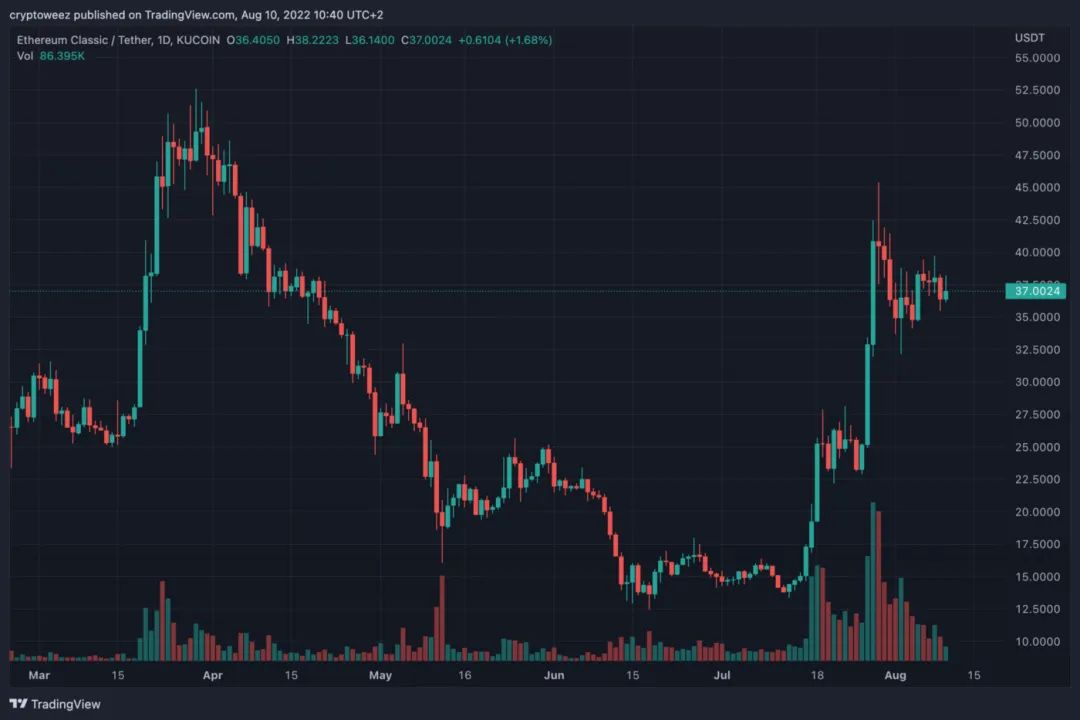
对于以太坊经典的价格,它高达 215%。与 ETC 币一样,上个月几乎没有任何其他加密货币出现上涨。

更多的项目受益于以太坊合并

但还有其他有趣的项目可能值得一看。以下是一些例子:

SushiSwap

Polygon

Lido

Uniswap

Aave

Optimism

Curve Finance (CURVE) & Convex Finance

Compound

ETH 网络在合并后不太可能取得进一步进展,直到下面的升级。在那之前,他们会将你的交易与围绕以太坊的叙事结合起来,这可能是危险的,也有可能是有益的。在任何情况下,都应该首先考虑成熟的策略。

当前的谣言和消息可能会在短期内引导市场表现。然而,从长远来看,成功的以太坊合并无疑会带来乐观的前景,因为 PoS 为网络提供了许多新的机会,并且更符合公众的时代精神。

Trending Cryptos

Related Reads

Stablecoins Becoming the Next Policy Challenge for the Fed's Walsh Version

Fed Governor Christopher Waller's speech at the June 22 conference on the U.S. dollar's international role signifies a notable policy shift: stablecoins like USDT and USDC are now being formally considered as potential channels for transmitting U.S. dollar liquidity globally. With their combined market cap surpassing $250 billion and high transaction volumes, these digital assets are moving from the periphery of crypto policy to the core of monetary system research. The key concern for policymakers is how stablecoin flows interact with traditional dollar infrastructure. Their growth could affect bank deposits, demand for short-term Treasury securities (like T-bills), and global access to dollars, depending on whether demand originates overseas or substitutes for domestic bank balances. Issuers' reserve management—holding assets in banks, money market funds, or Treasuries—links stablecoin activity directly to these core markets. The Fed's research agenda now examines whether stablecoins, by combining payment and balance-holding functions on digital rails, could complicate monetary policy implementation or transmit liquidity stress to banks. While current Treasury holdings by issuers are under 1% of the total market, their concentrated demand could marginally impact yields, especially during periods of stress. Consequently, stablecoins are evolving from mere crypto trading tools into a private-layer dollar transmission system with public policy implications, prompting closer regulatory scrutiny of their reserve robustness, redemption mechanisms, and systemic integration.

marsbit52m ago

Stablecoins Becoming the Next Policy Challenge for the Fed's Walsh Version

marsbit52m ago

A 380% Soar, Shenzhen’s 100-Billion-Yuan IPO Rings the Bell

HKC Holdings, a major Chinese display panel manufacturer, has successfully listed on the Shenzhen Stock Exchange's main board. The company's shares surged over 380% on its debut, pushing its market capitalization to around 350 billion yuan (formerly reaching 500 billion yuan). Founded by Wang Zhiyong in Shenzhen's Huaqiangbei electronics market nearly three decades ago, HKC evolved from assembling monitors to becoming a global top-tier supplier of semiconductor display panels for TVs, monitors, and smartphones. The IPO marks a significant milestone for HKC and its backers. The company's growth into the capital-intensive panel manufacturing sector was supported through partnerships with state-owned capital from regions like Chongqing, Mianyang, and Chuzhou. Its shareholder list also includes BOE Technology's investment arm. In recent years, HKC reported strong financials, with core panel business contributing over 70% of revenue and clients including Samsung, TCL, and Xiaomi. This listing is seen as part of a broader trend in Shenzhen's evolving tech landscape. Beyond established giants, the city is nurturing clusters of leading companies in specialized sectors like robotics—exemplified by the "Shenzhen Robot Valley"—and storage chips, where a group of firms dubbed the "Storage Five Tigers" has achieved a combined trillion-yuan market valuation. Shenzhen's strategic focus on emerging industries such as AI terminals, low-altitude economy, and humanoid robotics aims to build new industrial depth and foster the next generation of tech champions.

marsbit1h ago

A 380% Soar, Shenzhen’s 100-Billion-Yuan IPO Rings the Bell

marsbit1h ago

Trading

Spot
Futures

Hot Articles

Discussions

Welcome to the HTX Community. Here, you can stay informed about the latest platform developments and gain access to professional market insights. Users' opinions on the price of ETH (ETH) are presented below.

活动图片