特朗普:同意与伊朗新领导层对话,伊朗:不谈

华尔街见闻Published on 2026-03-02Last updated on 2026-03-02

Abstract

“委内瑞拉模式”结局是选项之一?

美国总统特朗普表示愿意与伊朗新领导层对话,并提出包括“委内瑞拉模式”在内的多种政治更迭设想。但伊朗强硬回应:不谈。

据新华社最新报道,美国总统特朗普3月1日表示,伊朗新领导层希望与他对话,他也同意与伊朗方面对话。

“他们想谈谈,我也同意谈,所以我会和他们谈。”

当被问及对话何时进行时,特朗普回答:“我不能告诉你。”他说,最近几周参与谈判的一些伊朗人已经身亡,“他们本可以达成协议,他们本该早点这么做的,他们耍小聪明了”。

特朗普这一表态发生在美以对伊朗发动军事打击、伊朗最高领袖哈梅内伊遇害之后,或表明中东局势在剧烈动荡中出现新的政治博弈空间。新华社提及,伊朗总统佩泽希齐扬3月1日说,伊朗临时领导委员会当天开始工作,直至选举出新的最高领袖。

不过对于特朗普的“谈判邀约”,央视新闻最新报道显示,伊朗最高国家安全委员会秘书阿里·拉里贾尼当地时间3月2日表示,不会与美国进行谈判。

他在稍早前的一篇帖子中写道:“特朗普用他的‘虚假希望’在伊朗制造了混乱,现在又担心美军伤亡会进一步增加。”

特朗普提及“委内瑞拉模式”

特朗普日前在接受媒体采访时,提出了一个备受关注的选项——“委内瑞拉模式”。他表示,在委内瑞拉的行动中,美国控制了最高领导人,而大部分政府架构得以保留,并愿意与美国合作。

据央视新闻报道,今年1月3日,美国总统特朗普宣布美军在委内瑞拉发动突袭行动,抓走委内瑞拉总统尼古拉斯·马杜罗及其妻子,并称两人将赴纽约面临刑事指控;他同时宣称美国将“暂时运行”委内瑞拉。

特朗普说:

“我们在委内瑞拉所做的,我认为是完美的,完美的场景,”

报道称,特朗普暗示这种模式可以复制到伊朗,即寻找一个更愿意与美国合作的领导层。

然而,这一设想面临巨大挑战。伊朗拥有庞大的军事力量和复杂的社会结构,且维持着相关核计划。特朗普的顾问曾警告,两国在文化和历史上的巨大差异,使得在伊朗复制委内瑞拉战略几乎不可能。

与此同时,特朗普的表态本身也充满矛盾性。他给出了数种并不完全一致的设想,甚至未明确是“延续既有权力结构”还是“推翻旧结构”。

在特朗普反复提及他所称的“委内瑞拉经验”之际,特朗普又声称,他希望伊朗精锐武装力量——包括伊斯兰革命卫队中“强硬的军官”——把武器交给伊朗民众。他说:“如果你想想,他们其实会向人民投降。”

在“由谁来领导伊朗”的问题上,特朗普称自己有“三个非常好的选择”,但拒绝点名:“我现在不会透露。先把事情办完。”

媒体报道同时提到,伊朗方面当天早些时候表示,将由一个临时委员会运转国家直至最高领袖继任者产生;报道点到伊朗最高国家安全官员阿里·拉里贾尼的表态,并称拉里贾尼曾负责与美国谈判核协议且在今年1月遭特朗普政府制裁。特朗普未回答自己是否认为拉里贾尼可能领导伊朗政府。

军事行动将持续 弹药储备引关注

关于冲突的持续时间,特朗普的表态与此前有所不同。他表示,美以将继续军事行动,直到达成所有目标。

据央视新闻报道,美国总统特朗普当地时间3月1日发表视频讲话称,美国和以色列将继续对伊朗的军事行动,直到达成所有目标。伊朗外交部长阿拉格齐当天表示,伊朗将决定这场美以强加的侵略战争何时以及如何结束。

此前特朗普的说法是:对伊朗军事行动或持续约4周。

特朗普在谈到维持战斗强度时说:

“这不会很困难……我们有大量的弹药。你知道,我们在世界各地的不同国家都储存了弹药。”

尽管特朗普对弹药储备充满信心,但五角大楼此前曾表达担忧,认为冲突可能会进一步消耗战略储备。在美军已有数人阵亡的背景下,特朗普承认“我们预计会有伤亡”,并表示根据预测,伤亡人数可能会更高。

伊朗的“马赛克防御”

面对美以的持续打击,伊朗并未示弱。

据央视新闻,伊朗外长阿拉格齐1日在社交媒体发文说,伊朗过去20年一直在研究美军的失败案例,美以对伊朗首都德黑兰的轰炸不会影响伊朗的战争能力。

阿拉格齐称,伊朗去中心化、分散式的“马赛克防御”体系使伊朗能够决定战争何时以及如何结束。

这表明伊朗已为长期冲突做好准备。

目前,伊朗临时领导委员会已开始工作,直至选举出新的最高领袖。特朗普表示,如果新领导层表现出务实合作的态度,他愿意解除对伊朗的制裁。然而,在冲突仍在持续、双方立场依然对立的情况下,任何实质性的对话与妥协都面临重重阻碍。


Trending Cryptos

Related Reads

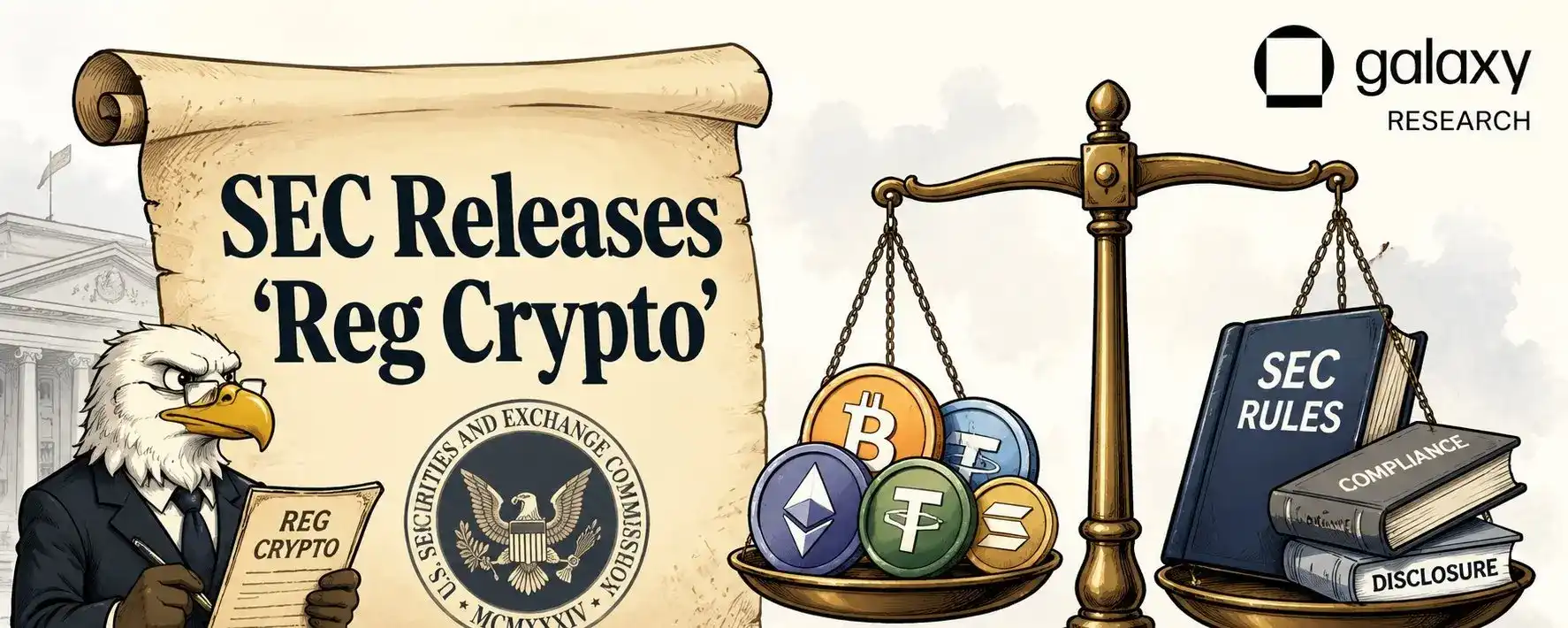
Galaxy Research: Can SEC's New Regulations Usher in a New Era for Token Financing?

**SEC Proposes New Framework for Token Offerings, Potentially Unlocking Legal Paths for U.S. Crypto Fundraising** On August 18, the U.S. Securities and Exchange Commission (SEC) proposed new rules, dubbed "Reg Crypto," specifically tailored for crypto asset offerings. This framework marks a departure from applying traditional securities rules designed for stocks to tokens. It creates a potential legal pathway for token sales to the U.S. public, including non-accredited investors, without full registration. The proposed rules apply to crypto assets that are not themselves securities but were sold as part of an investment contract where the issuer promised to build a product, network, or ecosystem. It establishes a four-phase lifecycle: Raise, Disclose, Build, and Exit. The "Raise" phase includes two new fundraising exemptions: a startup exemption allowing up to $5 million over four years and a larger, Regulation A-based exemption for up to $20 million or $75 million over 12 months. The "Disclose" phase requires specific token-related disclosures like supply schedules, governance, and development progress. After the issuer completes its promised development work and files a transition report, the "Exit" phase allows the associated investment contract to terminate, even if the token continues to trade. The analysis highlights that the framework's most immediate impact may be providing a formal "exit" path for existing tokens with unclear legal status, rather than immediately sparking a new wave of U.S.-based token offerings. It offers advantages over traditional private placements by allowing public sales and immediate token transferability but imposes ongoing disclosure and reporting obligations. A key hurdle is that the larger exemption requires a substantial U.S. operational presence, which may deter projects with offshore structures. Overall, the proposal is seen as a constructive step toward regulatory clarity, acknowledging that token offerings differ from equity offerings and require tailored investor disclosures. However, it remains a proposal subject to a 60-day public comment period, and its long-term stability may ultimately depend on congressional action.

marsbit24m ago

Galaxy Research: Can SEC's New Regulations Usher in a New Era for Token Financing?

marsbit24m ago

Bitcoin and Ethereum Soar Together! Eight Altcoins Worth Watching in the Later Market

Bitcoin and Ethereum Surge, Fueling Altcoin Speculation. Bitcoin Eyes $77,000, Ethereum Gains 20% in a Single Day. Market anticipates capital rotation from major cryptos to high-beta altcoins, but a selective rise is expected, favoring projects with genuine users, protocol revenue, and healthy tokenomics. Analysts highlight eight altcoins across key sectors: **High-Performance Blockchains:** * **SOL (Solana):** Market cap ~$51.88B. A dominant player with a strong ecosystem. Considered a relatively safe bet for potential catch-up growth. * **SUI (Sui):** Market cap ~$3.03B. High volatility potential but faces risks from its low circulating supply and future token unlocks. **DeFi Lending:** * **UNI (Uniswap):** Market cap ~$2.38B. Transitioning to a revenue-capturing asset post-fee switch implementation. * **AAVE (Aave):** Market cap ~$1.53B. Features balanced tokenomics and revenue but has seen significant recent gains. * **MORPHO:** Market cap ~$1.50B. Rapid protocol growth but weaker token value capture and opaque supply data. **Perpetual DEX:** * **HYPE (Hyperliquid):** Market cap ~$16.41B. The clear sector leader with strong revenue but high valuation and a large portion of tokens still locked, warranting caution. **RWA & On-Chain Finance Infrastructure:** * **LINK (Chainlink):** Market cap ~$8.09B. A key oracle provider positioned to benefit from multiple trends like RWA and institutional adoption, offering strong fundamentals. * **ONDO (Ondo Finance):** Market cap ~$1.77B. Shows strong business growth but carries high risks due to concentrated token holdings and a massive unlock scheduled for 2027. **Conclusion:** The altcoin rally is expected to be selective. Recommendations include a medium position in SOL, small allocations to SUI and UNI/AAVE for DeFi exposure, and caution with HYPE and ONDO due to their specific risks. LINK is suggested as a core holding for the RWA thematic.

marsbit2h ago

Bitcoin and Ethereum Soar Together! Eight Altcoins Worth Watching in the Later Market

marsbit2h ago

Shanghai's $10 Billion Unicorn Is About to Go Public

Shanghai-based automotive-grade millimeter-wave radar chip unicorn Calterah Microelectronics Technology (Shanghai) Co., Ltd. has filed for an IPO on Shanghai's STAR Market, aiming to raise 3.49 billion yuan. Founded in 2014 by Chen Jiashu, a UC Berkeley PhD graduate, and his professor Ali Niknejad, Calterah pioneered CMOS technology for 77GHz radar chips, breaking the decades-long monopoly of international giants like Texas Instruments. Its low-cost, highly integrated solutions enabled millimeter-wave radar to move from luxury to mass-market vehicles. By 2025, Calterah captured a 31.1% share in China's automotive millimeter-wave radar chip market (second domestically, fourth globally), with cumulative shipments exceeding 30 million units. Its client list includes BYD, Geely, Nio, and Volvo. The company has undergone 11 funding rounds, attracting high-profile investors such as the National Integrated Circuit Industry Investment Fund Phase II, China Capital Management, and GD Capital. Its valuation has reached tens of billions of yuan, with a projected post-IPO valuation of approximately 14 billion yuan. Despite rapid revenue growth—increasing from 206 million yuan in 2023 to 632 million yuan in 2025 with a 75.28% CAGR—Calterah remains unprofitable. It reported net losses of 323 million yuan, 334 million yuan, and 193 million yuan from 2023 to 2025, accumulating over 900 million yuan in losses over three and a half years. These losses are primarily attributed to heavy R&D investment, which totaled over 1.039 billion yuan in the reporting period, often exceeding annual revenue. The company faces significant risks, including high customer concentration (its top five customers accounted for over 99% of revenue from 2023-2025, with BYD alone representing over 50% in 2025) and supply chain concentration. Revenue pressure from key customers and dependencies on overseas suppliers for EDA tools and IP pose challenges to sustainable growth. The IPO is seen as crucial for securing capital to expand production, diversify its customer base, and reduce supply chain dependencies.

marsbit3h ago

Shanghai's $10 Billion Unicorn Is About to Go Public

marsbit3h ago

Ray Dalio's Latest Macro Analysis Full Text: Buy More Gold, Add Some Bitcoin

In his latest macro analysis, Ray Dalio applies his framework from "How Countries Go Broke: The Big Cycle" to the current global debt environment. He highlights recent events like Japan selling U.S. Treasuries and rising U.S. long-term yields as signs of an unsustainable debt dynamic. Dalio explains that excessive government debt leads to either unacceptably high interest rates, severe economic downturns, or significant currency debasement through central bank money printing. He summarizes the U.S. fiscal situation: with $5.5 trillion in revenue, $7.5 trillion in spending, a $2 trillion deficit, and total debt at six times annual revenue, debt servicing costs are immense. Without correction, U.S. debt could reach $55-$60 trillion in a decade. Dalio proposes a "3% Three-Way" solution: reducing the budget deficit to 3% of GDP through balanced spending cuts, tax increases, and interest rate reductions to avoid a traumatic adjustment. In response to FAQs, he argues that the risk of a U.S. debt crisis is high and could materialize within a few years if the current path continues. He dismisses the notion that the dollar's reserve status makes the U.S. immune, citing historical precedents of reserve currency declines. He is also unconvinced by Japan's high-debt stability, noting poor returns for yen-denominated assets. For investors, Dalio recommends diversifying globally, underweighting bonds, and overweighting assets like gold and a small allocation to Bitcoin (around 10-15% to gold) to hedge against currency debasement and poor debt returns.

marsbit4h ago

Ray Dalio's Latest Macro Analysis Full Text: Buy More Gold, Add Some Bitcoin

marsbit4h ago

Trading

Spot

Hot Articles

What is $BITCOIN

DIGITAL GOLD ($BITCOIN): A Comprehensive Analysis Introduction to DIGITAL GOLD ($BITCOIN) DIGITAL GOLD ($BITCOIN) is a blockchain-based project operating on the Solana network, which aims to combine the characteristics of traditional precious metals with the innovation of decentralized technologies. While it shares a name with Bitcoin, often referred to as “digital gold” due to its perception as a store of value, DIGITAL GOLD is a separate token designed to create a unique ecosystem within the Web3 landscape. Its goal is to position itself as a viable alternative digital asset, although specifics regarding its applications and functionalities are still developing. What is DIGITAL GOLD ($BITCOIN)? DIGITAL GOLD ($BITCOIN) is a cryptocurrency token explicitly designed for use on the Solana blockchain. In contrast to Bitcoin, which provides a widely recognized value storage role, this token appears to focus on broader applications and characteristics. Notable aspects include: Blockchain Infrastructure: The token is built on the Solana blockchain, known for its capacity to handle high-speed and low-cost transactions. Supply Dynamics: DIGITAL GOLD has a maximum supply capped at 100 quadrillion tokens (100P $BITCOIN), although details regarding its circulating supply are currently undisclosed. Utility: While precise functionalities are not explicitly outlined, there are indications that the token could be utilized for various applications, potentially involving decentralized applications (dApps) or asset tokenization strategies. Who is the Creator of DIGITAL GOLD ($BITCOIN)? At present, the identity of the creators and development team behind DIGITAL GOLD ($BITCOIN) remains unknown. This situation is typical among many innovative projects within the blockchain space, particularly those aligning with decentralized finance and meme coin phenomena. While such anonymity may foster a community-driven culture, it intensifies concerns about governance and accountability. Who are the Investors of DIGITAL GOLD ($BITCOIN)? The available information indicates that DIGITAL GOLD ($BITCOIN) does not have any known institutional backers or prominent venture capital investments. The project seems to operate on a peer-to-peer model focused on community support and adoption rather than traditional funding routes. Its activity and liquidity are primarily situated on decentralized exchanges (DEXs), such as PumpSwap, rather than established centralized trading platforms, further highlighting its grassroots approach. How DIGITAL GOLD ($BITCOIN) Works The operational mechanics of DIGITAL GOLD ($BITCOIN) can be elaborated on based on its blockchain design and network attributes: Consensus Mechanism: By leveraging Solana’s unique proof-of-history (PoH) combined with a proof-of-stake (PoS) model, the project ensures efficient transaction validation contributing to the network's high performance. Tokenomics: While specific deflationary mechanisms have not been extensively detailed, the vast maximum token supply implies that it may cater to microtransactions or niche use cases that are still to be defined. Interoperability: There exists the potential for integration with Solana’s broader ecosystem, including various decentralized finance (DeFi) platforms. However, the details regarding specific integrations remain unspecified. Timeline of Key Events Here is a timeline that highlights significant milestones concerning DIGITAL GOLD ($BITCOIN): 2023: The initial deployment of the token occurs on the Solana blockchain, marked by its contract address. 2024: DIGITAL GOLD gains visibility as it becomes available for trading on decentralized exchanges like PumpSwap, allowing users to trade it against SOL. 2025: The project witnesses sporadic trading activity and potential interest in community-led engagements, although no noteworthy partnerships or technical advancements have been documented as of yet. Critical Analysis Strengths Scalability: The underlying Solana infrastructure supports high transaction volumes, which could enhance the utility of $BITCOIN in various transaction scenarios. Accessibility: The potential low trading price per token could attract retail investors, facilitating wider participation due to fractional ownership opportunities. Risks Lack of Transparency: The absence of publicly known backers, developers, or an audit process may yield skepticism regarding the project's sustainability and trustworthiness. Market Volatility: The trading activity is heavily reliant on speculative behavior, which can result in significant price volatility and uncertainty for investors. Conclusion DIGITAL GOLD ($BITCOIN) emerges as an intriguing yet ambiguous project within the rapidly evolving Solana ecosystem. While it attempts to leverage the “digital gold” narrative, its departure from Bitcoin's established role as a store of value underscores the need for a clearer differentiation of its intended utility and governance structure. Future acceptance and adoption will likely depend on addressing the current opacity and defining its operational and economic strategies more explicitly. Note: This report encompasses synthesised information available as of October 2023, and developments may have transpired beyond the research period.

2.0k Total ViewsPublished 2025.05.13Updated 2025.05.13

What is $BITCOIN

Discussions

Welcome to the HTX Community. Here, you can stay informed about the latest platform developments and gain access to professional market insights. Users' opinions on the price of BTC (BTC) are presented below.

活动图片