Interest Rate Swap Layer: How Does DeFi Use 'Carry Trade' to Solve the Fixed-Rate Challenge?

比推Dipublikasikan tanggal 2026-01-09Terakhir diperbarui pada 2026-01-09

Abstrak

The article explores the challenge of fixed-rate lending in DeFi, arguing that while demand exists—primarily from institutional borrowers and recursive yield farmers seeking predictable costs—current solutions struggle to scale because they require lenders to lock funds, sacrificing the flexibility that DeFi users highly value. Instead of matching fixed-rate borrowers directly with fixed-rate lenders, the author proposes building an interest rate swap layer on top of established money markets like Aave. This layer would allow traders to speculate on the spread between fixed and floating rates with high capital efficiency, while preserving the seamless deposit/withdrawal experience for lenders. The piece concludes that such a mechanism is essential for the future expansion of on-chain credit, enabling larger, longer-term institutional and consumer lending with rate certainty.

Author: nico pei

Compiled by: AididiaoJ, Foresight News

Original title: Fixed-Rate Lending, the Key to DeFi's Success in Scaling


The demand for fixed rates primarily comes from institutional borrowers and looping strategy users. While on-chain credit is expected to expand in the future, at this stage, most on-chain participants highly value the flexibility of "being able to withdraw funds at any time." Therefore, instead of forcing lenders to accept "term locking," a better approach is to build an interest rate swap layer on top of existing money markets (like Aave) to meet the demand for fixed-rate lending.

Inspiration from Traditional Finance: The Fixed-Rate Market Begins with Borrower Demand

In the private debt market, fixed rates are the mainstream not because lenders prefer them, but because borrowers need certainty.

  • Borrower Perspective (corporations, private equity funds, real estate developers, etc.): Their primary concern is cash flow predictability. Fixed rates hedge against the risk of rising benchmark rates, simplify budgeting, and reduce refinancing risk. This is especially critical for highly leveraged or long-term projects, where interest rate fluctuations could directly threaten their survival.

  • Lender Perspective: They generally prefer floating rates. Loan pricing is typically structured as "benchmark rate + credit risk premium." A floating structure protects profit margins when rates rise, reduces "duration risk," and allows for additional gains if benchmark rates increase. Lenders only offer fixed rates if they can hedge the interest rate risk or charge a sufficient premium.

Thus, fixed-rate products are created in response to borrower demand, not as the market's default form. A key takeaway for DeFi is: without clear and sustained borrower demand for "interest rate certainty," fixed-rate lending will struggle to gain liquidity, scale, or develop sustainably.

Who Are the Borrowers on Aave / Morpho & Euler? Why Do They Borrow?

A common misconception is: "Traders borrow from money markets to add leverage or open short positions."

In reality, directional leverage operations are almost entirely conducted through perpetual contracts due to higher capital efficiency. Money markets require over-collateralization, making them unsuitable for speculative leverage.

Yet, Aave alone has approximately $8 billion in stablecoin loans outstanding. Who are these borrowers?

They can be broadly categorized into two types:

  1. Long-term Holders / Whales / Project Treasuries: They collateralize their crypto assets (e.g., ETH) to borrow stablecoins for liquidity, while avoiding selling the assets (thus retaining upside potential and avoiding taxable events).

  2. Yield Loopers: They borrow to recursively add leverage to yield-bearing assets (e.g., Liquid Staking Tokens LST/LRT like stETH; or yield-bearing stablecoins like sUSDe). The goal is to achieve a higher net yield, not to speculate on price movements.

So, Is There Actually a Need for Fixed Rates On-Chain?

Yes. The demand mainly comes from two types of users: institutional-grade crypto-collateralized loans and looping strategies.

1. Institutional-Grade Crypto-Collateralized Loans Need Fixed Rates

Take Maple Finance as an example. It lends stablecoins to institutions through over-collateralized loans, with collateral primarily being blue-chip crypto assets like BTC and ETH. Borrowers include high-net-worth individuals, family offices, hedge funds, etc., who seek fixed-rate funding with predictable costs.

  • Interest Rate Comparison: The cost to borrow USDC on Aave is around 3.5% APR, while the fixed-rate loan liquidation yield for similar collateral on Maple ranges from 5.3% to 8%. This means borrowers pay a premium of approximately 180-450 basis points to switch from floating to fixed rates.

  • Market Size: Maple's Syrup pool alone manages about $2.67 billion, comparable to Aave's ~$3.75 billion in outstanding loans on Ethereum mainnet.
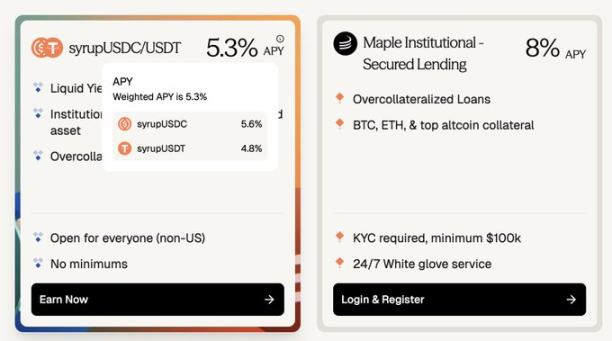
(Aave's ~3.5% vs. Maple's ~8%, paying a ~180-400 basis point premium for fixed-rate crypto loans.)

It's worth noting that some borrowers choose Maple to avoid (early DeFi's) smart contract risk. However, as protocols like Aave have proven their security, transparency, and liquidation mechanisms through testing, this risk perception is diminishing. If reliable fixed-rate options emerge on-chain, the premium for off-chain fixed-rate loans will likely compress.

2. Looping Strategies Need Fixed Rates

Despite generating billions in borrowing demand, looping strategies are often unprofitable due to volatile borrowing rates.

A stablecoin looping/borrowing user stated: "As a looper/borrower, the unpredictability of borrowing rates means rate fluctuations can suddenly wipe out months of accumulated yield, causing positions to become unprofitable."

Historical data also shows that borrowing rates on Aave and Morpho are extremely volatile, with annualized volatility exceeding 20%.

For loopers, they earn fixed income (e.g., via Pendle's PTs) but use floating-rate borrowing to maintain the loop, introducing "interest rate risk." A spike in borrowing rates can devour all profits. If both the borrowing rate and investment yield were fixed, the funding risk would be eliminated. The strategy becomes easier to evaluate, positions can be held with peace of mind, and capital can be deployed more efficiently.

As on-chain infrastructure (like Pendle's PTs) has been security-tested for over five years, demand for on-chain fixed-rate loans is growing rapidly.

Given the demand, why hasn't the market scaled? Look at the supply-side issues.

Flexibility is the 'Priceless Treasure' of On-Chain Participants

Here, flexibility refers to the ability to adjust or exit positions at any time, without lock-up periods—lenders can withdraw anytime, borrowers can repay and redeem collateral anytime, without penalties.

In contrast, holders of Pendle PTs sacrifice some flexibility. Even in the largest pools, Pendle's mechanism cannot allow instantaneous exit of positions exceeding ~$1 million without significant slippage.

So, how much compensation do on-chain lenders get for giving up flexibility? Taking Pendle PTs as an example, compensation is often as high as 10%+ APR, and even over 30%+ during YT points trading frenzies (e.g., usdai on Arbitrum).

Clearly, genuine borrowers (non-speculators) cannot afford a 10% fixed-rate cost. This high rate is essentially a "premium" paid for sacrificing flexibility, unsustainable without speculation on YT points.

Although PTs are riskier than base lending protocols like Aave (adding protocol and underlying asset risk), the core conclusion remains: any fixed-rate market requiring lenders to sacrifice flexibility cannot scale if borrowers cannot afford super-high rates.

Term Finance and TermMax are examples: few lenders are willing to give up flexibility for meager interest, and borrowers absolutely refuse to pay 10% to lock in rates when Aave's rate is 4%.

The Way Out: Don't Match Fixed-Rate Borrowers Directly with Fixed-Rate Lenders

Match fixed-rate borrowers with interest rate traders. Specifically:

Step 1: Protect the Lender Experience

The vast majority of on-chain capital only trusts the security of Aave, Morpho, Euler and enjoys the simple, passive experience of "depositing and earning" on Aave. They are not "sophisticated managers" who would meticulously evaluate every new protocol for a 50-100 basis point premium.

Therefore, for a fixed-rate market to scale, the lender experience must be exactly the same as using Aave now:

  • Deposit anytime

  • Withdraw anytime

  • Almost no additional trust assumptions

  • No lock-up periods

Ideally, fixed-rate protocols should be built directly on top of trusted money markets like Aave, leveraging their security and liquidity.

Step 2: Trade the 'Spread,' Not the 'Principal'

Borrowers seeking fixed rates don't need another full loan with a locked term. What they really need is capital willing to take on the spread risk between the "agreed fixed rate" and the "Aave floating rate"; the principal can still be borrowed from places like Aave.

In other words, traders are trading the expected difference between fixed and floating rates, not the entire loan principal.

An interest rate swap layer can achieve this:

  • Hedgers can exchange fixed payments for floating income perfectly matched to Aave's floating rate.

  • Macro traders can express views on interest rate trends with extremely high capital efficiency.

Capital Efficiency Example: A trader only posts a small amount of margin to take on the interest rate risk exposure, far less than the loan's notional principal. For example, to short the Aave borrowing rate for $10 million over 1-month term, assuming a fixed rate of 4% APR, a trader might only need to put up about $33,300 in margin—this implies ~300x capital efficiency.

Considering Aave rates often fluctuate between 3.5% and 6.5%, this implied leverage allows traders to treat the interest rate itself as a highly volatile "token" to trade (from $3.5 to $6.5), with amplitude far exceeding major cryptocurrencies, strongly correlated with overall market liquidity and prices, while avoiding the liquidation risks of explicit leverage (e.g., 40x on BTC).

Go long on rates to profit from "peaks," go short to profit from "troughs."

Long-Term Outlook: Fixed Rates are Essential for On-Chain Credit Expansion

I foresee that as on-chain credit grows, demand for fixed-rate loans will also expand. Borrowers will increasingly need predictable funding costs to support larger, longer-term positions and productive capital allocation.

  • Institutional Credit Expansion: Projects like Cap Protocol are pushing on-chain institutional credit. They help restaking protocols insure institutional-grade stablecoin loans. Currently, rates are determined by utilization curves suited for short-term liquidity, but institutional borrowers value rate certainty. In the future, a dedicated interest rate swap layer will be crucial for supporting "term pricing" and risk transfer.

  • On-Chain Consumer Credit: Projects like 3Jane focus on on-chain consumer credit. This field is almost entirely fixed-rate loans because consumers need certainty.

In the future, borrowers might enter different segmented rate markets based on credit grade or collateral asset type. Unlike traditional finance, on-chain rate markets could allow borrower groups to directly face market-driven rates, rather than being locked into rates set by a single lender.


Twitter:https://twitter.com/BitpushNewsCN

Bitpush TG Community:https://t.me/BitPushCommunity

Bitpush TG Subscription: https://t.me/bitpush

Original link:https://www.bitpush.news/articles/7601399

Kripto yang Sedang Tren

Pertanyaan Terkait

QWhat are the two main types of users who demand fixed-rate loans in DeFi according to the article?

AThe two main types of users demanding fixed-rate loans are institutional crypto-backed loans and looping strategy users.

QWhy do traditional finance borrowers prefer fixed-rate loans?

ABorrowers in traditional finance prefer fixed-rate loans because they need certainty for cash flow predictability, to hedge against the risk of benchmark rate increases, simplify budgeting, and reduce refinancing risk, which is especially critical for highly leveraged or long-term projects.

QWhat is the core problem with asking lenders to lock up their capital to provide fixed-rate loans in DeFi?

AThe core problem is that flexibility (the ability to withdraw funds at any time) is extremely valuable to most on-chain participants. Lenders demand a very high premium (e.g., 10%+ APY) to give up this flexibility, a rate that most real borrowers cannot afford to pay, making such markets unable to scale.

QWhat is the proposed solution, or 'way out', for creating a scalable fixed-rate market in DeFi?

AThe proposed solution is to build an interest rate swap layer on top of trusted money markets like Aave. Instead of matching fixed-rate borrowers with locked-up lenders, it matches them with interest rate traders who take on the spread risk between a fixed rate and the Aave floating rate, allowing lenders to maintain their flexible experience.

QHow does the article describe the capital efficiency for a trader in the proposed interest rate swap layer?

AThe capital efficiency is described as extremely high. For example, a trader taking a short position on a $10 million, 1-month Aave borrowing rate at a 4% fixed rate might only need to post around $33,300 in margin, implying roughly 300x capital efficiency, allowing them to trade interest rate volatility like a high-volatility token.

Bacaan Terkait

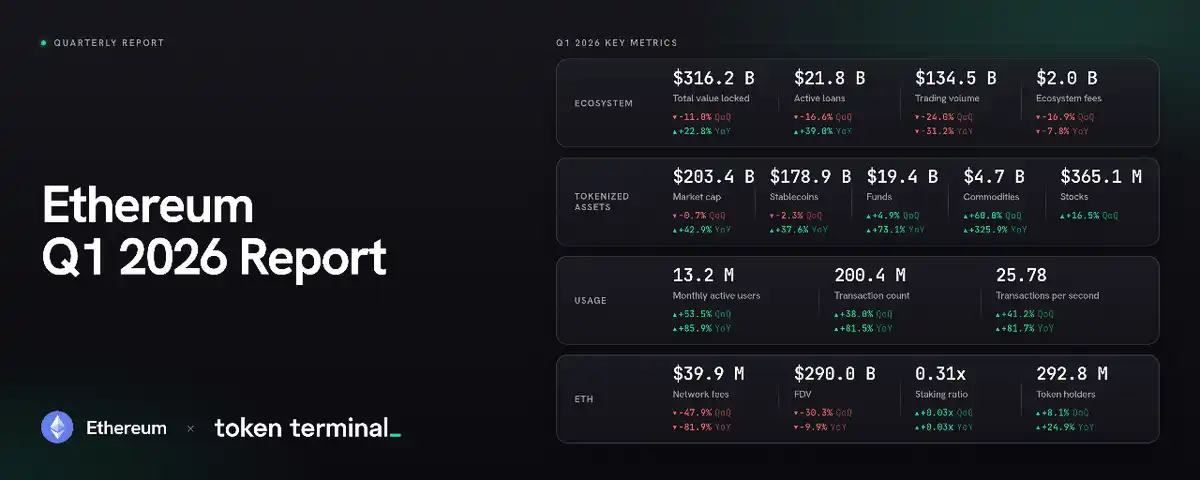
Tinjauan Kuartal Pertama Ethereum 2026: Aktivitas On-Chain Mencapai Rekor Tertinggi, Aset Tokenisasi Memimpin Industri

Tinjauan Kuartal I 2026 Ethereum: Aktivitas On-Chain Capai Rekor Tertinggi, Aset Tokenisasi Memimpin Industri Pada kuartal pertama 2026, ekosistem Ethereum menunjukkan dinamika ganda: penggunaan on-chain melonjak, namun nilai aset dalam dolar turun. Aktivitas pengguna bulanan mencapai rekor 13,2 juta alamat (naik 53,5% dari kuartal sebelumnya), dengan jumlah transaksi lapisan pertama juga mencapai puncak baru. Namun, total nilai aset terkunci (TVL) menyusut 11% menjadi $316,2 miliar, terutama didorong oleh penurunan harga aset kripto. Sektor aset tokenisasi Ethereum tetap dominan dengan kapitalisasi pasar total $203,4 miliar. Stablecoin mendominasi ($178,9 miliar), diikuti oleh reksa dana tokenisasi ($194 miliar, naik 73,1% per tahun) dan komoditas tokenisasi ($47 miliar, naik 325,9% per tahun). Ethereum menguasai pangsa pasar utama di antara lima blockchain teratas di hampir semua kategori aset tokenisasi ini. Peningkatan kapasitas jaringan melalui upgrade Blob (BPO#2) berhasil menurunkan biaya transaksi rata-rata secara signifikan, terlihat dari pendapatan biaya lapisan pertama yang turun 47,9% meski volume transaksi naik. Hal ini menunjukkan manfaat dari ekspansi jaringan. Meski kapitalisasi pasar ETH turun 30,3%, rasio staking naik menjadi 0,31 dan jumlah alamat pemegang ETH terus bertumbuh, menunjukkan kepercayaan jangka panjang. Laporan ini menyimpulkan bahwa Ethereum, dengan mengorbankan pendapatan biaya jangka pendek untuk skalabilitas, sedang membangun fondasi yang kuat sebagai lapisan penyelesaian global untuk keuangan on-chain, menarik semakin banyak lembaga tradisional seperti BlackRock dan JPMorgan.

marsbit4m yang lalu

Tinjauan Kuartal Pertama Ethereum 2026: Aktivitas On-Chain Mencapai Rekor Tertinggi, Aset Tokenisasi Memimpin Industri

marsbit4m yang lalu

All-In Full-Stack atau Gugur: Strategi di Balik Akuisisi Cursor senilai $600 Miliar oleh xAI

**Rangkuman: Entah "Full-Stack" atau Tersingkir - Kalkulasi di Balik Akuisisi Cursor senilai $60 Miliar oleh xAI** xAI milik SpaceX mengakuisisi Anysphere, perusahaan induk alat pemrograman AI Cursor, dengan harga $60 miliar dalam saham. Akuisisi ini bukan sekadar untuk pangsa pasar, tetapi terutama untuk **data pelatihan berkualitas tinggi** yang dihasilkan oleh 7 juta developer yang menggunakan Cursor setiap hari. Data dari aktivitas coding dianggap sebagai sinyal pelatihan terkuat untuk model AI. Artikel ini menyoroti kesuksesan Anthropic, yang pendapatannya melonjak 540x dalam 28 bulan, didorong kuat oleh produk coding mereka, Claude Code. Ini menunjukkan bahwa **generasi kode adalah aplikasi "pembunuh" (killer app) terkuat dari model bahasa besar (LLM) saat ini.** Penulis, Tara Tan dari Strange Ventures, menyimpulkan tren kunci: **untuk menjadi pemain AI besar, perusahaan harus membangun platform "full-stack"** yang mengintegrasikan tenaga komputasi (compute), model, dan aplikasi. Logika ini menciptakan siklus virtu: aplikasi yang baik menghasilkan data unik, data tersebut melatih model yang lebih baik, dan model yang lebih baik meningkatkan aplikasi. Dengan memiliki tumpukan penuh (seperti xAI dengan Colossus untuk compute, Grok sebagai model, X dan sekarang Cursor sebagai aplikasi), perusahaan dapat: 1. Meningkatkan ekonomi unit dalam pelatihan model. 2. Membangun "parit pertahanan" (moat) melalui data pelatihan berpemilik dan penguncian alur kerja pengguna. Kedepannya, perusahaan model AI akan semakin agresif membangun atau mengakuisisi aplikasi untuk menutup lingkaran ini. Era ini menuntut ambisi yang jauh lebih besar dari para founder.

marsbit19m yang lalu

All-In Full-Stack atau Gugur: Strategi di Balik Akuisisi Cursor senilai $600 Miliar oleh xAI

marsbit19m yang lalu

New Huo Research Institute: BTC Area 60 Ribu Menyaksikan Aksi Beli di Dasar yang Padat, 'Zona Nilai Terbaik' Diserbu Gelombang Peralihan Kepemilikan

Bitcoin (BTC) mengalami rebound setelah oversold minggu ini, dengan sentimen panik ekstrem di pasar kripto mereda. Beberapa data menunjukkan tanda-tanda pembentukan dasar harga. Dari sisi pasar, arus keluar bersih dari ETF spot Bitcoin terus menyempit, dan diskon negatif antara Coinbase dan USDT juga perlahan pulih. Biaya penutupan penambang utama berkisar pada $30.000-$50.000, mengindikasikan dasar biaya industri mulai terbentuk, yang merupakan sinyal klasik puncak harga di pasar kripto. Dari aktivitas perdagangan, modal institusional menunjukkan tren akumulasi berlawanan arah. Sebagai contoh, volume perdagangan OTC grup Sinohope melonjak lebih dari 8 kali lipat secara mingguan, dengan jumlah pengguna aktif juga berlipat ganda, menandakan peningkatan signifikan dalam permintaan pembiayaan besar-besaran. Data on-chain juga menunjukkan bahwa dana institusional, termasuk dari perusahaan publik dan "paus kuno," secara aktif mengakumulasi aset di sekitar level kunci $60.000. Sinohope Research telah menekankan sejak pertengahan Mei bahwa jendela "peluang bernilai tinggi" telah terbuka kembali, dan peralihan dari panic selling ke holding jangka panjang sedang berlangsung. Melihat ke depan, pelepasan likuiditas dan kebijakan makro akan menjadi pendorong utama kenaikan harga. Keberhasilan IPO SpaceX telah menyuntikkan optimisme, dan likuiditas besar yang sebelumnya terkunci akan dilepaskan kembali, berpotensi mengalir ke aset yang dinilai terlalu rendah seperti Bitcoin. Pada tingkat makro, pidato Kevin Warsh dalam pertemuan FOMC tanggal 18 nanti sangat penting untuk mengatur ekspektasi kebijakan moneter. Selain itu, jika RUU CLARITY disahkan akhir Juli, hal itu akan meningkatkan kepercayaan kelembagaan. Dengan kombinasi sinyal dasar, kondisi dana, dan faktor kebijakan yang mendukung, Sinohope Research tetap optimis terhadap pergerakan pasar ke depan.

marsbit44m yang lalu

New Huo Research Institute: BTC Area 60 Ribu Menyaksikan Aksi Beli di Dasar yang Padat, 'Zona Nilai Terbaik' Diserbu Gelombang Peralihan Kepemilikan

marsbit44m yang lalu

Trading

Spot
Futures

Artikel Populer

Cara Membeli SWAP

Selamat datang di HTX.com! Kami telah membuat pembelian TrustSwap (SWAP) menjadi mudah dan nyaman. Ikuti panduan langkah demi langkah kami untuk memulai perjalanan kripto Anda.Langkah 1: Buat Akun HTX AndaGunakan alamat email atau nomor ponsel Anda untuk mendaftar akun gratis di HTX. Rasakan perjalanan pendaftaran yang mudah dan buka semua fitur.Dapatkan Akun SayaLangkah 2: Buka Beli Kripto, lalu Pilih Metode Pembayaran AndaKartu Kredit/Debit: Gunakan Visa atau Mastercard Anda untuk membeli TrustSwap (SWAP) secara instan.Saldo: Gunakan dana dari saldo akun HTX Anda untuk melakukan trading dengan lancar.Pihak Ketiga: Kami telah menambahkan metode pembayaran populer seperti Google Pay dan Apple Pay untuk meningkatkan kenyamanan.P2P: Lakukan trading langsung dengan pengguna lain di HTX.Over-the-Counter (OTC): Kami menawarkan layanan yang dibuat khusus dan kurs yang kompetitif bagi para trader.Langkah 3: Simpan TrustSwap (SWAP) AndaSetelah melakukan pembelian, simpan TrustSwap (SWAP) di akun HTX Anda. Selain itu, Anda dapat mengirimkannya ke tempat lain melalui transfer blockchain atau menggunakannya untuk memperdagangkan mata uang kripto lainnya.Langkah 4: Lakukan trading TrustSwap (SWAP)Lakukan trading TrustSwap (SWAP) dengan mudah di pasar spot HTX. Cukup akses akun Anda, pilih pasangan perdagangan, jalankan trading, lalu pantau secara real-time. Kami menawarkan pengalaman yang ramah pengguna baik untuk pemula maupun trader berpengalaman.

221 Total TayanganDipublikasikan pada 2024.12.10Diperbarui pada 2026.06.02

Cara Membeli SWAP

Diskusi

Selamat datang di Komunitas HTX. Di sini, Anda bisa terus mendapatkan informasi terbaru tentang perkembangan platform terkini dan mendapatkan akses ke wawasan pasar profesional. Pendapat pengguna mengenai harga SWAP (SWAP) disajikan di bawah ini.

活动图片