¿El BTC regresa a 93.000 dólares? ¿El Banco de la Reserva Federal inyecta 160.000 millones para rescatar el mercado?

marsbitPublished on 2026-01-05Last updated on 2026-01-05

Abstract

Resumen: Bitcoin (BTC) ha vuelto a superar los 93.000 USD, con una subida del 5% en cinco días, mientras que Ethereum (ETH) ha roto la barrera de los 3.200 USD. El mercado alcista se extiende a memecoins como PEPE y BONK, y a los mercados globales de acciones, con índices asiáticos y futuros de EE.UU. en verde. La Reserva Federal ha aportado 16.000 millones de USD en liquidez, la mayor inyección desde la pandemia, lo que ha impulsado la confianza en activos de riesgo. Los ETF de BTC y Ethereum registran entradas netas significativas, con 471 millones y 174 millones de USD respectivamente. Aunque el sentimiento social es positivo, algunos analistas advierten de posibles ventas por parte de holders a largo plazo y señalan que un exceso de optimismo podría ser contraproducente.

El BTC no ha registrado una caída mensual de cuatro meses consecutivos desde 2019. Ahora, esta "metafísica" parece seguir funcionando. Tras la caída de octubre de este año, el BTC ha estado cayendo durante tres meses consecutivos, llegando a un mínimo cercano a los 80.000 dólares.
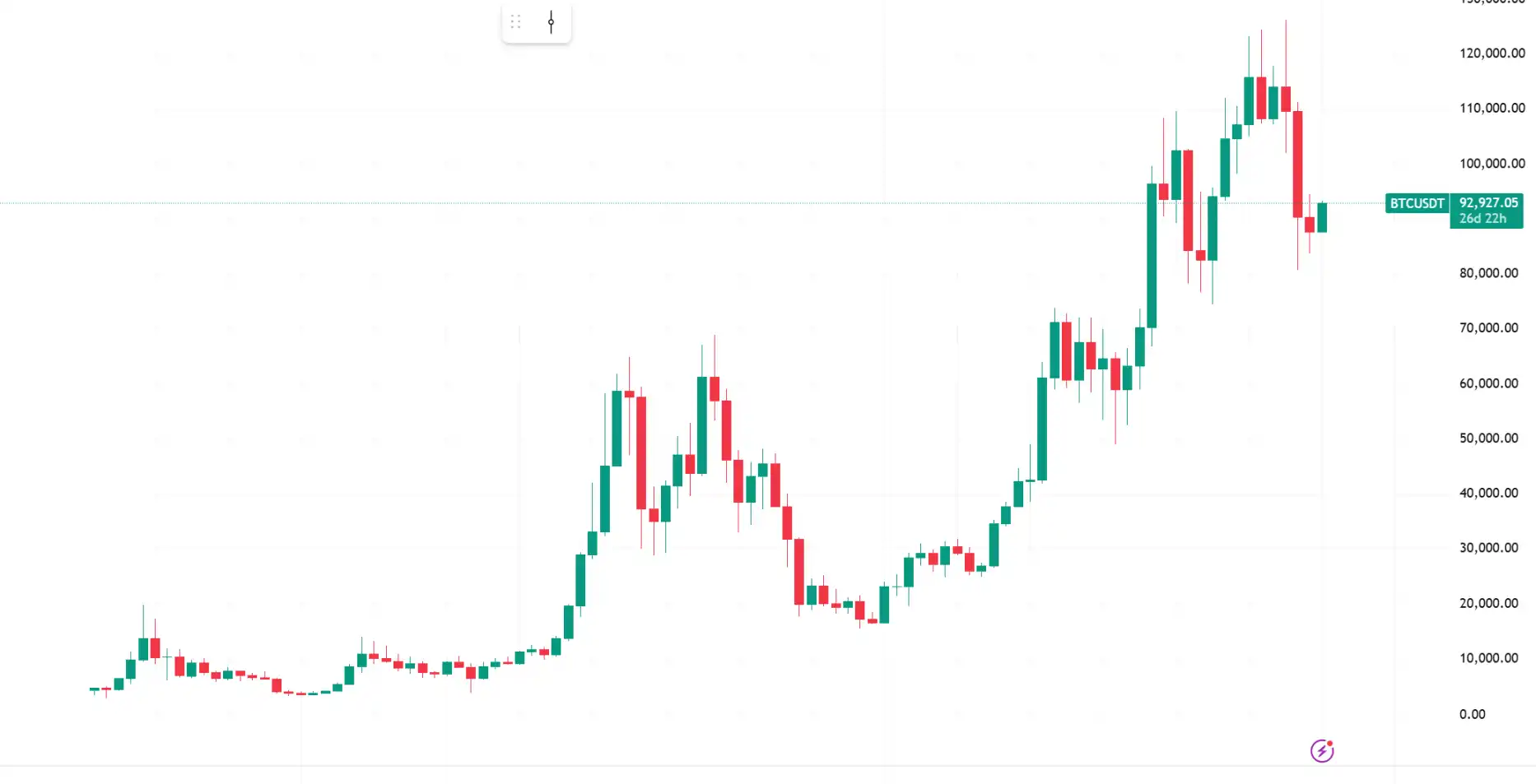
Desde el 1 de enero, el gráfico diario del Bitcoin ha registrado 5 días consecutivos de ganancias, e incluso superó los 93.000 dólares el 5 de enero. El ETH también rompió con fuerza la barrera de los 3.200 dólares. Meme coins como PEPE, BONK, PENGU y BOME han estado rotando recientemente en la lista de las más subidas.

Los datos de Coinglass muestran que las posiciones abiertas no liquidadas en toda la red registraron liquidaciones por 216 millones de dólares en 24 horas, de las cuales 168 millones correspondieron a posiciones cortas.

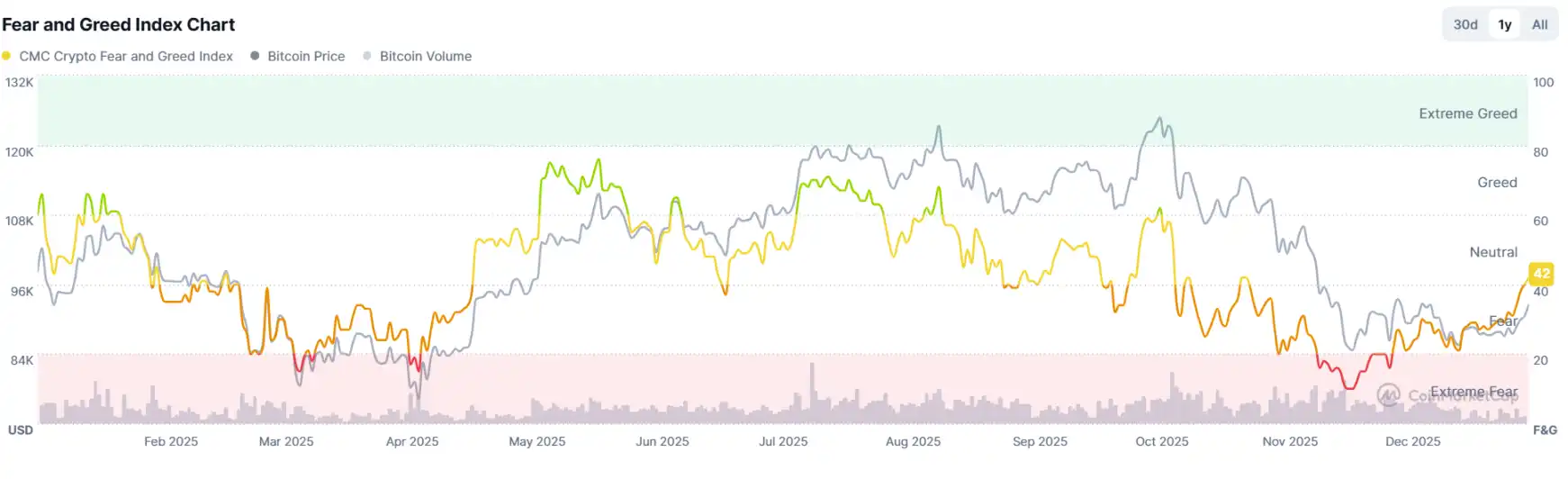
Tras más de tres meses de continuo pesimismo, el Índice de Miedo y Codicia subió inusualmente hoy hasta 42, volviendo a una neutralidad de mercado.
Los mercados globales de activos de riesgo registraron hoy ganancias generalizadas, liderados por los mercados bursátiles de Japón y Corea. El índice KOSPI de Corea subió más de un 2,27% en la sesión matutina, superando por primera vez los 4.400 puntos y alcanzando un máximo histórico. El índice Nikkei 225 se disparó más de 1.100 puntos en la sesión matutina, a solo un 2% de superar su máximo histórico. El índice Shanghai Composite abrió con una subida del 0,46%, acercándose a los 4.000 puntos. El índice Hang Seng abrió con una subida del 0,09%.

En cuanto a las acciones estadounidenses, los futuros del S&P 500 subieron un 0,46%, los futuros del Nasdaq un 0,26% y los futuros del Dow Jones un 0,58%. Los metales preciosos subieron considerablemente: el oro spot superó los 4.420 dólares por onza, con una subida de más del 2% en 24 horas, y la plata spot superó los 76 dólares por onza, con una fuerte subida del 4,5%.

¿Ha llegado el gran rebote de los altcoins?

La Fed inyectó 16.000 millones de dólares de liquidez a finales de 2025

Los activos cripto, encabezados por el BTC, están estrechamente ligados a la liquidez del mercado global. Cuando la liquidez es baja, los precios difícilmente suben significativamente; cuando la liquidez es abundante, los precios pueden recuperarse de forma sostenida.

El 30 de diciembre de 2025, según datos de Barchart, la Reserva Federal inyectó 16.000 millones de dólares en el sistema bancario estadounidense mediante operaciones de reporto overnight, la segunda mayor inyección de liquidez desde la pandemia de COVID-19.
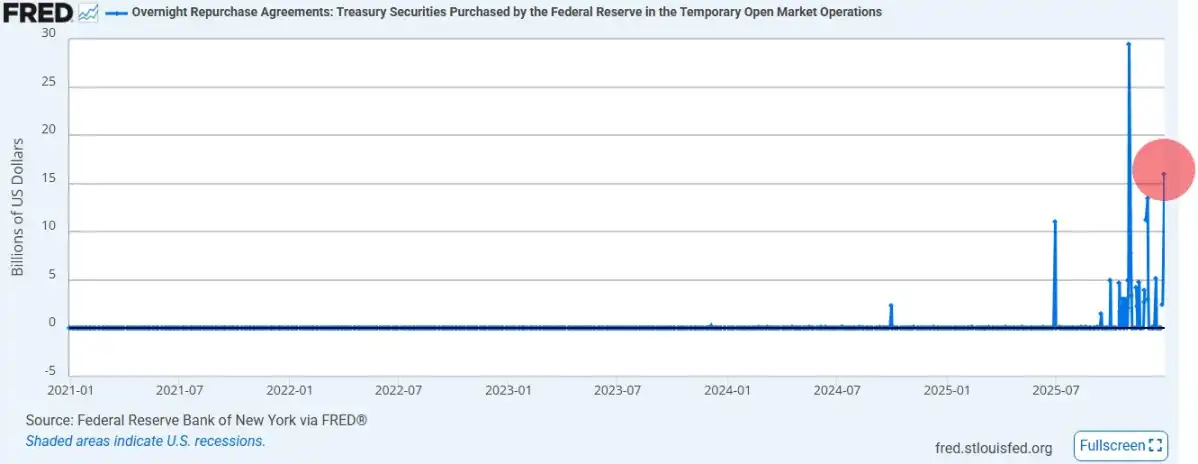
Este movimiento suele ser interpretado por el mercado como una señal de apoyo de la Fed ante una potencial escasez de liquidez bancaria o tensiones financieras. Aunque el gráfico muestra un repunte reciente en el volumen inyectado, la tendencia general refleja una política monetaria más laxa. En el mercado cripto, este tipo de inyecciones de liquidez suelen estimular el apetito por el riesgo, ya que el dinero barato fluye fácilmente hacia clases de activos de alto riesgo, impulsando el rebote de los precios de los criptoactivos. Los inversores pueden interpretarlo como que la Fed no quiere un aterrizaje económico forzoso, lo que aumenta la confianza del mercado y evita riesgos de recesión más graves.

El 31 de diciembre, Arthur Hayes, cofundador de BitMEX, declaró que la liquidez del mercado cripto podría haber tocado fondo en noviembre y estar recuperándose lentamente, y que es hora de que las criptomonedas empiecen a subir.

Jens Naervig Pedersen, estratega de divisas y tipos de interés de Danske Bank, declaró en un informe que se espera que la liquidez del mercado global se mantenga baja esta semana, pero podría reprender la próxima semana. El estratega señaló: "De cara al futuro, con la publicación de más datos económicos, la liquidez del mercado debería mejorar la próxima semana". Los datos clave de la próxima semana incluyen importantes cifras del mercado laboral estadounidense, como el informe de empleo no agrícola de diciembre, que se publicará el 9 de enero, y la encuesta del ISM. Durante el periodo de fin de año, muchos participantes del mercado están de vacaciones o liquidando posiciones, lo que suele dar lugar a una menor liquidez del mercado.

Los ETF spot de BTC y ETH registran grandes entradas netas a principios de año

Tras meses de bajo rendimiento, los datos de los ETF spot de Bitcoin registraron una entrada neta de 355 millones de dólares el 30 de diciembre, y volvieron a registrar una entrada neta de 471,14 millones de dólares el 2 de enero.
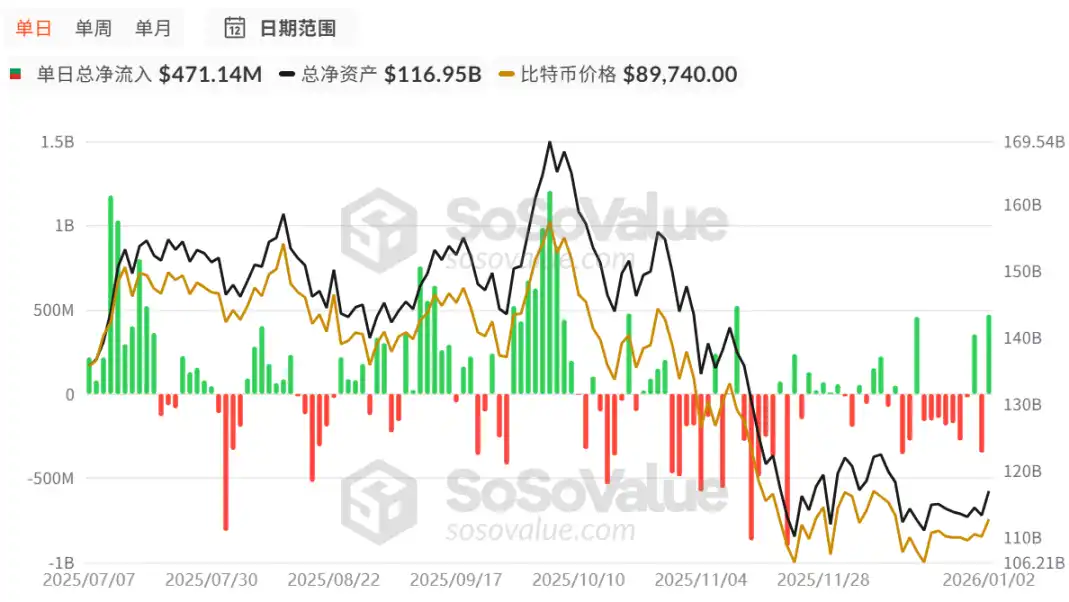
La magnitud y el impulso de su repentino crecimiento de las entradas netas son relativamente grandes.

En cuanto a los ETF spot de ETH, las entradas netas fueron de 67,84 millones de dólares el 30 de diciembre y alcanzaron los 174,43 millones de dólares el 2 de enero, marcando un nuevo máximo en las entradas netas diarias desde diciembre del año pasado.

El rendimiento actual de los datos de ambos ETF aún debe ser observado de forma continuada, pero el rendimiento de las entradas netas a principios de año sigue teniendo un efecto positivo no menor para impulsar los precios de las monedas.

Perspectivas futuras

JackYi, fundador de Liquid Capital, tuiteó el 3 de enero: "Antes del gran mercado alcista de 2026, los bajistas que liquiden pronto perderán poco; los que liquiden después perderán mucho y sufrirán. Los que sigan siendo bajistas en el mercado ahora o son fanfarrones o son carne de cañón. Tras más de un mes de volatilidad, los largos sin duda levantarán la cabeza. Los pesimistas siempre tienen razón, los optimistas siempre avanzan".

Ese mismo día, 10x Research también publicó un artículo insinuando que el mercado podría presentar oportunidades de rebote estructural. "Bajo la superficie del mercado de criptomonedas, están ocurriendo cambios importantes. A medida que el dominio del Bitcoin comienza a retroceder, nuestros modelos detectan una señal de inflexión clave que históricamente ha marcado el cambio de la defensa a la oportunidad. Lo que vale la pena observar en este ciclo no es una moneda o narrativa individual, sino el amplio panorama de validación sinérgica que se está formando entre las monedas principales y los altcoins selectos. El efecto momentum, el rendimiento relativo y la participación del mercado están empezando a resonar, y los traders no pueden ignorarlo.
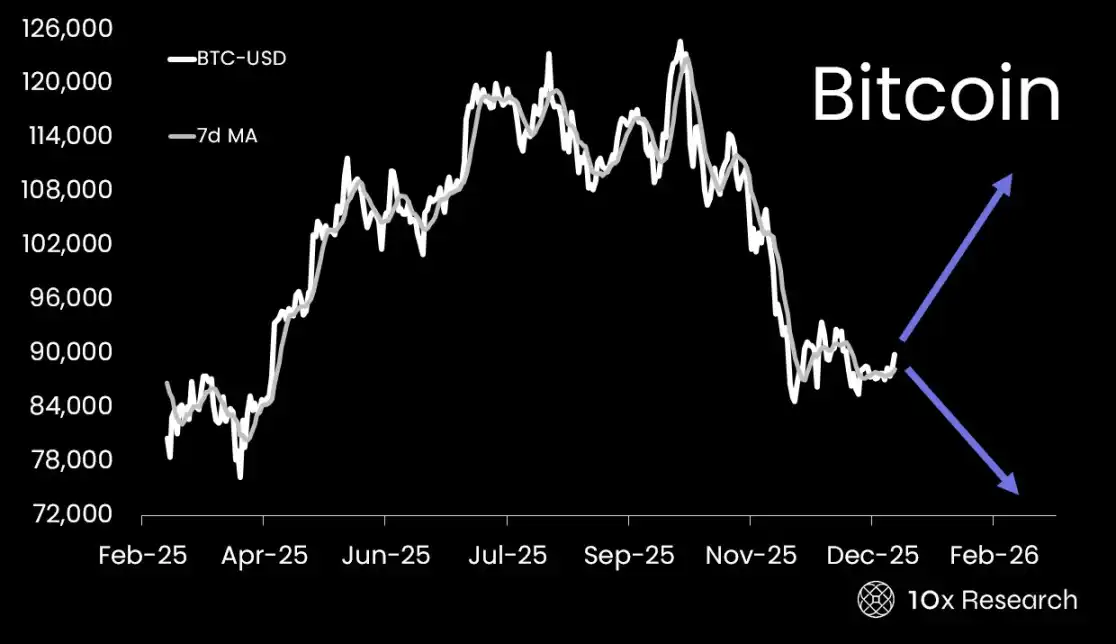
10x Research afirmó que el entorno actual no es un mercado alcista generalizado, ni es apropiado esperar pasivamente. La próxima fase pondrá más a prueba la disciplina, las reglas estratégicas y la gestión activa de posiciones, y una gestión clara del riesgo se convertirá en la clave para distinguir a los rentables del ruido del mercado. Mientras la mayoría de los inversores esperan que las noticias les marquen el camino, los traders deberían centrarse en la estructura del mercado y la validación de señales.

Los analistas de la plataforma de análisis blockchain Santiment señalaron que el sentimiento de los participantes del mercado de criptomonedas en las redes sociales fue fuerte a principios de año, pero advirtieron que la capacidad del mercado para subir más depende de que los inversores minoristas puedan mantener la racionalidad. "Necesitamos que los minoristas mantengan un cierto grado de cautela, un cierto pesimismo y un cierto grado de impaciencia", dijo el analista de Santiment Brian Quinlivan en un vídeo de YouTube publicado el sábado. Aunque otros indicadores de sentimiento cripto muestran miedo entre los participantes del mercado, Quinlivan dijo que los datos de redes sociales de Santiment apuntan en la dirección opuesta. "El sentimiento actual es muy positivo", dijo, "lo que normalmente es algo preocupante, pero esta vez podría ser solo un rebote normal tras volver de las vacaciones". Quinlivan dijo que no le preocupaba demasiado que "surgiera un gran sentimiento de FOMO", pero añadió que si el Bitcoin sube rápidamente a 92.000 dólares, este sentimiento podría inundar el mercado.

Sin embargo, los gráficos de datos también muestran cierto pesimismo en el mercado.
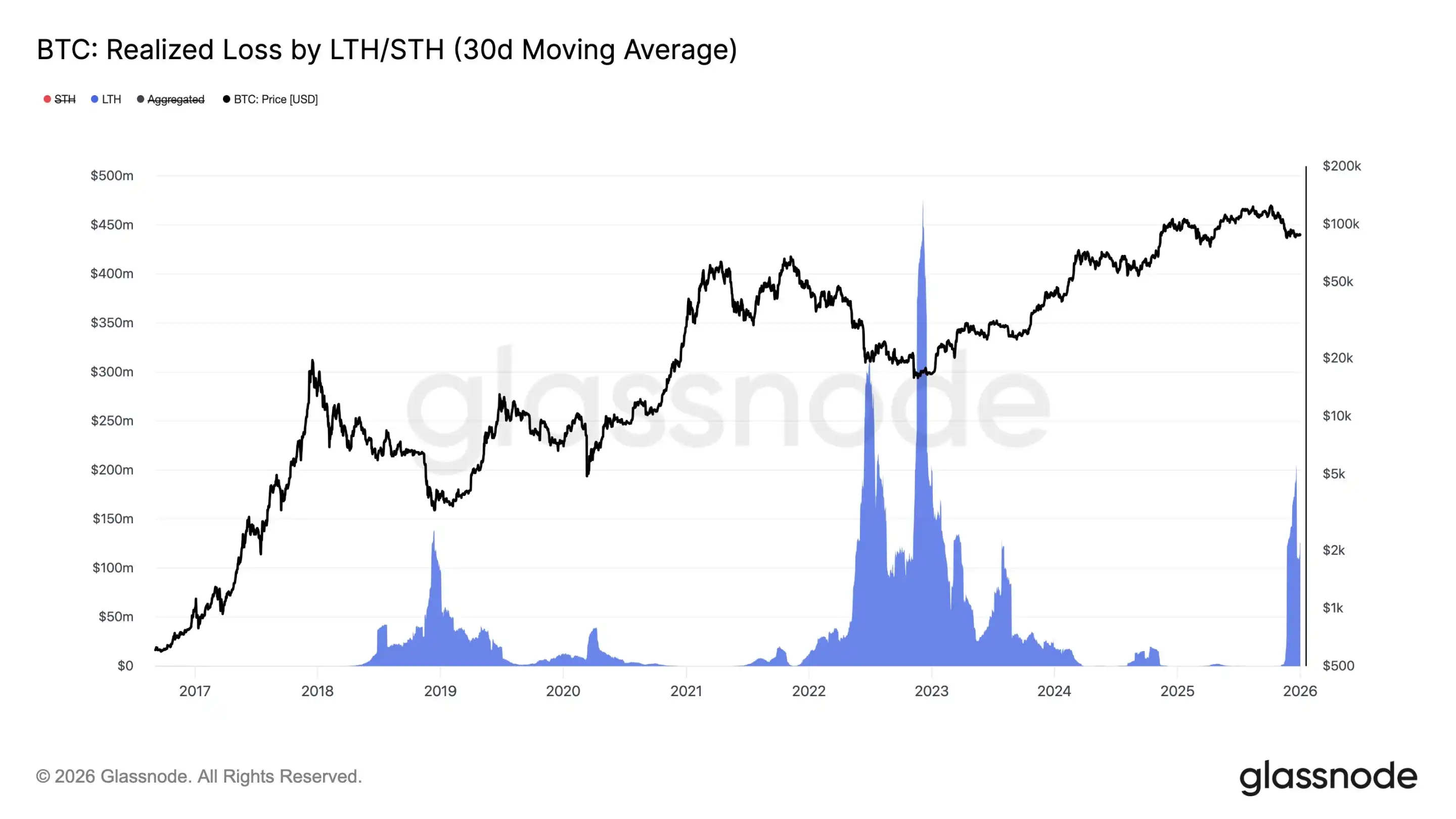
glassnode tuiteó recientemente que la desaceleración de las entradas de capital coincide con que los tenedores a largo plazo han intensificado la realización de pérdidas. Este escenario se está manifestando gradualmente mientras el precio del BTC fluctúa en un rango estrecho. Esto refleja el creciente agotamiento de los inversores con el paso del tiempo, una característica común de las prolongadas fases de mercado bajista.


Trending Cryptos

Related Questions

Q¿A qué nivel regresó BTC el 5 de enero según el artículo?

ABTC superó por encima de los 93,000 dólares el 5 de enero.

Q¿Qué acción tomó la Reserva Federal a finales de 2025 que se relaciona con el mercado de criptomonedas?

ALa Reserva Federal inyectó 16 mil millones de dólares de liquidez en el sistema bancario estadounidense a través de una operación de repos overnight el 30 de diciembre de 2025.

Q¿Cómo se comportaron los flujos netos de los ETF spot de BTC y ETH a principios de año?

AEl ETF spot de BTC tuvo un flujo neto de 471.14 millones de dólares el 2 de enero, y el ETF spot de ETH registró un flujo neto de 174.43 millones de dólares, el más alto desde diciembre del año anterior.

QSegún el fundador de Liquid Capital, JackYi, ¿qué le sucederá a los operadores en corto (bajistas) en el mercado?

AJackYi declaró que los operadores en corto que cierren sus posiciones temprano perderán poco, pero quienes lo hagan más tarde sufrirán grandes pérdidas.

Q¿Qué indicador de sentimiento mostró una mejora significativa después de más de tres meses de pesimismo?

AEl Índice de Miedo y Codicia (Fear and Greed Index) subió inusualmente a 42, regresando a una neutralidad de mercado.

Related Reads

After Three Consecutive Quarters of Decline, Can the Crypto Market Find a Window for Stabilization in Q3?

The cryptocurrency market has just concluded its worst-performing quarter since 2022, with total capitalization dropping 12.6% to $2.1 trillion. All core metrics indicate capital is leaving the sector, not just rotating within it. Bitcoin fell 14.2% and Ethereum dropped 25.4% in Q2, breaking their previous correlation with US tech stocks. A key driver is the reversal in US spot Bitcoin ETF flows, which saw a net outflow of approximately $4.67 billion in Q2, including a record monthly outflow near $4.5 billion in June. While recent data suggests long-term holders are accumulating again, sustained ETF outflows mean continued selling pressure. Market focus is now singularly on the Federal Reserve. The upcoming July FOMC meeting is seen as the most critical event for Q3. A dovish signal could support Bitcoin reclaiming a $68,000-$84,000 range, while a hawkish stance might establish a new trading band around $50,000-$56,000. Additionally, regulatory uncertainty persists, with the progress of the crucial *CLARITY Act* stalling in the Senate, reducing its perceived 2026 passage probability to 40-45%. Despite the broad downturn, a few sectors showed growth. Prediction markets saw nominal volume surge 48.7% year-over-year to $113.8 billion, and tokenized collectibles transaction volume rose 143% quarterly to $1.4 billion. The Real-World Asset (RWA) tokenization sector also continued steady growth, now representing ~$28.1 billion in on-chain value. The market's foundation for an extreme crash appears limited, with Bitcoin price hovering near its 200-week moving average. However, the trading paradigm has shifted from narrative-driven speculation to decisions based on price action, policy developments, and interest rate expectations, making a broad sentiment-driven rally unlikely in the near term.

marsbitYesterday 08:36

After Three Consecutive Quarters of Decline, Can the Crypto Market Find a Window for Stabilization in Q3?

marsbitYesterday 08:36

BIT Trading Moment: BTC Still Suppressed by Weekly 200 EMA, Rejection May Restart Decline; Storage and Semiconductors that Surged Last Night Begin Falling in Evening Trading

**Crypto & Stock Market Wrap: Bitcoin Tests Resistance, Stocks Retreat After AI Surge** Bitcoin consolidates around $66,000, facing key resistance near $68,000—an area seen as a major psychological and technical hurdle where previous rallies have failed. Analysts note the cryptocurrency is caught between its 200-week moving average (~$63,333) and 200-week EMA (~$68,328). A clear break above $68k is needed to signal a stronger bullish trend, while a rejection could lead to a retest of $63k support. Market sentiment remains cautious, with low futures open interest pointing to a low-liquidity rebound rather than a full bull market. Bitcoin spot ETFs saw another $203 million inflow. US stock futures pointed lower after a strong Tuesday session led by a massive rebound in semiconductors and memory stocks. The rally was fueled by renewed optimism about AI-driven hardware demand, with Micron, SanDisk, and SK Hynix surging. However, those gains reversed in pre-market trading. Super Micro Computer (SMCI) soared over 20% after hours on strong guidance and a record backlog. Other standouts included Rocket Lab and nuclear energy plays Oklo and X-Energy. Rising oil prices (Brent above $91) and climbing Treasury yields (10-year near 4.64%), however, are reigniting inflation concerns and acting as a headwind for equities. In Asia, markets were mixed. South Korea's KOSPI pared early gains to close slightly higher as semiconductor stocks like SK Hynix gave back initial surges. Japan's Nikkei edged lower as the yen hit a fresh 38-year low against the dollar, raising fears of potential market intervention. Key events to watch include the Samsung Galaxy launch, AMD's AI event, and a slew of major tech earnings from Alphabet, Tesla, and IBM after the close on Wednesday, followed by the ECB meeting and Intel's earnings on Thursday.

marsbitYesterday 08:28

BIT Trading Moment: BTC Still Suppressed by Weekly 200 EMA, Rejection May Restart Decline; Storage and Semiconductors that Surged Last Night Begin Falling in Evening Trading

marsbitYesterday 08:28

Former CFTC Chairman, Circle President Tarbert: Preaching Long-Termism While Cashing Out $30 Million Himself

Former CFTC Chairman and Circle President Heath Tarbert has consistently advocated for a long-term vision in public, urging patience from investors as Circle’s stock price has fallen significantly from its peak. However, it has been revealed that since Circle’s IPO, Tarbert has continuously sold his CRCL shares through pre-arranged trading plans, cashing out approximately $30 million, without making any public market purchases. This contrast between his public messaging and personal actions has drawn criticism. Tarbert joined Circle in July 2023 as Chief Legal Officer, leveraging his regulatory experience to help guide the company through its IPO and expansion. Despite promoting stablecoins as long-term infrastructure, he established a 10b5-1 trading plan just before Circle went public, leading to substantial stock sales over the following year. In March 2026, he initiated another plan to sell more shares. His career trajectory highlights a pattern of moving between high-level regulatory roles and influential positions in the financial sector. After resigning as CFTC Chairman in early 2021, he joined Citadel Securities as Chief Legal Officer just 27 days later, during a period of intense regulatory scrutiny for the firm. He later joined Circle, aiding its efforts to navigate regulatory challenges for its public listing. While Tarbert's expertise in policy and compliance is valuable to companies like Circle, his actions—advocating long-term confidence while personally divesting—raise questions about the alignment between his public statements and his private financial decisions, leaving investors who followed his advice to bear the market risks.

marsbitYesterday 08:06

Former CFTC Chairman, Circle President Tarbert: Preaching Long-Termism While Cashing Out $30 Million Himself

marsbitYesterday 08:06

Gate Research Institute: The 'Wall Street-ization' Wave of Crypto Financial Products – Competition or Integration?

The article titled "Gate Research Institute: Are Crypto Financial Products Sparking a 'Wall Street' Wave—Competition or Convergence?" explores the evolving relationship between the crypto ecosystem and traditional finance (TradFi). The piece begins by reflecting on Bitcoin's original 2009 vision of decentralization, disintermediation, and moving away from banks. It then contrasts this with the 2024 landscape, where key crypto assets like Bitcoin are increasingly held through Wall Street products like ETFs issued by giants like BlackRock. The article questions whether this signifies that TradFi is systematically taking over the rights to issue, price, custody, and distribute crypto financial assets. The core argument is that this is not a zero-sum takeover but rather a bidirectional convergence where each side addresses the other's weaknesses. Crypto offers 24/7 global markets, programmable settlement, and open access but lacks compliant channels, institutional-grade custody, deep fiat liquidity, and mainstream distribution. TradFi possesses these but is constrained by legacy systems, limited operating hours, and slow settlement. Two primary convergence paths are highlighted: * **Path A (CEX to TradFi):** Exemplified by Gate, which has progressed from offering tokenized stocks and CFDs to providing direct, real stock trading (US, Hong Kong, South Korea) within its platform, using USDT. * **Path B (TradFi to Crypto):** Exemplified by Robinhood, which has integrated crypto trading, acquired exchanges like Bitstamp, and is moving traditional assets like stocks onto the blockchain via tokenization and its own Layer 2. Both paths are ultimately competing to become the next-generation, unified financial account—a "super account" where users can seamlessly trade cryptocurrencies, stocks, ETFs, RWA (Real World Assets), and tokenized treasury products in one interface. The growth of RWA and tokenized treasuries (e.g., BlackRock's BUIDL) is presented as the asset-layer fusion, providing stable, yield-bearing assets on-chain and acting as a bridge between the two worlds. In conclusion, the "Wall Street-ization" of crypto is framed as a mutual transformation. Decentralized ideals persist in the protocol layer, while at the application layer, a more efficient, global, and accessible unified capital market is emerging from this convergence. The future competition lies not between crypto exchanges and stockbrokers, but between platforms vying to offer the most comprehensive asset coverage, liquidity, and user experience within a single account.

marsbitYesterday 08:01

Gate Research Institute: The 'Wall Street-ization' Wave of Crypto Financial Products – Competition or Integration?

marsbitYesterday 08:01

Trading

Spot

Hot Articles

What is $BITCOIN

DIGITAL GOLD ($BITCOIN): A Comprehensive Analysis Introduction to DIGITAL GOLD ($BITCOIN) DIGITAL GOLD ($BITCOIN) is a blockchain-based project operating on the Solana network, which aims to combine the characteristics of traditional precious metals with the innovation of decentralized technologies. While it shares a name with Bitcoin, often referred to as “digital gold” due to its perception as a store of value, DIGITAL GOLD is a separate token designed to create a unique ecosystem within the Web3 landscape. Its goal is to position itself as a viable alternative digital asset, although specifics regarding its applications and functionalities are still developing. What is DIGITAL GOLD ($BITCOIN)? DIGITAL GOLD ($BITCOIN) is a cryptocurrency token explicitly designed for use on the Solana blockchain. In contrast to Bitcoin, which provides a widely recognized value storage role, this token appears to focus on broader applications and characteristics. Notable aspects include: Blockchain Infrastructure: The token is built on the Solana blockchain, known for its capacity to handle high-speed and low-cost transactions. Supply Dynamics: DIGITAL GOLD has a maximum supply capped at 100 quadrillion tokens (100P $BITCOIN), although details regarding its circulating supply are currently undisclosed. Utility: While precise functionalities are not explicitly outlined, there are indications that the token could be utilized for various applications, potentially involving decentralized applications (dApps) or asset tokenization strategies. Who is the Creator of DIGITAL GOLD ($BITCOIN)? At present, the identity of the creators and development team behind DIGITAL GOLD ($BITCOIN) remains unknown. This situation is typical among many innovative projects within the blockchain space, particularly those aligning with decentralized finance and meme coin phenomena. While such anonymity may foster a community-driven culture, it intensifies concerns about governance and accountability. Who are the Investors of DIGITAL GOLD ($BITCOIN)? The available information indicates that DIGITAL GOLD ($BITCOIN) does not have any known institutional backers or prominent venture capital investments. The project seems to operate on a peer-to-peer model focused on community support and adoption rather than traditional funding routes. Its activity and liquidity are primarily situated on decentralized exchanges (DEXs), such as PumpSwap, rather than established centralized trading platforms, further highlighting its grassroots approach. How DIGITAL GOLD ($BITCOIN) Works The operational mechanics of DIGITAL GOLD ($BITCOIN) can be elaborated on based on its blockchain design and network attributes: Consensus Mechanism: By leveraging Solana’s unique proof-of-history (PoH) combined with a proof-of-stake (PoS) model, the project ensures efficient transaction validation contributing to the network's high performance. Tokenomics: While specific deflationary mechanisms have not been extensively detailed, the vast maximum token supply implies that it may cater to microtransactions or niche use cases that are still to be defined. Interoperability: There exists the potential for integration with Solana’s broader ecosystem, including various decentralized finance (DeFi) platforms. However, the details regarding specific integrations remain unspecified. Timeline of Key Events Here is a timeline that highlights significant milestones concerning DIGITAL GOLD ($BITCOIN): 2023: The initial deployment of the token occurs on the Solana blockchain, marked by its contract address. 2024: DIGITAL GOLD gains visibility as it becomes available for trading on decentralized exchanges like PumpSwap, allowing users to trade it against SOL. 2025: The project witnesses sporadic trading activity and potential interest in community-led engagements, although no noteworthy partnerships or technical advancements have been documented as of yet. Critical Analysis Strengths Scalability: The underlying Solana infrastructure supports high transaction volumes, which could enhance the utility of $BITCOIN in various transaction scenarios. Accessibility: The potential low trading price per token could attract retail investors, facilitating wider participation due to fractional ownership opportunities. Risks Lack of Transparency: The absence of publicly known backers, developers, or an audit process may yield skepticism regarding the project's sustainability and trustworthiness. Market Volatility: The trading activity is heavily reliant on speculative behavior, which can result in significant price volatility and uncertainty for investors. Conclusion DIGITAL GOLD ($BITCOIN) emerges as an intriguing yet ambiguous project within the rapidly evolving Solana ecosystem. While it attempts to leverage the “digital gold” narrative, its departure from Bitcoin's established role as a store of value underscores the need for a clearer differentiation of its intended utility and governance structure. Future acceptance and adoption will likely depend on addressing the current opacity and defining its operational and economic strategies more explicitly. Note: This report encompasses synthesised information available as of October 2023, and developments may have transpired beyond the research period.

995 Total ViewsPublished 2025.05.13Updated 2025.05.13

What is $BITCOIN

Discussions

Welcome to the HTX Community. Here, you can stay informed about the latest platform developments and gain access to professional market insights. Users' opinions on the price of BTC (BTC) are presented below.

活动图片














