Galaxy dự đoán stablecoin sẽ vượt qua khối lượng giao dịch ACH vào năm 2026

cointelegraphPublished on 2025-12-19Last updated on 2025-12-19

Abstract

Theo dự báo từ Galaxy Research, khối lượng giao dịch stablecoin có thể vượt hệ thống ACH của Mỹ vào năm 2026 nhờ sự rõ ràng về quy định và mức độ chấp nhận ngày càng tăng. Báo cáo chỉ ra rằng giao dịch stablecoin hiện đã vượt mạng lưới thẻ tín dụng lớn như Visa và bằng khoảng một nửa khối lượng của ACH. Nguồn cung stablecoin tiếp tục tăng trưởng 30-40% mỗi năm, đồng thời Đạo luật GENIUS dự kiến có hiệu lực vào đầu 2026 sẽ thúc đẩy hơn nữa việc sử dụng stablecoin. Thị trường stablecoin hiện đạt vốn hóa 309 tỷ USD, với sự tham gia ngày càng nhiều của các tổ chức tài chính như Western Union, Sony và SoFi. Dự báo cũng cho rằng Bitcoin có thể chạm 250.000 USD vào cuối 2027.

Stablecoin có thể xử lý khối lượng giao dịch nhiều hơn hệ thống Automated Clearing House (ACH) của Mỹ vào năm 2026, khi sự rõ ràng về quy định và mức độ chấp nhận ngày càng tăng mở rộng phạm vi sử dụng của chúng, theo một dự báo mới.

Galaxy Research, bộ phận nghiên cứu của công ty tài sản kỹ thuật số Galaxy Digital, đã chỉ ra dữ liệu giao dịch hiện có và các diễn biến quy định để hỗ trợ dự đoán của mình, lưu ý rằng "các giao dịch stablecoin đã vượt qua các mạng lưới thẻ tín dụng lớn như Visa và hiện xử lý khoảng một nửa khối lượng giao dịch của hệ thống automated clearing house (ACH)".

Thad Pinakiewicz, phó chủ tịch nghiên cứu, cho biết nguồn cung stablecoin tiếp tục tăng trưởng với tốc độ tăng trưởng kép hàng năm (CAGR) 30%–40%, với khối lượng giao dịch tăng cùng với việc phát hành. Galaxy cũng trích dẫn việc triển khai dự kiến các định nghĩa theo Đạo luật GENIUS vào đầu năm 2026 như một yếu tố hỗ trợ tăng trưởng hơn nữa trong việc sử dụng stablecoin.
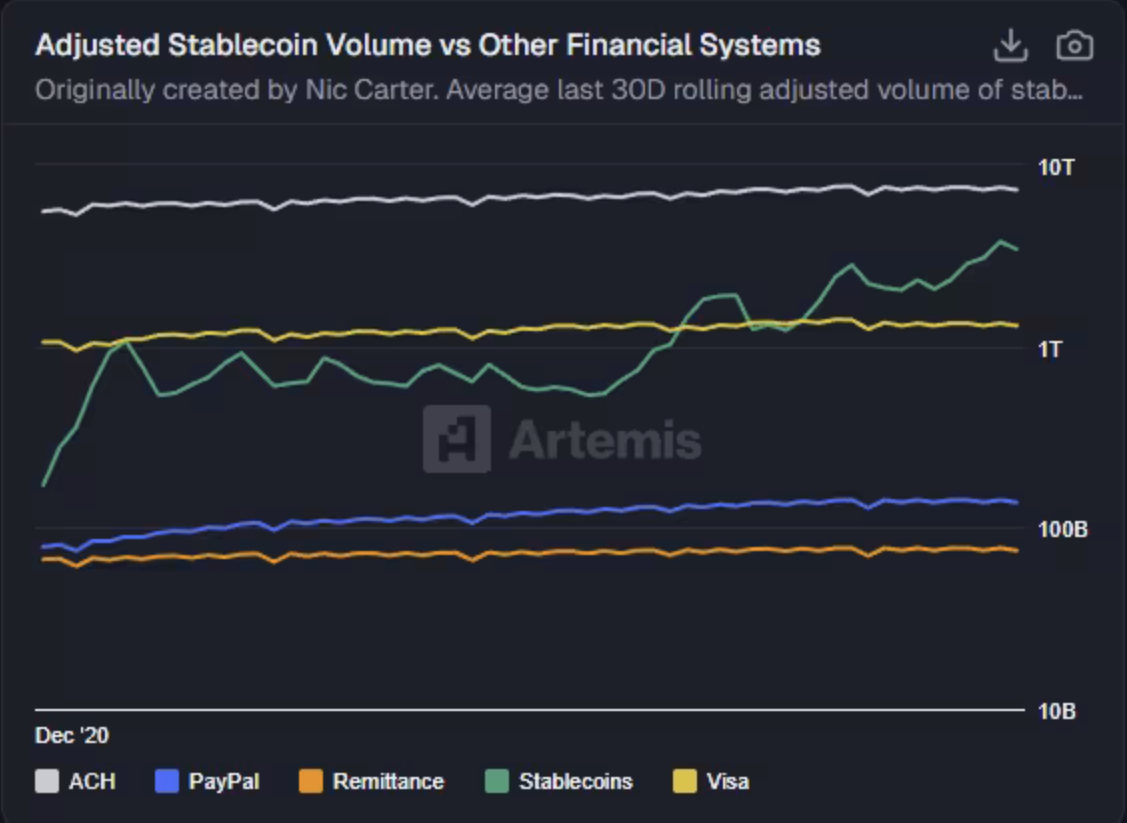
Khối lượng stablecoin so với các hệ thống tài chính khác. Nguồn: Galaxy Digital

Báo cáo cũng đưa ra dự đoán về giá của Bitcoin (BTC), viết rằng nó có thể đạt 250.000 USD vào cuối năm 2027. Theo Alex Thorn, người đứng đầu nghiên cứu toàn công ty tại Galaxy Research, năm 2026 "quá hỗn loạn để dự đoán, mặc dù Bitcoin lập mức cao mới mọi thời đại trong năm 2026 vẫn có thể xảy ra".

Liên quan: Coinbase 'lạc quan thận trọng' về năm 2026 khi crypto tiến gần đến điểm bùng phát thể chế

Thị trường stablecoin neo theo USD mở rộng

Theo dữ liệu từ DefiLlama, vốn hóa thị trường stablecoin hiện ở mức khoảng 309 tỷ USD. Trong khi USDt (USDT) của Tether và USDC (USDC) của Circle tiếp tục thống trị, ngày càng nhiều tổ chức tài chính và công ty thanh toán đã tham gia vào cuộc đua stablecoin trong những tháng gần đây.
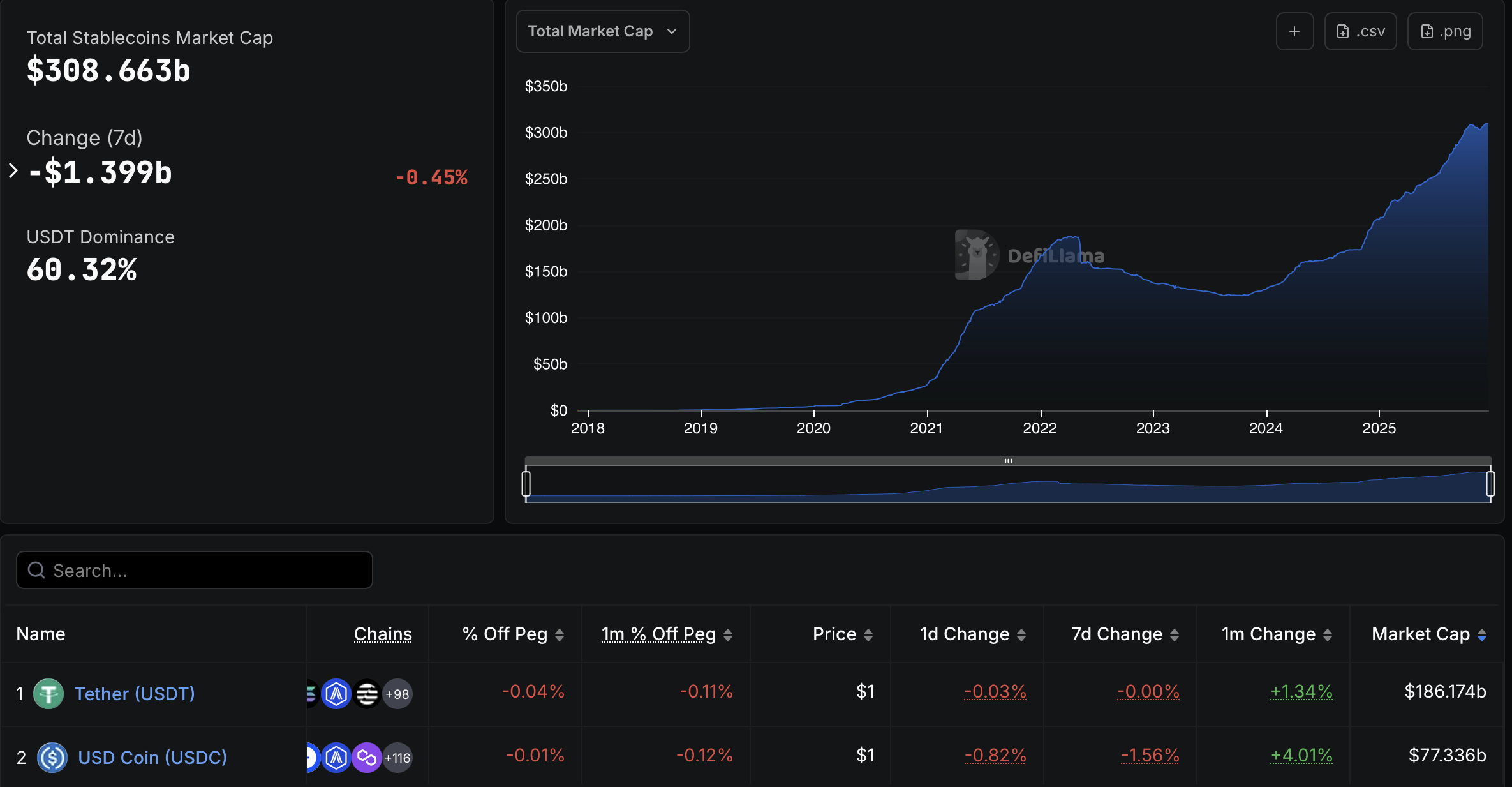
Vốn hóa thị trường stablecoin. Nguồn: DefiLlama

Vào tháng 10, Western Union đã công bố kế hoạch ra mắt stablecoin neo theo đồng USD của riêng mình, US Dollar Payment Token, sẽ được xây dựng trên blockchain Solana và do Anchorage Digital Bank phát hành như một phần của mạng lưới thanh toán tài sản kỹ thuật số rộng lớn hơn.

Sony Bank được cho là đang chuẩn bị một stablecoin neo theo đồng USD để sử dụng trên toàn bộ hệ sinh thái Mỹ của Sony, bao gồm trò chơi PlayStation, đăng ký và nội dung anime. Stablecoin này dự kiến ra mắt vào năm 2026.

Vào thứ Năm, SoFi Technologies đã ra mắt SoFiUSD, một stablecoin USD được dự trữ hoàn toàn do công ty con ngân hàng của nó, SoFi Bank, phát hành. Công ty cho biết token sẽ ra mắt trên Ethereum và được thiết kế để hỗ trợ thanh toán chi phí thấp cho các ngân hàng, công ty fintech và nền tảng doanh nghiệp.

Jianing Wu, cộng tác viên nghiên cứu tại Galaxy Research, cho biết cô kỳ vọng các stablecoin được hợp tác với TradFi sẽ củng cố vào năm 2026, vì người dùng và thương nhân khó có thể chấp nhận một danh sách dài các đồng đô la kỹ thuật số và thay vào đó sẽ ủng hộ một hoặc hai đồng có "mức độ chấp nhận rộng rãi nhất".

Tạp chí: Tấn công lượng tử vào Bitcoin sẽ là lãng phí thời gian: Kevin O’Leary

Trending Cryptos

Related Questions

QTheo dự báo của Galaxy Research, khi nào stablecoin có thể vượt qua khối lượng giao dịch của hệ thống ACH?

ATheo dự báo của Galaxy Research, stablecoin có thể xử lý khối lượng giao dịch nhiều hơn hệ thống ACH của Mỹ vào năm 2026.

QTốc độ tăng trưởng hàng năm kép (CAGR) của nguồn cung stablecoin là bao nhiêu?

ANguồn cung stablecoin đã tiếp tục tăng trưởng với tốc độ tăng trưởng hàng năm kép (CAGR) từ 30% đến 40%.

QDự đoán giá Bitcoin (BTC) có thể đạt mức nào vào cuối năm 2027 theo báo cáo?

ATheo báo cáo, giá Bitcoin (BTC) có thể đạt 250.000 USD vào cuối năm 2027.

QHai stablecoin nào hiện đang thống trị thị trường theo dữ liệu từ DefiLlama?

ATheo dữ liệu từ DefiLlama, Tether’s USDt (USDT) và Circle’s USDC (USDC) tiếp tục thống trị thị trường stablecoin.

QCông ty nào đã công bố kế hoạch phát hành stablecoin neo theo đồng đô la Mỹ trên blockchain Solana?

AWestern Union đã công bố kế hoạch phát hành stablecoin neo theo đồng đô la Mỹ có tên US Dollar Payment Token trên blockchain Solana.

Related Reads

The Biggest Dark Horse in AI Payments Might Be Coinbase Giving Agents a Wallet

In the AI payments race, while most focus on traditional giants like Visa or AI platforms like OpenAI, Coinbase has quietly emerged as a key player. Data from 2026 shows over 90% of on-chain Agent transactions occur on Coinbase's Base network, with 99% settled in USDC and over 97% using the x402 protocol. Coinbase's pivotal move was launching "Agentic Wallets" in February 2026—a dedicated wallet infrastructure giving AI Agents their own financial identity. Unlike Visa or Stripe, which connect Agents to existing payment rails, Coinbase provides Agents with autonomous wallets to hold assets (like stablecoins), initiate transfers, and execute transactions under predefined rules. This solves core issues for machine-to-machine payments: high credit card fees for micropayments, the need for constant human authorization, and unclear transaction attribution. Coinbase's strength lies in its closed-loop ecosystem: the Base blockchain (low-cost, high-throughput), the x402 payment protocol, Agentic Wallets, and native assets like USDC. This integrated stack, built through years of infrastructure investment, positioned Coinbase to capture early Agent payment demand as the AI economy surged. The key insight is that AI payment adoption may depend less on whose standard wins and more on whose usable infrastructure is ready first. While debates over protocols and payment rails continue, real Agent transactions are already flowing—primarily through Coinbase's ecosystem. It may not be the ultimate winner, but for now, it's the frontrunner by being prepared.

marsbit18m ago

The Biggest Dark Horse in AI Payments Might Be Coinbase Giving Agents a Wallet

marsbit18m ago

Dialogue with Bitwise CIO: Bitcoin May Be Near Bottom, Who Will Drive the Next Rally?

In a recent podcast, Bitwise CIO Matt Hougan analyzed Bitcoin's current market cycle, suggesting it is near a bottom characterized by low volatility and investor indifference. He believes the next major price surge will be driven primarily by wealth management platforms, financial advisors, and family offices, who control trillions in assets and are now gaining access to Bitcoin ETFs. Hougan views Bitcoin as a long-dated, out-of-the-money call option on it becoming a global reserve asset. Its value increases with global monetary system volatility, making it a natural hedge against currency disorder. He outlined Bitcoin's adoption path: first as a global digital store of value (competing with gold), and potentially later as a check against fiat currency abuse by sovereign states. Addressing the muted price action despite institutional ETF inflows, Hougan explained that significant selling by long-term retail holders has offset buying pressure. However, he is optimistic as data shows retail selling has subsided, which, combined with continued institutional inflows, could propel prices higher. Hougan downplayed the future impact of Federal Reserve interest rates and MicroStrategy's actions on Bitcoin's price, arguing they are becoming less relevant. Instead, he pointed to runaway U.S. fiscal deficits and debt as the core long-term drivers. Finally, he discussed the transformative potential of asset tokenization, predicting all traditional assets will eventually trade 24/7 on blockchains. This will merge traditional and crypto markets, increasing efficiency but also introducing crypto-like features such as overnight volatility and easier access to leverage into traditional finance.

marsbit58m ago

Dialogue with Bitwise CIO: Bitcoin May Be Near Bottom, Who Will Drive the Next Rally?

marsbit58m ago

Dalio Warns of U.S. Bond Supply-Demand Imbalance: Gold and Bitcoin Could Become Hedge Assets in Debt Crisis

Ray Dalio warns of an unsustainable imbalance in US Treasury supply and demand, drawing parallels to the mechanisms of a "big debt cycle" described in his book. Key recent developments include Japan selling US bonds to support the yen, rising US long-term yields amid weak demand, and limited Treasury buybacks. Dalio explains that when debt service burdens become too large relative to income, and bond supply outstrips market demand, a crisis point approaches. Typically, central banks then print money to buy bonds, leading to currency devaluation and inflation. He simplifies the US government's position: with ~$5.5T in revenue, ~$7.5T in spending, a $2T deficit, and $32T in debt, annual debt service is roughly $1T in interest plus ~$10T in maturing principal needing refinancing. Without change, he estimates a potential debt crisis in roughly three years, give or take two. Dalio proposes a "3% three-part solution" to reduce the deficit to 3% of GDP through balanced spending cuts, tax increases, and naturally lower interest rates. He warns that Japan's high debt, often cited as sustainable, has led to poor bond returns and significant currency losses versus gold and the dollar. In response to questions, Dalio states that all reserve currencies eventually decline via this debt cycle mechanism. He advises investors to diversify globally, favor countries with strong finances and stable politics, underweight bonds, overweight gold, and allocate a small portion (e.g., 10-15%) to Bitcoin as hedges against government-created currency devaluation.

marsbit58m ago

Dalio Warns of U.S. Bond Supply-Demand Imbalance: Gold and Bitcoin Could Become Hedge Assets in Debt Crisis

marsbit58m ago

Trading

Spot

Hot Articles

How to Buy ACH

Welcome to HTX.com! We've made purchasing Alchemy Pay (ACH) simple and convenient. Follow our step-by-step guide to embark on your crypto journey.Step 1: Create Your HTX AccountUse your email or phone number to sign up for a free account on HTX. Experience a hassle-free registration journey and unlock all features.Get My AccountStep 2: Go to Buy Crypto and Choose Your Payment MethodCredit/Debit Card: Use your Visa or Mastercard to buy Alchemy Pay (ACH) instantly.Balance: Use funds from your HTX account balance to trade seamlessly.Third Parties: We've added popular payment methods such as Google Pay and Apple Pay to enhance convenience.P2P: Trade directly with other users on HTX.Over-the-Counter (OTC): We offer tailor-made services and competitive exchange rates for traders.Step 3: Store Your Alchemy Pay (ACH)After purchasing your Alchemy Pay (ACH), store it in your HTX account. Alternatively, you can send it elsewhere via blockchain transfer or use it to trade other cryptocurrencies.Step 4: Trade Alchemy Pay (ACH)Easily trade Alchemy Pay (ACH) on HTX's spot market. Simply access your account, select your trading pair, execute your trades, and monitor in real-time. We offer a user-friendly experience for both beginners and seasoned traders.

4.2k Total ViewsPublished 2024.03.29Updated 2026.06.02

How to Buy ACH

Discussions

Welcome to the HTX Community. Here, you can stay informed about the latest platform developments and gain access to professional market insights. Users' opinions on the price of ACH (ACH) are presented below.

活动图片