利空齐袭:日元加息 + 矿场关门,加密市场迎来至暗一周?

Foresight NewsPublished on 2025-12-16Last updated on 2025-12-16

Abstract

ETF 单日净流出 3.5 亿 + 算力暴跌 17%,比特币 8.5 万关口岌岌可危。

完成降息后的这周开局,走势并不妙。

比特币回落至 85,600 美元 附近,以太坊失守 3000 美元 关口;加密概念股同步承压,Strategy 与 Circle 日内跌幅均接近 7%,Coinbase 下跌逾 5%,而矿企 CLSK、HUT、WULF 的跌幅甚至超过 10%。

从日本央行加息预期,到美联储后续降息路径的不确定性,再到长期持有者、矿工与做市商的系统性去风险,本轮下跌的原因更偏向宏观层面。

日元加息,被低估的第一张「多米诺骨牌」

日本加息是本次下跌最大的因素,这可能是今年金融行业最后一件大事。

历史数据显示,日本一加息,比特币持有者都不好过。

过去三次日本央行加息后,比特币在 4–6 周内下跌 20%–30%。正如分析师 Quinten 详细统计的那样:比特币在 2024 年 3 月日元加息后下跌约 27%,7 月加息后下跌 30%,2025 年 1 月加息后再次下跌 30%。
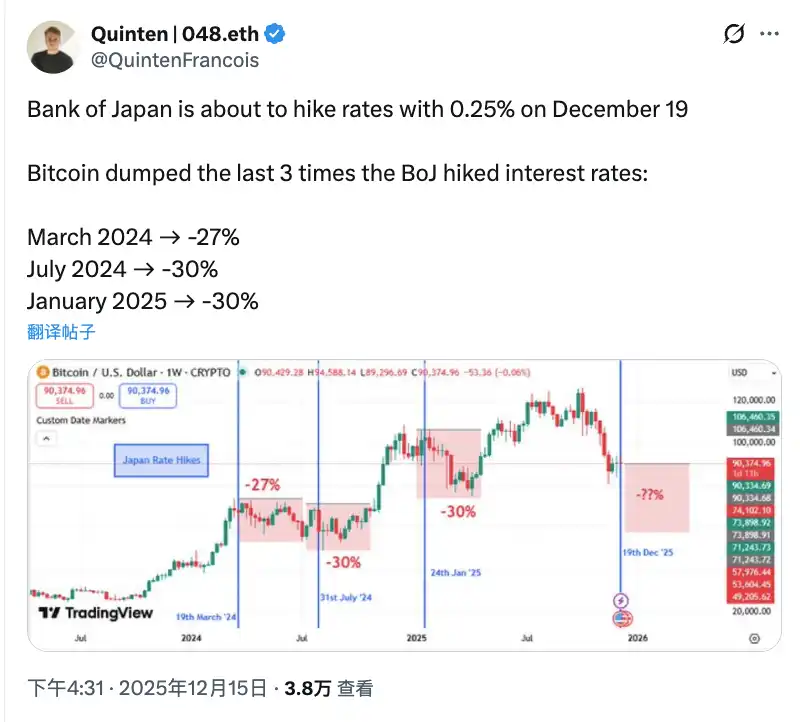
而这一次,是日本 2025 年 1 月以来首次加息,利率水平可能创 30 年新高。目前预测市场上显示,日元加息 25 个基点的概率是 97%,已是板上钉钉,当天的会议可能只是一个流程,市场已经提前给出了下跌反应。

分析师 Hanzo 就表示加密市场忽视对日本央行的动向,是一个重大失误。他指出,日本作为美国国债最大海外持有国(持仓超 1.1 万亿美元),其央行政策变动可能影响全球美元供应、国债收益率以及比特币等风险资产。

多位聚焦宏观分析的推特用户也同样指出,日元是除了美元之外最大的外汇巿场玩家、对资本市场的影响可能比欧元都大,美股近三十年大牛市都与日元套利有很大关系。多年来,投资者以低利率借入日元贷款,用于投资美股美债或是购买加密货币等高收益资产。当日本利率上升时,这些头寸可能迅速平仓,导致所有市场出现强制清算和去杠杆化。

且目前的市场背景是:多数主要央行在降息,日本央行却加息,这种反差将引发套利交易平仓,也就意味着此类加息导致加密货币市场再度动荡。

更重要的是,日元本次加息本身或许并非关键风险所在,更关键的是日本央行对 2026 年政策指引所释放的信号。目前日本央行已确认,自 2026 年 1 月起将出售价值约 5500 亿美元的 ETF 持仓。而如果 2026 年日本央行将再次或多次加息,那么将迎来更多加息和加速债券抛售,进一步解除日元套利交易,引发一场风险资产的抛售和日元回流,并可能对股市和加密货币造成持续的冲击。

但如果幸运的话,本次日本央行加息后,未来几次会议暂停继续加息的话,那么市场闪崩结束可能会迎来一段反弹行情。

美国后续降息预期不确定

当然,任何下跌都不会是单一因素和单一变量。这次日本央行加息与比特币暴跌的时间段还同时存在以下情况:杠杆率达到峰值;美元流动性紧缩;持仓极端水平;全球流动性和杠杆的影响等等。

我们再把目光重新投向美国。

本次降息靴子落地后的第一周,比特币开始走弱。因为市场关注点,已经转换到了「2026 年还能降几次、节奏会不会被迫放缓」。而本周即将公布的两项数据:美国宏观数据非农就业报告数据和 CPI 数据,正是这一预期重新定价的核心变量之一。

随着美国政府结束长期停摆,劳工统计局(BLS)将在本周集中发布 10 月和 11 月的就业数据,其中最受关注的,今晚 21:30 公布的非农就业报告,目前市场给出的预期就业情况并不算乐观。

表面看,这是典型的「利多降息」的数据结构,但问题恰恰在于:如果就业降温过快,美联储是否会担心经济失速,而选择更谨慎地调整政策节奏?一旦就业数据呈现出「断崖式降温」或结构性恶化,美联储反而可能选择观望,而不是顺势加速宽松。

再看 CPI 数据。相比就业数据,12 月 18 日公布的 CPI 数据被市场反复讨论的点是:CPI 是否会给美联储一个「我也得加快缩表」的理由,以对冲日本央行的紧缩?

如果通胀数据出现反弹或黏性增强,美联储即便维持降息立场,也可能通过加快缩表来回收流动性,从而在「名义宽松」与「实际流动性收紧」之间取得平衡。

下一次真正具备确定性的降息,最早也要等到 2026 年 1 月的议息窗口,而时间跨度依然偏远。目前,Polymarket 预测 78% 概率 1 月 28 日维持利率不变,降息预期概率仅为 22%,降息预期的不确定性太大。

此外,本周英国央行与欧洲央行也将相继召开议息会议,讨论各自的货币政策立场。在日本已经率先转向、美国犹豫不前、欧洲与英国观望的格局下,全球货币政策正处在一个高度分化、难以形成合力的阶段。

对比特币而言,这种「不统一的流动性环境」,往往比明确的紧缩更具杀伤力。

矿场关门、老钱持续退场

另外还有一种常见的分析观点是:长期持股者仍然在持续抛售,而本周减持速度愈发加快。

首先就是 ETF 机构的抛售,当日比特币现货 ETF 单日净流出约 3.5 亿美元(约 4,000 枚 BTC),以 Fidelity 的 FBTC 与 Grayscale 的 GBTC/ETHE 为主要流出来源;以太坊 ETF 方面,累计净流出约 6,500 万美元(约 21,000 枚 ETH)。

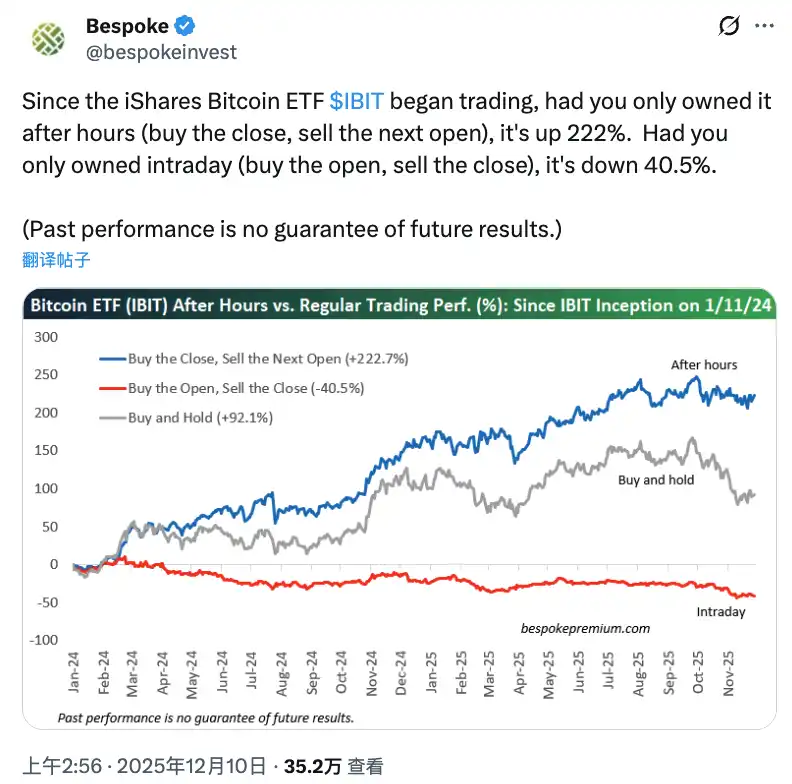
比如非常有意思的一点是,比特币在美国交易时段的表现相对更疲软。Bespoke Investment 统计的数据表示:「自贝莱德 IBIT 比特币 ETF 开始交易以来,若在收盘后时段持有,收益达 222%,但若仅持有盘中时段,则亏损 40.5%。」
紧接着出现在链上层面的,是更为直接的抛售信号。

12 月 15 日,比特币交易所净流入达到 3,764 BTC(约 3.4 亿美元),创下阶段性高点。其中,仅 Binance 一家的净流入就达到 2,285 BTC,较前一阶段放大约 8 倍,明显指向大户集中充值、准备抛售的行为。

此外,做市商的仓位变化也构成了重要的背景因素。以 Wintermute 为例,其在 11 月下旬至 12 月初期间,累计向交易平台转移超过 15 亿美元 的资产。虽然在 12 月 10 日至 16 日期间,其 BTC 持仓出现 271 枚的净增持,但市场对其大额转移的行为还是有一些恐慌。

而另一方面,长期持有者和矿工层面的抛售也引起了非常大的关注。

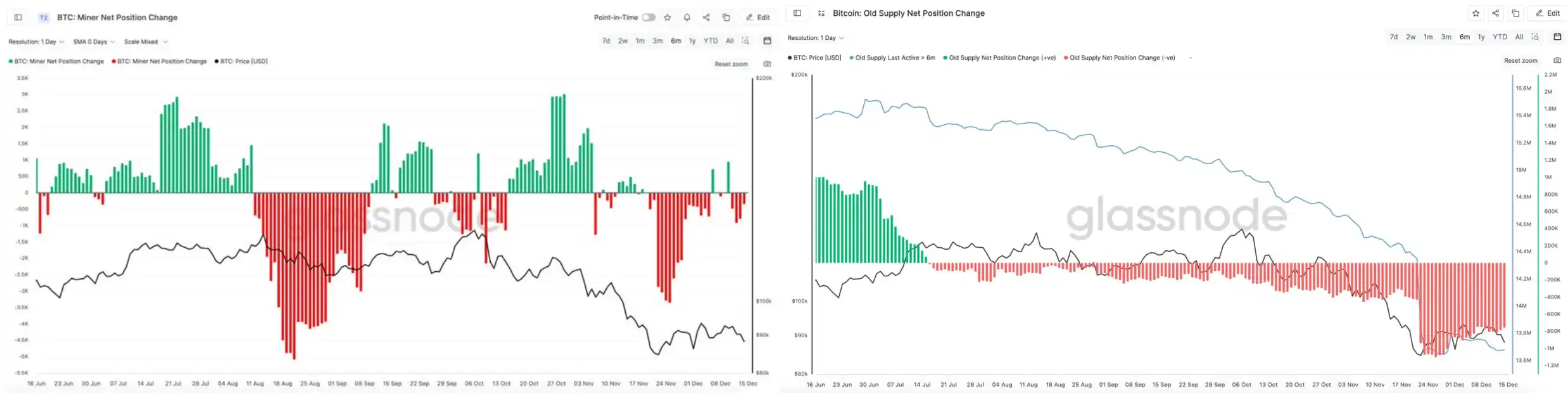
链上检测平台 CheckOnChain 监测到了比特币算力出现轮换,这种现象以往常与矿工承压期和流动性紧缩期同时出现。而链上分析师 CryptoCondom 指出:「一位朋友问我矿工和 OG 们是否真的在抛售他们的 BTC。客观答案是肯定的,可以查看 Glassnode 关于矿工净仓位数据及 OG 长期 BTC 持仓情况。」

可以看到 Glassnode 数据显示,过去 6 个月未动过的 OG 们抛售比特币的行为已经持续数月,且在 11 月下旬至 2 月中旬出现明显加速。
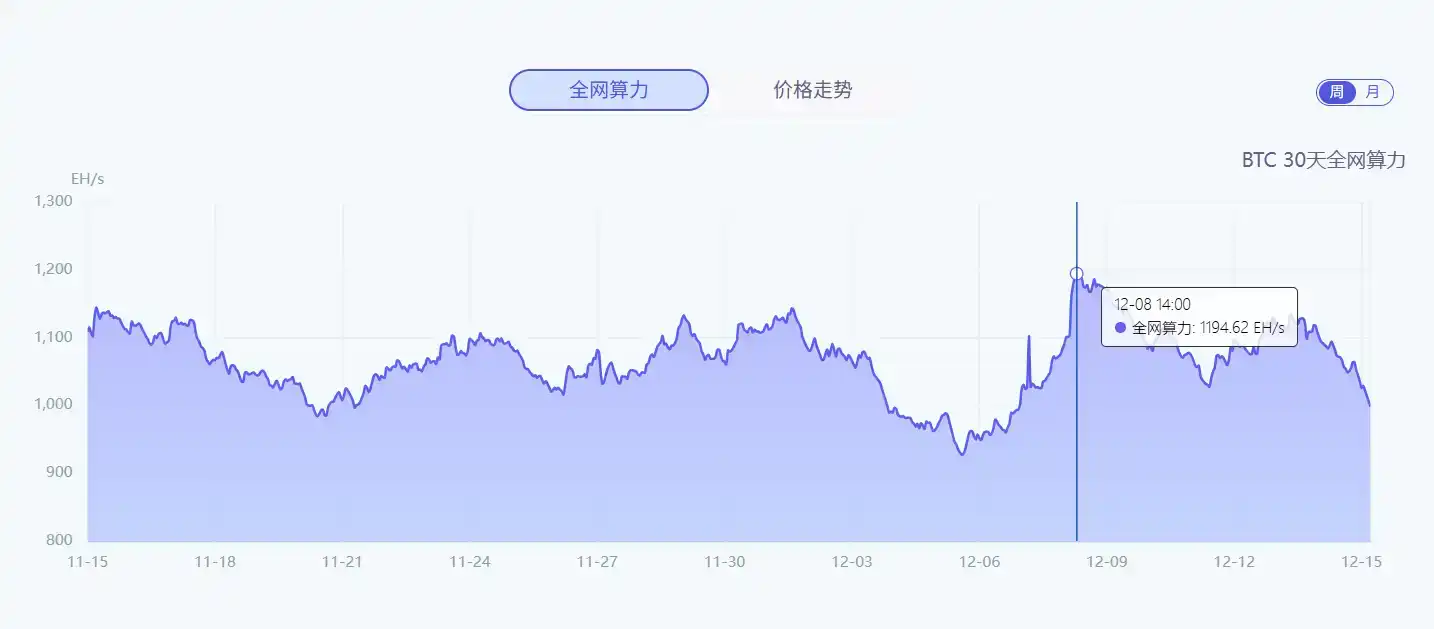
再叠加比特币全网算力下跌,截止 12 月 15 日,据 F2pool 数据,比特币全网算力暂报 988.49EH/s,距离上周同一时刻下跌 17.25%。

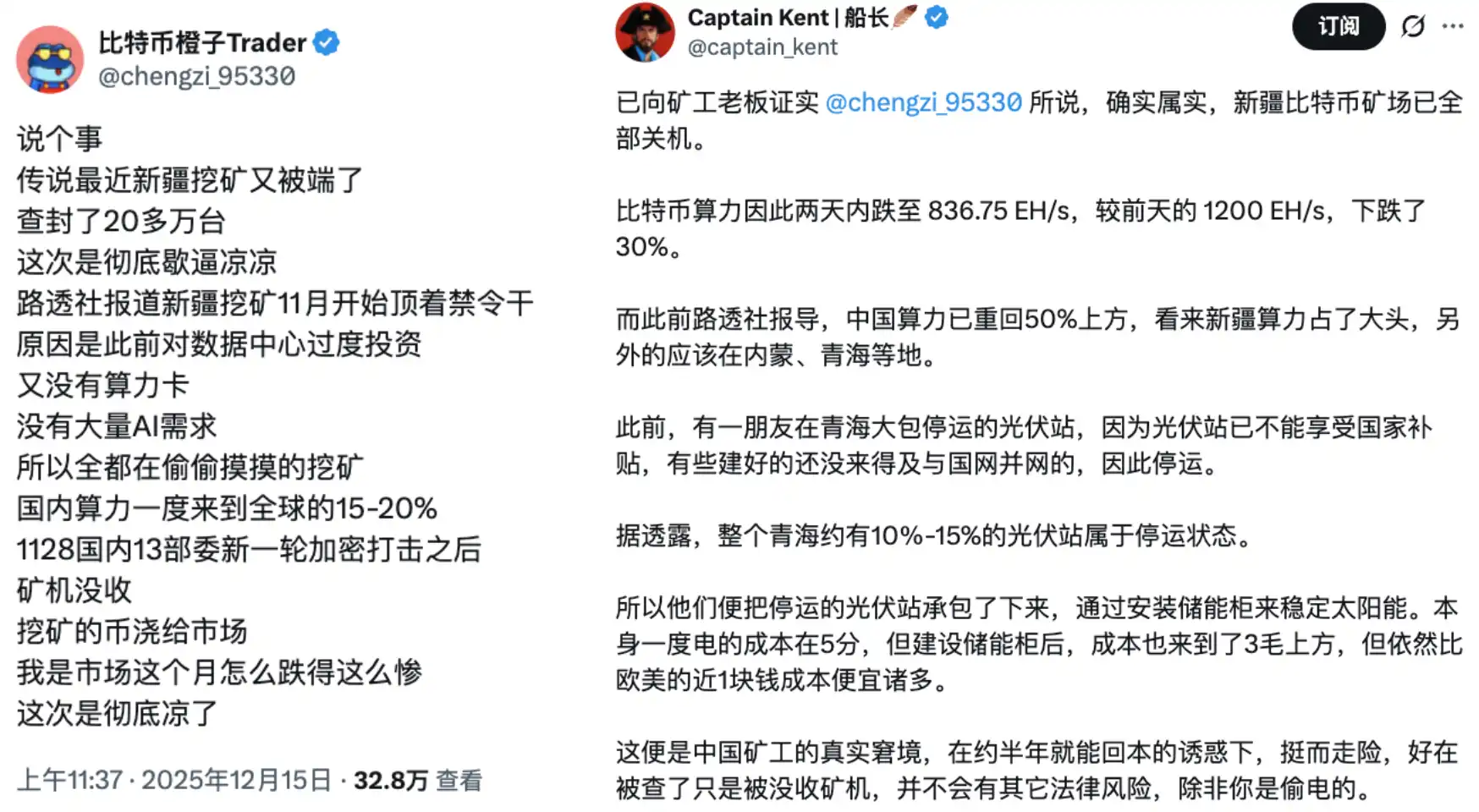
这些数据,也符合当前「新疆比特币矿场在陆续关机」的传闻背景。现 Nano Labs 创始人及董事长孔剑平也表示比特币近期算力下跌情况,按照(每台机器)平均 250T(算力计算),近期至少 40 万台比特币矿机关机。
综合来看,这轮下跌的因素有:日本央行率先转向紧缩,撬动了日元套利交易的松动;美联储在完成首次降息后,却迟迟无法给出清晰的后续路径,使得市场开始主动下调对 2026 年流动性的预期;而在链上层面,长期持有者、矿工与做市商的行为,则进一步放大了价格对流动性变化的敏感度。


Trending Cryptos

Related Reads

Why Is the World Nervous About Japan Raising Interest Rates?

In June 2026, the Bank of Japan raised its policy rate to 1%, marking its first hike to this level since 1995. While this rate remains low compared to global peers like the US and Europe, the move signals a profound shift for a nation that has been a global source of ultra-cheap funding for decades. Japan's long-standing near-zero or negative interest rates had facilitated massive "yen carry trades," where international investors borrowed low-cost yen to invest in higher-yielding assets worldwide, such as US tech stocks and emerging market bonds. This made Japan a critical, often overlooked, source of global liquidity. Japan's ultra-loose policy stemmed from structural challenges post-1990s asset bubble: aging demographics, chronic low inflation/deflation, and high public debt. Recent shifts, including sustained wage growth (exceeding 5% in recent years) and inflation consistently above the 2% target, have created a "wage-price spiral" possibility, prompting the policy normalization. The global market's concern lies not in the absolute rate but in the potential unwinding of the yen carry trade. As Japanese borrowing costs rise, the economics of these leveraged global investments change, potentially triggering deleveraging and capital outflows from risk assets. Market anxiety focuses on the end of a thirty-year consensus that Japan would perpetually provide cheap funding. Ultimately, the global impact will depend on the interplay with US monetary policy. While Japan is tightening, the significant interest rate differential with the US remains. The key future dynamic is whether simultaneous Japanese hikes and eventual US rate cuts will narrow this gap, forcing a major recalibration of global capital flows and asset pricing built on an era of abundant, cheap yen liquidity.

marsbit9h ago

Why Is the World Nervous About Japan Raising Interest Rates?

marsbit9h ago

Trading

Spot
Futures

Hot Articles

What is $BITCOIN

DIGITAL GOLD ($BITCOIN): A Comprehensive Analysis Introduction to DIGITAL GOLD ($BITCOIN) DIGITAL GOLD ($BITCOIN) is a blockchain-based project operating on the Solana network, which aims to combine the characteristics of traditional precious metals with the innovation of decentralized technologies. While it shares a name with Bitcoin, often referred to as “digital gold” due to its perception as a store of value, DIGITAL GOLD is a separate token designed to create a unique ecosystem within the Web3 landscape. Its goal is to position itself as a viable alternative digital asset, although specifics regarding its applications and functionalities are still developing. What is DIGITAL GOLD ($BITCOIN)? DIGITAL GOLD ($BITCOIN) is a cryptocurrency token explicitly designed for use on the Solana blockchain. In contrast to Bitcoin, which provides a widely recognized value storage role, this token appears to focus on broader applications and characteristics. Notable aspects include: Blockchain Infrastructure: The token is built on the Solana blockchain, known for its capacity to handle high-speed and low-cost transactions. Supply Dynamics: DIGITAL GOLD has a maximum supply capped at 100 quadrillion tokens (100P $BITCOIN), although details regarding its circulating supply are currently undisclosed. Utility: While precise functionalities are not explicitly outlined, there are indications that the token could be utilized for various applications, potentially involving decentralized applications (dApps) or asset tokenization strategies. Who is the Creator of DIGITAL GOLD ($BITCOIN)? At present, the identity of the creators and development team behind DIGITAL GOLD ($BITCOIN) remains unknown. This situation is typical among many innovative projects within the blockchain space, particularly those aligning with decentralized finance and meme coin phenomena. While such anonymity may foster a community-driven culture, it intensifies concerns about governance and accountability. Who are the Investors of DIGITAL GOLD ($BITCOIN)? The available information indicates that DIGITAL GOLD ($BITCOIN) does not have any known institutional backers or prominent venture capital investments. The project seems to operate on a peer-to-peer model focused on community support and adoption rather than traditional funding routes. Its activity and liquidity are primarily situated on decentralized exchanges (DEXs), such as PumpSwap, rather than established centralized trading platforms, further highlighting its grassroots approach. How DIGITAL GOLD ($BITCOIN) Works The operational mechanics of DIGITAL GOLD ($BITCOIN) can be elaborated on based on its blockchain design and network attributes: Consensus Mechanism: By leveraging Solana’s unique proof-of-history (PoH) combined with a proof-of-stake (PoS) model, the project ensures efficient transaction validation contributing to the network's high performance. Tokenomics: While specific deflationary mechanisms have not been extensively detailed, the vast maximum token supply implies that it may cater to microtransactions or niche use cases that are still to be defined. Interoperability: There exists the potential for integration with Solana’s broader ecosystem, including various decentralized finance (DeFi) platforms. However, the details regarding specific integrations remain unspecified. Timeline of Key Events Here is a timeline that highlights significant milestones concerning DIGITAL GOLD ($BITCOIN): 2023: The initial deployment of the token occurs on the Solana blockchain, marked by its contract address. 2024: DIGITAL GOLD gains visibility as it becomes available for trading on decentralized exchanges like PumpSwap, allowing users to trade it against SOL. 2025: The project witnesses sporadic trading activity and potential interest in community-led engagements, although no noteworthy partnerships or technical advancements have been documented as of yet. Critical Analysis Strengths Scalability: The underlying Solana infrastructure supports high transaction volumes, which could enhance the utility of $BITCOIN in various transaction scenarios. Accessibility: The potential low trading price per token could attract retail investors, facilitating wider participation due to fractional ownership opportunities. Risks Lack of Transparency: The absence of publicly known backers, developers, or an audit process may yield skepticism regarding the project's sustainability and trustworthiness. Market Volatility: The trading activity is heavily reliant on speculative behavior, which can result in significant price volatility and uncertainty for investors. Conclusion DIGITAL GOLD ($BITCOIN) emerges as an intriguing yet ambiguous project within the rapidly evolving Solana ecosystem. While it attempts to leverage the “digital gold” narrative, its departure from Bitcoin's established role as a store of value underscores the need for a clearer differentiation of its intended utility and governance structure. Future acceptance and adoption will likely depend on addressing the current opacity and defining its operational and economic strategies more explicitly. Note: This report encompasses synthesised information available as of October 2023, and developments may have transpired beyond the research period.

384 Total ViewsPublished 2025.05.13Updated 2025.05.13

What is $BITCOIN

Discussions

Welcome to the HTX Community. Here, you can stay informed about the latest platform developments and gain access to professional market insights. Users' opinions on the price of BTC (BTC) are presented below.

活动图片