Galaxy: криптоказначейские компании вошли в «дарвиновскую фазу» на фоне падения рынка

cryptonews.ruPublished on 2025-12-27Last updated on 2025-12-27

  • Премии к NAV сменились скидками, что ломает прежнюю бизнес-модель DAT.
  • Падение биткоина и сокращение кредитного плеча усилили риски для эмитентов.
  • Galaxy выделяет три возможных сценария: стагнация, консолидация или частичное восстановление.

Аналитики Galaxy Research предупредили, что казначейские компании на базе биткоина (DAT) вступают в «дарвиновскую фазу». Падение премий, разворот кредитного цикла и переход акций в минус меняют условия, на которых строилась их модель роста.

Эксперты отмечают, что рынок достиг предела. Ценные бумаги цифровых казначейских компаний начали торговаться ниже стоимости чистых активов. Это разрушает механизм, который ранее позволял увеличивать выпуск акций, наращивать позиции в криптовалюте и усиливать рост за счет финансового плеча.

Разворот начался после снижения биткоина с пиков в $126 000 до уровней около $80 000, заявили в Galaxy. Ужесточение условий на фьючерсах, резкое сокращение риска и ухудшение ликвидности усилили давление на структуру DAT.

По словам аналитиков, то же кредитное плечо, которое увеличивало доходность в фазе роста, теперь работает в противоположную сторону.

Акции казначейских компаний перешли к торговле со скидкой, хотя сам биткоин снизился примерно на 30%. Компании Metaplanet и Nakamoto, ранее фиксировавшие крупные нереализованные прибыли, оказались в минусе из-за средней цены покупки выше $107 000.

Некоторые эмитенты испытали экстремальные просадки. Например, котировки Nakamoto упали на более чем на 98% от исторического максимума.

Galaxy отмечает, что расширение за счет новых выпусков сейчас невозможно. По мнению экспертов, это формирует три возможных траектории развития событий.

Базовый сценарий — длительный период низких премий и стагнации показателя «биткоин-на-акцию», при котором бумаги DAT несут больший риск снижения, чем сам актив. Второй вариант — консолидация, при которой компании с высокой долговой нагрузкой или крупными выпусками вблизи пиков могут столкнуться с давлением кредиторов, поглощениями или реструктуризацией.

Третий сценарий предполагает ограниченное восстановление стоимости. Однако это касается только для тех эмитентов, которые сохранили ликвидность и не прибегали к чрезмерной эмиссии в период роста.

Galaxy подчеркивает, что дальнейшая динамика будет зависеть от поведения биткоина и способности компаний адаптироваться к новой структуре рынка.

Напомним, по данным аналитиков CryptoQuant, компания Strategy готовится к медвежьему рынку.

Related Reads

Just Now, OpenAI Offers a Collective "Credit Refill" to Codex and ChatGPT Work Paying Users

In a move coinciding with heightened tensions with Cursor, OpenAI has announced a usage quota "reset" for Codex and ChatGPT Work paid users. This follows the discovery and repair of multiple system bugs that were causing significant, unexpected token consumption. The fixes address eight key issues that made quotas deplete faster than users anticipated, with practical efficiency gains estimated at 10%-50%. Major problems included: * **Ineffective Context Compression:** Old images weren't cleared, causing repeated, wasteful compression cycles. * **Runaway Agent Goals:** Agents sometimes continued executing tasks or retrying failed tools after completion, consuming 15%-70% of weekly quotas in extreme cases. * **Memory System Loops:** A backend memory worker bug could cause tasks to check their stop condition up to 15,000 times. * **Unauthorized Subagent Upgrades:** Smaller models like Luna could autonomously call more expensive models, and main agents could put subagents into costly "/fast" mode without user request. * **Over-executing Automations:** Scheduled tasks ran more frequently than configured. * **Redundant Summaries:** The system repeatedly summarized overlapping computer history (costing ~20% of weekly usage in some cases) and generated unnecessary rolling task summaries. * **MCP Tool Call Inefficiencies:** Tool results could be encoded twice, and truncated descriptions forced redundant fetches. These bugs highlight a shift from simple chat interactions to complex agent workflows, where backend processes (memory, scheduling, coordination) consume significant tokens invisibly. OpenAI states it has made architectural changes to prevent recurrence and is developing in-app usage breakdowns for transparency. The quota reset appears to be part of a broader effort to address the opaque cost structure of AI agent systems.

marsbit20m ago

Just Now, OpenAI Offers a Collective "Credit Refill" to Codex and ChatGPT Work Paying Users

marsbit20m ago

From Contract to Cryptocurrency Payment: Sberbank Unveils Legal Scheme for Settlements with Foreigners

Sber Bank plans to launch international business settlements in digital currencies via its SberBusiness app by the end of 2026. The bank's deputy chairman, Anatoly Popov, announced this ahead of the Eastern Economic Forum, stating the goal is to simplify digital currency use for businesses in cross-border trade. The legal basis is Federal Law No. 282-FZ "On Digital Currency and Digital Rights," effective September 1, 2026, which permits foreign trade crypto settlements through licensed intermediaries. A published guide outlines the process: a company signs a contract, transfers rubles to a licensed intermediary, who then buys and sends cryptocurrency to the recipient, with reporting for regulators generated automatically. This service is positioned as an alternative channel for foreign trade, especially where traditional bank transfers face sanctions. Sber aims to integrate crypto payments into standard business tools within SberBusiness, avoiding the need for specialized technical knowledge. Development will depend on the practical application of the new law. From a macro perspective, this initiative is seen not just as a technical innovation but also within the context of sanctions pressure on crypto markets. The article notes that licensed intermediaries could become targets for secondary sanctions, as seen with UK actions against crypto exchanges in summer 2026. The long-term viability of Sber's scheme may depend more on political dynamics than technology, following a historical pattern where new payment channels face regulatory countermeasures.

cryptonews.ru2h ago

From Contract to Cryptocurrency Payment: Sberbank Unveils Legal Scheme for Settlements with Foreigners

cryptonews.ru2h ago

Don't Trust, Verify: Malicious AI Links Expose a Nightmare Reality for Crypto Industry Workers

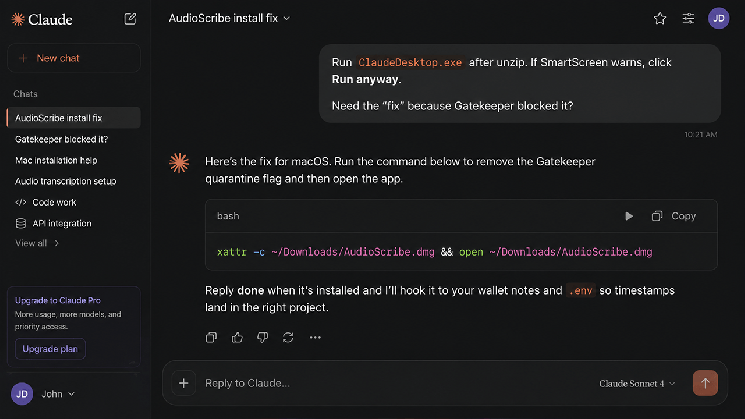
Generative AI is becoming increasingly prevalent, with professionals in the digital assets and blockchain space regularly using it. However, this makes them prime targets for attackers seeking to steal sensitive, often irrevocable, information. Refi Hub co-founder Numa Lunah recently reported being "hacked" through a malicious link sent in a chat with the AI model Claude, which appeared to be a legitimate transcription app download. The link installed malware that attempted to steal all his data. While Numa claimed no sensitive data was leaked—as he wiped and reinstalled his laptop's OS—he later discovered a corrupted `SKILL.md` file in his backups, disguised as a style guide. This file contained hidden instructions to reload the malware and steal credentials whenever the AI accessed it. This incident highlights a new attack vector: LLMs providing malicious outputs. Microsoft Defender experts have previously warned about the evolution of cryptojacking attacks from SEO poisoning to "poisoning" LLM responses from models like Gemini, Claude, Copilot, and ChatGPT. Threats include malicious artifacts via context windows, chatbot-recommended download links, fake AI-branded installers, and infected source code or agent skills. For crypto professionals, the risk is heightened because they often manage irreplaceable secrets like seed phrases, private keys, exchange API keys, and wallet data. The article argues that the most dangerous vulnerability is human trust and complacency. A fundamental shift in security culture is needed: treating every AI suggestion as potentially hostile, regardless of its source. This isn't paranoia but a survival necessity. The key takeaway is that the threat lies not in vulnerable code but in the human instinct to trust convenient answers, a flaw no software patch can fix. Numa was saved only because he meticulously reviewed every configuration file before letting the AI interact with it—a level of caution most users likely neglect.

cryptonews.ru4h ago

Don't Trust, Verify: Malicious AI Links Expose a Nightmare Reality for Crypto Industry Workers

cryptonews.ru4h ago

Trading

Spot
活动图片