Ethereum Fusaka Is Live: Buterin Explains Why It Is ‘Significant’

bitcoinistPublished on 2025-12-04Last updated on 2025-12-04

Abstract

Ethereum’s Fusaka upgrade is now live on mainnet, marking a major structural change in how the network handles data and...

Trusted Editorial content, reviewed by leading industry experts and seasoned editors. Ad Disclosure

Ethereum’s Fusaka upgrade is now live on mainnet, marking a major structural change in how the network handles data and scaling. The upgrade was activated at epoch 411392 at 21:49:11 UTC, with the official Ethereum account first signalling “upgrade in progress . . . activating Fusaka @ epoch 411392 // 21:49:11 UTC” and then confirming that “Fusaka is live on Ethereum mainnet!”

In its announcement, the account highlighted three core elements of Fusaka. PeerDAS “now unlocks 8x data throughput for rollups,” substantially expanding the amount of data that rollup-based layer 2 networks can publish to the network. The upgrade also introduces “UX improvements via the R1 curve & pre-confirmations,” and is described as explicit “prep for scaling the L1 with gas limit increase & more.” The project added that community members and core developers will “continue to monitor for issues over the next 24 hrs.”

Why Fusaka Is ‘Significant’ For Ethereum

Vitalik Buterin framed the core of the upgrade in unusually direct terms. “PeerDAS in Fusaka is significant because it literally is sharding,” he wrote. “Ethereum is coming to consensus on blocks without requiring any single node to see more than a tiny fraction of the data. And this is robust to 51% attacks – it’s client-side probabilistic verification, not validator voting.” In other words, the network can now agree on blocks even though no node has to download all of the associated data, relying instead on probabilistic verification on the client side.

Buterin tied this to a long-running research line, noting that “sharding has been a dream for Ethereum since 2015, and data availability sampling since 2017,” and linking back to early research work on data availability and erasure coding. With Fusaka, that architecture is no longer just a roadmap concept but a live mechanism securing Ethereum’s data layer.

At the same time, Buterin was clear that Fusaka does not complete the sharding roadmap. He stressed that “there are three ways that the sharding in Fusaka is incomplete.” First, he argued that “we can process O(c^2) transactions (where c is the per-node compute) on L2s, but not on the ethereum L1,” adding that “if we want to scaling to benefit the ethereum L1 as well, beyond what we can get by constant-factor upgrades like BAL and ePBS, we need mature ZK-EVMs.”

Second, he pointed to the “proposer/builder bottleneck,” where “the builder needs to have the whole data and build the whole block,” and said “it would be amazing to have distributed block building.” Third, he noted bluntly: “We don’t have a sharded mempool. We still need that.”

Despite those caveats, Buterin called Fusaka “a fundamental step forward in blockchain design.” He argued that “the next two years will give us time to refine the PeerDAS mechanism, carefully increase its scale while we continue to ensure its stability, use it to scale L2s, and then when ZK-EVMs are mature, turn it inwards to scale ethereum L1 gas as well.”

He closed by sending “big congrats to the Ethereum researchers and core devs who worked hard for years to make this happen,” underscoring that for the Ethereum community, Fusaka is not a routine protocol update but the arrival of a long-promised sharding era on mainnet.

At press time, ETH traded at $3,194.
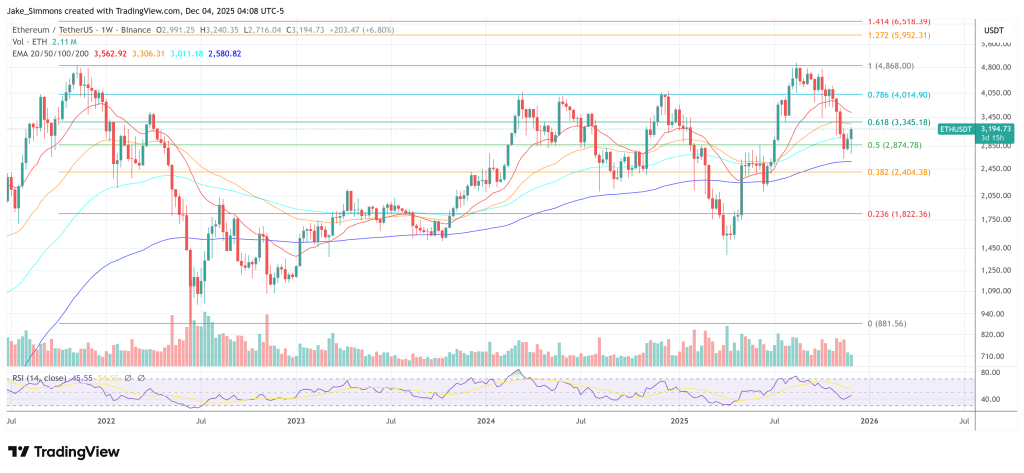
Ethereum price
ETH bulls target the 0.618 Fib, 1-week chart | Source: TOTAL on TradingView.com
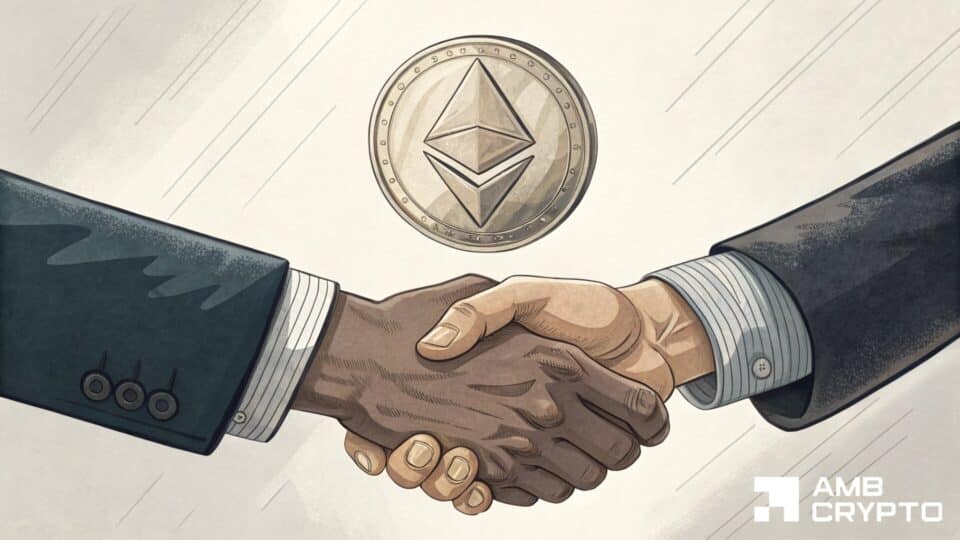
Featured image created with DALL.E, chart from TradingView.com
Editorial Process for bitcoinist is centered on delivering thoroughly researched, accurate, and unbiased content. We uphold strict sourcing standards, and each page undergoes diligent review by our team of top technology experts and seasoned editors. This process ensures the integrity, relevance, and value of our content for our readers.

Jake Simmons has been a Bitcoin enthusiast since 2016. Ever since he heard about Bitcoin, he has been studying the topic every day and trying to share his knowledge with others. His goal is to contribute to Bitcoin's financial revolution, which will replace the fiat money system. Besides BTC and crypto, Jake studied Business Informatics at a university. After graduation in 2017, he has been working in the blockchain and crypto sector. You can follow Jake on Twitter at @realJakeSimmons.

Trending Cryptos

Related Reads

Apple Sues OpenAI Sparking Feud, Musk Slams Altman for Fraud, Altman Retorts with 'Space Data Center' Boast

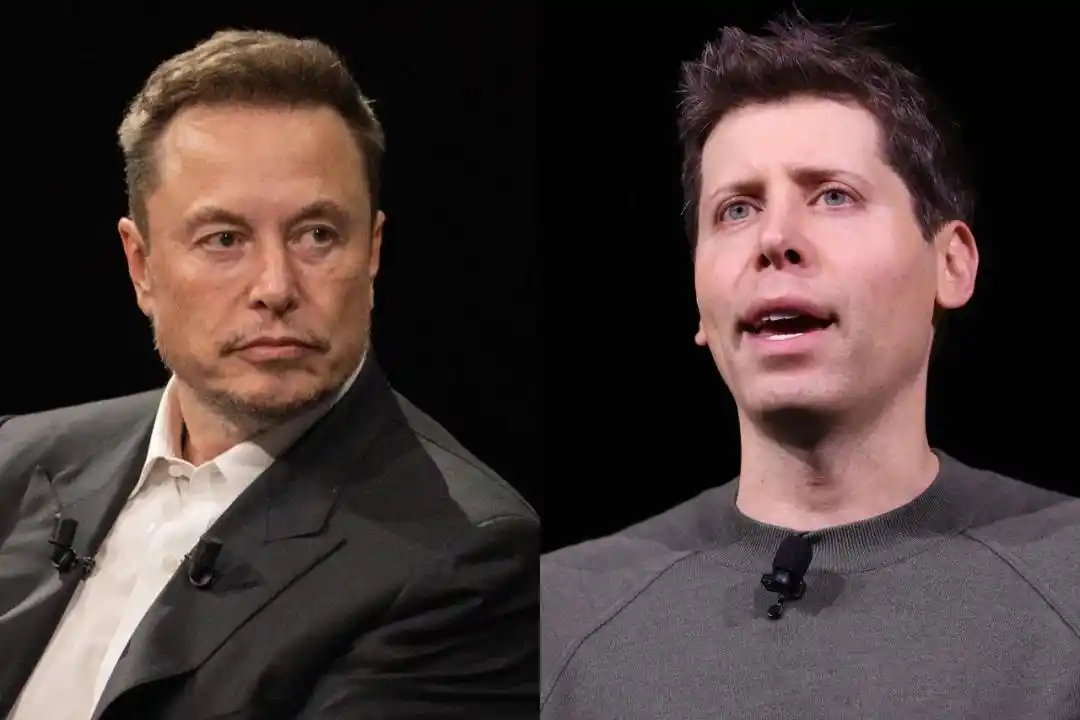
Apple Sues OpenAI as Musk-Altman Feud Escalates The public feud between Elon Musk and OpenAI CEO Sam Altman intensified, coinciding with their respective AI companies launching flagship models in the same week, highlighting fierce competition. On July 11, Musk posted on X, accusing Altman of taking "fraud to the next level" regarding OpenAI's commercial practices. Altman fired back, sarcastically suggesting Musk was the one selling "short-term space datacenter" concepts to public market investors. Musk countered with allegations that Altman "stole an open-source AI charity" and, amid Apple's recent lawsuit, "stole all of Apple's phone tech." He mockingly referenced Altman needing a "parole officer's" approval to travel. This exchange occurred against the backdrop of a significant legal development: Apple filed a lawsuit against OpenAI in a California federal court, alleging the AI company deliberately solicited Apple employees to leak confidential information on unreleased products to aid its own hardware plans. Apple demands OpenAI cease this activity, destroy proprietary materials, and redesign upcoming products. OpenAI responded, stating it has no interest in other companies' trade secrets and remains focused on innovation. This lawsuit could profoundly impact their two-year partnership where OpenAI provides key tech for Apple Intelligence and Siri. The rivalry extended to product releases. OpenAI launched GPT-5.6, while Musk's SpaceXAI unveiled Grok 4.5. Both are positioned as AI agents capable of multi-step tasks. GPT-5.6 is noted for strengths in broad reasoning, business workflows, and cybersecurity. Grok 4.5 is highlighted for higher efficiency in autonomous programming and developer workflows, with lower usage costs than GPT-5.6, though OpenAI's model reportedly still leads in areas like abstract reasoning. The differing strengths offer distinct choices for enterprises and developers based on their specific needs.

marsbit3h ago

Apple Sues OpenAI Sparking Feud, Musk Slams Altman for Fraud, Altman Retorts with 'Space Data Center' Boast

marsbit3h ago

Robinhood Chain's Success Proves Ethereum is Not Dead

Robinhood Chain's success demonstrates that Ethereum's L1+L2 model is thriving, not dying. Traditional crypto projects often focused on token sales and chose infrastructure to maximize token value. However, real-world businesses building cash-based products make different, pragmatic choices. When launching its chain, Robinhood chose Ethereum as its base layer and built a custom L2 using Arbitrum technology. It uses Ethereum blobs for data availability, ETH for gas, and relies on Ethereum for security. This mirrors Coinbase's earlier decision to build Base as an Ethereum L2. These are not ideological choices but sound business decisions driven by needs for security, liquidity, control, and predictable economics. The shift in the industry is from "token-centric" models to "cash business" models. Real companies serving broad user bases prioritize risk reduction, product improvement, and profit. For them, blockchain is infrastructure. The Ethereum L1+L2 "barbell" structure is ideal: the highly decentralized, neutral, and liquid L1 for settlement and security, combined with customizable, high-performance L2s for execution. This trend is positive for Ethereum and ETH. As more real businesses build on it, ETH becomes more integrated, distributed, and useful, strengthening its network effects and monetary premium. Robinhood's path—starting on an existing L2 and graduating to a dedicated one—is likely to become a standard playbook, proving the enduring utility of Ethereum's layered architecture for serious commercial adoption.

Odaily星球日报3h ago

Robinhood Chain's Success Proves Ethereum is Not Dead

Odaily星球日报3h ago

Trading

Spot

Hot Articles

Discussions

Welcome to the HTX Community. Here, you can stay informed about the latest platform developments and gain access to professional market insights. Users' opinions on the price of ETH (ETH) are presented below.

活动图片