Какова ключевая поддержка для BTC?

CointelegraphPublished on 2025-11-17Last updated on 2026-06-30

Abstract

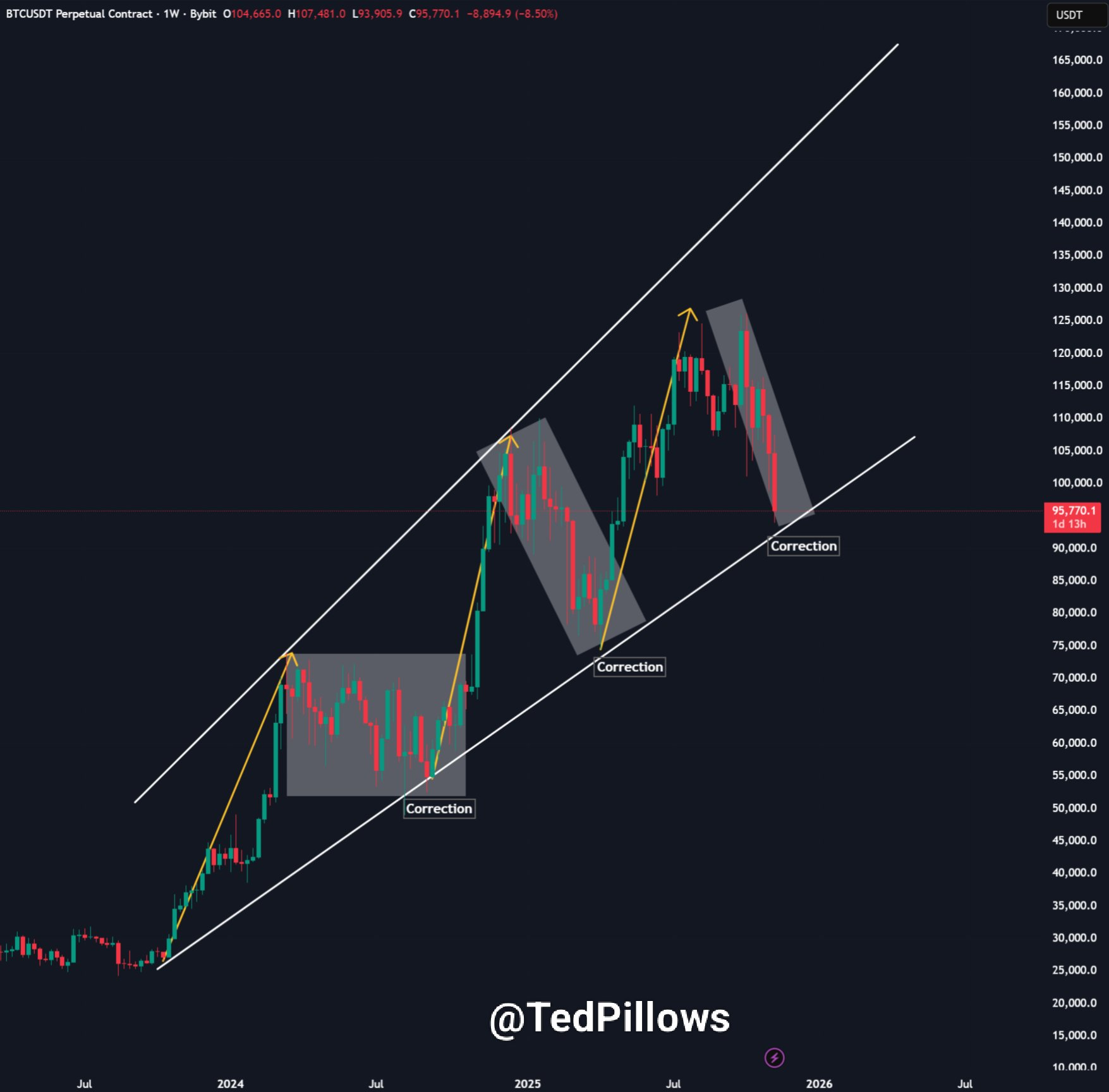
Биткоин приближается к ключевому диапазону поддержки$88 000-90 000.

Биткоин приближается к ключевому диапазону поддержки — $88 000-90 000. Провал этого уровня отправит котировки к апрельским минимумам, считает инвестор Тед Пиллоуз.

Согласно прикрепленному к посту графику, вышеуказанный диапазон — нижняя граница расширяющегося канала и локальное «дно» цены.

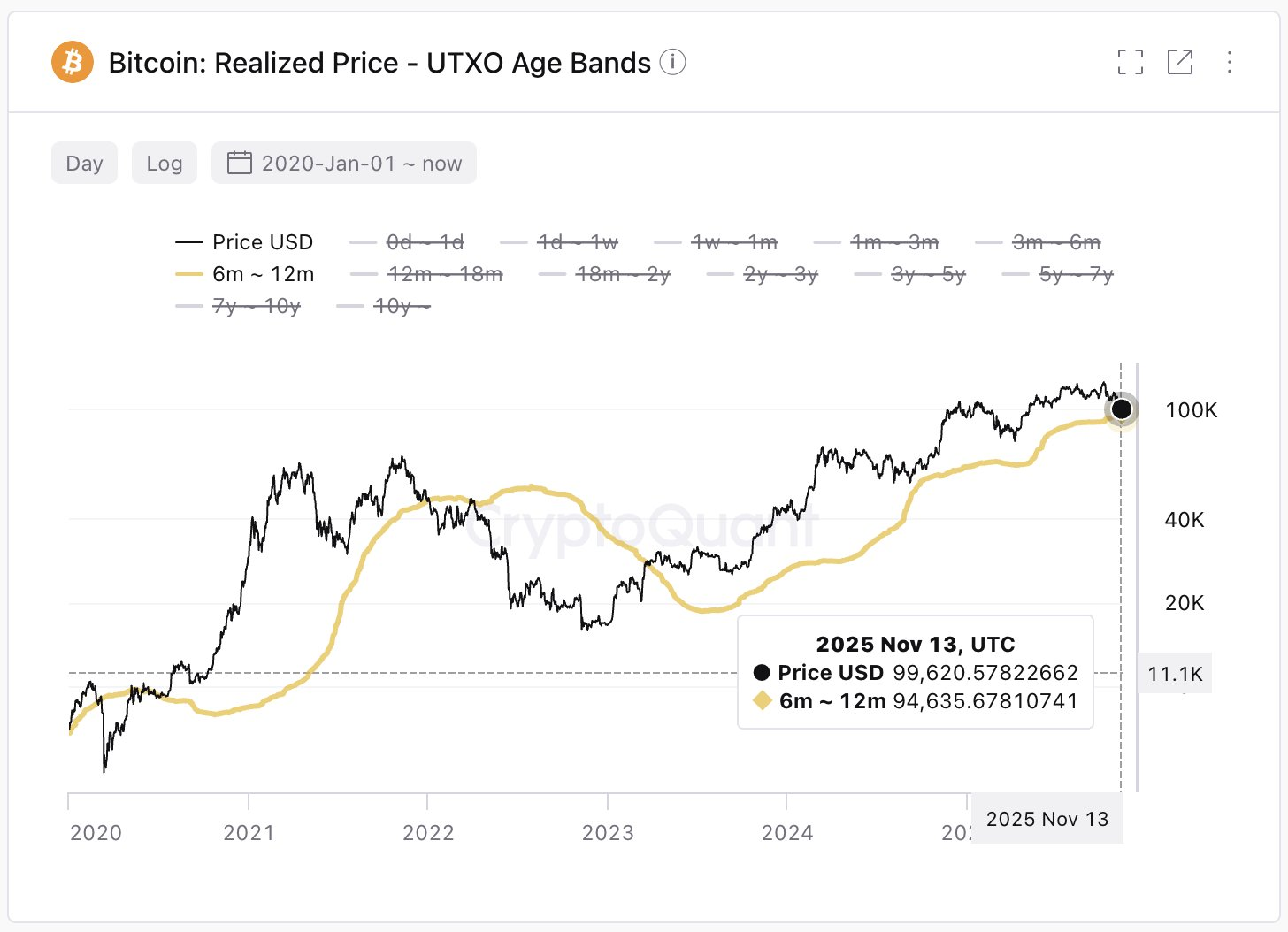
CEO CryptoQuant Ки Ен Джу отметил, что средняя цена покупки инвесторов, вошедших на рынок 6-12 месяцев назад, составляет $94 000.

Аналитик предположил, что провал этого уровня может послужить подтверждением медвежьего рынка. Однако он подчеркнул, что лучше подождет, чем будет делать поспешные выводы.

Давление растет

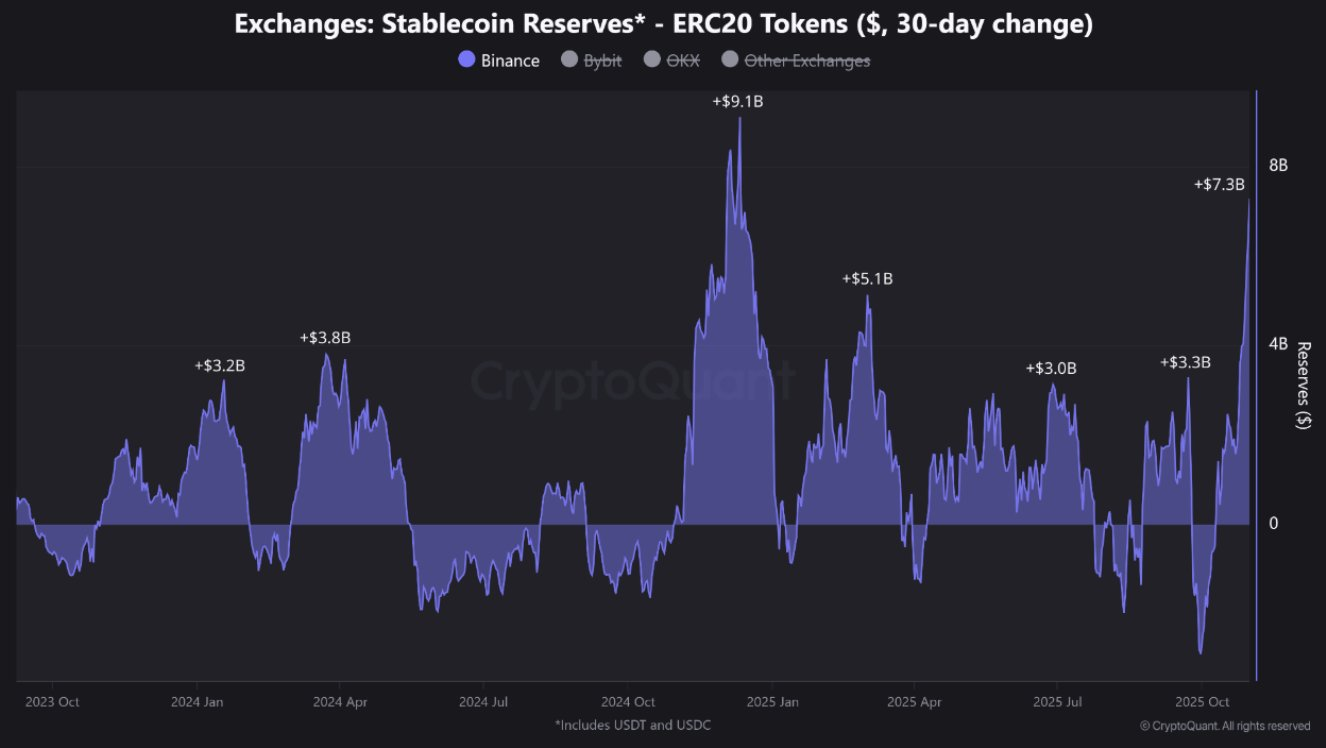
Ончейн-аналитик под ником Darkfost отметил усиление притока первой криптовалюты на Binance. По его словам, это чревато усилением давления продаж.

«Сейчас мы видим явное усиление таких поступлений. Масштаб несопоставим с отдельными эпизодами в прошлом, но сигнал слишком заметен, чтобы его игнорировать», — прокомментировал эксперт.

Ситуацию усугубляет значительное ухудшение рыночных настроений — криптовалютный индекс страха и жадности второй день удерживается на крайне низкой отметке 10.

На момент публикации цифровое золото торгуется в районе $96 500. За последние сутки актив вырос на 0,8%, согласно CoinGecko.

Trending Cryptos

Related Reads

Earning Six Figures and Still Struggling to Rent in San Francisco

A couple in San Francisco with a combined tech income over $360,000 struggled for months to find a one-bedroom apartment under $5,000 per month. Their story highlights how the AI wealth boom, driven by upcoming IPOs from companies like OpenAI and Anthropic, is dramatically escalating the city's cost of living. Even six-figure salaries are becoming insufficient for a comfortable lifestyle. The article details the financial reality for tech workers earning around $180,000 annually. After taxes, retirement contributions, and healthcare, take-home pay is roughly $7,000 per month. With average rents exceeding $3,800 and one-bedrooms often costing $4,500-$5,200, discretionary income shrinks to $1,500-$2,500. This contrasts sharply with reported median total compensations of $640,000 at OpenAI and $420,000 at Anthropic. The AI gold rush is identified as the primary driver. The scale of potential wealth from these IPOs, far surpassing previous tech booms, is flooding the housing market. Data shows San Francisco's average rent is now the highest in the U.S., with vacancy rates in desirable neighborhoods plummeting to around 3%. The overall cost of living is 65.6% above the national average. The piece features multiple professionals, including a 25-year-old with a $250,000 salary, facing housing instability, fierce competition for rentals, and a persistent, low-grade financial anxiety despite high earnings. It concludes that the rapid concentration of AI wealth is redefining what constitutes a "high salary" in San Francisco, pushing out mid-tier tech talent and creating a stark divide between those in the AI sector and everyone else.

marsbit58m ago

Earning Six Figures and Still Struggling to Rent in San Francisco

marsbit58m ago

Rate Hikes to Save STRC, Selling Bitcoin to Preserve Credit: Strategy Picks Its Two Most Expensive Paths

Over the past six weeks, Strategy has faced a significant crisis of confidence, with its core securities MSTR and STRC experiencing sharp price declines. The situation escalated as the company utilized dollar reserves intended for dividends and interest payments to repurchase debt, and then sold a small amount of Bitcoin for the first time since 2022—an action that contradicted its "never sell" narrative and signaled potential liquidity strain. In response, Strategy introduced a Digital Credit capital framework. This formalized a series of measures to manage the pressure down its capital structure: ordinary shareholders have already borne costs through equity dilution from an $11.5 billion ATM offering; new rules enforce a hard dollar reserve covering at least 12 months of expected dividend and interest payments; the STRC dividend rate was increased from 11.5% to 12%; and, most notably, Bitcoin was officially integrated into the capital toolkit, with board authorization to sell up to $1.25 billion worth if needed to support obligations and repurchase programs. The market reacted with a mix of relief and skepticism. While the announcement triggered a sharp single-day rally in both MSTR and STRC, the preferred shares still trade at a significant discount. Supporters view the framework as pragmatic crisis management that provides a price floor and clearer rules. Critics argue that institutionalizing Bitcoin sales undermines the core investment thesis and, with Bitcoin's price below the company's average cost basis, amounts to selling assets at a loss to maintain its financial structure. The broader context shows institutional Bitcoin buying drying up, highlighting that Strategy's challenges and new framework are now a key indicator for overall market risk sentiment. Ultimately, the framework buys time, but STRC's return to par value depends on market belief in the company's ability to cover dividends without further dilution or substantial Bitcoin sales—a task that would be easier if Bitcoin's price recovers.

链捕手1h ago

Rate Hikes to Save STRC, Selling Bitcoin to Preserve Credit: Strategy Picks Its Two Most Expensive Paths

链捕手1h ago

Has Bitcoin Bottomed? Unpacking 12 Key Data Indicators

Author: BitalkNews **Title: Has Bitcoin Bottomed? Analyzing 12 Key Data Indicators** The current Bitcoin price is around $59,600, representing a maximum drawdown of approximately 53% from the 2025 high. The market is in a deep correction phase. Multiple indicators suggest valuations are nearing historical lows, but a confirmed bottom requires more time. **Summary of Key Indicators:** 1. **Fear & Greed Index:** At 16, indicating "Extreme Fear," similar to levels seen during the 2022 FTX collapse. 2. **Rainbow Chart:** BTC has fallen into the "Bitcoin is dead" zone, only the second such occurrence historically. 3. **MVRV Ratio:** Currently around 1.13, near the lower historical band, pointing to a bottoming valuation area (approx. $53,200-$53,400). 4. **Realized Price:** The aggregate cost basis is ~$53,400; the current price is only about 12% above it but hasn't broken below yet. 5. **UTXO Profit/Loss Ratio:** Has dropped to its lowest level this cycle, signaling a potential "capitulation" event often seen near cycle bottoms. 6. **Long-Term Holder SOPR:** For holders >155 days, it's at 0.662, now negative, indicating seasoned investors are selling at a loss. 7. & 8. **Miner Health:** ~20% of miners are unprofitable, and actual miner revenue is below theoretical levels, indicating ongoing miner stress. 9. **ETF Flows:** U.S. spot BTC ETFs have seen sustained net outflows, including a 13-day streak with over $1.7B in weekly outflows. 10. **Strategy Risk:** Strategy's stock premium has significantly contracted, pressuring the traditional "borrow-to-buy" model. 11. **Bear Duration & Drawdown:** The correction has lasted >265 days with a ~52.5% drawdown, shorter in depth but lengthy in duration. 12. **Market Expectations (Polymarket):** Betting markets suggest an ~80% probability of BTC falling below $55,000 and a notable chance below $50,000. **Conclusion:** Bitcoin is in a deep correction with potential bottom formation. Valuation metrics are in historically low ranges, and on-chain capitulation signals are accumulating. However, a complete shakeout isn't finished—the realized price hasn't been breached, and ETF demand hasn't reversed. The area below $60,000 holds long-term appeal, but patience is advised. Key signals to watch for include a return to ETF inflows, a recovery in the Long-Term Holder SOPR, and easing miner pressure.

marsbit1h ago

Has Bitcoin Bottomed? Unpacking 12 Key Data Indicators

marsbit1h ago

Trading

Spot

Hot Articles

What is $BITCOIN

DIGITAL GOLD ($BITCOIN): A Comprehensive Analysis Introduction to DIGITAL GOLD ($BITCOIN) DIGITAL GOLD ($BITCOIN) is a blockchain-based project operating on the Solana network, which aims to combine the characteristics of traditional precious metals with the innovation of decentralized technologies. While it shares a name with Bitcoin, often referred to as “digital gold” due to its perception as a store of value, DIGITAL GOLD is a separate token designed to create a unique ecosystem within the Web3 landscape. Its goal is to position itself as a viable alternative digital asset, although specifics regarding its applications and functionalities are still developing. What is DIGITAL GOLD ($BITCOIN)? DIGITAL GOLD ($BITCOIN) is a cryptocurrency token explicitly designed for use on the Solana blockchain. In contrast to Bitcoin, which provides a widely recognized value storage role, this token appears to focus on broader applications and characteristics. Notable aspects include: Blockchain Infrastructure: The token is built on the Solana blockchain, known for its capacity to handle high-speed and low-cost transactions. Supply Dynamics: DIGITAL GOLD has a maximum supply capped at 100 quadrillion tokens (100P $BITCOIN), although details regarding its circulating supply are currently undisclosed. Utility: While precise functionalities are not explicitly outlined, there are indications that the token could be utilized for various applications, potentially involving decentralized applications (dApps) or asset tokenization strategies. Who is the Creator of DIGITAL GOLD ($BITCOIN)? At present, the identity of the creators and development team behind DIGITAL GOLD ($BITCOIN) remains unknown. This situation is typical among many innovative projects within the blockchain space, particularly those aligning with decentralized finance and meme coin phenomena. While such anonymity may foster a community-driven culture, it intensifies concerns about governance and accountability. Who are the Investors of DIGITAL GOLD ($BITCOIN)? The available information indicates that DIGITAL GOLD ($BITCOIN) does not have any known institutional backers or prominent venture capital investments. The project seems to operate on a peer-to-peer model focused on community support and adoption rather than traditional funding routes. Its activity and liquidity are primarily situated on decentralized exchanges (DEXs), such as PumpSwap, rather than established centralized trading platforms, further highlighting its grassroots approach. How DIGITAL GOLD ($BITCOIN) Works The operational mechanics of DIGITAL GOLD ($BITCOIN) can be elaborated on based on its blockchain design and network attributes: Consensus Mechanism: By leveraging Solana’s unique proof-of-history (PoH) combined with a proof-of-stake (PoS) model, the project ensures efficient transaction validation contributing to the network's high performance. Tokenomics: While specific deflationary mechanisms have not been extensively detailed, the vast maximum token supply implies that it may cater to microtransactions or niche use cases that are still to be defined. Interoperability: There exists the potential for integration with Solana’s broader ecosystem, including various decentralized finance (DeFi) platforms. However, the details regarding specific integrations remain unspecified. Timeline of Key Events Here is a timeline that highlights significant milestones concerning DIGITAL GOLD ($BITCOIN): 2023: The initial deployment of the token occurs on the Solana blockchain, marked by its contract address. 2024: DIGITAL GOLD gains visibility as it becomes available for trading on decentralized exchanges like PumpSwap, allowing users to trade it against SOL. 2025: The project witnesses sporadic trading activity and potential interest in community-led engagements, although no noteworthy partnerships or technical advancements have been documented as of yet. Critical Analysis Strengths Scalability: The underlying Solana infrastructure supports high transaction volumes, which could enhance the utility of $BITCOIN in various transaction scenarios. Accessibility: The potential low trading price per token could attract retail investors, facilitating wider participation due to fractional ownership opportunities. Risks Lack of Transparency: The absence of publicly known backers, developers, or an audit process may yield skepticism regarding the project's sustainability and trustworthiness. Market Volatility: The trading activity is heavily reliant on speculative behavior, which can result in significant price volatility and uncertainty for investors. Conclusion DIGITAL GOLD ($BITCOIN) emerges as an intriguing yet ambiguous project within the rapidly evolving Solana ecosystem. While it attempts to leverage the “digital gold” narrative, its departure from Bitcoin's established role as a store of value underscores the need for a clearer differentiation of its intended utility and governance structure. Future acceptance and adoption will likely depend on addressing the current opacity and defining its operational and economic strategies more explicitly. Note: This report encompasses synthesised information available as of October 2023, and developments may have transpired beyond the research period.

525 Total ViewsPublished 2025.05.13Updated 2025.05.13
What is $BITCOIN

Discussions

Welcome to the HTX Community. Here, you can stay informed about the latest platform developments and gain access to professional market insights. Users' opinions on the price of BTC (BTC) are presented below.

活动图片