Роб Хэдик из Dragonfly Capital: Polymarket напрямую конкурирует с компанией Robinhood

cryptonews.ruPublished on 2025-01-11Last updated on 2025-11-12

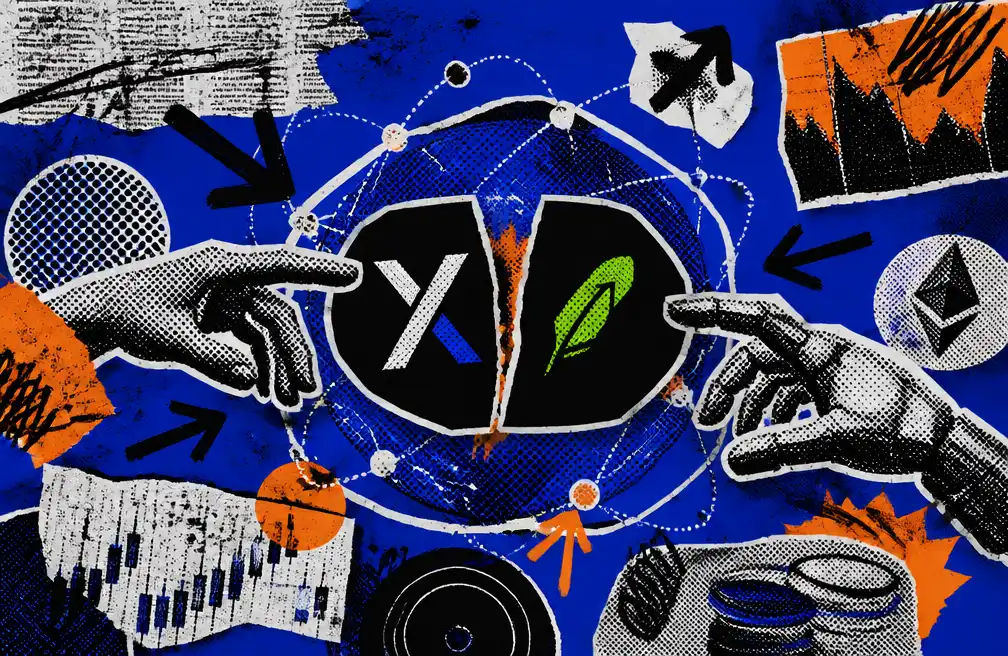
Партнер венчурной фирмы Dragonfly Роб Хэдик заявил, что дискуссия о конкуренции между платформами прогнозов Polymarket и Kalshi неверна. По его словам, последняя площадка фактически не имеет значимого органического объема вне партнерства с Robinhood. Он подчеркнул, что Polymarket имеет в 10 раз более широкую прямую дистрибуцию и множество крупных соглашений, тогда как активность Kalshi полностью зависит от пользователей Robinhood.

Хэдик прокомментировал пост, в котором упоминалось новое партнерство Polymarket с крупнейшей компанией в сфере фэнтези-спорта PrizePicks. Согласно заявлению, разработчиков, компания интегрирует инфраструктуру рынка прогнозов для запуска на своей площадке. Это событие, по мнению Хэдика, подчеркивает лидерство Polymarket не только в сфере технологий, но и в привлечении брендов с высокой капитализацией. Он отметил, что площадка хорошо узнаваема и строит собственные каналы распространения, которые способны соперничать с организациями вроде Robinhood.

Отвечая на комментарии других аналитиков, Хэдик добавил: Polymarket доминирует в поисковых трендах и имеет более чем в 10 раз больше активных пользователей, если исключить клиентов Robinhood из статистики Kalshi. По его данным, около 57% общего объема сделок Polymarket приходится на спортивные прогнозы, и этот показатель продолжает расти. Компания также активно расширяет охват, работая над партнерствами с крупными игроками индустрии, включая DraftKings.

Другие участники дискуссии, в том числе эксперт Нас Эддекиуак, отметили, что стратегия Polymarket — использование модели дистрибуции через партнеров — оказалась более масштабируемой и эффективной. Хэдик согласился с этим тезисом, подчеркнув, что сила компании заключается не только в спортивных рынках, но и в широте пользовательской базы, охвате бренда и прочных отношениях с клиентами.

В ответ на вопрос о перспективах Kalshi после получения другими платформами лицензий DCM (Designated Contract Market), Хэдик выразил сомнение в способности сервиса удержать долю рынка. Он пояснил, что с учетом специфики бизнеса Robinhood и контроля над клиентской базой, будет крайне трудно сохранить конкурентное преимущество.
Related Reads

The Largest Upgrade Since The Merge? How Glamsterdam Will Affect Ethereum?

Ethereum's next major upgrade, Glamsterdam (combining consensus layer "Gloas" and execution layer "Amsterdam"), is scheduled for late 2026 and considered the most significant overhaul since The Merge. It aims to fundamentally enhance L1 performance and architecture to prepare for substantial capacity increases. The upgrade centers on three core changes: 1. **Enshrined PBS (ePBS - EIP-7732):** Integrates the Proposer-Builder Separation directly into the protocol, eliminating reliance on external relays. This extends the window for processing execution payloads, allowing nodes more time to handle larger blocks and more data, paving the way for a higher Gas Limit. 2. **Block-Level Access Lists (BALs - EIP-7928):** Provides a pre-declared "map" in the block header of all state data (accounts, storage) that transactions will access and modify. This enables potential parallel transaction processing and faster state synchronization for nodes. 3. **Gas Repricing (EIP-8037):** Overhauls the gas model to more accurately reflect the real resource costs for nodes. It separates computation costs from state storage costs, making operations that create permanent state data (like new accounts) more expensive, while computation-heavy operations become relatively cheaper. These changes work together to solve the trilemma of scaling: giving nodes more time to process larger blocks (ePBS), reducing execution bottlenecks (BALs), and controlling unsustainable state growth (Gas Repricing). The goal is a credible path to a higher Gas Limit (e.g., 200M gas) without compromising decentralization by overburdening node hardware. For users: * Transaction fees for simple transfers may decrease and become more stable due to increased block space, but state-intensive operations (contract deployment) may cost more. * Gas estimation by wallets will improve in accuracy. * L2 data posting costs could become more stable long-term due to increased Blob capacity. * EIP-7708 will standardize logs for ETH transfers, improving tracking for wallets and exchanges. Node operators must upgrade clients, but ETH holders need take no action. In essence, Glamsterdam doesn't just raise the block size limit; it re-engineers Ethereum's core block production, execution, and economic models to enable sustainable, decentralized scaling.

marsbit16m ago

The Largest Upgrade Since The Merge? How Glamsterdam Will Affect Ethereum?

marsbit16m ago

Robinhood Chain Mainnet Goes Live: Can Stocks Finally Be Moved Into Wallets?

Robinhood has officially launched its public mainnet, Robinhood Chain, along with stock-like tokens, the USDG yield product, and a DeFi lending portal. This marks a significant shift where a major online broker is integrating its user interface, regulatory compliance, self-custody wallet, and on-chain protocols into a single, streamlined experience. The goal is to simplify access to stock exposure, stablecoin yields, collateralized lending, and AMM trading for mainstream users. Eligible non-U.S. users can hold these "Stock Tokens"—structured as tokenized debt securities—in the Robinhood Wallet for 24/7 exposure to assets like U.S. stocks or ETFs. U.S. users can access an estimated ~7% APY on dollar-backed USDG through the Robinhood Earn program via self-custody wallets, with lending infrastructure powered by Morpho protocol. Built as a Layer 2 on Arbitrum, Robinhood Chain leverages existing DeFi protocols like Uniswap. The core strategy is not to reinvent DeFi but to channel Robinhood's large traditional finance user base (27.4 million funded customers as of Q1 2026) into on-chain finance, lowering the technical barriers. However, key limitations exist. The stock tokens are not direct equity ownership and are unavailable in the U.S. and some jurisdictions due to regulatory constraints. The ~7% yield is variable and carries inherent DeFi risks, not guaranteed principal protection. Furthermore, while AMMs enable trading, price discovery for major stocks will likely remain anchored in traditional markets like NASDAQ for the foreseeable future. Ultimately, Robinhood Chain is an early experiment in "on-chain brokerage." Its success will depend on real-world metrics like trading volume, sustained user migration to self-custody, stable yield performance, and regulatory feedback, rather than its launch narrative.

marsbit1h ago

Robinhood Chain Mainnet Goes Live: Can Stocks Finally Be Moved Into Wallets?

marsbit1h ago

Circle CEO Responds to OUSD Challenge: Stablecoin Market Is 'Winner-Takes-All', Consortium Model Doomed to Fail

Circle CEO Jeremy Allaire addresses market concerns following the announcement of the Open USD (OUSD) stablecoin project backed by 140 global companies. Allaire argues the stablecoin market exhibits "winner-takes-all" dynamics due to powerful network effects. He cites USDC's near-decade lead in three key areas: 1) **Application Integration & Protocol Development**: Thousands of integrated services and protocols (like CCTP) create utility and lock-in for developers and users. 2) **Liquidity Network Effects**: A deeply embedded, globally distributed liquidity infrastructure across primary and secondary markets, built over years. 3) **Regulatory Integration**: Extensive licensing and compliance groundwork ensuring USDC's acceptance in major markets like Europe and Japan. Allaire challenges OUSD's proposed advantages. He contends that promises of free redemption, while appealing, face market realities where such models can become exit routes for other stablecoins. He also questions the feasibility of fully distributing all revenue to an alliance, stating it would "starve" the critical infrastructure investments needed for scale and utility. Furthermore, he expresses skepticism about large alliance governance models, noting they often lead to slow decision-making and misaligned incentives. While welcoming OUSD to the ecosystem, Allaire reaffirms confidence in USDC's dominant position, backed by its long-term infrastructure investments and strong partnerships, including its ongoing collaboration with Coinbase.

marsbit1h ago

Circle CEO Responds to OUSD Challenge: Stablecoin Market Is 'Winner-Takes-All', Consortium Model Doomed to Fail

marsbit1h ago

Trading

Spot
活动图片