‘Ethereum is one of the biggest macro trades over the next 10-15 years’ – Tom Lee

ambcryptoPublished on 2025-09-30Last updated on 2025-10-01

Key Takeaways

What are Bit Digital’s upcoming plans like?

Bit Digital plans to raise $100 million through senior convertible notes, with Ethereum set to take the lion’s share of the proceeds.

What is Ethereum up to on the price charts?

Ethereum’s price performance remains uncertain, with the asset testing a critical support level on the charts.


Bit Digital, Inc. (Nasdaq: BTBT) has announced plans to raise $100 million through a public offering of senior convertible notes due 2030, with most of the proceeds earmarked for Ethereum [ETH] purchases.

In fact, the company has also granted underwriters a 30-day option to purchase an additional $15 million in notes.

The notes will be senior unsecured obligations, maturing on 01 October 2030, unless converted, redeemed, or repurchased earlier. Holders will have the option to convert them into cash, Bit Digital shares, or a mix of both.

Final terms, including the interest and conversion rates, will be determined at pricing. Barclays, Cantor, and B. Riley Securities will lead the deal as joint bookrunners under the company’s effective Securities and Exchange Commissions (SEC) shelf registration.

Ethereum reserve strategy

According to the company, its Ethereum purchases are in line with its broader digital asset strategy. Even though proceeds may also fund acquisitions, investments, and other corporate initiatives.

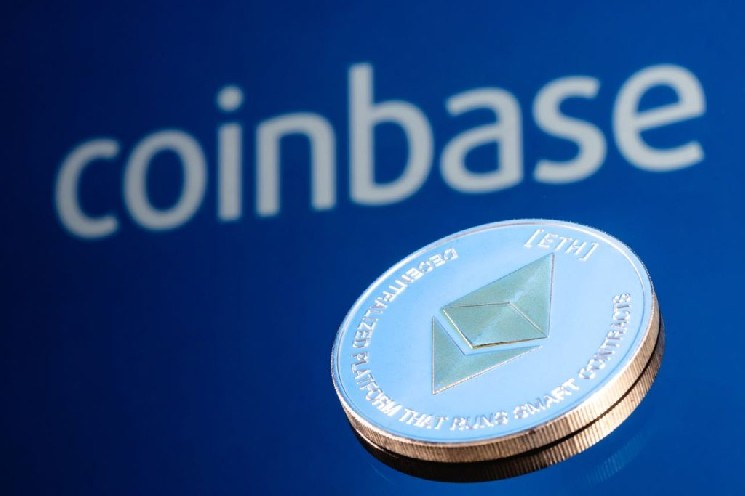
Bit Digital is currently the third-largest holder of ETH reserves among corporate investors who see the crypto as a treasury asset. According to CoinGecko, it owns about 120,000 ETH right now – Valued at roughly $494 million.

This latest purchase would place Bit Digital ahead of Coinbase, with the latter holding approximately 136,000 ETH. This would be the case if the company commits a significant portion of its convertible notes to Ethereum.

Ethereum reserve chart.

Source: CoinGecko

Corporate entities now hold about $16.5 billion in ETH reserves, a figure that continues to grow. BitMine Immersion Technologies leads the pack with the world’s largest reserves, valued at $10.5 billion.

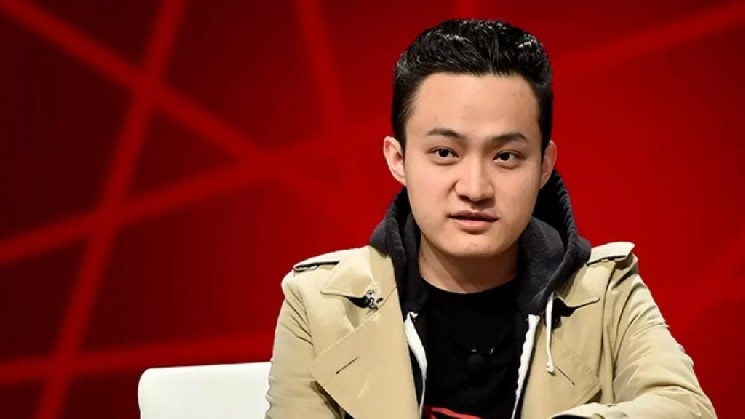
According to Tom Lee, Chairman of BitMine, their Ethereum bet focuses on long-term outcomes, with the firm expecting the asset to outperform over the next decade.

“We continue to believe Ethereum is one of the biggest macro trades over the next 10-15 years.”

This is a position shared by several other corporate entities holding Ethereum as a strategic reserve asset.

Ethereum’s market outlook

On the price charts, the altcoin is still under some pressure and could slide even lower. In the last 24 hours alone, ETH slipped by 0.89%, with trading volume falling to $36 billion at press time.

ETH seemed to be testing a key support zone between $4,003 and $4,093 – A level that has previously triggered rallies. This suggested that a similar scenario could unfold soon.

ETH price chart.

Source: TradingView

On the contrary, the Accumulation/Distribution (A/D) indicators highlighted a decline in accumulation over time, pointing to weaker buying momentum.

And yet, the metric has remained in positive territory – A sign that the overall outlook is still bullish and that this might just be a corrective phase.

A renewed uptick in accumulation could allude to fresh capital flowing back into ETH. This could potentially push the crypto higher, with the same reclaiming its previous levels. For now, however, the market direction remains uncertain.


Share

Related Reads

From Banning Doubao to Embracing Honor: Why Did WeChat Suddenly 'Change Its Face'?

The article explores the sudden shift in WeChat's strategy towards AI assistants from mobile phone manufacturers, transitioning from strict opposition to active collaboration. For over a year, WeChat fiercely resisted attempts by phone AI assistants (like ByteDance's Doubao in late 2025) to control its features via GUI automation ("simulated clicking"), citing security and data control concerns. This stance created a significant barrier for system-level AI integration. Now, Tencent has initiated A2A (Agent-to-Agent) partnerships with major phone brands like Honor, Xiaomi, OPPO, and vivo. This model allows a phone's system AI (e.g., Honor's YOYO) to parse a user's voice command and send a structured request directly to WeChat's own internal AI agent via secure APIs. WeChat then executes the action (e.g., sending a message) and returns the result. The article attributes Tencent's "change of face" to strategic pressure. While leading in social app usage, Tencent trails rivals like ByteDance and Alibaba in standalone AI app popularity. WeChat, with its vast mini-program ecosystem, is Tencent's key asset for an AI comeback. The upcoming WeChat AI agent aims to handle tasks like booking and payments within the app. However, phone system assistants remain the primary AI entry point for most users. The A2A collaboration allows Tencent to extend WeChat's AI reach to this crucial system layer while maintaining control over its core functions and data. For phone manufacturers, embracing A2A is a pragmatic move. The GUI route proved unviable due to WeChat's blocks. A2A offers a compliant path to integrate a vital service, enhancing their AI assistants' usefulness. It allows them to focus on developing their own AI ecosystems for other services while cooperating on WeChat access. The collaboration is framed as a mutual, strategic necessity: Tencent gains a distribution channel, and manufacturers gain a key functionality. The partnership relies on a "dual authorization" mechanism for security, requiring both user and app consent for each action. While questions about long-term data privacy practices remain, experts note A2A is more secure and compliant than GUI automation. Ultimately, this cooperation is seen as a tentative, calculated truce. Tencent's long-term goal is to make WeChat an AI-powered "service OS." Phone manufacturers aim to make their system AI the central user interface. Their paths may converge or clash in the future, but for now, the A2A deal represents the opening chapter in the battle for the AI-era user入口, driven by necessity and strategic calculus on both sides.

marsbit19m ago

From Banning Doubao to Embracing Honor: Why Did WeChat Suddenly 'Change Its Face'?

marsbit19m ago

On-Chain Figures on the Eve of Kickoff: 1.6 Billion Traded Before the World Cup Even Begins

"On-Chain Numbers on the Eve of the World Cup: $1.6 Billion Traded Before Kick-off" Analysis of on-chain markets before the 2026 FIFA World Cup reveals significant crypto integration into football. The most striking figure is the approximately **$1.6 billion** in total trading volume on the single "World Cup Winner" contract on the Polymarket prediction market platform, accumulated before a single match was played. This represents explosive growth for a sector whose annual volume surged from ~$16B in 2024 to ~$64B in 2025. The ecosystem is maturing beyond speculation. Key developments include: 1) **Infrastructure upgrades** like Polymarket's migration to native, regulated USDC stablecoin for settlements; 2) **Reliable data oracles**, such as Chainlink, being used to resolve real-world match outcomes on-chain; and 3) **Official recognition**, with FIFA appointing its first-ever "Prediction Markets" partner. Over 100 contracts now cover everything from the outright winner to individual match results and even non-sporting risks like venue relocation. This evolution marks a fundamental shift. While crypto firms are absent from FIFA's top-tier sponsor list, the technology has deeply penetrated the tournament's financial and predictive infrastructure through regulated stablecoin settlements, decentralized oracles, and new official partnership categories. The regulatory landscape remains complex and varies by jurisdiction, but on-chain markets for the World Cup are already a multi-billion-dollar reality.

marsbit1h ago

On-Chain Figures on the Eve of Kickoff: 1.6 Billion Traded Before the World Cup Even Begins

marsbit1h ago

From SpaceX's IPO to the Future of Crypto: Which Crypto Sectors Will Host the Trillion-Dollar Narrative?

From the SpaceX IPO, which targets a $750 billion raise at a $1.77 trillion valuation, we can extrapolate capital flow trends relevant to crypto. The focus shifts from speculative narratives to foundational infrastructure and real-world asset (RWA) integration. Key crypto sectors poised to benefit include: 1. **AI Infrastructure**: The narrative is moving from consumer-facing AI applications to underlying, scarce resources like compute power and decentralized GPU networks (e.g., TAO, RENDER, AKT, IO). These protocols are positioning as the essential "picks and shovels" providers for the AI economy. 2. **Real-World Assets (RWA)**: Beyond tokenized treasury bonds, RWA's future lies in on-chain equity and pre-IPO assets like SpaceX. This could democratize access to high-growth assets and reshape global capital flows, benefiting infrastructure projects like ONDO, LINK, and Plume that facilitate issuance, data, and liquidity. 3. **Core Financial Infrastructure**: Stablecoins, payment networks, and DePIN (Decentralized Physical Infrastructure Networks) are critical for settling the future on-chain economy. Their role expands from internal trading tools to foundational layers for global finance, AI systems, and real-world asset networks, leading to potential value reassessment. In summary, the next cycle may prioritize long-term infrastructure value—AI compute, asset tokenization networks, and settlement layers—over short-lived application hype, mirroring the broader market's shift towards funding the foundational systems of the future.

marsbit1h ago

From SpaceX's IPO to the Future of Crypto: Which Crypto Sectors Will Host the Trillion-Dollar Narrative?

marsbit1h ago

Trading

Spot
Futures

Hot Articles

Discussions

Welcome to the HTX Community. Here, you can stay informed about the latest platform developments and gain access to professional market insights. Users' opinions on the price of ETH (ETH) are presented below.

活动图片